
The Morpeth testimonial roll comprises a farewell address signed by approximately 250,000 people (according to contemporary sources) on 652 individual sheets of paper. These sheets were subsequently joined together to create a continuous length of paper, approximately 412 meters in length (over three times the length of Croke Park), which was rolled onto a mahogany spool. It was presented to Lord Morpeth at the Royal Exchange, Dublin, in September 1841 following his defeat in the 1841 general election which consequently led to his departure as Chief Secretary of Ireland. For many years the testimonial roll remained hidden away in a basement at Castle Howard, Yorkshire, but it is now on loan at Maynooth University thanks to the generosity of Simon Howard, owner of Castle Howard and the efforts of Professor Christopher Ridgway, Curator and Professor Terence Dooley, Director of the Centre for the Study of Historic Irish Houses & Estates. This unique document has huge research potential, whether looked at as a pre-Famine census substitute, a family heirloom, a genealogy resource or a politically motivated document in its own right. Moreover, it has the potential to provide a unique insight into Irish life, society and politics in pre-Famine Ireland. As a pre-Famine census substitute it is unparalleled and its importance is multiplied by the scarcity of census material from this period. The document also provides empirical evidence of mass political involvement.
After initial research led by Professor Dooley, Dr Patrick Cosgrove, Paul Hoary and others at Maynooth University it was discovered that the document contained only 157,439 names of the originally estimated 250,000 signatures. Despite having identified names (including Daniel O’Connell, Charles Bianconi, Thomas Davis, Charles Gavan Duffy and the brewing and distilling magnates – Beamish, Smithwick, Guinness and Power) the Morpeth Roll continues to ask more questions than it provides answers. According to Professor Ridgway ‘as an object of enquiry…it is inexhaustible’. Described by Morpeth as ‘the greatest heirloom’ which could ever be given to him, the roll of signatures has the potential to unlock family history, but perhaps more importantly the ability to reconstruct communities and how they were shaped on the eve of the Famine.
An examination of the Morpeth Roll in King’s County (Offaly) indicates a number of clusters where the document was signed before been sent back to Dublin in time for its presentation in September 1841. Not surprisingly King’s County was represented on the document by its two Repeal MP’s, Nicholas Fitzsimons of Broghal Castle and John Westenra of Sharavogue House, who had both benefited directly from legislative changes overseen by Morpeth. Elsewhere there are a handful of signatures scattered throughout the county’s towns and villages. At Geashill we know that a man named John McEvoy and another named Delemere signed the document, while in Durrow, Killeigh and Clara a handful of signatures are to be found. Surprisingly, given the strength of the Repeal party in the county, there are only a number of signatures from Parsonstown, and the same of Tullamore where Richard Mooney of Kileenmore and Michael Murphy penned their names. Does the document then highlight that in towns and villages where there was an absentee landlords the signatures are more likely to be found? One of the largest centres in King’s County where names were applied was in Philipstown (Daingean) where over 140 signatures signed the document. Using estate papers such as the Staples papers in the Public Records Office of Northern Ireland (PRONI) it is possible to identify some of these men including Richard Mangan of Kilclonfert and Barney Rourke. Of course, it may well have been the case that there were mistakes made in the compilation of signatures in King’s county and elsewhere and the parish of Eglish, may well be a case in point. Labelled as Tyrone and not King’s County, this batch of signatures were collected by a Walter Murtagh PP who was resident in the King’s County parish at the time but only further analysis will confirm this (over to others in the county to do so!).
***

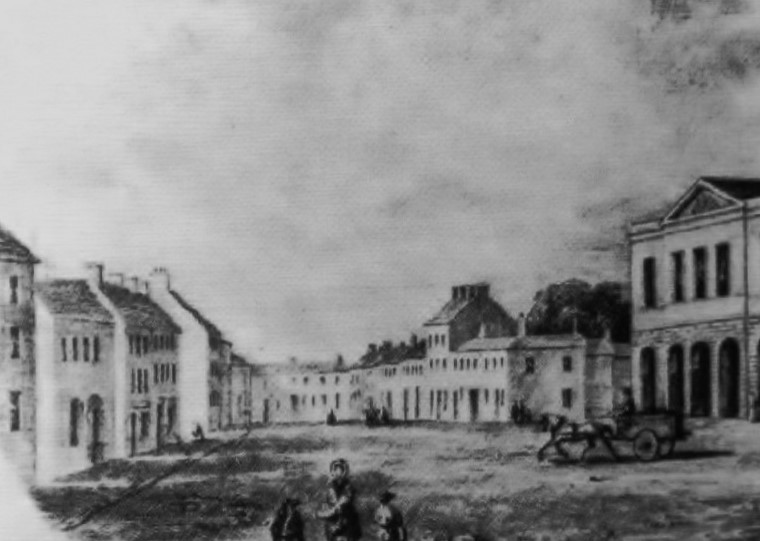
Over the last few years I have used a myriad of sources in conjunction with the Morpeth Roll including newspapers, estate papers and government publications to examine in detail the largest allocation of signatures in King’s County- those at Edenderry. Located just off the Dublin-Galway thoroughfare and on the route of the Grand Canal, in total 182 signatures were gathered in Edenderry in the summer of 1841. Edenderry was owned by the absentee third marquis of Downshire who was praised for the manner in which he had developed the town over the previous three decades. As the travel writer Jonathon Binns would note of Edenderry:
It is delightful to see the comfortable cottages he has provided for the poor of Edenderry, with small gardens in the front and shrubs behind, and neatly painted doors and windows, his lordships property may be generally known by the neatness of the buildings.
In 1841 the town could boast eight public houses, a painter, a nail maker, a plough wright, an earthenware dealer, a shoemaker, a forge, a baker and a general provisions dealer and other small shopkeepers. However, there was simmering political and religious discontent in Edenderry at this time which pitched Lord Downshire’s land agent, Thomas Murray, and the local parish priest and prominent member of the Repeal party, Rev James Colgan against each other. Indeed, in the 1830s it was said of Murray that he would prevail ‘when placed against the priest, or to the crowds of the agitating people’. A religious divide at Edenderry was also evident in the number of riots which broke out in the early 1840s when Orangemen gathered to celebrate the source of the River Boyne, near Edenderry in July. So who were the 182 people who signed the Morpeth Roll at Edenderry and what does it tell us about the make-up of this pre-Famine community?

***
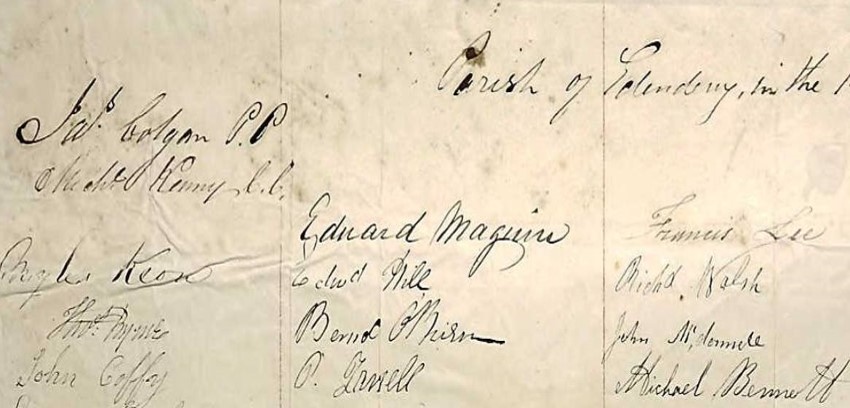
Gathering the Morpeth signatures was overseen by Fr Colgan, the first names signature on the list.
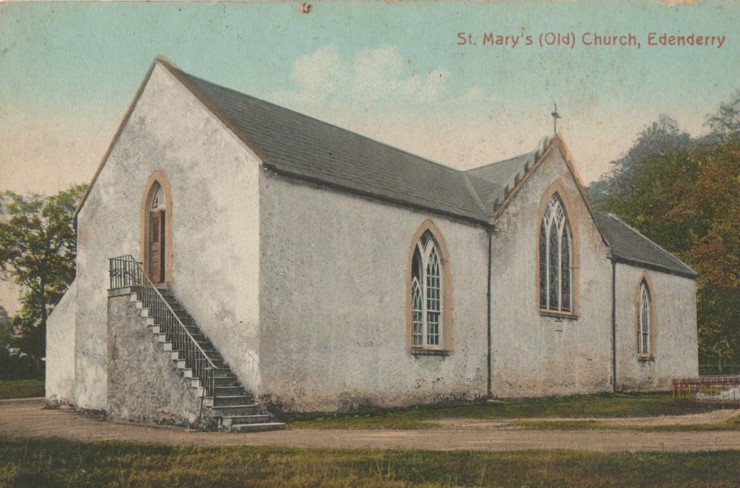
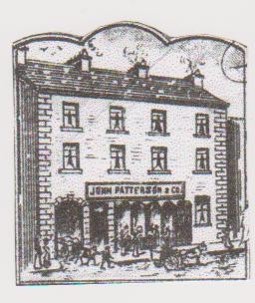
Colgan was a prominent member of the Edenderry Repeal party in the early 1840s, establishing a reading room in the town. According to the Nation newspaper in June 1844 Colgan visited Daniel O’Connell during his imprisonment. In his endeavours at Edenderry, Colgan was supported by Myles Keon, a local hotelier, who was also related to the Patterson family who would play an important role in the Land League almost forty years later. Other known ‘Repealers’ included Francis Lee of Ballyleakin House (described as a supporter of O’Connell by the Freeman’s Journal) and Michael Carmichael collected repeal money occasionally in Edenderry. For some the signing of the Morpeth Roll may well have been there first involvement in local politics. Certainly, those like Charles Jellico would go on to become a founding member of the Edenderry Home Rule club 1876, alongside the aforementioned Myles Keon. Many of the Edenderry signatories were also members of the Temperance movement, which by the early 1840s was very strong in the town and linked with the above political and religious animosity which engulfed the area. Among them was Arthur Keating, a gunsmith who emigrated to Minnestota in 1846. Other Temperance members included the Fox, Farrell, Jellico, Lenehan and Delaney brothers who all signed the document. Of others we know that they were prominent people locally, involved in business. The brothers Joseph & Isaac Rothery who later gave evidence before the Devon Commission in 1844 owned a number of properties on the main street and owned the quarry from which stone for the Edenderry workhouse, built in 1841, was drawn. Likewise, Andrew Burnell owned a quarry at nearby Carrick, while Michael Gilligan MD was an instrumental player in the establishment of the Boys National School which was built in 1835. Others, including Canavan, Holt, Kenny, Malin- are all identifiable through the Downshire estate papers at PRONI, all of whom it appears owned land around the site of the workhouse and from where there was a clearance of tenants in 1838.
Not located on the same page as the 182 signatories from Edenderry but three chairmen of the Edenderry board of guardians feature among the roll. These include Edward Wolestenholme of Newbury Hall, near Carbury, county Kildare; John H. Nangle and Dr Richard Grattan of Drummin House, Carbury. It was no surprise that the latter name was present on the Morpeth Roll and indeed Grattan is worthy of further study. A physician and noted writer, Grattan was present at the first meeting of the Repeal party in 1831; was an organiser of anti-tithe meetings in Kildare in 1830s; signed the William Smith O’Brien petition, 1848; was a member of the Tenant League, 1850; the Home Government Association, 1870 and was present at the first meeting of the Edenderry Home Rule Club in 1876.

One curious feature of the Edenderry names included on the Morpeth Roll is that only four of the 182 would contribute to Famine relief efforts in the town five years later. Does this tell us something about their socio-economic background of these men and how they are affected by Famine? Elsewhere, as Professor Ridgway noted about the roll in general, there are more questions than answers. For example, was James Lenehan the same man who was before the Insolvent Debtors Court in Dublin in February 1840? Likewise, was the ‘quite inoffensive pensioner Hugh McManus who expired in Edenderry on 15 April 1844’ the same Hugh McManus who signed the Morpeth Roll three years earlier? Indeed, even for this writer the quest continues to ascertain whether the John Farrell who signed the Morpeth Roll was in fact my great-great grandfather.

Dr Ciarán Reilly is a historian of nineteenth and twentieth century Irish history at Maynooth University. His publications include Capard: An Irish Country House & Estate (Dublin, 2019); The Irish Land Agent, 1830-60: the case of King’s County (2014); Strokestown and the Great Irish Famine (2014); John Plunket Joly and the Great Famine in King’s County (2012) & Edenderry, county Offaly and the Downshire estate, 1790-1800 (Dublin, 2007).
 offalyhistoryblog