
James Weale was appointed to the position of clerk in charge of Irish land revenue in the Commissioners of Woods, Forests and Land Revenue in 1827. The Commissioners managed the English kings’ estates. His actual position was that of the tenth clerk in the London Office but that did not describe his role in Ireland. Prior to his appointment these lands had been managed by officials in the Treasurer’s Office in Dublin Castle but following the Union of 1800 many Dublin offices were amalgamated with their counterparts in Whitehall. The Woods Commissioners were aware that the lands had been poorly managed in Dublin and were determined to introduce a better administrative structure. Weale continued to live in London but spent some months in Ireland from his first visit in 1826 till he died in Dublin in 1838. Weale had been secretary to Lord Sheffield prior to his appointment as an administrative clerk in the Woods Office in 1810. From 1827 he supervised the sales of many of the Crown’s remaining Irish estates. Further, he was the principal organizer in the few attempts to reform and regenerate life on ailing estates like Kinnitty, King’s County and Kingwilliamstown (now renamed Ballydesmond) in northwest Cork. In his management of these estates, he ran afoul of many of Ireland’s most powerful and influential landowners and encountered opposition from some of the personnel in Dublin Castle who resented the new management from London. Weale’s role in Ireland has been largely misunderstood but mainly ignored.
Weale visited Offaly on a few occasions, mainly to negotiate changes in the leases in Killconcouse, Kinnitty and settle other disputes about rents in north Offaly. On a visit in 1832 he commented on the state of the country. Cholera was then raging, and the courts had ceased functioning. Barristers would not travel, and the country was also in a state of unrest. He still travelled and his travels were not without incident. Once, when on the Post, as he described it, meaning the carriage that took both passengers and the mail, the carriage was attacked in James’ Street in Dublin. The coachman’s whip was grabbed by a mob, and he was dragged from the coach. The guard jumped off the coach and cut off the assailant’s fingers with his sword. The driver and the guard both jumped back on the coach and the journey was resumed without the intervention of any police. Weale’s comment on the incident was “Can you imagine it happening in Pall Mall?”

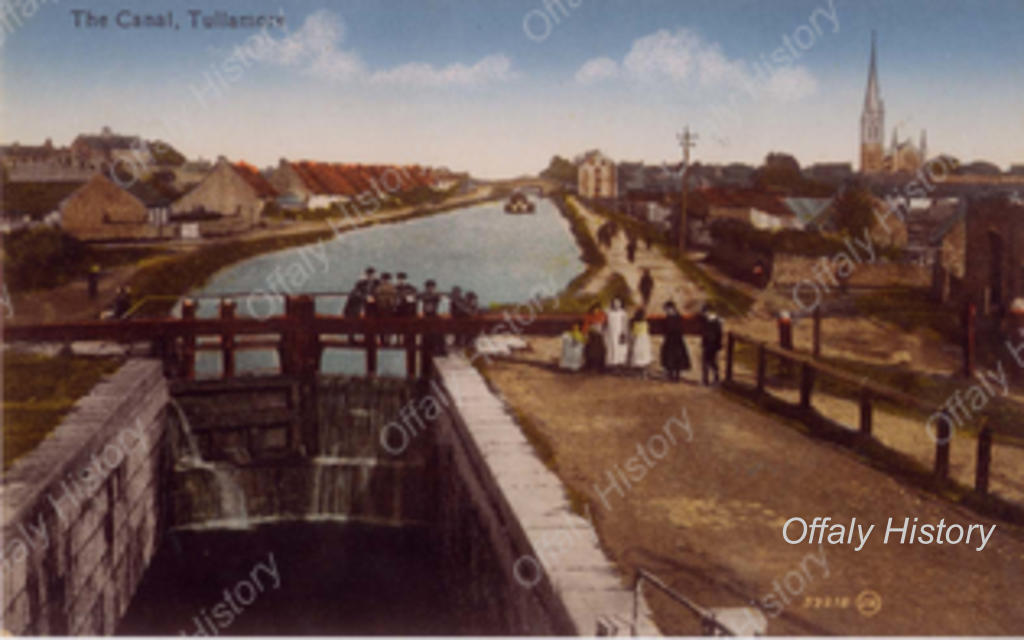
In 1829 he travelled to Tullamore. Unlike judges on circuit, he did not stay with local landlords and his visit was to meet Crown tenants in Kinnitty. .
Weale’s Midland letter
“Lower Gardiner Street,
Dublin,
4th October 1829,
My Dearest Love,
I was sorry to find from your letter of Wednesday on my return herewith that my own dear little Kate (his young daughter) has suffered so severely, and that Tom and Judy had not fared much better. I shall be very anxious to receive your accounts and I hope that they will be favourable to my prayers and assure me that you are all convalescent. I wish you would always on such occasions send for Mrs. Hockley. I have as much faith in that good lady, more than I should have in any family apothecary and I always feel more comfortable when I know that you are in communication with her. Tell the dear child that I was quite delighted at hearing of the progress she was making in spelling and reading and that when I return home, I will buy her two or three more books. Give her 20 kisses from me and a father’s blessing and tell her that I will send her 30 more kisses to be distributed among her sisters and even her dear Mum.
The insurance money has been paid to me … [Further comments on family affairs].

I told you that I proposed taking Mr Mason with me on my last tour. We left this house on Monday morning and posted to Tullamore where we arrived at 8 o clock, dined, and slept. On Tuesday we proceeded to Frankfort, [Kilcormac] where I had appointed all the [Kinnitty] tenants to meet me. They constituted the heads of eleven Protestant families, all respectable people, and almost all dependent on the property which it was my business to tell them they could no longer be allowed to enjoy. I have never had a more painful duty to perform and after spending five or six hours in explanations and endeavours to reconcile them to their fate, I was thoroughly knocked up. They were much more reasonable on the occasion than I would have ventured to hope, which enabled me finally to cheer them up a little before we parted by a promise to strain every part as far as possible in their favour and which I flatter myself the Board will be disposed to sanction as I think all their present expectations may be satisfied without any material sacrifice of revenue. We returned in the evening to Tullamore (about 14 miles) and slept there.
On Wednesday morning after breakfast, we walked over Lord Charleville’s domain about 2 miles distant. A fine park, well wooded, with a decoy pond and deer. The house, a modern built stone castle of which you will find an engraving and description in Brewer’s, Beauties of Ireland [the engraving is of Birr Castle and not Charleville]. I observed many finer grown English oaks which are now somewhat rare in England. We met Lord Tullamore’s and Colonel Marle[a]y’s children in the Park and their gambols carried me away to the new road without first seeing the interiors of the castle.
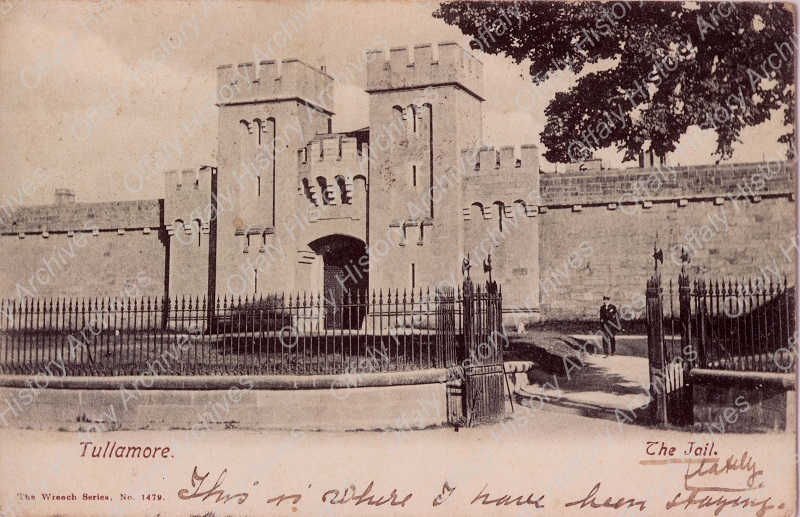
On our way back we inspected the County Gaol, a new building on the plan of that of Limerick. An octagonal centre with four wings and two infirmaries, constructed of beautiful blue limestone. The whole enclosed by a double wall. These buildings are now in the course of construction in almost every county on a scale and in a style of architecture which renders them nearly the most remarkable objects in the landscape.
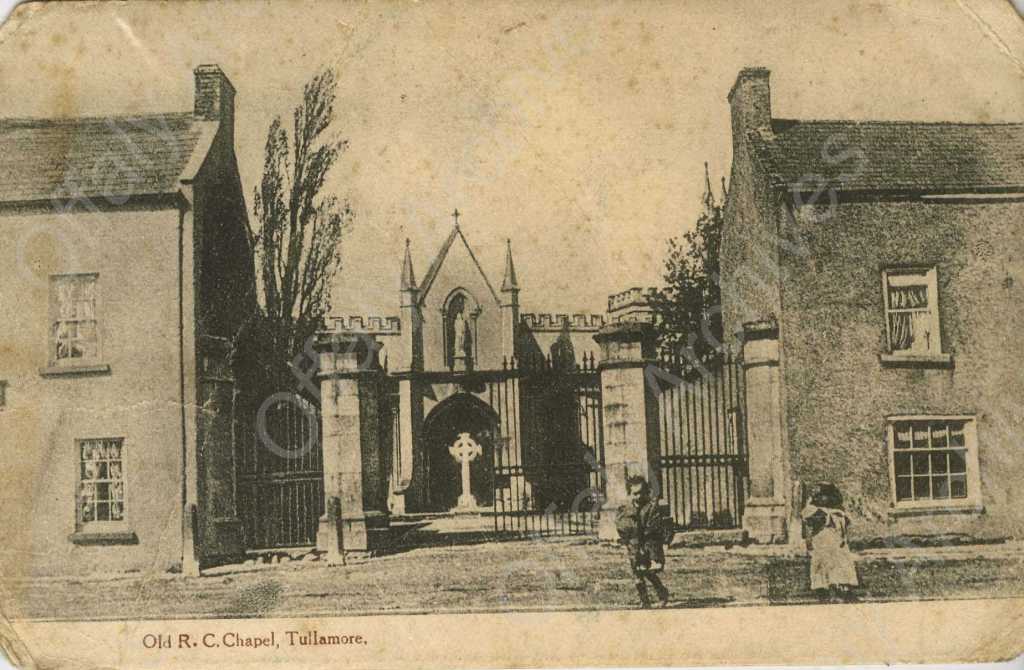
We then inspected the principal Roman Catholic chapel which has lately been augmented to double its former size and received additional ornament, internal and external – the general consequences of the late attempts at proselytism. Tullamore is rapidly an improving town rising in the ruin of Philipstown, the proper capital of the county about 10 miles distant in the consequence of Lord Charleville being a resident at the former, and the principal proprietors of the latter being absent, and perhaps from the contiguity of The Grand Canal which passes close to it. There are extensive barracks but only a party of the 84th regiment at present in in the occupation of them. At 1 o’clock I had to hold a further conference with a deputation from the tenants who had come over in better spirits than I had left them the preceding day and we departed on the best possible terms. . .
On Saturday we returned to Dublin by stage and arrived here about half past six o’clock.
The only good landscape we had was in our passage through The Phoenix Park, Chapel Izod, Lucan (The Strawberry banks) and Leixlip, all within 6 or 7 miles of Dublin. The rest of our route laid in turf bog, or unwooded tillage and pasture lands, generally under the most wretched cultivation. The wheat all carried, the barley, oats, and hay, generally cut, and mostly carried. The grain crops (are) generally good, but in some places the wheat was slewed by the high winds. The exclusive Catholic Schools well attended. The exclusively Protestant, except one at Tyrrell’s Pass, which mustered 43 children, presenting a perfect contrast and necessarily so from the paucity of Protestant families.
At Kinnegad, I found 71 children, in a school established by the Capel Street Society- a Protestant Society for discountenancing vice. Of these males and females 47 were Catholic; and each child pays one penny to six pence a week, according to classes, the master mistress being competent to instruct in bookkeeping, geography, and history. The clergyman and the Priest are both reasonable men and each maintains a steady visitation to the school.
We had very fine weather the whole week – today it has again become stormy, with heavy rain. Mr Filgate and I are the only tenants here. It would be miserably dull if I were less burdened with business. As it is, I find it rather convenient than otherwise. I shall make a one day’s journey this week – but I do not expect to be able to start on another expedition in less than a fortnight. I am in tolerably good condition. Bad bread and the change of water somewhat disordered me on my late journey; otherwise, I might have enjoyed it more than I did. I found William Mason somewhat heavy even in such a ramble – niais (French meaning half-witted, silly, simpleton) and ignorant and bad and to such a degree that, on pointing to a bank of nettles and wild winter celery and telling him it had a particular or=dour when rubbed in the hand, the lad took off his glove for the lesson. The blossom of red clover, he said, he had always thought was wild honeysuckle and half an hour afterwards, I gathered a small blossom of purple thistle, which he then conceived to be clover. However, he is so perfectly well tempered, perhaps sorry, that he bore my quizzing in right good humour and returned today to return a 1,000 thanks, and anxious to make himself useful in copying papers.
I shall desire Bottom (His assistant in London) to send you £40 or more if you wish it. The Haddocks are now in Killarney. I had not heard of Ferdy’s illness. I rejoice at hearing that Phelps is at last likely to be relieved of his Scotch Commander.
God Bless you mine own dearest. It is nearly 2 o’clock and I heartily wish we were under the same roof tree. Ever thine own affectionate,
JW.”
“P.S. I dare say you will find the whole route described on one of the Irish shelves.
Dublin, Lucan, Leixlip, Maynooth, Cloncurry, Kilcock, Innfield, Johnstown, Edenderry, Philipstown, Tullamore, Frankfort, Tullamore, Tyrrell’s Pass, Beggar’s Bridge, Kinnegad, Clonard, Innfield, Kilcock, Maynooth, Dublin.”
[James Weale to his wife in London.]
Weale’s letters to his wife blended a mix of family matters, his health, his moods, contemporary matters of public interest and the current tasks in which he was involved. He was curious about Ireland and the contrast with his English experiences. He commented on O’Connell, politics, landlordism, absenteeism, the lack of a more balanced social structure in the country and even customs and traditions. His Irish letters begin in a very positive manner and the longer he spent in Ireland the more frustrated he became. He became very critical of some of his work colleagues whom he claimed were attempting to impede his work. One matter blighted his time in Ireland. It was a dispute between the Archbishop of Armagh, the Rev John Beresford, and the Crown over the ownership of an estate in Cavan around Bawnboy. It occupied all his time in Ireland and in 1829 he wrote to his wife that; “it was the eternal business of The Primate, which engaged my attention (for) four or five weeks last year and by the perverse obstinacy and trickery of His Grace’s agent it has been made to assume an importance far beyond its value, and to involve the fate of all our future proceedings.” The resistance of one of the most powerful landowners in Ireland was to encourage others to resist and make his life difficult.
His travelling companion to Tullamore was William Shaw Mason who would have been invaluable to Weale. He was the author/editor of the three- volume, Statistical Account or Parochial Survey of Ireland, published ten years earlier and was a little older than Weale. Shaw Mason also had an interest in the Midlands and had published his Survey, Valuation, and Census of the Barony of Portnahinch in Queen’s County, in 1821. He would have been Weale’s ideal travelling companion as they were knowledgeable and interested in the same topics.
During his Irish visits Weale consulted with various scholars who could help him with his research into various aspects of Irish history. When struggling with aspects of seventeenth century-Cavan he consulted William Stokes who was a newly qualified doctor but was also well versed in broad cultural, antiquarian, and historical matters. Stokes house in Merrion Square would later be a hub for many scholars. Weale, in his correspondence, commented that he hated gossip and would prefer his own company to being subjected to boring gossip at dinner parties. The reference to William Mason at the end of the letter presumably refers to one of Shaw Mason’s two sons. Weale engaged him to act as a copy clerk making duplicates of letters and other documents. This was the entry process for many seeking employments in government departments and Weale was obviously providing employment as a favour to Mason senior. His other travelling companion was Henry Brassington who was the principal of a firm of surveyors and land agents who did a great deal of work for the Woods Office and on Crown estates in Ireland generally. Their surveys were of an exceptionally high standard, and they prepared reports on title, occupancy, values, and recommended sale indicators. Working in parallel with the new Ordnance Survey they were the independent sector of valuers and cartographers at the time. Here they were simply rent collectors.
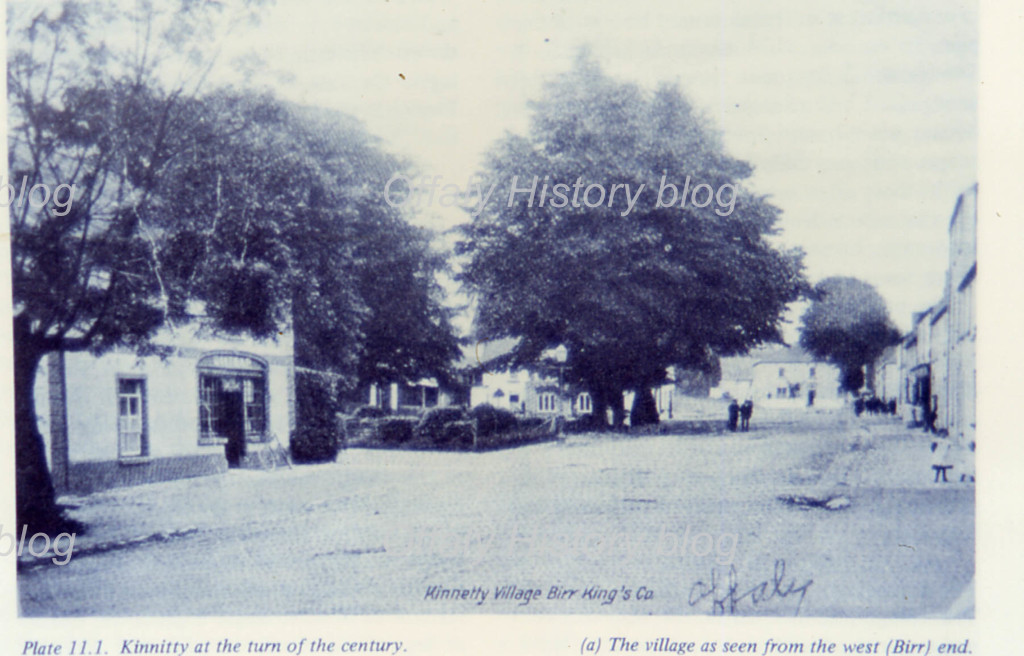
The negotiations he conducted on this trip saw the Protestant middlemen on the Kinnitty estate being given new twenty-year leases. The c.800 acres in Ballyshane and Killconcouse were forfeited in 1688 and remained unsold in 1713 when they were demised from time to time by the Commissioners of Revenue until finally, they were demised to William Cockedge by a lease dated 1st October 1728, for a term that determined in 1793, when all leases granted by those Commissioners ended. Weale’s task was to bring them back into Crown control. He worked out new leases for 12 head-tenants for a period of 21 years from 1829. That brought them to the end of the Great Famine but by then the occupying tenant farmers were in utter destitution and were removed by a Crown subsidized emigration scheme. The estate continued to be surveyed and in 1852 the Woods Commissioners again published extensive reports on these lands that discussed the suitability of these middlemen to continue. They included the Manifold family, one of whom was the land agent for other landlords who was murdered near the Blue Ball in the 1850s. The Crown finally withdrew from these lands in Offaly and the lands were sold off to Loftus Henry Bland, M.P. in 1855.
The other estates Weale was involved in on this trip were Castle Hyde near Kilbeggan and the Featherston’s land adjacent to it. Though he does not mention Ballyburly he would also have known that the lands around Croghan Hill were also Crown lands granted to the Wakely family in the 1560s. The Wakelys were in the process of buying out the Crown reversion to those lands in the 1820s from the Woods Commissioners.
Weale’s role in Ireland as the effective agent for the Crown’s lands was a significant one. His knowledge and expertise as an observer of various matters in Ireland was also recognised and he was called upon to give evidence to a number of Parliamentary Committees on aspects of Irish affairs. His role of expert witness at these hearings was a recognition of his knowledge of matters relation to Irish land, estate management and poverty. His role has been largely either ignored or misunderstood by Irish historians and geographers.
His letter from Tullamore is one where matters were calm and moving relatively smoothly. Not all his trips were as pleasant. He travelled to northwest Cork to the mountains around Ballydesmond in 1828 and stayed in cottages of some of the poorest tenants for days when the weather deteriorated, and he had no alternative. The following year some of his hosts were prosecuted for the crimes of unlawful assembly, murder, and outrage. Weale could not say if they were guilty or not, but in his own words, his life for the space of two days was in the keeping of the same “miserable accused wretches”. They had travelled over two or three miles of bog and moor to get him a piggin of milk and a hatful of cold potatoes. He saw the concession of Catholic emancipation as inevitable and could not believe that “official people” were so ill informed of the true state of the country. The prosecutions against the peasants from the Ballyhooley mountain failed. Weale’s reaction to the failure of that prosecution was that it would prevent a repetition of the horrible outrages on society and lessen the chances of 500 Whiteboys at the mouth of every road in “that region of misery and oppression”. Weale foresaw a growing crisis not of famine but of unrest. “It is not in the power of the law or the sword to restrain the barbarous workings of human passions, while the creatures whom they excite are left in the horrible condition in which that people now are.” He was referring to the abject poverty, not only, of the inhabitants of the Ballyhooley Mountains in Cork but also of other areas he had seen like the Beara Peninsula. He wished politicians would do as he had done and travel to the distressed areas. He wished they would go with him regardless of the lice and be able to bear “fatigue and mouth privations” and be disposed to sympathise with human suffering then and only then would politicians understand Ireland.
Weale was a man of high principles and was appalled by much that he saw in Ireland. His official communications were moderate and temperate but in his letters to his wife he showed his true feelings on many matters. Though his role was to manage Crown Estates in Ireland he was deeply critical of officials in Dublin, Irish estate management and the role of landowners. In 1828 he wrote to his wife on Christmas Eve. He lamented the fact that he had made little progress in his tasks though working literally day and night. No remuneration could compensate for the worry, anxiety, and labour that his job demanded, he wrote. His work in Ireland even by 1828 had “excited a good deal of clamour and misreputation” that he claimed were likely to produce a good deal of ire and very probably in Parliament. His predictions were accurate. His frustration arose from the lack of support he received from officials in Dublin as he attempted to manage closely the Crown lands. “Why not let the whole business go to the Devil – for nothing shall prevail on me to enact again the part I have hitherto acted?”, he asked, when he feared a lack of support from fellow officials.

In another letter to his wife, he outlined his pessimistic views;
“In my opinion, there remains but one effective remedy (to Irish problems), and that will not be taken, because it would be a violation of the laws of property, because it would be revolutionary, and prescribed by despotism – and it would be so – but, it would be no violation, but a proper exercise, of a higher law than all the laws of property, and from which alone they spring. Property is the creature of the law, and if the duties it attaches to its possession are not performed, surely the entire social frame is to be sacrificed to the barbarous selfishness of a few individuals. In short it is the settled conviction of my mind that, until a large proportion of the present proprietors be ousted of their possessions, there will be no permanent peace in this country; and whether it be effected by an assessment for the relief of the unfed, unclothed, and always distressed population, or by their suspension from the gallows tree, it would not draw a single drop from my lachrymal glands, so abominably hateful in my eyes are the entire race if those who now call themselves Lords of the most significant landscapes I have seen.
So, with my prayers for a new generation of masters, and my best blessings on each and all of you, good night, God’s Blessing be with you, J.W.”[1]
Weale grew to despise some Irish landlords and writing in the late 1820s, he wanted a poor rate to be imposed on them. For others, he believed that they could never be reformed, and he even mentions the gallows as a solution. Coming so closely after the French nobility had been brought to the guillotine in the 1790s, these were indeed revolutionary thoughts especially for a Crown representative who had the specific task of managing the monarch’s lands. The comment that “Property has its duties as well as its rights”, was attributed to Thomas Drummond in 1838 when the Poor law was introduced but Weale expressed the same thoughts a decade earlier. The Poor Law came too late to prevent a national catastrophe.
Weale was a complex character and his role in Ireland a difficult one. What shines through in his personal letters is his sympathy and empathy with the Irish poor. In his private letters he makes no attempt to hide his true feelings on various matters. His humour does not shine through, he was essentially attempting to manage the estates for the Crown in a humane manner, but he was appalled by the mismanagement of Irish estates generally.
 offalyhistoryblog