

Killaderry civil parish, is part of the ancient territory of Clann Colgain which was made up of three tuaths. The parish lies in an area which splits Kilclonfert civil parish into two parts and has the town of Daingean at its Centre.
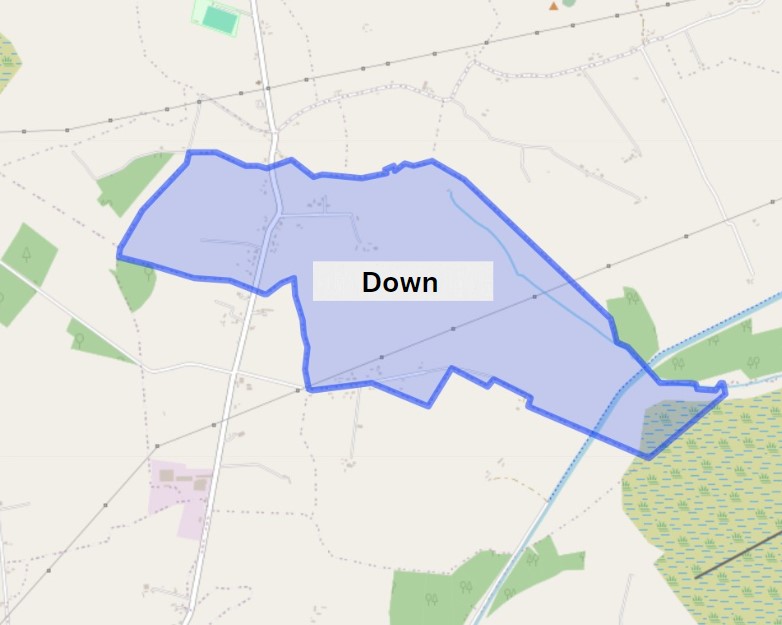
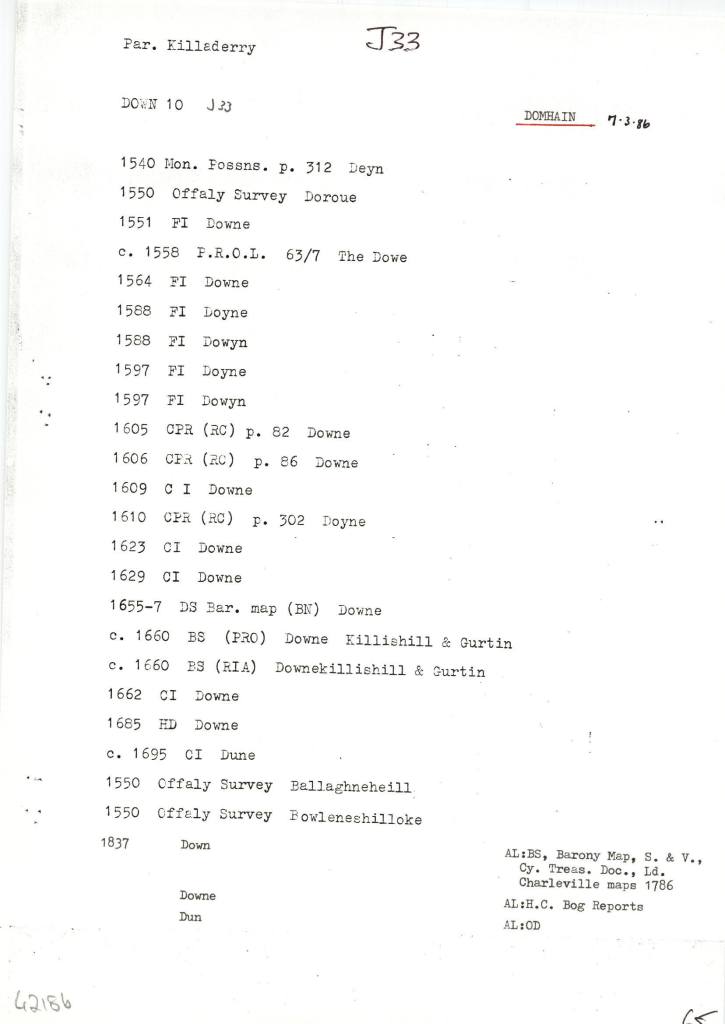
Down is in the Electoral Division of Mountbriscoe, in Civil Parish of Killaderry, in the Barony of Lower Philipstown, in the County of Offaly The Irish name for Down is Domhain meaning Deep.
Down townland has a possible burial mound here and there is also a platform ringfort in the townland which is 26 metres in diameter and enclosed by a slight bank. [1]
| Townland | Area | Pop.in 1841 | Pop. in 1851 | No. of Houses in 1841 | No. of Houses in 1851 | Pop. in 1871 | Pop. in 1911 | No. of Houses in 1871 | No. of Houses in 1911 |
| Down | 445 1 38 | 55 | 56 | 9 | 10 | 50 | 18 | 8 | 6 |
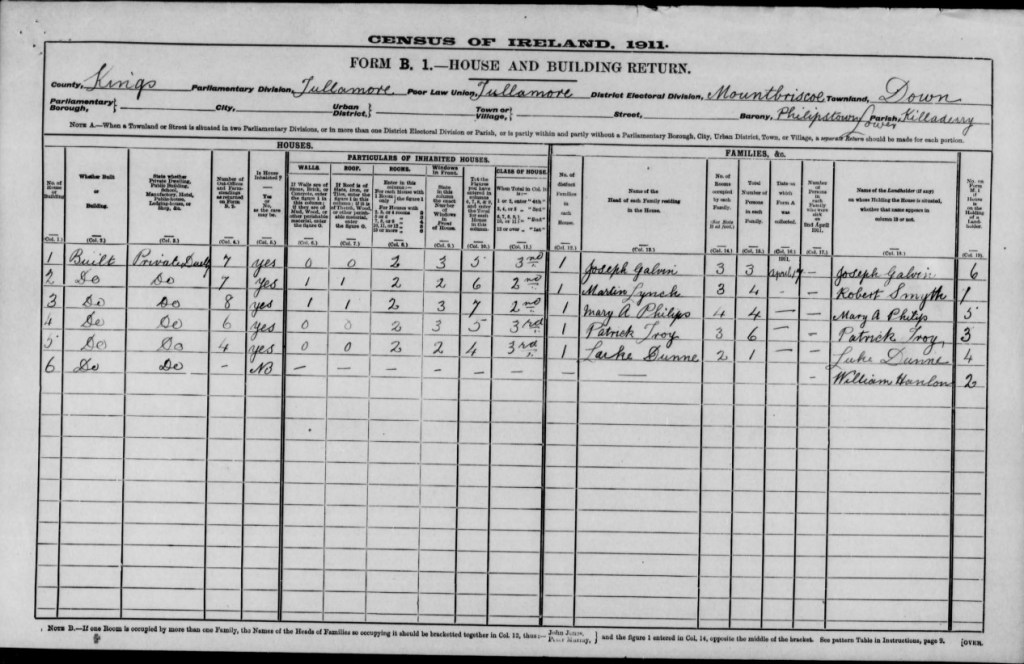
In 1911 Down had one of the lowest record of houses in the area, during this period the household returns and ancillary, shows us that there was 6 buildings all of Private Dwelling, with all inhabited, with classes of houses between 3rd and 2nd. Age ranging from 4-63. Between 1841 and 1911 the population decreased by 37 people. Leaving 18 residents at the time. Here are some of the families that occupied these buildings during this time:
| Class of House | Surname | Religion | Occupation in House | Family members |
| 3rd | Troy | RC | Farmer | 6 |
| 2rd | Lynch/Lynam | RC | Herd/Servant | 4 |
| 2nd | Philip/ Kidd/Dunne | RC | Farmer/ Labourer | 4 |
| 3nd | Troy/Colgan | RC | Farmer | 6 |
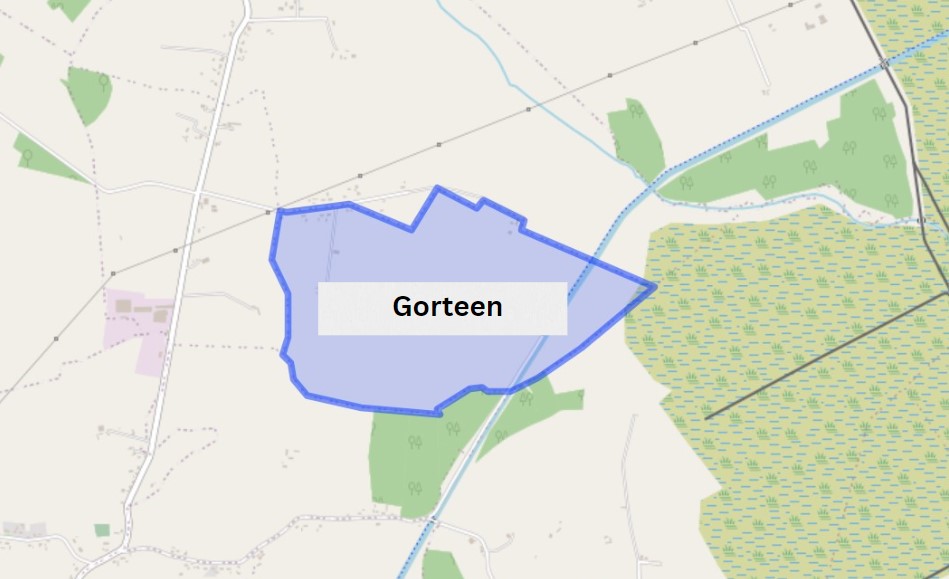
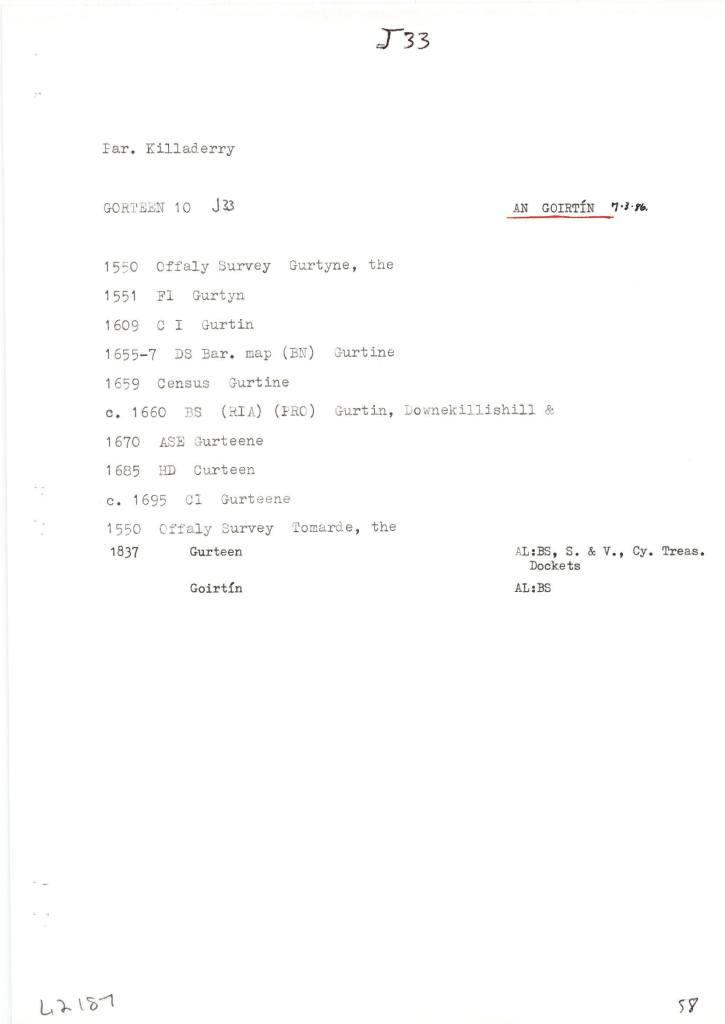
Coming along the line we reach Gorteen townland, situated in the Electoral Division of Mountbriscoe, in Civil Parish of Killaderry, in the Barony of Lower Philipstown, in the County of Offaly The Irish name for Gorteen is An Goirtín It follows the line from Tullamore to Daingean. Geashill is part of the ancient territory of Ui Failghe of the O’Connor chiefs. It is known for its archaeological heritage. It has a large number of ancient sites such as ringforts and enclosures.
Below shows examples of ringforts and enclosures that can be found around Ireland, These landscapes also show a record of the changing landscape and religious beliefs of the prehistoric and early historic people[2].
| Townland | Area | Pop.in 1841 | Pop. in 1851 | No. of Houses in 1841 | No. of Houses in 1851 | Pop. in 1871 | Pop. in 1911 | No. of Houses in 1871 | No. of Houses in 1911 |
| Gorteen | 249 1 29 | 49 | 34 | 9 | 6 | 29 | 18 | 4 | 4 |
In 1911 Gorteen had one of the lowest record of houses in the area, during this period the household returns and ancillary, shows us that there was 4 buildings all of Private Dwelling between 1871 and 1911. The population decreased by 31 people. Leaving 18 residents at the time.
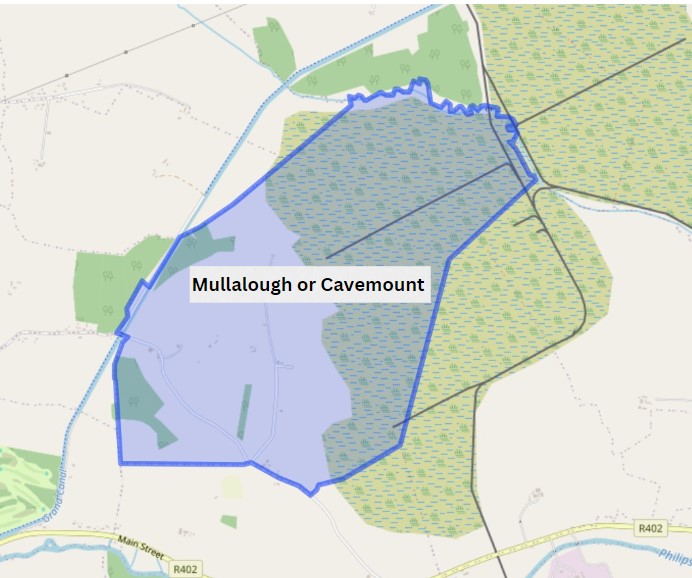
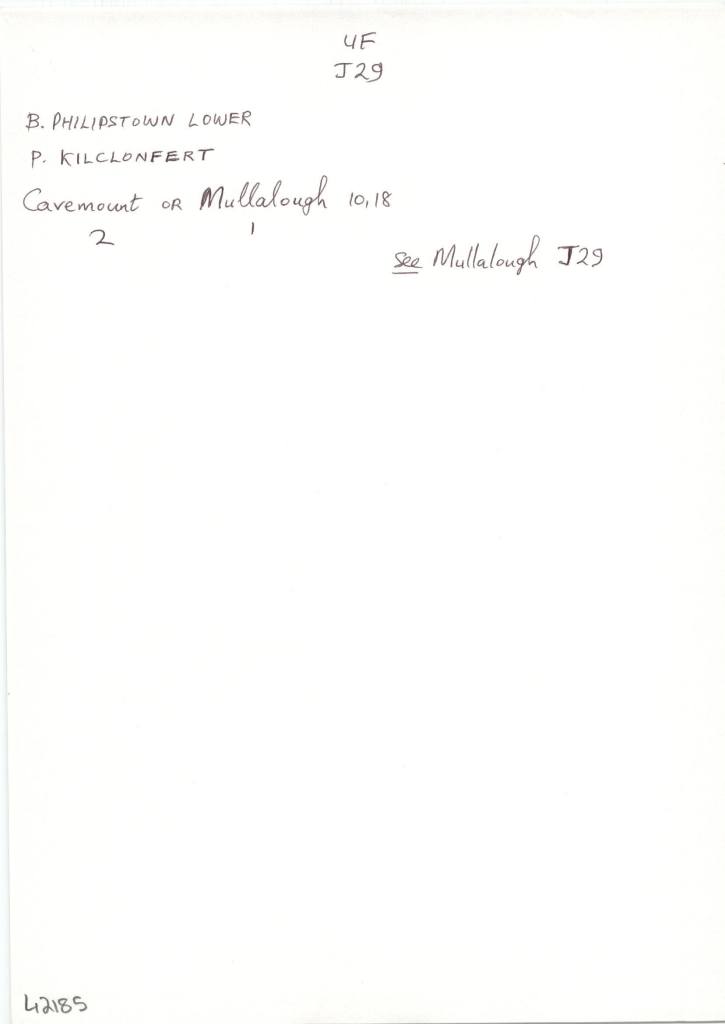
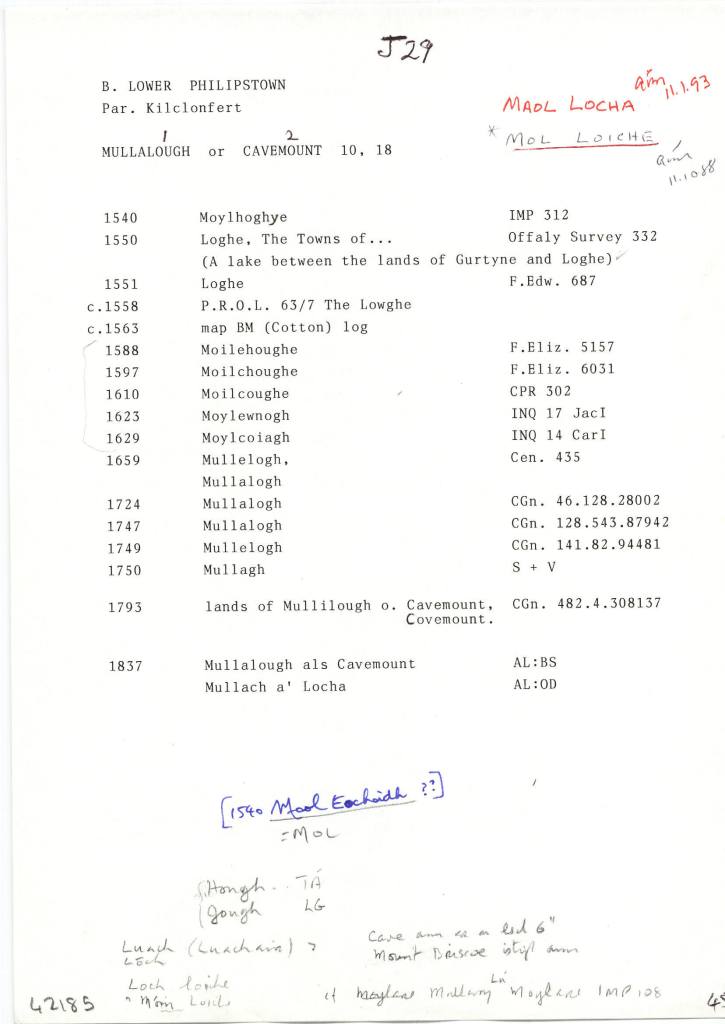
Next we come to Mullalough or Cavemount is in the Electoral Division of Mountbriscoe, in Civil Parish of Kilclonfert, in the Barony of Lower Philipstown, in the County of Offaly
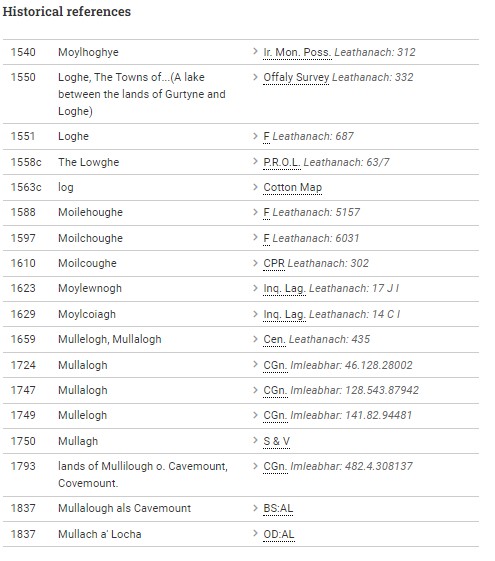
The Irish name for Mullalough or Cavemount is Maol Locha meaning Narrow Lough.
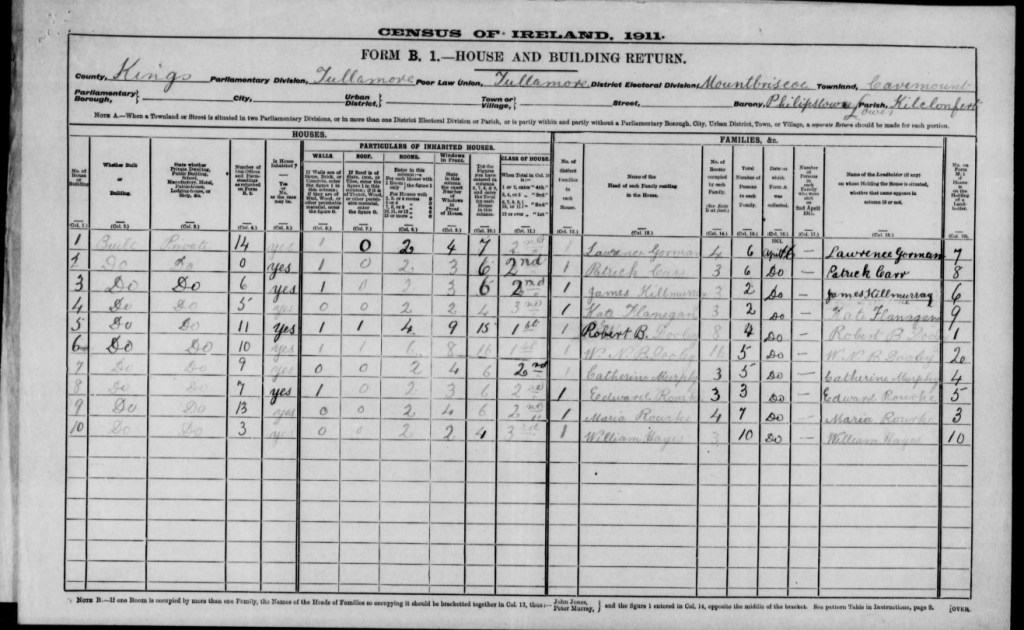
In 1911 Mullalough or Cavemount had 53 people on record living in the Mullalough area during this period. The household returns and ancillary, shows us that there was 10 buildings all of Private Dwelling between during 1911. These ranged from 1st 2nd and 3rd class of houses. The number of each person in the homes ranged from 2 up to 10. Age ranged from 1-83, with farmer been the most popular occupation at the time.
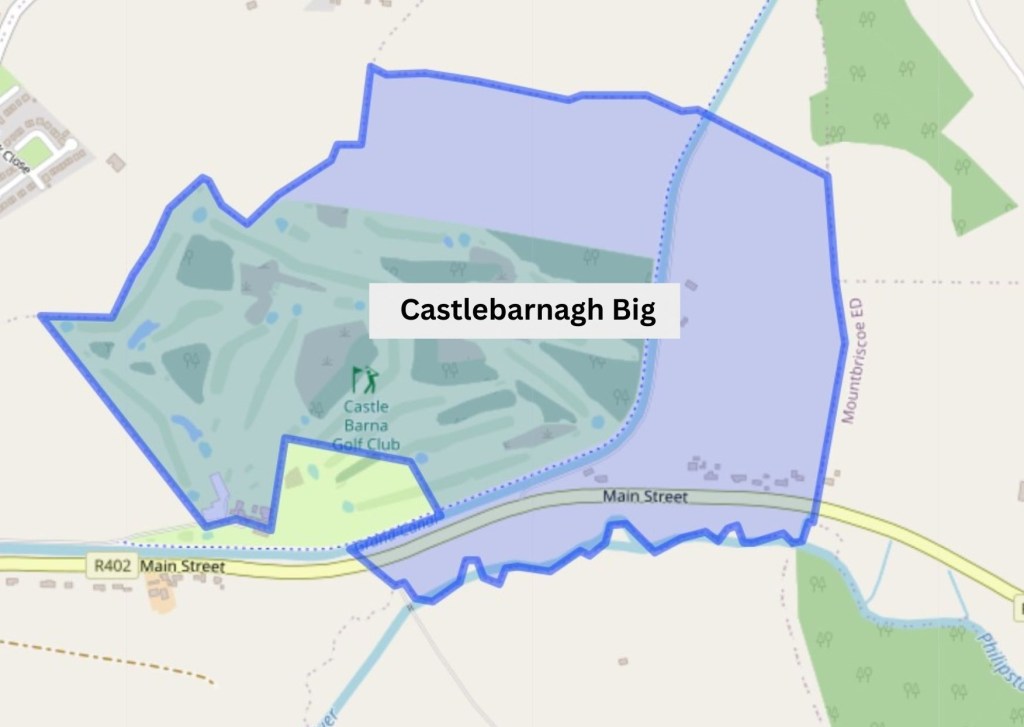
Next we come to Castlebarnagh big and little. The Grand Canal to Philipstown was completed in 1797. It was a major boost for the town at the time, as it acted as a terminus of the canal for both directions, Dublin to River Shannon. It helped generated more trade for the passengers traveling by boat and to the local people of Philipstown at the time. It generated more opportunities for locals to open shops, hotels and day & night canal inns[3].
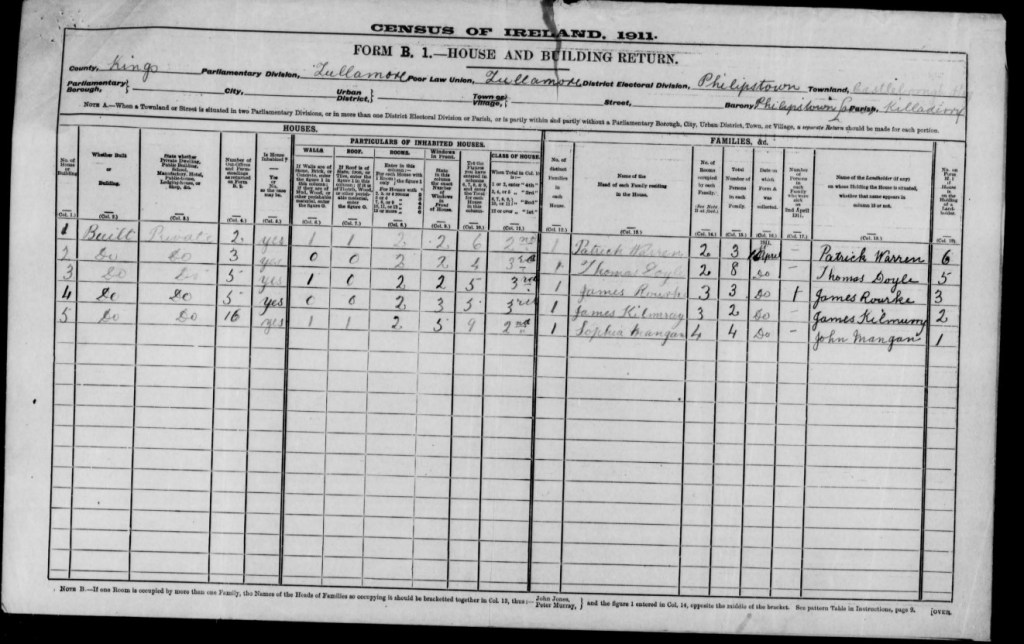
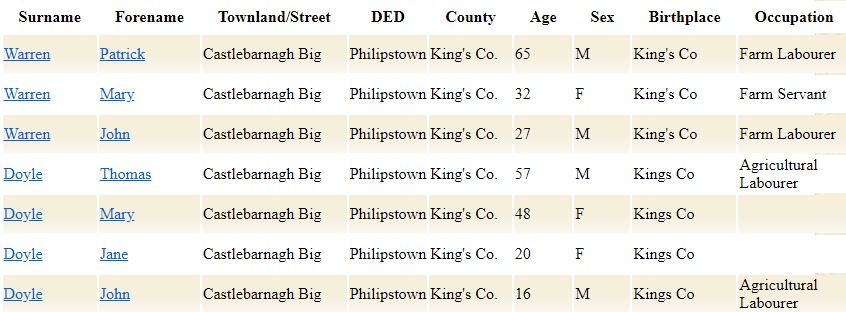
Townland: Castlebarnagh Big. The Irish name isCaisleán Bearnach Mór, meaning Large Gapped Castle .Civil Parish of Kiladerry, in the Barony of Lower Philipstown.
In this townland you will find a site of the castle names castle Barnagh, you will find this castle situated on a rock outcrop. All that remains of this once beautiful building is a twenty metre square area which is defined by an earthen bank.
| Townland | Area | Pop in 1841 | Pop in 1851 | No. of Houses in 1841 | No. of Houses in 1851 | Pop in 1871 | Pop in 1911 | No. of Houses in 1871 | No. of Houses in 1911 |
| Castlebarnagh Big | 220 1 21 | 37 | 55 | 5 | 11 | 14 | 0 | 3 | 0 |
Philipstown now known as Daingean, was renamed in the late 15th century. Was founded by Queen Mary, and name after her Husband at the time “Philip”. When coming into Philipstown we pass Killeen Bridge heading towards, Molesworth Bridge, here we see some of the structures built during the booming period within Philipstown, The old Canal Storehouse beside Molesworth Bridge, the Courthouse, prison, chapel , one church and a few hotels and inns for travelers when they would pass on the passage boats daily[4].
As you come along from Moleworth Bridge, you will find the wall of an early fort. This fort stood on the site of an old stronghold of the O’ Connors. . Inserted into the walls on the hall doors were two symbols carved from stone, representing the “Arms of England”. One which has dated back to the late 15th century. Had a crown and the right hade two crosses[5]. Today both of these historical pieces can be found in Daingean branch library and one was also displayed at Castle Barnagh golf club, which has now permanently closed.
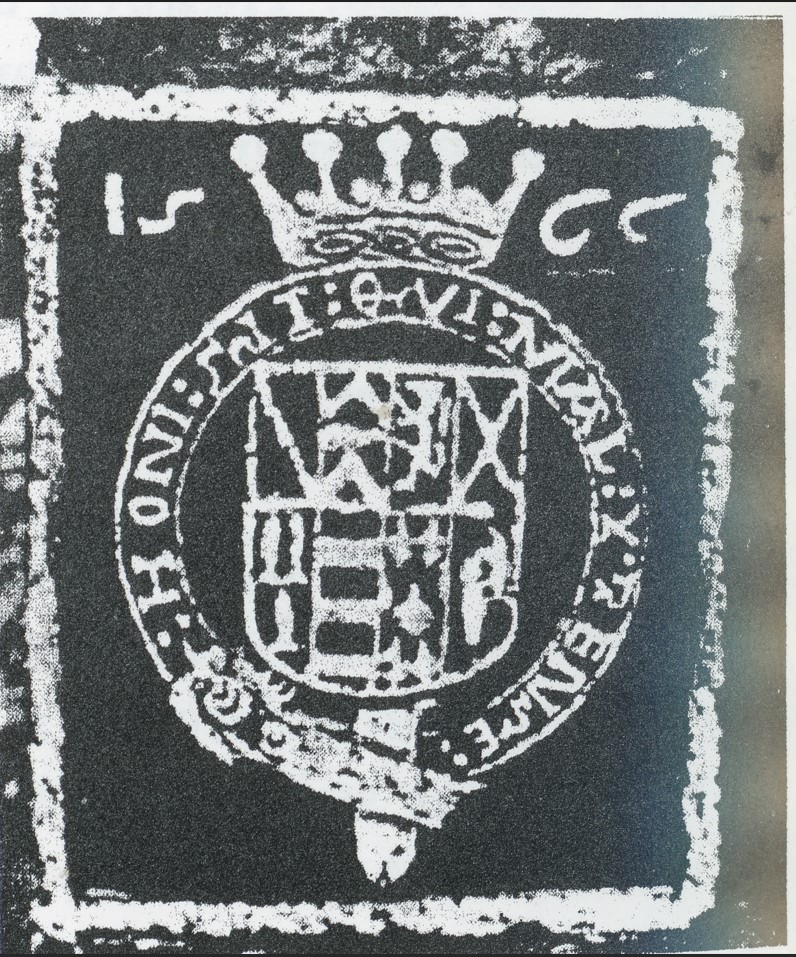
Don’t forget to check out the Daingean Library 3D Virtual Tour co, to have a look at the armorial stone, picture above.
Coming back along the Grand, we come to Molesworth Street, paved in history dating back to the 18th century, first we come to St Conleth’s Reformatory. First built to act as a Calvary Barracks back in the day and later converted into a convict prison for the next 10 years. Most of its prisoners saw their last days here and were buried in unmarked graves in the local Graveyard.
Transport along the way:
With the construction of the Grand Canal completed in Philipstown in 1797. It brought with it a new way to transport goods from different townlands along the canal line. With Philipstown been the terminus of the canal for both directions, Dublin to River Shannon, The Grand Canal was especially useful during the Second World War, as turf was easier to transport along the canal, Turf producers used the bring turf from the bogs by horse and cart to the canal where it would be loaned onto a barge and transported down the line. That practice had been ongoing since the canal was built to Daingean in 1797.
As well as fuel, goods were also carried along the line, farmers would use the boats to collect their beets, and theses would be delivered to Carlow factory. Later during the process, the beet pulp which is the byproduct from the processing of sugar beet, would be sent back to the farmers by boat, this was then used to feed livestock, such as cattle and sheep during the colder months[6].
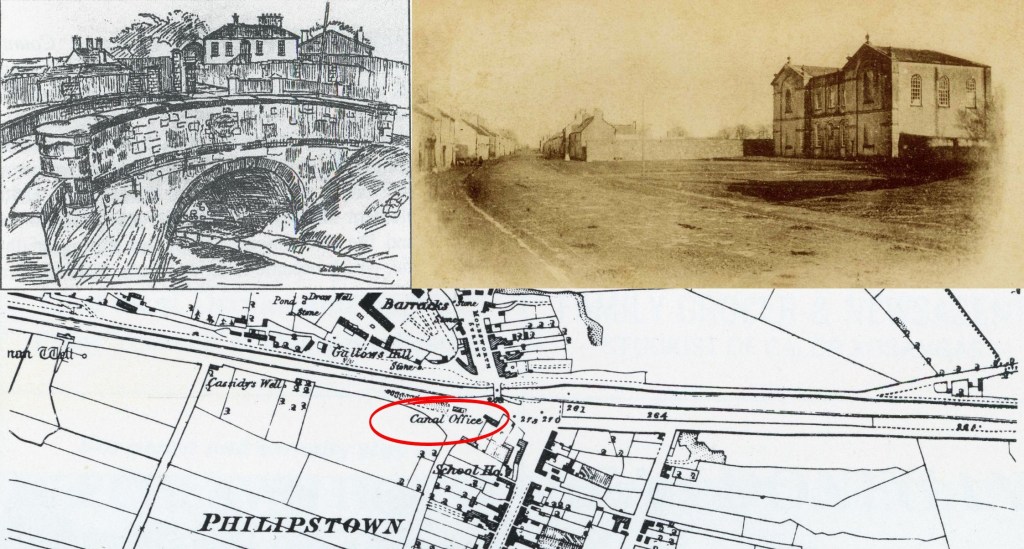
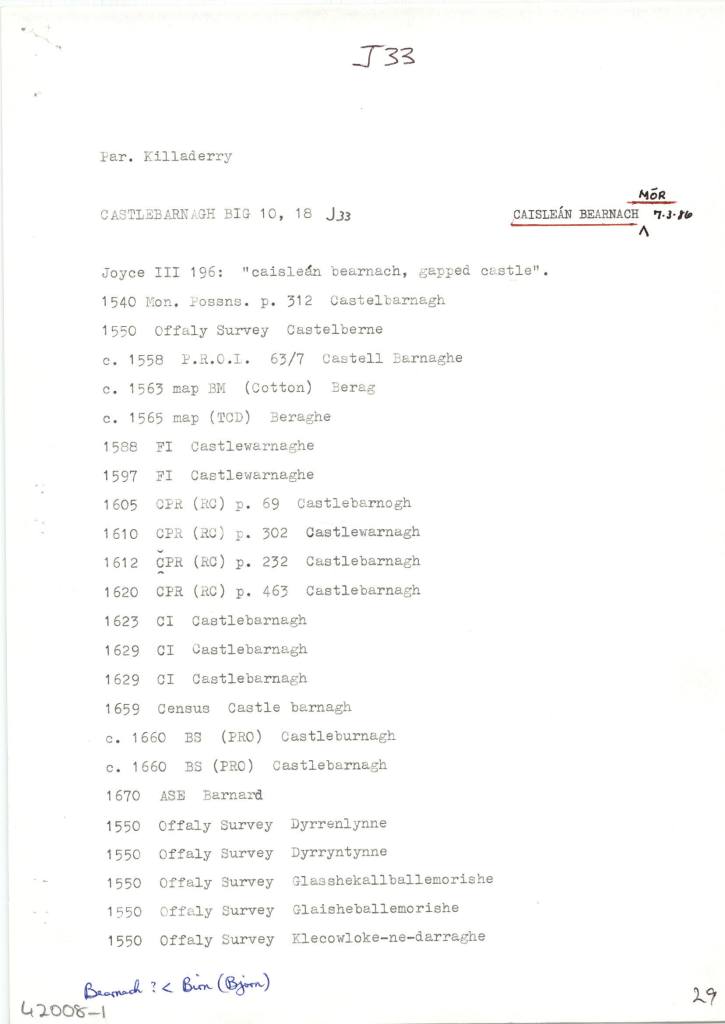
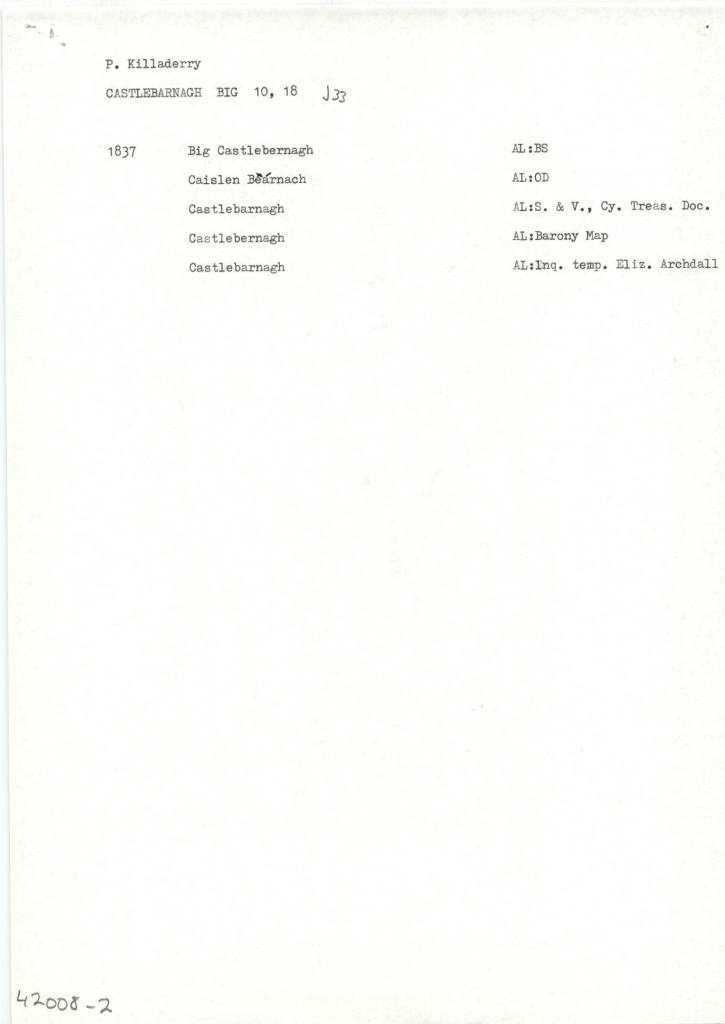
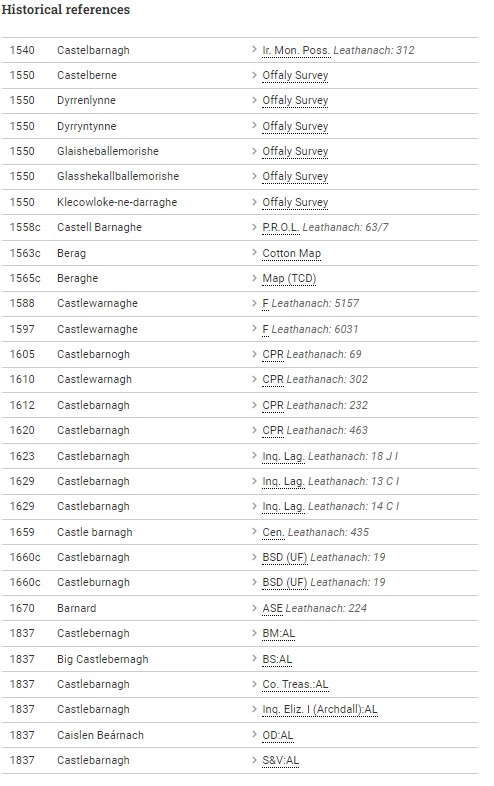
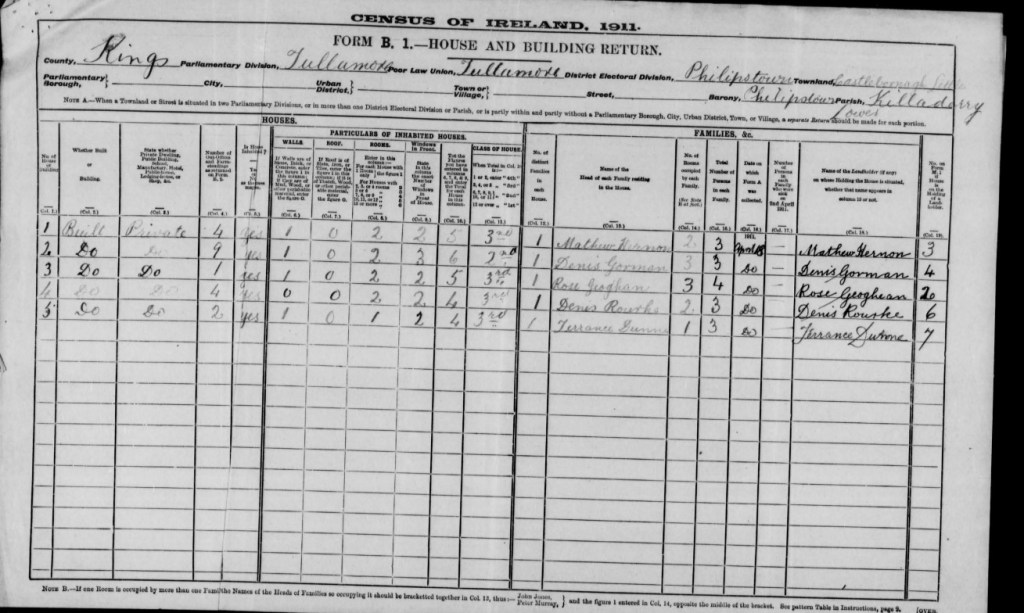
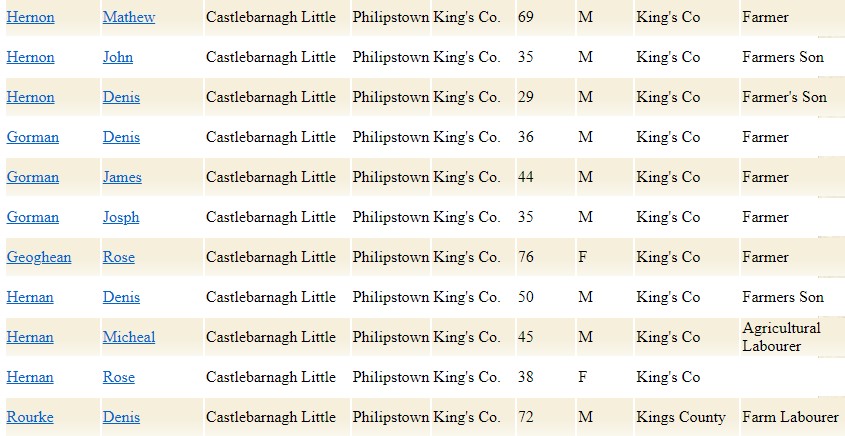
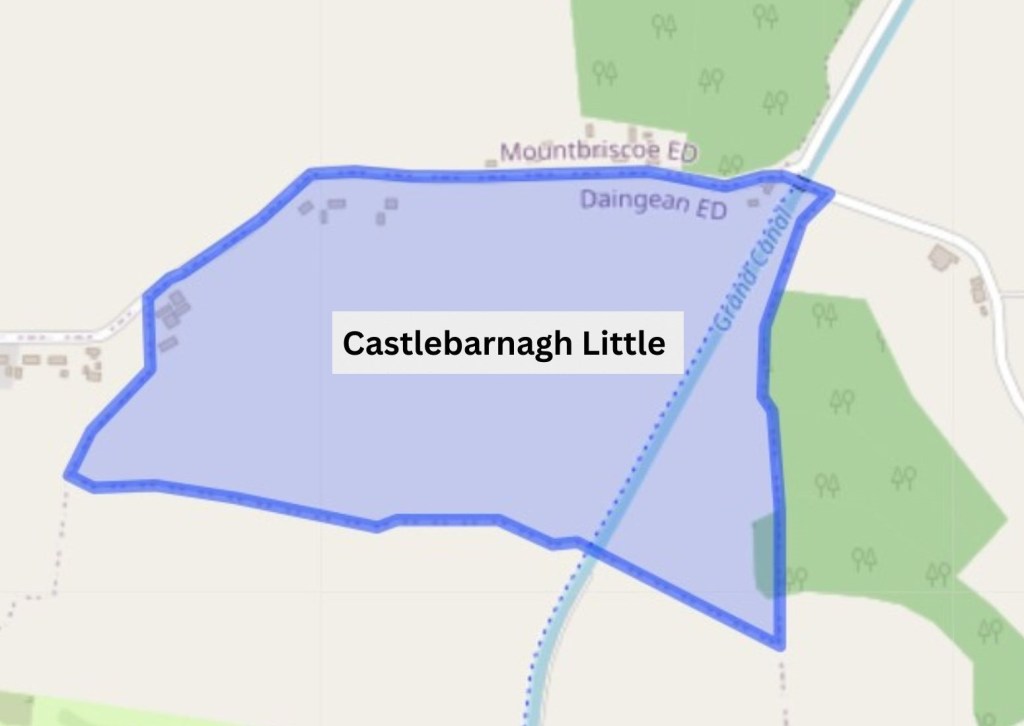
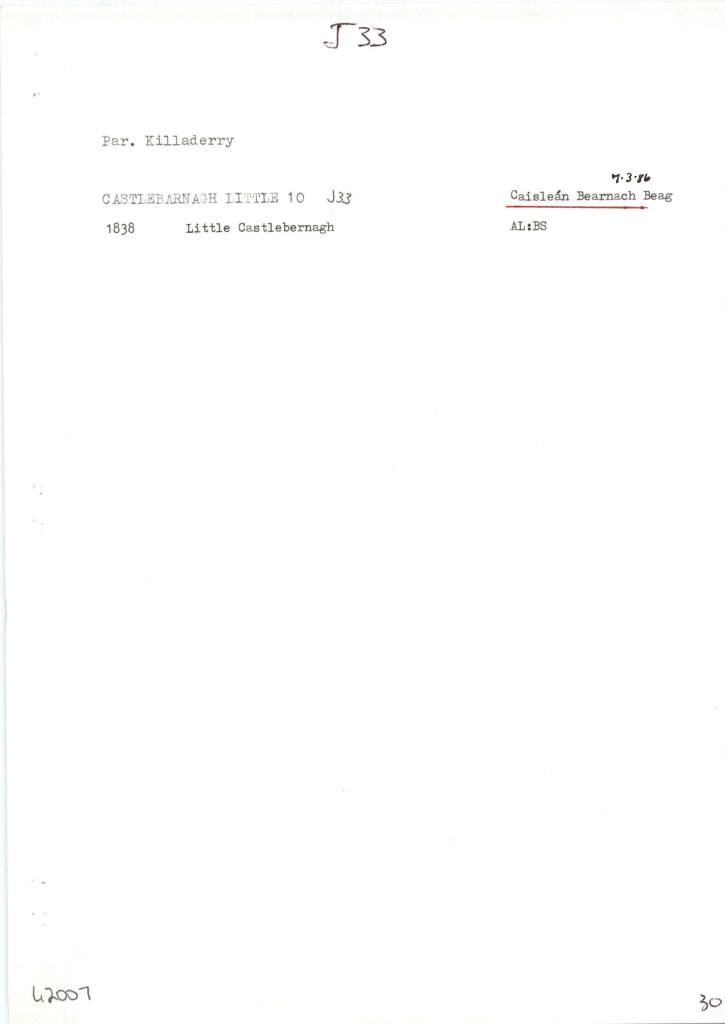
Next Townland we come to is Caslebarnagh Little. The Irish name is Caisleán Bearnach beag meaning small gapped castleCivil Parish of Kiladerry, in the Barony of Lower Philipstown.
| Townland | Area | Pop in 1841 | Pop in 1851 | No. of Houses in 1841 | No. of Houses in 1851 | Pop in 1871 | Pop in 1911 | No. of Houses in 1871 | No. of Houses in 1911 |
| Castlebarnagh Little | 74 1 5 | 44 | 20 | 7 | 4 | 53 | 0 | 10 | 0 |
Local History: The story of A saintly priest
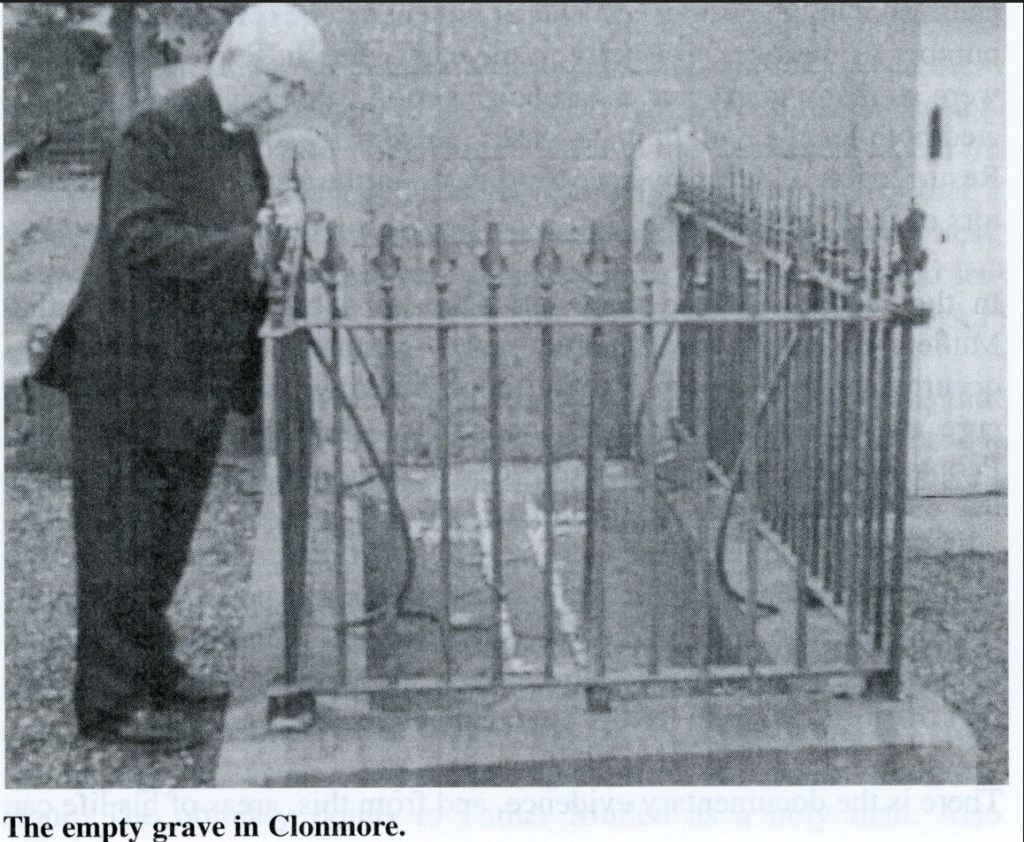
Fr Andrew Mullen, A local priest who was reputed to have a saintly and healing capacity among the poor and sick community in the late 18th Century. During his short life he devoted his time to caring for people. After his passing at just 27 years old, from a battle with fever. Two hundred years later after his sudden passing he is know locally and worldwide as a great symbol of prayer, for cures for illnesses[7]. Fr. Andrew Mullen, was laid to rest in Killaderry Graveyard, after his body was removed from his original burial place in Clonmore, The movement of the body to Daingean, was seen as a shock to the people of Clonmore, who still visited the empty grave site years after he was removed, the practice of taking clay from it could still be seen. To stop this a high iron railing was placed around the site and a hard surface poured over it with a cross. The burial place at Kiladerry is still a place of reverence for many people.
On the body’s return to Daingean, it was told that his body was seen to be incorrupt, this was taken as a sig by local people that Mullen had ‘gone straight to heaven’.
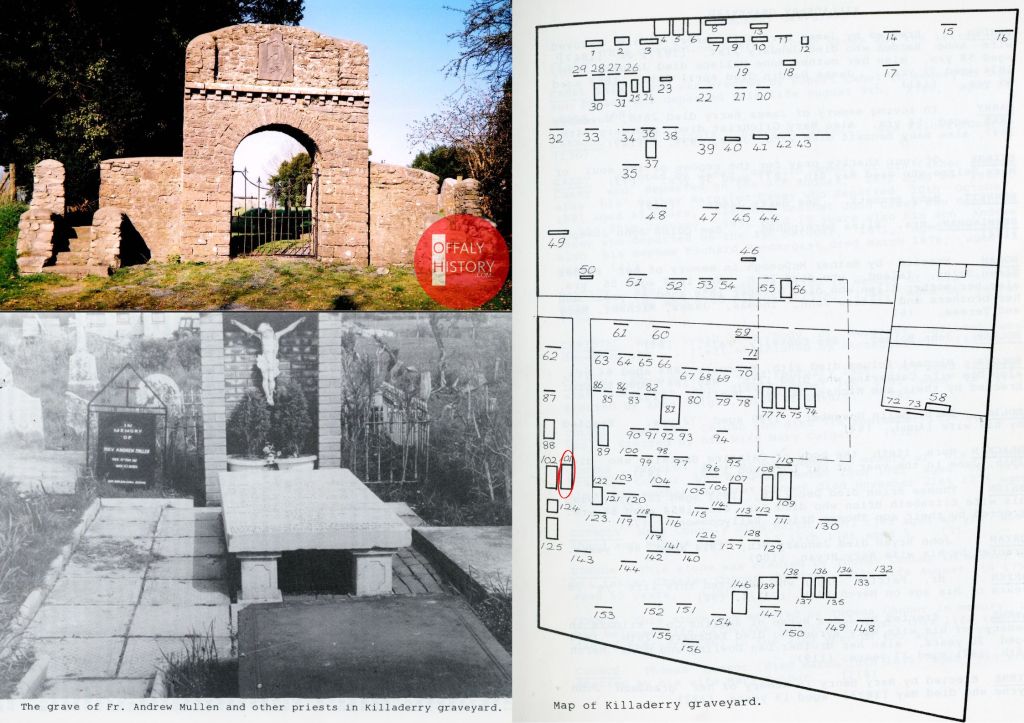
Today the devotion to Fr Mullen, is still seen as strong as it was back in the early 19th century. Pilgrimages are still carried out and people still gather at his tombstone for prayer to cure illnesses. Many have even slept under and on top of his grave slab, over night. As it is as seen as a place where God can be found. Down the years stories have been told of people who have been cured of many sickness, including sciatica, headaches, fevers and arthritis[8].
Join us next as we make our journey to Ballycommon
[1] Offaly through Times & Its Townlands. Thomas Lee. Published: 2009 Ottait Publishing, Pp114-120
[2] Ireland’s archaeology from the air. Tom Condit. Published: Town House and Country House. 1997,P15.
[3] See “Notes on the history of Daingean”. John Kearney. 2003. Pp1-2
[4] “Daingean Pages from the pass”. John Kearney. 1988. P12-13.
[5] See “Notes on the history of Daingean”. John Kearney. 2003. P2
[6] See “ Grand Canal 200. Writings & Memories from Daingean. P9.
[7] Offaly Tombstone Inscriptions. Daingean Graveyards and the story of Father Mullen. Publisher Offaly History Society 1985. John Kearney. Pp 1-28
[8] See “A light from the Grave. Father Andrew Mullen 1790-1818. Publisher Not Known, 2000. William Dempsey, Pp 31-133. Copy in Offaly History Centre Library
 offalyhistoryblog