
As darkness fell on the evening of 22 July 1806, the clatter of horses’ hooves and the sharp barking of orders in German temporarily drowned out the moans of wounded men and the confused murmurs of bewildered bystanders. This scene was not a foreign battleground, but the Irish town of Tullamore, in the then King’s County. The casualties resulted from a riotous action between representatives from two widely-separated portions of the domain of George III – Irish militiamen and soldiers of the King’s German Legion, a corps raised from exiled Hanoverians after the fall of the Electorate of Hanover to Napoleon in 1803. These two nationalities were thrown together in the spring of 1806, when units of the Legion were sent to Ireland to serve as garrison troops.
In March 1806 six infantry battalions – the 1st and 2nd Light Battalions and 1st, 2nd 3rd, and 4th Line Battalions – with the 1st Hussars and 1st Heavy Dragoons, a force of nearly 5,000 officers and men, were dispatched to Ireland after an abortive British expedition to northern Germany. One of the most experienced units, the 1st Light Battalion, numbering just over 600 rank and file, was stationed in Tullamore with one squadron (120 men) of the 1st Hussars of the Legion. These troops arrived in April, and for nearly three months they enjoyed amiable associations with the townspeople.[1] Trouble came to Tullamore in late July, when four companies of light infantry Militia passed through town on their way to join their respective regiments – Londonderry , Limerick County, Monaghan and Sligo. The progress of these 400 men found them in Tullamore for the night of 22 July.[2]

There was no great friendship between these Irish troops and the members of the Legion. A few weeks earlier, one of the militiamen had his backbone laid bare by flogging for stealing a pipe from a German soldier; his Irish comrades had not forgotten his accuser. Also, rumour purported that the Legion garrison troops were in Ireland to replace the militia companies which would thus be disbanded. A final point of friction was the lively contest among the soldiers for the attentions of the finite number of females in Tullamore – a contest the exotic foreigners were winning.[3]
As evening approached, the soldiers of the militia and Legion drifted into the barrack canteen for drink and boasting, but there was no hint of incipient violence. However, in the centre of town on a small bridge [the bridge at Bridge Street] an adolescent militiaman stood looking for sport. About 7 .00 p.m. some militiamen and a German soldier happened to pass before the mischief-maker at the same time. In a theatrical aside to the Irishman, the boy hissed: ‘Look sharp to the German burcals.’ The German had been in Ireland, long enough to appreciate Gaelic epithets and so stopped to square accounts with the impudent lad. This was a mistake. His verbal retort prompted physical retaliation from the nearby militiamen. Within moments the German was down with a gaping cut on his head caused by a heavy stick wielded by a militiaman. Since the streets were full of soldiers strolling towards evening roll-call, the bridge was immediately awash with angry men, shouting, cursing, and punching in a wild donnybrook.[4]

A gross violation of the public peace
Down the street at Mr. Doherty’s Inn [formerly the Phoenix Arms hotel and later the site of the public house, # Church Street, now Boots Pharmacy] Major General Martin von Linsingen, commander of the 1st Hussars, was having his dinner. The clamour from the bridge sent him into the street to investigate. Within half a minute, he reached the scene of the fray, waving his arms and shouting Anglo-German commands. General Linsingen’s sudden appearance and forceful ejaculations in broken English were enough of an oddity to cause the rioters to pause with fists raised and stare at him.[5] However his intervention had no lasting effect. Soon other knots of Irish soldiers were cursing and assaulting other Hanoverians. A general melee followed. By this time Linsingen was mounted and led a patrol of German hussars down the main thoroughfare to disperse the malefactors. He miscalculated. As the hussars proceeded down the street, the unmistakable click-clack of bayonets being fixed was heard.[6]

Meanwhile, on the opposite side of Tullamore at the Canal Hotel, the officers of the militia companies were sitting down to their evening meal when word reached them of the dangerous situation. Rushing to the scene, Captain Jones of the Sligo Regiment, sword in hand, ordered his men to fall in and retire from the street. Not all of them complied, for eyewitnesses reported that his order to unfix bayonets was ignored.[7] Other Irish officers were similarly defied; however, a few officers openly encouraged their men to ‘play away’ for a while.[8] The militiamen, their blood raised, required scant encouragement.
Still, the evening’s mayhem might have ended herewith had not Captain Jones’s men, en route to their barracks, met a body of Germans taking the youth who had started it all to the stockade. Defying Jones’s shouts to maintain ranks, a large number of militiamen bolted towards the guards and quickly freed the prisoner. Captain During of the 1st Light Battalion, commander of the set-upon Germans, soon gathered enough men to send the Irish flying. Then from a pigsty a shot was fired. During and company rushed the sty and captured the few militiamen hiding there, but before they led their prisoners away, two muskets blasted forth from the window of a nearby house. The German troops charged into the dwelling and apprehended two Irish soldiers, guns in hand.[9]
Meanwhile, Linsingen and his hussars were clearing the other end of the street of soldiers. Riding into the defiant groups of men, the German horsemen were compelled to disregard Linsingen’s order to employ their swords as cudgels. When bayonets began digging into horseflesh and slashing the legs of the riders, the Germans turned their swords, and militiamen dropped bleeding to the ground. By this time the confusion was so great that innocent Irish troops attempting to retire to quarters became interspersed with rioters and both groups suffered from the German sabres.[10] The main street and several side lanes were now seething with armed militiamen. The inhabitants of Tullamore, peering from windows and doorways, heard the surgeon of the Sligo company say: ‘By the Holy Saviour, there shall be corpses in the street!’ and a civilian respond, ‘the sooner the better’, and saw Irish officers, swords drawn, facing the Germans. A Mr. Burke in Tullamore on business chanced to confront an Irish officer in undress attire and advised the fellow to don his uniform and keep his men in order. ‘There are other officers’ was the reply.[11]
The officers of the King’s German Legion, trying to quell the rioting, suffered for their efforts. A lieutenant rushing to join his men was shot down before the commissary’s house; another lieutenant was felled as he emerged from the doorway of his quarters, a musket ball near his heart.[12] The contest was quite unequal at first since the Germans had no ammunition. However, both adversaries being in the service of the crown of England, the cartridge pouches taken from the Irish prisoners contained ammunition that would fit the muskets carried by the Hanoverians.[13] Now able to return fire, the Germans added some Irish bodies to those already in the streets. Dr. Conner and Dr. Tabrato [Tabuteau of 6 O’Connor Square] two Tullamore physicians, moved through the town doing what they could to aid the fallen on both sides. Both men later gave ample testimony of the mutinous spirit alive among the militiamen and the shameful failure of their officers to restore discipline. Dr. Tabrato saw an Irish officer, sword drawn, grinning at the bloody work in progress, and Dr Conner was appalled to witness militiamen in hiding shooting down unarmed Germans.[14]
About thirty minutes after the first foul words and violent deeds upon the bridge, a cavalry charge by the hussars across this bridge scattered the last sizeable group of rioters. As darkness fell, the muskets fire from the side streets and windows slackened, then stopped. The ‘Affray of Tullamore’ was over. Into the night, regimental surgeons and Drs. Conner and Tabrato cleaned and bandaged wounds while a joint patrol of Irish and German troops under officers of both nationalities policed the now-quiet town.[15] The small building used for a stockade bulged with eighteen Irish prisoners taken in the fray and a sizeable cache of captured weapons – twenty-five muskets, one flintlock and twenty-five bayonets. Of the prisoners, nine were wounded and one was dead of a bayonet wound in the chest. Across town in the Legion barracks lay twenty-four wounded Germans, half of them carrying bayonet wounds, the other twelve maimed by musket balls. One of the gunshot victims died before the night was out.[16]
His Majesty’s Government of Ireland was quick to deal with the incident at Tullamore. Four days after the affray, as word of the conflict distorted by rumor spread across Ireland, Major-General Dunne, commander of the Centre District, acted to prevent further trouble. A general order of 26 July instructed on the first appearance of disturbances in any of the quarters of Centre District, that every man shall repair to his barracks there to wait the orders of some superior officer. However, Dunne did authorize defensive action if a Legion patrol were attached, but he stipulated the respond with “moderation and disereti”.
Lieutenant-General Sir John Floyd, commander-in-chief of forces in Ireland, on his way to Tullamore to conduct an investigation into the incident, felt the situation was still dangerous for he ordered: ‘To prevent disagreeable circumstances which might occur in escort duty from momentary irritation arising from absurd and unfounded stories. . . for the present the King’s German Legion shall be dispensed with from taking this duty.’
Next, General Floyd impressed upon all officers commanding Irish militia regiments ‘the necessity of the strictest attention to the conduct of their men whenever they may be quartered or fall in with detachments from the King’s German Legion . . . ‘ .and also cautioned militiamen and Legion troops not to give credit to a variety of exaggerated accounts and absurd stories that are in circulation’.[17]
A glimpse at the Dublin Journal reveals some of these absurdities. This newspaper first reported the clash as ‘a regular battle’ with scores of casualties on each side. A few days later, the same publication related that Major-General Dunne had arrested an ‘officer of consideration belonging to the King’s German Legion, in consequence of his disapproving of the conduct of that part of his corps, quartered in the town, during the late unfortunate affray.[18] A week after the conflict, Dunne read this story in an English paper that had copied it from the Dublin Journal. Immediately he issued a district order denying such ‘false and unfounded representation’ against the King’s German Legion and countered it with assurances that ‘he not only approves of their soldier-like conduct on that night, but ever since they been under his command in the Centre District.’[19]
Meanwhile, a court of enquiry in Tullamore with General Floyd presiding had received evidence and apportioned blame in the affair. Aided by His Majesty’s Solicitor General for Ireland, Mr. Bushe, General Floyd quickly dispensed with the case. A steady stream, of Tullamore inhabitants come before Sir John to testify to the good character and pacific habits of the Germans in their midst. Although the cause of the incident was never officially determined, the inquiry did recommend one Irish officer be court martialled for failing to act to avert further violence. This officer was acquitted; however, eight militiamen were found guilty and were flogged for ‘gross violation of the Publick Peace.’[20]
For months following the Tullamore incident, the obvious tension between the Legion and militia was suppressed. As a precaution, however, the 1st Light Battalion was removed to Bandon, more than 100 miles from Tullamore, their duties in King’s County being assumed by men of the 5th and 6th Line Battalions of the King’s German Legion recently arrived in Ireland to free the 1st and 2nd Line Battalions for duty in Gibraltar.[21] The 5th and 6th Line had no trouble with the militiamen of the Centre District, and their months of garrison duty in Ireland passed without incident. However, years later it was yet evident that the Irish and Germans in King George’s service were far from friends. In each and every shipboard brawl and street corner fracas involving English and Irish soldiers, any legionnaires present could be seen aiding the sons of Albion. Even as late as 1811 – five years after the ‘Affray at Tullamore’- when the last units of the King’s German Legion left Ireland, relations were still not good. In December 1811, the district commander of the departing 1st and 2nd Heavy Dragoons of the Legion praised these troops for their good discipline and unfailing attention to duty while ‘dispersed . . . in small parties through the most disturbed parts of the country, frequently exposed to insults and attacks.[22]
None of these attacks were of the character and magnitude of the Tullamore incident. That bloody evening in July remained the single most violent encounter between the Germans and the Irish of the British army. It is regrettable, however, that the King’s German Legion, destined to win glory with Wellington in Spain and at Waterloo, experienced its first infantry skirmish and cavalry charge not in combat with the French, but against a riotous band of Irish militia in King’s County.
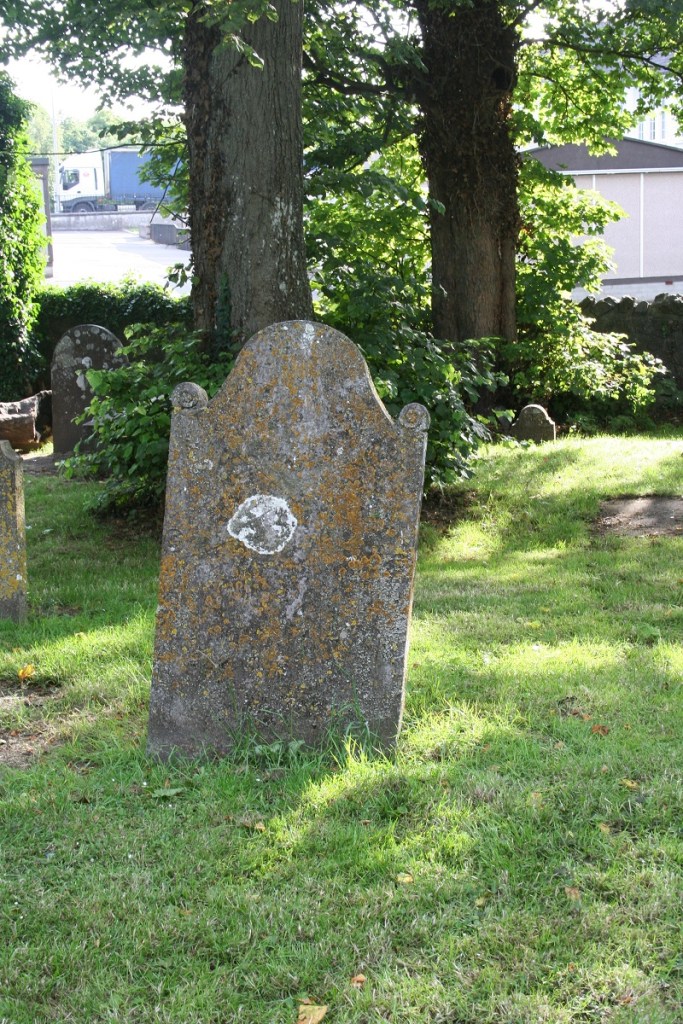
The Daniel S. Gray account of the ‘battle of Tullamore’ in 1806 (By kind permission, The Irish Sword., xii no., 49 (1976), pp, 298-301). Pictures and captions by Offaly History. Thanks to Dr Gray for his fascinating article of almost fifty years ago. Offaly History is a subscriber to the Irish Sword and has almost all of the c. 136 issues since 1949 in its library at Bury Quay, Tullamore. This article corrected many of the myths about this event that were circulated almost from the beginning and copied by historians such as Cooke and others as early as thirty years after the event. See also:
ENGLISH (N. W.). Two tombstones of the King’s German Legion. In the Irish Sword, xii, no. 49 (1976), pp. 302-4.
Byrne, Michael, ‘The “battle of Tullamore” in 1806: the King’s German Legion incident and the growth of a legend’ in Offaly Heritage 5 (2007-8), pp 51-71.
Joachim Fischer, ‘Georg Heinrich Bacmeister (1807–1890): A forgotten son of Tullamore’, Offaly Heritage 10 (2018), pp 288–91.

[1] Ludlow Beamish, History of the King’s German Legion (London, 1832). i, 97-99.
[2] The Morning Chronicle (London ), 5 August 1806.
[3] The Dublin Journal, 1 August 1806; Beamish, Legion, i, 99n.
[4] Niedersachische Haupstaatarchi (Hanover). 12 August 1806, Lt-Gen. Floyd to duke of Cambridge, 28 July 1806. Hann 38D / 237 , 178-80, The Times (London ), 12 August 1806.
[5] Major-General Baron Linsingens’s statement of the transactions that took place at Tullamore on the evening of the 22nd July 1806,Hann 38D/237 , 180- 1.
[6] The Morning Chronicle, 5 August 1806.
[7] Ibid.
[8] Evidence of the inhabitants of Tullamore, The Times, 13 August 1806.
[9] Linsingen’s statements, Hann 38/D237, 182; The Times, 13 August 1806.
[10] The Morning Chronicle, 5 August 1806; The Times, 13 August 1806.
[11] Evidence of the inhabitants of Tullamore. The Times. 13 August 1806.
[12] Journal of Major Rautenberg, cited in Beamish. Legion, i, 98.
[13] The Morning Chronicle, 5 August 1806.
[14] Evidence of the inhabitants of Tullamore, The Times, 13 August 1806.
[15] Linsingen’s statement, Hann 38D/237,188; The Morning Chonicle, 5 August 1806.
[16] Journal of Major Rautenberg, Beamish, Legion . I, 98; The Times, 13 August 1806.
[17] General Order, Centre District, 26 July 1806, 1st Light Brigade Order, Hann 38D/311,n.p.
[18] The Dublin Journal, 26 July 1806; The Times, 5 August, 1806.
[19] Centre District Order, 6 August 1806.; Hann 38D/311, n.p.
[20] A. Aspinall (ed.). The Later Correspondence of George III (Cambridge, 1968), Spencer to George III, /3283, 29 July 1806, IV 463; The Times, 4 August 1806.
[21] Beamish, Legion, i, 102.
[22] General South District Order, 11 December 1811, journale des 2ten Leichten-Schweren-Dragoner-Regiments, Hann 38D /232,12
 offalyhistoryblog