
The new courts system established in 1923–24 saw the first sittings of the district court in Tullamore and Birr in January 1923 and the opening of barracks or stations for the new civic guard from the autumn of 1922. The circuit court system in Offaly was established in October 1924. The circuit court system had its origins in the Courts of Justice Act, 1924, but based, as it was, on eight regions and with wide jurisdiction in criminal and civil matters, emulated the old courts of assize. For Offaly the year from June 1922 to May 1923 was a time of turmoil with up to twelve ‘Big Houses, burned, damage to property, theft and the loss of the county courthouse, jail and barracks in Tullamore.
The broad plans for a new native legal system were set aside when the civil war started in June 1922. At parliamentary and council level there had been a political revolution from 1918–20, but now with the pressure of the civil war a counter-revolution in terms of law and society would follow. No where was that more evident than in the legal system of the new Free State where the old British norms were continued especially in the circuit and higher courts. The district court was distinctly new with its paid district justice in place of panels of unpaid magistrates drawn from the landowning, political and business classes. The attendance at the opening of the new courthouse in Tullamore in June 1927 exemplified the re-emergence of the old order. However, we need to allow for the fact the county council had been dissolved in 1924 and was not reinstated until 1928. So there were no council members to swell the ranks in the only survving photograph of June 1927. The commissioner system would lead in time to the county manager system.
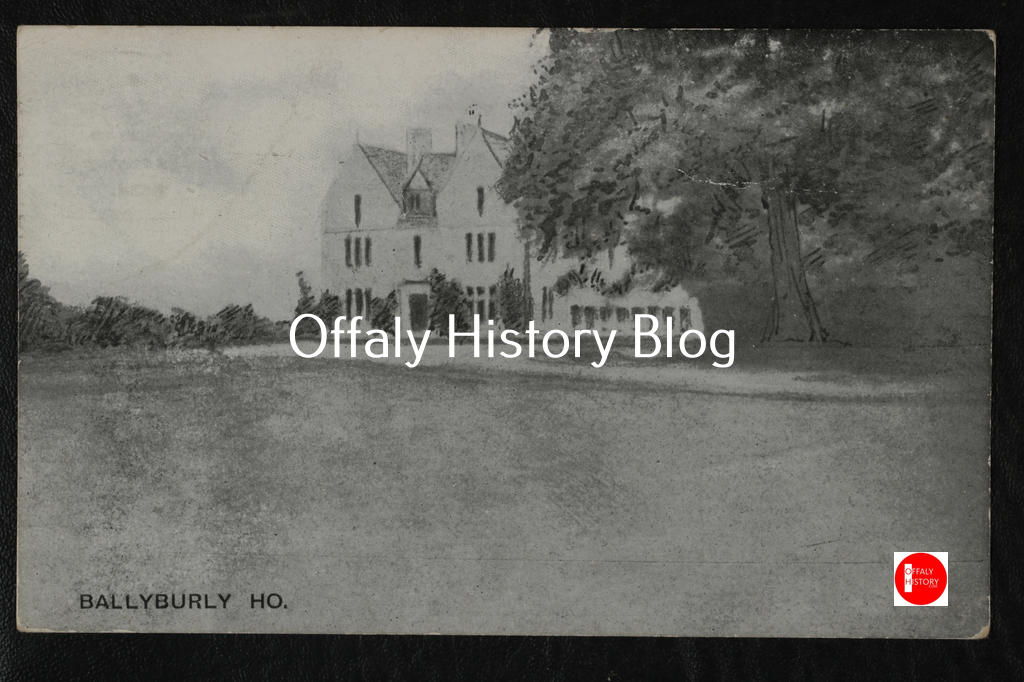
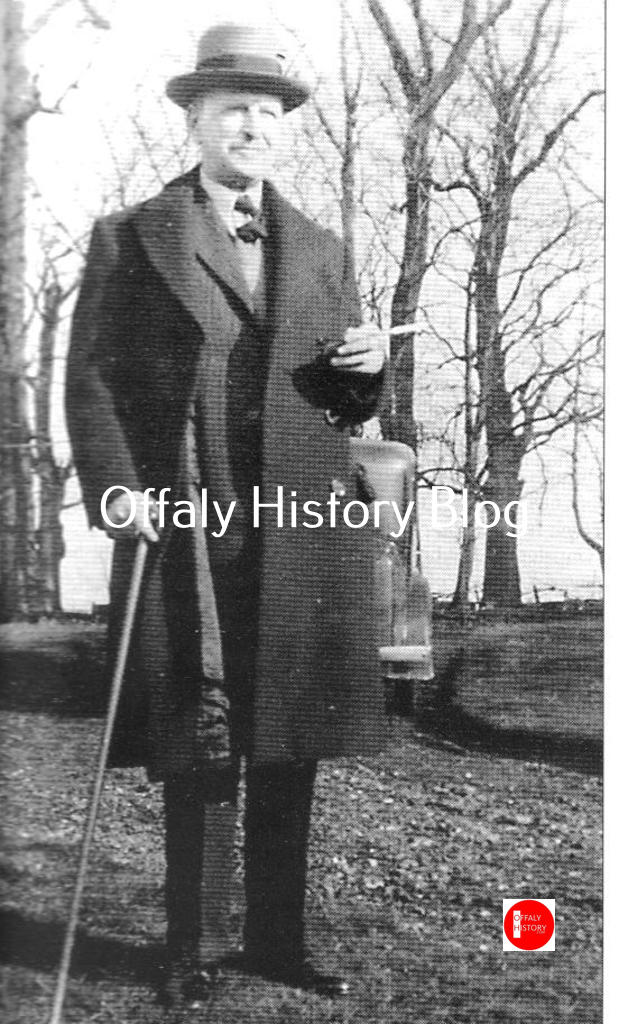
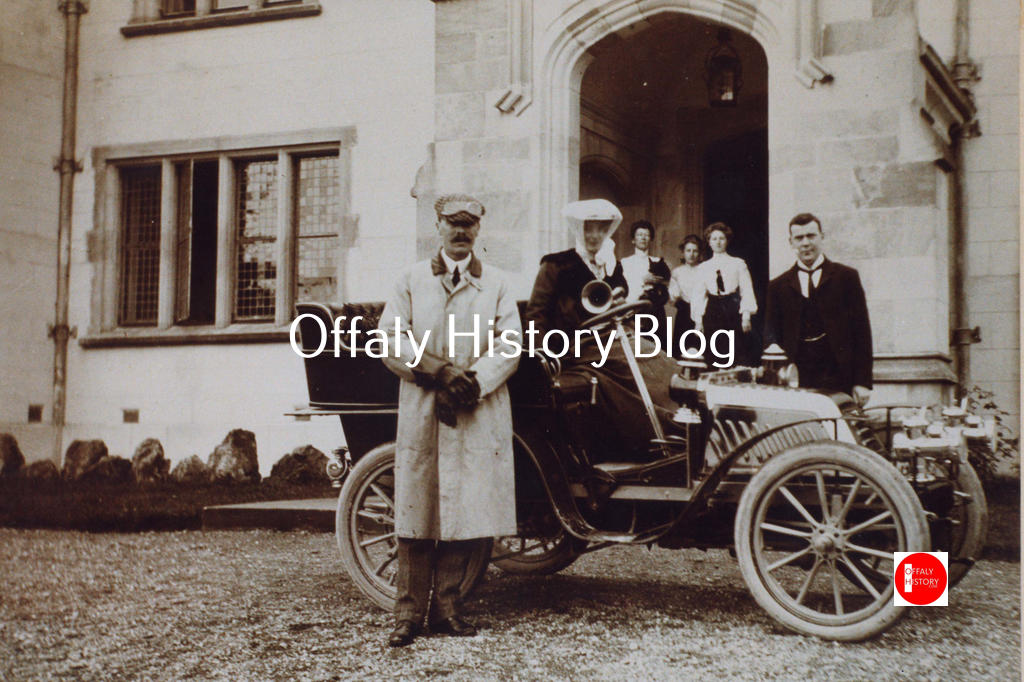
The first sitting of the circuit court in Offaly established under the Irish Free State government took place in Birr on 8 October 1924 and on Saturday 11 October in Tullamore, before Judge John Wakely, K.C. Wakely was from an old King’s County family who had settled at Ballyburly near Edenderry in the late sixteenth century and received forfeited lands as part of the Laois Offaly plantation.[1] John Wakely was called to the bar in 1885 and prior to his appointment to the midlands had been county court judge, from 1904, for the counties of Roscommon and Sligo. Wakely was obviously acceptable to the new government as he was one of only three of the eight circuit court judges out of sixteen county court judges whose tenure had been renewed.[2] One suspects that his friend and Edenderry solicitor, Thomas O’Kearney White, who had been prominent in the national movement since the 1880s, may have been of assistance in securing the appointment of Wakely as a county court judge. However, Wakely obviously did nothing to offend nationalist susceptibilities during his tenure of the county court bench. Notwithstanding his being acceptable to the Free State government his country house at Ballyburly, Rhode, County Offaly was destroyed by the Republican IRA in March 1923, supposedly in reprisal for Free State executions and had nothing to do with his tenure as a county court judge. At the time the civil war was a lost cause for the local Republicans who had destroyed the Tullamore courthouse, jail and barracks in useless retreating action in July 1922. On the same evening as Wakely’s home was destroyed so also was that of Dames-Longworth at Greenhills, Rhode. Gortnamona, the home of the family of the deceased Judge O’Connor Morris near Pallas Lake, Tullamore, was destroyed a year earlier on 23 August 1922. At Ballyburly Judge Wakely was given just an hour to save his family heirlooms. Compensation of £9,330 for the burning of the judge’s house and contents was awarded in 1925 at Tullamore circuit court before Judge B. Roche with no question of reinstatement of the house.[3] The house had been rebuilt in the 1880s to replace a much earlier property which had been lost in an accidental fire.
The new circuit court was different from the old county court in that there were now eight circuits instead of sixteen (the number was later increased to ten, with, as of 2023, up to 45 ordinary judges) and much greater power for the circuit court judges. The new circuits were each intended to cater for some 400,000 inhabitants. That for the midlands was comprised of Offaly, Laois, Westmeath, Longford, Roscommon and Sligo.[4] In civil matters the jurisdiction of the new court was increased to £300, and in title to lands where the rateable valuation did not exceed £60. (As of 2023 it was €75,000 and €3 million valuation; save €60,000 for personal injury actions).
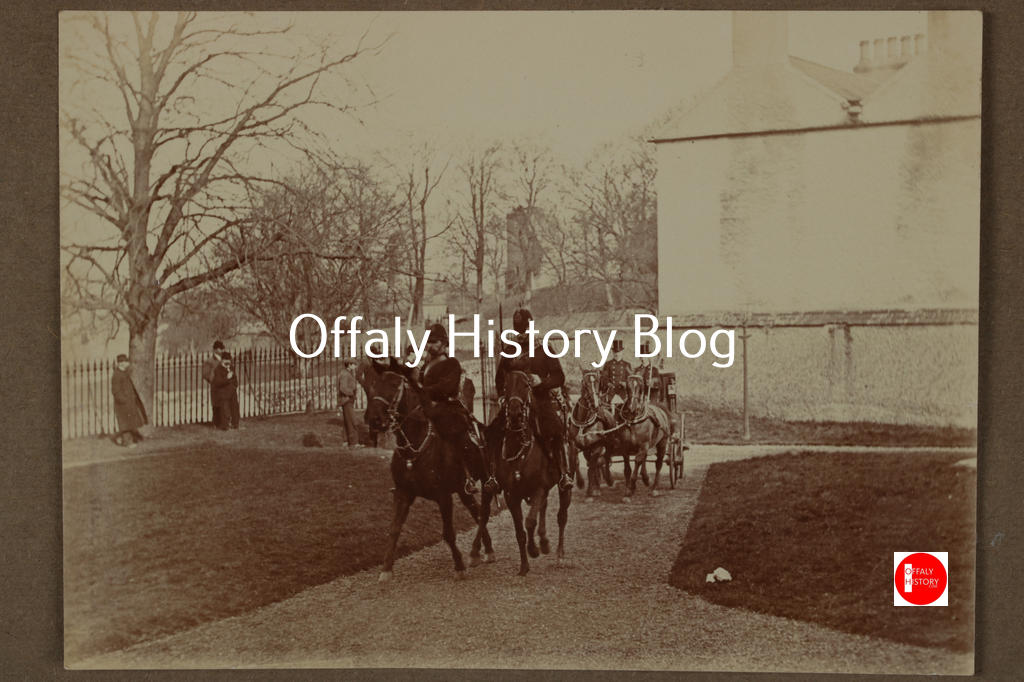
This was a big increase on the old county court jurisdiction and some members of the bar were worried that it would lead to decentralisation with the junior barrister living in the country ‘torn away from books or from anyone more learned than himself’. On the criminal side the circuit court could deal with all serious crime save murder or attempted murder. The old county court jurisdiction on the criminal side had been limited to minor offences and misdemeanours with the judges of the assize dealing with more serious crime. In many ways the new circuit court had much of the jurisdiction of the high court. Curiously appeals were on the record to two high court judges – a situation that survived until 1937 but gave rise to difficulties in the meantime. If the two judges could not agree the circuit court order was affirmed.[5] No longer would there be a complete rehearing to two high court judges at assizes. This was to change in 1937, but the high court judges now arrived in the country towns without the mounted escort. Appeals on the criminal side were heard by the court of criminal appeal. Kohn saw it as wonderfully innovative as did Gerald Horan who quoted from judgments of Kennedy and FitzGibbon in the introduction to his book on circuit court practice.[6]
The laws and procedures were much the same. Some of the old personnel were swept away but the formulae were largely as before. Everyone still addressed the judges as ‘my lord’ and wigs and gowns were still worn. ‘Only the harp replacing the royal coat of arms reflected the changed times’. Such was the extent of revolutionary change. In fairness it should be said that the changes at district court and circuit court level were more far-reaching than in the high court.
The Offaly Independent reported of that first session in Tullamore of the new circuit court on 11 October 1924 that there was a large volume of business, criminal and otherwise, and that the court was held in the splendid picture theatre attached to the Foresters’ Hall off Market Square and was attended by large numbers of people including jurors and the general public.[7] This was the Foresters new club and cinema (now in 2023 partly occupied by Characters/Fergie’s public house with the remainder still with the Foresters and a restaurant) funded from the compensation received for the burning of the old club house by the British military in November 1920. The burning was a reprisal for the shooting dead of a local policeman, Sergeant Cronin.[8] ‘The “calendar” for that first circuit sitting was as follows: – 6 state cases; 6 Criminal Injury Applications (after 12 May 1923); 170 Civil Bills, (of which 20 were defended) 2 Ejectments, 1 remitted action (slander); Equity – 4 Bills; 2 Notices of Motion, Workmen’s Compensation Act 1906; two requests for Arbitration’. The Independent reporter went on to note the formal welcome and reply which was in the time-honoured traditions of the bar, but putting any reference by Walter Callan B.L. to King’s County and not County Offaly in italics.
Judge Wakely would not make that mistake and emphasised his local farming background in his remarks at the opening session in Tullamore. Lewis Goodbody (H 1891, died 1933), was the senior solicitor in the county after T. O’Kearney White of Edenderry (M 1876) and was a partner in the firm of A & L Goodbody, then having offices in Tullamore, Moate and Dublin. Alfred Goodbody, born in Elmfield where the Aras is today, had qualified in 1881 and his cousin Lewis in 1891. Both Offaly-born solicitors would have had, given their social background, distinct unionist leanings, and Lewis Goodbody had been secretary to the great anti-home rule demonstration and meeting at Tullamore in April 1893.[9] Thomas O’Kearney White, the long established Edenderry solicitor and friend of Judge Wakely, was a Parnellite, even after 1891, when it was no longer fashionable.[10] By the end of 1926 the court administration at county registrar, district court clerk and state solicitor level would all be drawn from supporters of the new Free State regime. The report of the opening of the first Offaly circuit court on 11 October 1924 noted the welcome from Lewis Goodbody, and that on behalf of the bar from Walter Callan. Callan was a resident magistrate in Tullamore under the old regime and had been in the town up to about August of 1916. In his address to the judge he noted that:
They were now embarking on a great change in the legal administration of the country and how it would work, nobody could tell. The utmost he thought that he could say was that they hoped that it was for the good of the country and not bad for the profession.’
Judge Wakely in reply recalled his attending the fairs in Tullamore as a young man. He may have been reminded by the fact that the new cinema where the court was held was on the Market Square. He told those present that:
He was wandering round the town that morning to try and get back reminiscences of the dear old days and he stood in one spot where he remembered standing with five or six others on the occasion of the last fair he attended in Tullamore. It was only four o’clock in the morning and there was not a bullock or a sheep or a heifer in the whole place. He remembered saying at the time “Is anything coming at all, or are we going to buy and sell one another?” ’.
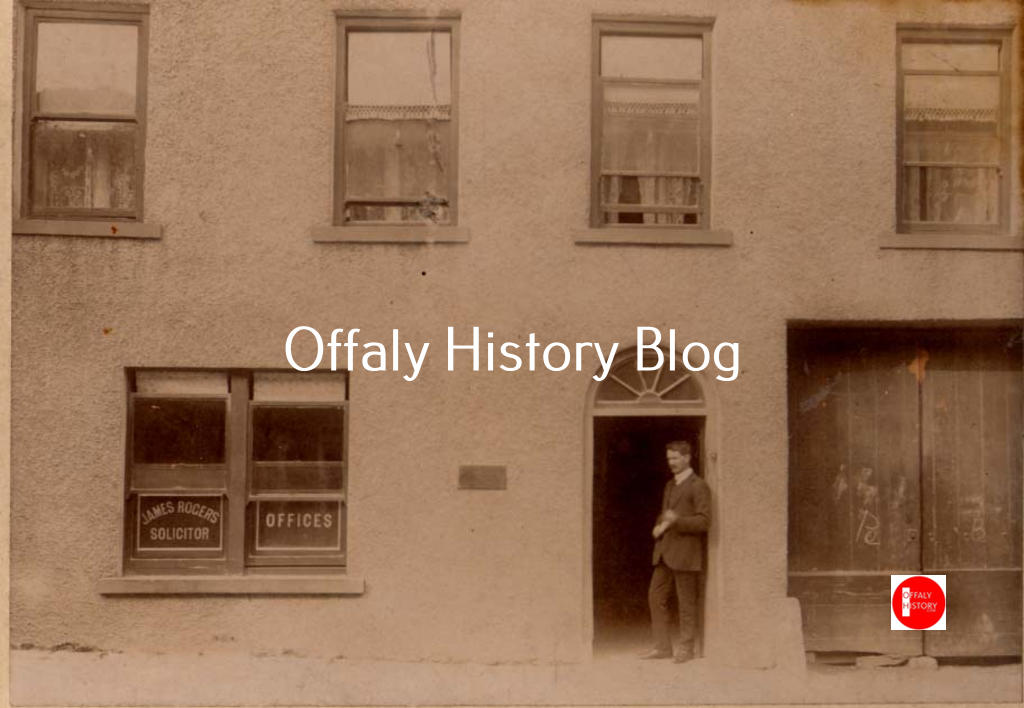
In Birr the welcome to Judge Wakely was made on behalf of the bar by Mr W.G. Shannon K.C. (later a circuit court judge) with James Rogers of Tullamore, then the state solicitor, presenting a welcome on behalf of the solicitors. Rogers said that to the ordinary man the judge was well known at their fairs and markets throughout the countryside. In reply Judge Wakely paid tribute to his predecessor, county court Judge Fleming, and believed he had retired of his own wishes. He hoped that any court official that had a matter to bring before him would speak to him as one man to another and not as an official to a judge.[11]Judge Wakely was to be kept busy. For example, the November 1926 Tullamore circuit court had an exceptionally large number of criminal cases. At that sessions only one woman was empanelled on any jury and she was challenged on behalf of the prisoner.[12] This was after the 1924 Juries Act which had given women the right to apply for exemption from jury service and before the Juries Act of 1927 deprived women of the right to sit on juries unless they applied to be added to the jury list. The legislation, which was a departure from the ideals of the first Dáil, was the work of Kevin O’Higgins, the sometime Laois-Offaly TD and minister for justice.[13]
The first sitting of the circuit court in the new courthouse at Tullamore took place on Tuesday 24 May 1927 before Judge Wakely. Wakely recalled that it was forty-two years since he first appeared in the old courthouse. The judge’s first brief in the old courthouse was in 1886 – the year of the moving in the House of Commons of the first Home Rule Bill. He went on to congratulate the minister for finance, the commissioner who had replaced the county council (dissolved in 1924 for four years) and the county secretary, Thomas J. Kelly. The judge regretted that the new rules prescribing the robes he should wear had not been passed but he had come in his best suit of clothes.
Judge Wakely retired in December 1931 and died in 1942 at Worcester, England. He had been ill prior to his retirement and from May 1931 Judge Moonan (of the Hayden and Moonan history textbook) had acted as deputy circuit court judge on the midland circuit. Wakely was succeeded on the midland circuit by Bill Gleeson, KC, who was referred to by Paddy MacKenzie in his memoir ‘as much a man of the world as anyone appearing before him’. Paddy Lindsay said that Gleeson, alongside his colleague in Galway, Charles Wyse Power, wore the crimson sash while on the bench in criminal trials. It was as far as they could go, he mused, with the British tradition of colour.[14] Judge Gleeson was popular, and on his retirement, by reason of the age limit, he was presented with a motor car at a bar dinner in Mullingar.[15] His last sitting was at Birr in December 1950. We have not time here to range over successive circuit judges of the post 1950 period.

Birr courthouse closes after more than 200 years
Much more than a blog is needed to record the proceedings of the circuit court in Offaly over the 100 years. The completion of the renovations to the county courthouse in 2007 was the scene of a celebratory opening and a legal dinner. At the time Birr courthouse was next on the list in the county for renewal but that was not to be, and 10 December 2013 was the last day of district court criminal proceedings in Birr court after more than 200 years. It was also the last month for Edenderry.[16] The circuit court sittings had been terminated in Birr in November 2011.[17] It was only sixteen years earlier that the Birr courthouse had been renovated after a visit from Minister Nora Owens and despite the proposal of the president of the circuit court to close Birr. There had also been earlier renovations in 1991.[18] The quarter sessions, later the county court, had commenced in Birr in the 1790s and the courthouse there was built between 1807 and 1810. The tradition of courts in Birr was at least 400 years old and the town had made a pitch for assizes/county town status in 1641 that did not proceed because of the rebellion of that year and the very troubled decade that followed.

Court hearings for the entire county are now centralised in Tullamore. Some of the colour of earlier days when barristers would stay over in Hayes’ or Bolger’s Hotel are long gone. The pressures of emailing and the call for an instant response make for a busy deskbound world where much more work is done and there are less stories to tell. Old Judge Wakely could have told a lot about his family and his legal career but did not care to do so. In that line we have the memoir of a previous county court judge who retired in 1913 – Adye Curran, that of Judge O’Connor Morris of Gortnamona and the memoir of Thomas F. O’Higgins. In King’s Inns are records of the old midland bar of the nineteenth century. In the Dictionary of Irish Biography (now online) are the short lives of many of the leading judges of the nineteenth century.[19]
[1] For the sixteenth century background see Elizabeth Hickey, ‘The Wakelys of Navan and Ballyburly’ in Ríocht na Midhe, vol. v, no. 4 (1974) pp 3-19. The original house, destroyed by fire in 1888, was illustrated in The King’s County Directory Birr, 1890), p. 180 Judge Wakely was appointed following on the Courts of Justice Act, 1924, no. 10. The entry for him in Kenneth Ferguson (ed.), King’s Inns Barristers, 1868-2004 (Dublin, 2005) is as follows at p.312: Wakely John(b. 30 Sept. 1861) eld. s. of John Wakely, J.P., of Ballyburly, Edenderry, Kings Co., and Mary C. George; B.A. (T.C.D.); E 1882, M.T.M. 1882. 1885/H/06 [7 items]. Q.C., 22 April 1899. Bencher, 1902. Joint author (with R. R. Cherry) of the first edition of Cherry’s Irish Land Law and Land Purchase Acts (Dublin 1888). Appt. County Court Judge for Roscommon and Sligo, 13 Sept. 1904. One of the eight original judges of the Circuit Court, 1924, appointed to the Midland circuit. Retired 31 Dec. 1931. Lord of the Manor of Ballyburly. Died 15 July 1942. Obituary, I.L.T. & S.J., 1xxvi (1942), 186, 190; Who’s Who. For the judge’s father see an illustration in King’s County Chronicle, 16 July 1896.For recent articles on the Wakelys of Ballyburly by a former member of the midland bar see Tim O’Neill, ‘The Last of the Line: the Wakely brothers of Ballyburly, County Offaly’ in Offaly Heritage 12 (Tullamore, 2023), pp 3–24; and forthcoming in Offaly Heritage 13 (2025) an article on the burning of Ballyburly House.
[2] ILT & S J (16 Aug. 1924), p. 204. See also Ronan Keane, ‘The voice of the Gael: Chief Justice Kennedy and the emergence of the new Irish court system, 1921-1936’ in Irish Jurist, vol. 31 (1996), p. 221 where he states that of the eight judges, three (Charles Drumgoole, KC, James Sealy, K.C. and J. Wakely, KC) were already county court judges or deputy judges and Charles F. Doyle, K.C. was the recorder of Galway. Of the remaining four, two, Charles Power and St Laurence Devitt, had been members of the Dáil courts and came from nationalist backgrounds, as did the third, Joseph McGelligot, K.C.
[3] Midland Tribune, 3 March 1923 and ILT & SJ, 31 October 1925, p. 261.
[4] Offaly Chronicle, 14 Aug. 1924.
[5] ILT & SJ, 13 September 1924, pp 225-26, 9 February 1924, p. 38 and 19 Feb. 1927, p. 47.
[6] Leo Kohn, The constitution of the Irish Free State (London, 1932), pp 343-44; Gerald Horan, K.C., Circuit Court practice (Dublin, 1932), pp v-vi.
[7] Offaly Independent, 18 October 1924.
[8] Sergeant Cronin’s grandson is a solicitor in South Africa and a regular visitor to Tullamore. See earlier blogs on this episode of November 1920 at http://www.offalyhistory.com
[9] King’s County Chronicle, 20 April 1893.
[10] For some references to his contribution to the national movement see Ciarán J. Reilly, Edenderry, 1820 – 1920: popular politics and Downshire rule (Dublin, 2007), especially the chapter on the Land War.
[11] Offaly Chronicle, 16 Oct. 1924.
[12] Offaly Independent, 27 Nov. 1926.
[13] See Rosemary Cullen Owens, ‘The machine will work without them: Kevin O’Higgins and the Jury Bills of 1924 and 1927’ in Myles Dungan (ed.), Speaking ill of the dead (Dublin, 2007), pp 41-66. In the Clara child murder case of 1892 women were excluded from attendance because of the character of some of the evidence – King’s County Chronicle, 10 March 1892.
[14] Patrick Lindsay, Memories (Dublin, 1992), pp 94-95.
[15] Ferguson entry, King’s Inns Barristers, as follows at p. 193: Gleeson, William Joseph (b. 24 Nov. 1878) eld. s. of Joseph Gleeson of Frankfort Lodge, Inchicore, Dublin, and Frances Nolan; T 1908. 1908/M/03 [2 items]. S.C., 6 May 1927, Judge of the Circuit Court (Midland circuit). Died 3 Feb. 1953. Obituary, I.L.T. & S.J., 1xxxvii (1953), 63. See also Patrick MacKenzie, Lawful occasions: the old eastern circuit (Cork, 1991), pp 75-76. For his appointment see ILT & SJ, 5 January 1929, p. 5; 17 Jan 1931, p. 18; 7 February 1931, p. 36, 21 March 1931, p. 69.
[16] Midland Tribune, 19 Dec. 2013, 18 July 2013.
[17] Tullamore Tribune, 25 Nov. 2011.
[18] Midland Tribune, 11 Feb. 1995, 16 Dec. 1995; Tullamore Tribune, 29 June 1991, 19 Apr. 1991.
[19] O’Higgins, Thomas F., A double life (Dublin, 1996); Morris William O’Connor, Memories and thoughts of a life (London, 1895); Curran, John Adye, Reminiscences of John Adye Curran K.C. (London, 1915).
 offalyhistoryblog