
The origin of Lynally as a religious centre can be traced to Colmán who founded a monastery here in the seventh century. His death is recorded in 611. Colmán himself was from Connor in modern day county Antrim. His family were of the Dál Sailni clan who ruled the area around Connor. According to an early Latin life of Colmán, it was St. Columcille who requested that a site be granted to Colmán for a monastery and as a result Aed Sláine (d.604) granted him Lynally.
Three ‘Lives’ of St. Colmán have come down to us, two in Latin and one in Irish. It should be pointed out that these so called ‘Lives’ are not biographies. Written long after the saint’s death the so called lives are in fact glorified fictional accounts of the saint’s life designed to justify property claims or political allegiances of his foundation by linking them to purported events in the founder’s life. Thus the close relationship between Lynally and St. Columcille’s foundation at Durrow is depicted in the lives by tales of friendly encounters between Colmán and Columcille. We have already seen how the early life of Colmán credits the founding donation of the site of Lynally to the request of Columcille while a later Irish Life even claims that Columcille’s sister was Colman’s aunt.
Of the real Colmán we know little except that he was a man of some literacy achievements. Most scholars agree that he is the likely author of the Latin hymn to St. Patrick Audite Omnes Amantes. Patrick’s missionary activities were centred on the north-east of Ireland (where Colmán was from) and it is now accepted that this hymn, which became very popular in Ireland, was a major contributor to making St. Patrick the national, as distinct from a regional, missionary saint.

Between 611, when Colmán died, and 1038, a total of ten abbots/superiors/ successors of Lynally are listed in the various Annals. The most interesting aspect of this list is that only one entry (817-Cú Chruithne) refers to Lynally alone. All others refer to the abbots/superior/successor as of Lynally and Connor, showing the continued binary relationship between the two foundations. As said earlier, Colmán was of the Dál Sailni family from which also was MacNissi, the founder of the monastery at Connor.

The monastery itself was an economic success, with a heavy emphasis on manual labour in the various lives. In addition we have stories of Colmán and his monks attending to prayers, fasts and readings and singing Audite Omnes Amantes. Of particular importance in the economic life of the monastery was the annual Óenach. An Óenach was a fair/ meeting of the great and influential of Gaelic society with leading kings and clerics in attendance. Here business was transacted, relics of various saints put on display for popular veneration, and the occasion was frequently used for synods or meetings when leading issues of church affairs were discussed. The óenach of Lynally was probably held between the saint’s feast day (26th September) and the feast of the Nativity (3rd October) and was the third most important in Ireland. In 827 the Ulster Annals record that there was ‘ A disturbance of the Fair of Colman [caused by an attack] on the Laigin Desgabair by Muiredach, and very many fell therein’.
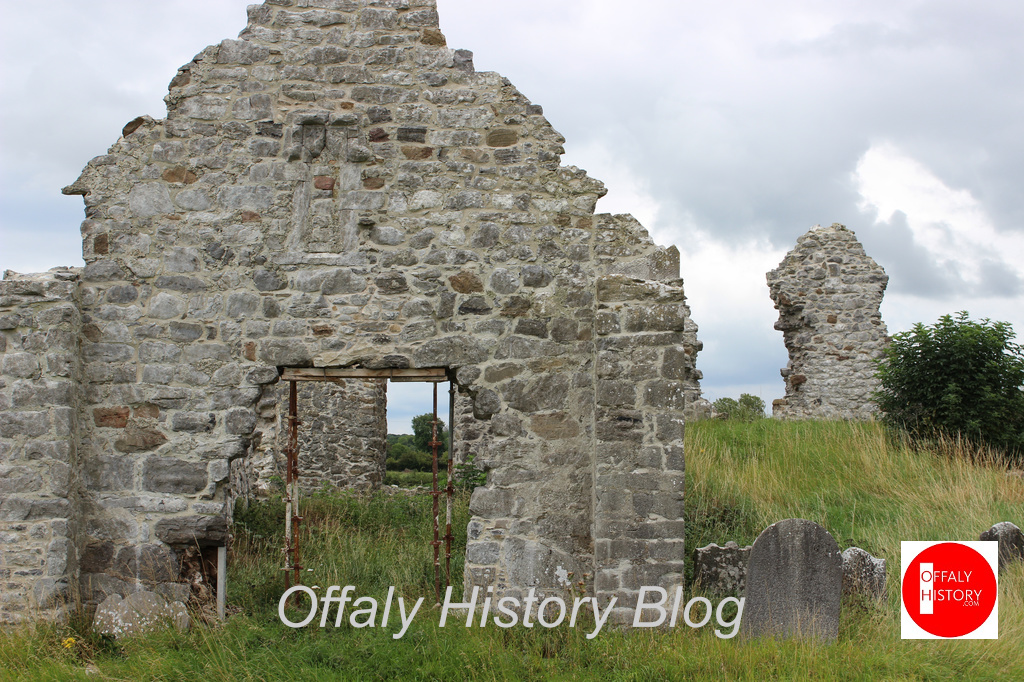
As said earlier the last recorded abbot /successor of Lynally was in 1038. The following century was an era of great change as at the Synods of Rathbreasail (1111) and Kells (1152) the Irish church was reorganised into a smaller number of clearly defined dioceses. Undoubtedly this filtered down to parish level as well but unfortunately this process is largely shrouded in obscurity. The process of parish formation was further complicated by the arrival of the Anglo-Norman in 1169 and afterwards. Anglo-Norman lords claimed not only the ownership of the lands they were granted, but the tithes (one tenth of income given to the church) of them as well i.e., the right to grant the tithes of their lands to whatever minister they wished. Sometimes they nominated the rector themselves, and subject to episcopal confirmation, installed him as the rector of their lands/manor which thus became the parish. More often they granted the right to nominate the minister to a religious institution or monastery in return for the monks’’ prayers for their souls’ salvation. The monastic institution thus became the de-facto rector, received half or two thirds of the tithes, and appointed a vicar (with one third of the tithes) to carry out the cure (carry out the religious duties) in the parish. Often the vicar might appoint a chaplain to perform the cure, for which he received the alterages (fees for various religious services such as baptism, marriages and funerals). Chaplains usually had the use of the Glebe lands or lands attached to the church to supplement their income.

At diocesan level Lynally was incorporated into the new diocese of Meath with borders roughly co- terminus with the kingdom of Mide, that have remained largely unchanged to this day. At parish level the lands of Lynally, along with the whole of the baronies of Moycashel except the parishes of Castletownkindalen and Newtown in Westmeath as well as the baronies of Kilcoursey, Ballycowan, Ballyboy, Eglish and all of Kilmanaghan parish in Offaly were granted to Meiler Fitz Henry by Hugh de Lacy (who in turn had been granted all of Mide by Henry II) as the cantred of Ardnurcher. Meiler built his caput at Ardnurcher (Horseleap) in 1192 and thus this vast area became the parish of Ardnurcher with its parish church of St. David’s beside his castle and borough of Ardnurcher. All the pre-existing churches in this parish now became daughter chapels or chapels of ease of the parish church of St. David’s. They continued to preserve their dedication to their original Gaelic saints, the Anglo-Normans fearing that any change in the patronage of the pre-existing Gaelic churches would ignite the retribution of their founding saints. In this way the monastic church of St. Colmán’s monastery became a daughter chapel of ease of St. David’s.

Besides Meiler’s receipt of the cantred/parish of Ardnurcher from de Lacy he was also the recipient of lands in Kildare from Richard de Clare (Strongbow). In 1202 at Great Connell he founded an Augustinian monastery under the invocation of the Virgin Mary and St. David. As was usual he granted to his foundation the parishes (rectorships) of his possession including Ardnurcher parish. The abbot of Great Connell now nominated the vicar who resided at Ardnurcher and chaplains resided in the various daughter chapels including Lynally. Meiler died in 1220 and was buried in the chapter room of his foundation at Great Connell with the epitaph ‘Entombed are the bones of him the noble Meyler call, who was the tameless tamer of the Irish nation all’!! He had no legitimate heirs so the cantred of Ardnurcher reverted to his lord, Walter de Lacy, son and heir of Hugh of the original grant. Walter died in 1241 and was succeeded by his two grand-daughter Maud/Matilda and Margery who shared his possessions between them. In 1250 Maud/Margery, now married secondly to Geoffrey de Geneville, began a law suit to revoke Meiler’s grant of the parish of Ardnurcher to Great Connell and by 1259 was successful. The parish now became of lay patronage with Maud and her heirs nominating the rector for approval by the bishop. Why she wished to recover the patronage we will never know. Perhaps she believed that the monks of Great Connell were not administrating the parish properly. More likely is that as Ardnurcher was one of the largest and most wealthy of the parishes of Meath, she wished to have the power of presenting the rector herself. Certainly her first choice of rector suggests that the latter was indeed the case as in that same year we find William de Geinville or William (Guillaume) of Joinville, Archdeacon of Salins, archdeacon of Besançon, and brother of Geoffrey (her husband) referenced to as rector of Ardnurcher parish as well. Evidently she had used her rights of patronage to promote the interests and income of her family. We also know from later records that William and his successors never appointed vicars and so the totality of tithes went to the rector and the daughter chapels were serviced by chaplains. Two other rectors names are known, Nicholas Wattonhull and John Perys, both clearly Anglo-Normans.
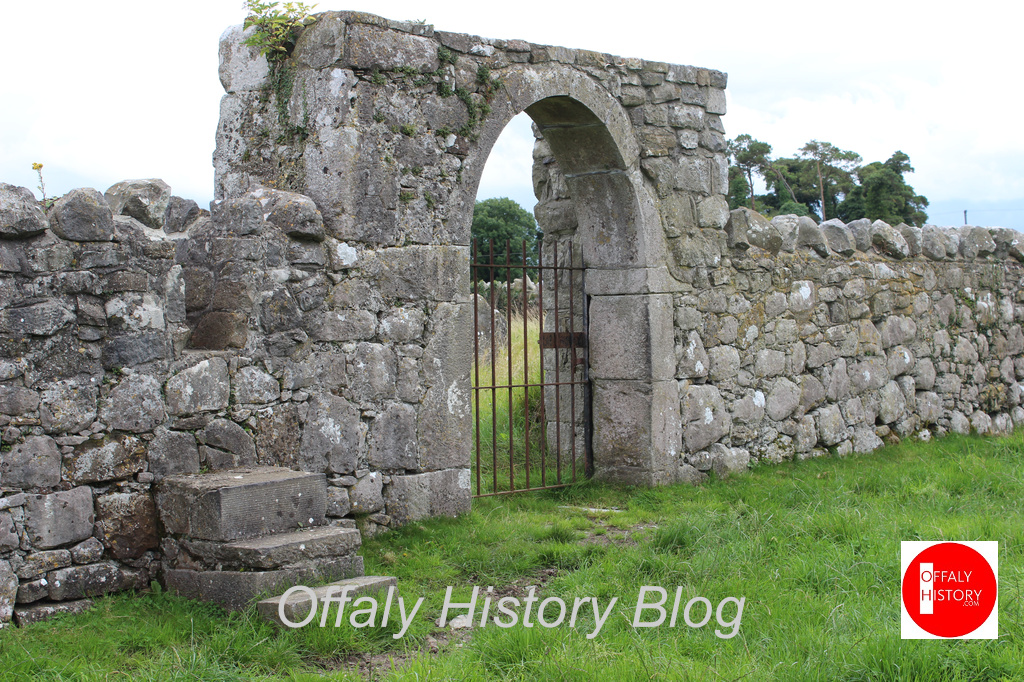
By the opening decades of the fifteenth century Anglo-Norman control of outlying areas such as Ardnurcher was gone. In response to this situation the local chieftains, so long under the overlordship of the Anglo-Norman lords of Ardnurcher, asserted their independence and part of that involved detaching Fir Cill or the southern part of the parish from the mother church of St. David’s. In 1401 their first effort failed for reasons too long winded to detail here but in 1421 were successful. The chapels of Rachayn (Rahin) Kylleacy (Killoughy) Ralyey(Rathleyne) Athalvy (Ballyboy) Drumeulynd (Drumcullen) and Eglays (Eglish) were detached from St. David’s and placed under St. Colman’s Lynally that now became the parish church with provision for both a rector and vicar. The new parish was to be known as Ferceall which was unusual, most parishes taking their name from where their parochial church was located.
What followed was a scramble for possession of the rectory and vicarage between various families. In 1421 Donald Omolmoyg (Donald O’Molloy) is listed as the first rector of FirCill with the proviso that he would take orders within a year of his appointment. He didn’t and in 1428 Odde Oheghyn (O’Higgins ) was appointed to replace him as he was still not in orders. A decade later (1438) Donald was still in possession and is accused by Huathne Omailmuaidh (O’Molloy) of having committed simony with Odde O’Higgins. This was quite common. Where a claimant came with papal letters of possession, very often the office holder paid off the claimant and thus avoided the long and expensive process of pursuing claim and counter claim at the curia. Huathne O’Molloy, was successful for now however but five years later Donald was back. In 1443 Donald Omaeyleadgayn (O’Mulligan), sponsored by Donald O’Molloy, claimed that Fergallus Oluonayn (O’Lynam), vicar of Lynally, had made an arrangement with Rory O’Lynam by which Rory was to resign the vicarage in Fergal’s favour in return for a share of the income. As a result Donald Mulligan was now instituted as vicar. At the same time Donald O’Molloy was reinstated as rector and Huathne removed.
This unedifying competition continued for the rest of the century. In 1466 Patrick Lynam was made vicar of Lynally void by the death of Fergal or Rory. By 1481 Donatus Ohaegayn (O’Higgins) was vicar, only to be removed and replaced by Nicholas O Corrigan. Finally in 1497 Nicholas was removed and replaced by Odo O’Lynam. During these years also FirCill seems to have moved outside of the control of not only the government in Dublin but of the Anglo-Norman bishops of Meath. In 1428 the bishop of Meath was mandated to cite certain clergy in the deanery of Arnughir (Ardnurcher,i.e., Ardnurcher and Fircill) who were excommunicated by the Archbishop of Armagh for non-payment of procurations due to him (payments to cover his costs for visiting the diocese). By 1484-1507 archbishop Octavian was writing to the bishop of Meath pointing out that the clergy of the rural deaneries of Ardnurcher (as well as four other deaneries) had not paid their procurations for his last two visits and as a result the entire clergy of the named deaneries were suspended and excommunicated. Despite these censures, the clergy had still not paid and so all five deaneries were placed under interdict!!! We are not told the outcome of this but can assume that it was received with the same indifference as all his previous fulminations.
In any case change was again coming with Henry VIII’s break with Rome and the dissolution of the monasteries. In April 1541 an extent of the possessions of the priory of Great Connell at Mullingar says the rectory of Ballynorker (Ardnurcher) was in the district of the McGeoghegan among the Irish and so could not be valued. The tithes were leased to the bishop of Meath who paid 50 cows to the priory. We are not told anything about the rectory of FirCill.
The rest of the sixteenth century draws a blank in references to Fircill. In 1604 the rectoral tithes of FirCill was granted to Henry Broncar, and in 1508 to James Fullerton, privy councillor. Evidently the parish was used as a reward for loyal government officials and the rapid change of ownership was not conducive to their showing any interest in the buildings. Not surprisingly then Ussher, in his 1622 visitation, describes the church as ‘ruynous’. In 1638 the parish of FirCill was split in its respective parishes with Lynally now designated as an independent church/parish. This was the parish that was to be used in all the nineteenth century records and only replaced by the rural districts in the twentieth.

Thanks to Rory Masterson for this article. He is guiding a tour to Fore in June. Photographs and captions Offaly History.
Saturday 21 June Visit to Westmeath and Fore with Rory Masterson. Depart Tullamore at 10. a.m. We can hire a bus but car sharing from Bury Quay is probably best.
More on monastic Offaly very soon
24 Mar 2025, Angus Mitchell on Sacred Space and Public Access: The Durrow Abbey Controversy of 1914
14 April Con Manning will speak on Clonmacnoise. The title for the lecture is ‘Clonmacnoise and its churches’
 offalyhistoryblog