
Growing up in our house in Clonminch outside of Tullamore, I came to detest
that mawkish dirge about the Lake Isle of Innisfree. My grandfather, who had
once visited the island, was obsessed by the poem and insisted that I recite it
at every party. He even named our house after it.
Later, as a young town planner, I blamed the wretched verse for the rash of
holiday homes that were beginning to appear in every beauty spot in Ireland
and cursed Yeats who had provided the moral justification for this desecration.
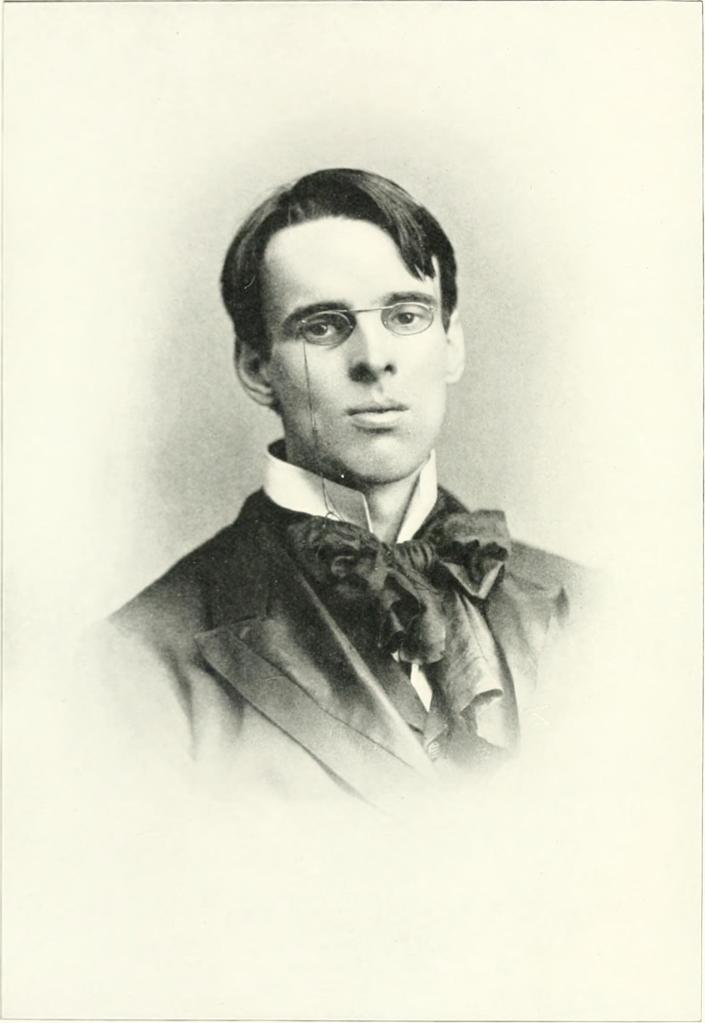
If a well known poet could simply arise and go and build in whatever idyllic
place he chose, why shouldn’t everybody else?
But – would Yeats get planning permission? I would put that to the test.
Having never seen Innisfree and having no intention of ever setting foot on it, I bought an Ordnance Survey map and drew a traditional clay and wattled
Irish cottage slap bang in the middle of the island. I surrounded it with nine
bean rows and a hive for the honey bee- or several honey bees, if it came to
that. I had thought of providing nests for the linnets but not being fully au
fait with the necessary ornithological arrangements, I decided to leave the
linnets out.
Now, in those days there were loopholes in the Planning Act which allowed
you to make an application on property which you didn’t own – nor did you
have to put up a site notice. So, I had all I needed to make a valid application
to Sligo County Council who would have to deal with it whether they liked it or not. I sent off my package and having lit the blue fuse, retired to a safe
distance to watch the fun.
Recently, I obtained the internal reports of the Council’s Planning Section
which were professionally objective and surprisingly didn’t reflect the irritation of busy officials who most likely thought they had better things to be doing than dealing with a crank or a comedian.
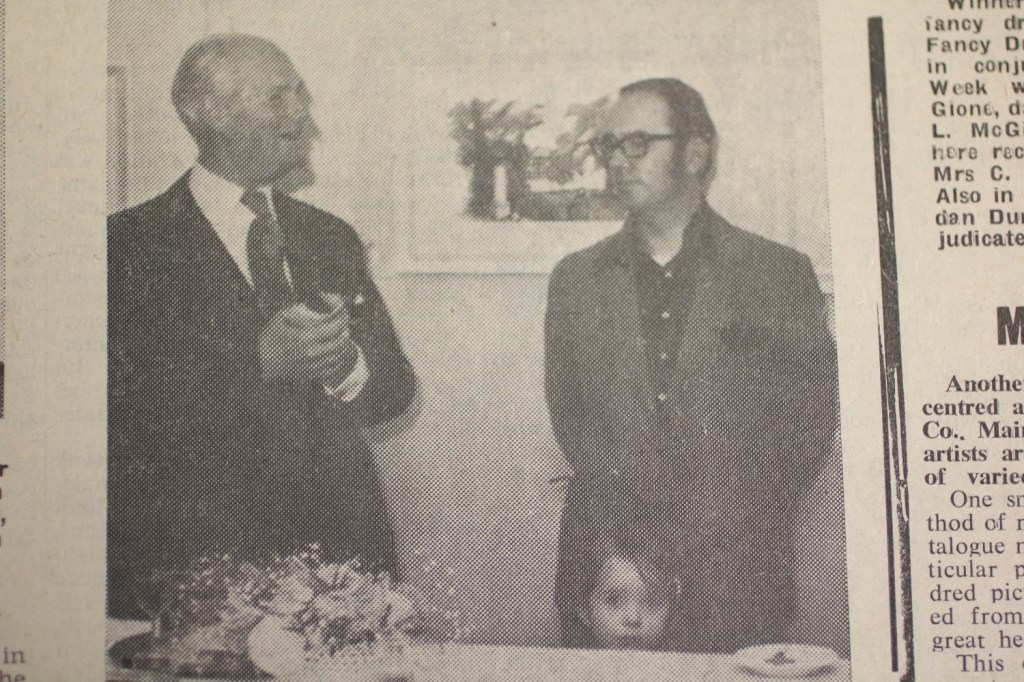
The planning application was referred to the Arts Council for advice and its
Secretary, the writer Mervyn Wall, replied. Wall noted the similarity of my
proposal to the cemetery of Whispering Glades in Evelyn Waugh’s satirical
novel The Loved One which had reserved an area containing a small cabin,
bean rows and beehives solely for the interment of writers and, anticipating
the ridicule which the Council would endure in the event of a grant, urged the
rejection of my application.
My application was also referred to the architectural historian Maurice Craig
for comment who, in the spirit of the exercise, wrote a spoof report suggesting
that the bearing strength of clay and wattles might be more than expected and
that the proposal could be a stalking horse for a much taller building.
Two months later I received a refusal set out in impenetrable bureaucratic
planning speak. To copper fasten it, on April Fool’s Day 1971, I lodged an
appeal with the Minister for Local Government and six months later, to my
delight, he turned me down too.
So, having put a stop to Master Yeats cabin building ambitions, I was content
at last.
Long, long after I had forgotten the whole silly episode, the young Sligo artist
Clea van der Grijn rang me out of the blue to ask if there was any truth in the
legend she had heard that someone had once tried to make Yeats’s dream
come true. I explained that the exact opposite was the case and to my
surprise found myself caught up with an enthusiastic group of local artists,
architects and poets who wanted to honour the hundred and fiftieth
anniversary of the poet’s birth by responding in their own, non interventionist,
ways to his mythic island.
Thus, on a surprisingly still and bright January day, I found myself standing
with them on the island of Innisfree.
A tiny untouched knoll, quite close to the shoreline of Lough Gill and covered
in holly and oak, it rises up from the landing place on its eastern shore to a
slight hill on its western and northern sides from which stunning views up the
lake towards Sligo town are revealed.
It is a child’s dream of a desert island – big enough to get lost in and yet small
enough to be found again. From the western bluff you can actually hear the
sound of lake water lapping on the shore below. It is a very special and
romantic place and only the most insensitive developer (and certainly not a
poet) would think of placing a holiday home in the middle of it.
I was instantly won over and fell in love with it as Yeats and my grandfather
once had.
I don’t believe for a moment that the poet actually wanted to build
a holiday home on the island – indeed he never lived in Sligo afterwards and
sensitively restored a castle in Galway. But standing on the little hill, I gave
thanks for those convoluted and torturously worded planning refusals which
had long ago conclusively protected Innisfree.
We give out a lot about our planning system these days but, should we ever
find ourselves in exile and far from home, we can still recite the words of ’The
Lake Isle’ and know that a very special place where all our troubles will
vanish is still unspoiled and still waiting for us.
Just don’t try to build a cabin – please.
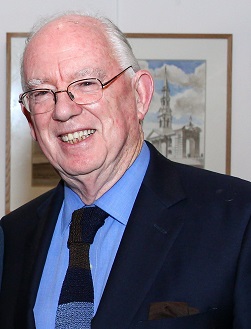
Fergal MacCabe
The Lake Isle of Innisfree
(W. B. Yeats 1865 – 1939)
I will arise and go now, and go to Innisfree,
And a small cabin build there, of clay and wattles made:
Nine bean-rows will I have there, a hive for the honey-bee;
And live alone in the bee-loud glade.
And I shall have some peace there, for peace comes dropping slow,
Dropping from the veils of the morning to where the cricket sings;
There midnight’s all a glimmer, and noon a purple glow,
And evening full of the linnet’s wings.
I will arise and go now, for always night and day
I hear lake water lapping with low sounds by the shore;
While I stand on the roadway, or on the pavements grey,
I hear it in the deep heart’s core.
 offalyhistoryblog