
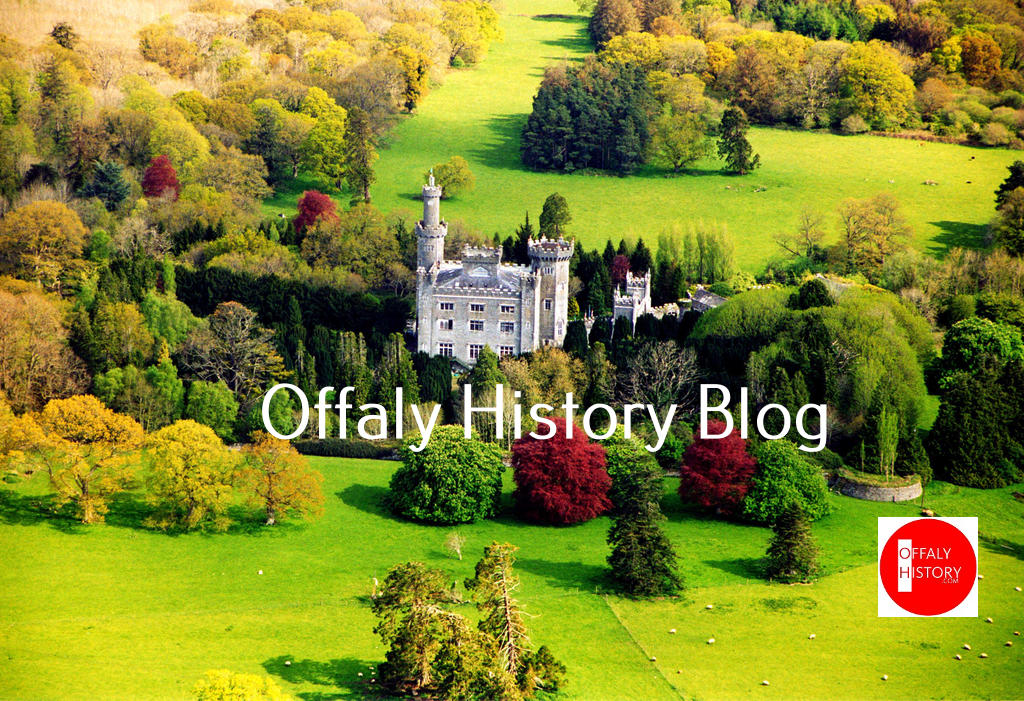
The demesne of Charleville must rank as one of the last unspoilt areas of tranquillity in the vicinity of Tullamore and is much loved by the inhabitants of the town who are proud of the great oaks still surviving after hundreds of years and of the great Gothic mansion of Charleville Forest. The demesne is about one mile south of Tullamore on the Birr Road and encloses some 1,142 acres, most of which is planted with oaks, ash, elms and some conifers.
Charles William Bury, then Lord Tullamore and soon to be earl of Charleville (1806), commenced building his castle in 1801 and completed the work of fashioning the demesne in the gothic sturm und drang manner by 1812. It was then the romantic period in literature and still is for many who walk in the demesne today. The old pre 1740 name for Charleville was Redwood and the first mansion house of Redwood was erected in 1641. When Charles Moore, Lord Tullamore, purchased the house and demesne in 1740 he called it Charleville. The old house was close to the existing farmhouse with the grotto of 1741 to the rear of the reconfigured river Clodiagh flowing through the demesne.

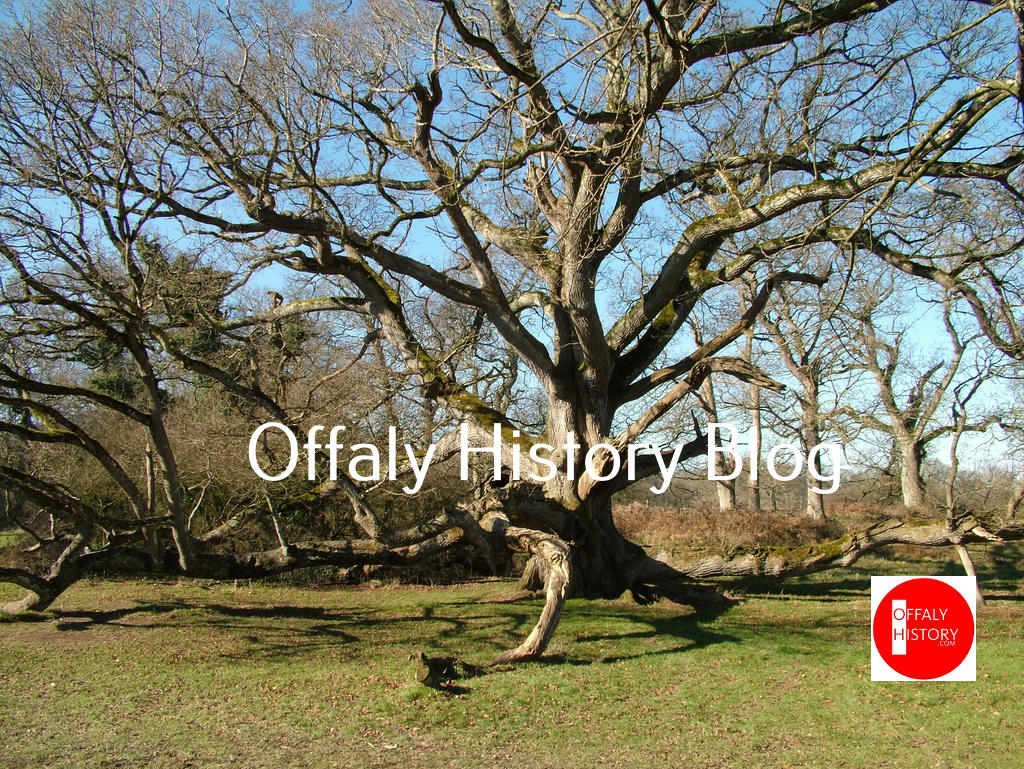
Perhaps in deference to the oak trees in the vicinity Charles William Bury called his new house ‘not Charleville Castle but Charleville Forest. Already there was one giant tree known as the “King Oak” dominating like a watch tower the carriage drive to the town’. Look at the span of its gigantic arms. One branch on the right of the photograph stretches 30 yards parallel to the ground. The Bury family believed that if a branch fell, one of the Burys would die, so they supported the great arms with wooden props. Of course there was nothing they could do to protect the trunk. In late 1963 a thunderbolt splintered the main trunk from top to bottom. The tree survived, but the head of the family, Colonel Charles Howard-Bury, then of Belvedere, Mullingar dropped dead a few weeks later.
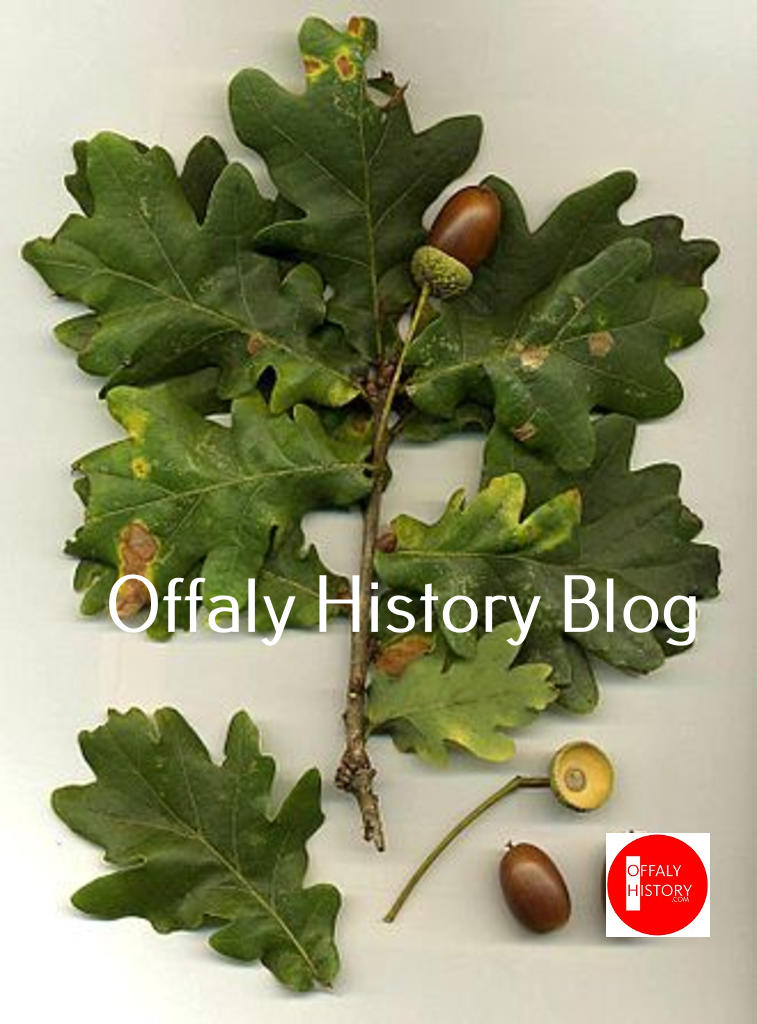
Perhaps this is the most noteworthy feature as one enters Charleville Demesne, south of Tullamore. The great ‘King Oak’ featured in Thomas Pakenham’s, Meetings with remarkable trees. Pakenham believes that ‘the great tree is a descendant of the great forests of common oak (Quercus robur) that once straddled the soggy green plains of central Ireland. Estimates of its age begin at 400 years but it might be double that or even 900 years old. If the latter it ‘would be a worthy candidate for the oldest living plant in Ireland’.[1] With a girth of twenty-six feet below its lowest branches and one of its longest branches reaching seventy-six feet from the trunk it is one of the oldest, largest and best-preserved oaks in the country’.[2]
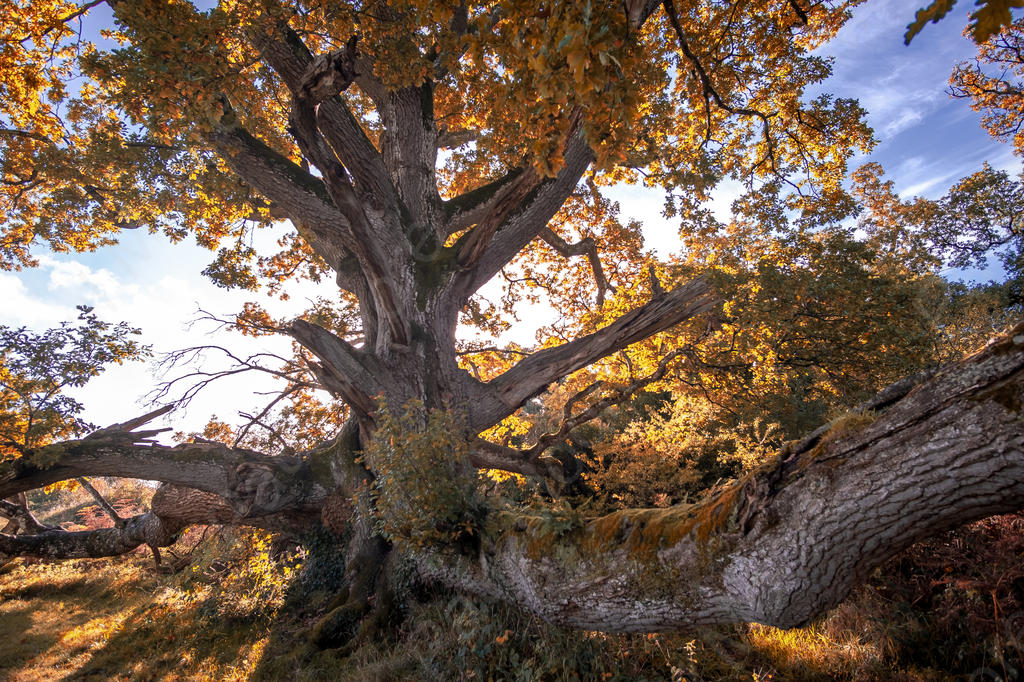
On entering (beside the Tullamore gate lodge of 1860 built five years before as the new railway station was completed ) the visitor finds himself in front of the ‘King of the Forest,’ which has survived the storms of many generations. It is a gigantic oak, with a spread of 130 feet, some of its immense arms being horizontal with, and within four feet of the ground. This remarkable tree is in the Deer Park, which with its fine oak groves and fern-furnished surface, extends for a considerable distance and on to the higher ground. In the great storm of 1839, no less than 5,000 oak trees were blown down in this forest, and a considerable number of limes, which met with similar treatment, were raised again into their former position by manual power alone.[3]
In 1890 John Wright mentioned the tree in his King’s County Directory confirming that its fame was already well established:
The oak woods still surviving at Charleville are now among the most extensive in County Offaly. What remains of these oaks date from between 150 to 500 years old. While some trees have been planted in the past 100 years generally there has been little change in the woodlands since a survey of the trees in the early 1800s and some of the oaks may represent indigenous stock of native Irish woodlands predating the colonisation and new settlers of the 1620s abd 1640s. Others may have been planted after the 1640s when the first house was erected, or in the 1740s when further improvements were made to the property by Charles Moore, Lord Tullamore, as he then was. These trees are now protected under various orders applying to areas of special conservation (SACs). Additionally work has been done in recent years by the owners of the estate, the Hutton Bury family, in co-operation with Offaly County Council and the Heritage Council to conserve the grotto, the Camden tower and the gatehouse at the Mucklagh entrance. The stable block is awaiting attention while the great house, Charleville Forest, is occupied since 1970 and its future hopefully secure. Plans have been laid out over the past fifty years to restore the building to its former glory. However, so much enterprise and money is needed that it will take many years and much public support.
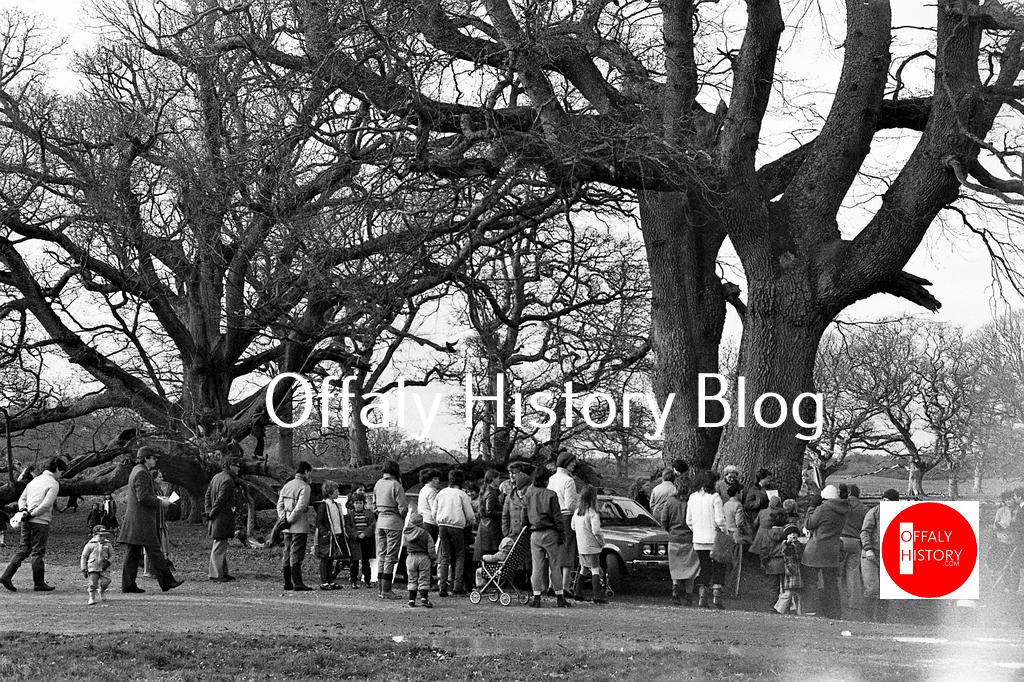
In the meantime the great King Oak enjoys a special place in the heart of so many who visit the demesne south of Tullamore on the Birr Road.
[1] E. Charles Nelson and Wendy F. Walsh, Trees of Ireland (Dublin, 1993), p. 125.
[2] Thomas Pakenham, Meetings with remarkable trees (London, 1996) and The Times, 26 October 1996.
[3] [John Wright], King’s County directory (Birr, 1890), p. 335.
 offalyhistoryblog