The Murals Bar Cultural life in 1950s Tullamore centred around ‘The Murals’ bar. This was where us local artists, actors, historians and writers drank, clutching our copies of ‘Ulysses’ in its concealing brown paper cover while engaging in fevered and sparkling debates on cubism, existentialism, atonality and Marxism.
I may be exaggerating somewhat, but ‘The Murals’ really was our Deux Magots, our Cafe de Flore. The bar was the meeting place of what passed for an intelligentsia in Tullamore at a time, which, though it is now regarded as restrictive and obscurantist, I remember as stimulating and progressive. Maybe I was lucky.
The attraction of ‘The Murals’ was its design which was quite unlike any of the more traditional pubs of the town which were usually small, dark and poky. With its high ceiling, stripped down design, timber veneering, bright red stools, it was cool and elegant and above all- modern.
Richard Rothwell holds a place as Ireland’s foremost portrait painter of the 19th century but there has been much confusion about his identity owing to W.E. Strickland’s biography of him in ‘A Dictionary of Irish Painters’ (1913), which had him born in Athlone, a son of James Rothwell, and a descendent of the Rothwells of Co Meath, none of which was correct. This was repeated by other art historian and in a 1961 family history by his descendant Desmond Rothwell of Montreal, where Desmond wrote that Richard’s grandfather was Thomas Rothwell of Lisdaly, Co. Offaly, and that his father, James Rothwell, married Elizabeth Holmes and had seven children. He states that James fled Ireland in 1798, perhaps to America, after he allowed forces to rest overnight in his barns during the 1798 rebellion. This tradition, however, is not compatible another tradition recorded by Desmond of Richard supposedly being born in Athlone in 1800.
The year 2024 was another good year for publications on Offaly history with overviews of County Offaly towns, books on Tullamore, Birr and a musician from Killeigh who acquired fame in the United States. We also had Cloneygowan, canals, peat, a Feehan bibliography and natural history.
Tullamore in the Sixties was launched to great acclaim on 6 December. Most of the contributors living in Ireland participated in the proceedings with three to five minute talks. The book was launched by architect, town planner and artist Fergal MacCabe. A few of his own watercolours grace the contents of this 450 page book with extensive essays (from 18 writers) and 350 pictures. The book is available from Offaly History Centre, Bury Quay, Tullamore and Midland Books and the pop up at Bridge Centre. It can also be ordered on line.
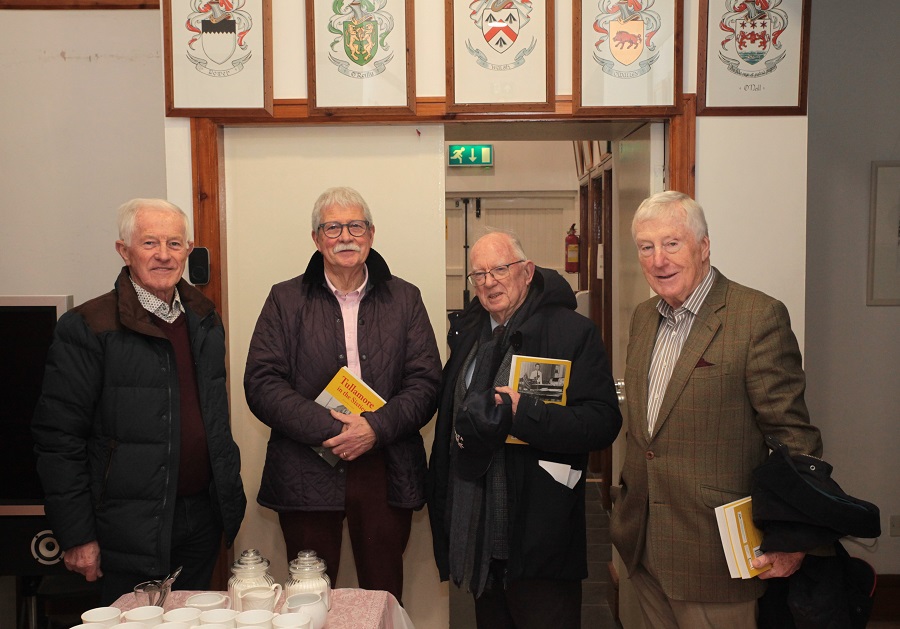
Some of the contributors to Tullamore in the Sixties
This volume of essays brings together the contributions of eighteen people who kept a keen eye on developments in Tullamore in the 1960s. Perhaps none more so than the late Joe Kenny who came to Tullamore in the 1950s as a vocational schoolteacher and was held in high esteem for his sound judgement and abilities as an impartial chairman. In that capacity he was the inaugural president of Tullamore Credit Union in 1963. Fergal MacCabe, as a Tullamore native, with a professional life in architecture and town planning in Dublin, brings a unique contribution by way of his recollections of Tullamore in the 1950s and his review of the first town plan of the 1960s. The same can be said of Vincent Hussey as a planning officer with Offaly County Council with his recollections of Tullamore since the 1960s. Niall Sweeney, an engineer and former Offaly County Manager, takes a close look at the provision of public infrastructure in Tullamore over the period from the 1960s to 2014. The late Jack Taaffe, as town clerk in Tullamore in 1970–72 demonstrates just how underfunded urban authorities were in those years. He went on to become county manager in Westmeath presiding over the progress of the county from 1981 to 1988. Michael Byrne looks at the history of business in Tullamore and sought to cover the principal enterprises of the 1960s in manufacturing, distribution, shopping, entertainment and dancing. Noel Guerin, as a former employee of ‘the bacon factory’, was able to write of a company that employed up to 100 people in Tullamore over forty years and made the name of the town famous for the Tullamore sausage. Ronnie Colton, from his own extensive involvement in the motor business brings a knowledge from the garage floor and sales yard that few others can match.
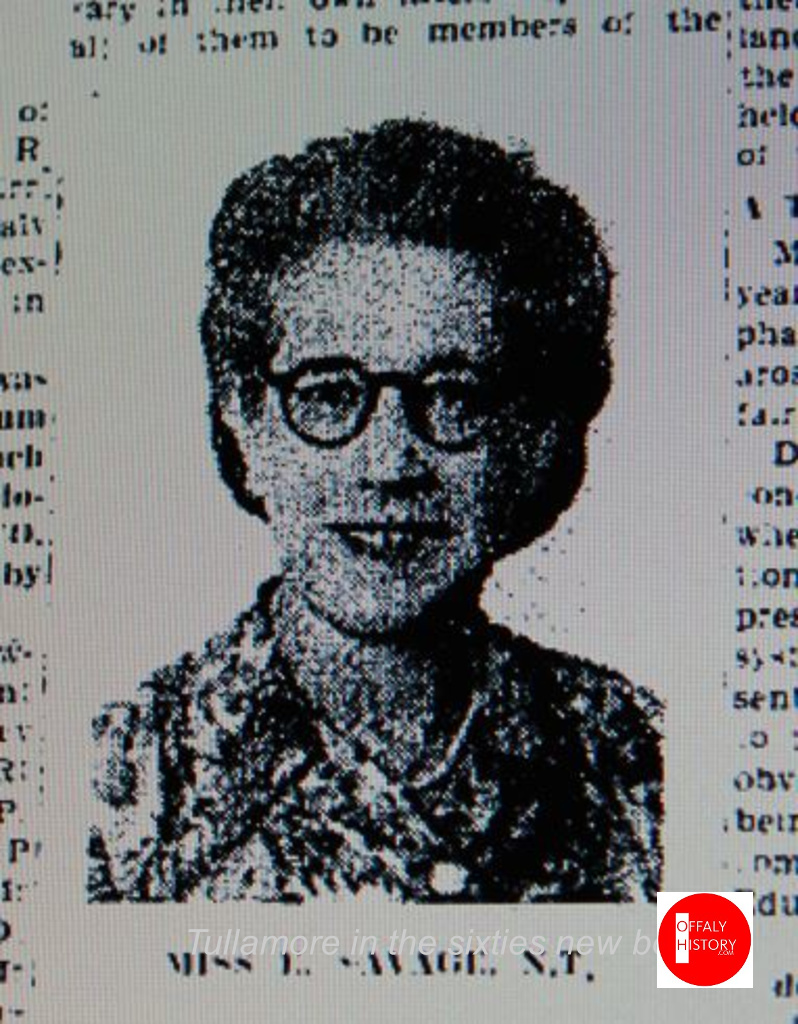
Miss Savage, a well-loved teacher in the Mercy primary school
Alan Mahon, as the grandson of an innovative cinema proprietor, recalls two cinemas in Tullamore whose cultural contribution is perhaps forgotten now but was all important to the people of Tullamore and district over a period of sixty or seventy years, if one takes it from the commencement of the Foresters cinema (later the Grand Central) in 1914.
Sport, so important to so many, brings us to the essay by Kevin Corrigan who looks at a formative decade leading on to the GAA Senior Football All-Ireland victories in the 1970s. Kevin had the challenging job of reducing to a short essay what could fill twenty books were one to address in detail each of the sporting activities that came to the forefront in the sixties.
Faithful Images: public art in County Offaly, will be launched on Monday 11 December at 8 p.m. at Offaly History Centre, Tullamore by Eddie Fitzpatrick, cathaoirleach of Offaly County Council. Faithful Images is a welcome addition to the growing library on the cultural patrimony of County Offaly. Thanks to Creative Ireland and Offaly County Council for their support. The new book is in full colour and is €20. It can be purchased at Offaly History Centre, Bury Quay (beside the Grand Canal and the Old Warehouse) and at Midland Books, and online at http://www.offalyhistory.com. You will be welcome to attend the launch and to purchase a signed copy.
The Turf Man – capturing working on the bog for over a century
The combination of Fergal MacCabe as architect/town planner/water colourist with that of Paul Moore as photographer makes for an excellent outcome. Fergal MacCabe has an eye to the broad sweep of architectural history from his having studied and practised the subject over sixty years. He has been looking at buildings with an admirable curiosity since his teenage years. By the 1970s this had blossomed into his being a superb watercolourist especially when it came to places associated with his childhood years in the midlands. Living in Dublin now he can return to his native place bringing with him a fresh perspective. We had the pleasure of working with him on Tullamore: a portrait in 2010, attending several of his exhibitions, and several of his lectures including those on the rediscovered Frank Gibney.
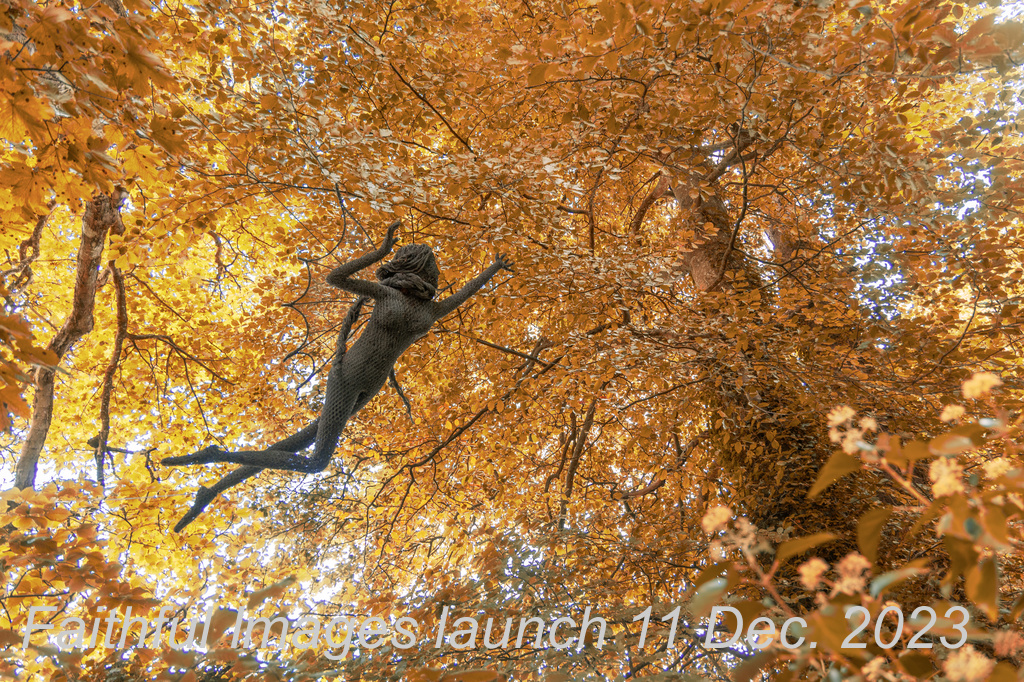
Aisling – the spirit of the trees, Geashill(more…)
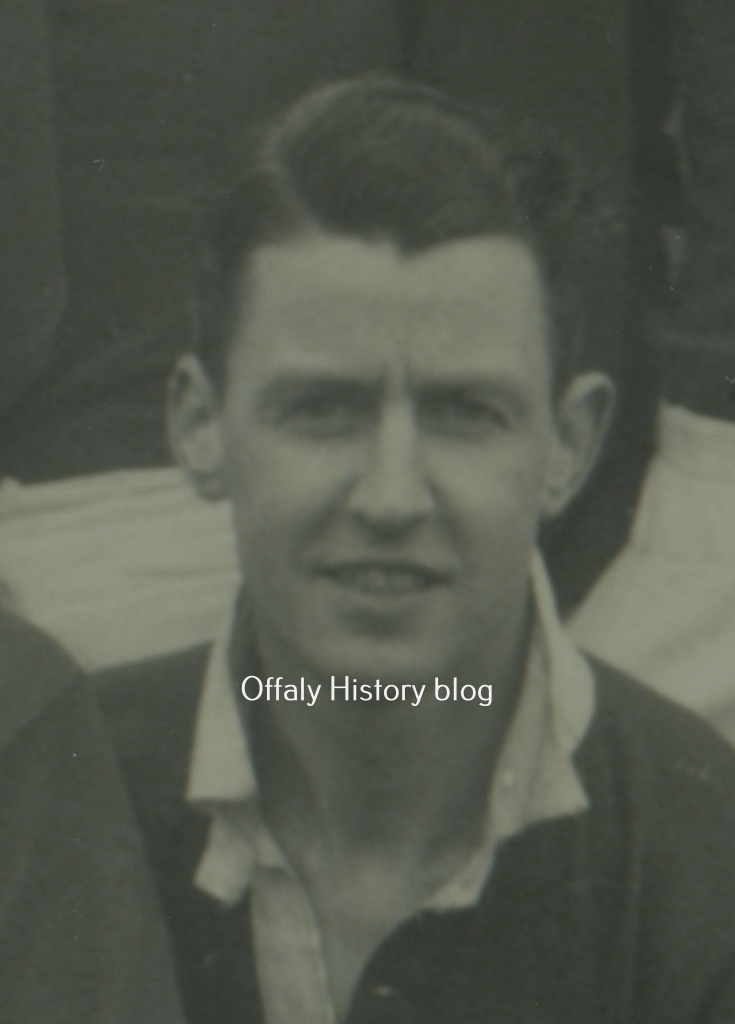
The co-founder of one of Ireland’s most successful architectural practices, Paul Burke-Kennedy died at his home in Booterstown Co. Dublin on 28 September 2023. Born in Tullamore in 1935, Paul’s father Gerry Burke-Kennedy was the popular manager of the Hibernian Bank (now part of Bank of Ireland) in the 1950s, well known for his hunting, horse racing and golfing enthusiasms and who, in later years, raised his family in the apartment above the bank premises on Bridge Street, Tullamore.
Gerry Burke Kennedy, popular bank manager in Tullamore in the 1950sand had worked in Tullamore in the 1930s, living on High Street. He was a prominent member of the new Tullamore Rugby Club (founded in 1937).
Paul studied architecture in University College Dublin and soon after graduation together with Joseph Kidney formed the practice Kidney Burke Kennedy which was later joined by Des Doyle. Paul’s designs were rooted in his awareness and respect for urban context and contemporary Scandinavian design. The firm became notable from the 1960s onward for its innovative housing development in Dublin’s Ringsend, the impressive first stage of the Dublin Docklands development together with hotels for the Jury’s Group and the Conrad and many office developments including the Harcourt Centre and Earlsfort Centre and the Tallaght Town Centre.
This week we provide an extract from the book to be published in November 2023 on Irish Mist Liqueur, a unique Tullamore-based product for almost forty years. Many homes have the Irish Mist Soldier in pride of place on a dresser so here is some more information about it from John Flanagan, the production manager with Irish Mist for twenty-five years. The book will be published in the autumn. You can email us to reserve a copy for you. No money now thanks. The book has support from Creative Ireland and Offaly County Council.
The Irish Mist ceramic figurine was made by Coronetti, Cunardo, Italy. Each one was individually hand-painted by different artists in the factory. The figurine is a replica of an Irish soldier (officer) in the Austrian army about 1756. The Austrian connection is associated with the founder of the recipe for Irish Mist Liqueur who was Austrian. Irish Mist was known as the Legendary Liqueur.
The closure in 2012 of Offaly Express, where I served as a staff reporter from 1988 to 2007, marked the end of an era in local journalism.
When I was a schoolboy, living in Tullamore, the dominant local paper was the Offaly Independent, though the Midland Tribune circulated to a degree from Birr. The growth of Tullamore led to a feeling that a specifically local paper was needed, and in 1978, the Tullamore Tribune was launched, under the editorship of the late Geoff Oakley. He remained in that post until he retired in 1994, when he was succeeded by Ger Scully.
The Offaly Express emerged as a sister paper of the Portlaoise-based Leinster Express, which began to circulate around Tullamore in 1984, though it already had a presence in Edenderry and the eastern half of Offaly. Much of the credit for the Offaly edition must lie with the late Kevin Farrell, who would surely have enjoyed the irony of the fact that his death in July 2012 took place the very day on which the Offaly Express ceased publication and that it had to hold on to report the sad news of his passing.
A contribution to Tullamore 400 and the Living in Towns initiative of the Heritage Council. Sit down and have a cup of tea with this blog!
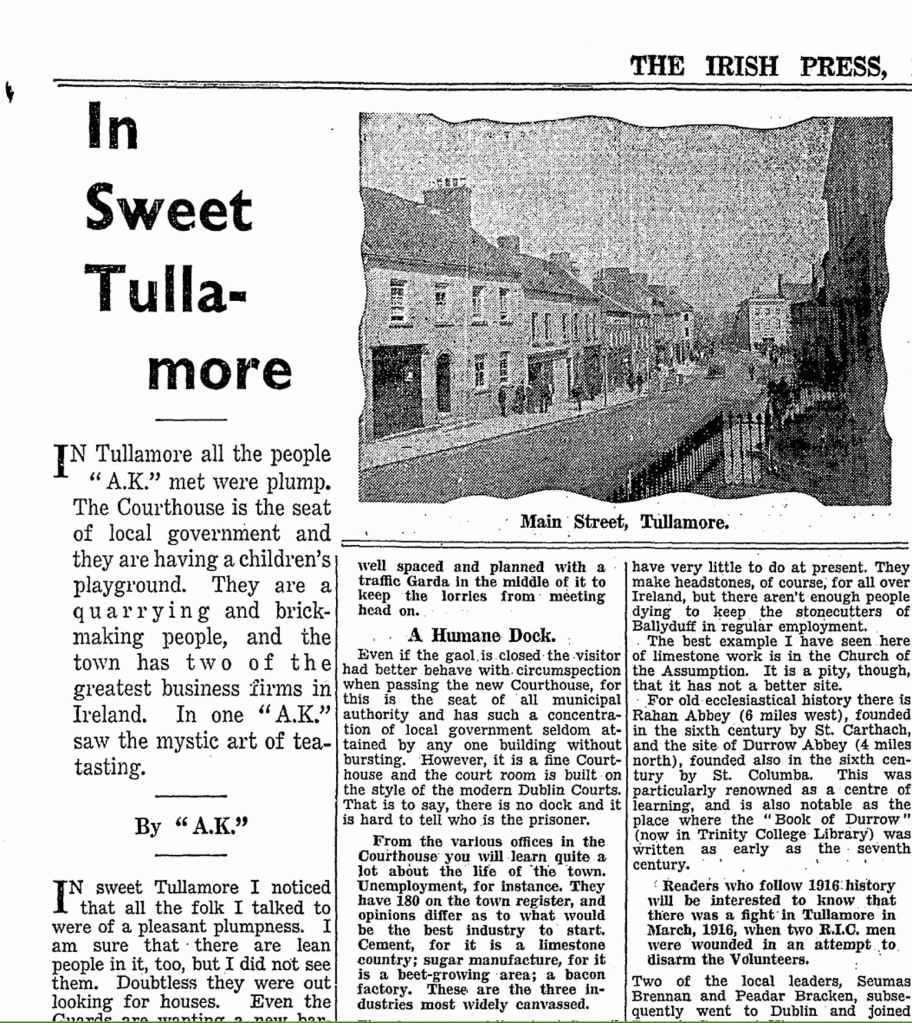
A visit by an Irish Press journalist to Tullamore in 1933 provided a nice puff for the Williams tea business and its brand Red Cup Tea. At the time Williams provided regular advertising in the Irish Press for its tea and Edmund Williams (d. 1948) was a founder director of Irish Press. D.E. Williams’ interest in tea can be traced back to 1895. In the Chronicle and the rest of the local press for February 1895 advertisements appeared in connection with the opening of a wholesale tea business by Daniel E. Williams. In a comment the Chronicle stated that most of the blending was done in London where D.E.W. had larger stores than hitherto. The draft 1917 accounts for DEW Ltd show sales at £8,324. This had risen to £13,807 by 1923. The business was much expanded in the 1930s led by the blender, a Mr O’Shea.
From the Irish Press, 5 May 1933. The picture is from an old postcard rather than sending a photographer.(more…)


 offalyhistoryblog