During the summer of 1908 the 4th Earl and Countess of Rosse made their customary journey to London in order to enjoy the society ‘season.’ Sadly, this was to be their final visit together, for although the sixty-seven-year-old Earl had been in declining health for some time, soon after they returned to Birr Castle his condition began to deteriorate markedly, so much so that by Saturday 29 August he could no longer be rallied. He died later that same evening, with his wife present to the end.
What would the future hold for the dowager Countess of Rosse? She had been mistress of Birr Castle for almost four decades, having arrived in Ireland newly-married when barely eighteen years-of-age in 1870. In common with her mother-in-law, Mary Rosse (née Field), Frances Cassandra Harvey Hawke had come from a wealthy Yorkshire family, being the only child of the 4th Baron Hawke of Towton. She too had inherited property from her father – two country estates, the largest being Womersley – which naturally brought with them a measure of responsibility. However, the Earl had quickly allayed any local fears that the couple might be lured away to England. At a banquet held in his honour at the then Dooly’s Royal Arms Hotel shortly after their honeymoon, he reassured the assembled dignitaries of his firm intention to remain among them. A successful marriage requires both parties to adjust to their changed circumstances, but the Earl’s pledge meant that Cassandra’s life was destined to undergo by far the more radical transformation. Although not yet formally ‘out’ in society, she would be required to settle in a country about which she initially understood very little and find her place within an entirely new social circle.
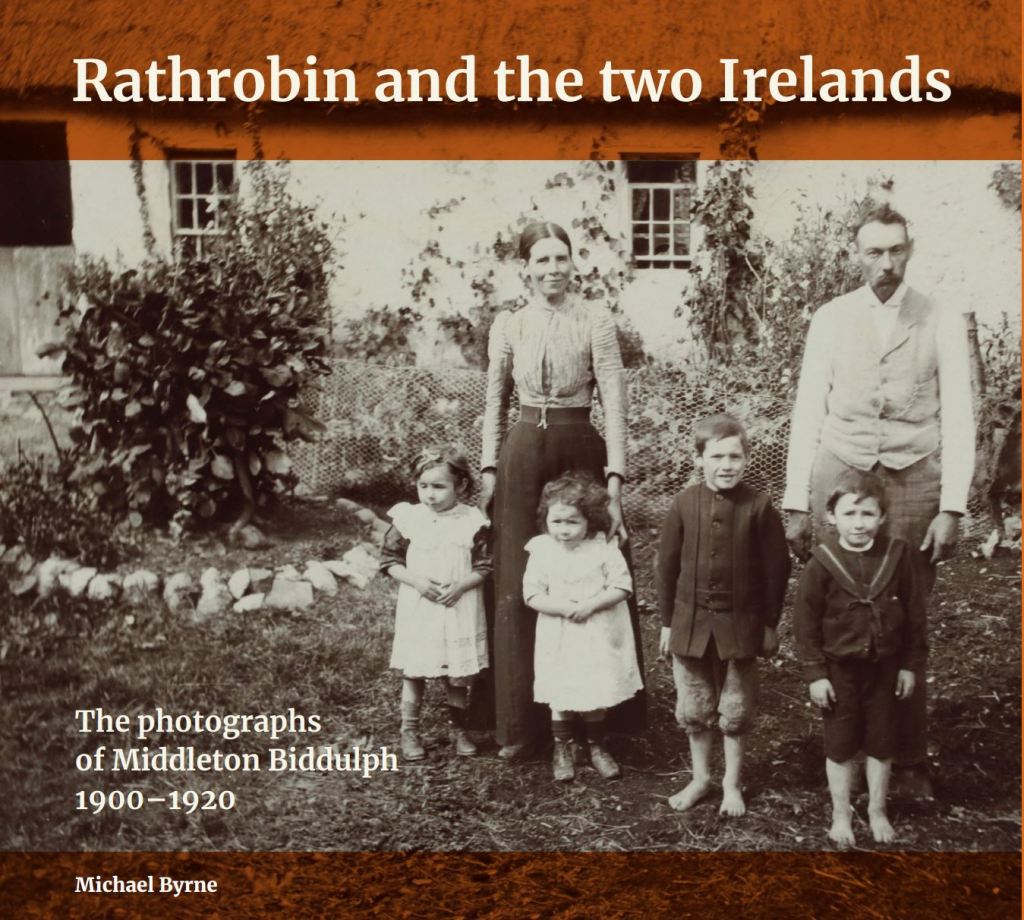
Rathrobin is a book that keeps on giving. Its 250 Biddulph photographs from the 1870s to 1920s, all carefully captioned, depict the two Irelands – unionist and nationalist, Catholic and Protestant, landed and cabbage garden. What is interesting about the photographs taken by Colonel Biddulph (1849-1926, of Rathrobin near Mountbolus) are the nuances. He was of the lesser gentry, was a tenant of the Petty Lansdownes, and was keenly aware of the plantations of the 1550s to the 1650s. He appreciated the needs of the farm labourers and was decent to his own tenants, indoor staff and farm workers. His entire estate was not much more than 1,000 acres. Biddulph’s circle was also the lesser gentry and those who served it such as land agents, bankers and clergy. The Catholic Protestant divide was strong but landed Catholic families did mix in Biddulph’s set, but not merchants or traders (even if very rich). Biddulph had an empathy with his farm workers and their families and sought their advancement. Many local families were photographed, together with the farming activities of his own employees.
All the books here can be purchased from Offaly History (Bury Quay, Tullamore and online) and at Midland Books, Tullamore. You can also view/ borrow at Offaly Libraries and consult at Offaly History Centre.
Rathrobin and the two Irelands: the photographs of Middleton Biddulph, 1900-1920. Michael Byrne (Offaly History, Tullamore, 2021), 330 pages, 280×240, hardcover, €24.99.
Rathrobin is a book that keeps on giving. Its 250 Biddulph photographs from the 1870s to 1920s, all carefully captioned, depict the two Irelands – unionist and nationalist, Catholic and Protestant, landed and cabbage garden. What is interesting about the pictures of Colonel Biddulph (1849-1926) of Rathrobin near Mountbolus are the nuances. He was of the lesser gentry, was a tenant of the Petty Lansdownes, and was well aware of the Plantations of the 16th and 17th centuries. He appreciated the needs of the farm labourers and was decent to his own tenants, staff and farm workers. His entire estate was not much more than a 1,000 acres. Biddulph’s circle was also the lesser gentry and those who served it such as land agents, bankers and clergy. The Catholic Protestant divide was strong but landed Catholic families did mix in Bidduph’s set, but not merchants or traders (even if very rich). Biddulph had an empathy with his farm workers and their families and sought their advancement. Many local families were photographed, together with the farming activities of his own employees.
Biddulph’s story, and that of his associates and friends, is illustrated by a selection of over 300 pictures in all, of which 250 are from the Biddulph Collection in Offaly Archives, and fifty more to illustrate the introductory essay and provide the all-important context. The essay and the photographs provide a more nuanced understanding of Ireland in the revolutionary period of 1900–23. Biddulph’s wonderful house at Rathrobin that he had so carefully ‘restored’, and all his farm improvements, were lost in the Civil War in 1923. Many other big houses from Ashford, to Ballyfin, Durrow, Brookfield, Screggan Manor and Charleville are also recorded in this volume. Some such as Brockley Park in Laois are now gone thereby making this an important work of record. The photographs by Middleton Biddulph were taken at a crucial moment in Ireland’s history. Their publication now could not come at a better time. Rathrobin is the portrait of one small estate and Killoughy parish in Offaly from the 1650s to the 1920s, but the story is of national interest. T.E. Lawrence spoke of the Arab Revolt, perhaps in Ireland we can talk of the Irish Revolt and not the full circle Revolution. You decide.
Rathrobin was supported by the Decade of Commemorations Unit in the Department of Tourism, Culture, Arts, Gaeltacht, Sport and Media
Warner Francis John Plantagenet Hastings was born on 8 July 1868 at 54, St Stephen’s Green Place, Dublin. He was the son of Francis Power Plantagent Hastings, 14th Earl of Huntingdon, and Mary Anne Wilmot Westenra. The title of Earl of Huntingdon was an English peerage title originally created in 1065, the current title is its seventh incarnation which was created in 1529.
The 14th Earl married Mary Anne Wilmot Westenra 15 August 1867, who was the only daughter of Colonel Honourable John Craven Westenra, of Sharavogue, King’s County – a member of the Irish Whig party.
The family acquired lands in Waterford and King’s County. In the latter they lived in Sharavogue House. The house was originally built in the 1820s and was described as containing drawing and dining rooms of the finest proportion, a library, seven bedrooms, servant apartments, stables, coach houses and offices. A walled garden and 100 acres of land. Later additions to the house were made by notable Irish architect Sir Thomas Deane.
Take the good and bad in life as it comes; be satisfied with your fate; if you find yourself in an argument, get out of it as quickly as possible. This was the philosophy of Mr Michael Coughlin (or Coughlan), of Rapp, Tullamore, who celebrated his 107th birthday in November 1929. I am told by Offaly History that he was the oldest man to die in Tullamore in the history of record keeping. He and his wife ‘who is nearing her century, have based 80 years of married life on this happiness recipe and he guarantees that if this advice is followed it will bring contentment to thousands of married couples.’ News of their recipe for ’80 years of marriage and never having quarreled’ went around the world and is said to have featured in Ripley’s Believe it or Not. Michael Coughlin was a native of Eglish and had worked for Malachy Scally as a gardener at Moore Hall, Tullamore in his later years. Rapp is the road to Tyrrellspass from the canal at Whitehall and was the main road from Tullamore to Westmeath until the canal was completed in 1798. Housing there was decimated in the Famine years.
If only the American policymakers of late years since 2001 (Afghanistan), (or even Kennedy and LBJ) had read B.C. Molloy. A former MP for King’s County, Bernard Charles Molloy, was one of the few to predict that the First World War would not be over by Christmas 1914. Molloy read the signs well, besides he had fought with the French in 1870 and knew the strength and perseverance of the Prussians. He was an MP in King’s County from 1880 to 1900 and died in 1916. It is a good time to reflect as we recently marked 11 November and the anniversary of the Truce and the Peace in June 1919. It was a a war that killed at least 40,000 Irishmen, led to 1916, the War of Independence and the Second World War.
One could only marvel at the grandness of the shopfront, its curved plate glass display windows, its fine chiselled limestone three-story edifice, as well as the coming and goings of customers. This was what was on view to the townsfolk and visitors to Tullamore when coming across the shop owned and operated by proprietor Malachy Scally of Kilbeggan. In 1901, for his thirty first birthday he visited London and picked up retailing insights, ideas on cash handling systems, and street facing window placings from the likes of Selfridges and Harrods retail establishments.1 He completed the magnificent frontage, between 1912 and 1914 at a cost of £5,000-.
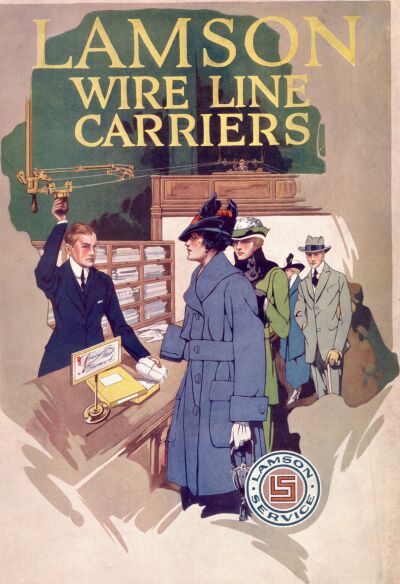
In the 1960s, I remember putting my back against Noel O’Brien’s shop on the opposite side of the street and watched the same comings and goings to the famed shop under new owners, the Melville group. The most intriguing sight was seen from within, the mesmerising swishing sound and rapid movement of the railway wire line carriers with its overhead mechanical system. It was just fascinating to watch. (Mrs Jo. Morris and her sons Philip and Kenneth, had a similar but smaller version, at their family shop, J Morris draper on Church Street).
Fig 1. The magnificent edifice of Malachy Scally’s drapery on Columcille Street (Pound Street), Tullamore. Designed by architect T F McNamara (who also designed the Church of the Assumption, Tullamore), it was completed between 1912 and 1914. Courtesy NLI and set here in the jacket of Maurice Egan’s new book to be published in mid-December by Offaly History.
While my mother bought her items from the various departments, she chatted at length to the attendants, I was only too happy to sit all day and watch the mechanics of the ‘rapid wire’ system. In fact, I recall pleading with her to buy each item for cash, so I could observe the railway workings in detail. The Lamson ‘rapid wire’ system was developed in 1888 and consisted of a cylindrical wooden cup with screw-on base which was projected by a catapult mechanism along a taut wire, travelling on grooved wheels suspending the cup from the wire. These cups would travel a good distance, including around corners, without the need of gravity by incline.2 At Malachy Scally’s this system would travel to and from the ground floor centrally located, elevated cash office.
Fig 2. The Lamson Store Service Fig 3. From Anscombe’s in the UK, the cashier returning the customers change along the ‘rapid wire’ system.
The Scallysof Rahugh, Kilbeggan and Tullamore
The Tullamore drapery store Scallys were originally farmers who hailed from Attyconnor, Rahugh, close to the Westmeath/Offaly border. The farm is still owned and worked by the family and lies between Kilbeggan and Tullamore.
Loughlin Scally (b c 1808, d 16 October 1896) and his wife Rose (b c 1809 d 21 August 1885) had three sons and one daughter that we know of: James, Patrick, Daniel, and Clara Scally. James Scally (b c 1841 d 8 December 1903) was a Kilbeggan merchant and licenced premise owner based on Main Street Upper, Kilbeggan, and was a leading local member of the Land League. He married Clara Christina Horan (b c 1846 d 13 January 1917), a prosperous farmers daughter from Muiniagh, Tullamore. They were married at Durrow church on 17 January 1868 by Tullamore curate Fr Joseph Flood C C. The bridesmaid was Clara Scally. They had ten children. James was an enterprising entrepreneur and with the assistance of his father-in-law, Mathew Horan, James expanded his business to Tullamore. Luke Horan, second eldest son of Mathew (b c 1841 m Bedelia Clavin of Clara on 18 April 1866, b c 1846 d 4 November 1896), was a merchant tailor by trade, and was set up in business on Tullamore’s Colmcille Street (Pound Street) in a shop leased to him by his father. They had one son Mathew Joseph Horan who died of TB in early childhood (b 16 September 1867 d 24 March 1871). Sadly, Luke did not escape the ravages of TB, and suffered from its effects for many years.
_________________________________________________________________________________Footnote: Muiniagh is the townland (218a) that extends from Tullamore’s Axis business park north to the Silver River and includes a portion of the residential estate called, Norbury Woods.
It is believed James Scally, his brother-in-law, took over the lease of the Horan shop and established it as James Scally draper in 1876.3 Luke died at the Whitworth Hospital in Drumcondra (a hospital for the chronically ill) on 30 November 1879. He was 38 years of age. His bereft widow Bedelia moved to Castletown, Clara to live with her two brothers.
Fig 4. Extract from the last will and testament of Mathew Horan 1880. Courtesy NLI.
Fig 5. Will and testament of Mathew Horan 1880. Courtesy NLI.
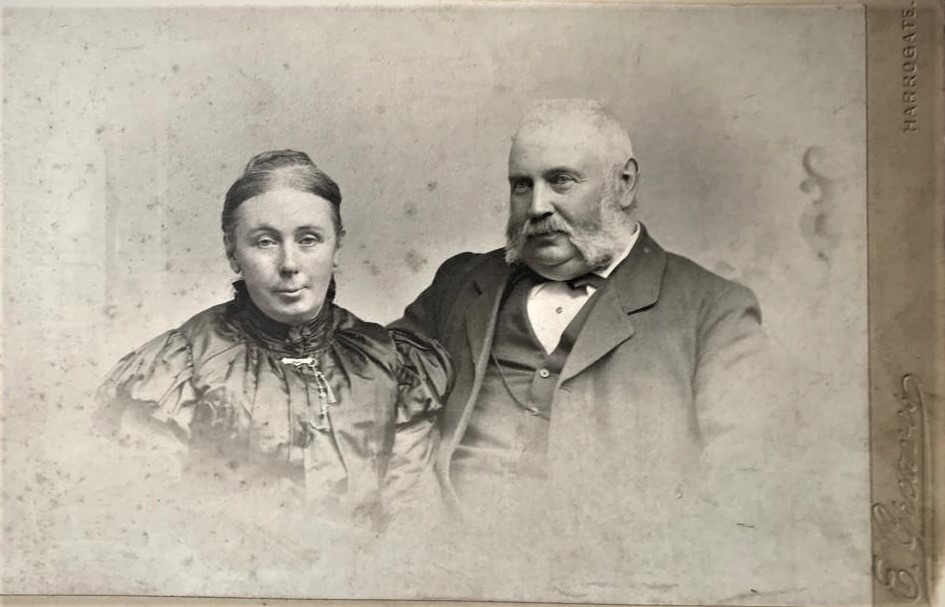
Fig 6. Clara (née Horan) and James Scally. Courtesy Malachy Scally.
Established in 1876, this became the start of a great trot for the Scally drapery business, which was to continue for an uninterrupted eighty-five years. It is believed that James and Clara Scally lived at Bank House (alias Step House), on Main Street Upper North, Kilbeggan since around 1868. They later resided at their fine hardware, grocery, provision, and licenced merchant house which continued as Scally’s for over sixty years until 1928. Malachy, their eldest son was born 8 April 1870. They had ten children, five boys and five girls. James now a successful businessperson, continued to grow his business and leased lands, some known as Towns Park, as well as property, including the Crescent store and Market Square store, Kilbeggan.
Fig 7. James Scally, grocer, provisions merchant and licenced premises, Main St, Kilbeggan. Their residence ‘Step House’ was six doors up the street to the right of picture. Courtesy the NLI.
Unbearable tragedy was not too far around the corner for James and Clara Scally. In 1884, in the space of just nineteen days they lost six (four daughters and two sons) of their ten children to scarlet fever and typhoid.
Malachy Scally
Malachy Scally (b 8 April 1870 d 3 October 1935) married Mary Anne Fitzgibbon (25 June 1874 d 9 May 1935), at St Michaels church, Kingstown (Dun Laoghaire). She was daughter of well-known M P in the House of Commons for Castlerea County Roscommon, John Fitzgibbon and his wife Marion, née O’Carroll. John Fitzgibbon (1845–1919) was also a merchant draper in Castlerea. John was a supporter of Home Rule and unity with Britain, as well as a member of the Gaelic League. He started his working life in his father’s drapery business in Castlerea. Seen as a spokesperson for the tenant, Fitzgibbon exercised his powers of persuasion and oratory at meetings across Roscommon. His political life spanned 30 years, from the land war to the ranch war.4 Mary Anne’s brother Michael Fitzgibbon (b 2 August 1886 d 15 August 1915, was an apprentice at the solicitors’ firm, Hoey & Denning, Tullamore) joined the British army during the First World War as a second lieut with the 7th Dublin Fusiliers. In July 1915 he was promoted to the rank of Captain and the regiment was shipped to the Dardanelles. One week into the disastrous Allied Gallipoli campaign, the popular twenty-nine-year-old Capt Fitzgibbon was killed in action on Turkish soil.
__________________________________________________________________________________Footnote: The ten children of James and Clara Scally were: Rose Mary (b 3 April 1869 d 25 September 1919 of TB, m 15 September 1892 Peter Joseph Joyce of Leenane Galway b 1859, a commercial traveller from Edgeworthstown and Longford d 9 September 1926), Malachy (b 8 April 1870 d 3 October 1935 m 19 June 1895 Mary Anne Teresa Fitzgibbon of Castlerea b 25 June 1874 d 9 May 1935), Joseph (b 29 September 1873), Mathew James Scally (b 20 July 1875 d 31 October 1884), John Frances Scally (b 4 December 1877 d 1 March 1907 m 1906 Annie White, daughter of P J White of Clara, widowed she later married James Kelly 17 June 1912), Bridget Christina (b 21 December 1878 d 3 November 1884), Mary Joseph (b 29 February 1880 d 24 October 1884), James Scally jnr (b 20 July 1881 d 24 October 1884), Agnes Scally (b 28 January 1883 d 11 November 1884), Clara Christina (b 18 July 1884 d 4 November 1884).5
Malachy was deemed an astute and quick learner, and was schooled at the Christian Brothers, Tullamore and later at Navan. He finished his schooling at Rockwell College. He quickly learned the drapery business and was constantly looking out for new ideas in the world of fashion and retailing. He and Mary Anne had eleven children, the three eldest were born above the drapery store on William Street (todays Colmcille Street) . The businesses in both Kilbeggan and Tullamore were thriving, and he took out a lease on the architecturally impressive residential property Moore Hall on Earl Street (O’Moore St, Tullamore) in 1900. He learned much on his travels and brought back and implemented new ideas from a 1901 trip to visit Selfridges and Harrods, London. Malachy formally took over the running of the family business when his father James died in 1903.
In April 1902, as his business expanded he took over the lease of the former Bradley boot and shoe warehouse next door (today’s AIB bank). Malachy Scally, grandson of Malachy snr recalls: ‘Around 1903, Malachy took a lease on number 2 and 3 Colmcille Street from Lady Emily Alfred Julia Howard Bury of Charleville Forest. Earlier, it was called William Street after Charles William Bury First Earl of Charleville.
In 1912 he commissioned the office of architect William Hague (1836-1899) to design the magnificent shop and façade for 2 and 3 Colmcille Street. His daughter Philomena (Phlo) also had an input in the design. While accompanying her father on a buying trip to Brussels, she made sketches of shop fronts, which influenced the outcome. After Hague’s death, his wife took over the firm’s partnership with their managing assistant, the renowned architect T F McNamara (1867-1947) who had worked on the Church of the Assumption, Grand Central Cinema, and the Co-Operative Society premises in Tullamore. The shop was completed in 1914.’
Ever the moderniser with a keen interest in mechanics, he was the first to install the mesmerising Lamson overhead cash wire carriers in the town. He was fascinated with aeroplanes and encouraged his sons Manco and Frank in their pursuit to become qualified pilots.
He continued to run the original family business on Main Street, Kilbeggan, and employed his first cousin Patrick Scally of Attyconner and later Moyvore, as an assistant shop hand. He thereafter put his son Manco in charge of the Kilbeggan store from around 1920. James A Scally the eldest son, worked with and was trained in the retail trade by his father, having completed his schooling at Clongowes. Together they introduced a new sales incentive at Scally’s drapery where paying customers were entered into Scally’s draw for their unique prize scheme. Uncollected monetary prizes were donated to charity. Increasingly James A was taking over more of the running of the business, assisted by his youngest brother Brendan and youngest sister Eithne Scally.
Manco decided to spend more and more time engaged as a professional aviator, spending considerable time in Coventry, England. In 1928 Malachy decided to sell the old established Kilbeggan business inherited from his father James Scally. It was advertised for auction by the Kelly Brothers, Auctioneers at Kilbeggan on the 29 September that year.
The free-spirited Manco had planned a huge adventurous solo flight from Ireland to Ceylon (Sri Lanka) via Baghdad. It would be the first private individual flying out of the new Irish Free State. His tiny plane (EI AAL) he called ‘Shamrocket’ and flew via Paris and then onto Marseilles. He was tragically killed while trying to land at nearby Berre on 21 February 1932.
We need 100 carefully researched stories for 2022. If you have one contact us info@offalyhistory.com. With thanks to all who have contributed the 330 so far and to you the readers of which we had 100,000 views so far this year. 120,000 is our target for 2021 so spread the word. We have published 83 on the Decade of Centenaries period.
In mid-December we publish a book by Maurice Egan, ‘Merchants, Medics, and the Military Commerce and Architecture’ It provides an exciting insight on the social history of Ireland from 1875 to 1925, as seen through the lives of influential Irish families. We are now taking orders and expect to be able to fill them from 13 December. You can order online or call to Offaly History at Bury Quay and at Midland Books in High Street, Tullamore. Email info@offalyhistory.com
Some of the more recent contributions to the narrative of the 1912–23 period, such as that of Ferriter and Dolan, have looked at the personal histories of the combatants and less at causation and the course of the military campaign (Hopkinson and Laffan). Others such as Foster (and earlier Thompson) examined the cultural background for what role it played in the mind-set of the young revolutionaries. These approaches can be combined in the context of at least one Tullamore family that of Barry of Earl Street, now O’Moore Street, Tullamore. Here two sons of Richard Barry, Richard jun. and John (Sean) each played a significant role – Richard on the cultural side and Sean as a soldier Volunteer. We will look at Richard’s early years in the cultural movements in Tullamore in a later article.
One hundred years of Clara History:The diary of Lydia Goodbody, 1841–86; Harold Goodbody’s history of Clara, 1887–1945. Illustrated with over 200 photographs, 360 pages (Offaly History, 2021). To be launched at GAA Centre, 8 pm on 4 Nov. Orders also per shop at http://www.offalyhistory.com and to callers (from 5 Nov.) to Offaly History, Bury Quay, Tullamore 9 am to 4 30 pm Mon to Fri. Thanks to Clara Heritage Society for all their help with the launch. Strictly in accordance with Covid guidelines for events so follow directions of members of society. There will be at least four points of sale to avoid crowds and possibly outside the hall as needs. Email us at info@offalyhistory.com for any special wants or needs in regard to securing a copy of the book. We have copies set aside for all who ordered. On the night have €15 for soft and €20 for hardback handy so as to avoid change and delay. Enjoy and with thanks to all in Clara Heritage Society.
Clara has long been associated with the textile industry; stretching from the bleach greens of the early 1700s to development of the country’s largest jute factory, which gave employment in the district from 1864 and ran as a very successful business for the next hundred years. Reading the diaries of his Victorian great-aunt during World War II Harold Goodbody realised that she had kept a day-to-day record of how this industry had been created and how it and her family’s flour milling activities had supported the local community.
Harold made extracts of the more relevant parts of the diaries and added his own notes and recollections, creating a history of the Goodbody family in Clara and how a modest Offaly village had been turned into one of Ireland’s leading industrial centres. His work has now been edited to what will be a valuable local history source. Harold’s own historical research, covering the period from the late 1880s to the 1940s, is particularly insightful in the context of a period of significant change in Ireland and in the fortunes of Clara and its leading entrepreneurial family. The work is illustrated with over 200 carefully selected photographs.






 offalyhistoryblog