Patrick Lynch and John Vaizey in their history of Guinness’s brewery in the Irish economy to 1876 observed that in England the canals followed trade while in Ireland it was hoped that trade would follow the canals. It was a hope that was only partially fulfilled as outside of Dublin the new canals served few areas of commercial or industrial importance.[1] The observation was following in the line of Arthur Young in the 1770s who had advised ‘to have something to carry before you seek the means of carriage’.[2] Yet the record of the carriage of goods on the canal was satisfactory with 500 million ton miles carried in 1800 and double that by the 1830s.[3] The Grand Canal was especially beneficial to north Offaly for the transport of stone, brick, turf, barley, malt and whiskey. All bulky goods suited to water transport. The emerging firm of Guinness also found the inland water transport system helpful to sales and market penetration. The slow movement of Guinness beer by waterway was good for product quality on arrival.
The view is about 1840 and the book 1960. There is a copy at Offaly History Centre Library
Work on the Grand Canal started in 1756 and by 1779 the first stretch of water from James’s Street to Robertstown was completed. Over the next twenty years the canal was extended to Tullamore (1798) and Shannon Harbour (1804). The six-year delay at Tullamore while resolving issues with the direction of the ‘Brosna Line’ at Tullamore facilitated the establishment of a canal hotel, stores and a harbour.
This evocative piece of writing, describing childhood in Shannon Harbour in the 1950s by Gerry Devery, Cuba Avenue, Banagher won for him the prestigious 1st prize, Autobiographical section in the Writers’ Week, Listowel, Co. Kerry in May 1991. It is one of my many interesting articles over the years in the Banagher Review.[1]Our thanks to Gerry Devery for permission to publish this stylish pieceon the terminus of the Grand Canal in County Offaly
Where the murky, still waters of the Grand Canal join the majestic River Shannon in the heart of the midlands, lies a small village; Shannon Harbour. Here I was born. This once vibrant and prosperous little place, is now quiet and silent with only a few inhabitants and its ghostly ruins to betray its past.
I spent the first fifteen years of my life, in an enormous old house, right by the edge of the canal. My memories of those times, when all life revolved around the village and the canal are very fond ones, it was the beginning of the fifties then and although life was pretty hard for my parents, neither I nor my three brothers and sisters realised this until much later in life. Looking back now I can understand what a difficult job it was to rear seven children within a few feet of the canal bank.
The death of Ger Connolly at Droimnin Nursing Home, Stradbally on 25th January 2024 marks the end of an era in the political life of County Offaly.
Aged 86 Gerard C (Ger) Connolly was a former Fianna Fáil councillor, TD and Minister of State who might best be described as the great survivor of Offaly politics, with an unbroken record as TD from 1969 until his retirement in 1997. He was witness to and an important figure in some of the most turbulent times in Irish politics, as a devoted supporter of Charles J Haughey during the Eighties.
His entry onto the national stage and his electoral record mark him out as one of the most significant figures in a five seat constituency with no shortage of political titans including a former Taoiseach and three former cabinet ministers.
Colourful, engaging and often provocative in political debates Ger Connolly was hugely popular throughout the constituency, securing first preference across traditional party boundaries, especially in North Offaly. He loved the cut and thrust of politics and his one liners and bot mots, delivered with theatrical flair, often enlivened debates in Offaly County Council and Dáil Eireann.
He was also a diligent constituency worker and as Minister of State made a significant contribution to the implementation of new policies on urban renewal and inner city development.
Strongly supportive of the construction industry and a firm believer in encouraging private sector development he relished his role as Minister of State at the Department of the Environment. He had a reputation as a decisive Minister of State and enjoyed good relations with civil servants, often surprising those who might have initially mistaken his mischievous smile and faux distain for detail.
We looked a few days ago at Charles Lever’s description of Shannon Harbour through the eyes of Jack Hinton (1843) and which he commenced writing in the winter of 1841. Another visitor to Banagher was the celebrated novelist, Anthony Trollope. Material has already been published on Offaly History blog on Trollope’s connection with Banagher where he arrived in September 1841 to take up employment with the Post Office. In his Kellys and the O’Kellys (London, 1848), Trollope sends Martin Kelly from Portobello, Dublin to Ballinasloe. His description of the journey is as derogatory as Lever’s and may well be autobiographical as Trollope travelled on the canal as a young man to take up that first post at Banagher.
Charles Lever in his novel Jack Hinton sends his hero on a passage boat from Portobello (Rathmines, Dublin) to Shannon Harbour where he attempts to find accommodation at the hotel, then already in decay. Charles Lever began his Jack Hinton in the winter of 1841.
He had one chapter dedicated to ‘The Canal Boat’ and another to ‘Shannon Harbour’. He must have known the Grand Canal system well as John Lever, his brother, was rector of Tullamore from 1830 to 1843 and from 1843 to his death in 1862 at Ardnurcher (Horseleap). James Lever, their father, died at St. Catherine’s Rectory, Tullamore and was buried 1st April 1833. Charles Lever worked as a dispensary doctor at Kilrush and Portstewart and later in Brussels. He was back in Ireland as editor of the Dublin University Magazine (1842-45). His novels were attacked as stage-Irishry but his later novels have more sympathetic portrayals. It was during the early 1840s while resident in Dublin that Lever tried to ‘recreate the lifestyle of earlier generations of feckless Anglo-Irish gentry, becoming a semi-accomplished rider, hosting all-night card parties, and holding court in a Jacobean mansion in Templeogue, where he was visited by Thackeray, who dedicated his Irish sketch-book to Lever in 1843.’ (DIB online, entry by Jason King).
M0016715 Portrait of John Charles W. Lever
Credit: Wellcome Library, London. Wellcome Images
images@wellcome.ac.ukhttp://wellcomeimages.org
Portrait of John Charles Weaver Lever; from a proof impression of an engraving in the Royal College of Surgeons, signed C.B. Black, 392
Strand, London, 1854.
Published: –
Copyrighted work available under Creative Commons Attribution only licence CC BY 4.0 http://creativecommons.org/licenses/by/4.0/(more…)
The line from Tullamore to the Shannon is known as the Brosna route. Last week we looked at it from the terminus at Shannon Harbour and followed Donal Boland’s well illustrated trip from the Shannon to Tullamore. The canal had reached Daingean in 1797 and Tullamore in 1798. It was then the terminus for six years with trade opened to Shannon Harbour in 1804 and fully in 1805. During that period the directors of the Grand Canal Company had considered three options for completing the canal to the Shannon:
1. To lock down into the River Brosna and continue as a river navigation.
2. To construct a canal alongside the Brosna.
3. To continue the canal on the same level to the south, with the possibility of an extension to Birr and the lock down steeply into the Shannon at Banagher.
The commencement of the Brosna line at Tullamore was east of the Kilbeggan bridgeand close to the first canal warehouse on Bury Quay close by this footbridge of the 1930s to 2013.(more…)
The pioneering travel book on the Irish canals was Green and Silver (London, 1949) by L.T.C. Rolt. Tom Rolt made his voyage of discovery by motor cruiser in 1946 along the course of the Grand Canal, the Royal Canal and the Shannon navigation from Boyne to Limerick. The Delanys writing in 1966, considered Rolt’s book to be the most comprehensive dealing with the inland waterways of Ireland. [1] In this extract Banagher gets a severe press very unlike the optimism of the 1890-1914 period and again in the 1960s. Banagher also got a severe jolt post 2008. Things are now improving with sunlit uplands breaking through.
Moving off to Shannon Harbour Rolt got sight of the many arched bridges at Shannon Bridge and passed beneath the swinging span. See last week’s blog by Donal Boland covering the same trip in 2023 as far as Tullamore.
Shannon Harbour with the police barracks and the collector’s/agent’s house.
“Just below, was the Grand Canal depot with a canal boat lying alongside the quay. Opposite, and commanding the bridge was a gloomy fortress backed by a defensive wall of formidable proportions which extended westward like a grey comb along the crest of yet another of the green esker ridges. It was a symbol of the more peaceful times that have now come to the Shannon that, according to the signs displayed, part of the fortress had now become a village shop and bar.”[2]
The late Girvan McKay/Garbhan MacAoidh, who died recently at the age of 94, was Presbyterian Minister in Tullamore and Mountmellick from 1983-96 and made a huge contribution to the local community. After retirement, he and his wife Máire continued to reside at Clonminch, Tullamore. A service in his memory was held at the Presbyterian Church, Tullamore on Saturday 13 January 2024.
Our thoughts are with her and their sons Ruairidh, Conall and Somhairle and their families.
He was a distinctive figure within the Presbyterian Church in Ireland (PCI) due to his never having lived in Northern Ireland, in contrast to the great majority of that church’s ministers.
A singlehanded trip from the River Shannon to the town of Tullamore along the western section of the Grand Canal was conducted by the writer over seven days in August, 2023. The trip was conducted aboard the heritage vessel Bomb Scow a converted thirty-three foot Royal Navy seaplane tender. Our thanks to Donal Boland for this comprehensive overview of the Brosna Line, Shannon Harbour to Tullamore which is better presented as one extensive with its helpful picture coverage. This comprises articles 6 to 10 in the series on Grand Canal Offaly.
Content
Overview
Entrance from the River Shannon
First Lock Number 36
Lock 36 to 35
Lock 35 to 34 Shannon harbour
Lock 34 to 33 Clonony Barracks
Lock 33 Belmont…
Belmont to Tullamore
Memories
Appendix 1: Hull and Spoke Concept
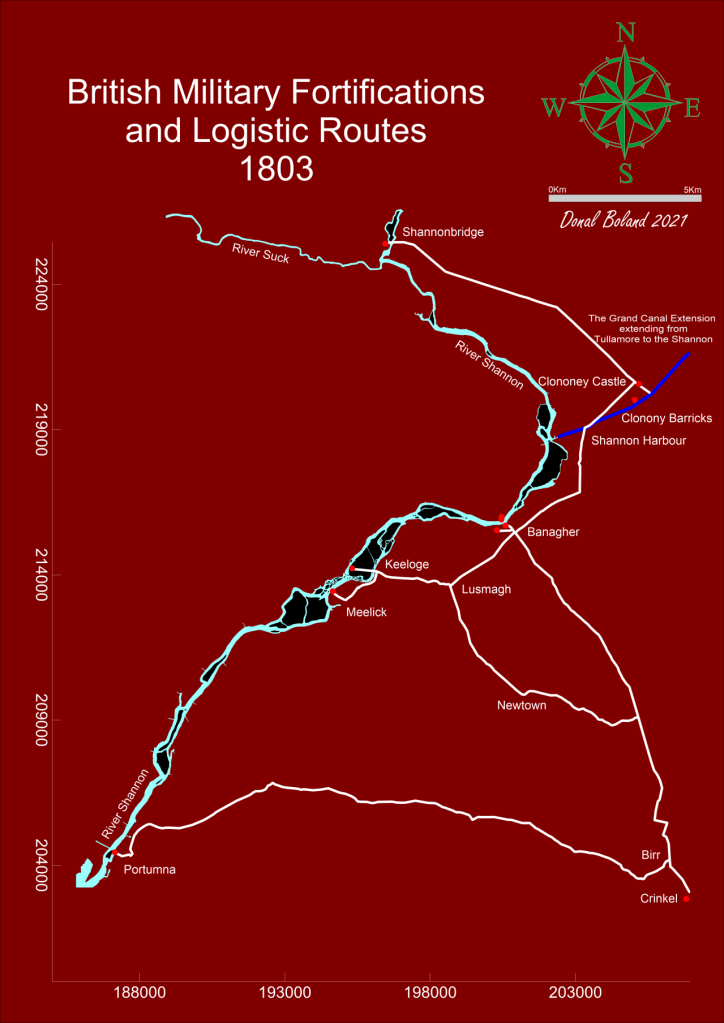
Appendix 2: The Napoleonic Aspect
1. Overview
A singlehanded trip from the River Shannon to the town of Tullamore along the western section of the Grand Canal was conducted by the writer over seven days in August, 2023. The trip was conducted aboard the heritage vessel Bomb Scow a converted thirty-three foot Royal Navy seaplane tender.
The trip, was a fact-finding event to record the on-water experience as part of an initiative to highlight the possibility of attracting more visitors to this section of the canal. Described here as The Grand Extension, previous research had revealed its construction was later than the eastern section of the canal and forming part of the British Militaries Napoleonic defensive network.
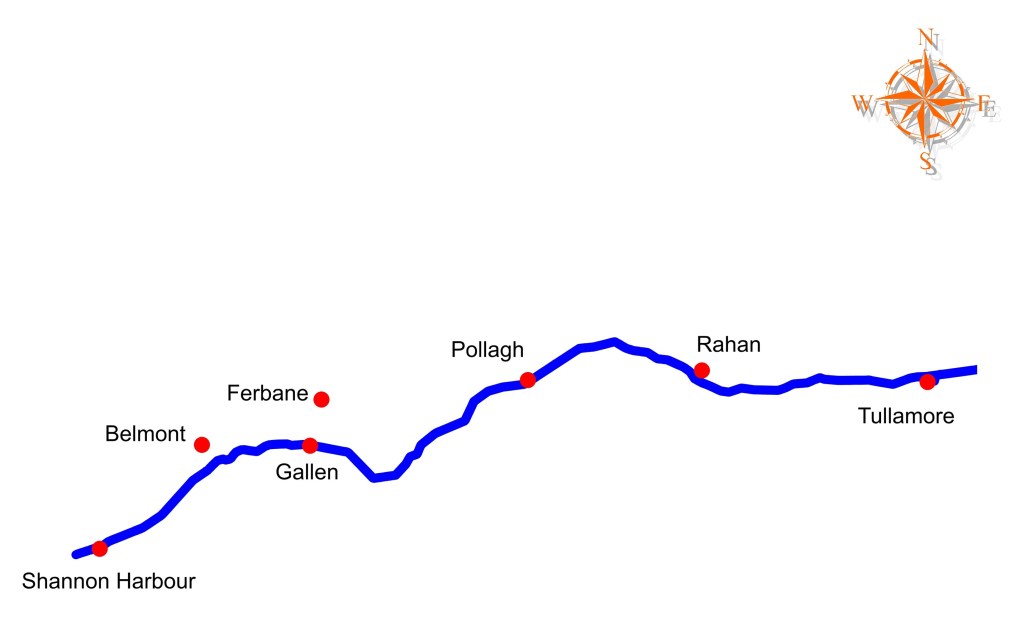
The route commenced in the west on the callow fringed landscape of the River Shannon, travelling through boglands on a raised section of the canal and terminating to the east in an Esker dominated upland landscape, encountering the villages of Shannon Harbour, Belmont, Ferbane, Pollagh, Rahan and the town of Tullamore.
The Stllwater Navigation extending for a distance of twenty two miles and rising some ninty feet is comprised historically of the waterway, ten locks, twenty bridges, eighteen aquaducts, four feeders and four spillways. Presently the waterway is managed by four lock keepers or waterway patrollers with overlapping areas of responsibility, who operate the lock systems and control the sections water levels.
The Grand Extension, Town and Villages The heritage vessel Bomb Scow moored on The Grand Extension
2. Entrance from the River Shannon
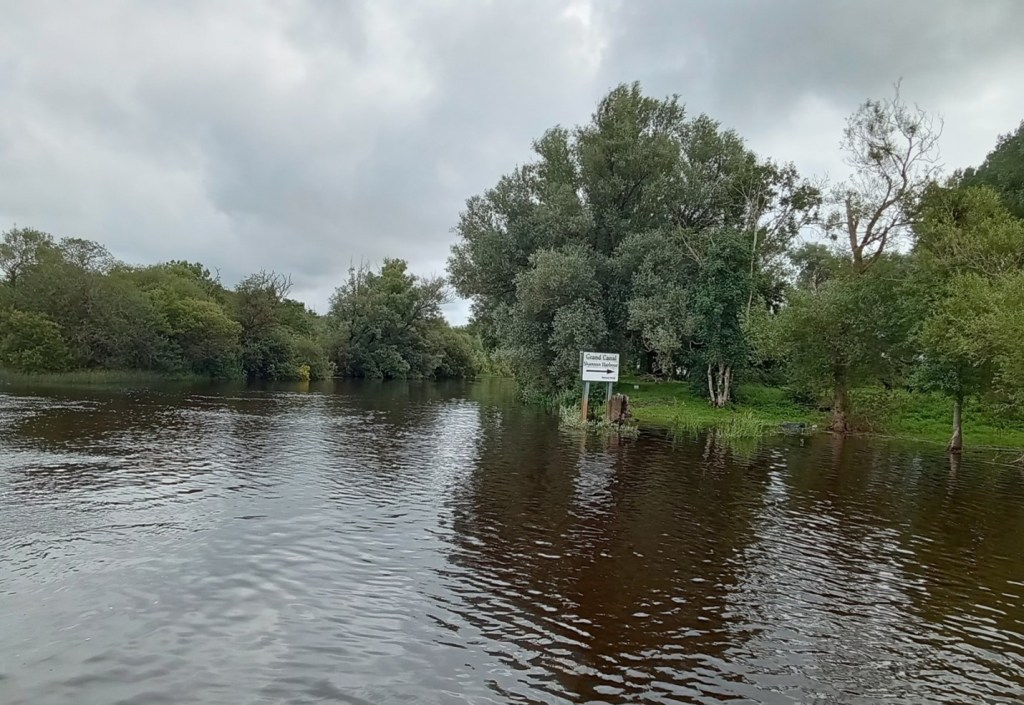
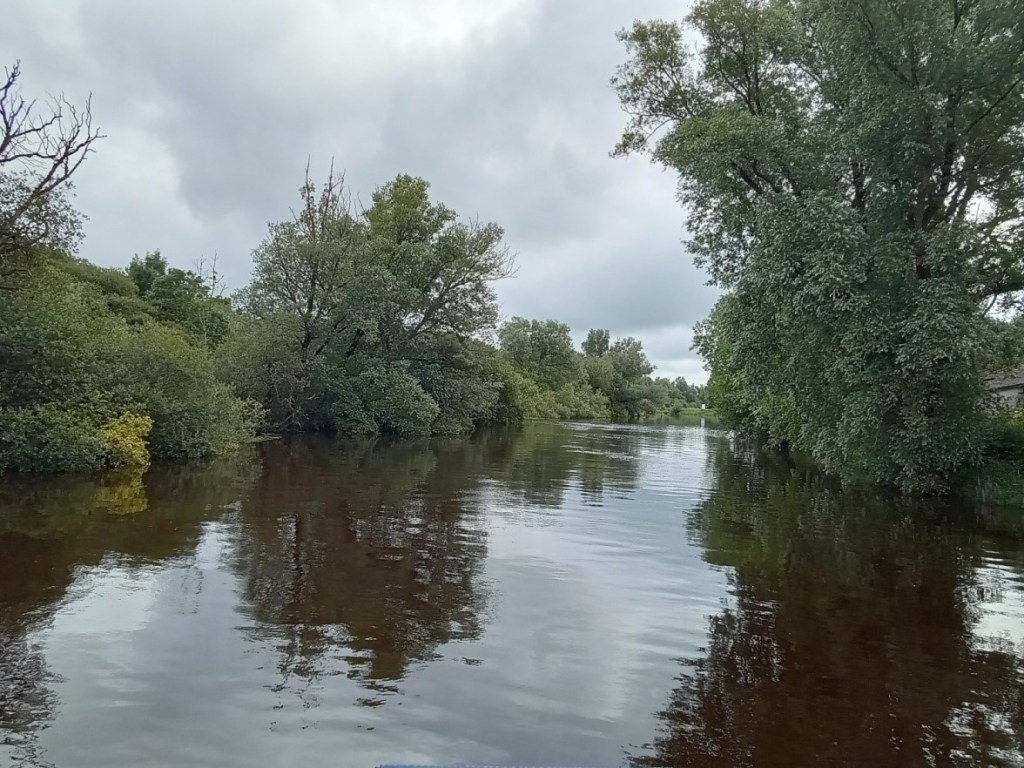
The Stillwater navigation of The Grand Extension is accessed from the River Shannon by way of the Brosna River and its confluence with the Shannon. This entrance is characterised by magnificent over-hanging foliage to the north and earthen banks associated with the canal’s construction to the south. An isolated, derelict bridge-keeper’s cottage that stands on Bullock Island is passed as you enter the River Brosna waterway.
The confluence of the River Brosna waterway with the River Shannon
The River Brosna waterway
The confluence of the River Brosna Waterway and The Grand Extension
3. Lock Number 36
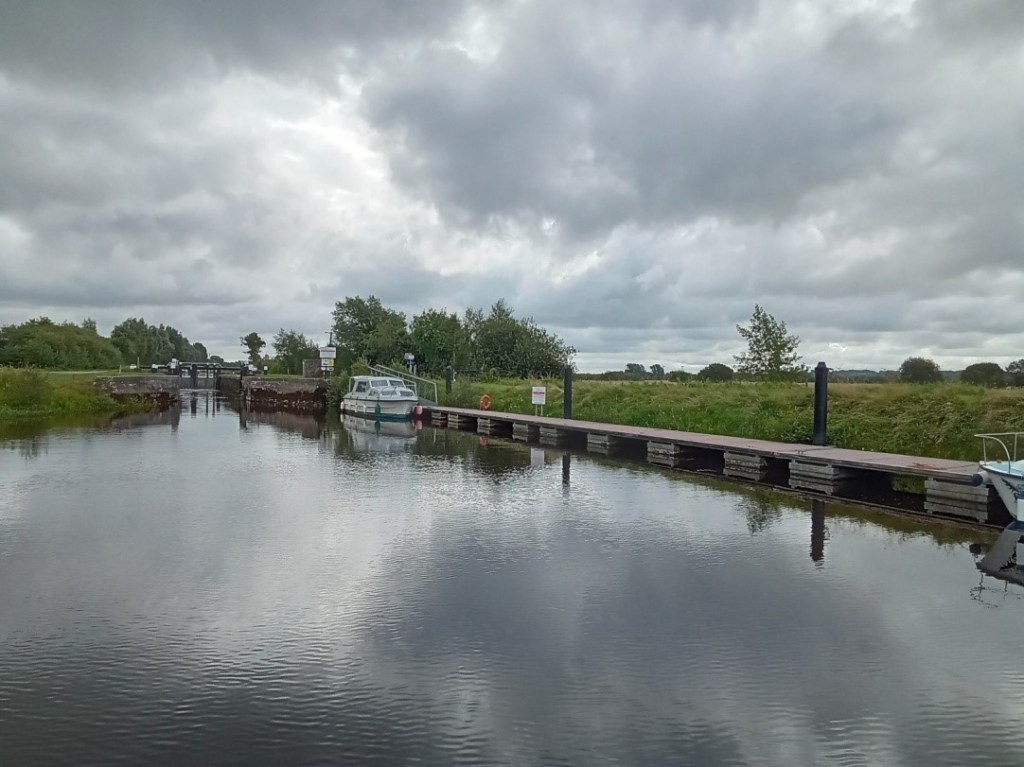
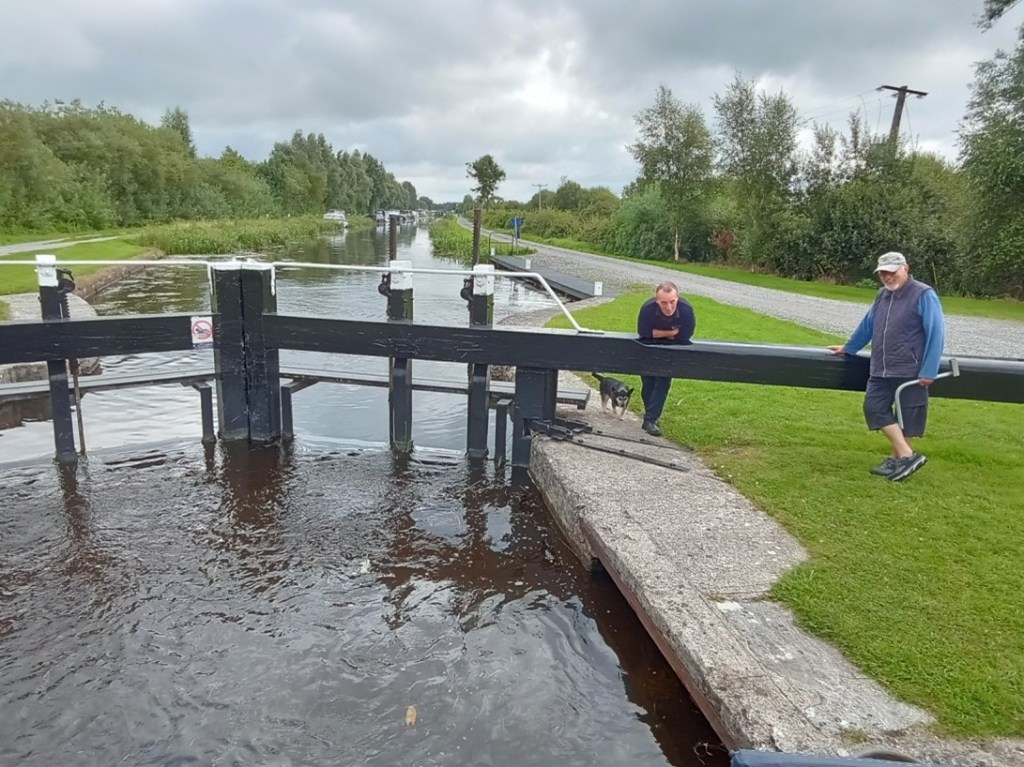
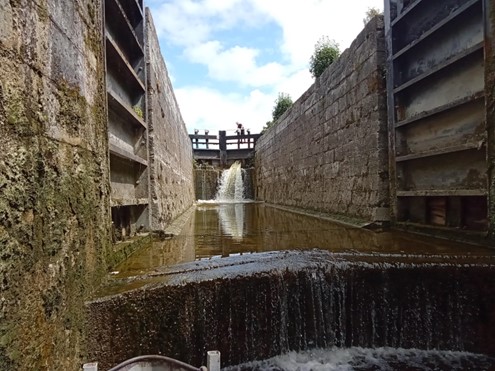
Lock 36 is the final, lowest lock on the Grand Canal system and the first lock you meet when arriving from the River Shannon. A long, floating jetty stands on the southern bank immediately below the lock, providing access to land by way of a large sloping ramp. The lock constructed of cut-stone is entered via wooden balanced, hanging gates that incorporate water control sluices, operated by the lock keeper utilising a rack and pinion mechanism mounted on the gates topside. The gates are opened and closed by way of the long balance beam that extends from each gate.
An engraved stone plaque mounted on the north wall of the lock, details the construction and features of the extension.
The entrance to Lock 36 and its large waiting jetty
The empty cut-stone lock chamber and wooden gates
The full lock chamber and upper-gates
The upper lock gates opened and the ever-attendant lock keeper
4. Lock 36 to 35
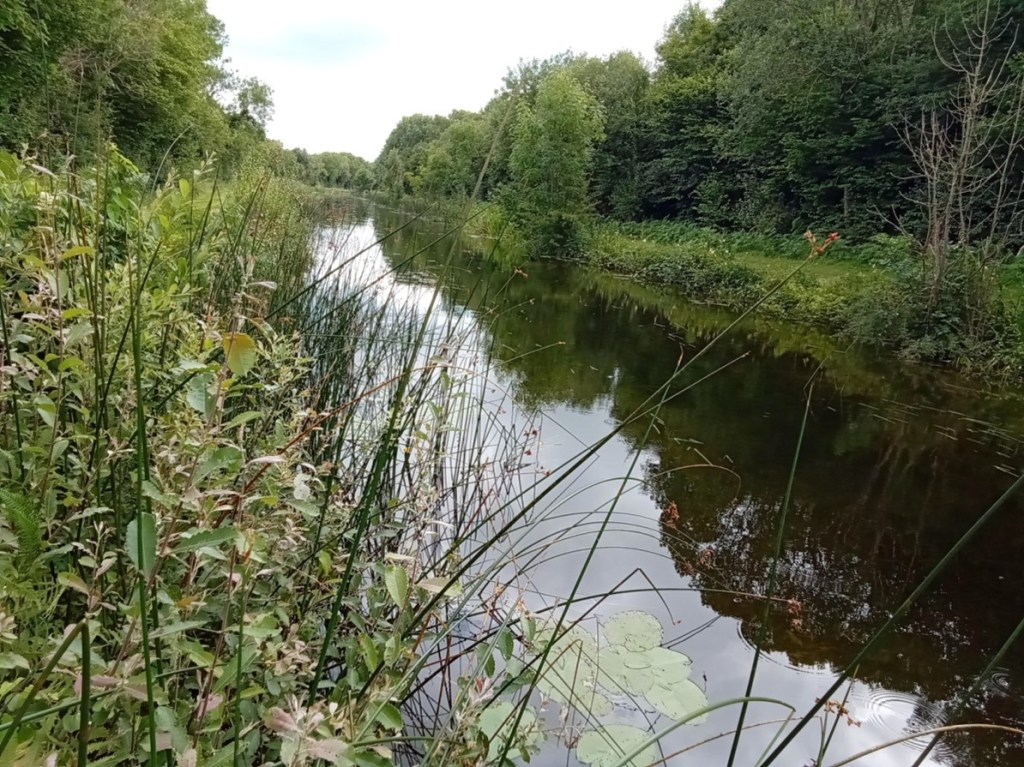
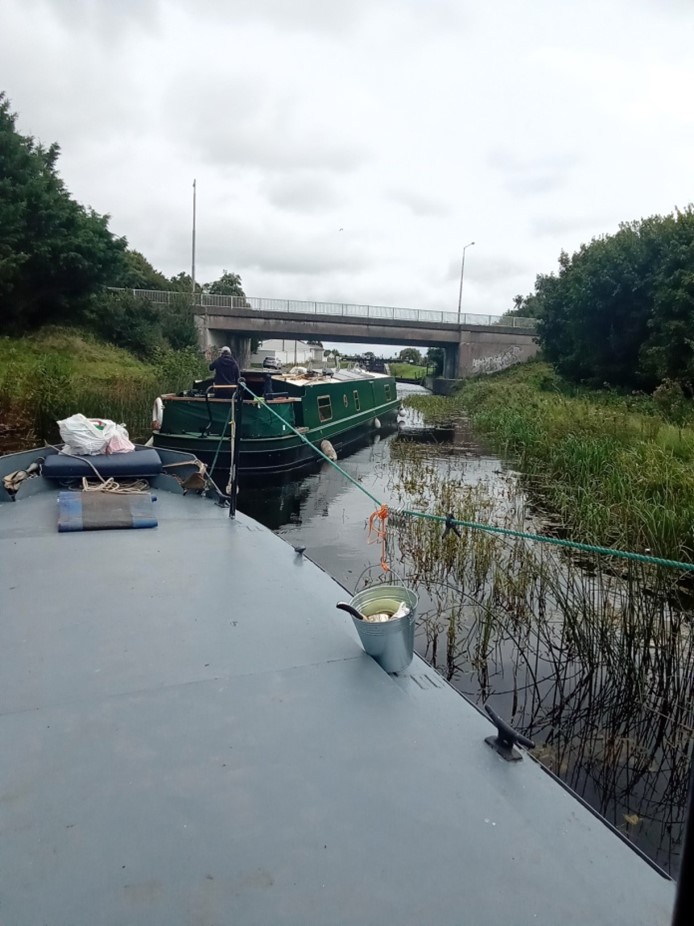
This short section of the canal provides an initial experience and understanding of the Stillwater navigation. It is many times narrower than the River Shannon with a defined navigation path bordered by moored vessels to the north and a rich reed-based ecosystem to the south.
Entering the first section of The Grand Extension
The short canal section extending from Lock 36 to Lock 35
Lock 35
5. Lock 35 to 34
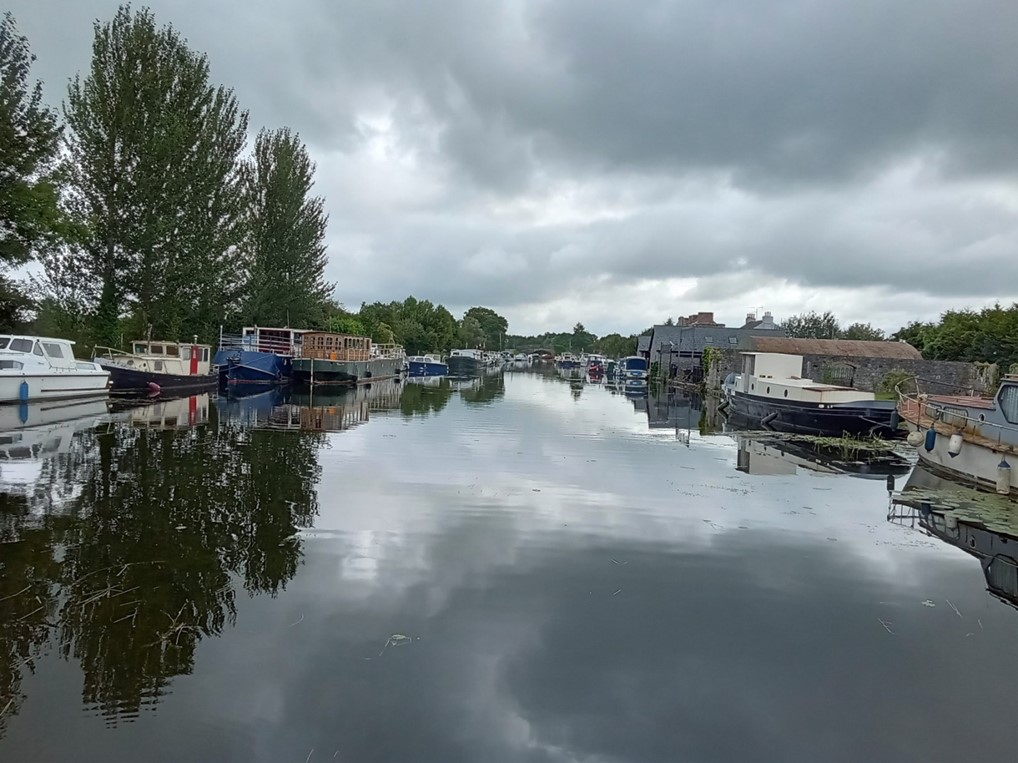
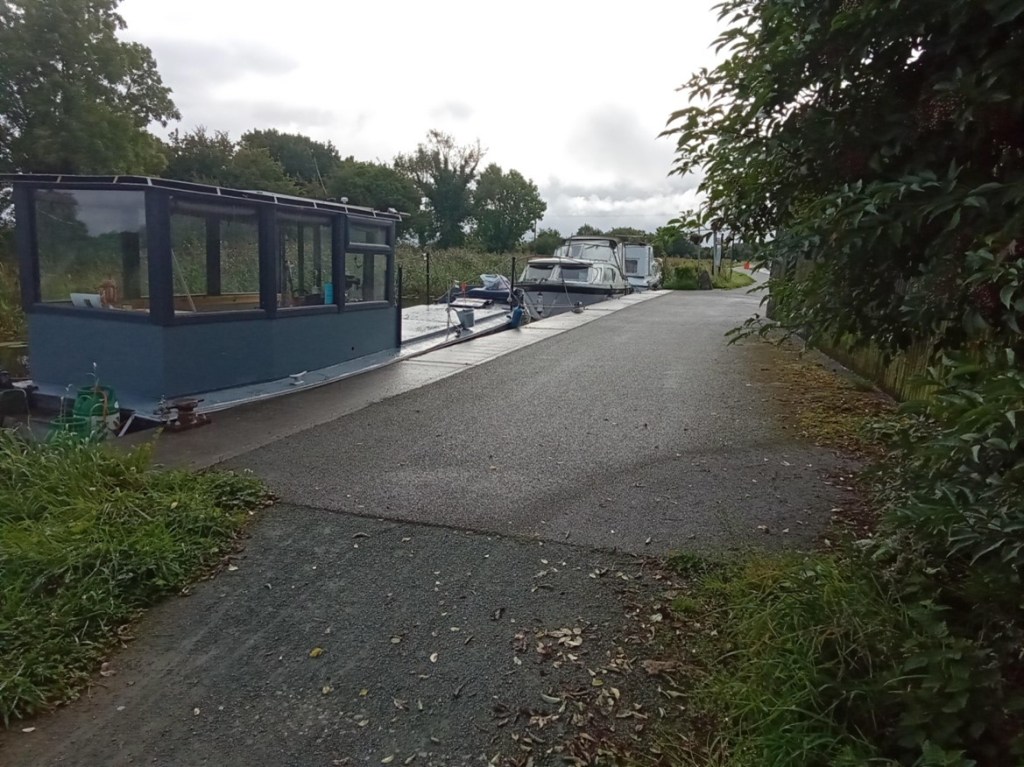
The second, Lock 35 on the system, provides access from the first level up to the second level which is comprised of Shannon Harbour, Griffith and Clonony bridges and a section of canal extending to the thirty fourth lock that contains numerous moored vessels for most of its length The waterway beyond the moored vessels starts to provide an understanding of the true characteristics of this Stillwater navigation.
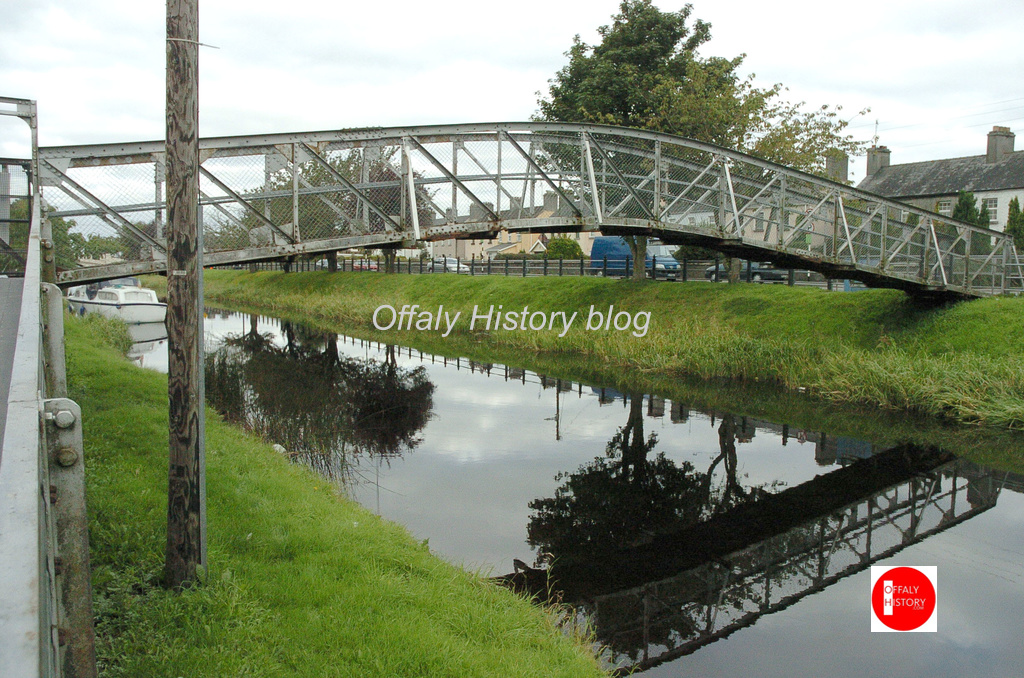
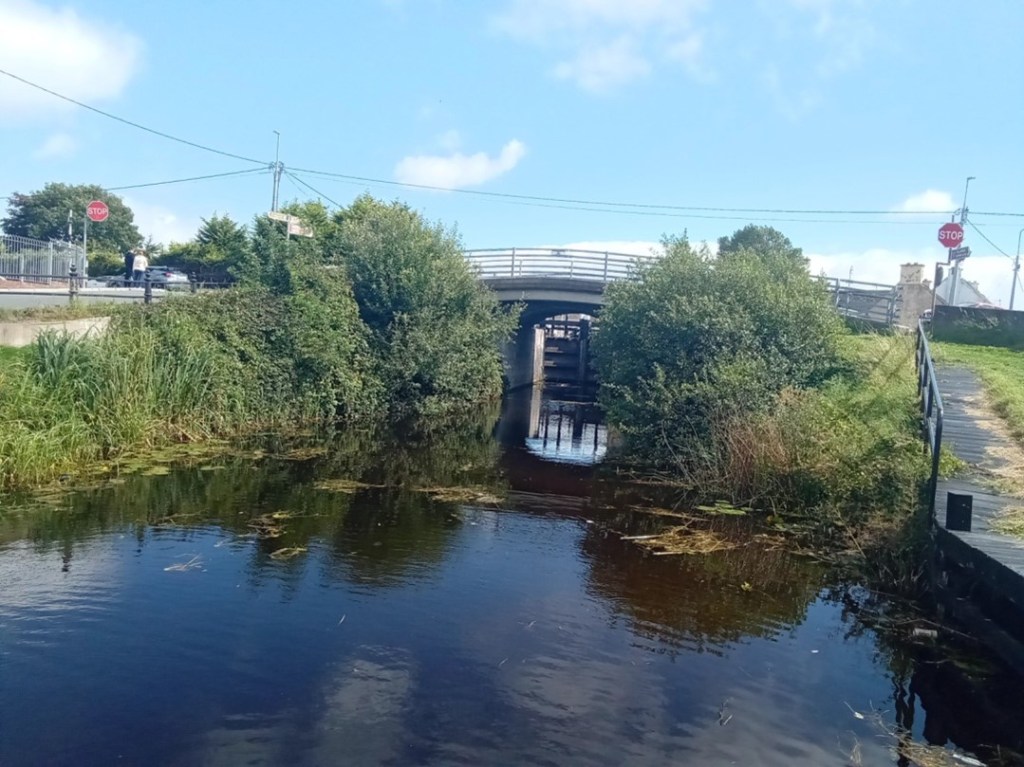
A feature of this canal is the construction of bridges and locks immediately adjacent to one another, this allowed for the transfer of horses (which were originally employed to pull barges along the navigation) from one towpath to the other.
Entering Shannon Harbour
Shannon Harbour
The canal extending to Clonony Bridge and Lock 34
Clonony Bridge and Lock 34
6. Lock 34 to 33
The section of canal east of Lock 34 is best described as the military section as along its northern bank lies the remains of Clonony Military Barracks – most likely the military destination of the canal and the reason it was constructed swiftly. The military grounds are defined to the west by a wooden fence and metal gate and to the east by a long roadside timber fence. The towpath within the military grounds is substantially wider encompassing a lay-by or mooring area. Immediately east of the military grounds lies L’Estrange Bridge and Quay which was utilised by the L’Estrange family for commercial purposes possibly associated with the barracks.
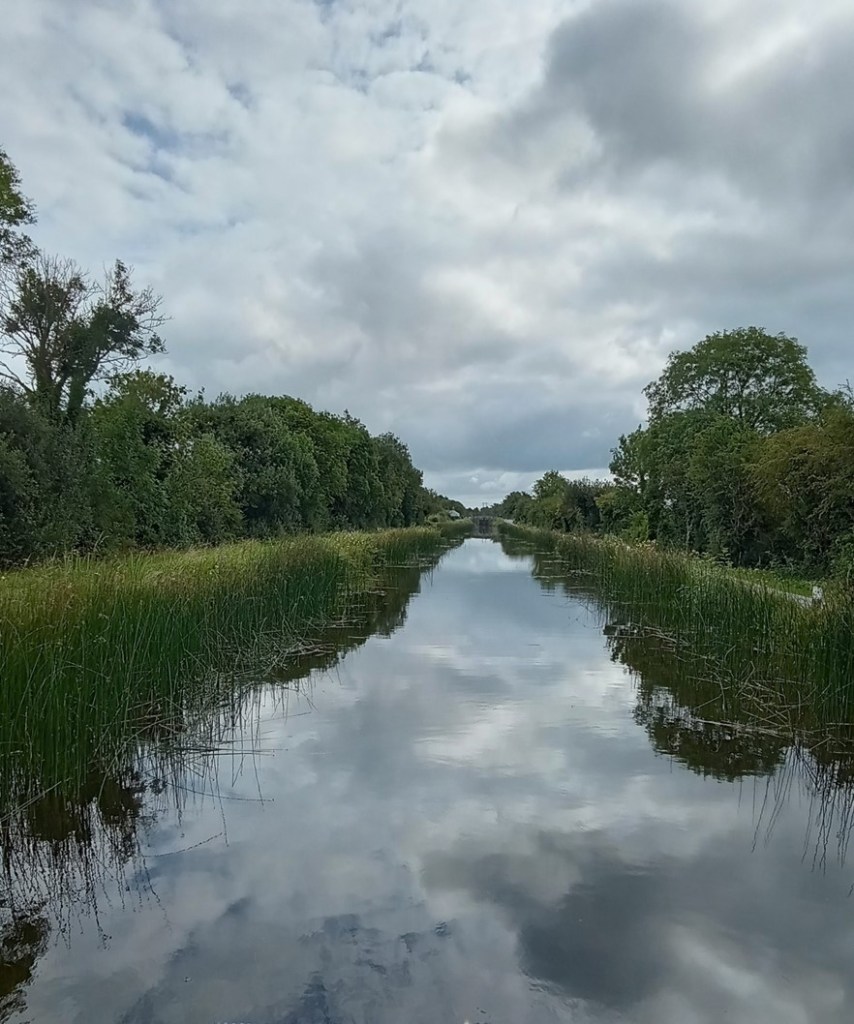
The canal beyond L’Estrange Bridge and Quay displays its mature natural character as a tranquil linear still-waterway navigation mostly devoid of habitation and humanity broken only by the arrival of Belmont Mill.
The Eastern and Western boundaries of the Military Lands
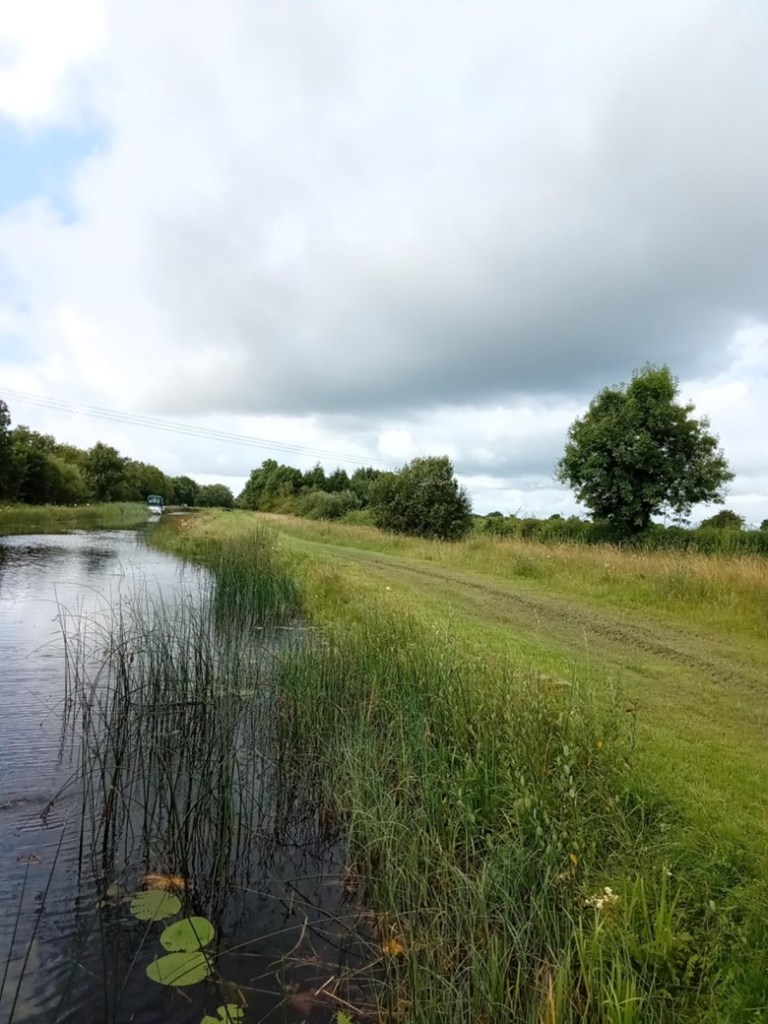
The lay-by and broader towpath within the Military Grounds
L’Estrange Bridge / Quay and Belmont Store
The magnificent natural features of The Grand Extension
7. Lock 33
Lock 33 or Belmont Lock is the only double lock on the Grand Extension. A double lock is constructed when a high lift is required at a location. The standard lift for locks on the canal is circa eight feet while the lift a Belmont Lock is some fifteen feet. Transiting this lock is a delightful experience hard to describe and best experienced.
Belmont Mill and Lock
Lock 33 at Belmont
Filling the lower level
Filling and emerging from the upper level 8.Belmont to Tullamore
The canal extending east from Belmont Lock to Tullamore is best described as isolated continuous delightful for some and a horror for others. The mind may transition into a relaxed static state imbibing the natural landscape and the activities of inhabiting creatures or one may be bored to insanity. The architecture of the locks, bridges and associated buildings coupled with the relatively unchanged landscape propels one back in time to the period of the canal’s construction in the early eighteen hundreds. This relaxation is interspersed by interludes of surprise and delight when a bridge is encountered and frantic activity when locking from one level to another. The villages of Gallen/Ferbane, Pollagh and Rahan when encountered are a connection with present times providing basic mooring facilities. The town of Tullamore provides an opportunity for the replenishment of supplies and the possibility of fresh water. The facilities available to the canal traveller are sparse and presently reflect the industrial era of canal usage.
A simple water tap
The continuous Stillwater Navigation
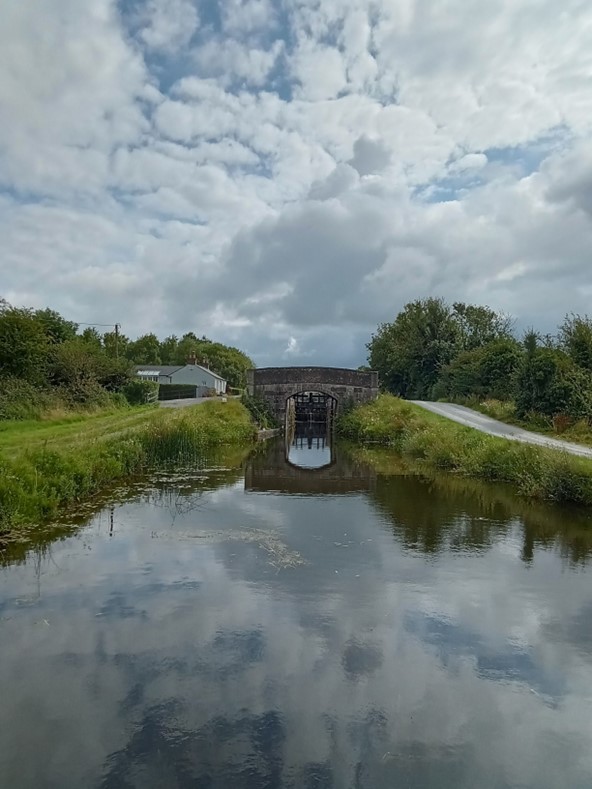
A canal bridge endowed with generations of growth
Bell’s Bridge and Lock 32
Gallen Village, bridge and rest area
Gallen Village bankside mooring area
Pollagh Village and Canal-Side facilities
Lock 31
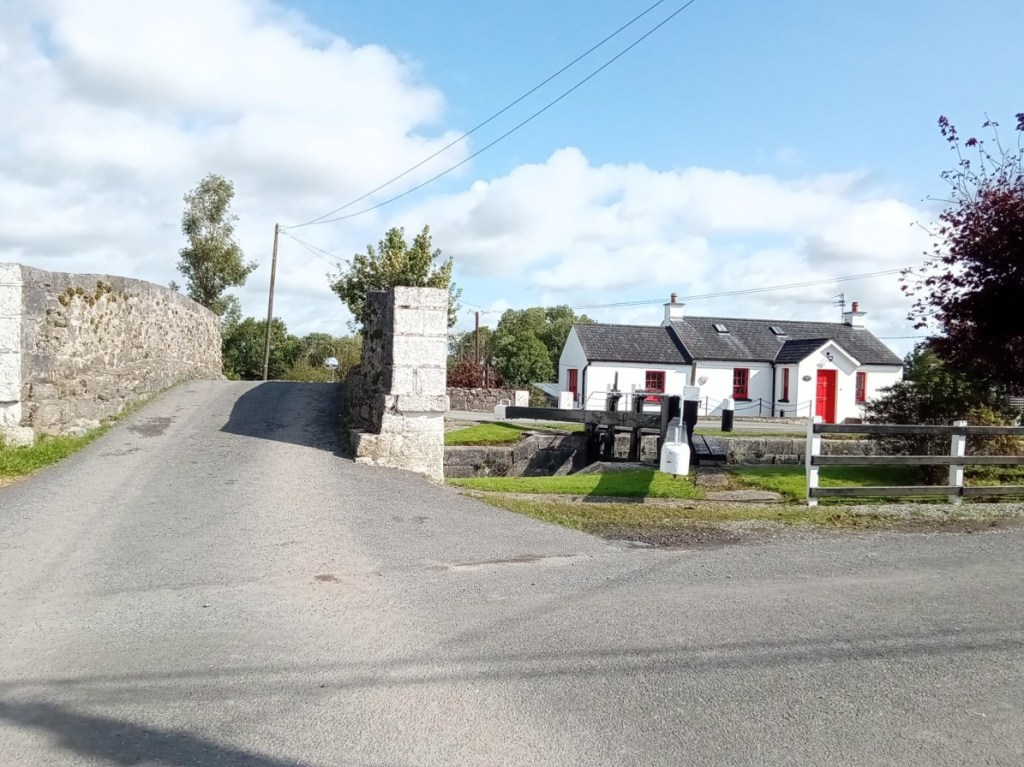
Lock 30 and the canal manager’s house.
The canal-side facilities at Rahan Village and the Thatch pub – a former Williams branch shop
Ballycowan Castle of 1626 and beside it the Huband aqueduct dated to 1803. Huband was a barrister and a director of the Canal Company from 1777 for most of the years to 1835.
Srah Castle, Bridge and and the railway bridge
Sragh Bridge and Lock 28
Entering Tullamore at the Clara Road Lock 29
The spur from the canal main line to Tullamore Harbour
The canal side facilities in Tullamore Town
9. Memories
Memories of this trip are especially positive
The waterway was weed free with a good water level
The courtesy and efficiency of the water patrollers was first class
The lock landings were in a good condition
The lock operating systems all worked well
The lock surrounds were neat and well maintained
The lock keeper’s cottages were a joy to behold
Canal-side moorings and services were adequate and of their time
Down the Decades was launched in Rahan Hall in November 2023 with a large audience and since then the new book by Tom Minnock has proved to be extremely popular with more copies printed to meet the demand. We asked Tom Minnock to tell us in this blog article about how the book came about.Born in 1922, the life of George Griffith tracked the life of the new Irish State, down through the decades. George never left his native Clonshanny giving him a local perspective on community life in the area during a fascinating period in the history of Ireland and the world.George Griffith died in March 2022.
Tom’s book is a collection of George’s reflections on that century up to 2022. Tom has set the context both locally and globally for each decade.
Tom Minnock writes:
The book is out there now and it is a peculiar feeling that is hard to put into words as something that you have spent countless hours living with takes wings. A few random words sketched out on a large note book and transferred on to a computer screen had grown and grown over time. How did this come about and why do I think it was important to publish it and expose myself to my community to be judged? I would like to share the journey and in doing so challenge you all reading this to consider writing or sharing your stories with somebody who will set them down for a future generation to ponder and continue the process.
























 offalyhistoryblog