
Over a series of articles, it is intended to examine the evolution of the ‘market place’, Tullamore to the fine square it is today. It is intended to look first at the evolution of the square over the period from 1713 to 1820 with additional comments on the building history in the last 300 years in the second article. This will be followed with analysis of the return for the 1901 and 1911 censuses and thereafter case studies of two of the houses in the square. Both are public houses, the Brewery Tap and The Phoenix, and business is conducted in the original houses albeit that both have been extended. Both are well known with the Brewery Tap one of the oldest pubs in Tullamore and The Phoenix the newest. The Brewery Tap house can be dated to 1713 and The Phoenix as a house to 1752.
(more…)Category: Local history
-
The limestone quarries of Ballyduff, Tullamore. PART 5 – Wrafter stonecutting heritage still alive. By John Wrafter. Blog No 542, 11th Nov 2023
In my previous article (Part 4) on the history of the Ballyduff quarries I looked in more detail at one of the Wrafter families involved in stonecutting at far back as at least 1807. In this article I will relate the story of two other Wrafter families of stonecutters. Members of these families are still active in the cutting, carving and sculpting of stone.
Wrafter family #2
This Wrafter family were also from Ballyduff and were heavily involved in the stonecutting trade at least from the 1850’s onwards. Between 1850 and the 1950’s at least 12 men from three generations of this family were stonecutters and most of them had at one time or another lived in Ballyduff and learned their trade at the nearby quarries. The lack of older records makes it impossible for me at present to say to what extent this family, and indeed even the other Wrafter branches, were involved in stoneworking before 1800.
Belonging to the earliest generation of stonecutters were Thomas (b. 1835, d. before 1882) and Patrick (b. ab. 1842, d. 1889). Five sons of Patrick Wrafter and his wife Katherine (nee Walsh) became stonecutters (John, Patrick, Jim, Joseph and Alec). After learning their trade in Tullamore Jim, Joseph and Alec practised their trade for extended periods in Cork and Dublin.
John worked a quarry of his own in Ballyduff in the late 19th – early 20th century. Patrick worked a quarry together with some employees in the neighbouring townland of Arden until at least 1928. Alec returned to Tullamore and also worked part of the Ballyduff quarries up to the 1950’s.
Stonecutters from this Wrafter family worked on the building of the new Catholic Church in Tullamore circa 1906. In 1908, they carved the stone tracery for a new stained-glass window for St Catherine’s Church (Church of Ireland) in Tullamore. Several of the Celtic cross grave monuments at Clonminch cemetery in Tullamore bear the names of John and Patrick Wrafter, and can arguably be considered works of art.


Clonminch, Tullamore 2 Fig. 1. Celtic cross headstones sculpted by John Wrafter (1866-1941). Erected in or around 1910 in Clonminch cemetery, Tullamore. The monument in the photo on the right (2) was made by John for his own family; three of his children and his wife are named on the headstone.
Four of the Wrafter brothers (John, Jim, Alec and Joseph) were active in the Stonecutters’ Union of Ireland, a trade union for stonecutters. The photo below is of representatives of various branches of the Stonecutters’ Union of Ireland, as well as of the union’s central organisation. The picture was taken about 1905. Two of the brothers feature in the photo:
John Wrafter (b 1864), representative for Tullamore and Alec Wrafter (b 1879), representative for Dublin.

Fig 2. Photo of members of the Stonecutters Union of Ireland (obtained from Barry Wrafter). Alec Wrafter (Dublin) back row, 2nd from the left. John Wrafter (Tullamore) back row, 2nd from the right.
James (Jim) Wrafter (b 1872) was Treasurer of the Union (perhaps the Dublin Branch) about 1909.
Joseph Wrafter (b 1882) was elected Annual Auditor of the Stonecutters’ Union of Ireland in 1907. Joseph was not living in Dublin at the time so involvement in the union would have meant regular trips by train to Dublin to attend meetings in Capel St. Several years later Joseph moved to Dublin and by 1932 he had been elected the General Secretary of the Stonecutters’ Union of Ireland. He died in Dublin in 1936.
Among the members of the Tullamore Company of the Irish Volunteers in 1916 were several stonecutters and masons from the Bracken, Wrafter and Molloy families. Joseph Wrafter was an active member and played a big part in the events of 20 March 1916, which became known as the “Tullamore incident”. In a skirmish, shots were fired and a bullet from the gun of Peader Bracken (another stonecutter) hit police sergeant Ahern. Joseph and his fellow volunteers were tried by a military court and ultimately released without conviction. Joseph was the father of the late Sister Oliver, who was a Presentation nun in Rahan and a keen local historian.
Recurring issues at the Union meetings reported by the press were demands for the use of Irish limestone in construction and the employment of Irish stonecutters in quarrying and dressing stone. Another demand was that available jobs should go to trade union stonecutters.
In 1896 stonecutters of the Stonecutter’s Union at the Ballyduff quarries went on strike over demands for higher wages and a half-day on Saturdays. The strike was short-lived as a settlement was promptly reached. Three decades later in 1922, there was another dispute over wages. This time the settlement resulted in a reduction of wages of stonecutters by 5 shillings to £3-10s, and of quarrymen by 2 shillings to £3. This may have reflected a decrease in the demand for quarried stone. In the early years of the 20th century concrete blocks began to replace stone for construction purposes, a development that was much criticized by the Stonecutter’s Union.
Several of the next generation of the Wrafter family entered the stonecutting trade. I will mention just two of them here. Patrick Joseph, born c. 1899, son of James, emigrated to America. He states his occupation as stone carver on his wedding certificate of 1922 in Albany, New York State.
John born 1891, son of John (b 1864), became a stonecutter/sculptor in Tullamore. By the 1930s he had left the stone trade and became a grocer and publican, with premises on Harbour Street (Wrafter’s Harbour Bar).
The latter half of the 20th century saw the continuing decline of the stonecutting trade. The carving of headstones was one of the few activities that survived for the employment of stonecutters. Among the Wrafters of Tullamore the trade died out. Four or five decades passed without a Wrafter putting his signature to a piece of stonework. Then in the late 1990s the Wrafter name appeared once again in connection with stonework. Barry Wrafter, the great-grandson of stonecutter John Wrafter, born 1864, and grandson of John Wrafter of the Harbour Bar, revived the family tradition, and has made a name for himself as a sculptor and stone carver.
Growing up in Ennis, Co Clare, Barry returned to the trade of his forefathers as an outlet for his creative talent. He became interested in stone carving and sculpting after learning about the history of stonecutting in his family. Barry is one of only a few stone carvers using traditional methods and skills operating at the current time in Ireland. Since 1999 he has been commissioned to produce several public works throughout Ireland. His most ambitious work to date is undoubtedly the hurling sculpture in Kilkenny city (Fig 2), which he worked on in 2016-17. Closer to the home of his ancestors is “The Turf Cutter” from 2007, which is to be seen at the entrance to Belvedere House Garden and Park, near Mullingar (Fig 3).
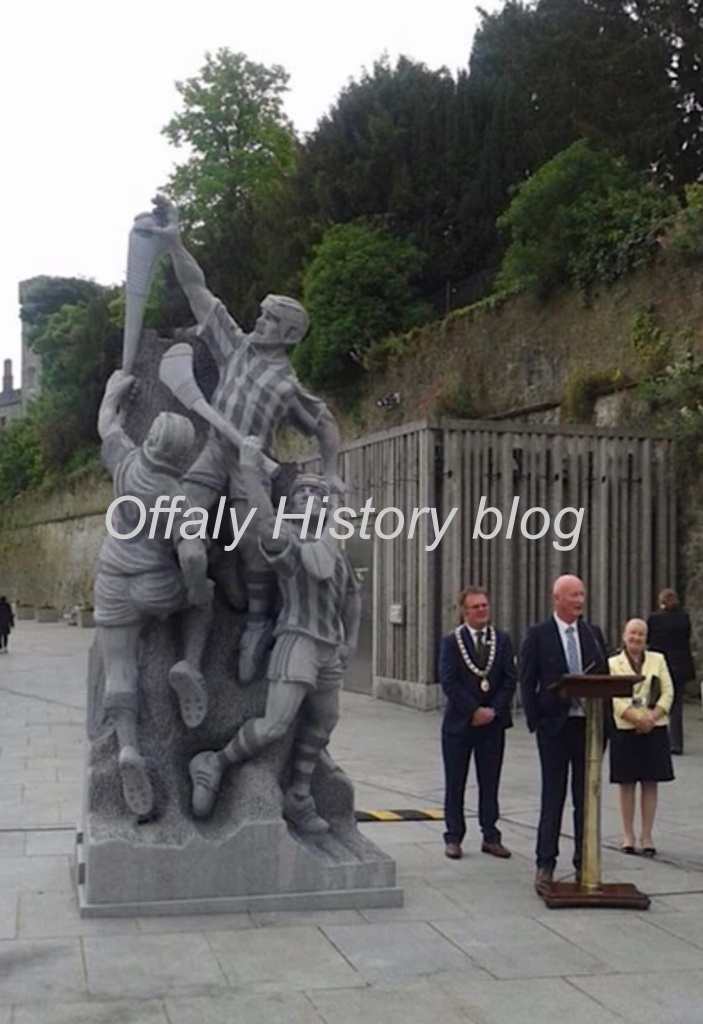
Fig 3. Barry’s major work, the Kilkenny Hurling sculpture in Irish limestone completed in 2017. (Photo: http://www.barrywrafterart.com)
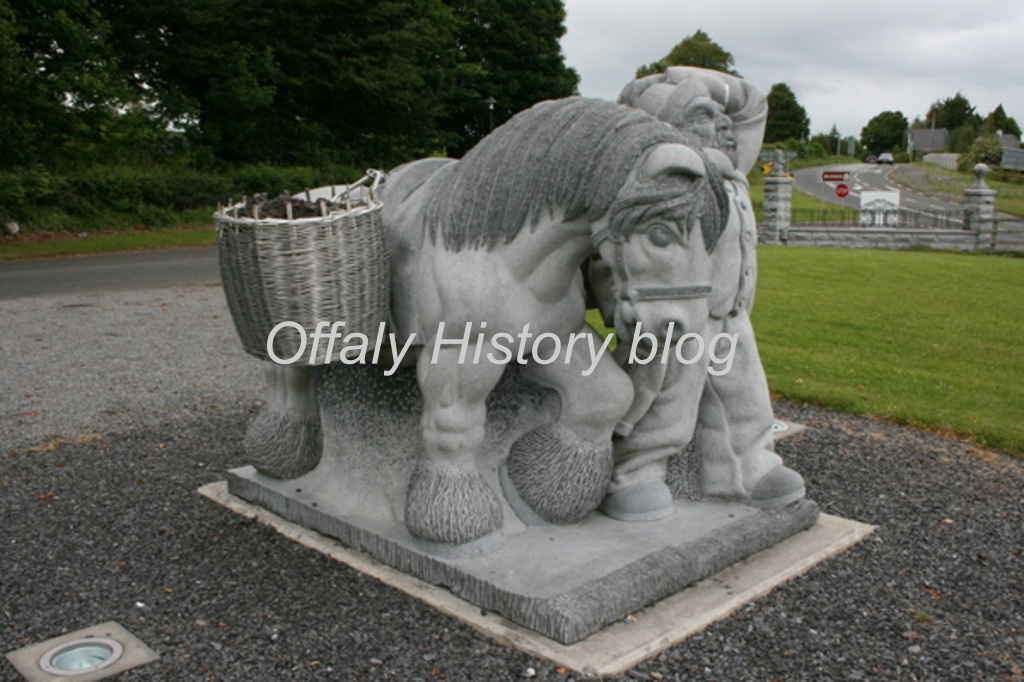
Fig 4. The Turf cutter sculpture at the entrance to Belvedere House and Gardens. (Photo: http://www.mckeonstone.ie)
More recently (in 2022), Barry was employed in the restoration of the Primark store (also called The Bank Buildings) in Belfast. The building, made of red sandstone from Scotland and completed in 1900, was ravaged by a fire in 2018. Some of his work can be seen in the photos below.

Fig 5. Pieces of carved sandstone ready for mounting into place in the Primark department store in Belfast. (Photo: Barry Wrafter)

Fig 6. Part of the facade of the Primark department store in Belfast during restoration. (Photo: Barry Wrafter)
Wrafter family #3
The third Wrafter branch involved in stonecutting may have started with Timothy Wrafter, born about 1804. Timothy, who lived in Aharney (a townland about 6 km northwest of Tullamore), was a stonecutter and farmer. He married Bridget Houghran in 1839 and had a large family; they had at least 11 children between 1840 and 1861.
At least two of the sons became stonecutters. John, born 1840, had settled in Chicago by 1880. He was married to Mary Molloy. He died in Chicago in 1904, age 65, occupation “Stone cutter”.
Another son, Timothy, born in 1849, married Anne Somers in 1877 and emigrated with his wife and two young children to Australia in 1883. They settled in the Brisbane area, where Tim continued his trade as a stonemason. Before leaving Ireland he probably worked for John Molloy at the Ballyduff quarries.
Timothy’s nephew, also called Tim, was a stonecutter according to the 1911 census. He was living with his parents in Ballykillmurray, close to Tullamore and the quarries, according to the same census. A couple of years later, in 1913, Tim made the same journey as his uncle had done 30 years earlier. He arrived in Brisbane, Queensland on 19 December 1913 on the ship Perthshire. Working with his uncle Timothy, the younger Tim learned the ropes of the trade.
Timothy eventually procured the business from his uncle and together with his two sons, Denis and Joseph, who were apprenticed as stonemasons, they founded the firm, T. Wrafter & Sons in Brisbane. It is still owned and run by the Wrafter family. They are the fifth or sixth generation of this Wrafter family involved in stonecutting. The company produces monuments, memorials, public works, and carries out church work, stone artworks and heritage restorations.
One of their most recent works is a 5-meter-tall Celtic cross standing on the grounds of Nudgee College in Brisbane. The monument, erected in August 2021 to mark 130th anniversary of the college, celebrates the school’s Irish Catholic heritage. Peter Wrafter, Company Director and a qualified stonemason, is a former pupil of the school. The material sought after for the cross was one that would exhibit good weathering properties and would have a colour resembling crosses in Ireland. Australian black granite was chosen and after a sandblast finish resembles the colour of Irish limestone. This beautiful work of art is a testament to the legacy of the Ballyduff stonecutters.

Fig 7. A recently erected Celtic cross on the grounds of Nudgee College in Brisbane made by T Wrafter and Sons, Stonemasons. (Photo: https://twstone.com.au)

Fig 8. An example of one of many public works in stone designed and produced by T Wrafter and Sons, Stonemasons., Brisbane. (Photo: https://twstone.com.au)
Given the prevalence of the name Timothy in this family there may be a link with another Timothy Wrafter who died in 1815 and whose headstone can be found in the graveyard of the old Church of St Carthage in Rahan. The tombstone is ornately carved as can be seen below.

Fig 9. The gravestone of Timothy Rafter who died in 1815, aged 33, in the graveyard of the old Church of St. Cartage in Rahan. (Photo: Paul Stafford. From booklet Offaly Tombstone Inscriptions. 1. Rahan Graveyards)
Thomas Wrafter is another Wrafter stonecutter that emigrated to Australia in the 19th century. Thomas ran a quarrying business on the outskirts of Adelaide in South Australia in 1880. He employed several stonecutters. He may be the same Thomas Wrafter that emigrated from Ireland and arrived in Brisbane in 1866. I have not been able to link him to any specific branch of the Wrafters.
Conclusion
In my research into the quarries and stonecutters of Ballyduff and Tullamore a picture has emerged that shows that the limestone quarries of Ballyduff produced some of the finest building and monument stone in Ireland. Moreover, the stonecutters that originated in Tullamore were widely recognized as some of the best in the country, and those that left Ireland (mainly to Australia) found that their skills were highly valued in their new homelands.
Many thanks to John Wrafter for these articles. Great research and we look forward to a printed publication in due course, Ed.
-
29 High Street, Tullamore – the former Motor Works house, known since the 1900s as The Manse and formerly West View. A contribution to the Living in Towns series. By Michael Byrne. Blog No 541, 8th Nov 2023
On several walking tours of High Street, Tullamore in 2023 what stuck one was how good the architecture is, the plan of the street, how much has survived, and the extent of reforms and repairs needed to houses that have become dilapidated. This article is about no. 29 High Street, the former Motor Works, and a dwelling or manse for the Presbyterian minister for over thirty years from the early 1900s. The number 29 is derived from that in the first printed Griffith Valuation of 1854.

The former Motor Works, 29 High Street, Tullamore. The signage has now been removed. If the shop fronts were removed, walled area restored and sash windows inserted etc etc. Lived in and looking well will be a good compromise in these times when so many fine town houses are struggling for life. The garden once ran to Moore Hall and behind it. The two houses to the left were also built on this generous leasehold. But then what would you not do for your doctor? No 29 is the first house on the upper east side of High Street and occupies an important visual position when seen from Cormac Street and in the distance from the old road as one walks out of Charleville Demesne. The house is of five bays and three storeys, and has ‘gable-ends with rough cast battered walls and a high pitched, sprocketed roof. The windows are small and have a good rhythm which slows towards the centre. However, they have lost their original glazing-bars. The house has a simple round-headed, architraved doorcase which is probably later in date. (Garner, 1980).
(more…)
-
Birr and the 1821 census: the case of Castle Street, Birr. An exploration for the Living in Towns series. By Michael Byrne. Blog No 537, 26th Oct 2023
In the Pigot directory of 1824 Birr was described ‘as far the most considerable of any of the towns in the King’s County. Birr was the leading town in the county from the 1620s until the 1840s By the 1820s Birr had new Protestant and Catholic churches (the latter nearing completion at the time of the census and the publishing of the Pigot directory), two Methodist chapels and a Quakers’ meeting house. The charitable institutions of Birr, were a fever hospital and dispensary, supported by county grants and annual subscriptions; a Sunday school for children of all denominations; a free school for boys, and another for girls. Birr had a gaol and a courthouse where the sessions were held four times a year. The prisoners were sent to Philipstown/Daingean which was the county town until 1835 for trial for serious crimes. From 1830 when the new gaol was built in Tullamore Birr prison was more a holding centre only. . One mile from the town were the Barracks, ‘a large and elegant building, capable of holding three regiments of soldiers’. Birr has two large distilleries and two breweries, which, it was said, gave employment to the poor of the town.
The population in 1821 was 5,400. The market day was Saturday and the fairs were four in the year. And that was it. The brief introduction to Birr in the 1820s did not engage in any detail with the census of the town in 1821 other than to produce an abstract.
(more…)
-
Lieutenant-Colonel Francis Edward Biddulph (1834-1919), St. Kilda’s, Birr, County Offaly. By Nicola Jennings. Part 2, concluded. A contribution to the Decade of Centenaries. Blog No 534, 18th Oct 2023
But while Amy Biddulph’s life was happy, these were troubled times. From the age of nine Amy began to hear of the Land League. Francis read the newspapers out loud every day for the benefit of Annabella. Just after the shooting of the Chief Secretary Lord Frederick Cavendish in the Phoenix Park, her brothers were walking along one of the roads in the town near their house with two policemen walking in front of them. They saw a flash out of one of the houses and one poor young policeman fell dead almost at their feet. There was constant anxiety about Francis. As a J.P., a landlord and an army man he was a marked man. One day he received a letter containing a picture of a coffin with his name on it. In spite of this, for the three girls growing up in Birr, there was a lively social scene.
(more…)
-
Sr Dolores Walsh and Student empowerment at the Sacred Heart, Tullamore. Recalling fifty years in a new book. Blog No 531, 11th Oct 2023
When Sr Dolores Walsh returned to Tullamore in the early 1970s to take over as principal of the Sacred Heart School she brought with her a wealth of ideas influenced by her years in California.
(more…)
The Sacred Heart School (or SHS as it has always been known by its pupils past and present) is believed to have been the first school in the country to introduce a Student Council, a concept that did not become the norm nationally until 1998.
The 50th anniversary of the Student Council in the SHS was the perfect opportunity to celebrate a concept that was decades ahead of its time and to mark the school’s role “at the heart of education, at the heart of the community,” so it was decided to publish a book.
Initial meetings were enthusiastic and optimistic and as time marched on it became obvious it was going to be more than a labour of love and was going to be a publication of some heft as contributions began to pour in.
The book’s coordinator Jacinta Gallagher Carroll cajoled and persuaded past pupils from the 1970s through to 2023 to put pen to paper and recall their Student Council and SHS experiences. The contributions varied from succinct recollections to albums of newspaper cuttings to poems and sometimes poignant essays.
-
Paul Burke-Kennedy, architect. An Appreciation by Fergal MacCabe. Blog N0 530, 8th Oct 2023
The co-founder of one of Ireland’s most successful architectural practices, Paul Burke-Kennedy died at his home in Booterstown Co. Dublin on 28 September 2023. Born in Tullamore in 1935, Paul’s father Gerry Burke-Kennedy was the popular manager of the Hibernian Bank (now part of Bank of Ireland) in the 1950s, well known for his hunting, horse racing and golfing enthusiasms and who, in later years, raised his family in the apartment above the bank premises on Bridge Street, Tullamore.
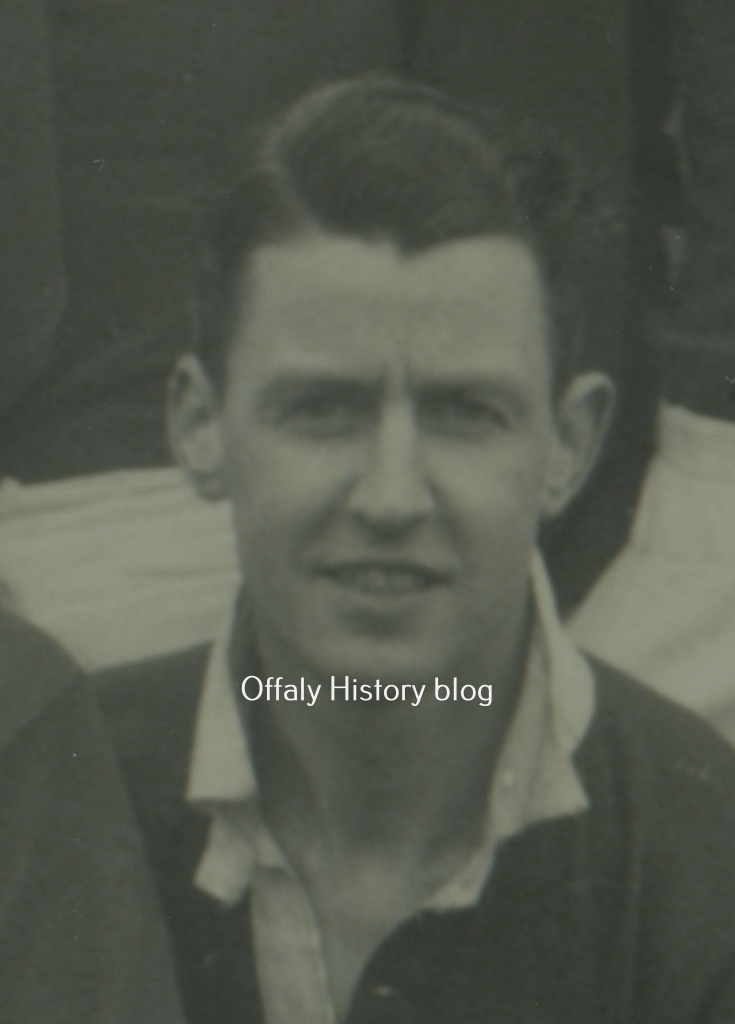
Gerry Burke Kennedy, popular bank manager in Tullamore in the 1950s and had worked in Tullamore in the 1930s, living on High Street. He was a prominent member of the new Tullamore Rugby Club (founded in 1937). Paul studied architecture in University College Dublin and soon after graduation together with Joseph Kidney formed the practice Kidney Burke Kennedy which was later joined by Des Doyle. Paul’s designs were rooted in his awareness and respect for urban context and contemporary Scandinavian design. The firm became notable from the 1960s onward for its innovative housing development in Dublin’s Ringsend, the impressive first stage of the Dublin Docklands development together with hotels for the Jury’s Group and the Conrad and many office developments including the Harcourt Centre and Earlsfort Centre and the Tallaght Town Centre.
(more…)
-
Bro Pat Guidera of the Jesuit college, Tullabeg, Tullamore recalls his role in the War of Independence and the Civil War, Mountrath and Johnswell, Kilkenny. A contribution to the Decade of Centenaries. Blog N0 528, 30th Sept 2023
Brother Pat Guidera S.J. (born 1900, died 1992) was a familiar figure in Tullamore over a period of forty-two years from his transfer to Tullabeg College in 1948 up to its closure in 1990. Today the old college is falling to ruin. Many will recall its very good order up to the 1990s and thereafter it was used in part as a nursing home. Brother Guidera wrote a short ‘Story of my life’ in 1991 and this is an extract from that now very scarce memoir – of which there is a copy in Offaly Archives (courtesy of the Irish Jesuit Archives). The college was opened in 1818 and several volumes have been published on its history but few as intimate as that of Bro. Guidera. His memoir is interesting also for the marked distinctions in the religious orders between those fully ordained and those who were effectively providing support services in the college or convent. Brother Guidera was a carpenter cum painter and many will remember him shopping in Tullamore and carrying the large carton of cigarettes in the town for his colleagues in the college
Pat Guidera was born in Mountrath in 1900 and died in 1992. The family saw lean times in his early years in the town. Here he talks about his time with the IRA from 1919 and with the Republicans in the Civil War, 1922–23. Some Tullabeg Jesuits provided support services to the old IRA in the War of Independence, especially after the attack on Clara barracks. That was long before Bro. Guidera arrived.
(more…)
-
History of transport – a County Offaly, Ireland perspective: bogs, canals, rail, steam and petrol fuelled motors. By Sylvia Turner. A contribution to the Decade of Centenaries. Blog No 526, 23rd Sept 2023
As evidence of the climate crisis increases across the world, the need to find alternative forms of energy to fossil fuels has intensified. According to the Sustainable Energy Authority, Ireland imports a little over 70% of the energy used with the EU average, being 58%. Ireland’s. Transport accounts for the most demand, with over 95% of transport energy coming from fossil fuels. Other than environmental factors, being dependent on importation of fossil fuels has led to concern about energy security due to the geo-political climate, specifically today, the Russian Ukraine War.
As a country without its own oil and a limited supply of gas and coal, peat has historically been an important fossil fuel for Ireland, providing it with some energy self-sufficiency.(Geological Survey Ireland) In recent decades, however, there is growing recognition that burning peat for fuel is not sustainable as not only is it a highly carbon inefficient fuel, intact peatlands are an efficient carbon sink, whereas damaged peatlands are a major source of greenhouse gas emissions. “. . . Ireland has more than half the European Union’s remaining area of a type of peatland known as raised bog, one of the world’s rarest habitats and, scientists say, the most effective land form on earth for sequestering carbon . . (New York Times 4 October 2022)
(more…)
-
After the Break. By Terry Adams. Blog No 524, 16th Sept 2023.
It was cold, dark and rainy that November 2017 night as we left the Embassy. My mood did not fit the weather. The warm glow of a job well done wrapped itself around my stomach and spread out to envelop my whole being. It was all hard to believe that my scribbling had brought me here.
I had started to write to commemorate my father way back in 1976, a few poems to inscribe his memory onto paper. The first one was printed in the Midland Tribune on the anniversary of his death in 1977. I was delighted to see my words in print, a feeling that persists to this day! I returned to my university and thought no more about it until I fell in love. That led to more poems, some I laugh at now but some I’m glad I wrote and, who knows, some may even have had an impact on my future wife.
So forty years later there I was sitting in a restaurant with two of my sisters and one of my daughters, all of whom had flown over for the big event. My wife and other two daughters were abroad, unavailable. The conversation floated by me a little as my mind was back in the embassy room with the Irish Tricolour and the European blue flag forming a backdrop to my poems. The whole situation was a little surreal.
The words from that beautiful, sad, song by Tommy Sands, ‘There were Roses’, floated unbidden into my mind. ‘It’s little then we realized the tragedy in store’. Now, I admit, ‘tragedy’ may be a little strong, thankfully, to describe the events that were shortly to unfold.
Five months after my uplifting evening in the Irish Embassy I found myself in the less salubrious surroundings of a psychiatric ward here in Luxembourg city. A crash due to depression had stolen up on me and twisted my mind into such a state that I needed hospitalization. For two weeks I wondered what had happened, how could I exchange the Irish Embassy for a psychiatric bed in a matter of months? How had this happened? What exactly had happened?
(more…)
 offalyhistoryblog