The finding of the De Burgo-O’Malley Chalice in a house in High Street, Tullamore in 1896 was a significant event and the chalice now features in A History of Ireland in 100 Objects.[1] Other artifacts in the 100 series include the Clonmacnoise Crozier, Old Croghan Man and the Ballinderry Brooch. Surprising omissions from the 100-book were The Shrine of St Manchan, The Book of Durrow and MacRegol’s Gospel. Never mind, these manuscripts were included in the British Library exhibition in 2018–19, and the wonderful new book The Shrine of St Manchan will make the locally held shrine known to a much wider public.[2]
The stories in this book by Vincent Henry are based on real events and are as accurate, he states, as he could make them, with many factual accounts that document characters and happenings from the end of World War II to the beginning of the 1980s.
Two months after the end of World War II, my parents, Peter Henry and Elizabeth O’Brien, who had recently married, made a far-reaching decision. Responding to an advertisement in the local Westmeath-Offaly Independent, they purchased a grocery shop with attached living premises, in Clara, County Offaly, right in the centre of Ireland. A Protestant lady called Miss Poff sold the house, shop and sizeable garden to my parents for the princely sum of £900. This was money my mother had received as an inheritance from her father.
My father, who was thirty-two years of age at the time, had spent his working life farming but wasn’t particularly fond of that occupation. He was the eldest male in his family, but his younger siblings were eager to take over the farm and he was more than happy to venture into a new career in the grocery business.
‘The Emergency,’ as World War II was known in Ireland, was still in operation at that time. Each family continued to use ration books for basic necessities such as tea, bread, butter and eggs. Showing his entrepreneurial spirit, my father circumvented the letter of the law by securing basic foodstuffs from the surrounding rural areas. He dealt directly with local farmers, and as a result was able to provide a lot of basics over and above ration allocation quotas.
Thus began our travelling shop – or ‘the van,’ as it was invariably called.
It has been a good year for new publications contributing to the history of County Offaly and helping us to get to know ourselves and our place better. When the annual report of the Tullamore Credit Union is dropped in the door you know Christmas is close. Seeing the cover and that the credit union is now sixty years old set us thinking of phases in our history. The year 1923 marked the end of the civil war. After a period of growth from 1891 to 1918 things got difficult. You could write off 1923–63 in terms of the economic engine. It was mostly switched off with exceptions in Tullamore Yarns, the Bacon Factory, Tullamore and the Williams and Egan businesses serving the midlands. The emerging Bord na Mona and ESB were providing jobs in west Offaly from the 1950s and east Offaly later, but it was the 1960s before a general ‘all boats’ lift up occurred. Equally you could say that since September 2001 (and the mobile phone) we have been living with anxiety which seems to grow every year especially since Brexit 2016 and now the war and climate change. Not to mention all the things we have to do online to comply with the requirements of banks and government. These books are all available from Offaly History, Bury Quay (and online http://www.offalyhistory) and our friends in Midland Books, Tullamore.
In 1840, the scaffolding began to come down to reveal the new convent and school of the Sisters of Mercy on Bury Quay, today Convent Road.
With the building of the County Gaol in 1830, the County Courthouse in 1835 and the Union Workhouse in 1839-41, Tullamore was rapidly acquiring substantial civic and social buildings which were adding to its prestige and promoting its new role as the capital of King’s County.
But as yet, no buildings of a religious or educational nature which might contribute equally significantly to the architectural character of the town centre had emerged. The Catholic chapel of 1802 on its backland site off Harbour Street was a relatively modest structure without a frontage presence onto a main street. Charleville School built in 1811 at the junction of Henry Street and Church Street exhibited a well-mannered but unassuming appearance. Though a most impressive structure, the siting of Francis Johnston’s St Catherine’s on Hop Hill rendered it remote from the daily life of the town.
The B.B.C.’s centenary celebrations and John Bowman’s recent feature on RTÉ’s Sunday morning broadcast which included a recording of my late father, Llewellyn Marcus Goodbody, bring to mind the important part that Clara played in the development of radio, the scientific discovery which transformed communications and is now part of everyday life. Without the backing of Irish capital it is possible that Guglielmo Marconi’s invention would never have got off the ground.
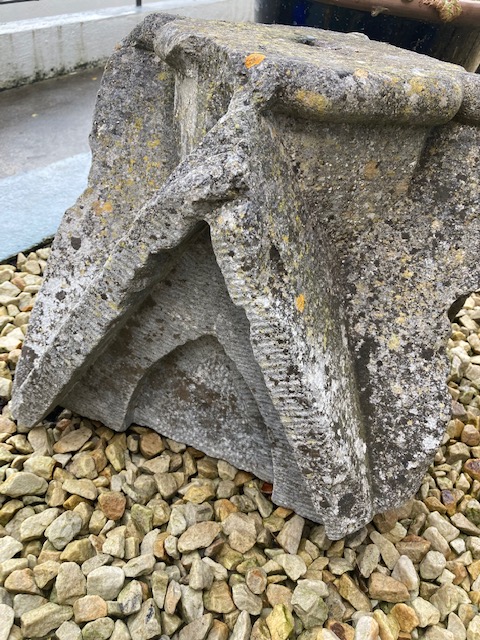
The first post-reformation Catholic Church in Tullamore parish was completed in 1775. Recently an architectural fragment from that church was presented to the Society. Ballyduff chapel was a small T-shaped building the remains of which are still standing and used to be glimpsed from the roadway between the former Wrafter’s farmhouse and the Carroll Meats factory. It is now in the grounds of Axis Business Park and easy to access.
The architectural fragment from Ballyduff first RC post-Reformation church of 1775 presented to Offaly History by John Wrafter.(more…)
Contributed by Offaly History to mark the occasion
The new book, St Manchan’s Shrine, by Griffin Murray and Kevin O’Dwyer was launched to great acclaim by the CEO of the Heritage Council Virginia Teehan on Friday 21 October 2022 at Offaly History Centre, Tullamore before a large and distinguished audience. Proceedings began at 5 30 p.m. with Amanda Pedlow ably acting as chair and introducing the four speakers. First was the author of the text Griffin Murray, followed by silversmith and photographer Kevin O’Dwyer. The County Offaly CE Anna Marie Delaney skillfully chartered the progress being made in regard to the county’s heritage while CEO Virginia Teehan paid tribute to the county for its wide-ranging involvement in heritage projects and availing of the funding available. The new Offaly Archives was a leading case but one among many successful projects undertaken. Another is that of the funding received to create the post of a biodiversity officer. Offaly has demonstrated its ability to secure funding for projects and that was a reflection of the work being done in the county. Ms Teehan congratulated the authors, Griffin Murray and Kevin O’Dwyer, on a job well done. Yet another exemplar.
Despite being out of the town for more years than I care to count I still get a kick out of telling people “I’m from Tullamore”. This often leads to “are you from the Town”? To which I readily reply in the affirmative, mentioning that I grew up on Patrick St. This invariably brings back memories of those happy days long ago. As a youngster in the 50s and early 60s I felt – and still do! – that Patrick St was the centre of the universe, a fantastic microcosm of daily life at the crossroads of the known world (well, High Street and William Street). To my young eyes it was Times Square, Piccadilly and the Istanbul souk all rolled into one. I remember the great variety of shops, with all kinds of enticing and exotic goodies, and behind the counters a wonderful collection of “grown-ups”, friendly but also each a source of curiosity to this young shopper. There was Talbots, definitely first among equals, where all your sweet fantasies could be fulfilled: ice creams (“wafers”) went from 2 pennies to 6 pennies (though I also remember a one penny half portion), while every cavity inducing confection was available from big glass jars. Particularly good value was the two-penny chocolate covered Trigger toffee bar. Turning right out of our house, you came to Cathy Dunne’s sweet shop, cousins of my dad, and always with an encouraging word for the “little fella”.
Collecting books on your favourite topics is an ever present challenge that can give great satisfaction and broaden as well deepen one’s knowledge of a subject. On 8 October 2022 Offaly History Centre is hosting a book fair, such as not seen in the town for three or four years. Many dealers are coming so why not call and talk books from 10 a.m. to 5 p.m., but don’t get caught in the callows! Bring money and enthusiasm.
Book fair day 8 Oct. The Society has over 50,000 books of which 25,000 are for sale comprising about 3,000 titles. The Society’s 13,000 titles in its library can be viewed on http://www.offalyhistory.com as to the titles. Call if you want to read something including many of the latest Irish history publications.(more…)


 offalyhistoryblog