We looked a few days ago at Charles Lever’s description of Shannon Harbour through the eyes of Jack Hinton (1843) and which he commenced writing in the winter of 1841. Another visitor to Banagher was the celebrated novelist, Anthony Trollope. Material has already been published on Offaly History blog on Trollope’s connection with Banagher where he arrived in September 1841 to take up employment with the Post Office. In his Kellys and the O’Kellys (London, 1848), Trollope sends Martin Kelly from Portobello, Dublin to Ballinasloe. His description of the journey is as derogatory as Lever’s and may well be autobiographical as Trollope travelled on the canal as a young man to take up that first post at Banagher.
A singlehanded trip from the River Shannon to the town of Tullamore along the western section of the Grand Canal was conducted by the writer over seven days in August, 2023. The trip was conducted aboard the heritage vessel Bomb Scow a converted thirty-three foot Royal Navy seaplane tender. Our thanks to Donal Boland for this comprehensive overview of the Brosna Line, Shannon Harbour to Tullamore which is better presented as one extensive with its helpful picture coverage. This comprises articles 6 to 10 in the series on Grand Canal Offaly.
Content
Overview
Entrance from the River Shannon
First Lock Number 36
Lock 36 to 35
Lock 35 to 34 Shannon harbour
Lock 34 to 33 Clonony Barracks
Lock 33 Belmont…
Belmont to Tullamore
Memories
Appendix 1: Hull and Spoke Concept
Appendix 2: The Napoleonic Aspect
1. Overview
A singlehanded trip from the River Shannon to the town of Tullamore along the western section of the Grand Canal was conducted by the writer over seven days in August, 2023. The trip was conducted aboard the heritage vessel Bomb Scow a converted thirty-three foot Royal Navy seaplane tender.
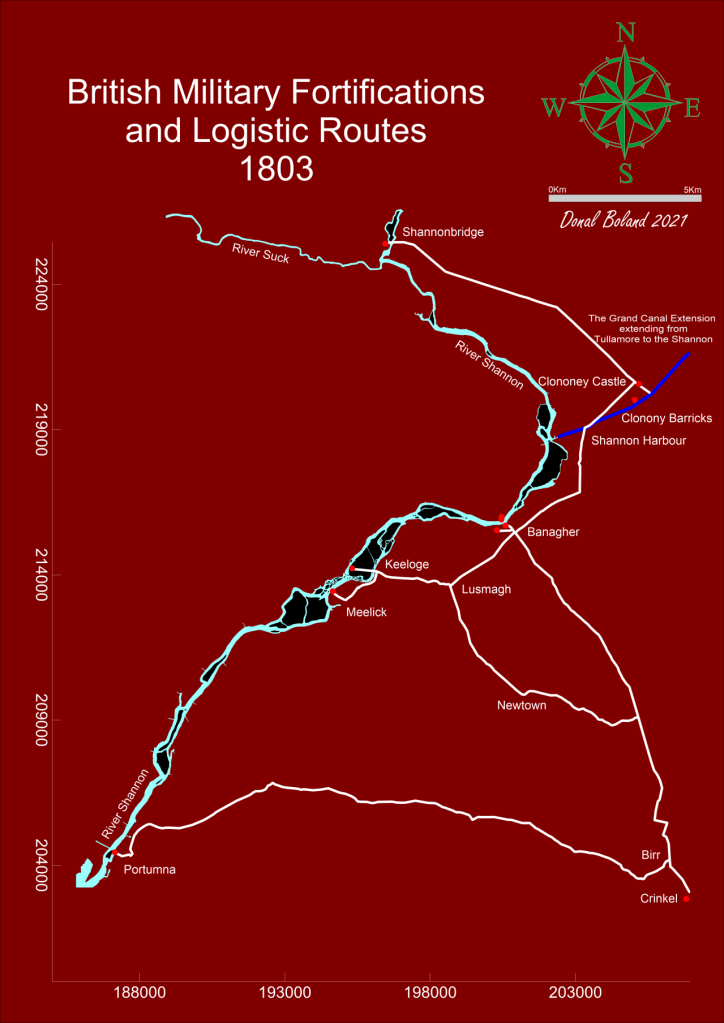
The trip, was a fact-finding event to record the on-water experience as part of an initiative to highlight the possibility of attracting more visitors to this section of the canal. Described here as The Grand Extension, previous research had revealed its construction was later than the eastern section of the canal and forming part of the British Militaries Napoleonic defensive network.
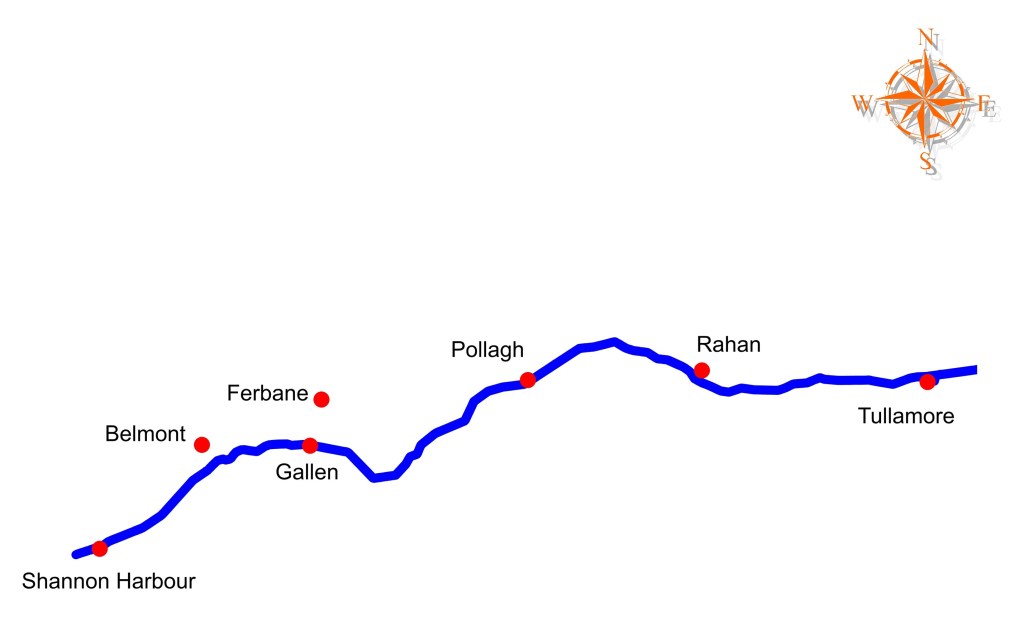
The route commenced in the west on the callow fringed landscape of the River Shannon, travelling through boglands on a raised section of the canal and terminating to the east in an Esker dominated upland landscape, encountering the villages of Shannon Harbour, Belmont, Ferbane, Pollagh, Rahan and the town of Tullamore.
The Stllwater Navigation extending for a distance of twenty two miles and rising some ninty feet is comprised historically of the waterway, ten locks, twenty bridges, eighteen aquaducts, four feeders and four spillways. Presently the waterway is managed by four lock keepers or waterway patrollers with overlapping areas of responsibility, who operate the lock systems and control the sections water levels.
The Grand Extension, Town and Villages The heritage vessel Bomb Scow moored on The Grand Extension
2. Entrance from the River Shannon
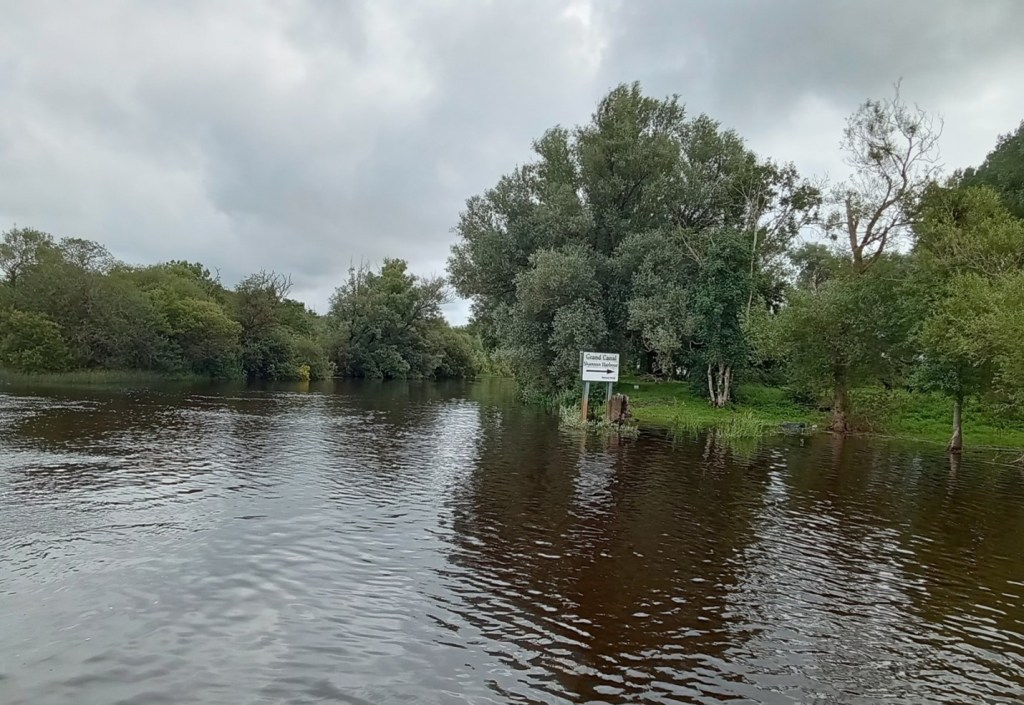
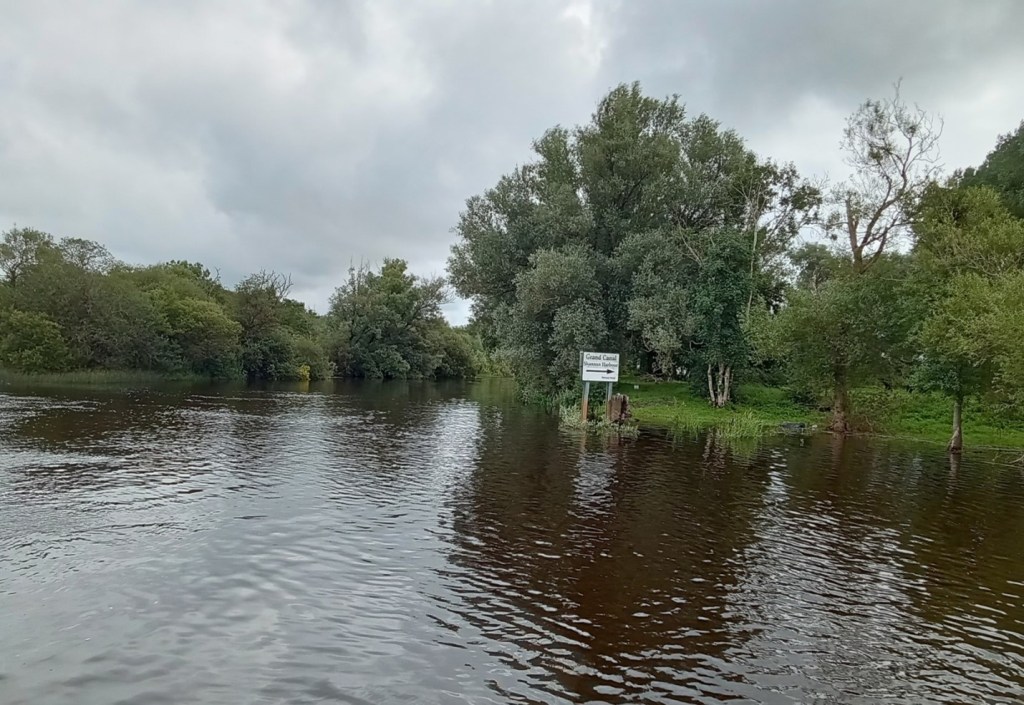
The Stillwater navigation of The Grand Extension is accessed from the River Shannon by way of the Brosna River and its confluence with the Shannon. This entrance is characterised by magnificent over-hanging foliage to the north and earthen banks associated with the canal’s construction to the south. An isolated, derelict bridge-keeper’s cottage that stands on Bullock Island is passed as you enter the River Brosna waterway.
The confluence of the River Brosna waterway with the River Shannon
The River Brosna waterway
The confluence of the River Brosna Waterway and The Grand Extension
3. Lock Number 36
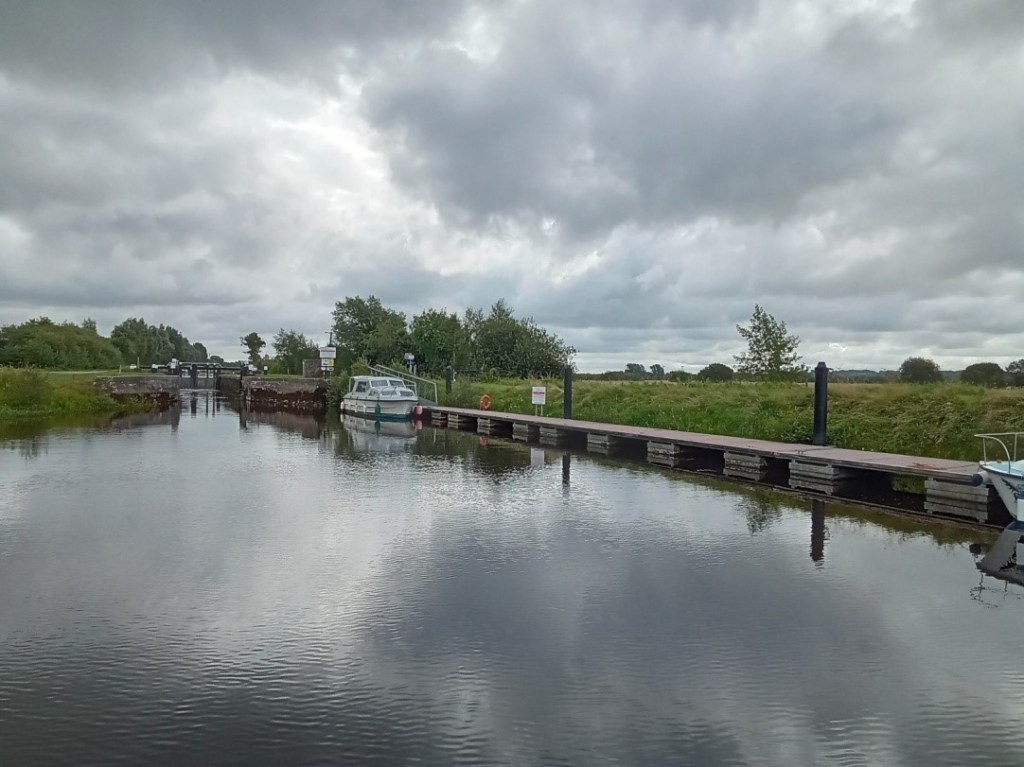
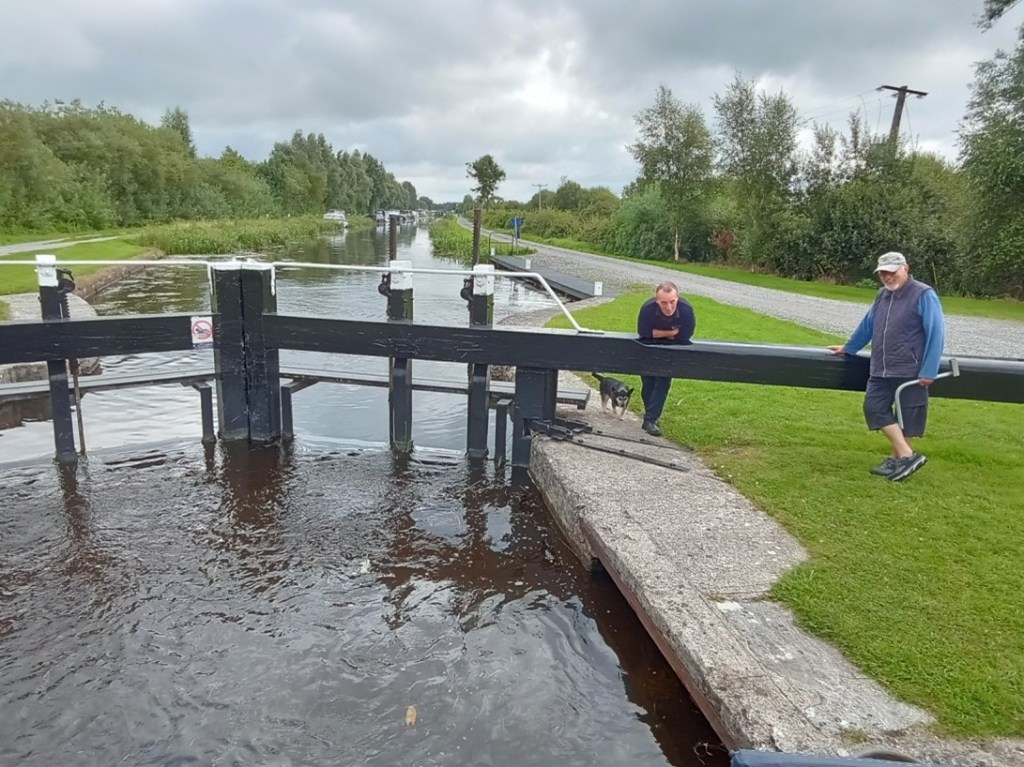
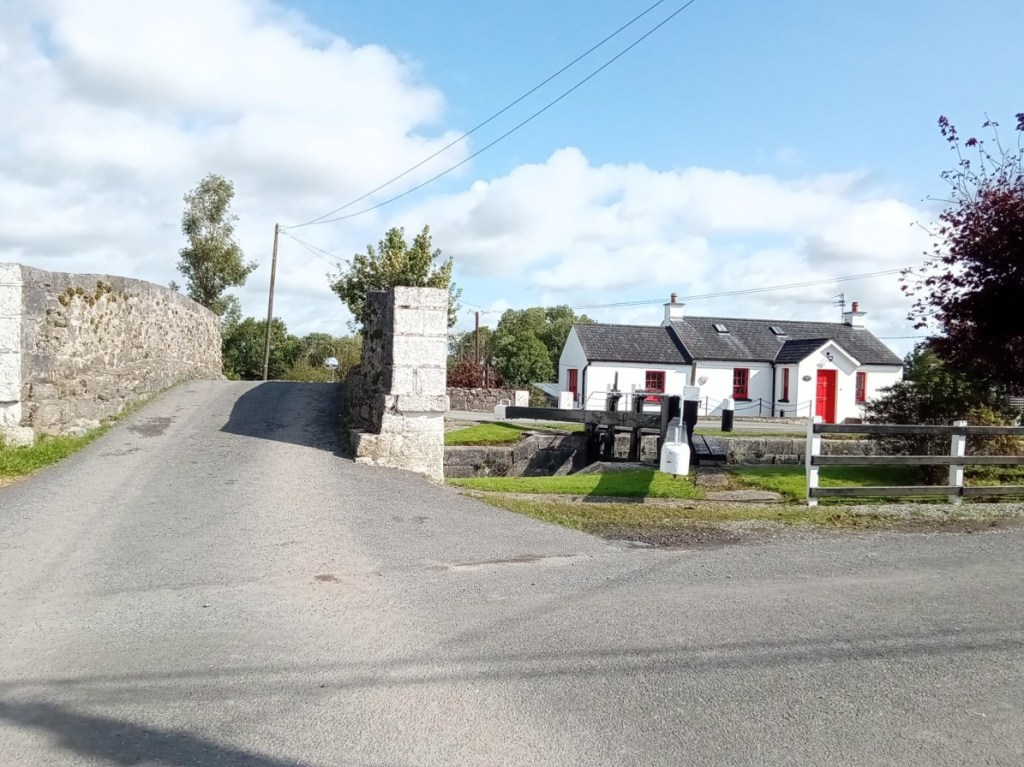
Lock 36 is the final, lowest lock on the Grand Canal system and the first lock you meet when arriving from the River Shannon. A long, floating jetty stands on the southern bank immediately below the lock, providing access to land by way of a large sloping ramp. The lock constructed of cut-stone is entered via wooden balanced, hanging gates that incorporate water control sluices, operated by the lock keeper utilising a rack and pinion mechanism mounted on the gates topside. The gates are opened and closed by way of the long balance beam that extends from each gate.
An engraved stone plaque mounted on the north wall of the lock, details the construction and features of the extension.
The entrance to Lock 36 and its large waiting jetty
The empty cut-stone lock chamber and wooden gates
The full lock chamber and upper-gates
The upper lock gates opened and the ever-attendant lock keeper
4. Lock 36 to 35
This short section of the canal provides an initial experience and understanding of the Stillwater navigation. It is many times narrower than the River Shannon with a defined navigation path bordered by moored vessels to the north and a rich reed-based ecosystem to the south.
Entering the first section of The Grand Extension
The short canal section extending from Lock 36 to Lock 35
Lock 35
5. Lock 35 to 34
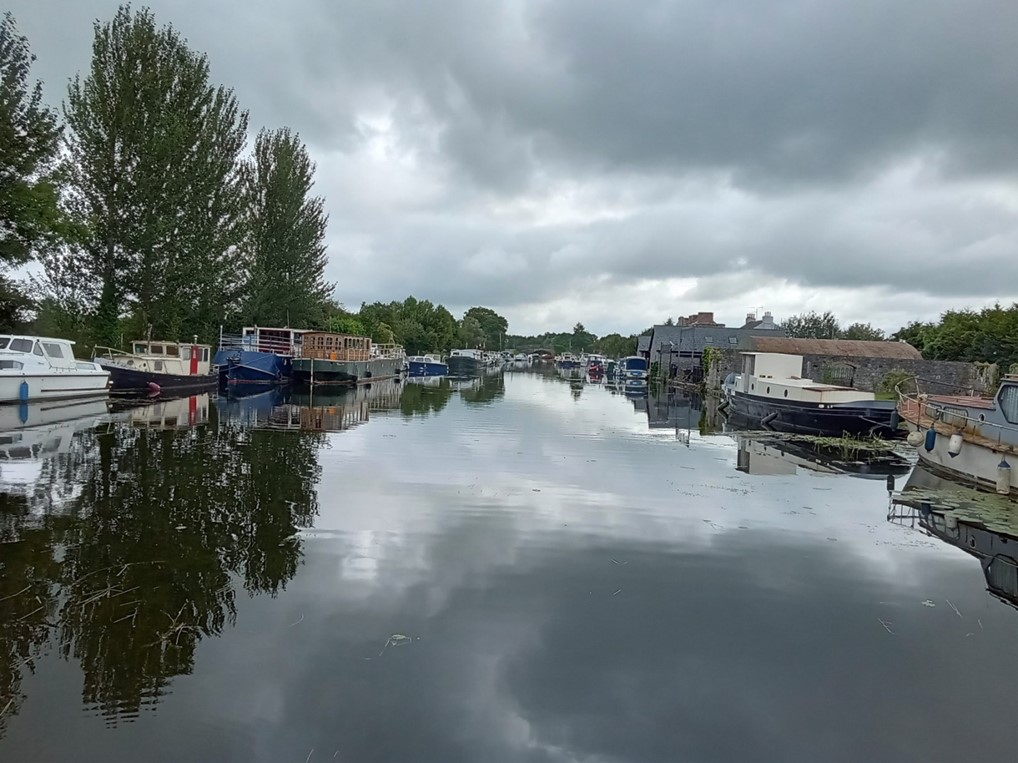
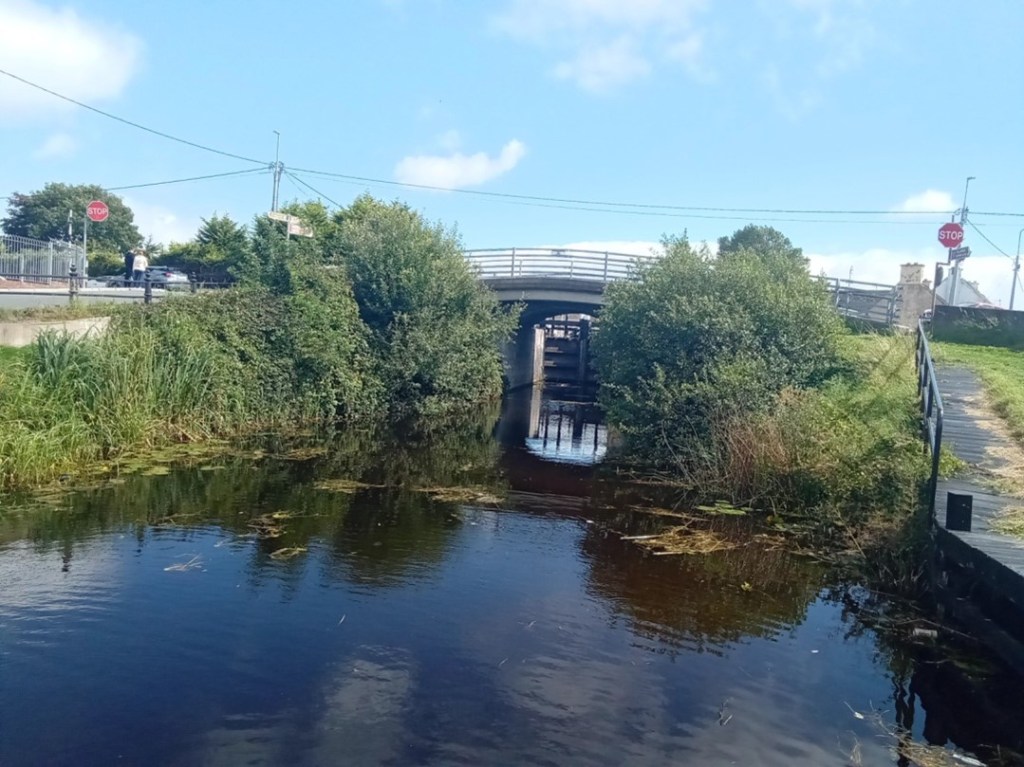
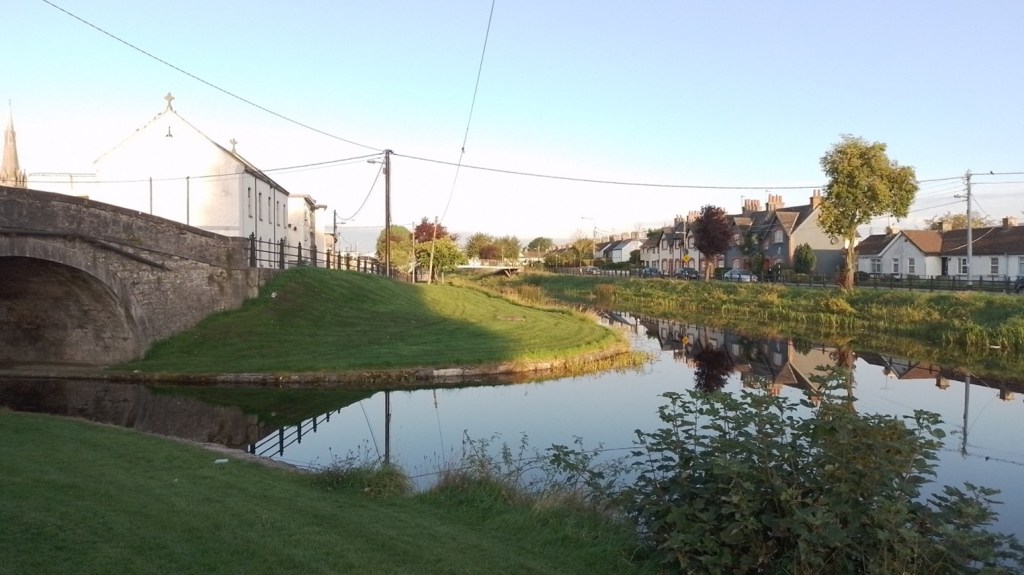
The second, Lock 35 on the system, provides access from the first level up to the second level which is comprised of Shannon Harbour, Griffith and Clonony bridges and a section of canal extending to the thirty fourth lock that contains numerous moored vessels for most of its length The waterway beyond the moored vessels starts to provide an understanding of the true characteristics of this Stillwater navigation.
A feature of this canal is the construction of bridges and locks immediately adjacent to one another, this allowed for the transfer of horses (which were originally employed to pull barges along the navigation) from one towpath to the other.
Entering Shannon Harbour
Shannon Harbour
The canal extending to Clonony Bridge and Lock 34
Clonony Bridge and Lock 34
6. Lock 34 to 33
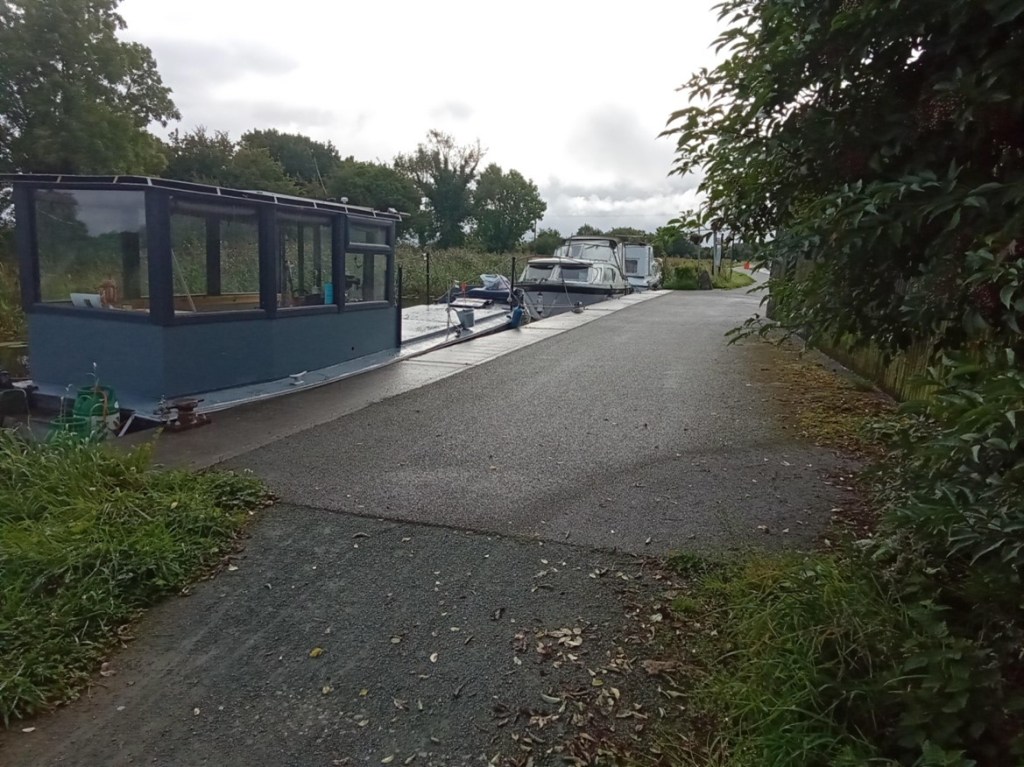
The section of canal east of Lock 34 is best described as the military section as along its northern bank lies the remains of Clonony Military Barracks – most likely the military destination of the canal and the reason it was constructed swiftly. The military grounds are defined to the west by a wooden fence and metal gate and to the east by a long roadside timber fence. The towpath within the military grounds is substantially wider encompassing a lay-by or mooring area. Immediately east of the military grounds lies L’Estrange Bridge and Quay which was utilised by the L’Estrange family for commercial purposes possibly associated with the barracks.
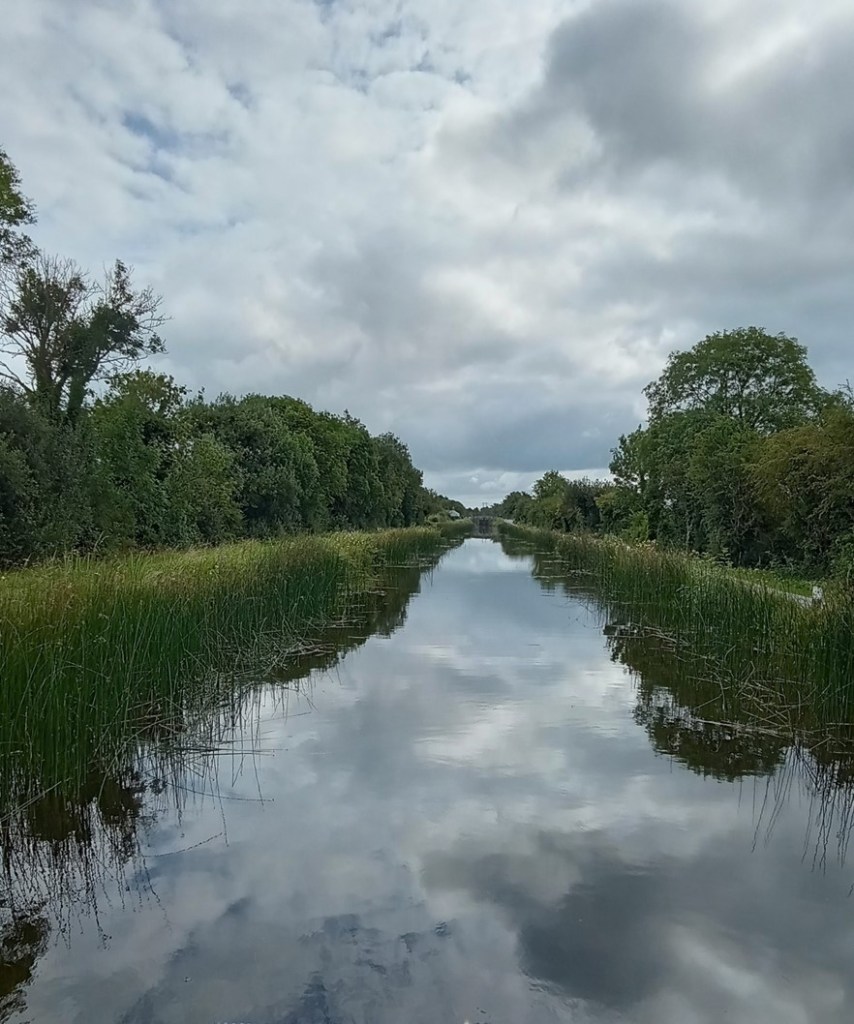
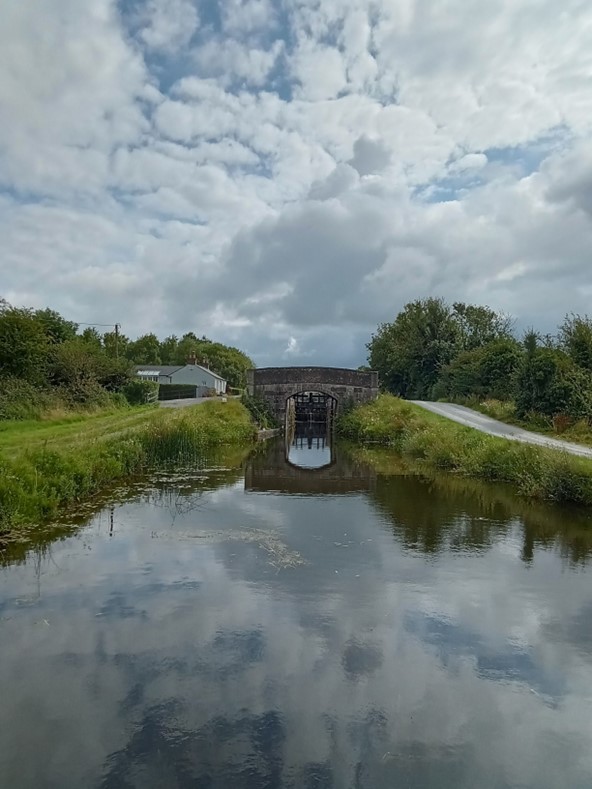
The canal beyond L’Estrange Bridge and Quay displays its mature natural character as a tranquil linear still-waterway navigation mostly devoid of habitation and humanity broken only by the arrival of Belmont Mill.
The Eastern and Western boundaries of the Military Lands
The lay-by and broader towpath within the Military Grounds
L’Estrange Bridge / Quay and Belmont Store
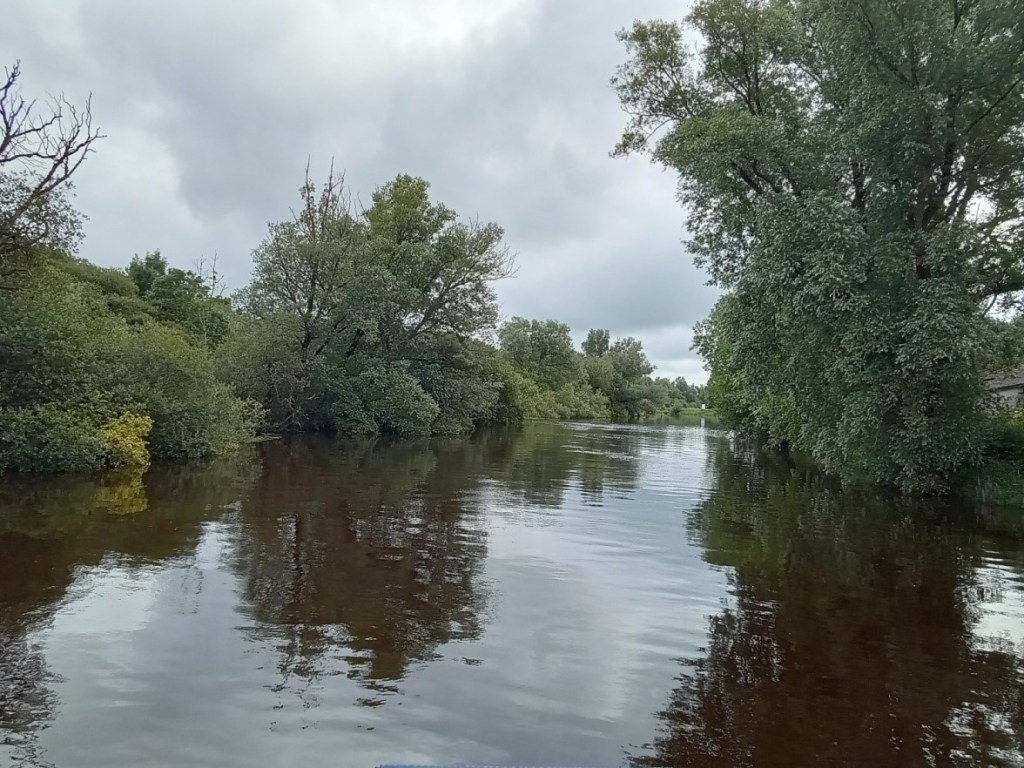
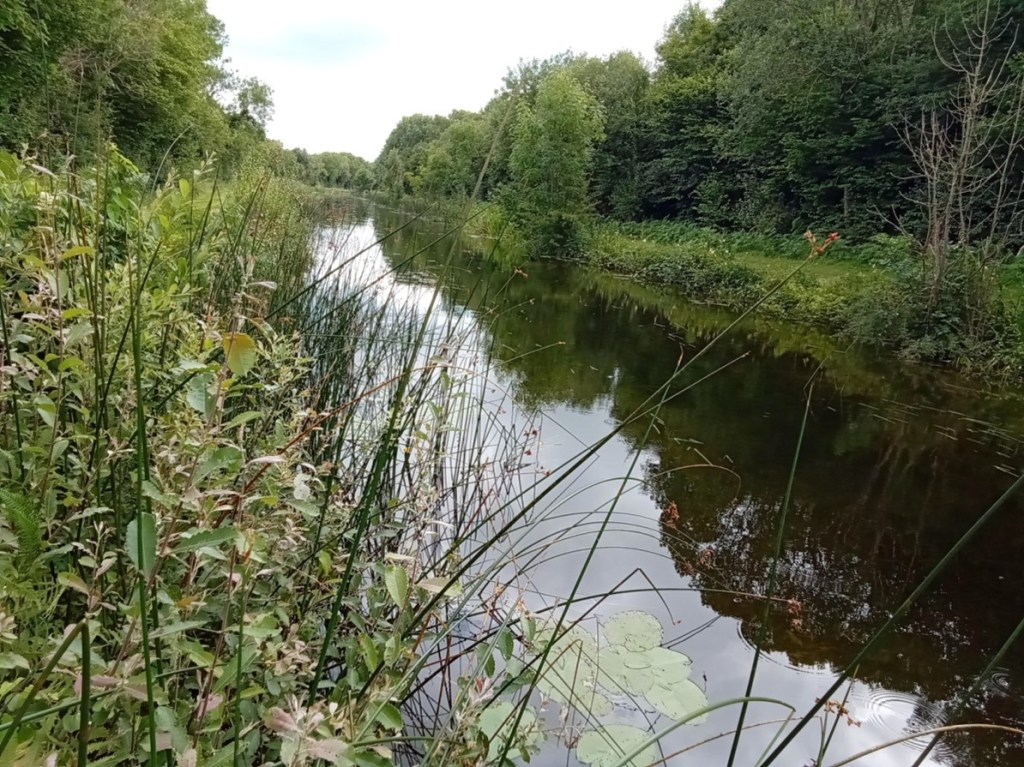
The magnificent natural features of The Grand Extension
7. Lock 33
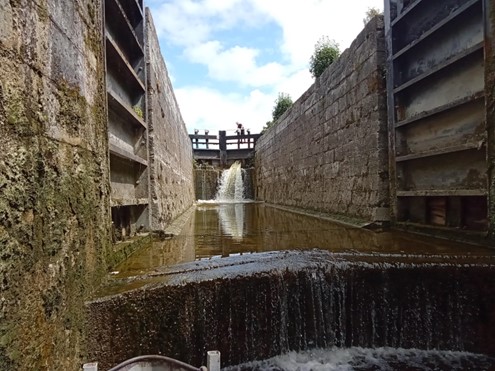
Lock 33 or Belmont Lock is the only double lock on the Grand Extension. A double lock is constructed when a high lift is required at a location. The standard lift for locks on the canal is circa eight feet while the lift a Belmont Lock is some fifteen feet. Transiting this lock is a delightful experience hard to describe and best experienced.
Belmont Mill and Lock
Lock 33 at Belmont
Filling the lower level
Filling and emerging from the upper level 8.Belmont to Tullamore
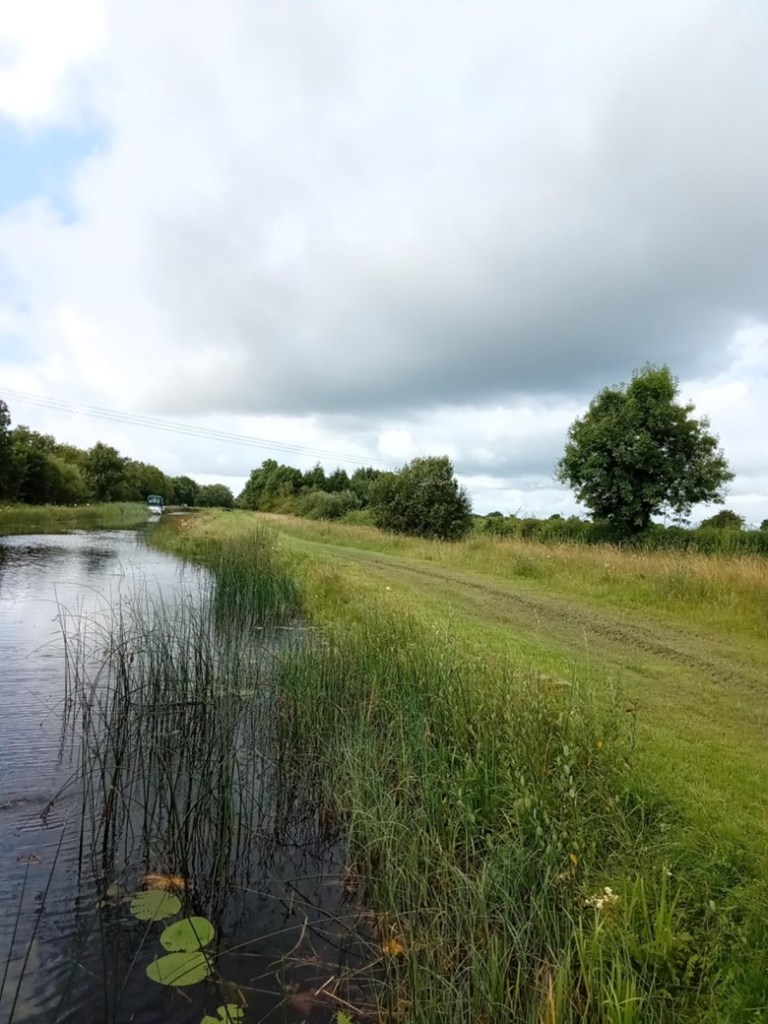
The canal extending east from Belmont Lock to Tullamore is best described as isolated continuous delightful for some and a horror for others. The mind may transition into a relaxed static state imbibing the natural landscape and the activities of inhabiting creatures or one may be bored to insanity. The architecture of the locks, bridges and associated buildings coupled with the relatively unchanged landscape propels one back in time to the period of the canal’s construction in the early eighteen hundreds. This relaxation is interspersed by interludes of surprise and delight when a bridge is encountered and frantic activity when locking from one level to another. The villages of Gallen/Ferbane, Pollagh and Rahan when encountered are a connection with present times providing basic mooring facilities. The town of Tullamore provides an opportunity for the replenishment of supplies and the possibility of fresh water. The facilities available to the canal traveller are sparse and presently reflect the industrial era of canal usage.
A simple water tap
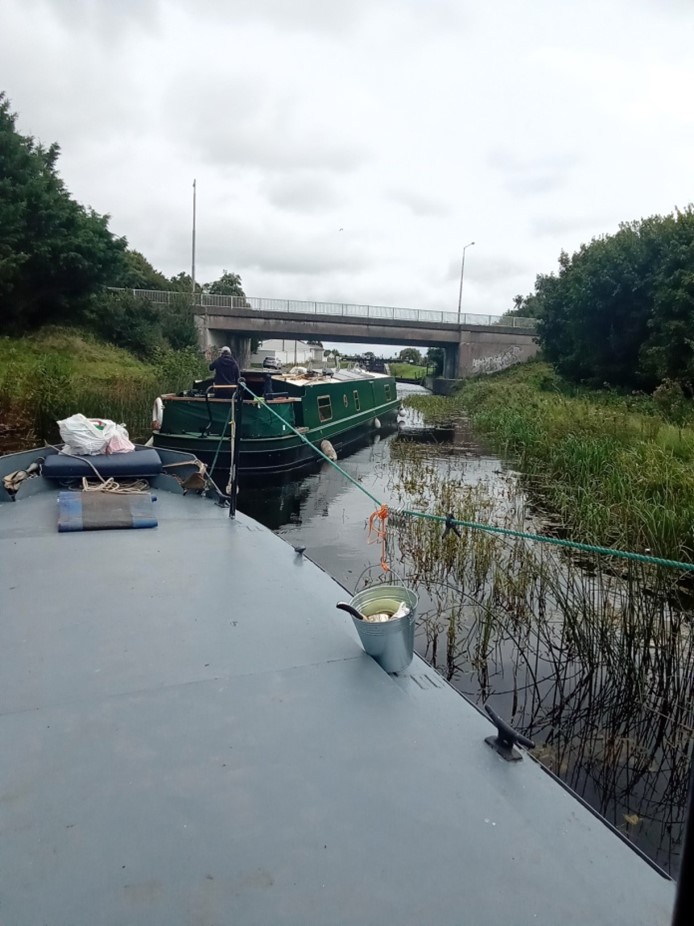
The continuous Stillwater Navigation
A canal bridge endowed with generations of growth
Bell’s Bridge and Lock 32
Gallen Village, bridge and rest area
Gallen Village bankside mooring area
Pollagh Village and Canal-Side facilities
Lock 31
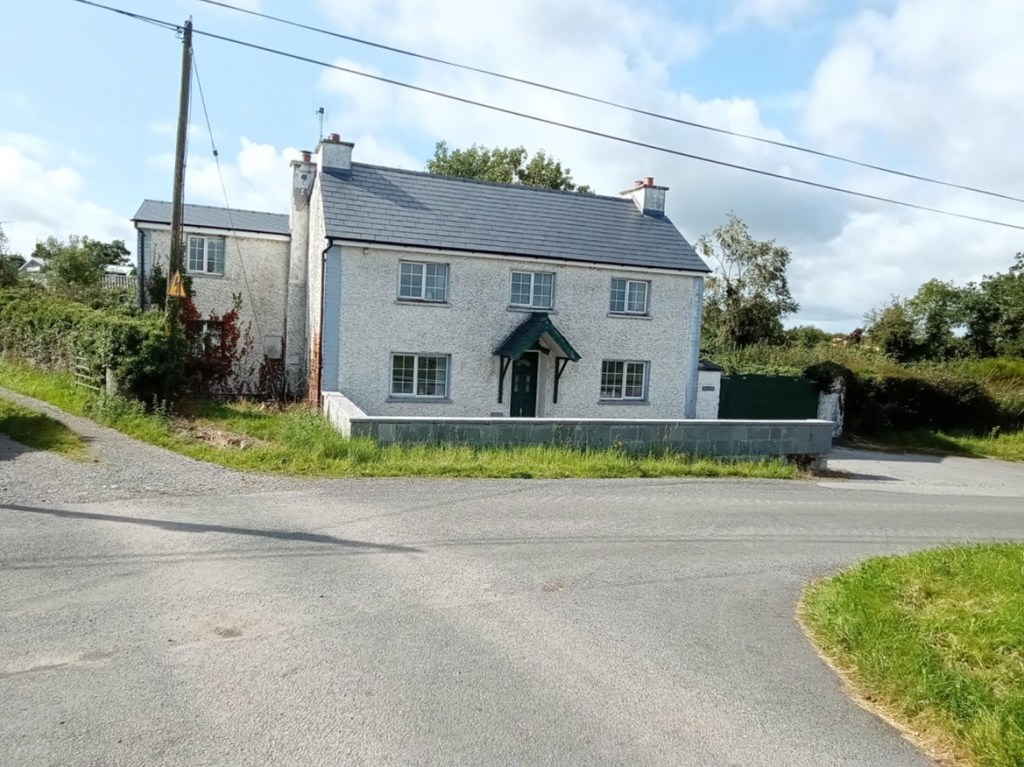
Lock 30 and the canal manager’s house.
The canal-side facilities at Rahan Village and the Thatch pub – a former Williams branch shop
Ballycowan Castle of 1626 and beside it the Huband aqueduct dated to 1803. Huband was a barrister and a director of the Canal Company from 1777 for most of the years to 1835.
Srah Castle, Bridge and and the railway bridge
Sragh Bridge and Lock 28
Entering Tullamore at the Clara Road Lock 29
The spur from the canal main line to Tullamore Harbour
The canal side facilities in Tullamore Town
9. Memories
Memories of this trip are especially positive
The waterway was weed free with a good water level
The courtesy and efficiency of the water patrollers was first class
The lock landings were in a good condition
The lock operating systems all worked well
The lock surrounds were neat and well maintained
The lock keeper’s cottages were a joy to behold
Canal-side moorings and services were adequate and of their time
The pioneering travel book on the Irish canals was Green and Silver (London, 1949) by L.T.C. Rolt (1910–74). Tom Rolt made his voyage of discovery by motor cruiser in 1946 along the course of the Grand Canal, the Royal Canal (fully open from Mullingar to the Shannon, until 1955 and thereafter from 2010), and the Shannon navigation from Boyne to Limerick (happily now navigable up to Lough Erne). The Delanys writing in 1966, considered Rolt’s book to be the most comprehensive dealing with the inland waterways of Ireland.[1]
During the 1940s, and up to the early 1970s the canal candle was flickering but was kept burning by enthusiasts in England and in Ireland. Among these were the late Vincent Delany and Ruth Delany whose book on the Irish Canals in 1966 was a seminal work. As pointed out in the Irish Times in November 1993 Ruth Delany is the most prolific author on the subject of the Irish canals and herself acknowledges that Green and Silver had a profound influence on her. Other writers were Hugh Malet and Colonel Harry Rice – the latter largely founded the Inland Waterways Association. In 1973 Ruth Delany extended the 1966 book with a full-scale study of the Grand Canal which was reissued in 1995 with an update on the previous twenty years.
Tom Rolt was born in Chester in 1910 and after working in engineering and with vintage cars he became a full-time writer in 1939. Some of his many books are shown in the attached illustrations while ‘his biographies of great engineers, such as Isambard Kingdom Brunel (1806-1859), are still highly regarded. As a campaigner, activist and champion of industrial heritage Rolt is best known for his involvement with the Inland Waterways Association, the Talyllyn Railway Preservation Society, the Newcomen Society, and the Association of Industrial Archaeology.’[2] On his marriage in 1939 to Angela Orred, daughter of a retired army major. They went to live on his house boat Cressy and in 1944 published Narrow Boat, a passionate evocation of the British canals and those who worked on them. His wife left him in 1951 to join the Billy Smart circus. Two very focused people.
This month we begin a series of articles on the history and heritage of the Grand Canal in County Offaly that will run to upwards of 50 blog articles in 2024 and have its own platform on our website, http://www.offalyhistory.com. Our aim is to document the story of the course of the canal from the county boundary east of Edenderry to Shannon Harbour in the west. Today the Grand Canal is one of the greatest amenities that County Offaly possesses and we want to tell the story, and for readers to contribute by way of information and pictures. All the material will be open to be used on our website and the format will allow for editing to improve and to receive additional information from you the reader, which will be acknowledged. So Buen Camino as we make our journey through a quiet and well-watered land. The year 2024 marks the 120th anniversary of the completion of the Shannon Line at Shannon Harbour and may also see the completion of the canal greenway in this county.
In 1120 Turlough O’Connor, high-king of Ireland, built a ‘principal’ bridge on the River Shannon at a place called Áth Cróich. Recent study has proven that this is an earlier name for Banagher.
SIR MATHEW DE RENZY (1577-1635)
Sir Mathew De Renzy writing in December 1620 about West Offaly with particular reference to roads and passageways made two clear statements regarding a major crossing point on the River Shannon at Banagher and how there was practical and convenient access to the West and Galway from that location.
1. ‘At the Benghar there ought a towne or a good fort to be made, to keep that passage of the Shannon, for that in no other place can come any horsemen near the river to take passage out of Connaught but only here, by reason of the impediments of the bogs and woods; from this passage it is but 30 or 34 miles to Galway all hard and fair ground.
2. At Banagher ‘…to be no more than about 30 miles (from the Shannon at Ahcro or Benghar to) to Galway over the Shannon, all hard and faire ground
Both these references leave no doubt that there was a major crossing point at Banagher in the 1620s. More importantly the second quote equates Banagher with a place called Ahcro (Áth Cróich). This information was crucial to the recent acceptance by the Locus placenames project (Locus) that the two places are synonymous. Consequently, in future editions of their definitive dictionary of Irish placenames, Banagher and Áth Cróich will be recorded as one and the same place. The implication of this decision is that it requires a major revision of Banagher’s early history.
This year’s That Beats Banagher Festival will take place over next weekend Friday to Sunday, 22 to 24 July with a multiplicity of literary, heritage, cultural and sporting events including a food and craft fair in the Bridge Barracks Yard at the West End on Saturday, 12 noon to 4.30 p.m. craft workshops, children’s events, water events, children’s outdoor cinema and other surprise events. We are a day early with the blog to help promote this interesting festival.
Book Launches
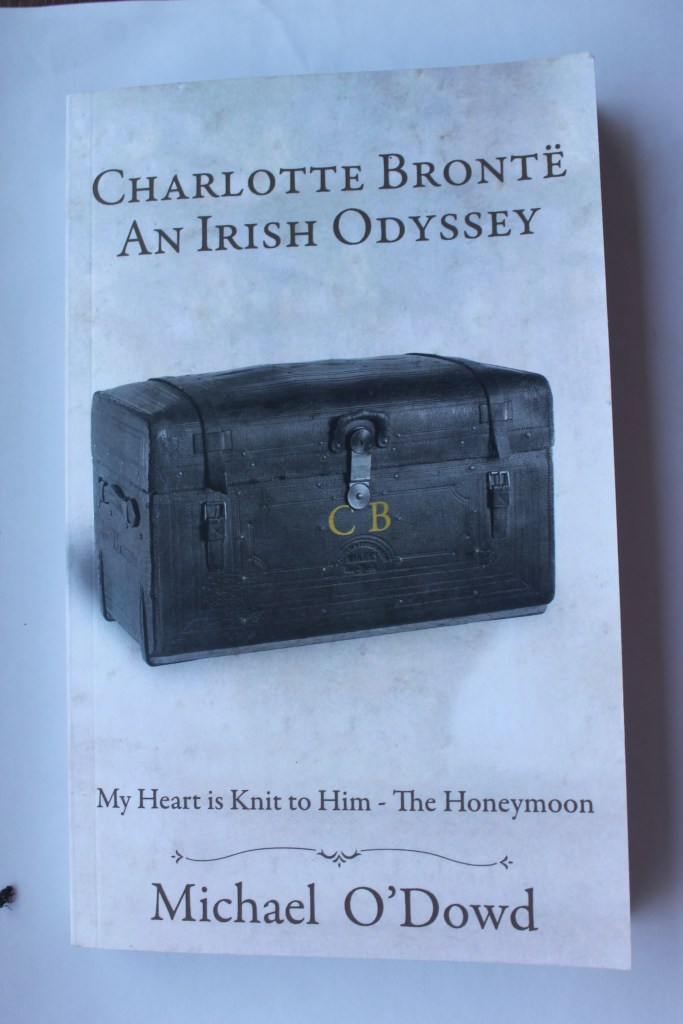
The programme is particularly strong on literary events with the launch of two books on Charlotte Brontë’s honeymoon in Ireland, the first called Arthur & Charlotte, by Pauline Clooney (published by Merdog) and the second, Charlotte Brontë: An Irish Odyssey by Michael O’ Dowd (published by Pardus Media). Pauline & Michael recently spoke with much acclaim at the prestigious Bradford Literary Festival under the title No Net Ensnares Me: Charlotte Brontë Abroad. The event will be held at 6.30 p.m. on Friday 22nd July in the Long Room in The Crank House.
This short article is the first in a series designed to look at the growth of Tullamore over the period from 1622 and to take key dates in the development of the town. Suggested dates will include 1622, 1716, 1764, 1785, 1804, 1835, 1900, 1923, 1948, 1966 and 2000. These dates coincide with particular events, or the availability of documentary sources that may allow us to draw some conclusions about the state of Tullamore at varying times over the last four centuries. Rather than take matters in chronological order we are going to look for some key moments in the stages of growth. One such was the completion of the canal to Tullamore in 1798 and its extension to Shannon Harbour in 1804. During that six years Tullamore had served as the depot and terminus for the new waterway to the west and south. The opening to Shannon Harbour and the link to the Shannon may have been seen by some as marking the end of the new canal hotel and harbour in Tullamore with business moving further west and travellers no longer having to stop over in the town. That was not the case. The hotel client base weakened to almost nothing by the 1840s and so did passenger traffic. Commercial traffic was continued on until 1960.
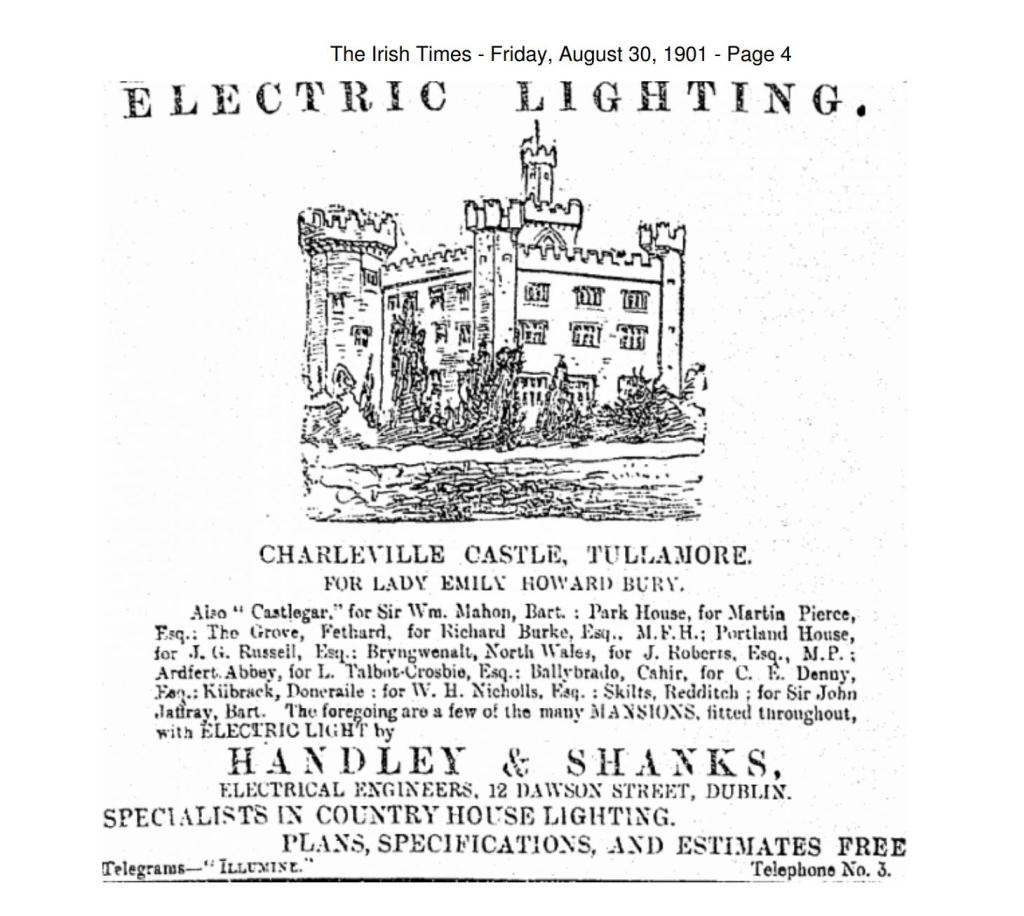
Tullamore made the switch from gas lighting to public lamps powered by electricity on 27 September 1921 and Birr about a week earlier. The change in Tullamore was coming for over twenty years and Charleville Castle and D. E. Williams both had electric light from about 1900 and earlier. Lord Rosse had it in Birr Castle in the 1880s. Birr was earlier to have public lighting by gas lighting than Tullamore and had a town supply and town commissioners in 1852.
Tullamore elected its town commissioners and adopted gas lighting in 1860. Before that public lighting was non-existent in Tullamore with just one candle lamp in Charleville/O’Connor Square in 1854. By the beginning of the First World War the number of gas lamps in Tullamore was almost 80 and the lighting system had been greatly improved with ‘the illuminating power of the lamps having been greatly increased by the adoption of inverted incandescent burners’ (1915). The gas was supplied by a private company comprised of local merchants who were the owners and directors. Change was flagged in 1913 but little progress could be made during the war. In 1918 Birr registered a company to take charge of the local public lighting undertaking and Tullamore did likewise in 1920-21. Birr business contributed £9,000 and Tullamore £13,000 to the new undertakings. The lighting was switched on in Birr in 1920 but only for short time and was not finally in place until a week before Tullamore in mid September 1921. Roscrea had electricity at least a year earlier via a tender from Roscrea Bacon Factory. The Tullamore investors included D.E. Williams £5,000, P.J. Egan €1,000, P & H Egan Ltd £1,000, Fr Callary £500, Sisters of Mercy £200 and others. What is striking about the list of promoters of public lighting is that where Quaker and Methodists businessmen led the way in 1860 (Goodbody and Lumley), in 1921 it was Catholic merchants and Catholic institutions (Egan, Williams, the parish priest and the Mercy nuns). The 1921 directors were all Catholics save the Methodist W.C. Graham.
Tullamore’s High Street with Sergeant Ahern talking in what is now the Dew Inn (former Bus Bar), about 1910. Courtesy of NLI.
A Tullamore school boy records the date in his diary
Patrick Wrafter, better known in later life as P. A. Wrafter, kept a short diary relating to national and Tullamore events during the War of Independence and the Civil War. For its simplicity and directness, it is attractive and provides an insight into how crucial events in Ireland’s history impacted on the mind of a thirteen-year-old boy. Most of the diary entries were about the War of Independence and the Civil War. The move to electricity began during the War of Independence and was completed during the Truce period, i.e. when negotiations had started but before the delegation went to London. Wrafter wrote:
Started to build the Electric Light Shed over in the square on the 3rd January 1921. The same day as we went back to school. [This was the shed used to house the electricity generating equipment in the Market Square. The ESB acquired the Tullamore Electric Light Company in 1930 and the shed was demolished in 1999.]
Alo Brennan, Church St., Tullamore, was arrested on the 18 January 1921. [Later of Cormac Street, he was prominent in the Volunteers.]
Masked and armed men entered the Post-Office in Tullamore on the 20th January 1921 and took away the mails for the R.I.C.
Peace Conference started on July the 3rd 1921, in the Mansion House, Dublin.
Mr D. E. Williams, Tullamore died on the 3rd July 1921 aged 72 years. R.I.P.
Truce declared in Ireland in July 1921. [9th July.]
At least 80 prisoners escaped from the Rath Camp, Curragh by a subterranean tunnel 50 ft. long dug by themselves with pieces of iron etc. Sept. 1921 [LE, 17 Sept. 1921.]
Electric light was lit in the streets and houses on September the 27, 1921.
The electricity generating shed in Market Square, Tullamore, 1921-1999.It was to the rear of the old gas company buildings
Young Patrick Wrafter might have added that the poles to carry the electric cable were in course of erection in the streets of the town from July 1920. These were not the first of many poles to ‘grace’ the streets as those for telephones had been provided from about 1908–11. Of the 80 or so gas lamp standards in Tullamore only one survives at Moore Hall, O’Moore Street. The Truce of 11 July 1921 was holding with a Truce dance in the Foresters new hall over the co-operative bakery in September and a big meeting in Tullamore on 2 October to welcome Dr McCartain. In the same month a young girl of 20 was tied to the railings of Tullamore church with the word ‘Immorality’ written on a card attached to her. Two more girls were chained to the new electric poles near the church with the card attached ‘Beware of I. . . There are others too’. Presumably these were girls who had been overfriendly with the occupying forces, or it may have been the highly moral new republican police acting on possible sentencing in the Dáil courts.
The provision of public utilities in a town is a measure of its civility. Here we are talking of lighting, water, sewerage, roads, footpaths, a market house, and nowadays a public library (see OH blog of May 2021), and a swimming pool. Arts centres, public archives and museums would be down the list, but even here we are well on the way with only the county museum missing from the galaxy of facilities. Hospitals, courthouses and jails were early on the list of institutional facilities with a county hospital of sorts in Tullamore from 1767.
In a blog on 20 October 2020, we wrote that the start-up of the Tullamore Gas Company was in 1859 and the company survived until September 1921. Gas lighting for Tullamore had been mooted as early as 1845 but it took sustained pressure from the local press and the business acumen of the Goodbody brothers of the Tullamore tobacco factory to get it done. Others who helped were Alfred Bury of Charleville (later fifth earl) and the young Tullamore-born barrister Constantine Molloy. Initial opposition had come from the parish priest Fr O’Rafferty (died 1857), and later from the ratepayers led by the Acres family – the principal tenement property owners in Tullamore. Birr had street lighting from 1852 and Mullingar and Newbridge by 1859. The completion of the new railway connection to Tullamore in September 1859 was another boost to forward thinking about the status of Tullamore and its potential. The opening of the streets for lamps meant the adoption of a small measure of local government and the provision of town commissioners – the first town council in Tullamore from 1860. It did not mean that buildings were to be lighted and places such as Tullamore courthouse were still without gas lighting in 1868, as was much of the workhouse in 1897. The latter was using 36 lbs of candles per week in the late 1890s. Gas was later provided but as late as of 1910 the infirmary section of the workhouse was still lit by oil lamps.
The question of lighting Tullamore by electricity surfaced as early as early as 1897. Daniel E. Williams, who was the first to have a motor car in Offaly, introduced electrical generation in his own business in the 1890s. In 1909 the Tullamore town clerk, E.J. Graham, estimated that it would cost £4,000 to bring electricity to Tullamore. At the time the town was serviced by 69 lamps at £2 each per year. This would increase to 78 lamps by 1916. By this time the council had spent large sums on waterworks and housing but less so on sewerage. Economy was a watchword and, as noted, the gas lamps were not activated on moonlit nights. The Tullamore rector, R.S. Craig wrote to the press in early 1914 in the aftermath of the rejection of electric light for Tullamore in 1913 on the grounds of the need for a town sewerage system needed to have a prior call on local expenditure.
The public lighting of Tullamore is not in the hands of the Urban Council as it should be. It is farmed out to the local Gas Company, and one of the conditions – economic conditions – is that there is no occasion to light the lamps on moonlight nights. This is a condition , as the Rev Mr. Craig very aptly says, has nothing to commend it, but ancient precedent. The same bad precedent in the matter of this arrangement is followed in Athlone, and many of the other provincial towns. On the nights when we should have moonlight, but very often have not, there is no public lighting, and pedestrians and visitors or strangers doing business within our gates move about to the imminent danger of breaking their necks. There was the recent case in Tullamore when on the occasion of the great National Demonstration many thousands of people were gathered in the town. Before they could get out of it nightfall overtook them. The business houses were, of course, closed, and there was no assistance to be had from friendly shop windows. The moon was expected that night to give light to the wayfarer, but was in no particular hurry in coming to our help. The Gas Company economised according to their arrangement with the Urban Council and did not light the gas lamps. The inconvenience of the situation need not be emphasised.
Rector Craig’s letter was an expression of his frustration at the council not being able to proceed with the change over to electricity in 1913. The big shops already had electric power and were in no rush to suffer a possible rates increase from the council to provide the funds for the new scheme. It was only in 1917 that Griffith of the new Turf Works in Pollagh agreed to give his expertise to assisting in getting electricity going in Tullamore.
The provision of electric lighting in the smaller towns and villages was slow in coming. A Banagher writer in late 1921 noted that the town was in the dark: ‘The only bit of light we have had for the past three or four years was that provided on the night of Dr McCartan’s arrival’. McCartan was the last MP elected for King’s County/Offaly and the first for the Sinn Féin Party (April and December 1918). Electricity for Banagher lighting had been mooted as early as 1911 by the local improvement association. The visit of Dr McCartain to Tullamore on 2 October 1921 may have been the incentive to get the electric light installation completed in time for the big welcome.
From the Midland Tribune, 1 October 1921
No less than six Offaly based private companies were taken over by the ESB over the period 1928 to 1956. The Tullamore company with 240 customers in 1930 (about one-third to one quarter of the number of houses) was taken over by ESB in that year. In 1929 Birr had 342 customers, rising to 596 in 1947 when transferred to ESB. The Edenderry business was transferred in June 1928, but the number of customers is not now known. Banagher obtained the ESB Shannon supply in 1930 and Clara in the same year.
The offer for subscribers for shares in the new Tullamore company. It was alongside the obituary for Terence MacSwiney. Sgt Cronin of Tullamore was shot a few days laterin reprisal.Ordinary life and the War of Independence coexisted side by side in a strange way.
Disputes with staff working for the Tullamore Electric Light Company started within months of the light being switched on and a strike was called off in November 1921 when the three men employed by the company agreed to accept £3 7s. 6d. per week for a 56-hour week, in lieu of the £3 10s. demanded. The town council was the main customer and was paying up to £300 per year for 75 lamps. No great change in public provision from the days of gas. We do not know at this point what was the take up of power from the private and domestic sector. In the home it would have been for lighting only and that sparingly in many houses up to the 1960s. At the time of the move to ESB in 1930 and the takeover of the local provider it was reported that ESB men were preparing posts to replace existing standards where necessary. Also that ‘Mechanics are affixing electric fittings in several houses’. The firm of Siemens Schuckert was finishing the installation of electric light in the Catholic church and that Oppenheimer was finishing mosaic work to sanctuary. Dreamy altar boys will recall these mosaics with St Brendan navigating the billowing sea and which were destroyed in the fire of 1983.
A 1901 advert for a supplier featuring Charleville Castle. By 1912 the castle had been largely vacated by its owner Lady Bury. Courtesy of Irish Times
It is hard to believe now that before the 1850s there was no public lighting in any of the Offaly towns. Neither was there any on moonlit evenings up to 1921, or after 12 midnight up to the early 1960s. Visitors to the Aran Islands will recall walking on its pitch-black roads, and, nearer home, those living in the countryside experience it every evening if making a short journey on foot. Rural electrification did not follow the towns until the late 1940s in many areas in Offaly and this has been documented in lectures at Bury Quay and the records of interviews now in Offaly Archives. See also a useful piece on the arrival of ESB provided electricity on http://www.esbarchives). Surprisingly there is nothing surviving of the minutes of the local gas companies in Offaly or the private electricity companies that were taken over by ESB in c. 1930. The company’s dealings with the urban council can be followed in the local press and in the minute books of the council (now in Offaly Archives). The Tribune was the only Tullamore newspaper in 1921 as the printing works of the Offaly Independent had been destroyed by the British military in November 1920. It reported the switch-on while the Birr Chronicle did likewise a week earlier.
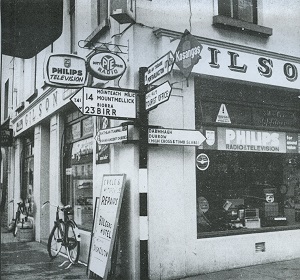
Sales of electrical goods took off only in the 1960s. Here the well-known Tom Gilson’s shop, Tullamore
Next blog is on Saturday 18 on Charleville by Dr Judith Hill. Email info@offalyhistory.com for the link to the Monday lecture.
On 25 Sept. Dr Mary Jane Fox on Columcille and copyright disputes
When the well-known musical historian Terry Moylan drew my attention to the Offaly poet John de Jean Frazer, I was forced to confess I had never heard of him, much to my shame. I made enquiries about him and surprisingly few had knowledge of him. Shannonbridge native, James Killeen, currently resident in Illinois, was able to tell me that Master John Lane, who taught in Shannonbridge National School, was aware of him and mentioned him. He always referred to him as Frazer, finding the de Jean a bit much. James also told that Francis Reddy, the son of Michael Reddy M.P. used to enthuse about the Nationalistic poetry of Frazer.
The object of this Blog is to rescue from the mists of time the name and career of this significant Birr poet. Writing in the first half of the 19th century John de Jean Frazer, has left a considerable body of work. His work is hard to source outside the major libraries and college archives.
This is a shame, as his poetry has not been published in a sole collection for a long time. It would be wonderful if this Blog were to give an impetus to someone to undertake such a project, as I feel his writings should be more readily available.
The questions I shall try to answer are, who was he, where did he hail from, what are his most notable works, what were his politics, his religion and his family details.
He is said to have been born and reared in Parsonstown, now Birr, King`s County, however like a lot of things about him there is a degree of uncertainty. On the 100th anniversary of his passing in 1952 The Westmeath Independent did a piece where it said tradition claimed he was from Moystown, near Clonony Castle. There is also a suggesting that he may have been from near Ferbane, guess his poem `Brosna`s Bank` lend a bit of credit to all these claims.
There is some conjecture as to the exact year he was born. We know his date of death was 23rd March 1852, at which time he is recorded as being 48 years old, suggesting he was born in 1804. The current Birr Tourism Brochure gives his year of birth as 1804. However ` A Compendium of Irish Biography 1878` by Alfred Webb gives his date of birth as 1809. Webb also gives his year of death as 1849 which we know is incorrect, so it seems Webb may have needed a better editor. I am inclined to accept the 1804 figure, especially as I discovered his wife was born in 1800.
He is believed to come from a Presbyterian family, but unfortunately records of Presbyterian births/baptisms for Birr only commence in 1854. His family were said to be from Huguenot stock. I have been unable to unearth details of his parents.
While Offaly has a huge range of Early Christian church and monastic sites it would not have been noted for crannogs, unlike its neighbour in Co. Westmeath. Surprisingly, Offaly has 13 crannog sites recorded in the National Monuments database, however they are in many ways different from the usual picture of the small, man-made island in a lake. Many of these crannogs are located close to natural esker and drumlin routeways and survive as wetland settlements in or close to bogs. One third of Offaly is covered by peatland.
Crannogs in Ireland.
The name crannog is obviously the Irish names of ‘crann’ for tree and ‘óg’ in this case referring to small and not young. But we will see that ‘small tree’ does not account for the size and scale of wood used in the construction of these lake dwellings which are generally in open bodies of water.
There is no agreed figure for the number of crannogs in Ireland. Some have suggested 1,200 over the whole country while others take the number over 2,000! Crannogs were constructed in the sixth and seventh centuries and occupied and used up to the end of the seventeenth century. As a monument in the landscape that has changed considerably with the reduction in water, lake and river levels, along with the drying out of the bogs since the Middle Ages, it is only by accident that a new crannog is discovered. (more…)


























 offalyhistoryblog