Several of my ancestral families came from Ireland in the early to mid 1800s. They came from Counties Dublin, Armagh, Tyrone, Westmeath and King’s (now Offaly) and surrounding midlands counties. The one common factor was that they all migrated to Quebec, settling in several small communities in the area just southeast of Quebec City across the St. Lawrence River.
After a generation, many of those families moved to western Canada or the United States, often settling together. Many went to Wisconsin and Michigan where they worked in the logging industry and farmed. In the next generation, some married into other Irish families, so studying one’s family gradually evolved into studying several. My families were among those settling in Jacksonport, Door County, Wisconsin.
I had always wondered how and when these Church of England/Ireland families got to Ireland from England and Scotland, then migrated to the same places in North America. What did they have in common? There are no relevant ship manifest lists for British Isles migrants going to Canada since it is a part of the British Commonwealth, and it was not like going from one country to another.
I have an old family Bible with some information, but for the most part all I had to go on was Canadian census records or church records which gave a child’s birthplace and age, indicating approximately when the families left Ireland, and if I was lucky, a more specific birthplace. Usually, specific meant only a county. Family lore told of one or two Bagley children being born in Clara, Kings County. Other names of the Quebec families appeared in the Irish Midlands, so I concentrated my research there.
Marking Tullamore 400th, Decade of Centenaries and Sustaining the country towns in the 21st century
August 1922 was a wicked month with the death of two Irish leaders, Arthur Griffith and Michael Collins. At local level we had the death in July 1922 of the Ulster Bank manager Tullamore in the course of a robbery and at Bunaterin the death of a Free State soldier, Matthew Cullen, on 29 August 1922. Raymond Cullen wrote about this in our blog last week and in July we carried a blog on the Ulster Bank robbery by the Republican IRA. The Republicans departed Tullamore on 20 July 1922 just before the Free State army reached the town. Before leaving the barracks, courthouse and jail were burnt. Later in the month and in August it was the turn of the Big House owners including Screggan Manor, Geashill Castle and Brookfield. Thucydides (d. 400 BC) wrote of how civil war exhibited a tendency to extremism. We were fortunate in Ireland that things, while bad, was not by any means on a par with the American of Spanish Civil Wars. That said the killings in the North of Ireland were terrifying. But enough of that lets go back to our story for today which is about shopping in Tullamore in the early 1900s, living over the shop and the tragedy of early death for the family of the owner Michal J. Gill in September 1922.
High Street late 1940s with Gill’s as a ruin, third from left
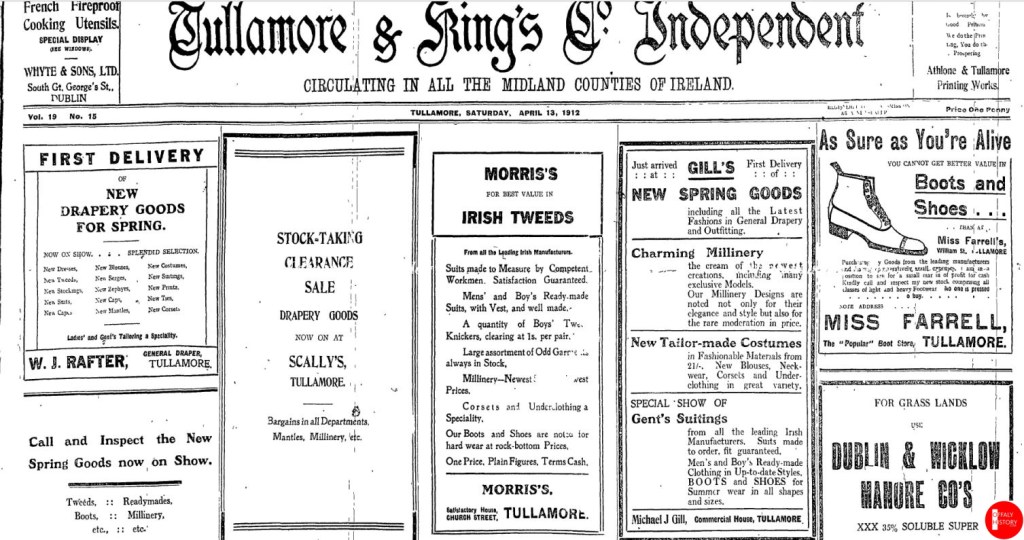
Affable is a word I find myself using to describe the business people of High Street over the last 50 years from J.J. Horan, to McGinns, Daly’s shop, John Clifford, Midland Books, Kilroys Matty Coyne, Paddy Cleary, P.J. Carragher, Tom Lawless and so many more one could mention. In the course of a family wedding recently I had the pleasure of being ‘fitted out’ by Anthony Kearns, his ‘affable’ father, and the staff of the shop. Now I am revisiting, but today to look back at the history of the store and the building here since the 1750s, but more especially in the time of Gill’s Drapery from 1901 to c. 1922. This was a good time for drapers and opposite Gill’s (on the corner) was the Rafter drapery. In William/Columcille St. was Tullamore Drapery and Scally’s (to become a massive new store in 1912), and of course there was Morris’ shop in Patrick Street and later Church Street.
The drapers of Tullamore were all to the fore in this issue of 13 April 1912. Thanks to Irish Newspaper Archive.
GV 6 and 7 High Street, Galvin’s ladies’ drapers, now Guy Clothing
Guy Clothing in recent times
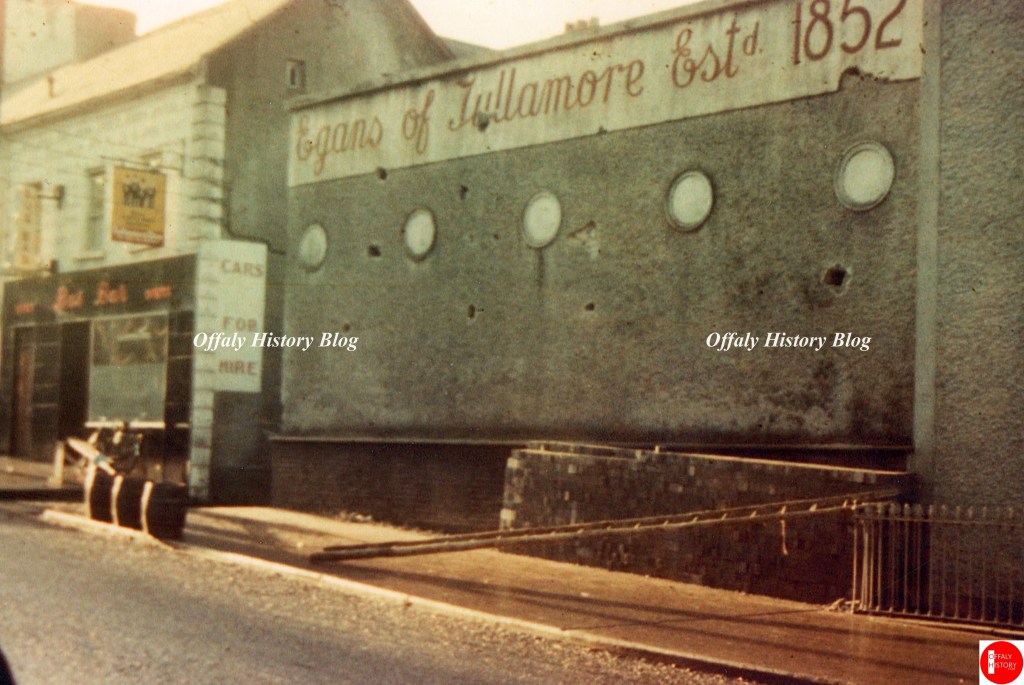
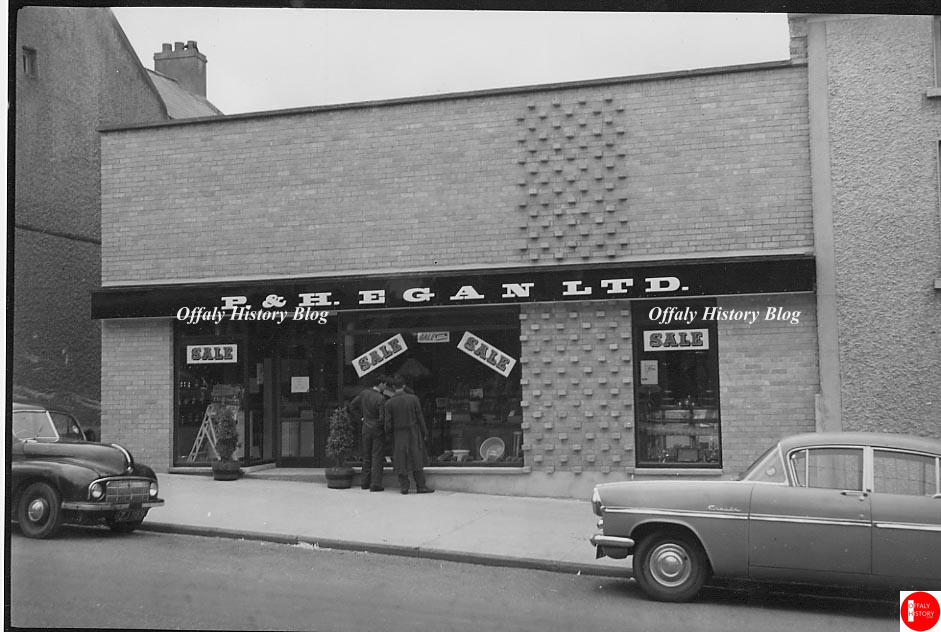
The modern Guy Clothing shop was erected in the early 1960s by P. & H. Egan Limited in a contemporary style and replaced a five-bay, two-storey house erected in 1753. Why the old house had been allowed to go to ruin in the 1940s is not known. It seems to have been a fire in the 1930s. For many years in the 1940s all that survived was a high wall. By the way the number of the shop, GV 6 and GV 7, comes from Griffith’s Valuation (GV) of 1854 and settled the numbering of these houses for many years.
The layers of transactions in regard to GV 6 & 7 certainly confirm the many layers in leasehold properties and the use they were put to in order to shore up income maintenance for investors. In April 1753 Lord Tullamore leased to Robert Mills, a farmer, the dwelling house adjoining John Nightingale. Mills also held, by a lease of three lives, twenty-six acres of arable land and four acres of bog at Spollanstown. The lives inserted were those of John Mills, Thomas Mills and James Mills, annual rent £3, and double that figure in the event of Mills selling to a papist.[1] He mortgaged the Tullamore property to John Finlay of Dublin in 1758 and in 1767 – the latter for a loan of £113.
Gill’s with the rolls of Cloth outside. Courtesy of NLI, c. 1905. Sergeant Ahern in picture.
Miss Mills and Sergeant Major Muller strike up a match
This Mills family of Tullamore were recalled in a story in 2001 in connection with the marriage of a daughter to a soldier in the King’s German Legion (KGL) some of whom are buried in Kilcruttin graveyard.That the KGL settled in Tullamore and were popular is evident from matches that were made including that of Anne Mills, a Tullamore farmer’s daughter to Sergeant Major Muller and who were married at Middleton County Cork in November 1806. She died at Osnabruck in 1845. The story of Anne Mills was told to the Irish Times journalist, Richard Roche in 1961 while on a press visit to Germany by his guide to Berlin, a descendant of the same Anne Mills. He noted in his Irishman’s Diary article of 9 January 2001 that Anne Mills was still remembered in her adopted Osnabruck but wondered was she remembered in her native Tullamore?[2] Her name does not appear in the Tullamore parish registers of the Church of Ireland but other members of KGL feature in 1807 and 1808. A daughter was born to the ‘Germans’ in December 1806 and baptized at the old church in Church Street in July 1807 while a marriage is recorded on Feb. 29 1808. On 30 November 1808 is recorded a birth outside marriage to a KGL captain and an Irish girl. Was the child sent to the Foundling Hospital in Dublin as was usual at that time?[3]
In 1790 William Finlay, administrator of John Finlay’s will sold the property to Samuel Bollard of Farthingston, Westmeath.[4] By 1843 the house was subdivided, the northern end of the building was occupied by Thomas Mullen (?McMullen) and later Robert Galbraith, possibly a draper. In 1854 it was occupied by Thomas Kenny and let at £12 a year. In 1843 the southern end of the house was occupied by Matthew Warren who ran an eating house, later Mary Bolan, and in 1854 John Flanagan.[5] Flanagan had cabins to the rear as shown on the 1838 5 ft scale town plan.
The first valuation in 1843
6. (24) Thomas McMullen to be let (Robert Galbraith) [James Kenny, James Bollard]. This house was let at £12 a year. The rere is small, enclosed with a lock up gateway – no garden, situation good.
F.21, H.20, Q.L. 1B – YR (£14.0.0) LR (£10.4.0)
7. (25) Matthew Warren eating house (Mary Bolan) [Rob Flanagan from James Bollard. Warren holds from Susanna Smith of Wm. St. – there is no rere – and the house very inconvenient – part of the lower story is occupied by a poor tenant – the rent was £14 but reduced. The situation good.
Kevin Fergus Egan sold the Egan interest in GV 7 to the Egan company in 1927 arising from an interest acquired in 1908. It is noted on the title to the property that Robert Bollard died a bachelor farmer, aged 64, in 1898. Meanwhile the occupancy was with Patrick O’Hanrahan from 1886 and subsequently Denis Fitzpatrick of Cappancur. Fitzpatrick was adjudicated a bankrupt in 1895 and the 99-year lease from 1886 was assigned to the Egan firm in 1896. By 1898 the property was tenanted by drapers Richard J. Ranson and Thomas J. Adams and was known as ‘The Mart’. In 1901 it was leased to Michael J. Gill for £60 a year. Gill had been a draper with Malachy Scally in Columcille Street and opened on his own account. He was from Castlerea and has worked in Fitzgibbon’s drapery. Mrs Scally was a Fitzgibbon and there is the link. Anyway it was severed in 1901 when Gill went out on his own. After his death in 1922 his widow surrendered the lease to Egan’s in 1927/ and or sold the contents of the shop to McFaddens of Patrick Street. A second part of the High Street property was tenanted by John Flanagan and James Kenny. Flanagan had a 999-year lease from 1880. Egan’s acquired this or another 999-year interest in the property in 1940.
Strange to say the 1901 census entry was not found in High Street or Charleville Square. Michael Gill, drapery manager, was living in William Street over Scally’s shop. An entry at no, 5 may mean this property was vacant in April of 1901 at the time of the census.
The census for 1911 census High Street (no. 59), GV 6 and 7 really shows us what living over the shop meant and how the drapers of those years had inhouse staff to make suits and other clothing. The Gill Family lived in what the census people called a 1st class private dwelling in a house/Shop with seven windows to the front. The house had three out-offices which were two stables and one shed. The household was comprised of the husband, wife, four sons, one daughter, six employees (four milliners and two draper assistant) and two servants (one female nurse and one servant). It was largely a family concern with no less than seven family members and eight support staff to help in the house and the shop.
The Gill shop on census night in 1911
Gill
Michael J
Head of Family
RC
40
Draper
M
Co Roscommon
Gill
Elizabeth
Wife
RC
30
–
M
Co Longford
Gill
Martin
Son
RC
7
–
S
King’s Co
Gill
Margaret
Daughter
RC
5
–
S
King’s Co
Gill
Eugene
Son
RC
3
–
S
King’s Co
Gill
Michael
Son
RC
2
–
S
King’s Co
Gill
William
Son
RC
–
S
King’s Co
Smyth
Patrick
Draper’s Assistant
RC
19
Draper’s Assistant
S
Co Westmeath
Marron
Patrick J
Assistant
RC
41
Draper’s Assistant
S
Co Louth
Carolan
Lizzie
Milliner
RC
17
Milliner
S
Co Longford
Colgan
Kate
Milliner
RC
18
Milliner
S
King’s Co
Bastic
Bridget
Milliner
RC
16
Milliner
S
Co Westmeath
Butler
Kate
Milliner
RC
17
Milliner
S
Kings Co
Lawlor
Mary
Servant
RC
20
Servant
S
Co Westmeath
Owens
Lizzie
Servant
RC
38
Nurse Domestic
M
King’s Co
Michael Gill died at 51 in 1922 and his family departed for the United States. Michael Gill died at 51 in 1922 and was buried in Clonminch. His obituary noted: The death took place at his residence, High St., Tullamore, of Mr. Michael J. Gill, draper. The deceased was a native of Castlerea and served his apprenticeship in the drapery establishment of the late Mr John Fitzgibbon, in that town. He came as assistant to the drapery establishment of Mr. Malachy Scally, Tullamore, about 35 years ago. He was a man of kindly genial disposition, and a citizen for whom there was great regard and esteem….[6] Mrs Gill carried on the business until the mid-1920s. It was closed by 1927 when the upper floor was used by Cumann na nGaedheal for the 1927 general election. It appears that Mrs Gill sold her interest in this property to McFadden drapers of Patrick St. for £1,200 in 1929 (MT, 23/2/29) which conflicts with surrendering the key.
Gill’s wife and ten children emigrated to New York in the late 1920s. A few of the children were back in Tullamore in the 1950s and 1960s In 1953 Rita Ryan née Gill attended a dinner for friends of the Old IRA. Ten years later Michael J. Gill, a son of the draper, visited Tullamore.[7]
Gill’s site c. 1952. Bus Bar to left.
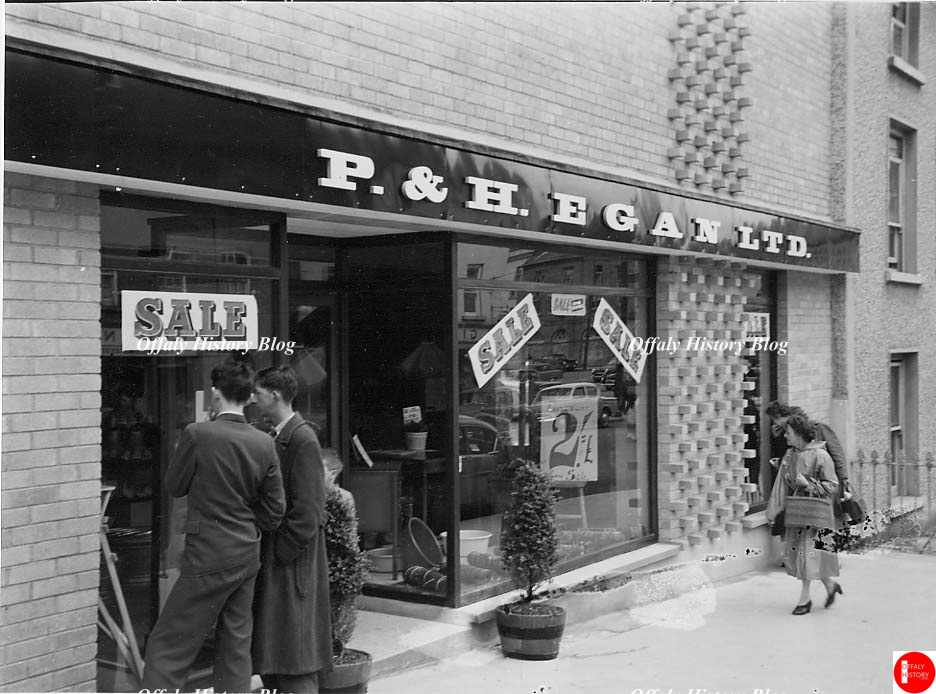
The building appears to have been vacant from 1927 or soon after (more information needed here) and was taken down by P.& H. Egan Ltd in 1952. It was then left for eight years as a walled in yard. In 1961, and to a very modern style, a newly constructed shop was opened by that firm as a hardware store focusing on electrical goods and the new products in demand in the early 1960s for the modernised home.[8] It was sold in the late 1960s with the winding up of the Egan firm and was acquired by Joe Galvin, the auctioneer, for offices on the first floor and ladies fashions on the ground floor. The new store, Galvin’s Ladies Drapery, was under the direction of Joe Galvin’s wife, Mrs Lily Galvin, having moved to much larger premises from her former shop in Harbour Street, established in 1957 twelve years earlier.[9] Joe Galvin was from a distinguished Tullamore-based business family headed by his father Michael (of the gravel business, later Readymix), and brothers John and Andy, and Brendan (among others) also in business in Tullamore. Joe Galvin died at the early age of 54.[10] His auctioneering business was continued for a time by his brother Andy and Enda Soden.
The new store of c. 1961. Fergal MacCabe, the architect and town planner has commented on this article and the new building: ‘A very interesting addition to the study of the urban heritage of High Street. The 1961 shopfront was the first post war building in Tullamore in a modern style. Designed by the Tullamore born architect Paul Burke-Kennedy, its simple form and use of concrete bricks as a finish is reminiscent of contemporary Scandinavian architecture which was briefly popular with younger architects at this time. The contrast between the horizontal fascia and its modern lettering with the vertical panel of projecting bricks was well executed and was a device used by the Athlone based architect Noel Heavey also.’
Galvin for Ladies closed in 2014 after forty-five years in this location of which twenty-eight years was under the direction of John Galvin. In appearance the building has been changed radically on two occasions since the time of the Gill ownership from 1901 to 1922. The first was in 1961 for Egan’s and the second about 2007. The store was continued as a drapery for younger women in a new location.
The lovely new consumables of the early 1960s. Tullamore was a lead town in the midlands in that decade. What Tullamore child of the 1960s has not climbed those bricks?
The High Street store got a new lease of life with the opening of Guy Clothing by Anthony Kearns and Kara Kearns in October 2014. Their fine store has brought new business to High Street after the closure of Kilroy’s (both stores in 2007). We wish them well.
If we had letters and diaries from the 1750s what a story could be told of this one house in High Street. We did hear that some members of the Gill family from the Unites States called to the town council about ten years ago and would hope to make contact. The same can be said to the Mills Muller family in Berlin. Maurice Egan has written in two books now of the Egan family and others in Tullamore.
If you have a story to tell why not email us info@offalyhistory.com. For over 400 stories so far see Offalyhistoryblog. They are nicely organised on our website www. Offalyhistory.com.There are about sixteen houses in O’Connor Square and over forty in High Street. Every building has a story. Have you archival material, memorial cards, photographs, diaries, letters? Why not call us. Offaly history is about saving memories. Visit our website and that of Offaly Archives. Our thanks to Offaly County Council, Decade of Centenaries and the Heritage Council. Only 55 more stories for High Street and O’Connor Square!! Thanks to Offaly History Centre for so much help with this one.
[1] Offaly Archives/4/36, 6 Apr. 1753; RD, 154/592/107558. Charleville to Robert Mills; fee farm grant, 11 June 1880, RD, 1880/40/216.
[2]Irish Times, 9 January 2001. This article first appeared in The Irish Sword in 1971, x, p.73. A Mills family lived at Spollanstown and were farmers and had property in High Street, Tullamore. Lord Tullamoore granted a lease to Robert Mills of Tullamore, a farmer, in 1753 (Registry of Deeds memorial Book 154-592-107558). A later deed of 1773 (Registry of Deeds 308-478-206673) refers to a Spollanstown address for Robert Mills and James Mills.
[3] Church of Ireland parish registers, Tullamore. Index with OHAS, Research Centre, Tullamore
[4] RD, 6 April 1753, Tullamore to Mills, memorial no., 154/592/107558; 10 March 1767, Mills to Finlay, memorial no., 297/637/196497; 4 November 1758, Mills to Finlay, memorial no. 199/346/132431; 13 September 1790, Finlay to Bollard, memorial no., 416/493/277814.
[5] MS valuation, Tullamore, property nos, 24-5; Slater, Directory (1846), p. 93.
Enjoyed reading your recent blog re the Gill’s of High Street. Surprised that anybody remembered them.
The Gill family were longterm friends of my own family (Wrafter) – resident at 9 Church St. in those days and the connection continued for decades after their departure to the U.S.
It’s my understanding that four of the Gill boys served, during WW2, in the U.S. army. All survived. Attached is a photo of Michael Joe Gill at Montecassino in Italy. You will be familiar with that famous battle I am sure !.
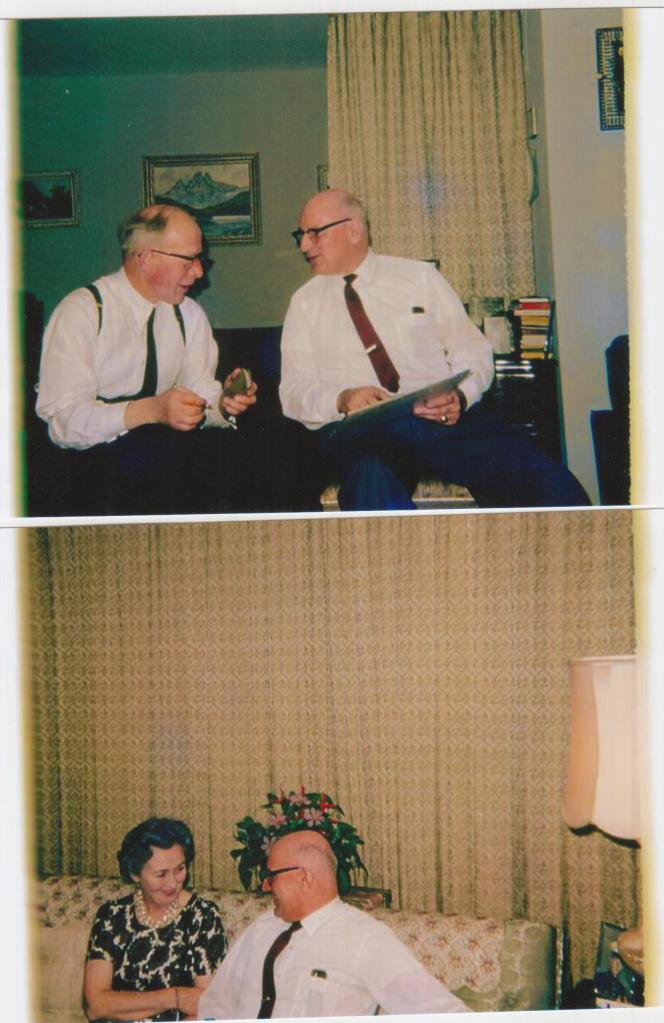
Here also are a couple of photos of Michael Joe in later life. One chatting with my late mother (Mona W.), the other with my uncle, P.A. Wrafter, late of 9 Church Street, where the Gills would usually stay during their occasional visits to Tullamore. Both photos were taken at Michael Joe’s residence in New York sometime in the late 1960’s.
Best regards, John Wrafter, (Late of O’Moore St, Kilbride St, Church St, and Ballyduff.)
This year’s That Beats Banagher Festival will take place over next weekend Friday to Sunday, 22 to 24 July with a multiplicity of literary, heritage, cultural and sporting events including a food and craft fair in the Bridge Barracks Yard at the West End on Saturday, 12 noon to 4.30 p.m. craft workshops, children’s events, water events, children’s outdoor cinema and other surprise events. We are a day early with the blog to help promote this interesting festival.
Book Launches
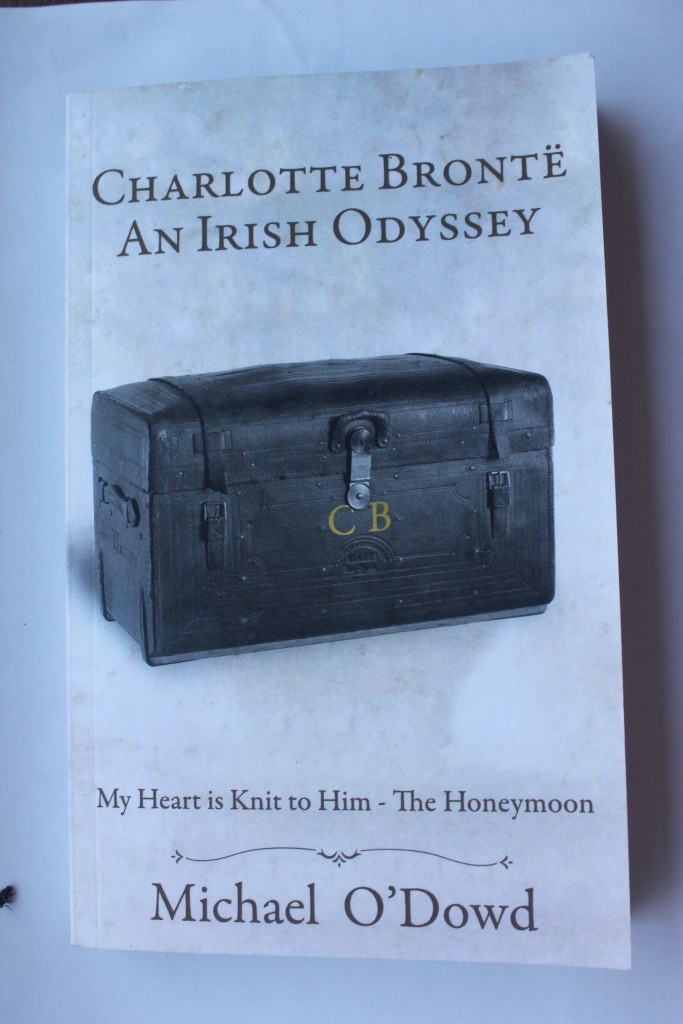
The programme is particularly strong on literary events with the launch of two books on Charlotte Brontë’s honeymoon in Ireland, the first called Arthur & Charlotte, by Pauline Clooney (published by Merdog) and the second, Charlotte Brontë: An Irish Odyssey by Michael O’ Dowd (published by Pardus Media). Pauline & Michael recently spoke with much acclaim at the prestigious Bradford Literary Festival under the title No Net Ensnares Me: Charlotte Brontë Abroad. The event will be held at 6.30 p.m. on Friday 22nd July in the Long Room in The Crank House.
Charles William Francis Bury, the fourth Earl of Charleville, came of age on the 16th of May 1873. Celebrations were delayed to the end of May so as to confine the party and the guests staying at the castle to one week and ending with the marriage of the earl’s sister to Captain Edmund Hutton on 5 June 1873. As stated in article no. 5 in this series the young earl died in New York on 3 November 1874 without marrying and was succeeded as fifth earl by his uncle Alfred. The latter died childless on 28 June 1875 and so the Charleville title died with him. The fourth earl’s sister, Lady Emily, succeeded to the estate while yet a minor. She married in 1881 but was a widow by 1885. Lady Emily died in 1931 having spent much of her widowed life abroad and was succeeded by her only surviving child Lt Col. Howard Bury (died 1963 aged 80). He inherited Belvedere, Mullingar from his cousin Brinsley Marlay in 1912 and sold the contents of Charleville Castle in 1948. As Lt Colonel Bury died childless the estate went back up the line to the children of Lady Katherine Hutton née Bury (died 1901). The celebrations of 1873 were poignant and the speeches full of irony. That the family had an excellent relationship with the Tullamore townspeople is clear from the speech of the parish priest Fr McAlroy who had succeeded O’Rafferty in 1857. Alas so little material has survived by way of letters or diaries of the speech makers of that exciting week in the history of Tullamore. As noted in the no. 5 blog the original address of Dr Moorhead on behalf of the town commissioners was donated by Professor Brian Walker to Offaly History. The late Brigadier Magan donated an important photograph of the 1873 wedding and pictures of the Hastings of Sharavogue in what we now call the Biddulph Collection in Offaly Archive.
The Hastings and Westenras of Sharavogue were among the guests at the Charleville wedding as also was Lord Rosse (the fourth earl) and the Bernards. Lords Digby and Downshire, the other big landowners in the county were absentees. This copy from Rathrobin and the two Irelands (Tullamore, 2021) available from Offaly History.(more…)
As the decade of centenaries draws to a close, one centenary not on the government’s list of official commemorations is the 1922 visit to Ireland of the Hon. Hugh Mahon, a former cabinet minister in the Australian government. Nevertheless, at a local level, the people of County Offaly may find more than a passing interest in this event from one hundred years ago.
Born in 1857 at Killurin, six kilometres south of Tullamore, Mahon was forced to leave his native land in 1882 and emigrate to Australia to avoid being arrested for his activities in the Land League. Forty years later he returned to Ireland for the first time, visiting family and friends in and around Tullamore. The years in between had been eventful for Mahon, leading to one of the most contentious episodes in Australia’s political history. And the return visit to his homeland also was not without controversy.
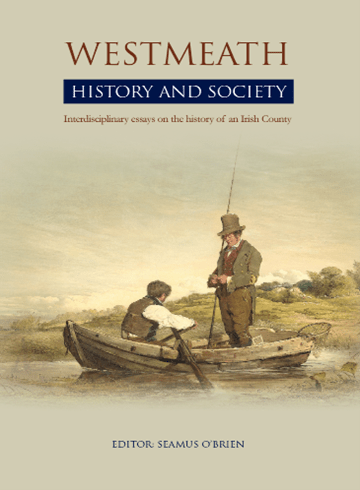
The Mullingar and Athlone launches of Westmeath History and Society have provided two interesting and original addresses on the status of local history in Westmeath, our neighbouring county. The Offaly History and Society volume was published in 1998 and is long out of print. A few copies were secured by Offaly History some years ago and are offered for sales as scarce titles. We thank our friend Dr Harman Murtagh for a copy of his address on 31 3 2022 and we have added some pictures for our readers. Enjoy the address in Athlone and you can get the book at Offaly History Centre and online at www.offalyhistory.com, over 900 pages, hardback, €60.
My friends,
This is the south Westmeath launch of this magnificent volume, Westmeath history and society.
A week ago it was launched in north Westmeath by the archbishop of Dublin, the very Reverend Dr Farrell; south Westmeath must make do with the most irreverent Dr Murtagh.
The book is 900 pages long. As the archbishop observed in Mullingar, it’s about the size of a concrete block: in my view, its only fault is that it’s rather heavy to hold in bed.
Westmeath history and society is one of a series of county books – incredibly it’s the twenty-ninth in the series. The series has been appearing at the rate of a volume a year since 1985.
The series founder, general editor and manager from the start is Dr Willie Nolan, aided and abetted by his wife, Theresa. Their contribution to Irish society and to local studies is without equal. In France they would undoubtedly be awarded the Legion of Honour; in Britain surely Sir Willie and Dame Theresa? In Ireland, and here in Athlone, we can offer at least our enormous admiration for their magnificent achievement – twenty-nine county volumes of this size down, and only three to go! Wow!
On January 7th this year, we raised a glass to commemorate what would have been my mother’s 100th birthday. Born in Kilcoursey Lodge, Clara, she had always said that she was born on a special day, being the day, the Anglo-Irish Treaty was signed in the Dáil. Her explanation to me as a child was that ‘it split Ireland in two and caused a lot of trouble’.
This example of family commemoration running parallel to the national one, relates to one of the aims on The Decade of Centenaries Programme to ‘focus on the everyday experience of ordinary people living in extraordinary times, as well as on the leaders and key actors in these events’
The Decade of Centenaries Programme has led to a great variety of commemorative events and literature, both at a national and local level. The Decade has been commemorated by Offaly History through a variety of media, no longer limited to monuments and the written word, as technology has enabled visual and auditory means to be retained through the use of videos and podcasts.
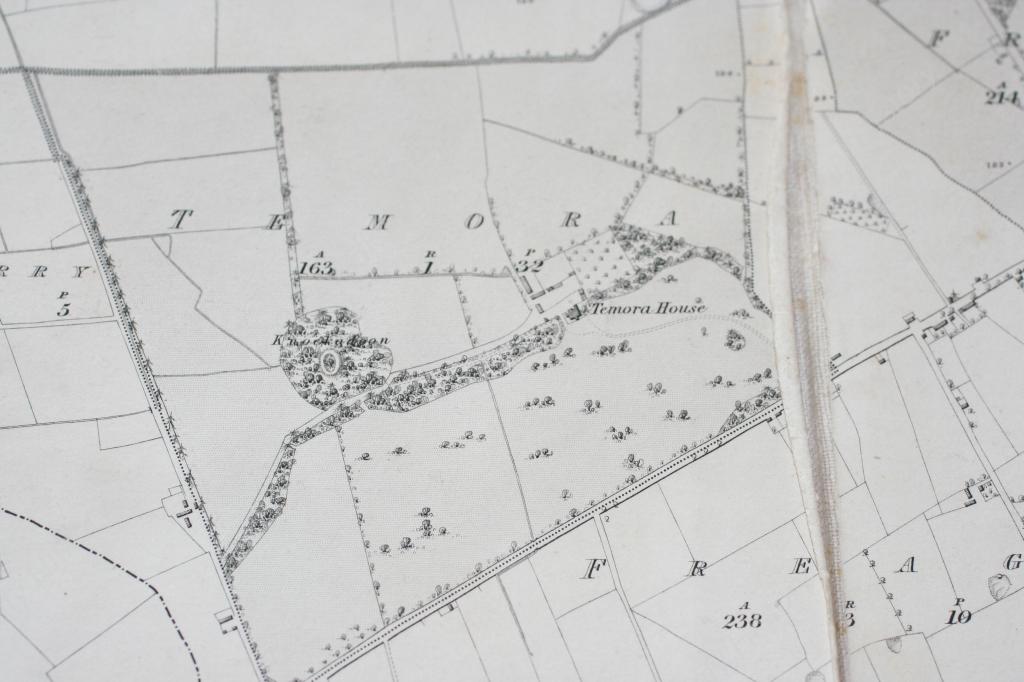
On the road to Birr, and not far from Kilcormac, are the classical gate piers of Temora – all that is left now of the home of the family of Magawly family. This Catholic family owned much of Kilcormac and, after a long legal battle, had the benefit of the articles of the Treaty of Limerick and were able to retain some of their lands. Temora may have been built in the 1750s or 1760s and the naming of the house possibly had an eye to the poem, Temora, of 1763 by James Macpherson. The illustrious history of the Magawly family can be recalled in the memorial inscription in the Catholic church in Kilcormac, placed there a few years after the completion of that church in 1867. The family had been obliged to sell the last of their landholding in 1852, but the pressure was on from the mid-1840s when the process servers were sniffing about. Money problems may have gone back at least 100 years earlier to the 1740s and 1750s when much of the Magawly landholdings were sold by way of long leases. The house itself was occupied by the Free State army in the early 1920s and destroyed by arson about 1930.
This is the second of two Heritage Week 2021 blogs by Dr Perry McIntyre AM, a Sydney-based historian, who has used the Birr Workhouse registers to research the lives of workhouse girls who emigrated to Australia under the ‘The Earl Grey Scheme’ during the Great Famine. An accompanying podcast featuring Perry in conversation with Lisa Shortall, Offaly Archives, is available here. The Heritage Council has generously supported the conservation of the Birr Workhouse registers by way of a Community Grant.
My previous blogs have told some stories of these girls and the last one related the sad fate of Elizabeth Walsh. This time we hear about two sisters who remained together for their lives in Australia and had a good outcome.
Sisters, Eliza and Catherine Dooley arrived in Sydney from the Parsonstown (Birr) Workhouse on the Tippoo Saib on 29 July 1850. They were two of the 35 young ‘orphan’ girls who left that workhouse in on 27 March 1850 and travelling by train to Dublin to catch the steamer to Plymouth to meet the sailing of the ship on 8 April 1850.[1]
Our favourite week of the year has rolled around again – Heritage Week 2021 – and we are delighted to publish the first of two blogs by Dr Perry McIntyre AM, a Sydney-based historian, who has used the Birr Workhouse registers to research the lives of workhouse girls who emigrated to Australia under the ‘The Earl Grey Scheme’ during the Great Famine. An accompanying podcast featuring Perry in conversation with Lisa Shortall, Offaly Archives, is available here. The Heritage Council has generously supported the conservation of the Birr Workhouse registers by way of a Community Grant.
In Ireland, once a person emigrated they were often lost to local memory, but records in Australia can provide wonderful details of their lives in their new homes. This blog gives an outline of the life of one of the thirty-five young women aged between 13 and 18, who were selected from the Birr workhouse for emigration to Australia as discussed in a previous blog in January 2020. Thirty of the thirty-five were listed in that blog, the others being more difficult to identify because of the nature of their native places enumerated on the shipping list of the Tippoo Saib. This was the last of twenty ships which conveyed young women from Ireland to Australia during the Famine years of 1848-1850 under what has become to be known as ‘The Earl Grey Scheme’.