The oral story of Offaly people in the Offaly History Centre sound archives collection. 21 October 2024, 8 p.m. Offaly History Centre, Bury Quay Tullamore, R35 Y5V.
The presentation by Aidan Barry will consist of the following: – An overview of the oral history resources available at Offaly History and how to access them. – Commemorating the work of Maurice O Keefe (RIP) at Irish Life and Lore and Albert Fitzgerald (RIP) at — – Midlands103 and also the late James Kenny of Clara Bridge, Tullamore. – Listening to samples from the Oral History collection at Offaly History – Recording Oral History and editing recordings – Transcribing Oral recordings using the latest technology
In March 2024 we published two articles in this series by Aidan Doyle marking the 125th anniversary of the founding of the Tullamore branch of the Irish National Foresters (I.N.F) and the 100th anniversary of the opening of its new cinema in Market Square. As was noted in a Midland Tribune article forty years ago[1] the Irish National Foresters Benefit Society is an organisation about which most people know very little about although the Tullamore (Conn of the Hundred Battles) branch has been part and parcel of the town since 1899. Even less would know of it now save that some its members appear in the annual St Patrick’s Day Parade. In August 1984 the Tullamore branch received a special award at the I.N.F. National Convention to mark its development since it was founded in Tullamore in 1899. The I.N.F. may be the fourth oldest organisation in Tullamore after the Freemasons (1759), GAA Tullamore (1888) and the Tullamore Golf Club of 1895-6.
120 years has passed since the motor vehicle and driver licences registrations had been introduced in the UK and Ireland. The King’s Co (Offaly) county council was responsible in the collecting and registering drivers’ details and collecting fees. There were motor vehicles on the county roads from the late 1890’s, although there was no administration register for them. With the increase in motor transport on the roads by 1900 the council adopted rules of the roads act.[1] This included a twelve mile per hour speed limit in the country and eight mile per hour in the towns and villages. Bicycle and motor car owners must carry lights between sunset and sunrise, and a driver of a bicycle or motor vehicle dismount if they encounter a horse driven carriage, wagon or any other beast of burden until they were clear of the area to continue driving their motor vehicle. This law was updated 25th May 1901.[2]
The inside cover label of the 1904-23 King’s County vehicle registration ledger. Athlone Printing Works was owned by Thomas Chapman and was a subsidiary of the Westmeath Independent Newspaper (1883-1920). Courtesy Offaly Archives
In November 1903 at a meeting of the county council in Tullamore courthouse the council adopted regulations under the 6th section of the new Motor Car Act, which would come into force on the 1st January 1904.The principal rules were that “The county shall keep a numbered register of cars and motor bicycles; owners of motor register, and pay a fee of 20s, and in the case of motor cycles 5s. On the change of ownership, a re-registration fee of 10s for a car and 2s:6d for motor cycles. Persons driving any motor vehicle must be licenced and pay a fee of 5s per year. The legal age to obtain a licence was seventeen”.
The task of motor vehicle/licence administration was carried out by the council secretary’s office headed by Charles P. Kingston a local Birr native.
In the summer of 1903 Ireland received the letter (I) for its first licence plate letter and each county received a second letter in alphabetical order of counties. Offaly then (King’s Co) receiving the letter (R). Each vehicle was issued with its own alphanumeric number starting with IR.1 as the first vehicle registration. There were two categories for vehicles, private and public convenience, the latter being hired out by its owner to anyone who possessed a driving licence. Registration numbers could be transferred from one type of vehicle to another type and be registered in another county where the owner may have resided. This continued in many counties up to the early 1970’s.
The first people to embrace this new technology were affluent industrial families and large landowners were among the first motor vehicle owners in the county. Clergy and police were also encouraged to use motor transport for their day-to-day activities. The increase in vehicle registrations in the county from 1904 can be describe as slow and steady. From 1st of January 1904 to 23 February 1911, one hundred vehicles were recorded, and from 2nd November 1912 showed 150 vehicles registered. However, the beginning of the first world war, saw a large increase in registrations that included commercial vehicles. From the beginning of the 20th Century to the late 1920’s saw an increase in commercial businesses activity in the county. Road transport became more important for the supply of goods to branch houses throughout the midlands and beyond. Buildings in the county towns were re-developed and enlarged with new facade advertising a wider choice of imported goods. This can be seen more evident in the textile merchant businesses such as the many drapery buildings of the larger towns.
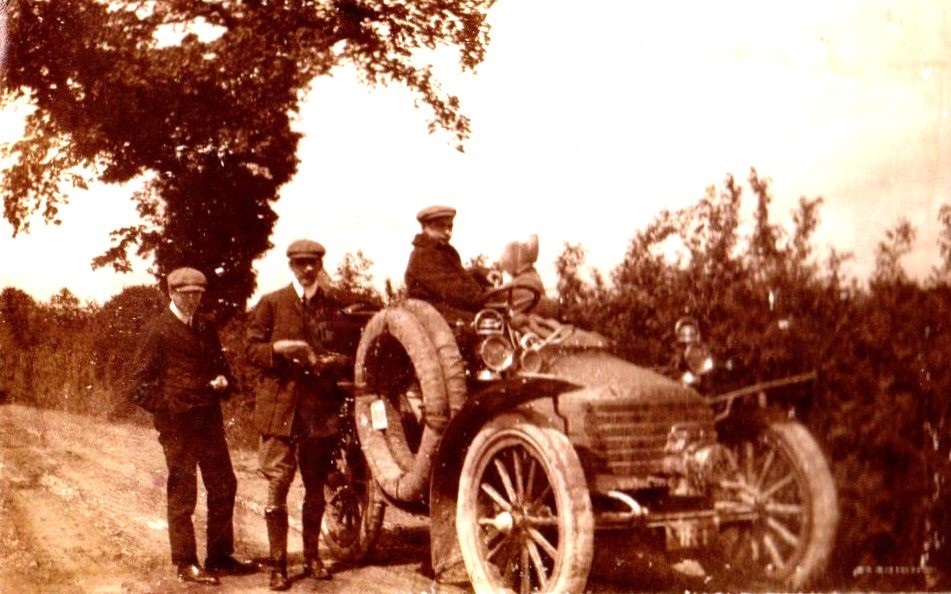
Motor Tour of the west of Ireland in 1906 , James Perry and party aboard IR 1 Wolseley[3]
The first vehicle registered in King’s Co (Offaly) IR.1 was a Wolseley 10 hp black car lined red for private use, James Perry Goodbody, Inchmore Clara.[4] The Wolseley Tool and Motor Car Co, Ltd Adderley Park, Birmingham. This company was acquired in 1901 by Vickers, Sons & Maxim engineering empire with Senior engineer Herbert Austin taking over the design of the car and motor.
This Wolseley power plant was a horizontal flat twin cylinder motor, chain drive to the back wheel, top speed 20 mph designed by Austin, and the first wholly British car to be mass produced from their Birmingham factory in 1902.The price with 36-inch tyres was £380.00. This registration number would stay in use on different vehicles in the Goodbody family well into the mid 1920’s.
D. E. Williams Ltd with their first registered motor lorry IR 164 registered 25th March 1913.Commer lorry 25hp painted red 2 1/2 tons trade[5].
D. E. Williams also registered IR 165. A four-seater Ford model T Car on the same date for trade. These new Ford cars were aimed at the commercial traveller and services that could now attend multiple destinations in one day’s drive and return. They came equipped with electric lights and window wiper, a hod and inflatable tyres that could the repaired quickly. Ford dealerships springing up all over the country in this period.
This new mode of transport had an impact on other professions such as: Agricultural consultants, Bank Managers, Doctors, legal administration and policing, Political, Religious and Sporting assembly’s and events etc.
Another large merchant business in the town with sixteen shops and licenced premises, across the midlands with their main office on Bridge St. was P & H Egan Ltd. Over the years this company built up a transport department and on 16th July 1915 they registered their first motor lorry, a Commer 2 ton for trade registered IR 236.
From 1912 local garages started to appear in the town. Robert H. Poole in Bridge St. was a motor and cycle agent with a large garage, service department and car hire. He was an accomplished competition cyclist and started selling Triumph motorcycles from 1904, also sales of used motor vehicles and in 1915 Ford and Overland cars.
James Arthur Kilroy, started his hardware, Ironmonger and garage supplying Ford model T cars from 1914 and later Maxwell five seat touring cars. James registered IR 162, a 3 HP Premier Motorcycle, 23 February 1913.
The first resident of Tullamore to register a motor vehicle was James Hayes b.1863 lived in Charleville street with his family. He was manager of the Charleville Arms Hotel and was a justice of the peace for many years at local petty sessions. He registered a Ford (Model T) car IR.11 in 1913 for commercial use, transporting guest around the area with a morning run to the town’s railway station. This car was assembled at the Henry Ford & Sons ltd factory Trafford Park, Manchester.
In 1914 Charles Kingston applied to the county accountant John Mahon for an increase in salary for himself and the county surveyor as well as additional staff to cope with the increase in road works across the county.[6]
As other smaller businesses were expanding around the town, Thomas English baker and general merchant William St. Registered a 20hp motor van IR 205, on 23ed April 1915 and held this number until 1923.This was a re-released Ford Model T, new to the market in late 1914 and was targeted at smaller local delivery business. This was a turning point for commercial transport as no longer did business owners need to burden the cost of horse drawn delivery carts and a man to look after them.
John H. Wakefield with his 1926 Ford Model TT delivery van[7]
There is also a separate short index for Vehicles with registrations from outside of the county.
For example, John Henry Wakefield was a store assistant and driver for Joseph A. Lumley grocer, William St. On the 6th May 1916 John registered a Ford model T four-seater car RI 2971 (Dublin). In July 1917 he set up his own grocery business (Central Stores) on the corner of Bridge Lane and Bridge Street, now part of the Bank of Ireland building. He then transferred this number to his new Ford delivery van. These new ford vans were capable of carrying up to one ton with its long wheel base and factory-made body. This limited the speed between 15-20 mph.
Registration of motor vehicles during the war period was slow as most of the motor manufactures changed production to supply the WD (War Department) with transport of all types of machines, equipment as well as munitions. By 1919 the motor market became saturated with repurposed military machines, that drove down prices. As well as returning soldiers and mechanics struggled to find employment in garages, this led to low wages and high unemployment in the country.
From January 1920 the first signs of change hung over the country with outbreaks of hostility against the Crown Forces from the Republican Army, and the pursuing War of Independence continued until December 1921, and was followed from June 1922 when the Civil war began.
During these years registration of motor vehicles was slow. From 1922 most vehicles were taken off the roads by their owners, as they were being targeted and used for transporting armouries and republican volunteers to and from ambushes around the county. Other cars were adopted with armoured plate on the sides to protect the drivers and passengers as the country fell into lawlessness. Garages, general merchets were targeted constantly with fuel stores raided along with anything of value, the owners threatened and intimated into selling up or in some cases burning of premises and homes. This was the case with Robert Poole Tullamore and George Lee Castle St Birr, both men and families had sold out and eventually emigrated.
By 1924 motor registrations had bounced back with most large industries purchasing goods vehicles. (3) D. E. Williams Barrick St. (2) P&H Egan, Ltd Bridge St. (1) M.J. & L. Goodbody Clara. James Kilroy High St (Hackney). (1) Joseph A. Lumley William St.
By the mid 1920’s car sales started to increase, this led to another new garage in Tullamore.
O’Conner Square mid 1920’s[8] L-R: Rafters Drapery Store with facade of advertising. George N. Walshe premises, fire engine parked outside his shop. Access to his garage was through the gate to the left of this building. This was an old coach yard and stable building. Building to the right of Walshe was Egan’s brewery house, Daly’s shop and arch entrance to Egan’s brewery and stores houses. The town switched to electric lighting in 1921.
Other families in the area that would go on to set up their own garage and motor works shortly after the first Motor Registration ends. Frank Hurst, O’ Moore St. started his Motor works in 1926, repairing agriculture machinery (Irish made Fordson tractors and small stationery engines) that was now replacing the work horse. Among his many staff was a young George Colton (1899-1931) Gorteen, Killeigh, motor mechanic who worked for G. N. Walshe before joining F Hurst Motor Works.
Unfortunately, the vehicle registration ledger is incomplete and ends in June 1923. There are no motor vehicle registration legers known to exist between 1923 and 1945.
Offaly Archives is the depository for all motor licences ledgers from 1904-1928 however there is also a gap from 1928-45 for licence registration’s (OFCC 10/5/1). The surviving ledgers are a wonderful source of information to anyone with an interest in early motor transport in the county and the early pioneers who embraced this technology.[9]
See also: James Perry Goodbody, Offaly’s leading industrialist and county council member for 21 years (1853-1923) By Michael Byrne April 19, 2023 Offaly History Blog.
Our thanks to Tomas Ó Helion for all his research for this blog article on a subject that touches most of us. A second article on this subject will be published in the Anniversaries Series in October 2024.
The history of passenger steamers on the Shannon, covering a period of 140 years, was traced by Dr McNeill of Southampton University, in a lecture jointly sponsored by the Old Athlone Society and the local branch of the Inland Waterways Association, and held in the Prince of Wales Hotel, Athlone, in January 1966.[1] Dr McNeill soon after published two volumes on the subject of steamer transport. Ruth Delany has also published material in her The Shannon Navigation (Dublin, 2008).[2]
McNeill, in his 1966 Athlone lecture, said that Ireland had a tremendous heritage of water transport. Mentioning that the first experiment in the idea of iron bulkheads in streamers was tried out on the Shannon in 1829, he said that we were apt to forget the work done by Irishmen in the technical field in the last 150 years. Iron steamers were cradled in Ireland in the 1820s.
Mr. McNeill acknowledged his debt to the late Dr Vincent Delany and to the files of the Westmeath Independent for much information on Shannon steamers.
Recalling that in 1829, the first commercial passenger steamer service commenced plying on the lower Shannon, he said it was operated by the City of Dublin Steampacket Company for roughly thirty years. The fleet included the Garryowen, the largest iron steamer in the world at that time and first development of the new idea of iron bulk-heads. Another steamers, Erin Go Brath, made marine history at that time by keeping her engines running for six days without stopping.
Thursday May 19th 1938 was a big day in Tullamore. The occasion was the opening of 146 new houses on O’Molloy Street and the opening of a new outdoor Swimming Pool by the Tánaiste and Minister of Local Government and Public Health Mr. Sean T. O’Kelly. By Damien Byrne
The local newspapers of the day describe the town as being “profusely decorated with flags and bunting” with O’Molloy Street being “richly festooned with the Tricolour being strongly in evidence”.
The Tánaiste on his arrival at Tullamore, at 12:15 p.m., passed through a guard of honour of Civic Guards, drawn up outside Hayes Hotel. He was met at the door of the hotel by the members of the Council and public officials, and proceeded at once through Patrick St., Kilbride St., and Clara Bridge, where his arrival at O’Molloy Street was awaited by many clergy of all denominations and representatives of the laity. Along the route large numbers of people had gathered, and the Tánaiste smilingly bowed his acknowledgements of their greetings.
The weather was bad when Joseph Hutchinson arrived in Tullamore. For 22 years Hutchinson had dedicated himself to the Irish National Foresters and as a result a small mutual aid society founded by 18 men in Dublin, had spread across the globe and recruited over 20,000 members in Ireland. On Sunday 9 April 1899, Hutchinson had come to the midlands to recruit some more members and establish the first INF branch in King’s County. His visit that day would have profound repercussions for Tullamore, but it had its roots in the north of England.
A singlehanded trip from the River Shannon to the town of Tullamore along the western section of the Grand Canal was conducted by the writer over seven days in August, 2023. The trip was conducted aboard the heritage vessel Bomb Scow a converted thirty-three foot Royal Navy seaplane tender. Our thanks to Donal Boland for this comprehensive overview of the Brosna Line, Shannon Harbour to Tullamore which is better presented as one extensive with its helpful picture coverage. This comprises articles 6 to 10 in the series on Grand Canal Offaly.
Content
Overview
Entrance from the River Shannon
First Lock Number 36
Lock 36 to 35
Lock 35 to 34 Shannon harbour
Lock 34 to 33 Clonony Barracks
Lock 33 Belmont…
Belmont to Tullamore
Memories
Appendix 1: Hull and Spoke Concept
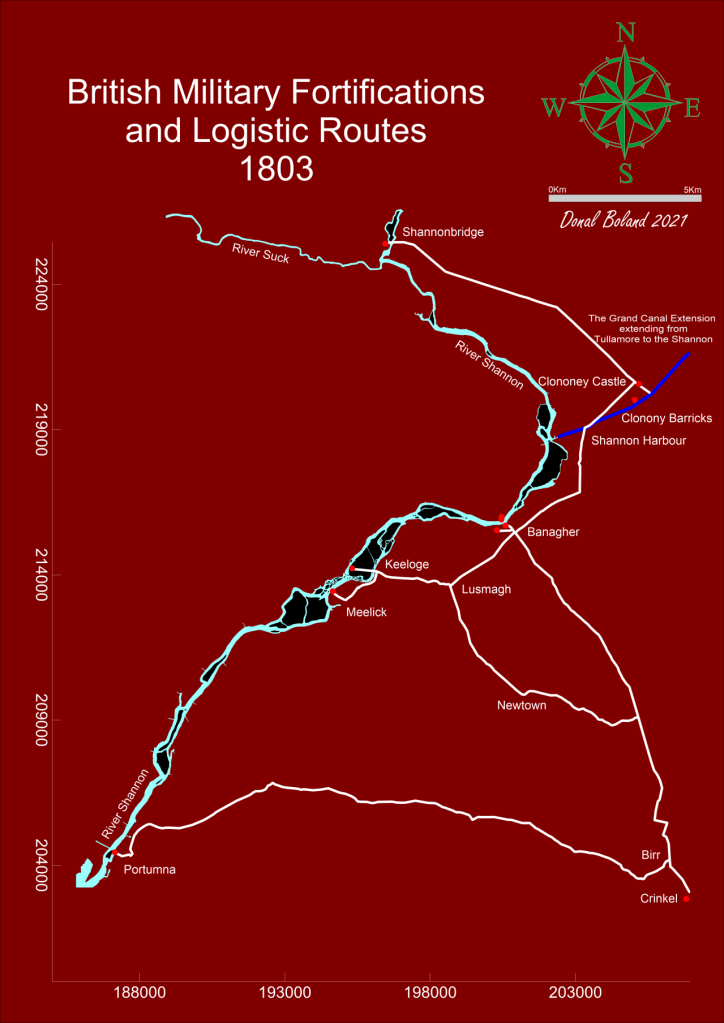
Appendix 2: The Napoleonic Aspect
1. Overview
A singlehanded trip from the River Shannon to the town of Tullamore along the western section of the Grand Canal was conducted by the writer over seven days in August, 2023. The trip was conducted aboard the heritage vessel Bomb Scow a converted thirty-three foot Royal Navy seaplane tender.
The trip, was a fact-finding event to record the on-water experience as part of an initiative to highlight the possibility of attracting more visitors to this section of the canal. Described here as The Grand Extension, previous research had revealed its construction was later than the eastern section of the canal and forming part of the British Militaries Napoleonic defensive network.
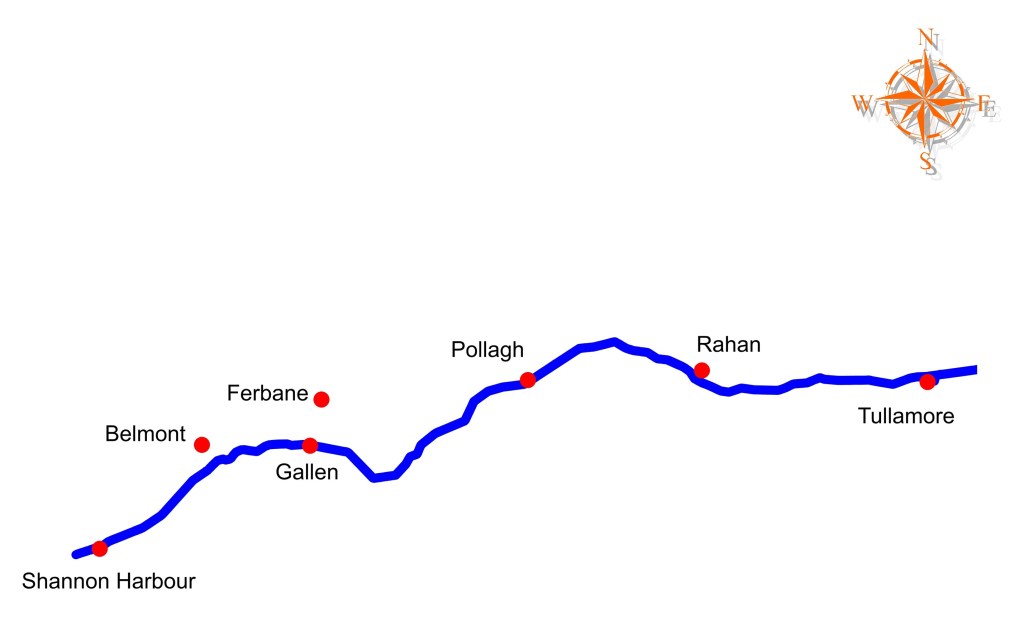
The route commenced in the west on the callow fringed landscape of the River Shannon, travelling through boglands on a raised section of the canal and terminating to the east in an Esker dominated upland landscape, encountering the villages of Shannon Harbour, Belmont, Ferbane, Pollagh, Rahan and the town of Tullamore.
The Stllwater Navigation extending for a distance of twenty two miles and rising some ninty feet is comprised historically of the waterway, ten locks, twenty bridges, eighteen aquaducts, four feeders and four spillways. Presently the waterway is managed by four lock keepers or waterway patrollers with overlapping areas of responsibility, who operate the lock systems and control the sections water levels.
The Grand Extension, Town and Villages The heritage vessel Bomb Scow moored on The Grand Extension
2. Entrance from the River Shannon
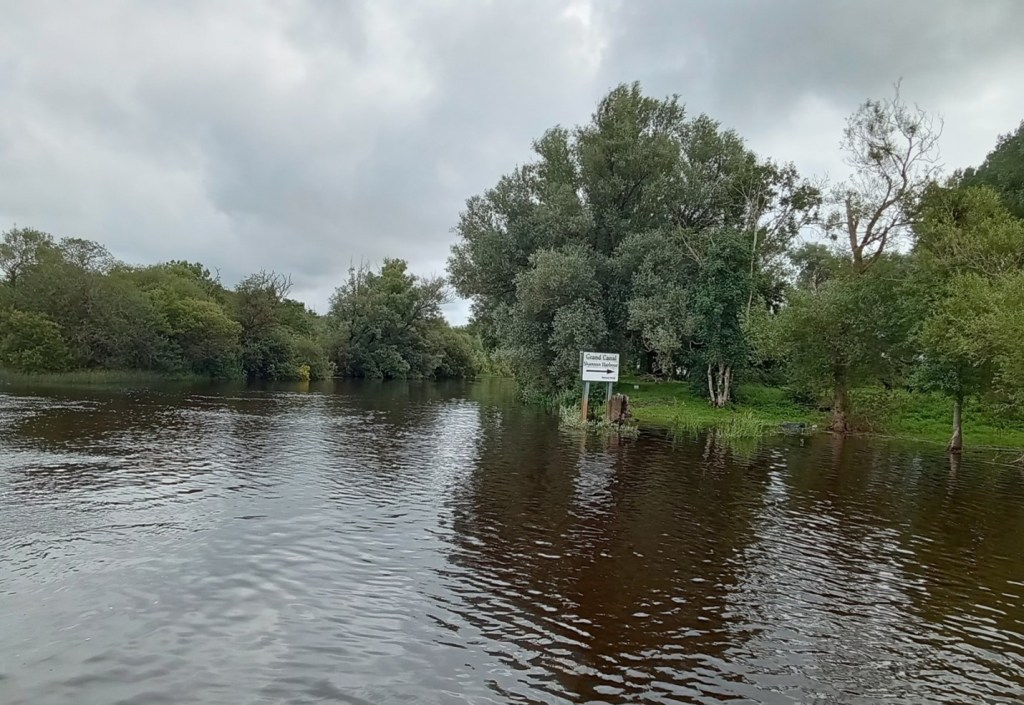
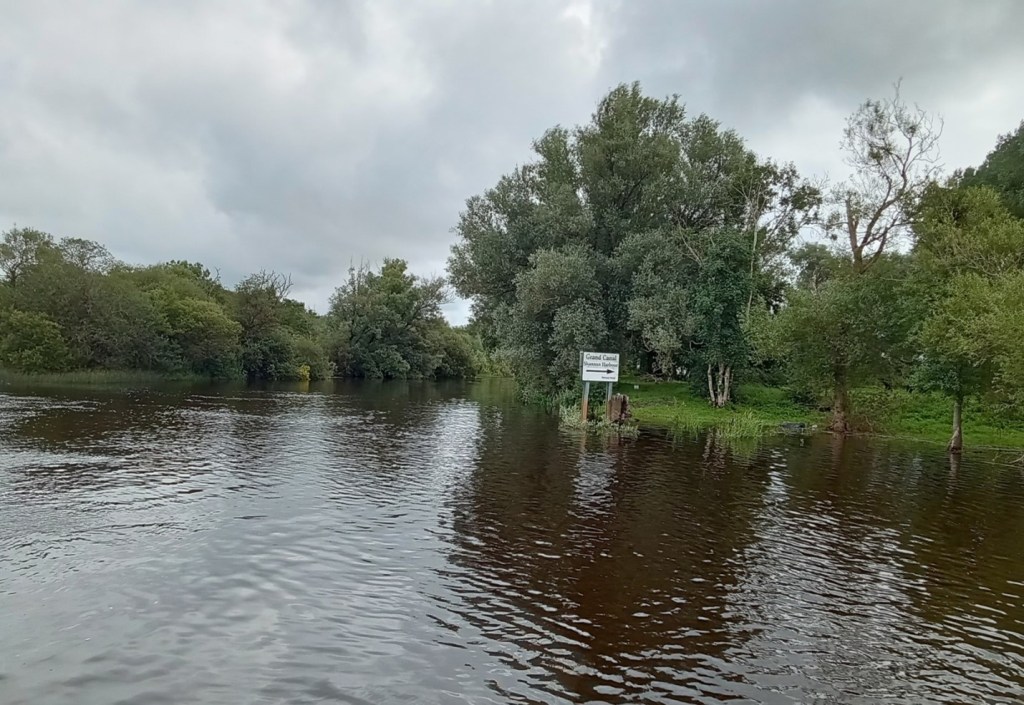
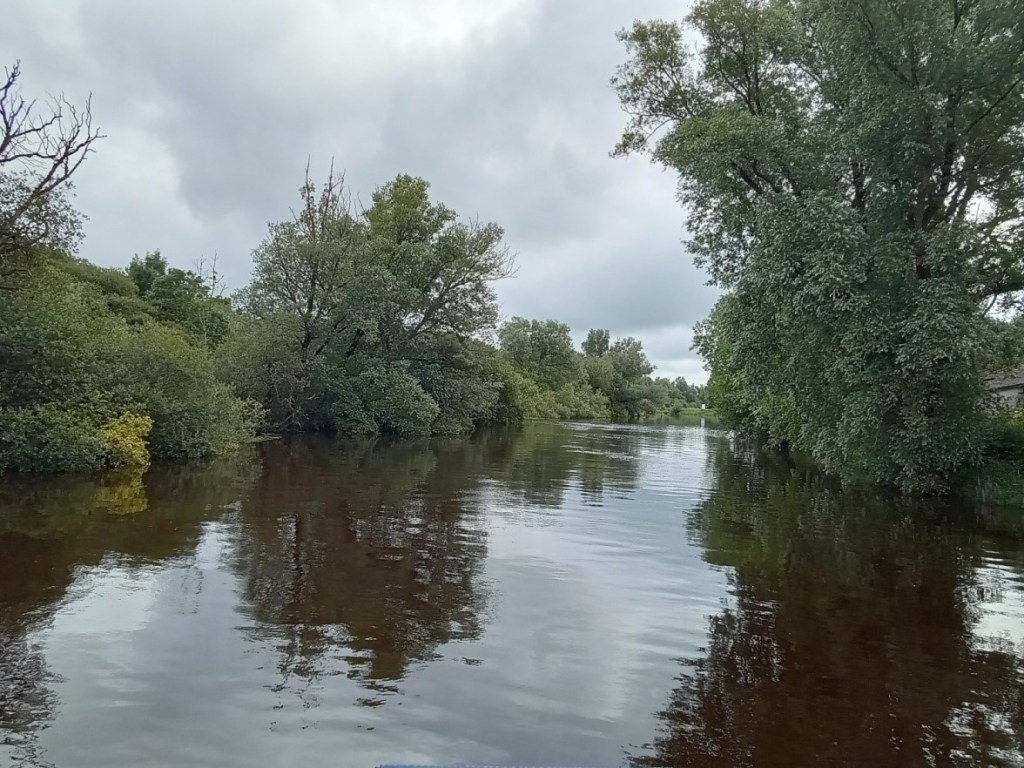
The Stillwater navigation of The Grand Extension is accessed from the River Shannon by way of the Brosna River and its confluence with the Shannon. This entrance is characterised by magnificent over-hanging foliage to the north and earthen banks associated with the canal’s construction to the south. An isolated, derelict bridge-keeper’s cottage that stands on Bullock Island is passed as you enter the River Brosna waterway.
The confluence of the River Brosna waterway with the River Shannon
The River Brosna waterway
The confluence of the River Brosna Waterway and The Grand Extension
3. Lock Number 36
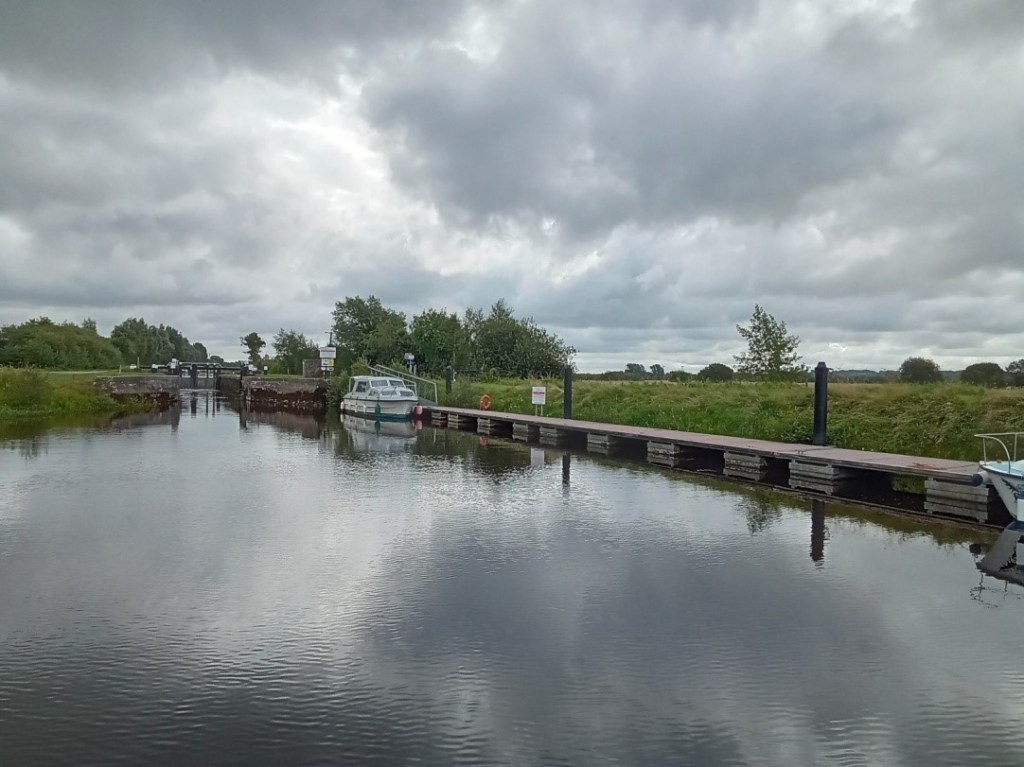
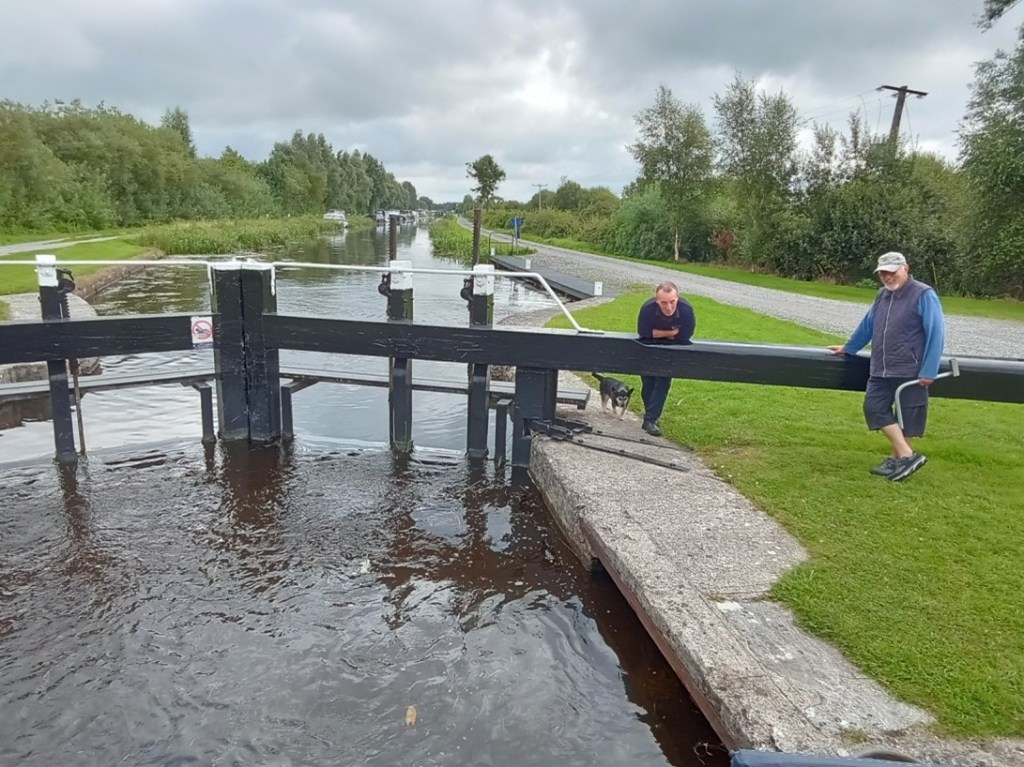
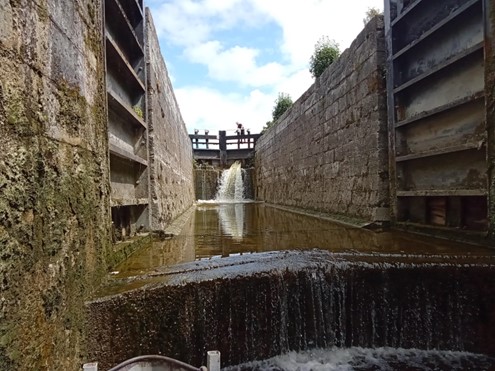
Lock 36 is the final, lowest lock on the Grand Canal system and the first lock you meet when arriving from the River Shannon. A long, floating jetty stands on the southern bank immediately below the lock, providing access to land by way of a large sloping ramp. The lock constructed of cut-stone is entered via wooden balanced, hanging gates that incorporate water control sluices, operated by the lock keeper utilising a rack and pinion mechanism mounted on the gates topside. The gates are opened and closed by way of the long balance beam that extends from each gate.
An engraved stone plaque mounted on the north wall of the lock, details the construction and features of the extension.
The entrance to Lock 36 and its large waiting jetty
The empty cut-stone lock chamber and wooden gates
The full lock chamber and upper-gates
The upper lock gates opened and the ever-attendant lock keeper
4. Lock 36 to 35
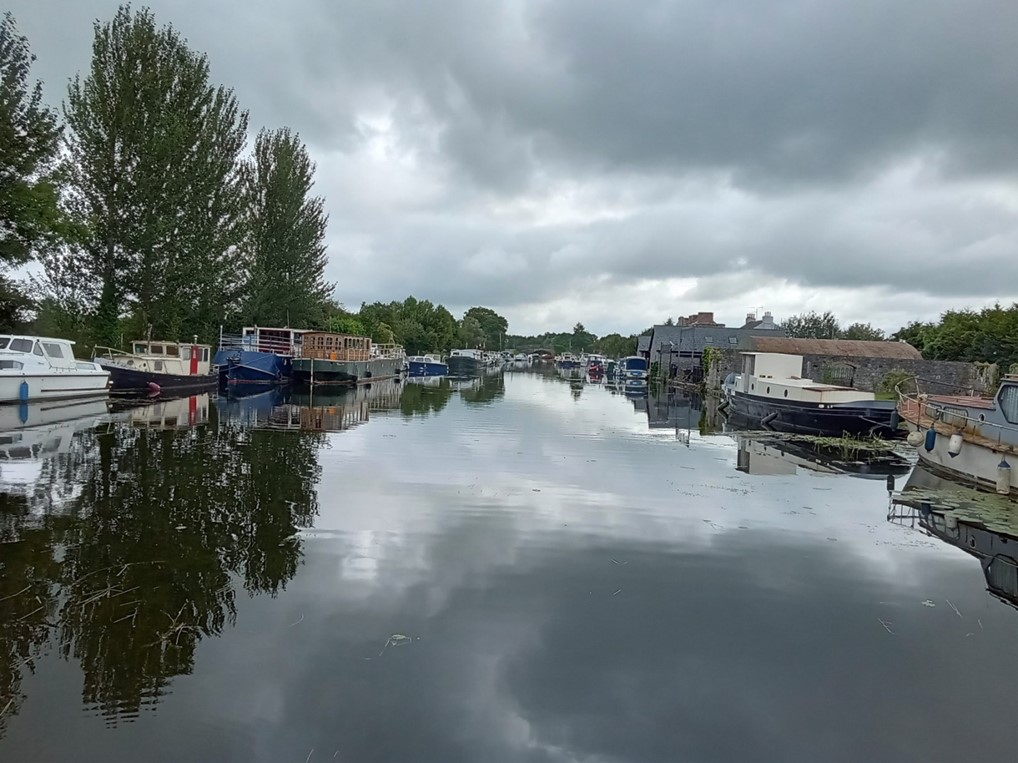
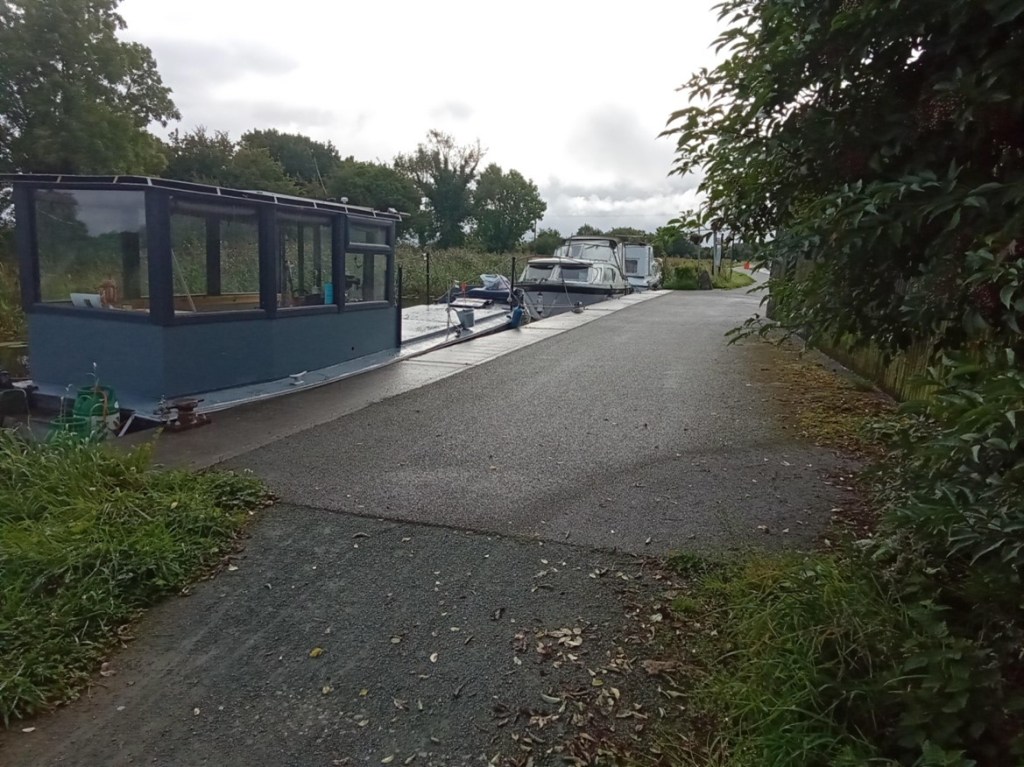
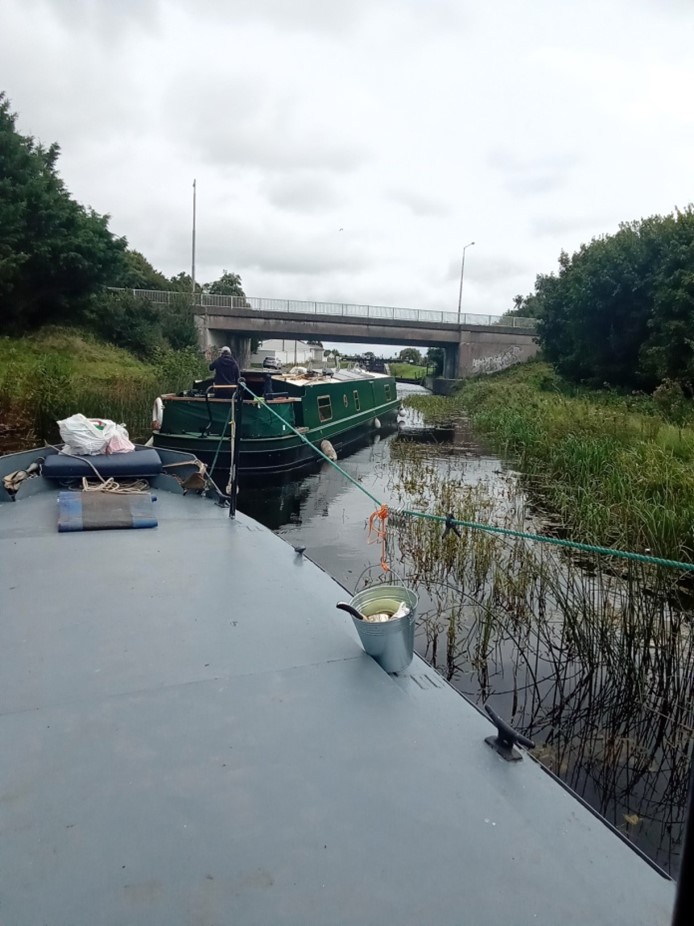
This short section of the canal provides an initial experience and understanding of the Stillwater navigation. It is many times narrower than the River Shannon with a defined navigation path bordered by moored vessels to the north and a rich reed-based ecosystem to the south.
Entering the first section of The Grand Extension
The short canal section extending from Lock 36 to Lock 35
Lock 35
5. Lock 35 to 34
The second, Lock 35 on the system, provides access from the first level up to the second level which is comprised of Shannon Harbour, Griffith and Clonony bridges and a section of canal extending to the thirty fourth lock that contains numerous moored vessels for most of its length The waterway beyond the moored vessels starts to provide an understanding of the true characteristics of this Stillwater navigation.
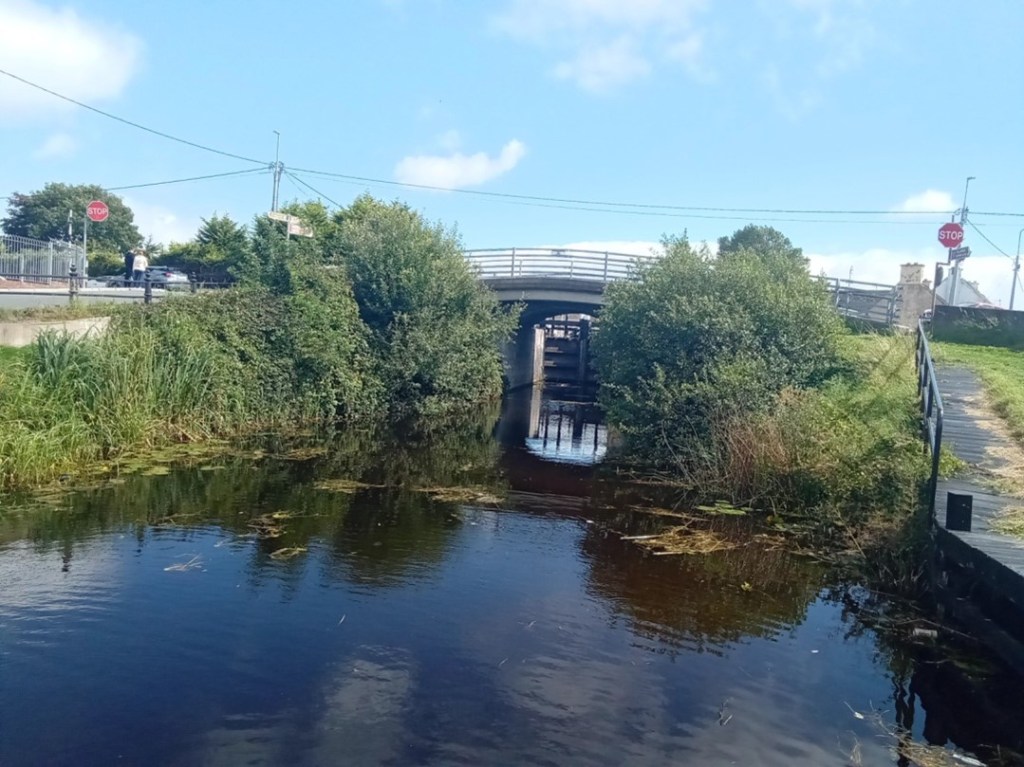
A feature of this canal is the construction of bridges and locks immediately adjacent to one another, this allowed for the transfer of horses (which were originally employed to pull barges along the navigation) from one towpath to the other.
Entering Shannon Harbour
Shannon Harbour
The canal extending to Clonony Bridge and Lock 34
Clonony Bridge and Lock 34
6. Lock 34 to 33
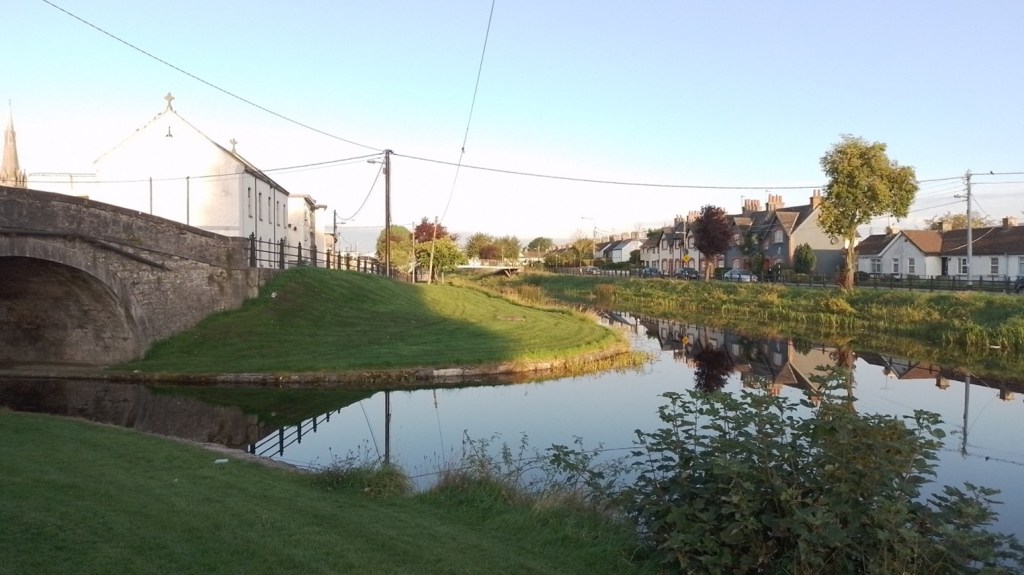
The section of canal east of Lock 34 is best described as the military section as along its northern bank lies the remains of Clonony Military Barracks – most likely the military destination of the canal and the reason it was constructed swiftly. The military grounds are defined to the west by a wooden fence and metal gate and to the east by a long roadside timber fence. The towpath within the military grounds is substantially wider encompassing a lay-by or mooring area. Immediately east of the military grounds lies L’Estrange Bridge and Quay which was utilised by the L’Estrange family for commercial purposes possibly associated with the barracks.
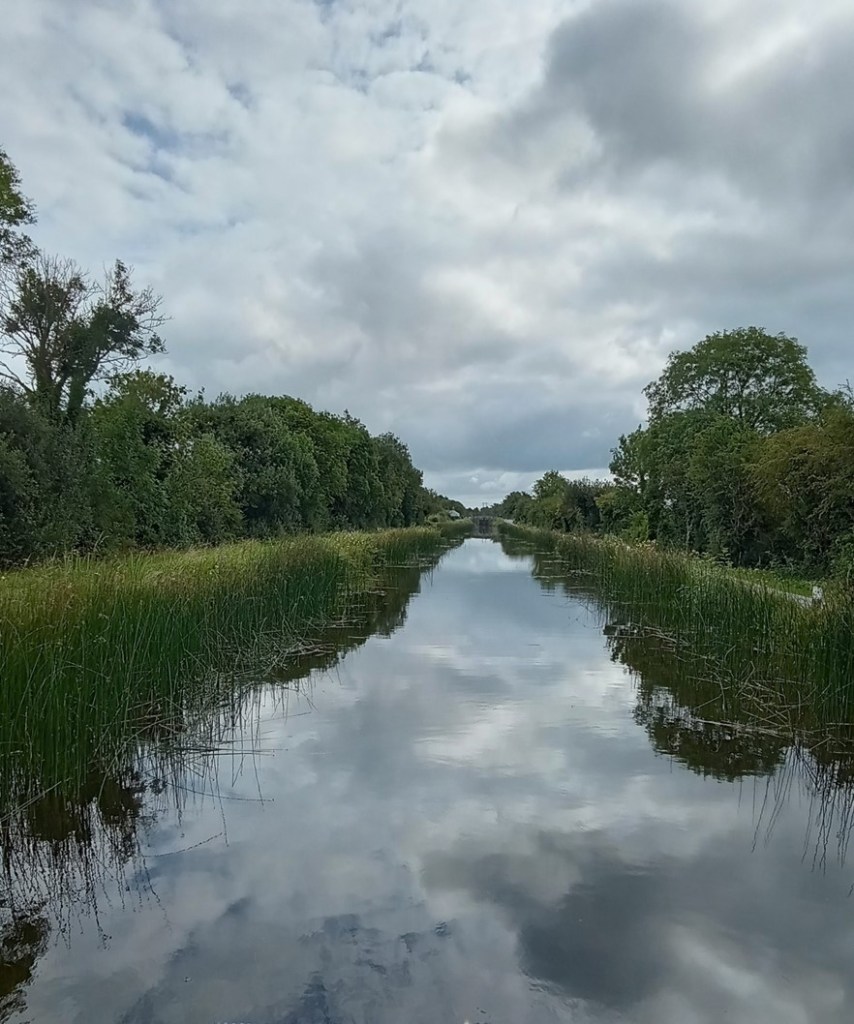
The canal beyond L’Estrange Bridge and Quay displays its mature natural character as a tranquil linear still-waterway navigation mostly devoid of habitation and humanity broken only by the arrival of Belmont Mill.
The Eastern and Western boundaries of the Military Lands
The lay-by and broader towpath within the Military Grounds
L’Estrange Bridge / Quay and Belmont Store
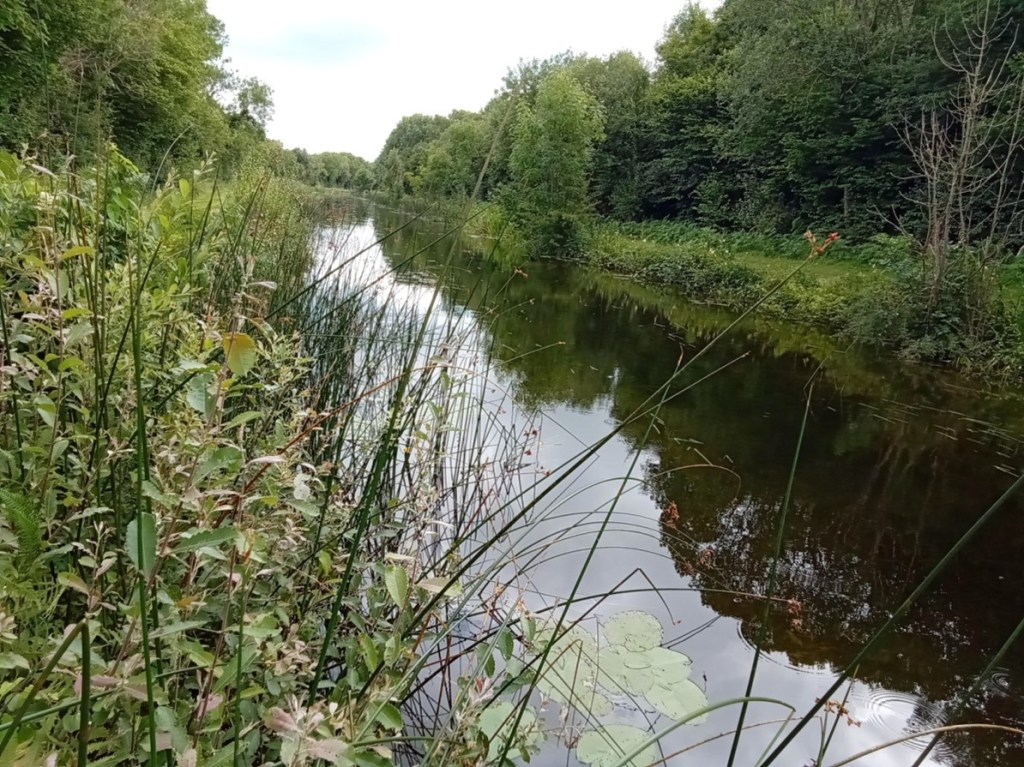
The magnificent natural features of The Grand Extension
7. Lock 33
Lock 33 or Belmont Lock is the only double lock on the Grand Extension. A double lock is constructed when a high lift is required at a location. The standard lift for locks on the canal is circa eight feet while the lift a Belmont Lock is some fifteen feet. Transiting this lock is a delightful experience hard to describe and best experienced.
Belmont Mill and Lock
Lock 33 at Belmont
Filling the lower level
Filling and emerging from the upper level 8.Belmont to Tullamore
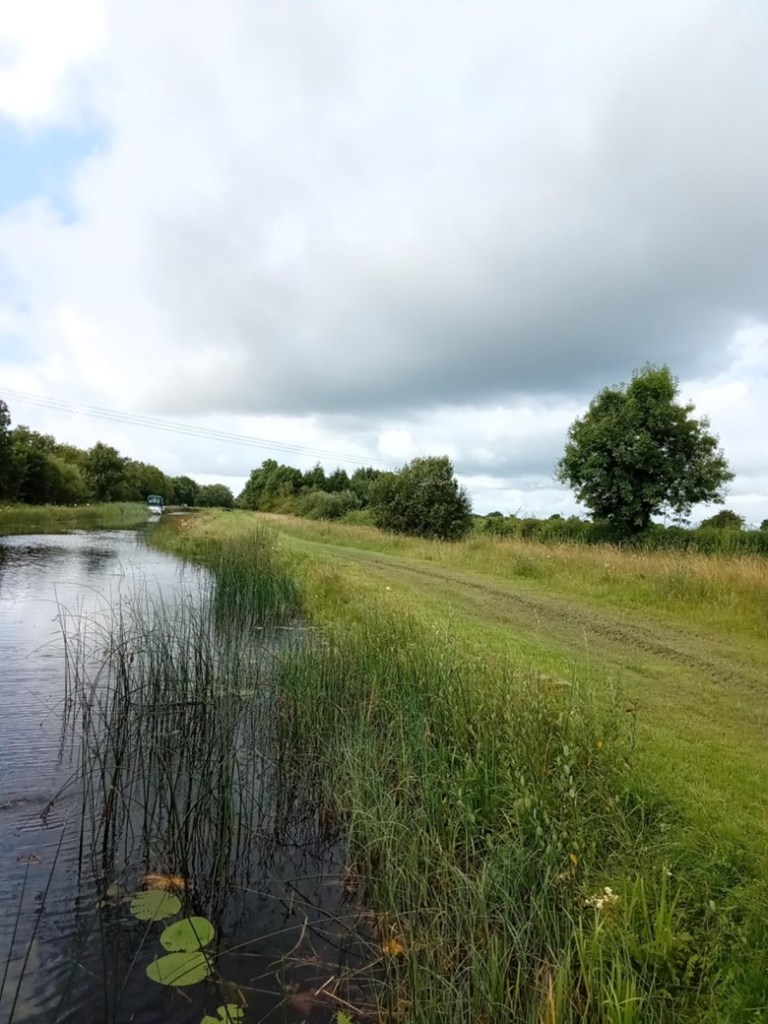
The canal extending east from Belmont Lock to Tullamore is best described as isolated continuous delightful for some and a horror for others. The mind may transition into a relaxed static state imbibing the natural landscape and the activities of inhabiting creatures or one may be bored to insanity. The architecture of the locks, bridges and associated buildings coupled with the relatively unchanged landscape propels one back in time to the period of the canal’s construction in the early eighteen hundreds. This relaxation is interspersed by interludes of surprise and delight when a bridge is encountered and frantic activity when locking from one level to another. The villages of Gallen/Ferbane, Pollagh and Rahan when encountered are a connection with present times providing basic mooring facilities. The town of Tullamore provides an opportunity for the replenishment of supplies and the possibility of fresh water. The facilities available to the canal traveller are sparse and presently reflect the industrial era of canal usage.
A simple water tap
The continuous Stillwater Navigation
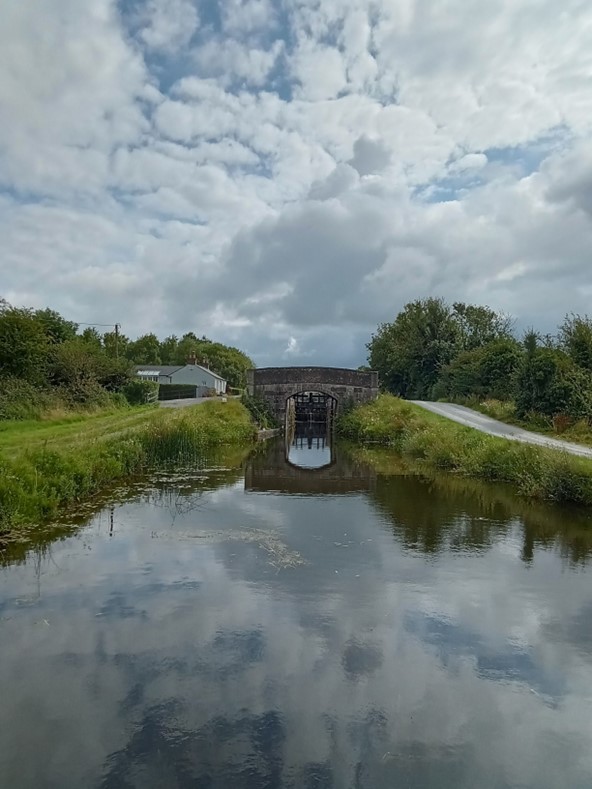
A canal bridge endowed with generations of growth
Bell’s Bridge and Lock 32
Gallen Village, bridge and rest area
Gallen Village bankside mooring area
Pollagh Village and Canal-Side facilities
Lock 31
Lock 30 and the canal manager’s house.
The canal-side facilities at Rahan Village and the Thatch pub – a former Williams branch shop
Ballycowan Castle of 1626 and beside it the Huband aqueduct dated to 1803. Huband was a barrister and a director of the Canal Company from 1777 for most of the years to 1835.
Srah Castle, Bridge and and the railway bridge
Sragh Bridge and Lock 28
Entering Tullamore at the Clara Road Lock 29
The spur from the canal main line to Tullamore Harbour
The canal side facilities in Tullamore Town
9. Memories
Memories of this trip are especially positive
The waterway was weed free with a good water level
The courtesy and efficiency of the water patrollers was first class
The lock landings were in a good condition
The lock operating systems all worked well
The lock surrounds were neat and well maintained
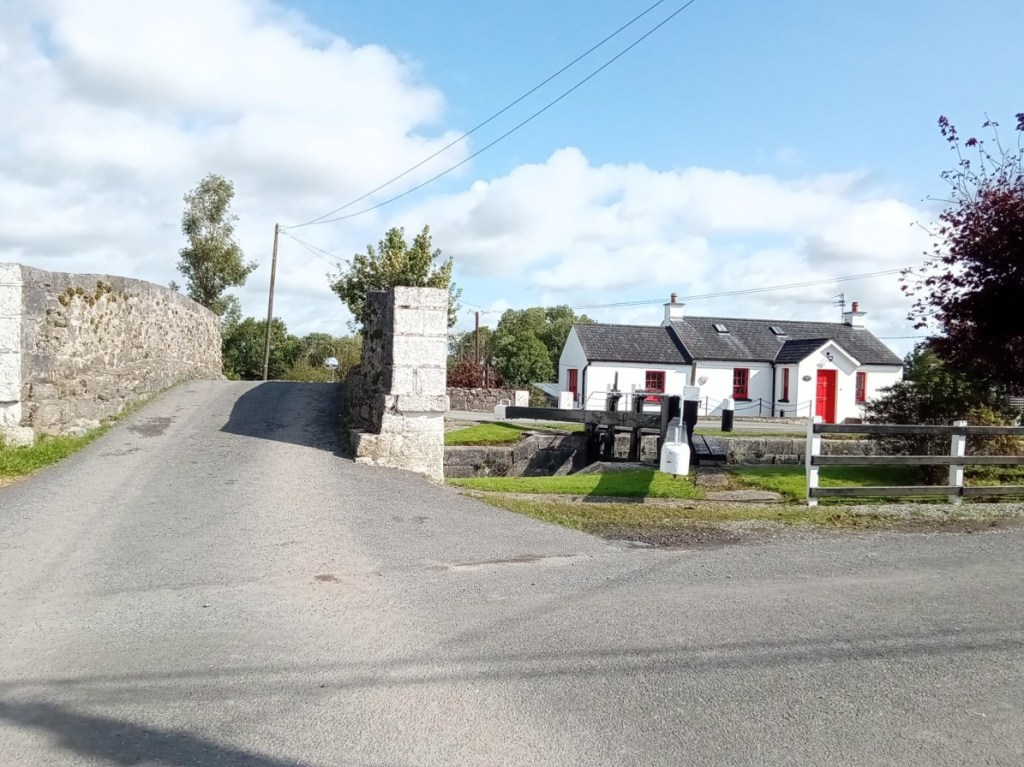
The lock keeper’s cottages were a joy to behold
Canal-side moorings and services were adequate and of their time
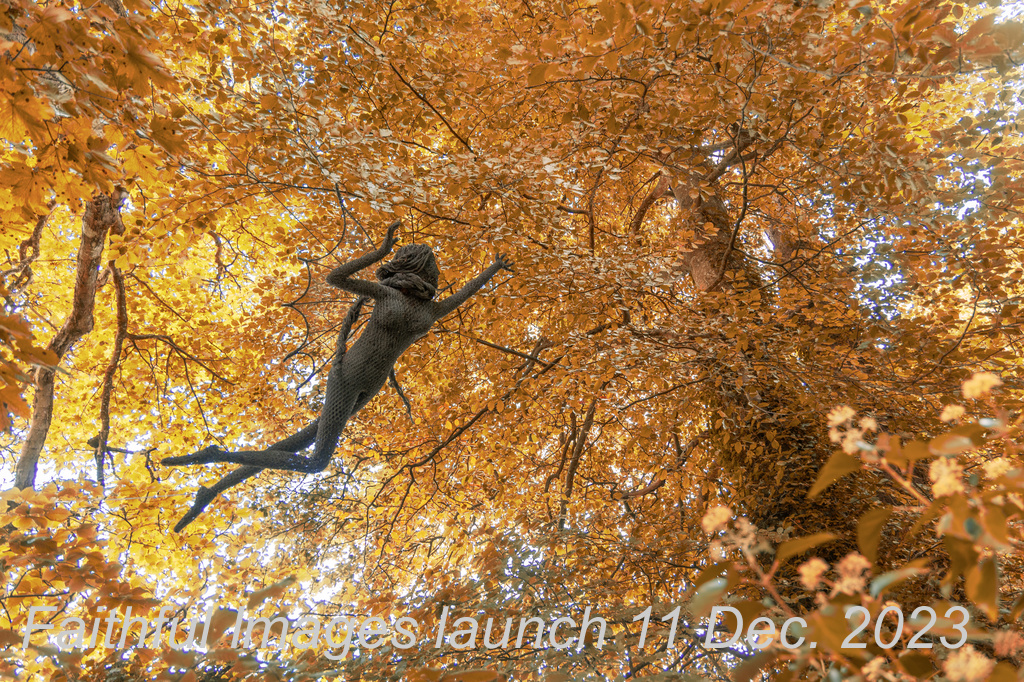
Faithful Images: public art in County Offaly, will be launched on Monday 11 December at 8 p.m. at Offaly History Centre, Tullamore by Eddie Fitzpatrick, cathaoirleach of Offaly County Council. Faithful Images is a welcome addition to the growing library on the cultural patrimony of County Offaly. Thanks to Creative Ireland and Offaly County Council for their support. The new book is in full colour and is €20. It can be purchased at Offaly History Centre, Bury Quay (beside the Grand Canal and the Old Warehouse) and at Midland Books, and online at http://www.offalyhistory.com. You will be welcome to attend the launch and to purchase a signed copy.
The Turf Man – capturing working on the bog for over a century
The combination of Fergal MacCabe as architect/town planner/water colourist with that of Paul Moore as photographer makes for an excellent outcome. Fergal MacCabe has an eye to the broad sweep of architectural history from his having studied and practised the subject over sixty years. He has been looking at buildings with an admirable curiosity since his teenage years. By the 1970s this had blossomed into his being a superb watercolourist especially when it came to places associated with his childhood years in the midlands. Living in Dublin now he can return to his native place bringing with him a fresh perspective. We had the pleasure of working with him on Tullamore: a portrait in 2010, attending several of his exhibitions, and several of his lectures including those on the rediscovered Frank Gibney.
Aisling – the spirit of the trees, Geashill(more…)
The publications below are available from Offaly History’s history shop at Bury Quay, Tullamore beside the Old Warehouse restaurant, online 24/7, and open Mon to Fri 9 to 4. 30. We are also in Bridge Centre from 14th to 24 Dec. as in previous years. We look forward to seeing you. All our work is to promote Offaly History on a selfless basis. All the publications below are from authors pro bono, pro deo, pro condado.
Offaly History is delighted to produce another volume of Offaly Heritage which is the twelfth collections of essays and writings on the history of the Faithful County’. The essays in section one reflect the ongoing research in Offaly into aspects of life in Ireland 100 years ago as we come to the end of the Decade of Commemoration (1912-1923). The essays reflect the changing nature of society in Offaly at that time, particularly during the years 1920 to 1923 and readers will enjoy contributions as varied as they end of the Wakely family of Rhode; the final years of the Leinster Regiment at Birr; the Protestant minority in Offaly during the revolutionary period; the courts of assize in King’s County in the years 1914-21; the burning of Tullamore courthouse, jail and barracks in 1922; the story of Belgian refugees in Portarlington, and Offaly claimants in 1916. A series of short lives are presented in this volume, as they were in Offaly 11 and includes entries on individuals as diverse as J.L. Stirling, Averil Deverell. Middleton Biddulph; Robert Hames Goodbody and volunteer Sean Barry. This volume of Offaly Heritage is also strengthened by a wide array of essays on aspects of Offaly history stretching from Colmcille to early soccer activity in Offaly in the late nineteenth century. The editors are particularly pleased to include essays from a number of contributors for the first time. The compilation of writings on Offaly history topics continues in this volume. The volume concludes with information on the Offaly Historical and Archaeological Society, the county’s heritage office and reviews of recent books of Offaly interest.
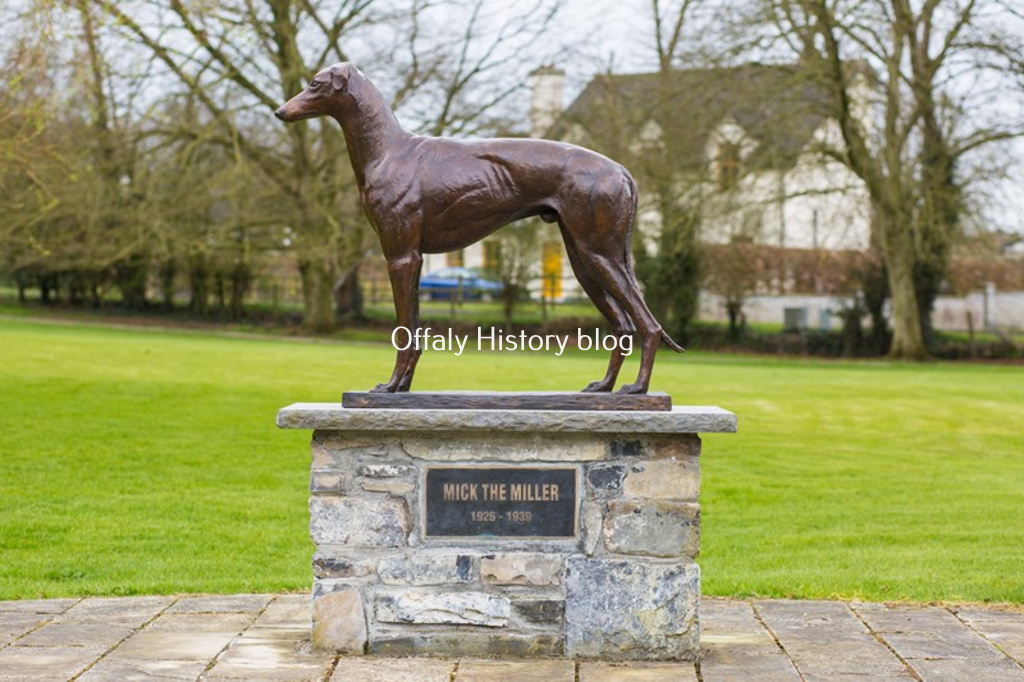
1. Sculpture of Mick the Miller by artist Elizabeth O`Kane on Killeigh village green.
Mick the Miller was the first great star of greyhound stadium racing in Britain. Born in Killeigh, Co Offaly in 1926, he had a successful Irish career before he began racing in England in 1929. By the time he retired in 1931 he had won 5 classics including the English Derby twice, the Cesarewich, the St Leger and also the Welsh Derby. He was the first greyhound to win the English Derby twice in succession and the first greyhound in the world to win 19 races in a row (both records remained unequallled for over 40 years). He won 51 of his 68 races, finished out of the top 2 positions only 6 times and also won 10 of his 13 one-on-one matches. His total prizemoney was £9,017 (€485,000 in today`s money) and he won 18 silver and 6 gold trophies. Mick equalled 2 track records and set 7 new ones (6 of which were also new world records).
He was a very exciting dog to watch and people flocked in their thousands to see him run.


























 offalyhistoryblog