
A new book detailing the history of Birr Military Cemetery has been published by Offaly County Council. Researched, written and designed by Stephen Callaghan the book gives an authoritative history of the cemetery and all those identified as buried there. While the cemetery only contains 52 inscribed memorials, the book gives biographical details of a further 230 people buried there. The memorials which survive are also examined and described in detail, including information about type, symbols and details about the materials used and the stonecutters who made them. The cemetery is one of the few surviving features of Birr Barracks and is an important link to the past. The people buried there are a mix of soldiers, soldiers’ wives and children, the latter make up most of the burials.
(more…)Category: Military history
-
Sgt John Thomas Cannon of Birr. Blog No 203, 13 June 2020
The 12 June 2020 marks the 98thanniversary of the disbandment of the historic Southern Irish infantry regiments of the British Army at Windsor Castle. Disbandment was brought on by economic cuts to the British Army and in part due to the Anglo-Irish agreement. The Royal Irish Regiment, Connaught Rangers, Leinster Regiment, Royal Munster Fusiliers, Royal Dublin Fusiliers (and South Irish Horse) all surrendered their colours to King George V for safe keeping. The ceremony took place at 11:30am in St. George’s Hall in Windsor Castle. During the ceremony the King made a promise to safe guard these highly prized colours. The ceremony finished with a royal salute and God Save the King played.
The colour party detachments for each regiment consisted of the regiment’s commanding officer, then three officers and three non-commissioned officers (NCO) for the 1stand 2ndbattalion respectively. One of the NCOs on whom this honour fell was John Thomas Cannon of the Leinster Regiment’s 2nd Battalion. This is John’s story.
-
A Birr Letter’s Untold Story: Hugh Leonard of Crinkill. By Stephen Callaghan. Blog No 186, 8th April 2020
Today it is all too easy to take modern technology and communication for granted. When was the last time you remember sitting down to attentively write an important letter with pen and paper? It might be fair to say that letter writing has become a dying art form. For Hugh Leonard 168 years ago this letter was important in the hope of claiming battle and prize money owed to his late son, William, who died in India in 1849. This blog post examines the contents of this letter. (more…)
-
From a hedge school in Cappincur to adventures in the American Civil War: the story of Peter Cavanagh. By Michael MacNamara. Blog No 180, 18th March 2020
Offaly Archives received a very interesting donation of manuscripts in recent times. Michael MacNamara, a native of Colehill and long-time resident of County Limerick, donated archives relating to his great grand-father, Peter Cavanagh, who was born in Cappincur in 1824 and ended up as a solider in the US army during the American Civil War. Before all those adventures, Peter undertook high level tuition from a Mr Patrick Glowry in a hedge-school arrangement through the famine years of 1844-1848. His copybook survived and is among the items donated to Offaly Archives. Michael MacNamara has spent many years researching Peter Cavanagh and summarised his unusual life and times for an interview in the Midland Tribune in 2005: (more…)
-
County Offaly in the Military Service Pensions Collection: an exploration by Cécile Gordon. Blog No 157, 19h Oct 2019
Cécile Gordon is Senior Archivist and Project Manager of the Military Service (1916-1923) Pensions Project in the Military Archives of Ireland. She will give a lecture on Offaly in the Military Service Pensions Collection on Monday 21 October, 8pm in Offaly History Centre, Tullamore. The talk will include an overview of the records available in MSPC for county Offaly and will illustrate how they interconnect. The highlight will be put on the IRA Brigade Activity Reports for Offaly Brigades. A selection of some of the most interesting pension cases will be presented with a focus on newly catalogued records and claims lodged by the women involved in the independence movement in Offaly.
The Military Service (1916-1923) Pensions Collection – General
The Military Service (1916-1923) Pensions Collection (MSPC) Project is one of the leading projects of the Irish government’s plan for the Decade of Centenaries, led by the Irish Department of Defence and supported by the Defence Forces. With around 250,000 files, it is the largest collection in the Military Archives and the largest collection covering the revolutionary years, anywhere.
In a nutshell, the MSPC records are the pensions applications lodged by over 80,000 people who took part in the 1916 Rising, the War of Independence and the Civil War. Veterans applied under various legislation from 1923 onwards, enacted to recognise active military service or to award gratuities for wounds or injuries contracted during active service. Dependants of deceased members of certain organisations could also claim in respect of their relatives. (more…)
-
Vintage Week before it was Vintage! Military sports and spectacles at Birr Barracks in August 1919. By Stephen Callaghan. Blog No 145, 3rd August 2019
For the past 51 years Birr Vintage Week has commenced around the month of August, with only in recent years it taking in the August bank holiday weekend. While the festival is in its 51st year, 100 years ago on 4 August 1919 the army at Birr Barracks had organised a program of military sports and spectacles. An antecedent of Birr Vintage Week perhaps?!
The events took place on the military training grounds adjacent to the barracks, the ‘Fourteen Acres’. The events kicked off at two o’clock. While the weather was not desirable it held dry until the events had finished up. The program was organised and promoted by Lieutenant Noel Edward Fasken, while Lieutenant Leslie M. Codner was responsible for the ground arrangements. Both officers were members of the Royal North Devon Hussars. The day’s program consisted of 26 events which lasted beyond six o’clock. While the barracks occasionally held large events and concerts, one of this scale was likely not seen before.
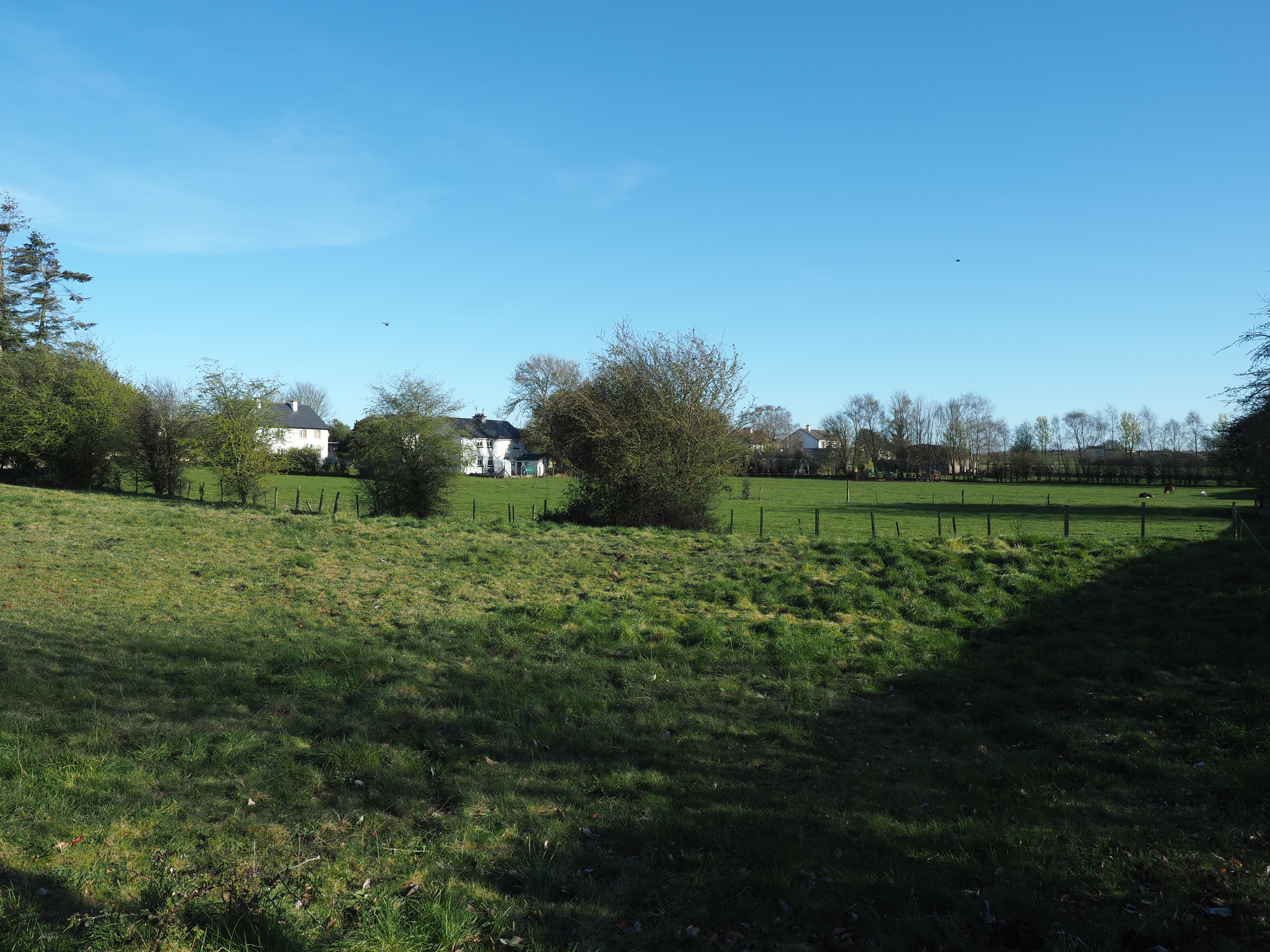
Looking south-east from cemetery road towards Leinster Villas where the military air field was located. (Photo: Stephen Callaghan) One of the main spectacles was the air display by Captain Brooks. ‘His daring feats in the air were witnessed with interest and admiration, and showed the possibilities of a flying machine in the hand of a capable pilot.’ Captain Brooks was likely piloting an Avro 504k, a two seat trainer biplane. The airfield in Birr had only been constructed in February and consisted of a detachment of six aircraft from 106 Squadron, Royal Air Force. The airfield was dismantled in October of that same year 1919..
Men under the command of Second Lieutenant E. A. Grainger and Sergeant W. A. J. Leonard enacted a battlefield play, entitled ‘The Sacrifice’. The demonstration was reminiscent of a scene from the Great War. It was apparently not without a sense of humour! The centre of the sports ground was chosen for this display, it had been mocked up to look like ‘anywhere on the battlefield’; there were sandbagged trenches, mines, and a ‘shattered’ house. The house had been temporarily erected for the event. It is quite likely that the sandbagged trenches were in fact the practice trenches dug to training men during the Great War. These trenches were excavated during August 2018.
Second Lieutenant Grainger took command of about twelve British soldiers, while Sergeant Leonard played the role of a German officer and took command of twelve ‘enemy’ soldiers. The battle was set as if it had taken place three hours after dawn. The idea was that at dawn that morning a line of trenches had been captured from the enemy.
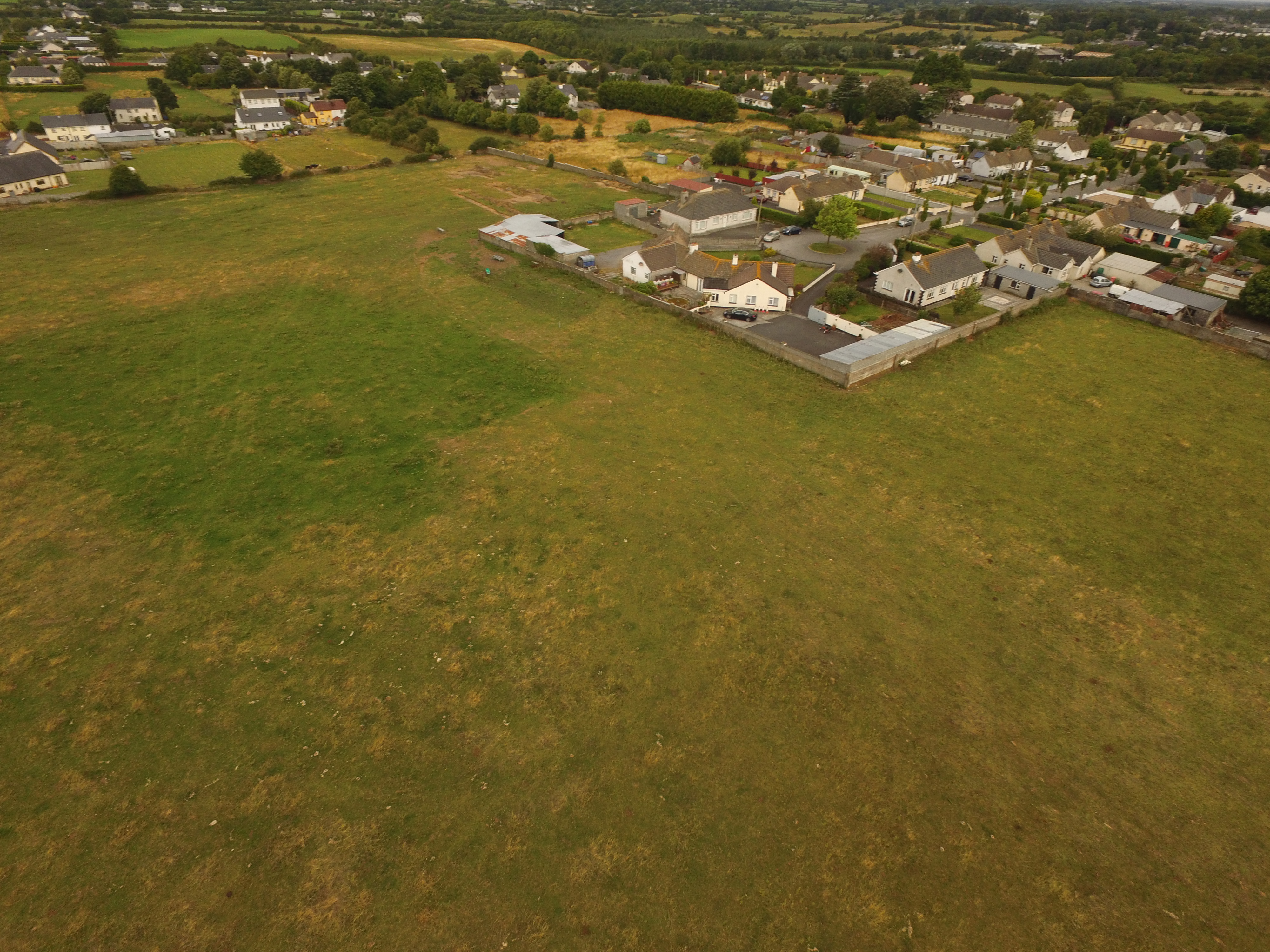
Aerial view of the ‘Fourteen Acres’, looking north-west, where the day long events would have taken place The ‘shattered’ house was occupied by a ‘British’ gun team, they had defended against a ‘German’ attack which had attempted to recapture their old trenches. The attacked opened with the explosion of mines, the ascension of rockets and the crack of rifle and Lewis gun fire. The outpost was supplied with ammunition by courageous runners.
The lone outpost held out until the very last man gave his life in its defence, thereby giving their comrades time to prepare for a counter attack. The display was well preformed and a stark reminder of the horror of the recent Great War.
Another item of interest was the physical training exhibition by a squad of the Royal North Devon Hussars under Corporal Snwothey.
Humour was provided in the form of Corporal Hatch and Private Ash acting as gentlemen the worse for ware, another soldier acting as a lady. Hatch and Ash both competed for the affection of ‘the lady’.
The day long events were reported in the King’s County Chronicle as a ‘splendid source of entertainment’, with the events being well attended by the people of Birr and the surrounding areas. The events themselves were also well patronised by competitors. Prizes for the sports were presented by Brigadier General James Graham Chaplin.
-
Francis Hitchcock’s War: Stand To, A Diary of the Trenches and its legacy. By Ruth Barton. Blog No 129, 13th April 2019
I first came to Lt Col Francis Clere Hitchcock, OBE, MC via his brother Reginald (Rex). I was writing my biography (Rex Ingram: Visionary Director of the Hollywood Screen) about the older Hitchcock, and soon realised that one of the defining influences on his life and work was his close relationship with his brother.

Kinnitty Village about 1910 The Hitchcock family and Kinnitty
The Hitchcocks were born in Dublin, Rex on 18 January 1893, Frank on 15 March 1896. The family moved to Nenagh in 1898, to Borrisokane in 1901, and to Kinnitty in 1903. Their father, Rev. Hitchcock, was a Church of Ireland rector, whose appointment to Kinnitty was prompted by concerns for the health of his delicate wife. Kathleen. Rev. Hitchcock was a man of firm character; alongside his normal parochial duties he was an aficionado of military affairs. He wrote numerous books, some on predictable ecclesiastical matters, others in the vein of the Cultural Revival celebrating old Irish folktales and a pre-colonial past of magic and superstition. He was also a keen boxer, and rigged up a boxing ring in the stables of the rectory at Kinnitty to toughen up the boys. Kathleen, by contrast, was artistic and dreamy, much loved in the parish for her caring manner. Her early death in 1908, when the boys were barely in their teens, threw a pall over the Hitchcock home that Rex for one never fully recovered from. She left behind a material legacy, too, the wonderful wooden carvings on the panels of the pulpit in the Church of Ireland.
-
Barbados to Birr, the story of Sergeant Gordon Brooker, Leinster Regiment. By Stephen Callaghan. Blog No 125, 16th march 2019
The 11th March 2019 marked the 100th anniversary of the death of Sergeant Gordon Brooker of the Leinster Regiment, a soldier who for the best part of the last 96 years was buried in an unmarked grave in Clonoghill Cemetery, Birr. This is his story.
Gordon McNeill Brooker was born around 1886 in the parish of St John’s, Barbados. He was the son of Benjamin and Elizabeth Brooker. They lived on a plantation in the parish of St Philip. Gordon enlisted in Barbados for a short term of military service (3 years with the army and 9 years in the reserves) with the Lancashire Fusiliers on 11 September 1903, aged 18 years. He gave his previous trade as an engine driver at water works. Upon enlistment he was recorded as being 5 feet 6 and a half inches tall and having blues eyes and brown hair. He was tattooed on both forearms and his right breast. (more…)
-
Early Aviation in and around Offaly by Guy Warner. Blog No 122, 23 Feb 2019

No 2 Squadron at Limerick in 1913. In 1910, about six weeks before the first successful powered flight in Ireland by Harry Ferguson in Co Down, the King’s County Chronicle reported as follows, ‘Mr Michael Carroll, cycle mechanic, conducted experiments in aviation in the hills adjoining Birr reservoir. An apparatus constructed from calico and bamboo made one or two fitful attempts to ascend. The incredulous may laugh at his efforts but it should not be forgotten that every great invention has its beginning in failure.’ One week later it was noted that the Engineering and Scientific Association of Ireland [founded in Dublin in 1903] had been discussing aviation, ‘The opinion was expressed that flying through the air was not an accomplished fact, though eventually it would be, that flying was not of any practical use and that men now engaged in a series of experiments in aviation would not die in their beds.’
-
Offaly and the First Air War: Joe Gleeson. Blogs No 119, 02 Feb 2019
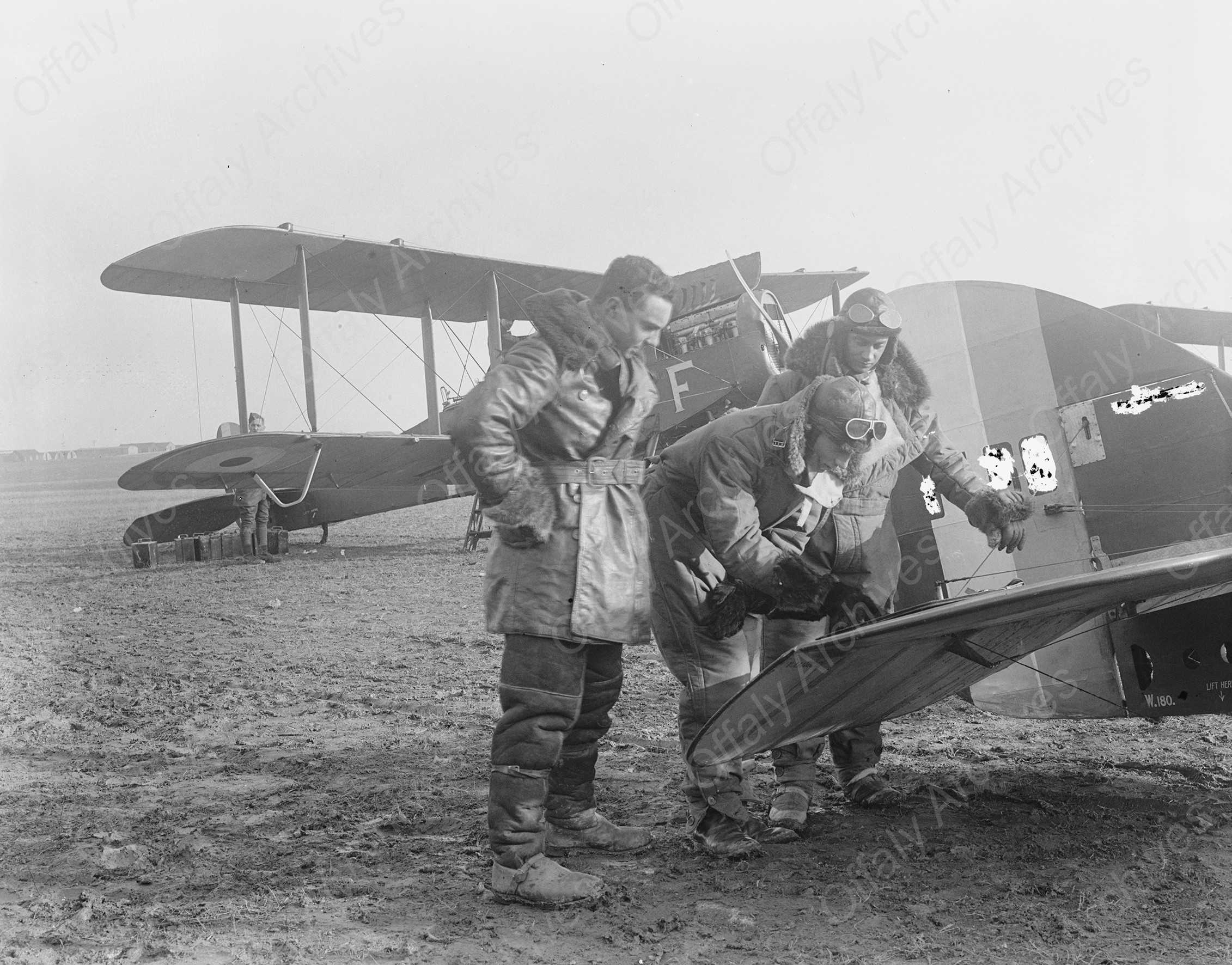
2. D.H.4 bomber, aircrew posing with map (IWM, Q12021) Offaly had a small but significant part in the early years of military aviation. In September 1913 Offaly was an important base for some of the earliest uses of aircraft in the annual British Army manoeuvres; some of the Royal Flying Corps’ earliest crashes took place in Offaly during those operations. Approximately 85 men who served in the Allied flying services were born or from Offaly, but their impact was far greater than would be expected. Ferbane hosted an operational wartime base at ‘RAF Athlone’, and there was a landing ground at Birr during the 1918-1920 mobilisation period.
 offalyhistoryblog