
At the beginning of the centenary commemorations for the War, at the Theatre of Memory Symposium at the Abbey Theatre in 2014, President Higgins spoke of the commemorative activities in terms of myth-making and ethical remembering. He remarked that ‘for years the First World War has stood as a blank space in memory for many Irish people – an unspoken gap in the official narratives of this state’. He suggested that ‘literary memoirs written during or after the War can be enabling sources for ethical remembering’ and advocated using the commemorative period to create ‘opportunities to recollect the excluded, to include in our narratives the forgotten voices and the lost stories of the past’. In the aftermath of the death in the last few years of all the veterans of the War, to find these stories and these voices we must go back to the archives and seek out the diaries, memoirs letters and photographs of those who served. The Library in Trinity has a fascinating collection of this kind of material, gifted and bequeathed over the decades and, to mark the centenary of the War, the Library decided to publish this material online.
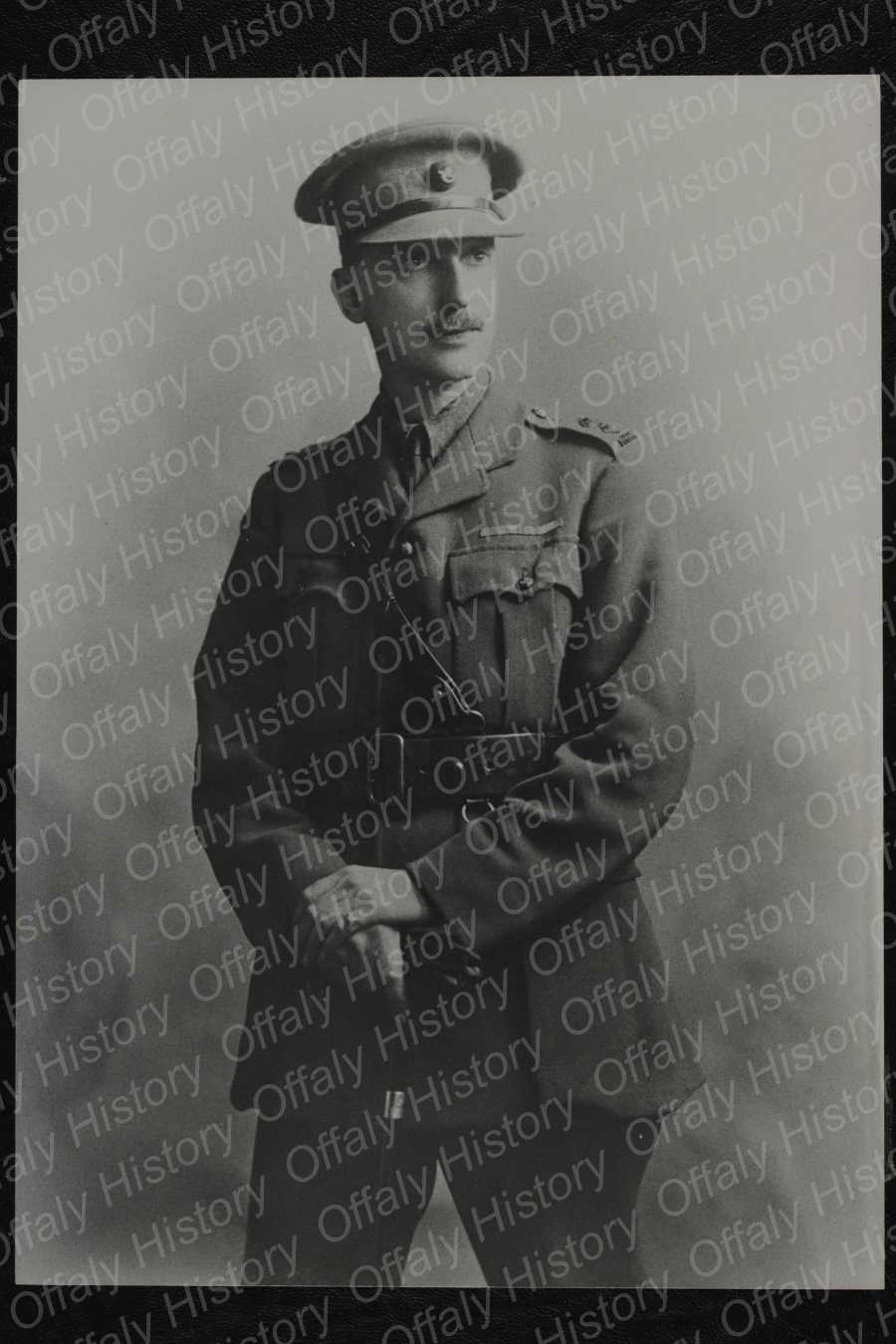
Fit as fiddles and as hard as nails is the name given to the online project which allows free access not only to digitised images of over 1500 pages of WW1 letters and diaries from the Library’s special collections, but transcriptions of the texts are also provided. There are nine war-time authors involved – almost all officers – and altogether they produced three sets of letters, four diaries (including a very brief home-front diary by the single female author among them) and three memoirs (two of which are prisoner-of-war accounts). The authors served on both Western and Eastern fronts, and ranged in age from twenty years of age to thirty-three. Two of them won Military Crosses, and one of them received the DSO having been mentioned in despatches seven times. This was Charles Howard-Bury – the oldest of our authors; he was born in Charleville Castle, Co. Offaly in 1881 and was a career military man who went with the British army to India in 1904. He was present at the Battle of the Somme and was eventually taken prisoner in 1918.

 offalyhistoryblog