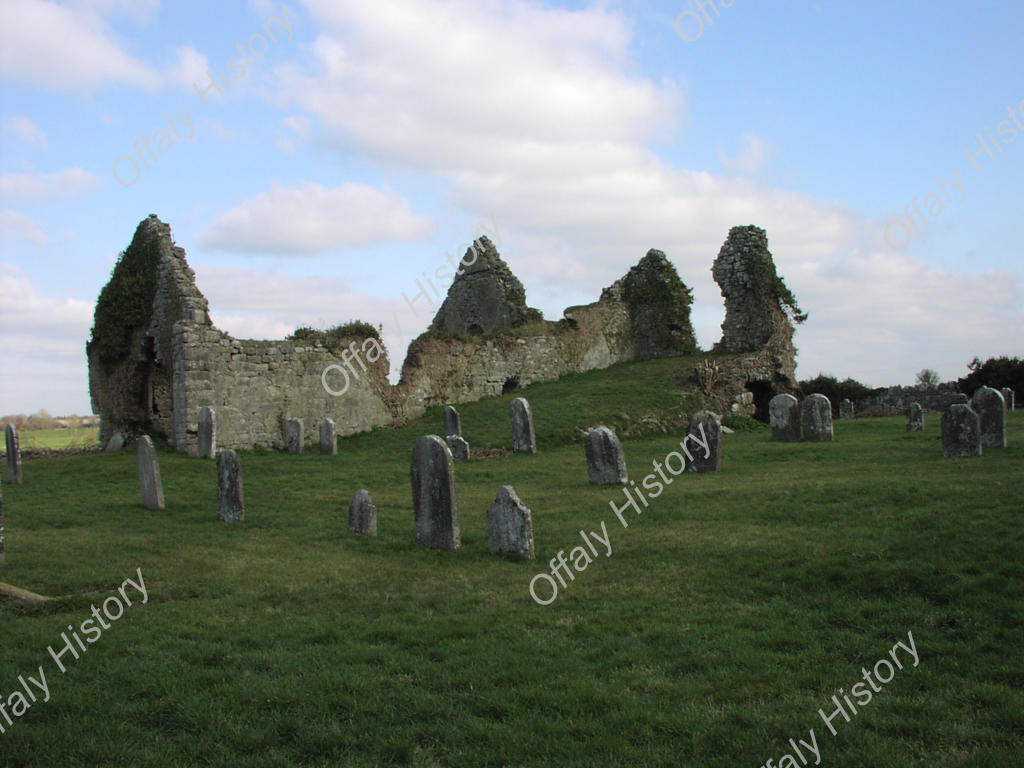
Offaly Archives received a very interesting donation of manuscripts in recent times. Michael MacNamara, a native of Colehill and long-time resident of County Limerick, donated archives relating to his great grand-father, Peter Cavanagh, who was born in Cappincur in 1824 and ended up as a solider in the US army during the American Civil War. Before all those adventures, Peter undertook high level tuition from a Mr Patrick Glowry in a hedge-school arrangement through the famine years of 1844-1848. His copybook survived and is among the items donated to Offaly Archives. Michael MacNamara has spent many years researching Peter Cavanagh and summarised his unusual life and times for an interview in the Midland Tribune in 2005: (more…)
Category: Subjects
-
Pandemics in Ireland and Spanish Flu cases in Offaly, 1918-19. Dr Tim O’Neill and Offaly History. Blog No 179, 14th March 2020
Last week’s article on the cholera outbreak in Offaly in 1832 attracted a huge readership. This week Dr O’Neill (a Mucklagh, Tullamore native) contributes this piece on Pandemics in Ireland. The Offaly History research team has added some local material on the effects of the Spanish Flu (1918–19) in the county and some pictures by way of further reading. Enjoy and stay positive. Read our 179 articles posted to offalyhistoryblog and catch up on Camus.
-
How did we cope with Cholera in Offaly in the 1830s? Edited from an article by Dr Tim O’Neill in Offaly Heritage (2003).Blog No 178, 7th March 2020

The Offaly County Hospital, Church Street, Tullamore, had 50 beds while the population in 1841 was twice what is is now. Cholera was the epidemic disease most feared around the world in the nineteenth century.A letter from Tullamore of 1832 describes the devestating disease of cholera. ‘We had 165 deaths. All bridges to the town are cut and broken. Every house is shut up and there is no such thing as business. Men who would eat their breakfact in perfect health would be buried before dinner.’
In the eighteenth century neighbouring countries began to suffer from the disease and in the nineteenth century it attacked Europe. Cholera spread around the world in great epidemics from its traditional base in the Indian sub-continent and carried with it high mortality rates, severe suffering and terrifying symptoms. These began in 1817 but the first wave did not reach Europe and was halted temporarily at the shores of the Caspian Sea. From there in 1829 it spread rapidly through Europe. It arrived in Ireland around St Patrick’s Day 1832. This was the most serious cholera outbreak in Ireland in the nineteenth century and it has been estimated that 25,378 people died during that epidemic. The Irish death rate was high when compared to other countries for the same period.
-
Researching the story of your house: Brady’s shop, Daingean, Offaly and some of Daingean’s old families. By Claire Gogarty. Blog No 176, 22nd Feb 2020

Brady’s shop, Daingean in the 1980s I was asked by John Brady to research his house, which has long functioned as a shop in Daingean, Co. Offaly. John Kearney’s book From the Quiet Annals of Daingean contains a picture of the old post office, with the name Z. Collins above it, and a large ivy-covered wall beside it, taken some time at the beginning of the 20th century. This is the same building, so it was going to be very interesting to find out all about it.
-
The spirit of the Shannon: a journey along the River Shannon in Richard Hayward’s footsteps. Offaly History Centre, Monday 17 Feb. 2020. Blog No 175, 15th Feb 2020

In August 1939 the Irish travel writer Richard Hayward set out on a road trip to explore the Shannon just two weeks before the Second World War broke out. His evocative account of that trip, Where the River Shannon Flows, became a bestseller. The book, still sought after by lovers of the river, captures an Ireland of small shops and barefoot street urchins that has long since disappeared.
Eighty years on, inspired by his work, Paul Clements retraces Hayward’s journey along the river, following – if not strictly in his footsteps – then within the spirit of his trip. From the Shannon Pot in Cavan, 344 kilometres south to the Shannon estuary, his meandering odyssey takes him by car, on foot, and by bike and boat, discovering how the riverscape has changed but is still powerful in symbolism. Paul Clements will be giving an illustrated lecture on Monday 17 Feb. at 8.00 p.m. at the Offaly History Centre, Bury Quay, Tullamore ‘The spirit of the Shannon: a journey along the River Shannon in Richard Hayward’s footsteps’ Admission is €5 and includes tea and biscuits. So why not come along to hear and see this wonderfully illustrated talk.
-
A D. E. Williams Limited Tullamore maltster for fifty years tells his story. By the late Michael Power of Marian Place, Tullamore. Blog No 174, 8th Feb 2020

The old floor malting process for hundreds of years ceased in Tullamore in 1969. Cover pic is of Water Lane now entrance to Main Street, Tullamore. Courtesy of Fergal MacCabe. The Williams company of Tullamore (1884–1996) was in the malting business from 1892. Other Tullamore firms included Egan, Tarleton and B. Daly, the Tullamore distillery. In this article Michael Power tells his story. This piece was first published in Jip-cat, pig’s head, petticoats and combinations: our lives, our times in Tullamore and surrounding districts; editor Feargal Kenny. Tullamore: Tullamore Active Retirement Association, 2002 (available from Offaly History Centre).

Modernisation of agriculture in the 1970s As a seasonal worker in the Maltings, you started in September when the harvest came in and wound up in May when the malting was over. I became a permanent worker [at Williams/B Daly/Tullamore Distillery [in 1932 and remained there for fifty years. The work was hard, labouring work, carrying sacks, working in the malthouse, screening malt and barley and carrying sacks of grain.
-
Dancing with the Stars and the Tyrrellspass connection. By Bríd Ryan. Blog No 173, 1st Feb 2020

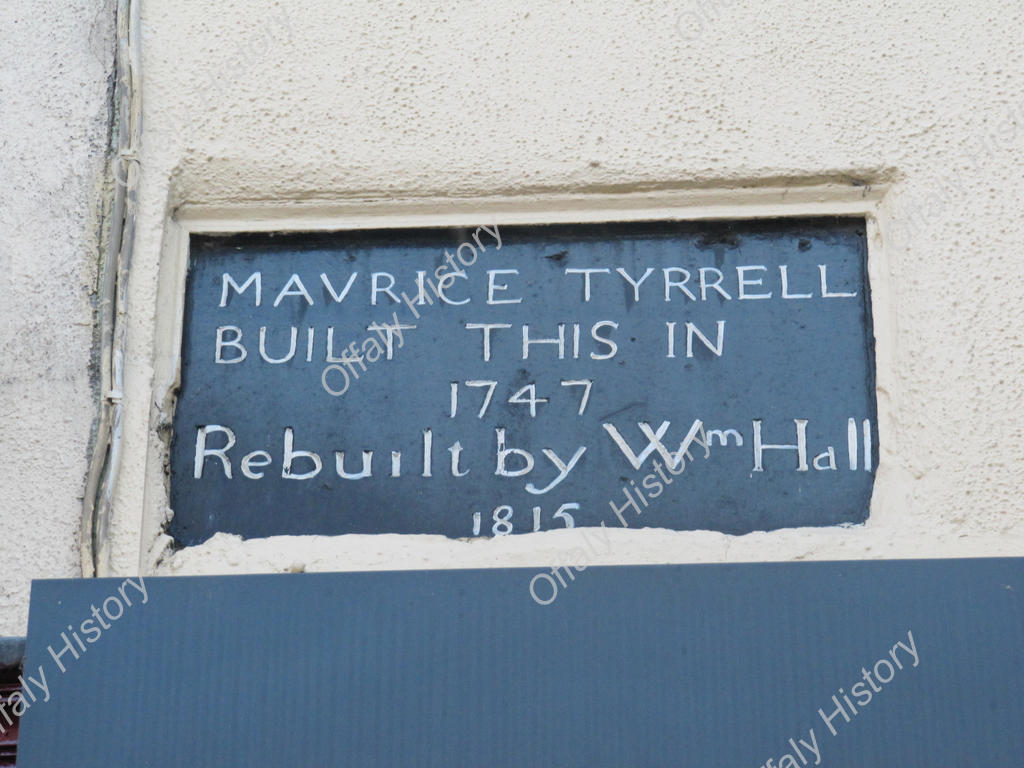
I was delighted to see Fr Ray Kelly doing so well on Dancing with the Stars for the past few weeks. He may not be a great dancer but he is a lovely singer and he was a grand young lad in Tyrrellspass years ago when I went on holidays there to my aunt. My aunt and uncle lived in The Buildings, Tyrrellspass on the Mullingar Rd and very near Ray Kelly’s home. The houses there were a part of an orphanage years before and some of the older people remembered the children walking to the Protestant school on the Green in their little white smock uniforms.
The Orphanage children on the Mullingar Road near The Buildings I remember a lovely quaint house with a stairs going downwards inside the front door. A woman called Mrs Craven lived in the largest house in The Buildings. She was involved in the ICA but I didn’t know her. I remember the Kelly children playing in the garden. They were a little younger than me but they were always friendly and I know there was always music in their house. His Dad drove a lorry and dealt in sheep and cattle. He had a word for everyone and was very popular. Nurse Kelly was known far and wide as a midwife and was very highly regarded for same. It was interesting, in the book, to see her work from the children’s point of view. I don’t suppose anyone wondered who would mind her four children when she was with an expectant mother and their Dad was working away from home. His Aunt Kitty got great love and well deserved praise from Ray. I just remember her as a quiet woman who loved to go to Bingo and was a regular on the Bingo bus with my own aunt!
-
Workhouse orphan emigration, particularly those from Parsonstown (Birr). By Perry McIntyre. Blog No 172, 25 Jan 2020
Perry McIntyre is the Chair of the Great Irish Famine Commemoration Committee (Email: contact@irishfaminememorial.org. Website: www.irishfaminememorial.org).
On 4 May 2017 Offaly Historical and Archaeological Society archivist, Lisa Shortall, brought up the Parsonstown Union Letter Book [Reference OHS 71] for me to consult at Bury Quay. (This item is now available to consult at Offaly Archives). My interest was to see what clues may have been recorded about any of the 136 young women who left King’s County for Australia during 1848-1850 as part of the Famine emigration to Australia, now often referred to as ‘Earl Grey’s workhouse orphan scheme’. During these three years 4114 young women aged between 13 and 18 were selected as healthy, suitable domestic servants and potential marriage partners and they were given a free passage from Ireland to one of three Australian colonies: two in New South Wales (Sydney and Port Phillip) and Adelaide in South Australia. (more…)
-
Walking the stream at Ballinagar and district by John Malone. Blog No 171, 18th Jan 2019
Ballinagar village is in the townland of Ballinagar. A small stream borders Ballinagar from its neighbouring townlands. For this article I walk along this stream to see what it can tell us about the past.

The stream as it flows through the scrub. BALLYMOONEY
At Ballymooney bridge the stream enters the Tullamore river. The road here is called the Killeigh road. Over the years various road improvements and land reclamation works have changed this area completely. Before the late 1700s the stream entered the Tullamore River nearer to Ballycrumlin. A new road was constructed between Killeigh and Daingean and the Ballycue stream as it was known became a road drain. In 1808 local landowner’s Rev John Webb, Daniel Commins, James Digan and Rich Cleary got grants to work on drains between “the new bridge and where the old stream of Ballycue had been turned into a road drain” They also had to build five gullets or channels for water between Ballinagar and Ballina. William Steuart Trench who managed the Digby estate from 1857 to 1871 saw the potential of the land here and undertook a huge drainage scheme and redesigned the field system around Ballymooney House. He remarks after his drainage scheme that “land in Ballinagar that had previously lain in permanent water, where cattle were in constant danger of drowning were now good areas of pasture .”