
The county grand jury system will be the subject of much focus from mid-2022 with the uploading of links to the county archives records throughout Ireland by way of the Beyond 2022:Virtual Record Treasury Project. The first thing to say is that a useful and well-illustrated booklet People, Place and Power: the grand jury system in Ireland (Brian Gurrin with David Brown, Peter Crooks and Ciarán Wallace, online 2021) can now be downloaded from the Beyond 2022 website as well as useful material from the county archives in Offaly, Wicklow and Donegal. Furthermore, Brian Gurrin has published online an interim listing of the records held in each county. The scope of the records is well illustrated and draws on more detailed catalogues for counties such as Offaly and Donegal where listings are available on the online catalogues from the county archives. For more on Offaly material see the blog and presentation by Lisa Shortall now on YouTube and as a video on the Offaly History Decade of Centenaries platform on http://www.offalyhistory.com.
In summary the access position to these records will be revolutionised within the year and will greatly facilitate family historians, those interested in the workings of local government and how local elites interacted. What elite families provided the power brokers and controlled local patronage? All were men, most were landowners, representative of the county families, and, of course, most were Protestant from the early 1700s and the enactment of the Penal Laws. It was not until the Catholic Relief Act of 1793 that Catholics were admitted, and being a select club were scarce until the 1830s.
(more…)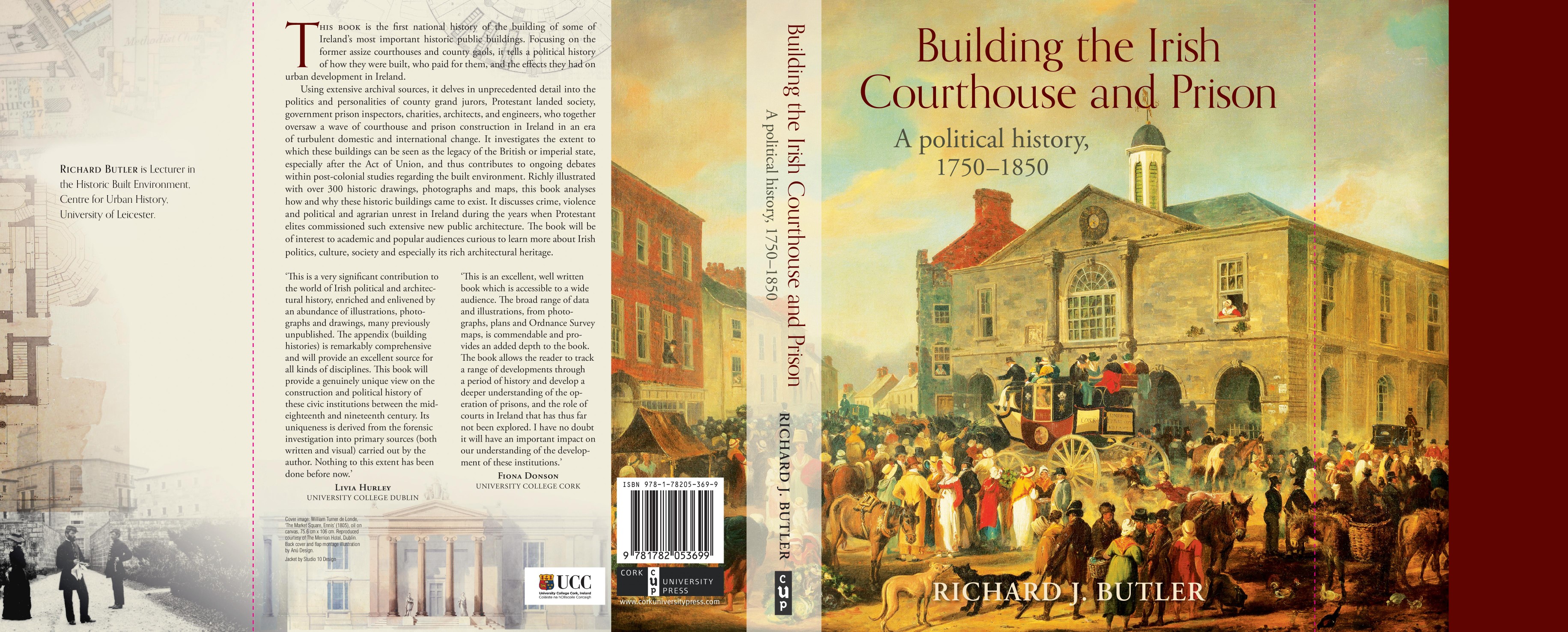 Cork University Press has published a major new reference work on some of Ireland’s most well-known public buildings, entitled Building the Irish Courthouse and Prison: a Political History, 1750-1850. The author is Richard Butler, a native of west Cork who lectures in Irish history at the University of Leicester. This lavishly illustrated book traces the history of how and why these celebrated architectural treasures were built in Irish cities and towns in years marked by the Great Rebellion of 1798, the Act of Union of 1800, and the Great Famine of 1845-52. It is the fruits of the author’s doctoral dissertation at the universities of Cambridge and Wisconsin-Madison in the United States. For the first time, it offers a national survey of the largest and most impressive of these buildings, where judges, juries, landed aristocrats, and government officials met to administer law and order in Irish counties.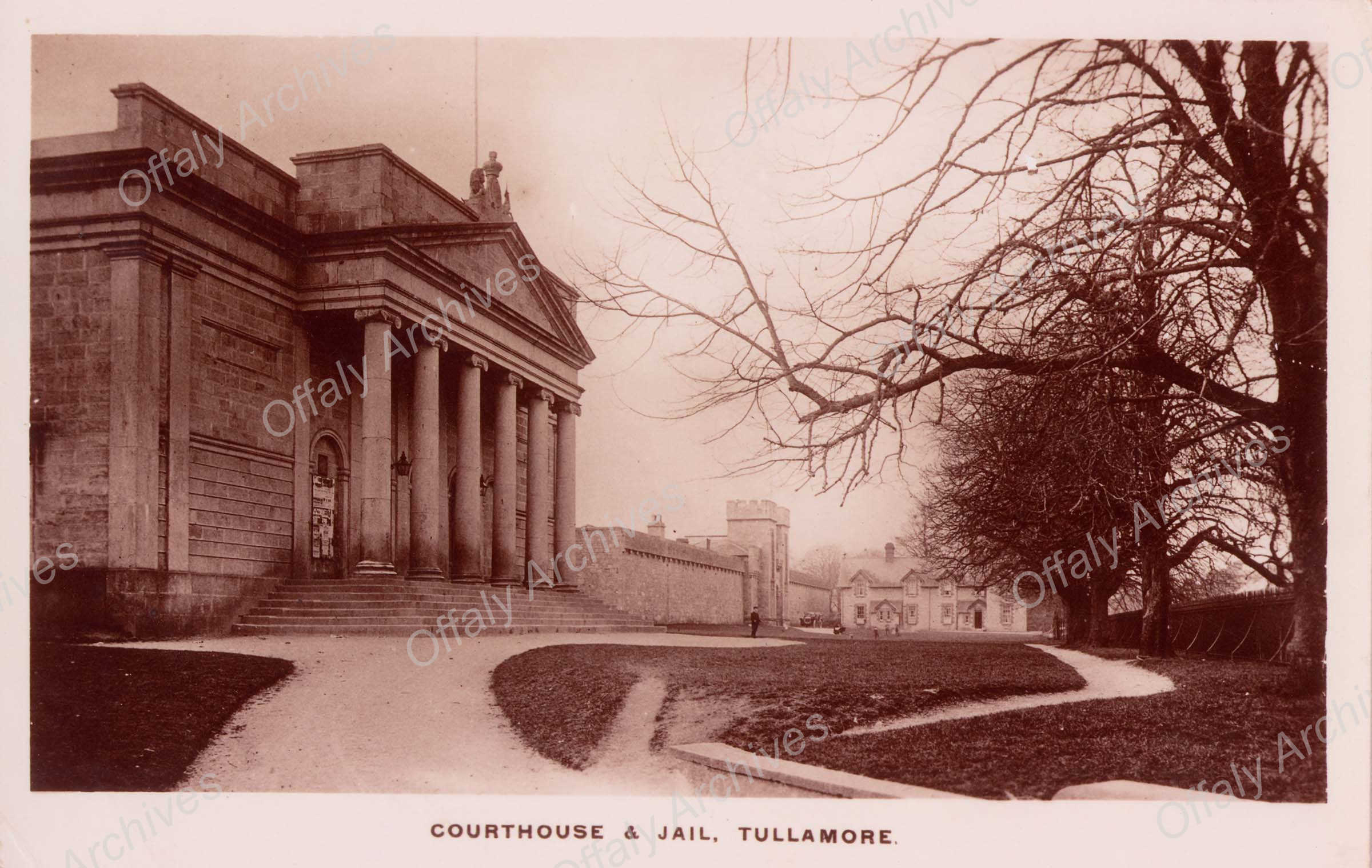


 offalyhistoryblog