The railway line from Portarlington to Tullamore was opened on 2 October 1854. It was a quiet affair, but the commencement of the line was to mean significant growth in the years that followed. This was particularly so from 1857 when the extension to Athlone and Galway was completed.
The act to enable the line to be commenced was passed in 1847, but no action was taken until 1851. The connection to Tullamore was part of the line of the Great Southern and Western Railway (GSWR) while that to the west via Mullingar was backed by the Midland and Great Western Railway (MGWR).
The image is that of a cancelled return rail excursion ticket from Edenderry to Dublin on the 17th of March 1963. The event was the Railway Cup inter Provincial Finals in Hurling and Football. Four Offaly Players were selected – Greg Hughes, Paddy McCormack, Charlie Wrenn and Sean Brereton. It was the last passenger or goods train to use the Edenderry – Enfield Branch or Slip Line which started almost 86 years earlier. Would you like to contribute a story. Email us info@offalyhistory.com first.
Last week we set out reasons why Cormac Street can be considered so good. Anybody getting off the train, visiting the town park or the courthouse cannot but be impressed. The street is very largely intact since it was built and has been enhanced by the town park. The restoration of the full Kilcruttin Hill beside the folly should be undertaken by the municipal council given its historic importance. Charleville/Cormac Street was the outer extremity of the town when building started here in the 1780s. Probably the Elmfield house (now the location of the Aras an Chontae) dates to 1795. Both Norris of that house and Acres of Acres Hall (dated to 1786) were functionaries of the young landlord’s family and both built on the road to the demesne. Bury came of age in June 1786 and so could regulate matters himself. While there were some cabins on Charleville Road these were temporary structures and aside from Elmfield no building leases were granted here until that to Daniel E. Williams in 1898. He completed Dew Park by 1900 and it was then regarded as the best house in Tullamore having taken that honour from Acres Hall. It reflected changing times with the demise and relative impoverishment of the Acres family and the growing importance of the new Catholic merchant class of Egan’s and Williams. While Williams had a virtual freehold in Dew Park lands the Egan family took a long lease from the Acres Pierce family of Acres Hall in 1891. The third big house that of Elmfield may well have earned the first-place honour but the Goodbodys sold this house in the 1880s and moved to Dublin. Richard Bull, the sub-sheriff moved in and departed after 1904 when the house was taken by Dr Kennedy who had moved from The Cottage in O’Moore Street.
There’s no shortage of very ordinary towns in Ireland but Tullamore certainly isn’t one of them. How could it be? After all it has its proud legacy as one of the original trading and transport hubs on the Grand canal from its arrival in the town in 1798. That early advantage over competing centres like Birr and Daingean was reinforced with the coming of the railway in 1854, allowing Tullamore to build on its status as an important transport hub and retail, administrative and merchant centre. On this basis, the town maintained at least the appearance of prosperity up to the present era. This early pre-eminence is reflected in the town’s exceptionally fine architectural legacy including an assemblage of late Georgian town houses, the civic space at O’Connor Square and individual gems such as the Tullamore Dew Whiskey Heritage Centre along with J.B. Keane’s Neo-Classical Courthouse.
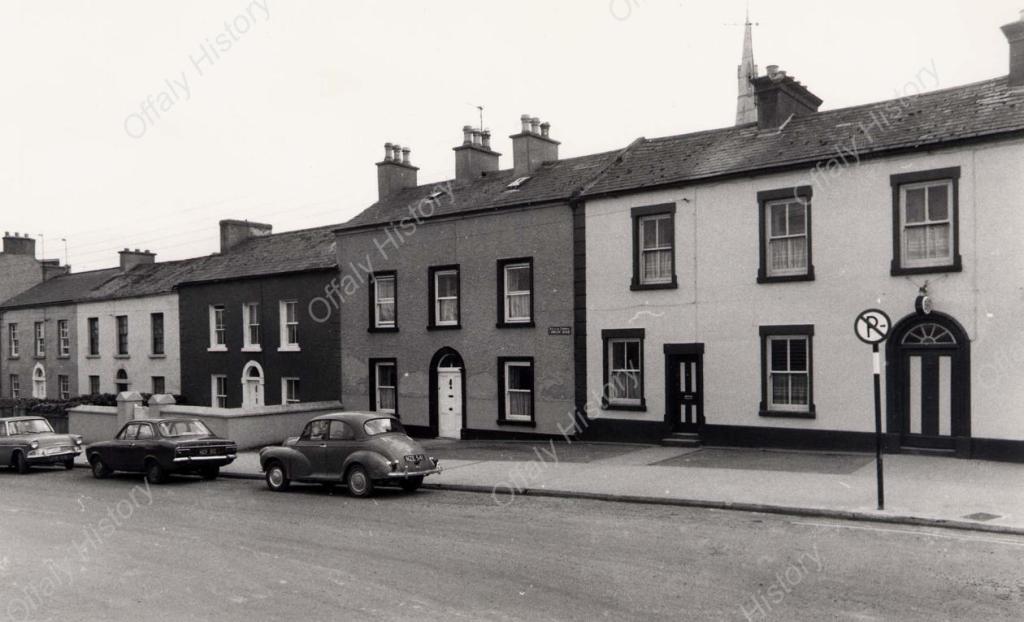
Late Georgian Terrace at Bury Quay/Convent Road, Tullamore. Mid1970s
So, while future prospects are certainly influenced by the legacy of the past, for urban centres like Tullamore factors such as economic performance and civic leadership will figure as the more immediate drivers.
We welcome Pat McLoughlin this week as a new contributor writing about attacks on trains in the Clara-Ballycumber area during the War of Independence. Pat writes: I grew up between Clara and Ballycumber in the townland of Clonshanny. Thomas Bracken who was Adjunt Officer 1st Battalion, Offaly No. 2 Bde. is my grandfather, Brigid Bracken (née Reilly) Cumann na mBan is my Grandmother. The Bracken family who at that time lived in Erry, Clara were all involved on the War of Independence. My neighbours Tommy and Annie Berry (née Morris) and John Minnock were among many veterans in that community. The War of Independence I grew up with was fought in Clara, Ballycumber, The Barney Bridge, The Island, on the Banagher line, the people who fought it were the people we lived alongside. The people and stories were part of our lives, then came funerals with Tricolour draped coffins, Military honours for Irish War Heroes and life moved on. 100 years on the Military Archive maintained by the Irish Defence Forces gives me an opportunity to recreate some of the history of the community where I grew up.
The first hotel constructed in Tullamore in 1786 cost £200. The second in 1801 about £4,5,00. Even by multiplying by 200 for the cost of living today, this expenditure was light in the context of the three new hotels in Tullamore in 1997- 2008 which may possibly represent a total expenditure of €25 million for 270 beds. And yet the canal hotel of 1801 was a major investment and may have never made a return to the Grand Canal Company. The need for it disappeared within five years of its construction. By contrast the deprecated Bury Arms (Hayes/Phoenix Arms) in the centre of town was in business for over 200 years.
The Bury Arms (later Hayes Hotel) erected in 1786, demolished 2000. From the Hanly Collection Offaly History. This view in the late 1950s.
The first hotel (that we know of) to be constructed in Tullamore was the Bury Arms Hotel (later the Phoenix Arms, demolished 2000, now Boots Pharmacy), erected in 1786 as an inn for Tullamore at a cost to the landlord, Charles William Bury, of £200. We know that in 1798 it had 13 beds for letting. The hotel was first leased to John Tydd at a yearly rent of £20. John Tydd and his son Benjamin were both dead by 1798 at which point the innkeeper was one Mr Doherty. Captain William Evans, who had been a director of the Grand Canal Company until c.1796, but remained with the Company providing engineering advice until 1805, was critical of the Bury Hotel on his visit there in 1798. His departure from the company in 1805, possibly following soon after the completion of the works to Shannon Harbour in 1804. Notwithstanding Evans’ criticism of the Bury Arms hotel Sir Richard Colt Hore who stayed at the hotel in 1806 wrote: ‘At Tullamore I found a good inn and accommodation at Doherty’s (the Bury, later Charleville Arms) near the Bridge’ (Tour, p. 32). The hotel had changed its name in line with that of the ennobling of the town’s landlord who became Lord Tullamore in 1797, Viscount Charleville in 1800 and earl of Charleville in 1806. It should be mentioned that there was at least one earlier inn in Tullamore, that of Hugh Clough in the 1760s and other smaller hotels post 1800.
Medieval architecture
In a region crowded with fine buildings, County Offaly has a lot of significant works of architecture of which to be proud. It is rich in early Christian and Romanesque remains at Kinnitty, Durrow and Rahan, while the monastic settlement at Clonmacnoise is one of the outstanding survivals of this period in Ireland.
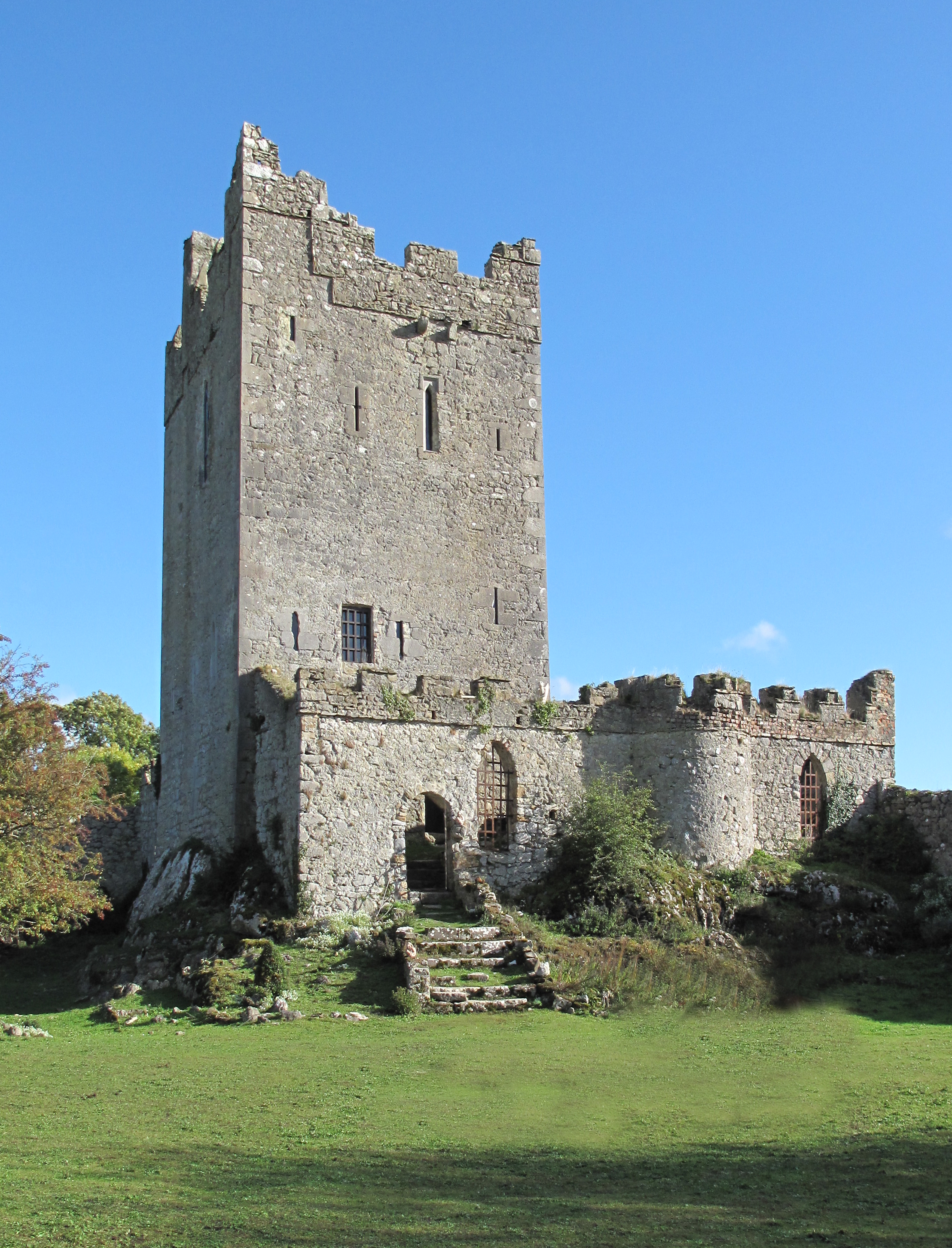
PHOTO 1. Clonony Castle, a seat of the MacCoghlan clan. From 1612 the home of German planter Mathew de Renzi
The county is less fortunate in its late medieval ecclesiastical buildings, but of the three Central Leinster counties (Laois, Offaly and Kildare) retains perhaps the most extensive architectural legacy of its Gaelic lordships – notably in tower houses such as Leap, Cloghan and Clonony, among others.
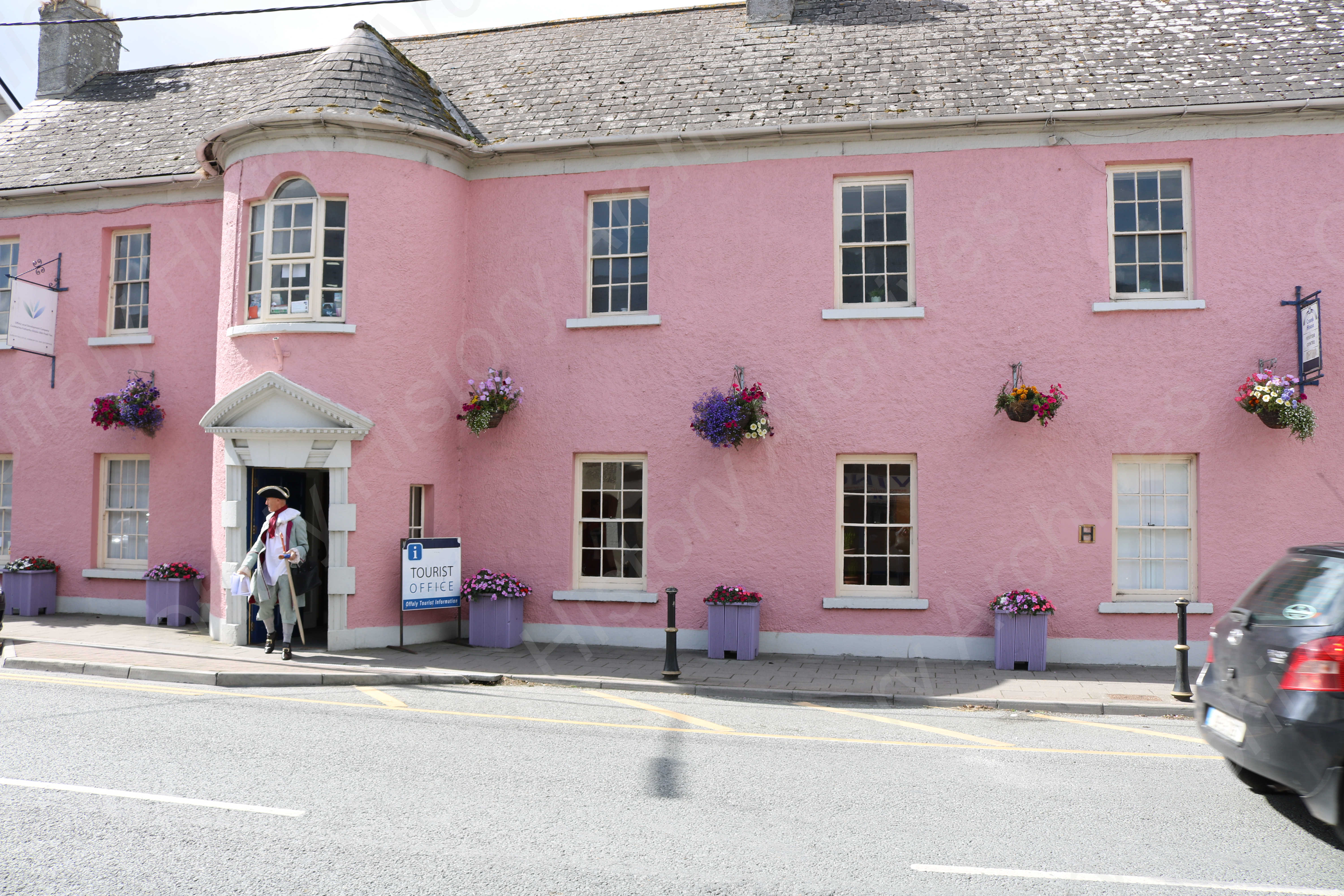
So it’s Heritage Week and Saturday 25 August 2018 was given over to a tour of the West Offaly castles in the company of Kieran Keenaghan and James Scully. It was a full day starting at the lovely Crank House, Banagher at 10. a.m. This house is a tourist facility and a community endeavour from a community co-operative society. Banagher needs all the support it can get in the form of incentives and tax relief schemes to bring the older houses, including the Shannon Hotel, back into use. (more…)
The old town of Tullamore has gone through many changes in recent years and I see now that the settled Charleville Road has not escaped. For many years it was one of the best addresses in the county town, but now others can seek that title such as Spollanstown, Tegan Court, Mucklagh and, perhaps, Charleville View. Yet, for my money Charleville Road is still the best. It is on the high ground that starts to rise from Bridge Street and reaches a plateau at the site of Acres Folly on Kilcruttin Hill at Cormac Street. On the opposite site behind the junction of O’Moore Street and Cormac Street I read that two windmills were located from the 1700s until around the time that Napoleon was finally trounced in 1815. It all seems long ago, but to us Molloys who were here in number before anyone else its only yesterday.
The Perrys originated with Henry Perry, a Quaker from Shanderry, near Mountmellick in Co. Laois. He had five sons, many of whom became successful industrialists. Robert Perry, the eldest, founded Rathdowney Brewery, of Perry’s Ale fame, and was father to the Perry Brothers who founded Belmont Mills. Another of his sons, James Perry, was a visionary in terms of transport development. He was a director of the Grand Canal Company and then turned his attentions to railway advancement. With the Pims, another Quaker family, he promoted the first railway line in Ireland, the Dublin to Kingstown line. He made a sizeable fortune investing in that company, and then became director of the Great Southern and Western Railway before leading a new group to form the Midland Great Western railway, and the two companies battled it out to win routes west of the country, finally managing to get a train line through Clara in 1859. (more…)


 offalyhistoryblog