On Monday 21 February 2022 Offaly History will host a public lecture on the photographic work of Middleton Westenra Biddulph (1849–1926) of Rathrobin, Tullamore. The lecture will also be streamed via Zoom and will start at 8 p.m. at/from Offaly History Centre. Biddulph’s photographs of Offaly and midlands interest together with Big Houses in Ireland have been published in Michael Byrne, Rathrobin and the two Irelands (Tullamore, 2021).For the link to Zoom email info@offalyhistory.com. There is no charge.
The new large format book has over 300 photographs with context and captions and is available for €25 in hardback. The publication was supported by the Decade of Centenaries and took fourteen months to prepare.
Middleton Westenra Biddulph was born on 17 August 1849 at Rathrobin, Mountbolus, King’s County. He was one of six children and the eldest surviving son of Francis Marsh Biddulph (1802–1868) and Lucy Bickerstaff (d. 1896). She was born in Preston, Lancashire and they married in 1845 when F.M.B. was 45 and Lucy 24.[1] The Bickerstaff connection was to be an important one for the surviving sons of F.M.B. and led to a substantial inheritance in the 1890s for Middleton W. Biddulph (M.W.B.) and his brother Assheton who lived at Moneyguyneen, Kinnitty. F.M.B. was of a large family of eleven children. All were girls save their one surviving brother. F.M.B. lived with at least three of his sisters at Rathrobin, few of whom married and at least three emigrated to Australia or the United States.
In person and online. For link email info@offalyhistory.com(more…)
Recently nominated by the Irish Times as amongst the twenty best places to live in Ireland, Tullamore earned the accolade because of its central location and its excellent recreational amenities and services. However, neither its built or natural environment figured as deciding factors in the survey.
Regrettably, my home town lacks the physical drama of Kilkenny and Lismore dominated by fortresses standing on cliffs, the waterside charms of Kinsale and Carrick on Shannon, the mystery of the mediaeval alleyways of Galway and Carlingford or the suave urban quality of Westport, Clonakilty and Birr. Nevertheless, it’s qualities, modest as they are, have always inspired me and I have often tried to capture them in drawings. Tullamore’s few architectural setpieces were my first introduction to the notion that a town or a village could be a beautiful artefact as much as a painting or a piece of sculpture.
We had a blog last April on the 100th anniversary of the death of Matthew Kane. Now we recall the first procession in his memory from Tullamore to his place of burial in Mucklagh in late January 1922. Those early weeks of February 1922 saw the commencement of the removal of the British forces from Offaly in the aftermath of the Anglo-Irish Treaty. The barracks at Daingean, Clara, Shannonbridge and the great Birr barracks were handed over to the IRA. In the first week of February the Offaly Independent was again issued after a break of fifteen months due to the burning by the Crown forces in early November 1920 (see an earlier blog).
This week we welcome Ronan Healy, a new contributor to our series of articleson Offaly History. We are pleased to have his contribution and invite our readers to put the hand to the churn and write for the series.
In the townland of Strawberry Hill lies a cross-slab with a history that has generated a number of different theories but no definitive answer. This cross-slab is indistinct in the landscape. You would easily drive or walk past it without even noticing it. However this simple piece of stone has a history, folklore and decoration that suggests it is much more than a simple stone on the side of the road. This blog post will look at the history of the cross-slab, previous research on the slab and some suggestions for the future preservation of the cross-slab.
In the aftermath of the Anglo-Irish Treaty Birr Barracks in Offaly was one of the first to be evacuated by the British military. It was also the largest in the county. Stephen Callaghan takes up the story.
Wednesday, 2 February 2022 marked the centenary anniversary of the departure of the Leinster Regiment from Birr Barracks. A historically significant event which little is known about. The signing of the Anglo-Irish Treaty in December 1921 effectively saw the withdrawal of the British Army from Ireland which would take place over the coming months, with British military barracks around the country being handed over to the newly created National Army. This mass exodus included the Leinster Regiment depot staff based in Birr Barracks, which it had called home for the past 41 years.
Followers of Gaelic games in Offaly will no doubt be familiar with Raheen’s G.A.A. grounds, just outside the village of Geashill. The grounds were once known as ‘The Lawn’ where stood the gate house to Alderborough house. In the early 1900s Alderborough house was the headquarters of the famous Reamsbottom garden nurseries, one of the largest in Europe and renowned worldwide for its anemones, the most famous of which was the St Bridget’s which won numerous prizes in shows such as the Chelsea Flower Show. At that time also a Gaelic football team trained and played their matches on the lawn and other fields in Geashill including P. Finlay’s field in Bawnmore, which became both feared and respected, not alone in Offaly but throughout Leinster.
We are so delighted to see Offaly feature in this week’s episode of Droichid na hÉireann. Lochlann Ó’Mearáin will visit one of Europe’s oldest surviving suspension bridges at Birr Castle before stopping off at Shannonbridge to learn all about the historical importance of the bridge in the villag
All this and more on Monday the 31st of January at 7:30pm on RTÉ One. #visitoffaly #offalyhistory #droichidnahÉireann #RTÉOne
Having looked at the programme check out the bridges of Offaly. You can download Fred Hamond’s study of the bridge of Offaly from the Heritage Section of the Offaly County Council website.
More on Monday night
Fred Hamond writes in the first of his two books:
Bridge builders
4.1 From the early 1600s until the late 1800s, the Grand Jury financed most of Offaly’s road bridges. In 1898, responsibility was transferred to Offaly County Council. In the more recent past, the National Roads Authority has assumed responsibility for bridges along the national primary routes.
4.2 In the late 1700s and early 1800s, the Grand Canal Company erected numerous bridges in connection with the cutting of a canal from Dublin to Shannon Harbour via Tullamore. Bridges are also associated with the Edenderry and Kilbeggan branches of the Grand Canal. The Shannon Commissioners also erected a number of bridges during improvements to the navigability of the River Shannon in the 1830s. 4.3 In the 1850s, major drainage schemes throughout the county led to the construction of many bridges by the Board of Public Works. A second phase of drainage and bridge construction was undertaken by the Office of Public Works in the 1950s.
4.4 Various railway companies also erected bridges in the later 1800s, notably the Great Southern & Western Railway with lines from Portarlington to Athlone (1854-59), from Ballybrophy to Limerick (1863), and a branch to Banagher (1884). The Midland Great Western Railway opened a branch to Clara in 1863 and to Edenderry in 1877. There were also two minor companies: the Roscrea & Parsonstown Railway (1858) and Parsonstown & Portumna Bridge Railway (1868). Iarnród Éireann is now responsible for all railway bridges along the lines still in use and has recently been engaged in the replacement of level crossings with bridges
. 4.5 Since the 1950s, Bord na Mona has been extracting peat from bogs in the northern half of the county. This necessitated the construction of mineral railways for the transfer to the peat to power stations and briquette factories, and the erection of bridges over rivers and under roads.
4.6 Several of Offaly’s many demesnes also have significant bridges, notably at Birr, Kinnitty Castle and Charleville. Birr boasts the earliest surviving wire suspension bridge in Ireland (c.1825). Ardara Bridge, near Cadamstown, is the oldest surviving bridge in the county and possibly dates from the 15th century. 5. Heritage assessment and protectio
In Tullamore alone there are so many: that at Bridge Street may date from the early 1700s. Then there is one at Church Road known as Pound Bridge that may date to 1795. Clara Road is a canal bridge called after an owner of land at Tinnycross – Cox just at that at Whitehall is after Charles William Bury. Who has not heard of Digby bridge in recent weeks. In Birr there is the suspension bridge in the demesne and Oxmantown Bridge of 1817.
Anyway, take a look at the series on Monday 31 Jan. and read your Hamond.
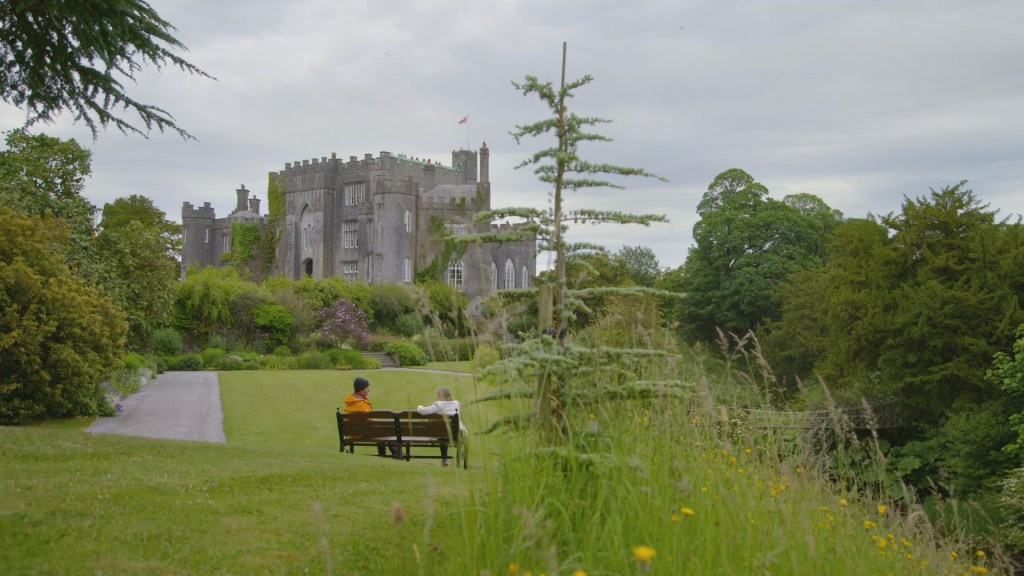
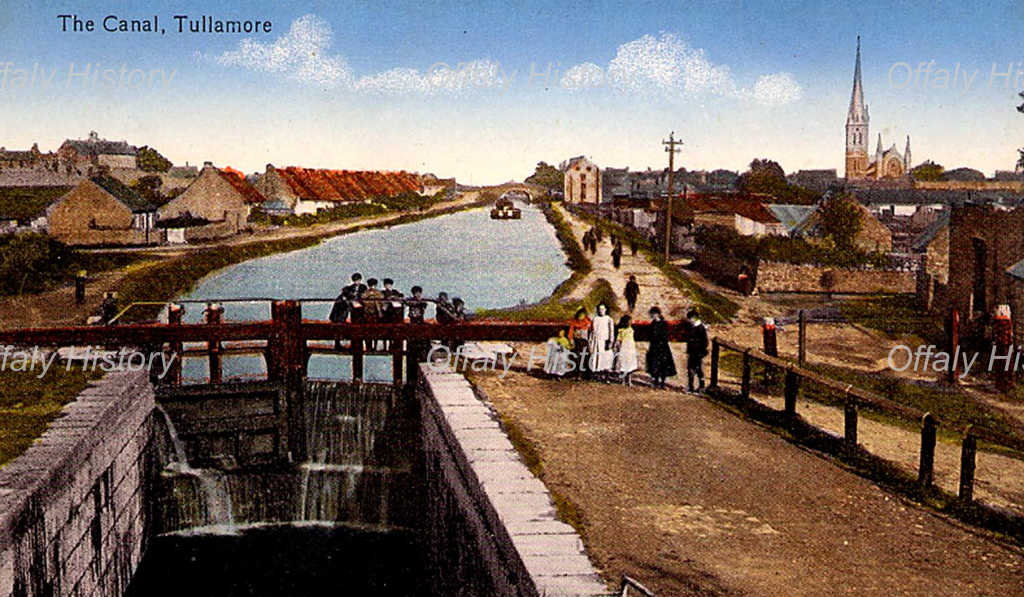
Birr Castle and the suspension bridge to the rightThe old Kilbeggan bridge in the distance over the Grand Canal at Tullamore, about 1910. Well before the new bridges of 2013.
In a new six-part series for RTÉ One, Droichid Na hÉireann tells the story and history of Ireland’s beloved bridges. Presented by actor Lochlann Ó Mearáin, the series explores the history, architecture, landscape and above all the people behind these extraordinary bridges and the pivotal role they have played in historic events and in modern day society.
From road to railway bridges, viaducts to footbridges, these man-made structures have long been an integral part of our country’s infrastructure. But beyond their primary function, how much do we really know about these structures?
Travelling across the length and breadth of the country, Lochlann explores century old stone bridges to modern contemporary designs from natural geological formations to great engineering feats, to reveal their hidden history and impact, far greater than just bricks and mortar.
He rediscovers the remarkable tales behind our bridges through a wealth of fascinating human stories told through expert commentary and local storytelling.
On his breath-taking visual journey through some of Ireland’s most beautiful landscapes, Lochlann ventures to the hills of Donegal to Poisoned Glen under the shadow of Mount Errigal, visits the beloved Shakey Bridge in Cork City, walks across Ireland’s longest rope bridge in Kells Bay and explores one of Europe’s first examples of a suspension rope bridge in Birr Castle. In the walled city of Derry he visits a structure that bridged communities together, he listens to a unique musical performance at Bellacorrick Musical Bridge in Mayo and travels to Connemara to visit the iconic Quiet Man Bridge. While in the midlands he explores one of Europe’s finest examples of a suspension bridge in Birr Castle and travels to the Drogheda to visit a Victorian bridge supposedly built on foundations of cotton wool.
Droichid na hÉireann explores the rich architectural and historical heritage of Ireland’s most fascinating and visually spectacular bridges
A new attraction on Offaly’s Shannon boundary
Uncivil engineers at Meelick weir relief bridge
03-01-22
Episode 1: Dublin
In the first leg of his expedition around Ireland, Lochlann O’ Mearáin explores some of Dublin’s iconic bridges. Starting of in the leafy suburbs in the Strawberry Beds, Lochlann visits Farmleigh Bridge and learns about the inventiveness of the Guinness Family. He ventures to Lucan to discover what wildlife live under the shadow of Lucan bridge. He travels to Clontarf to learn more about Dublin Bay and biosphere. Back in the bustling city, along the River Liffey, he takes a trip to the elegant and iconic Ha’Penny Bridge. He visits the striking and contemporary harp shaped Samuel Beckett Bridge and takes to the water to marvel at the design of Spencer Dock Bridge.
10-01-22
Episode 2: Mayo/Galway
From the soft and craggy bog lands of Mayo to the vibrant City of Tribes, Lochlann ventures West this week. He will discover the history behind the construction of Newport Railway Viaduct, listen to a unique musical performance in Bellacorrick and learn about the famine at Bunlahinch Clapper Bridge. Lochlann travels to wild and beautiful Connemara to visit Carricklegaun Bridge in Leitir Mor and follows in the footsteps of American actor John Wayne as he visits the iconic Quiet Man Bridge in Oughterard before finishing his travels in the heart of Galway city at O Brien’s Bridge.
17-01-22
Episode 3: Clare/Kerry/Limerick
Starting off at the most westerly point of County Clare on the Loop Head Peninsula, Lochlann learns about the geological formation and power of the Atlantic Ocean at the Bridges of Ross. He makes a short trip to the village of Bunratty where he discovers the significance of the renowned Durty Nelly’s pub and Studdert Bridge. He learns about the Treaty Stone at Thomond Bridge in Limerick City and heads to the Kingdom County to marvel at Lios Póil Viaduct and visit Ireland’s longest rope bridge in the sub-tropical gardens of Kells Bay.
24-01-22
Episode 4: Cork/ Waterford
This week Lochlann heads to Ireland’s most southerly point to view the spectacular Mizen Head Footbridge and then heads to the Rebel County to learn how the Shakey Bridge acquired its name. Over the River Finisk, Lochlann visits the Hindu-Gothic Bridge at Dromana. Hopping on his bicycle he gets a taste of the Waterford Greenway whilst crossing over the Ballyvoyle Viaduct and finishes his epic adventure at the Rose Fitzgerald Kennedy Bridge, the longest bridge on the island of Ireland.
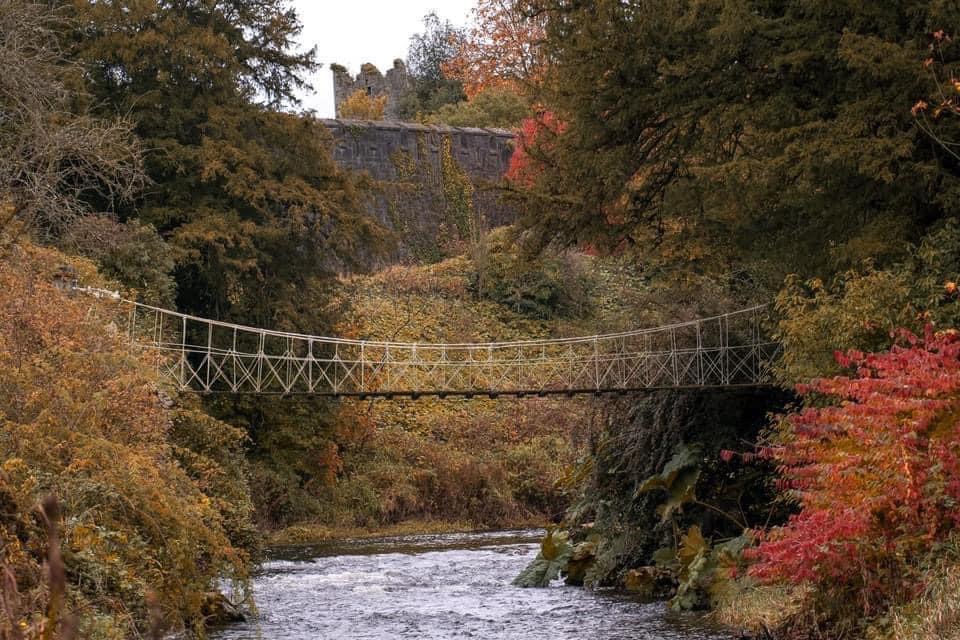
The suspension bridge in Birr demesne. Courtesy of Paul Moore
31-01-22
Episode 5: Offaly, Westmeath, Meath, Louth
On this week’s episode, Lochlann will reveal some of the most breath-taking bridges in the heart of Ireland. Starting off by viewing one of Europe’s oldest surviving suspension bridges in Offaly, he will sail along the River Shannon to gaze upon The Athlone Railway Bridge before walking across the Joe Dolan Memorial Bridge. Finishing his travels on the River Boyne where he marvels at the great engineering feat of the Boyne Viaduct and discovers if there is any truth behind the viaduct being built on a foundation of cotton wool.
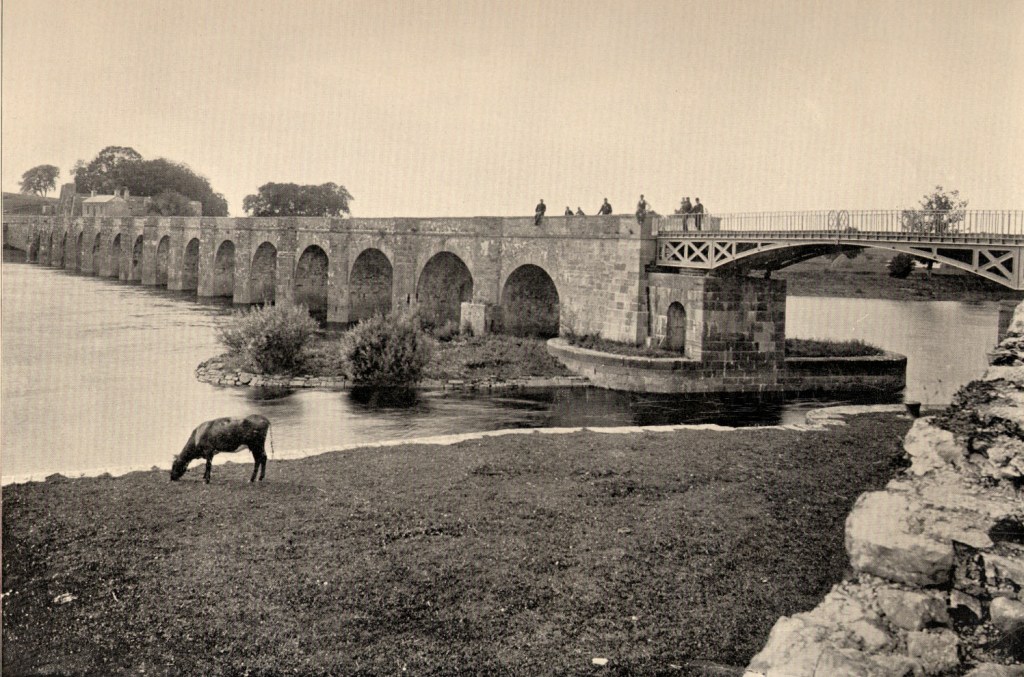
Shannon bridge about 1897. A beautiful Lawrence compositionfrom the bumper published volume.
07-02-22
Episode 6: Donegal/Derry
This week Lochlann heads north to picturesque Donegal. He will try his hand at the traditional game of handball at Bundoran Bridge, take a look at the history behind the disappearance of the Donegal railway line and catch up with musician Mairéad Ní Mhaonaigh under the shadow of Mount Errigal. He will then travel to the walled city of Derry where he will sail along the River Foyle to learn about how one modern structure has built bridges between two communities.
We hope to have a full blog on Shannonbridge of the 1750s very soon and also the ‘oldest bridge in Ireland’ at Clonmacnoise. After that we have Banagher of 1690 and that of 1843.We have also to do the suspension bridges at Kinnitty and Birr and, of course, that at Cadamstown.We need more contributors please.
The release of thousands of internees from jails in Ireland and Britain followed on the signing of the Anglo-Irish Treaty in early December 1921. Most had been imprisoned under the Restoration of Order (Ireland) Act. We carried a blog on the first phase of the releases in mid-December. Upwards of 4,000 were being held since the Truce of July 1921 in Rath Camp in the Curragh, Portlaoise Jail and Ballykinlar Camp in Co. Down as well as from Waterford, Cork, Kilmainham, Mountjoy and other prisons. The second wave of releases came in mid-January 1922 and many had been convicted and sent to English prisons.
On January 7th this year, we raised a glass to commemorate what would have been my mother’s 100th birthday. Born in Kilcoursey Lodge, Clara, she had always said that she was born on a special day, being the day, the Anglo-Irish Treaty was signed in the Dáil. Her explanation to me as a child was that ‘it split Ireland in two and caused a lot of trouble’.
This example of family commemoration running parallel to the national one, relates to one of the aims on The Decade of Centenaries Programme to ‘focus on the everyday experience of ordinary people living in extraordinary times, as well as on the leaders and key actors in these events’
The Decade of Centenaries Programme has led to a great variety of commemorative events and literature, both at a national and local level. The Decade has been commemorated by Offaly History through a variety of media, no longer limited to monuments and the written word, as technology has enabled visual and auditory means to be retained through the use of videos and podcasts.
The whole of Ireland will be watching Mountbolus today for perhaps the first time in its history. None would want the attention it will receive as the family of Ashling Murphy, her friends and representatives of state, gather for her final mass in the lovely church dominating the village of Mountbolus. The family who have given and suffered so much may now need privacy in their great sorrow.





 offalyhistoryblog