‘Catherine Maria Bury and the design of Charleville Castle’ is the title of an online lecture via Zoom provided by Offaly History for Mondy 20 September at 7. 30 p.m. Our speaker is Dr Judith Hill. She has kindly provided this note for Offalyhistoryblog readers on her forthcoming lecture.
When I started researching my PhD on Gothic revival architecture in Ireland after the Union I had no idea that Charleville Castle, one of the first and most impressive of the castles of this period, owed its inspiration to a woman. I wanted to compare the castles at Birr and Charleville, and was very much aware that their (male) owners had voted on different sides for the Union and that they came from different political traditions. Would this play any part in the designs for the castles that they built, or in the case of Sir Laurence Parsons, remodelled in the very first years of the nineteenth century?
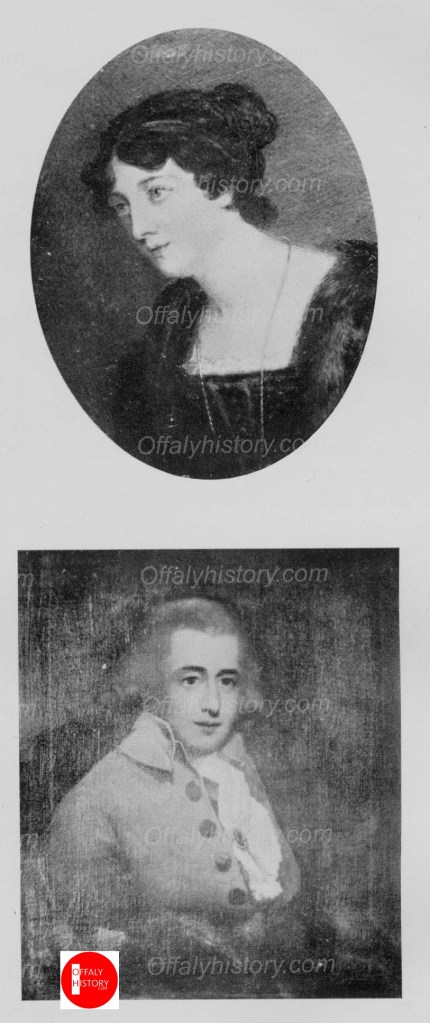
Women at that time played no direct role in politics. They are also relatively (though not entirely) invisible in the historical record. It is only when you can look at family papers that you might find some evidence of what a woman might have done. Catherine Maria Bury’s letters have survived; some of these were published in 1937. They tell us about Catherine (later Lady Charleville) as a person, her friends, her interest in literature. They are tell us that she was close Charles William Bury, and that when he (for it was he) went to see how the building of the castle was progressing he would send detailed descriptions to her. Although he does not ask her directly for her advice, it is clear that when they were together they discussed the project.
Catherine Maria Bury and Charles William Bury(more…)
Tullamore made the switch from gas lighting to public lamps powered by electricity on 27 September 1921 and Birr about a week earlier. The change in Tullamore was coming for over twenty years and Charleville Castle and D. E. Williams both had electric light from about 1900 and earlier. Lord Rosse had it in Birr Castle in the 1880s. Birr was earlier to have public lighting by gas lighting than Tullamore and had a town supply and town commissioners in 1852.
Tullamore elected its town commissioners and adopted gas lighting in 1860. Before that public lighting was non-existent in Tullamore with just one candle lamp in Charleville/O’Connor Square in 1854. By the beginning of the First World War the number of gas lamps in Tullamore was almost 80 and the lighting system had been greatly improved with ‘the illuminating power of the lamps having been greatly increased by the adoption of inverted incandescent burners’ (1915). The gas was supplied by a private company comprised of local merchants who were the owners and directors. Change was flagged in 1913 but little progress could be made during the war. In 1918 Birr registered a company to take charge of the local public lighting undertaking and Tullamore did likewise in 1920-21. Birr business contributed £9,000 and Tullamore £13,000 to the new undertakings. The lighting was switched on in Birr in 1920 but only for short time and was not finally in place until a week before Tullamore in mid September 1921. Roscrea had electricity at least a year earlier via a tender from Roscrea Bacon Factory. The Tullamore investors included D.E. Williams £5,000, P.J. Egan €1,000, P & H Egan Ltd £1,000, Fr Callary £500, Sisters of Mercy £200 and others. What is striking about the list of promoters of public lighting is that where Quaker and Methodists businessmen led the way in 1860 (Goodbody and Lumley), in 1921 it was Catholic merchants and Catholic institutions (Egan, Williams, the parish priest and the Mercy nuns). The 1921 directors were all Catholics save the Methodist W.C. Graham.
Tullamore’s High Street with Sergeant Ahern talking in what is now the Dew Inn (former Bus Bar), about 1910. Courtesy of NLI.
A Tullamore school boy records the date in his diary
Patrick Wrafter, better known in later life as P. A. Wrafter, kept a short diary relating to national and Tullamore events during the War of Independence and the Civil War. For its simplicity and directness, it is attractive and provides an insight into how crucial events in Ireland’s history impacted on the mind of a thirteen-year-old boy. Most of the diary entries were about the War of Independence and the Civil War. The move to electricity began during the War of Independence and was completed during the Truce period, i.e. when negotiations had started but before the delegation went to London. Wrafter wrote:
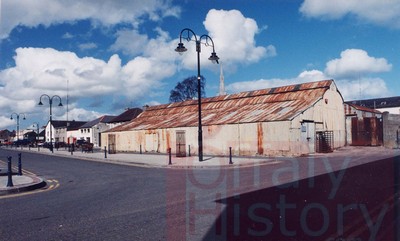
Started to build the Electric Light Shed over in the square on the 3rd January 1921. The same day as we went back to school. [This was the shed used to house the electricity generating equipment in the Market Square. The ESB acquired the Tullamore Electric Light Company in 1930 and the shed was demolished in 1999.]
Alo Brennan, Church St., Tullamore, was arrested on the 18 January 1921. [Later of Cormac Street, he was prominent in the Volunteers.]
Masked and armed men entered the Post-Office in Tullamore on the 20th January 1921 and took away the mails for the R.I.C.
Peace Conference started on July the 3rd 1921, in the Mansion House, Dublin.
Mr D. E. Williams, Tullamore died on the 3rd July 1921 aged 72 years. R.I.P.
Truce declared in Ireland in July 1921. [9th July.]
At least 80 prisoners escaped from the Rath Camp, Curragh by a subterranean tunnel 50 ft. long dug by themselves with pieces of iron etc. Sept. 1921 [LE, 17 Sept. 1921.]
Electric light was lit in the streets and houses on September the 27, 1921.
The electricity generating shed in Market Square, Tullamore, 1921-1999.It was to the rear of the old gas company buildings
Young Patrick Wrafter might have added that the poles to carry the electric cable were in course of erection in the streets of the town from July 1920. These were not the first of many poles to ‘grace’ the streets as those for telephones had been provided from about 1908–11. Of the 80 or so gas lamp standards in Tullamore only one survives at Moore Hall, O’Moore Street. The Truce of 11 July 1921 was holding with a Truce dance in the Foresters new hall over the co-operative bakery in September and a big meeting in Tullamore on 2 October to welcome Dr McCartain. In the same month a young girl of 20 was tied to the railings of Tullamore church with the word ‘Immorality’ written on a card attached to her. Two more girls were chained to the new electric poles near the church with the card attached ‘Beware of I. . . There are others too’. Presumably these were girls who had been overfriendly with the occupying forces, or it may have been the highly moral new republican police acting on possible sentencing in the Dáil courts.
The provision of public utilities in a town is a measure of its civility. Here we are talking of lighting, water, sewerage, roads, footpaths, a market house, and nowadays a public library (see OH blog of May 2021), and a swimming pool. Arts centres, public archives and museums would be down the list, but even here we are well on the way with only the county museum missing from the galaxy of facilities. Hospitals, courthouses and jails were early on the list of institutional facilities with a county hospital of sorts in Tullamore from 1767.
In a blog on 20 October 2020, we wrote that the start-up of the Tullamore Gas Company was in 1859 and the company survived until September 1921. Gas lighting for Tullamore had been mooted as early as 1845 but it took sustained pressure from the local press and the business acumen of the Goodbody brothers of the Tullamore tobacco factory to get it done. Others who helped were Alfred Bury of Charleville (later fifth earl) and the young Tullamore-born barrister Constantine Molloy. Initial opposition had come from the parish priest Fr O’Rafferty (died 1857), and later from the ratepayers led by the Acres family – the principal tenement property owners in Tullamore. Birr had street lighting from 1852 and Mullingar and Newbridge by 1859. The completion of the new railway connection to Tullamore in September 1859 was another boost to forward thinking about the status of Tullamore and its potential. The opening of the streets for lamps meant the adoption of a small measure of local government and the provision of town commissioners – the first town council in Tullamore from 1860. It did not mean that buildings were to be lighted and places such as Tullamore courthouse were still without gas lighting in 1868, as was much of the workhouse in 1897. The latter was using 36 lbs of candles per week in the late 1890s. Gas was later provided but as late as of 1910 the infirmary section of the workhouse was still lit by oil lamps.
The question of lighting Tullamore by electricity surfaced as early as early as 1897. Daniel E. Williams, who was the first to have a motor car in Offaly, introduced electrical generation in his own business in the 1890s. In 1909 the Tullamore town clerk, E.J. Graham, estimated that it would cost £4,000 to bring electricity to Tullamore. At the time the town was serviced by 69 lamps at £2 each per year. This would increase to 78 lamps by 1916. By this time the council had spent large sums on waterworks and housing but less so on sewerage. Economy was a watchword and, as noted, the gas lamps were not activated on moonlit nights. The Tullamore rector, R.S. Craig wrote to the press in early 1914 in the aftermath of the rejection of electric light for Tullamore in 1913 on the grounds of the need for a town sewerage system needed to have a prior call on local expenditure.
The public lighting of Tullamore is not in the hands of the Urban Council as it should be. It is farmed out to the local Gas Company, and one of the conditions – economic conditions – is that there is no occasion to light the lamps on moonlight nights. This is a condition , as the Rev Mr. Craig very aptly says, has nothing to commend it, but ancient precedent. The same bad precedent in the matter of this arrangement is followed in Athlone, and many of the other provincial towns. On the nights when we should have moonlight, but very often have not, there is no public lighting, and pedestrians and visitors or strangers doing business within our gates move about to the imminent danger of breaking their necks. There was the recent case in Tullamore when on the occasion of the great National Demonstration many thousands of people were gathered in the town. Before they could get out of it nightfall overtook them. The business houses were, of course, closed, and there was no assistance to be had from friendly shop windows. The moon was expected that night to give light to the wayfarer, but was in no particular hurry in coming to our help. The Gas Company economised according to their arrangement with the Urban Council and did not light the gas lamps. The inconvenience of the situation need not be emphasised.
Rector Craig’s letter was an expression of his frustration at the council not being able to proceed with the change over to electricity in 1913. The big shops already had electric power and were in no rush to suffer a possible rates increase from the council to provide the funds for the new scheme. It was only in 1917 that Griffith of the new Turf Works in Pollagh agreed to give his expertise to assisting in getting electricity going in Tullamore.
The provision of electric lighting in the smaller towns and villages was slow in coming. A Banagher writer in late 1921 noted that the town was in the dark: ‘The only bit of light we have had for the past three or four years was that provided on the night of Dr McCartan’s arrival’. McCartan was the last MP elected for King’s County/Offaly and the first for the Sinn Féin Party (April and December 1918). Electricity for Banagher lighting had been mooted as early as 1911 by the local improvement association. The visit of Dr McCartain to Tullamore on 2 October 1921 may have been the incentive to get the electric light installation completed in time for the big welcome.
From the Midland Tribune, 1 October 1921
No less than six Offaly based private companies were taken over by the ESB over the period 1928 to 1956. The Tullamore company with 240 customers in 1930 (about one-third to one quarter of the number of houses) was taken over by ESB in that year. In 1929 Birr had 342 customers, rising to 596 in 1947 when transferred to ESB. The Edenderry business was transferred in June 1928, but the number of customers is not now known. Banagher obtained the ESB Shannon supply in 1930 and Clara in the same year.
The offer for subscribers for shares in the new Tullamore company. It was alongside the obituary for Terence MacSwiney. Sgt Cronin of Tullamore was shot a few days laterin reprisal.Ordinary life and the War of Independence coexisted side by side in a strange way.
Disputes with staff working for the Tullamore Electric Light Company started within months of the light being switched on and a strike was called off in November 1921 when the three men employed by the company agreed to accept £3 7s. 6d. per week for a 56-hour week, in lieu of the £3 10s. demanded. The town council was the main customer and was paying up to £300 per year for 75 lamps. No great change in public provision from the days of gas. We do not know at this point what was the take up of power from the private and domestic sector. In the home it would have been for lighting only and that sparingly in many houses up to the 1960s. At the time of the move to ESB in 1930 and the takeover of the local provider it was reported that ESB men were preparing posts to replace existing standards where necessary. Also that ‘Mechanics are affixing electric fittings in several houses’. The firm of Siemens Schuckert was finishing the installation of electric light in the Catholic church and that Oppenheimer was finishing mosaic work to sanctuary. Dreamy altar boys will recall these mosaics with St Brendan navigating the billowing sea and which were destroyed in the fire of 1983.
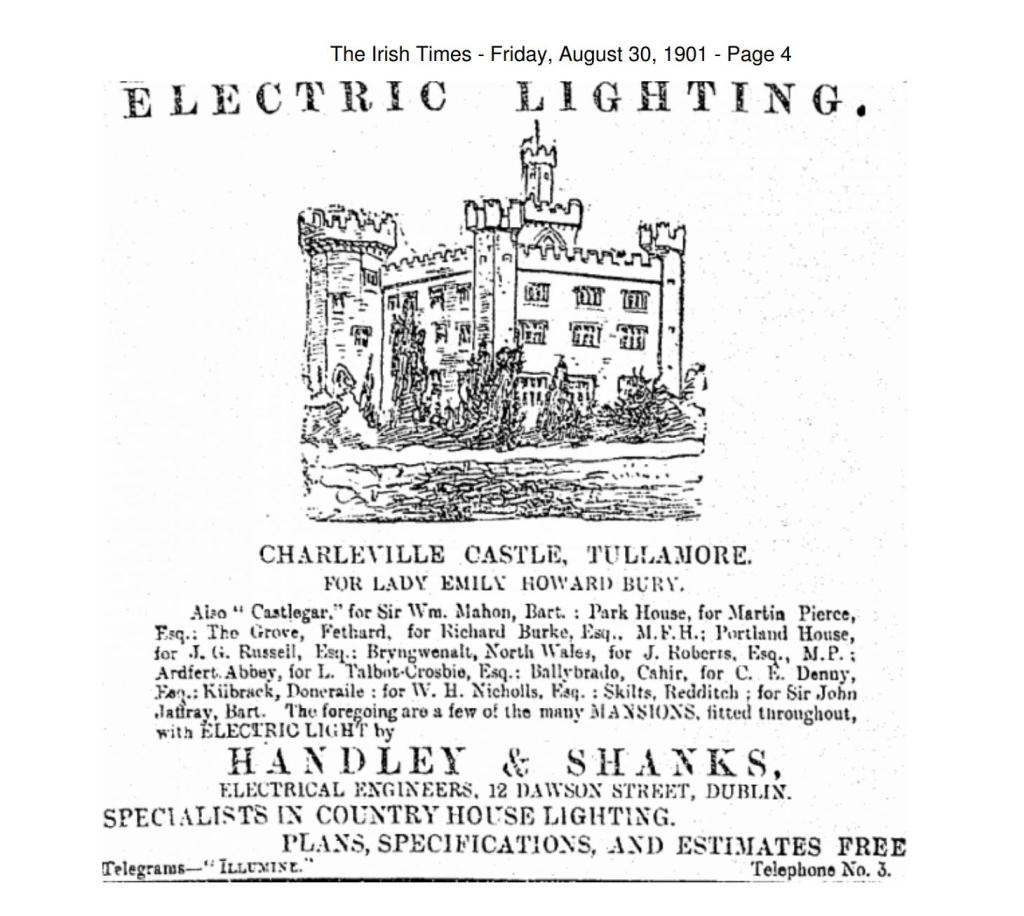
A 1901 advert for a supplier featuring Charleville Castle. By 1912 the castle had been largely vacated by its owner Lady Bury. Courtesy of Irish Times
It is hard to believe now that before the 1850s there was no public lighting in any of the Offaly towns. Neither was there any on moonlit evenings up to 1921, or after 12 midnight up to the early 1960s. Visitors to the Aran Islands will recall walking on its pitch-black roads, and, nearer home, those living in the countryside experience it every evening if making a short journey on foot. Rural electrification did not follow the towns until the late 1940s in many areas in Offaly and this has been documented in lectures at Bury Quay and the records of interviews now in Offaly Archives. See also a useful piece on the arrival of ESB provided electricity on http://www.esbarchives). Surprisingly there is nothing surviving of the minutes of the local gas companies in Offaly or the private electricity companies that were taken over by ESB in c. 1930. The company’s dealings with the urban council can be followed in the local press and in the minute books of the council (now in Offaly Archives). The Tribune was the only Tullamore newspaper in 1921 as the printing works of the Offaly Independent had been destroyed by the British military in November 1920. It reported the switch-on while the Birr Chronicle did likewise a week earlier.
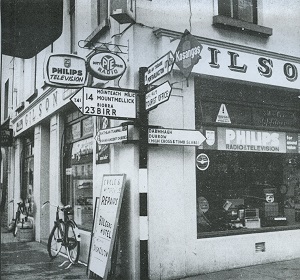
Sales of electrical goods took off only in the 1960s. Here the well-known Tom Gilson’s shop, Tullamore
Next blog is on Saturday 18 on Charleville by Dr Judith Hill. Email info@offalyhistory.com for the link to the Monday lecture.
On 25 Sept. Dr Mary Jane Fox on Columcille and copyright disputes
While perusing some late 19th century newspapers a reference to The National Indemnity Fund 1888 caught my eye. The object of this fund was to provide an indemnity for Parnell against an Order for costs in the event of him loosing a defamation action against the Times.
This fund received contributions from virtually every parish in Ireland, and also from outside Ireland. I found records of fundraising events in England, Scotland, U.S.A., New Zealand, Australia and elsewhere.
However, I was more interested in the small contributions made by the ordinary people of Ireland, the vast majority of whom would not have been in any way well off. They would have been tenant farmers who lived a very precarious life due to their lack of security of tenure and volatile rents. Reflecting their means some the contributions are very small reminding us of the story of the widow`s mite in the gospel of St. Mark.
I was very pleased to find contributions from my own neck of the wood in west Offaly. I found a fascinating letter from Michael Reddy of Shannonbridge in the Freeman’s Journal of 26th October 1888.
The Midland Tribune and King’s County Vindicator was first published at Birr on 15th September, 1881. The aim of its promoters, three Birr Catholic priests of the Killaloe diocese, was to provide a ‘thoroughly independent organ of popular opinion in a district hitherto without the semblance of national journalism’. In politics it declared itself as a supporter of Home Rule. Its tone would be Catholic while at the same time endeavouring to promote ‘the union of Irishmen of every class and creed.’ On the land question the Tribune adopted the programme of the Land League and on education the views of the Catholic hierarchy
Seamus Dooley, Geoff Oakley, the late Dorothy Oakely and an NUJ function in Tullamore in recent years. Geoff was editor of the Tullamore Tribune from 1978 to 1994. Seamus was a well-known reporter with the newspaper.
The Tribunewas founded in what is generally considered the most exciting decade of the nineteenth century. The 1880s saw the development of the most powerful democratic movement in Irish history, based at first on the struggle of tenant farmers to wrest the land they tilled from the landlords and later the right of Ireland to manage her own affairs. These twin aims, Home Rule and a solution to the land question were welded together into a popular mass movement led by Parnell, Davitt, and O’Brien. But, in the 1880s the masses came on the political stage as leading players rather than as extras.
Dealing with time periods that trace back thousands and hundreds of thousands of years can be difficult to handle because of the range of dating systems used such as BC, AD, CE etc. For this blog dates will be recorded as BP – before present. This is to avoid conflicting terminology and confusion.
Simplistic timelines for early Irish human occupation up to the historic period are:
Mesolithic (Hunter Gatherers) 10,000 – 6,000 Before Present
Neolithic (Farming) 6,000 – 4,500 BP
Copper and Bronze Age 4,500 – 2,500 BP
Iron Age 2,500 BP – 400 AD
What mechanisms are there for identifying dates that trace back into the distant past? A number of research mechanisms are used. Firstly, land base studies include Greenland ice analysis, then lake sediment analysis and lastly radiocarbon dating. Newer research methods include undersea marine geological data which would include marine landforms and sediment cores. It is not possible to extract dates from stone tools/weapons unless there are associated artefacts that can be radiocarbon dated.
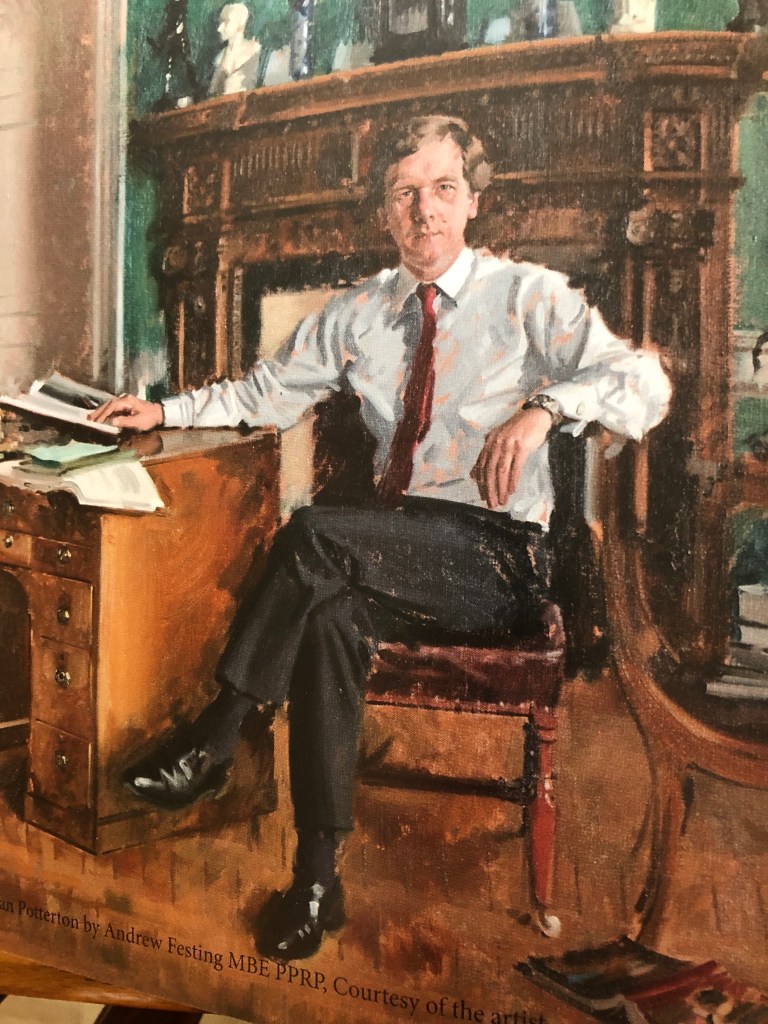
The Homan Potterton sale on 7 September 2021 at Adam’s, Dublin features three painters with Offaly connections. But first a word about Potterton. After secondary education at Kilkenny College and Mountjoy School he began studying to be a solicitor, but (great for him ) he switched to art history at Trinity with the formidable Anne Crookshank. He was the youngest director of the National Gallery of Ireland ever appointed (1979) but stayed for only eight years. He retired in 1988 out of frustration with the bureaucracy, the bullying Charlie Haughey, and his being unable to secure much needed funds for the gallery. That was back in the difficult 1980s. Had Potterton remained he would have been able to oversee the wonderful gallery there is today. All the great institutions saw money flow in from the 1990s with the support of EC funds and the lift in the economy from 1993. While he took over the editorship of the Irish Arts Review in the 1990s (then an exciting annual event) he later moved to France and we heard no more of him save for several family histories, a memoir and a novel.
The jacket of Potterton’s memoir of 2017 with the arresting painting in the great classical style by Festing.(more…)
Starting in Tullabeg as a boarder in September might mean not getting home until the following June. Tullabeg, the Jesuit boarding school near Tullamore was opened in 1818 and closed in 1886 as a boarding school, following amalgamation with Clongowes Wood. This account of the four years spent there as a schoolboy was written in 1951 and published almost seventy years after the event.
On the 2nd of September, 1882, close on seventy years ago (almost 140 now), my father left me at St. Stanislaus’ College, Tullabeg. At that time Fr. Sturzo, an Italian, was Rector ; he was succeeded later by Fr. George Kelly. Fr. Wisthoff was Higher Line Prefect, Fr. Vincent Byrne, who lived to be ninety years of age, was Third Line Prefect. I forget who was Lower Line Prefect, though I remember that Mr. Charles Farley, S.J., held that position sometime later; whoever it was, I am sure that he had a hard time. The captain of the Third Line, known to us then as Billy O’Leary, was afterwards the famous seismologist at Rathfarnham Castle, Fr. William O’Leary. The youngest and, I think, smallest boy in the house at that time was Paddy Rath, who became Captain of the House in Clongowes in 1890. The oldest person in the house was, strange to say, Fr. Young, S.J.
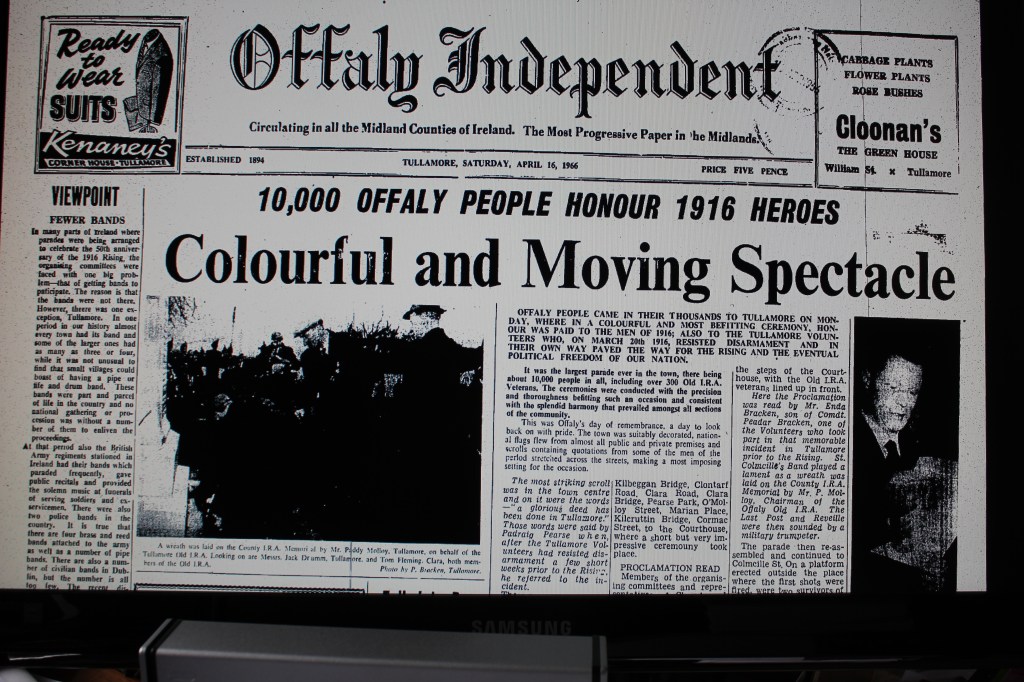
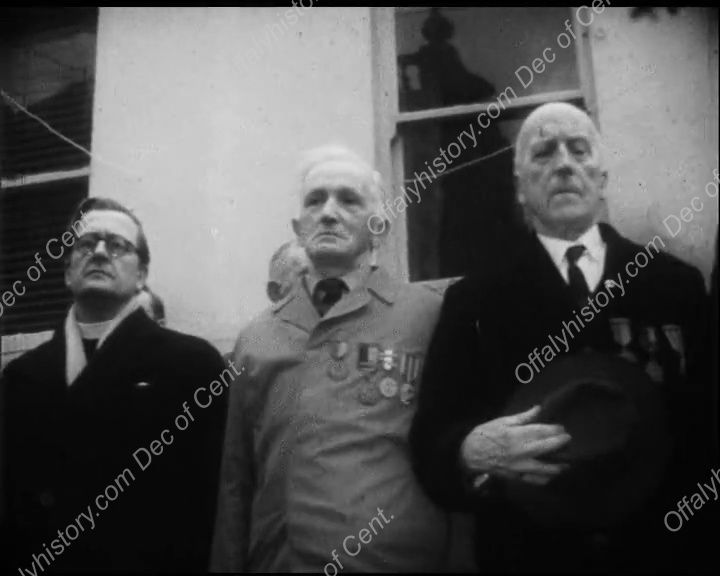
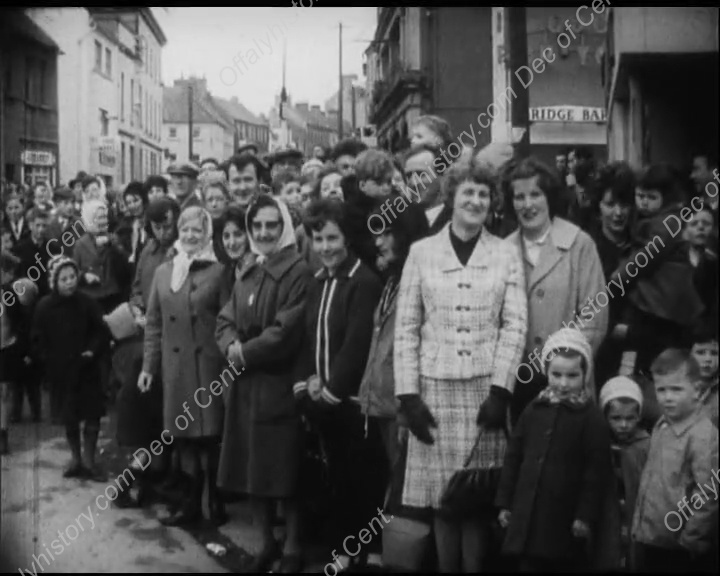
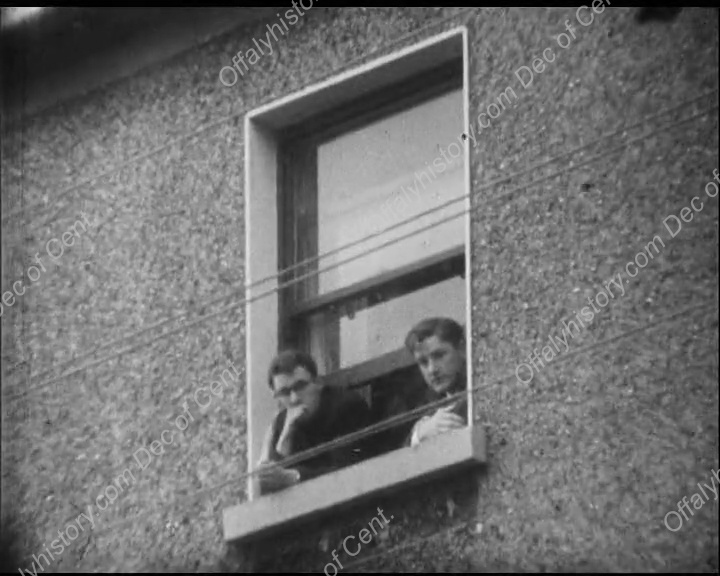
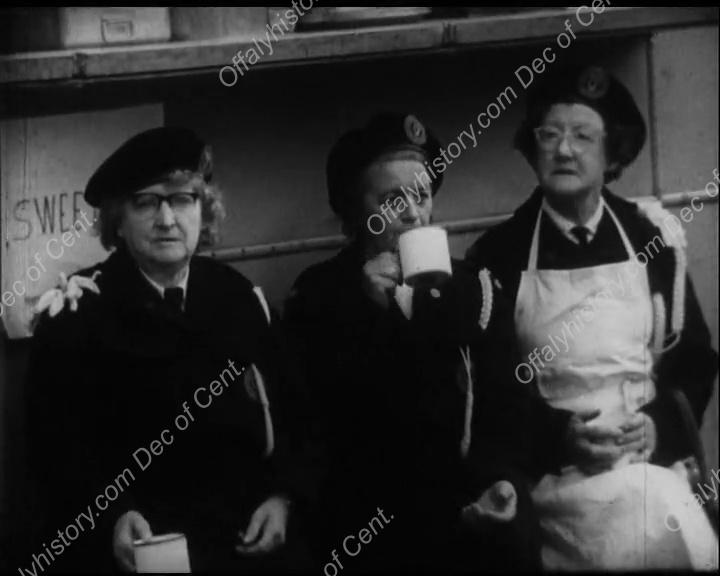
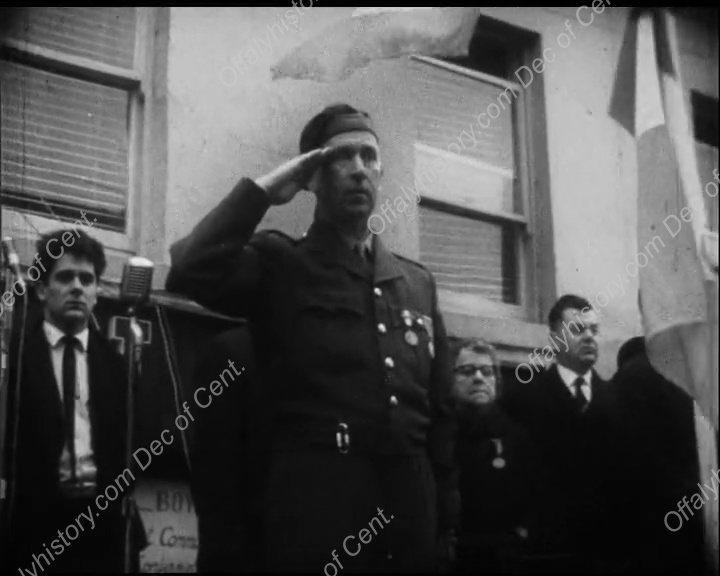
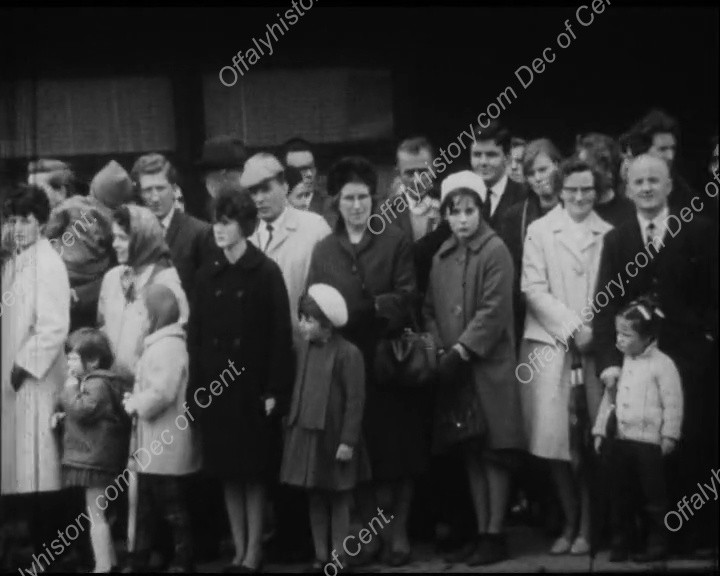
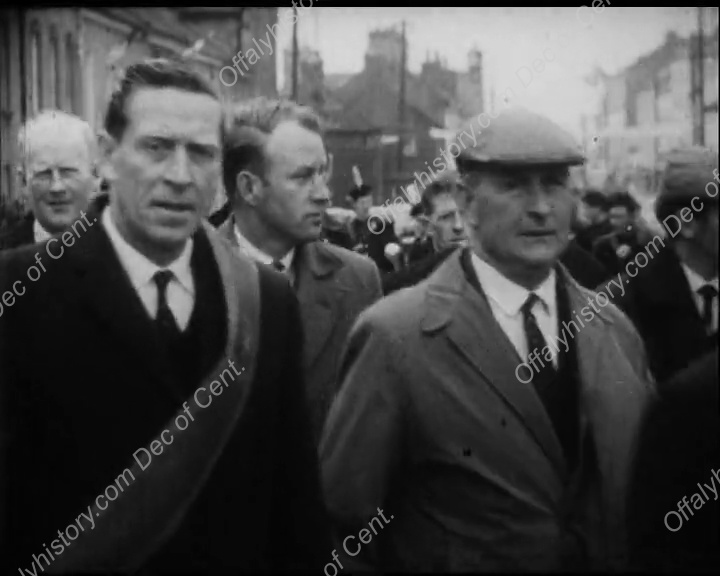
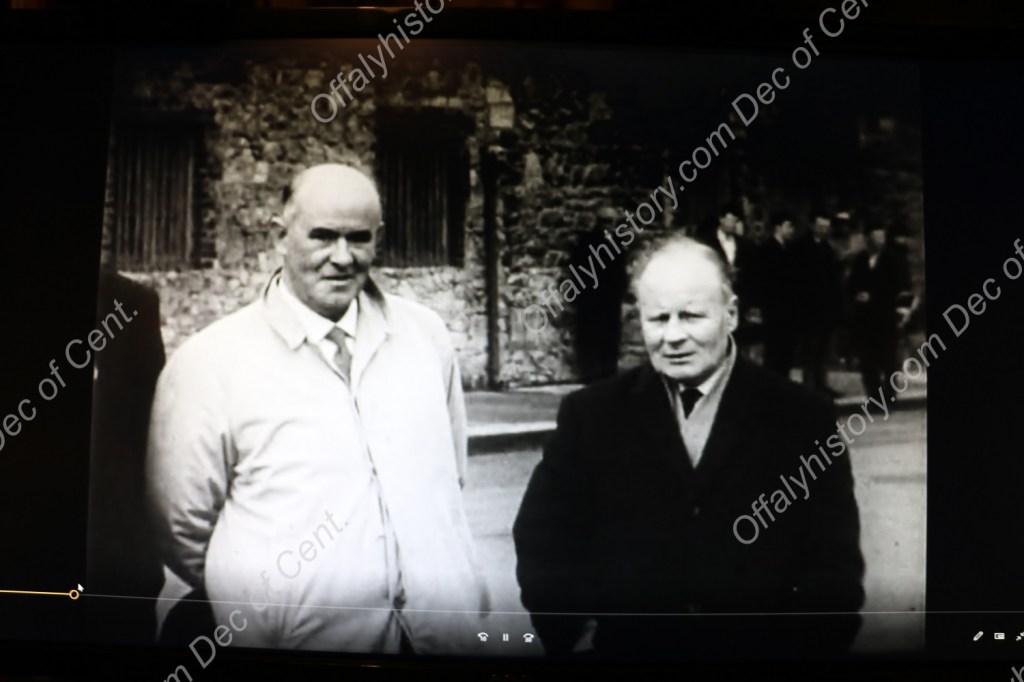
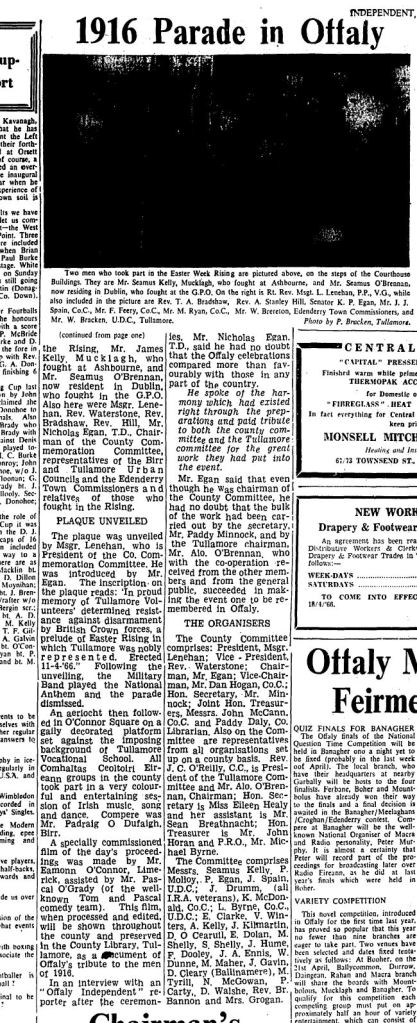
The film made of the 1966 Commemoration parade on Easter Monday 1966 may be the first film made of a public civic event in Tullamore. It was commissioned by the organising committee for the parade and was made by Eamonn O’Connor Studios, Limerick. The cost was £265. In 2015 funds were provided under the aegis of the 2016 commemoration committee to have the film restored and digitised (Midland Tribune, 2/7/2015). The script was by Denis Wrafter and the commentator was Padraic O Raghallaigh who worked with Raidió Teilifís Éireann (which commenced broadcasting on 31 December 1961). The Offaly committee had been chaired by Alo O’Brennan and the secretary was Paddy Minnock of Offaly County Council (Midland Tribune, 14/1/1967). The film was later deposited in the Offaly County Library and was shown on a few occasions since the 1970s. It was made available to the public in 2016 and has now been uploaded to the Decade of Centenaries site on the platform provided by Offalyhistory.com on behalf of the contributors to the project. Our thanks to Offaly County Library. See also our discussion on the film with John Flanagan – On YouTube Offaly History. The film is about twenty minutes long and in black and white.
The report of the parade from the Offaly Independent, 16 April 1966 with Jack Drumm and Paddy Molloy, representing the two sides of the old IRA, coming together to lay a wreath. Far right is a picture of Enda Bracken, son of Peadar Bracken, reading the Proclamation. Peadar Bracken had died in 1961.Revd A.T. Waterstone to the left of the 1916 veterans James Kelly and Seamus O’Brennan.People assembled at Bridge Street for a view of the paradeEnda Bracken reading the Proclamation from the steps of the courthouse. The 2016Possibly from Dolan’s PharmacyStalwarts from Croghan area with the old tin mugsTom Galvin of Ardan Road, a former chair of Offaly HistoryThe Duffy family on extreme rightMick Forrestal of Clontarf Road on the right and Ned Connor behindThe Pender family to the front and Jim Toner to the backPat Minnock, hon sec to committee and John HoranOI, 16 April 1966
Over the years, Tullamore has been known as ’Towllaghmore’,‘Tullaghmore’ or ‘Tullymore’ -all anglicizations of ‘Tulach Mhór’ and most likely deriving from the high land to the south of the river. By the middle of the 19th c. the name of the now extensive town had morphed into ‘Tullamoore’- reflecting the influence of the Moore and later the Bury families and their ownership of all the lands around.
As urban developers, these skilled entrepreneurs with cultural pretensions reached their highest point during the overlordship between 1785 and 1835 of Charles William Bury, the first Earl of Charleville. Whether motivated by commercial considerations, a desire for social prestige and the admiration of his peers or by pure aesthetic sensibility, the development of Tullamore as promoted by Charles William, resulted in a coherent urban form which survived without much amendment into the middle of the 20th c., largely still exists today and will influence any future reconfiguration of the town centre.
This is the second of two Heritage Week 2021 blogs by Dr Perry McIntyre AM, a Sydney-based historian, who has used the Birr Workhouse registers to research the lives of workhouse girls who emigrated to Australia under the ‘The Earl Grey Scheme’ during the Great Famine. An accompanying podcast featuring Perry in conversation with Lisa Shortall, Offaly Archives, is available here. The Heritage Council has generously supported the conservation of the Birr Workhouse registers by way of a Community Grant.
My previous blogs have told some stories of these girls and the last one related the sad fate of Elizabeth Walsh. This time we hear about two sisters who remained together for their lives in Australia and had a good outcome.
Sisters, Eliza and Catherine Dooley arrived in Sydney from the Parsonstown (Birr) Workhouse on the Tippoo Saib on 29 July 1850. They were two of the 35 young ‘orphan’ girls who left that workhouse in on 27 March 1850 and travelling by train to Dublin to catch the steamer to Plymouth to meet the sailing of the ship on 8 April 1850.[1]







 offalyhistoryblog