
This is the story of eight new houses built by Tullamore Urban District Council in 1923 in what is now John Dillon Street. Turning into the street from Charleville Road, the first eight houses on the right were built as part of the Provisional Government’s £1 million scheme launch in 1922 in the midst of the Civil War. Opposite them are houses built by the Irish Soldiers and Sailors Land Trust for veterans of World War I. The eight houses may only have made a small dent in Tullamore’s chronically bad housing conditions in the early 20th century, but the circumstances surrounding when and how they were built provide some valuable insights into the history of the town and the country in these turbulent years.
(more…)Tag: Archival collections
-
Paul Burke-Kennedy, architect. An Appreciation by Fergal MacCabe. Blog N0 530, 8th Oct 2023
The co-founder of one of Ireland’s most successful architectural practices, Paul Burke-Kennedy died at his home in Booterstown Co. Dublin on 28 September 2023. Born in Tullamore in 1935, Paul’s father Gerry Burke-Kennedy was the popular manager of the Hibernian Bank (now part of Bank of Ireland) in the 1950s, well known for his hunting, horse racing and golfing enthusiasms and who, in later years, raised his family in the apartment above the bank premises on Bridge Street, Tullamore.
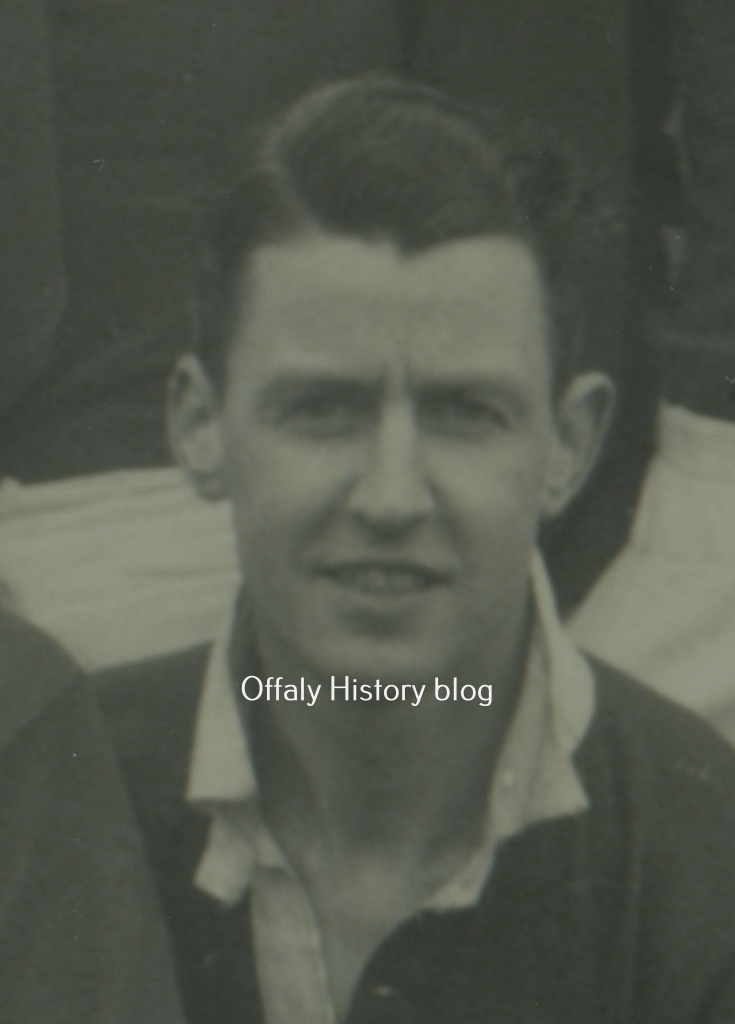
Gerry Burke Kennedy, popular bank manager in Tullamore in the 1950s and had worked in Tullamore in the 1930s, living on High Street. He was a prominent member of the new Tullamore Rugby Club (founded in 1937). Paul studied architecture in University College Dublin and soon after graduation together with Joseph Kidney formed the practice Kidney Burke Kennedy which was later joined by Des Doyle. Paul’s designs were rooted in his awareness and respect for urban context and contemporary Scandinavian design. The firm became notable from the 1960s onward for its innovative housing development in Dublin’s Ringsend, the impressive first stage of the Dublin Docklands development together with hotels for the Jury’s Group and the Conrad and many office developments including the Harcourt Centre and Earlsfort Centre and the Tallaght Town Centre.
(more…)
-
Trade Directories for Offaly one hundred years ago. From Offaly History. Blog No 417, 31st August 2022
A contribution to marking the Decade of Centenaries in Offaly and recalling the past generations and the towns and villages on the eve of the War of Independence
In marking the years from 1912 to 1923 we may think that the years around 1916, the War of Independence and the Civil War were times of unmitigated strife. Not so. Normal life continued, if punctuated by violent acts, such as the shooting of policemen in Kinnitty, Kilbeggan or Tullamore. The finding of bodies of spies, ‘the disappeared’, in Mountbolus or Puttaghaun. The holding of brief gunbattles in Ballycommon or Charleville Road. Worst of all the organised state violence condoned by Churchill and Lloyd George in the form of the Black and Tans racing through towns and villages in the dead of night and taking shots at anything that moved. Yet normal life continued and no better illustrated than by the issue, almost every week, (Offaly Independent excepted as the printing works was destroyed by British forces ) of the three or four local papers in Offaly and from time to time trade supplements or special publications such as trade directories that very much illustrate local business in most of the Offaly towns. Recently Offaly History acquired the 1919 MacDonald’s Trade Directory for Ireland to add to its collection at Bury Quay, Tullamore.
(more…)
-
Internship at the Offaly Archives. By Michelle Günter, Blog No 383, 18th May 2022
My internship at the Offaly Archives finished in March and I will go home with a suitcase full of experiences, knowledge, and impressions I gained about Irish life and heritage. I am an archivist student from the University of Applied Sciences in Potsdam, Germany. In our college a practical experience of the duration of 22 weeks (5.5 months) is a mandatory element of the undergraduate degree course in Information Sciences.
After my Abitur (the German form of the Leaving Cert), I went to explore Ireland on a year abroad with the organization WWOOF (Worldwide Opportunities on Organic Farms). Eventually, I landed in Offaly, more precisely on Mount Briscoe Organic Farm near the village of Daingean, a place full of history. The beech-lined avenue, the country house with its walled garden and the quarry with a lime kiln are dating back to the beginning of the 19th century. Through the interest of the family in the local history I got to know about the Offaly Historical and Archaeological Society and visited some of the evening lectures.
(more…)
-
John’s Place, Birr and Foley’s Memorial to the 3rd Earl of Rosse, by Michael Byrne. Blog No 49, 01 October 2017
Birr has been referred to as Umbilicus Hiberniae, the navel or centre of Ireland. For many years it was also known as Parsonstown taking that name from its then proprietors, the Parsons family, earls of Rosse. That it is the centre of Ireland is often disputed but few will deny the accuracy of yet another appellation that of the ‘model town’. The late and much loved Jim Dooly, who was chairman of the town council in the mid-1960s, appeared on a Frank Hall programme in 1971 to defend Birr’s claim. He was no lover of television as can be seen in his performance, now viewable on the Frank Hall Archive of RTE on Youtube (‘Dead Centre of Ireland’). (more…)
-
Offaly GAA: Slivers of History. Blog No 17, 18 February 2017.
To coincide with the release by Offaly History Archives of a collection of Offaly GAA minute books and records (1906-1980), Dr Paul Rouse takes us through the history of the GAA in Offaly from its establishment in the county in the 1880s to the present day.
Without Gaelic games, there is nothing that unites Offaly. The county boundaries were first laid out in 1557 during the plantation of Leix-Offaly – but this was effectively a nominal administrative division that did not translate from maps, bore no relation to the divergent customs of the region and was largely ignored by the populace. Offaly sprawls across five Catholic dioceses and includes within its area, the ancient fiefdoms, or parts of fiefdoms, of a host of Gaelic chieftains. (more…)
-
Offaly History Archives Catalogue Development Process. Blog No 8, 09 Sept 2016.
As a follow on to a previous post outlining the concept and development of the online catalogue, this post from Ed Doyle explores the technical development of the catalogue which may be of interest to other archivists and repositories who are thinking of using AtoM software.

Beginnings
Our first version of AtoM started off on a single local office computer previously scavenged from various spare parts in the back of an office. The archivist had to create all the data that would appear on the AtoM site from scratch as there were no legacy finding aids to import, all while learning the ins and outs of the new software and communicating her experience with myself.
Our installation used Ubuntu 14.04 LTS as the operating system and AtoM 2.2 and all of its dependencies. If you are starting from scratch I would advise using whatever version that is stable (currently 2.3).
-
Offaly History Archives online catalogue. Blog No 6, 28 June 2016.
Offaly History Archives will shortly launch a searchable online catalogue of its holdings. Not only that, the website will contain a large amount of digitised resources and will also host the catalogues of other Offaly repositories so that researchers will be able to search for related material in one place. Here are some facts and figures about the new catalogue.
When will it be launched?
We are hoping to launch the catalogue in August 2016. It is a work in progress so parts of the catalogue will be released in stages to allow further work on the remainder. The first collection to be released is from a hosted repository, Offaly County Council Heritage Office. In 2013, OCC’s Heritage Officer, Amanda Pedlow, arranged for the digitisation of the Digby Irish Estates papers which are kept by Lord Digby in Dorset. The papers contain the annual reports sent to the Lords Digby by successive land agents on the Geashill Estate. The first tranche of these reports, containing over 1000 digital objects, will be the first section of the catalogue to go live. These comprise the annual reports written by William Steuert Trench and his son, Thomas Weldon Trench between 1857 and 1872. The reports are a goldmine of information on the tenantry, containing full rentals of all townlands in the 30,000 acres which made up Lord Digby’s estate. They also contain vivid descriptions of housing conditions, poverty, emigration, agrarian unrest and even assassination plots against the Trenchs. Although generally reviled amongst the tenants for their cruelty, the Trenchs were improvers and the reports also contain detailed explanations of land improvements, drainage schemes, establishment of new farms, construction of new housing, repairs to existing housing and plantations of woodlands. (more…)
-
What’s in our archives? Blog no. 2, 1 June 2016.
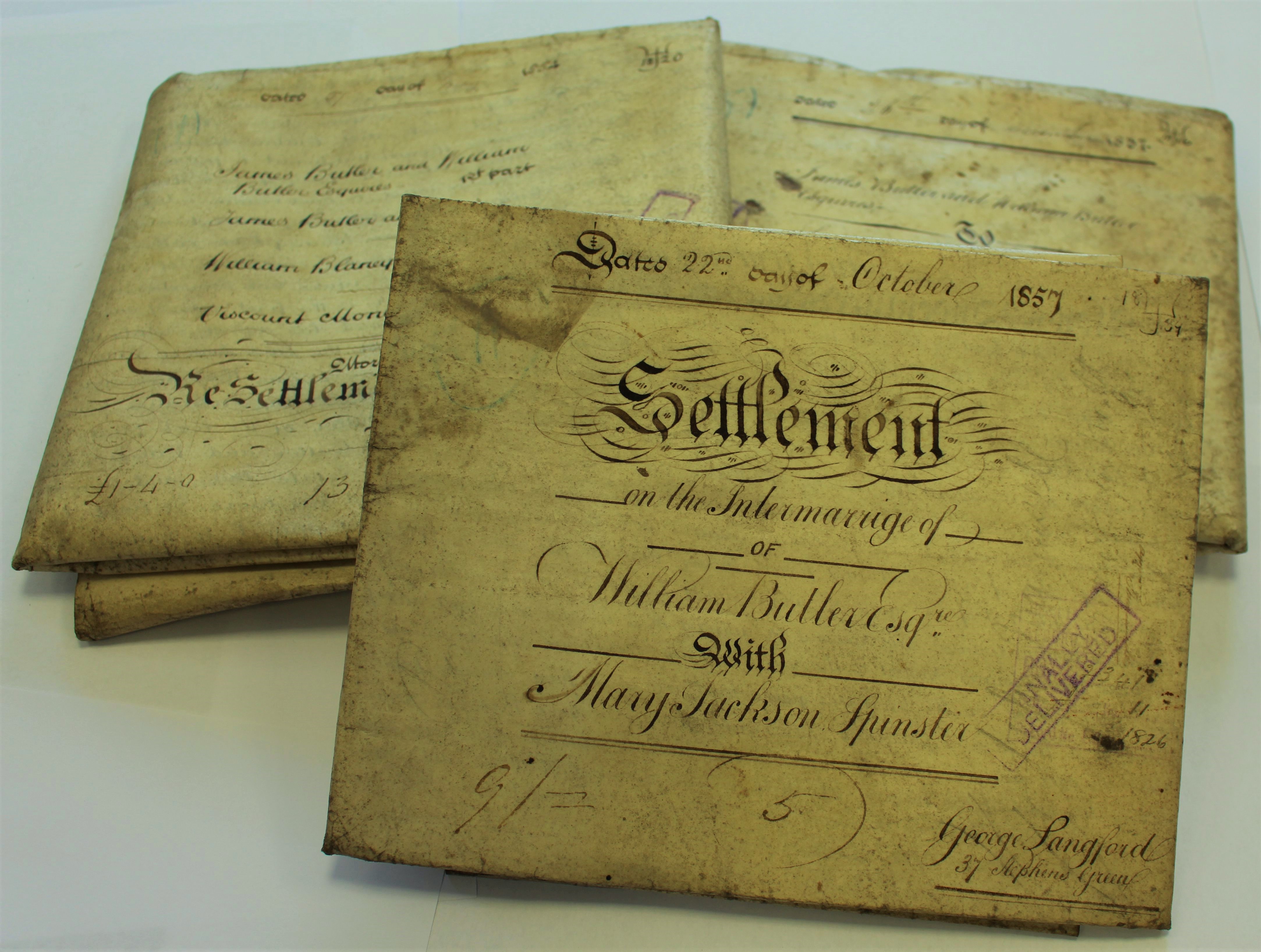
Offaly History has been collecting primary historical sources in the form of manuscripts, photographs, maps, plans and drawings for many years. Until recently, this material has been kept safe and secure but inaccessible. It was understood that the material would have to be professionally catalogued and carefully preserved before it could be offered as a resource for historians and other researchers. There are hundreds of bound volumes, thousands of manuscript pages and dozens of trunks full to the brim with historical treasures. In 2015, an archivist began the mammoth task of physically rehousing the material in archival boxes, and cataloguing the contents for publication in our new online catalogue which we hope to launch in the coming months.
 offalyhistoryblog