
Please see an invitation from the community in Lemanaghan about two events this Saturday 12 August as part of Heritage Week. We are publishing early this week as part of our Heritage Week Specials from 12 to 20 August. So keep in touch with us on Social Media and do call to Offaly History Centre and Offaly Archives as part of next week’s 2023 programme.
The community of Lemanagahan extend a special invitation to you for a truly remarkable event – the book launch of “The Annals of Clonmacnoise” where the links with Lemanaghan will be discussed by the author Nollaig Ó Muraíle.
Event Details:
Date: Saturday, August 12th, 2023
Time: 2:30 PM
Venue: The Granary, Boher, Ballycumber, Offaly, N35NX30 [beside St. Manchans Church]
“The Annals of Clonmacnoise” is a meticulously compiled chronicle that offers a panoramic view of Ireland’s past. Through its pages, you’ll be transported to a world of ancient tales, historical intrigue, and cultural treasures that have shaped the very essence of our heritage.


Event Highlights:
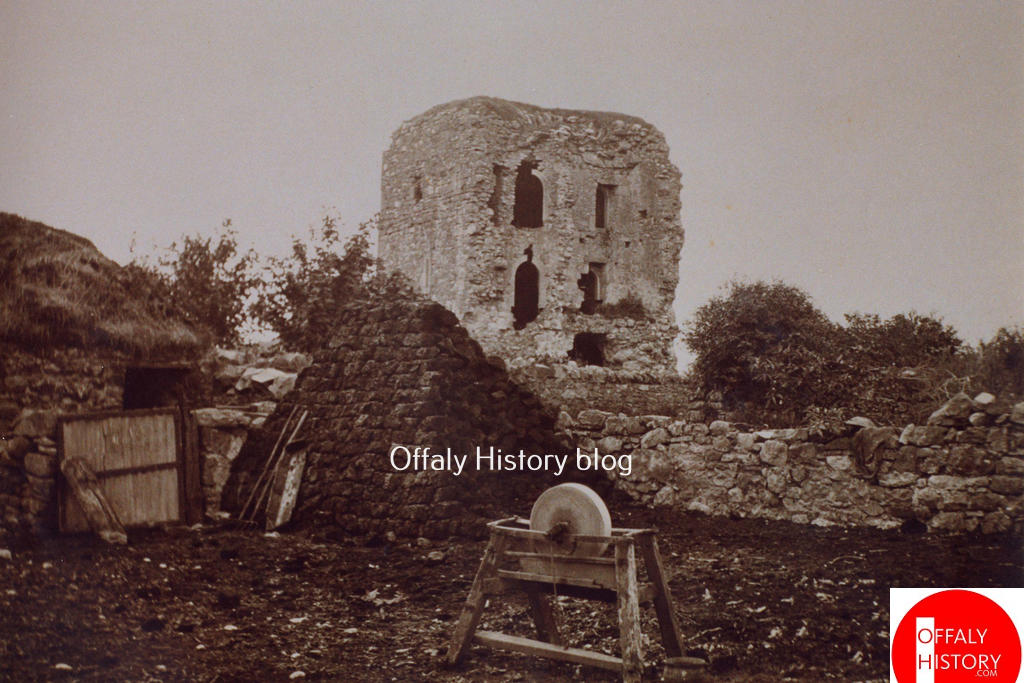
· Author Insights: Gain firsthand insights into the research, passion, and dedication that went into compiling this remarkable piece of historical literature and the links between the book and Lemanaghan Castle, its place of origin.
Limited Edition Copies: Be among the first to secure your own signed copy of “The Annals of Clonmacnoise” and take home a piece of history.
We believe that this event is a unique opportunity to delve into Ireland’s past and celebrate the beauty of its cultural heritage. Your presence would truly make this occasion even more special.
We look forward to welcoming you to an afternoon filled with history, culture, and camaraderie as we unveil “The Annals of Clonmacnoise.”
Later that same day, we have our annual Heritage Week Event in Lemanaghan Monastic Site.
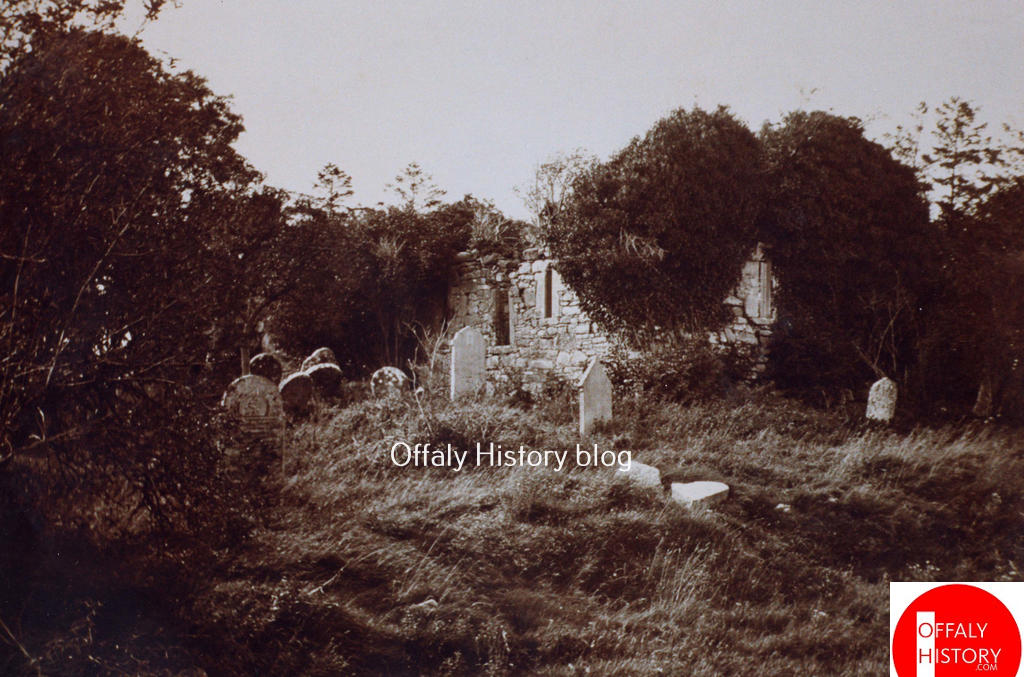
“Voices of Lemanaghan: An Evening Walk, Words, and Melodies” promises an extraordinary fusion of history, literature, and local talent. Come and be part of this unforgettable celebration of Lemanaghan’s heritage, as we delve into its stories, poems, and melodies, honoring the past while embracing the present.
The event will start at 7.15pm immediately after the annual blessing of the graves in Lemanaghan graveyard. Mass at 6.30pm for anyone wishing to attend.
https://www.heritageweek.ie/event-listings/voices-of-lemanaghan-an-evening-walk-words-and-melodies

All who are familiar with the world of place names will know of the work of Nollaig Ó Muraíle. He provided an article on the historical significance of the name Offaly for the first issue of Offaly Heritage in 2003. For the Offaly entries in Logaim.ie his initials are to be found on many of the entries for the names of the county’s townlands. He is especially welcome to Offaly and we hope that many of our readers will be able to attend the launch in Offaly of this important work. If you are unable to get to the event you can order the book from Offaly History, Bury Quay, Tullamore and via info@offalyhistory.com.
The publisher of the new edition has provided the following summary. That great student of Clonmacnoise heritage, Conleth Manning, has added his voice by way of congratulation.

NEW EDITION OF THE ANNALS OF CLONMACNOISE. Nollaig Ó MURAÍLE (Editor)
The ‘Annals of Cluain Mhic Nóis’ translated in 1627 by Conall Mag Eochagáin (Annals of Ireland from the Earliest Period to AD 1408 – based on BL Add. MS 4817, with some variants from TCD MS 673). Edited by Nollaig Ó Muraíle. Dublin: De Búrca, 2022. Quarto. pp. circa 680. Green buckram, titled in gilt on spine. €125

The so-called Annals of Clonmacnoise – an inaccurate title bestowed in the 17th century by Sir James Ware – are a collection of Irish annals that purport to extend from the earliest times (Adam and Eve!) down to the year AD 1408. The text – an English translation completed in 1627 – is the work of Conall Mag Eochagáin, a Gaelic gentleman from Lismoyny, County Westmeath. The early portion of the text (about one-sixth of the whole) is based on the medieval work of pseudoprehistory called Lebar Gabála Érenn (the Book of the Taking of Ireland, the so-called ‘Book of Invasions’), while much of the remainder is closely related to other collections of Irish annals, especially those of Ulster, Loch Cé and Connacht. The Irish text from which Mag Eochagáin worked is now lost, as indeed is the original manuscript of his translation. The entire work survives in a number of manuscriptcopies penned in the later 17th century, as well as in some later copies. The only edition produced to date, that by Fr Denis Murphy, SJ, was published 120 years ago and is a sadly inadequate production, being based on one of the less satisfactory manuscripts. Among its many shortcomings is the deletion/censorship by the editor of some passages he deemed ‘offensive’. A new edition has long been called for, and this Nollaig Ó Muraíle has now undertaken. The edition is based on a manuscript which is deemed to be superior to the other surviving manuscripts, BL Additional MS 4817. This was written in 1661 by a native of Tralee, Domhnall Ó Súilleabháin. (Occasional words, and sometimes longer phrases, omitted by Ó Súilleabháin have been inserted from TCD MS 673 – the manuscript on which Murphy based his edition.) In accordance with modern historical practice, the text of the annals (running to approximately 100,000 words) has been modernised, in terms of both orthography and punctuation – except in the case of proper names (both people and places). (Nothing is gained by preserving the very irregular early 17thcentury spelling, erratic capitalisation, etc., which make Murphy’s edition so frustrating to use.) As is the norm with modern editions of Irish annals’ collections – such as those published over the past seven decades by the School of Celtic Studies, DIAS – the various entries are divided into numbered paragraphs under the appropriate year. (Admittedly, the rather erratic chronological arrangement of these annals rendered this difficult in a number of instances.) Where an entry has a parallel in one of the other annalistic collections, this is inserted after the appropriate paragraph. Also inserted after each paragraph are the correct Irish forms of the proper names aforementioned – so many of which are quite unrecognisable in their often quite bizarre anglicised forms. Those Irish forms – using the standard Classical Irish spelling – will also facilitate the provision of a ‘user friendly’ series of indices. The publication of this new edition will be welcomed by scholars, who have all too often tended to ignore this intriguing text because of the difficulties of handling Murphy’s now obsolete work.

Conleth Manning writes:
“Congratulations on the very fine new edition of the Annals of Clonmacnoise. It is a consummate work of scholarship, beautifully produced and a most valuable reference for students of medieval Irish history. Nollaig is a great and very industrious scholar. His introduction and the quality of his editing is masterly. Including the Annals of Leacáin is an amazing bonus as the only previous edition had no index. I have found the latter one of the most interesting sets of annals because of the level of detail included even though it only covers some 25 years. For example just compare 1444.5 and all the detail of the battle in which the bishop of Clonmacnoise was killed including mention of his son and brothers with the laconic entry dealing with the same event in the Annals of Connacht – ‘Cormac Mac Cochlain, Bishop of Clonmacnoise, died’. Wishing you every success with this great publication” –
 offalyhistoryblog