
Faithful Images: public art in County Offaly, will be launched on Monday 11 December at 8 p.m. at Offaly History Centre, Tullamore by Eddie Fitzpatrick, cathaoirleach of Offaly County Council. Faithful Images is a welcome addition to the growing library on the cultural patrimony of County Offaly. Thanks to Creative Ireland and Offaly County Council for their support. The new book is in full colour and is €20. It can be purchased at Offaly History Centre, Bury Quay (beside the Grand Canal and the Old Warehouse) and at Midland Books, and online at http://www.offalyhistory.com. You will be welcome to attend the launch and to purchase a signed copy.

The combination of Fergal MacCabe as architect/town planner/water colourist with that of Paul Moore as photographer makes for an excellent outcome. Fergal MacCabe has an eye to the broad sweep of architectural history from his having studied and practised the subject over sixty years. He has been looking at buildings with an admirable curiosity since his teenage years. By the 1970s this had blossomed into his being a superb watercolourist especially when it came to places associated with his childhood years in the midlands. Living in Dublin now he can return to his native place bringing with him a fresh perspective. We had the pleasure of working with him on Tullamore: a portrait in 2010, attending several of his exhibitions, and several of his lectures including those on the rediscovered Frank Gibney.
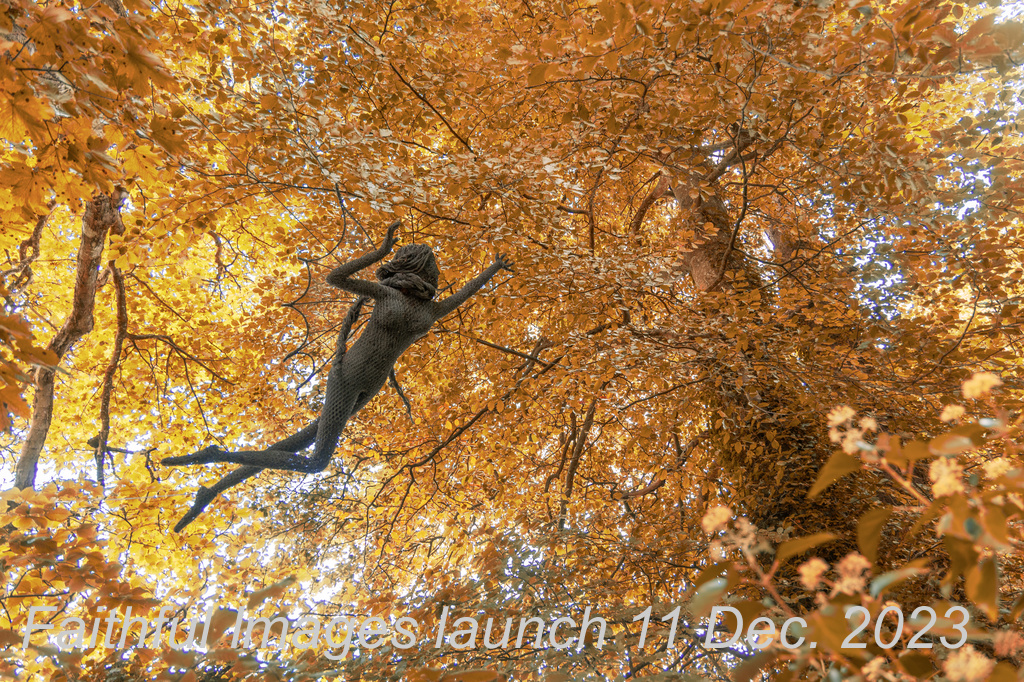
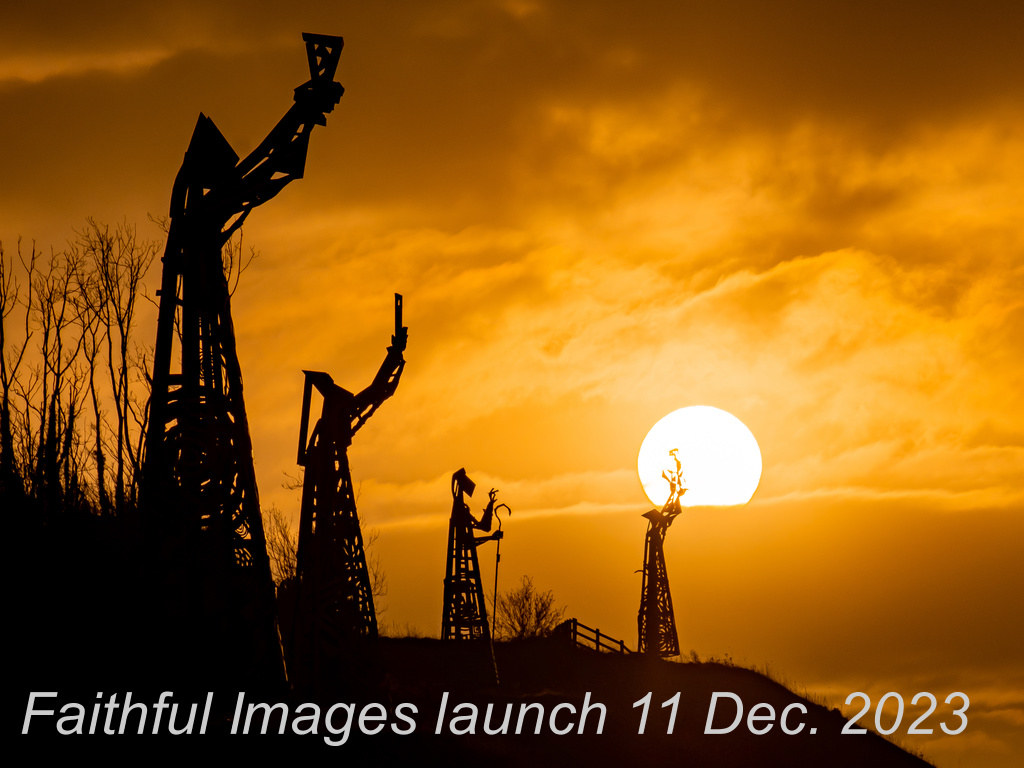
Paul Moore is one of Ireland’s best architectural photographers and has honed his skills since he took up this career five years ago. Whether it is Pilgrim, Turfman or Chancellor/astronomer his pictures do wonders for the scenes that people pass every day without perhaps appreciating the degree of artistic endeavour that has gone into the creation of the piece of sculpture ‘uploaded’ to the landscape. Not since the work of County Life on Birr town in the mid-1960s have we seen the ‘astronomer earl’ in such an intense way and the magnificent composition of Greek temple and nineteenth-century scholar. His media postings of his work have introduced many people to the pleasures of ‘seeing’. This contribution to a printed work was overdue and I hope will be the first of many.

While there have been important articles on the high crosses at Durrow, Kinnitty and Clonmacnoise, the windows at Tullabeg, the sculpture park at Boora, the obelisk at Kinnitty, nothing like this book has appeared before on public art in County Offaly. Fergal MacCabe has made the selection, and his sweep is broad and daring. There is much to reflect on in the choice he has made and the cultural politics of monuments. This is nowhere better shown that in the two squares and interconnecting main street in Birr with the ‘Bloody Duke’ of 1747 setting off the new Cumberland Square on the northern side of the town and in the Market Place the memorial to the Manchester Martyrs (1894). Both seem to fit perfectly while the Birr town council was, in hindsight, wiser to reject the obelisk to those who died in the Boer War, when a dispute arose about its location in the early 1900s. It would not have sat well with Foley’s masterpiece of the third earl unveiled in 1876, or the Greek temple. In Tullamore the War of Independence memorial is well and defiantly situated in what had been the seat of British power – the county courthouse with its assizes and displays of compelling force. The reluctance of the people of Tullamore to part with the war memorial (1926) in the town square, to an out of the way location in the town park, was in tune with the sense of loss felt in town and county arising from the many casualties in the First World War. These memorials are of their time and reflect loss and sadness rather than triumph. The War of Independence memorial was completed almost fifteen years before the two sides in the Civil War came together to unveil it in 1953.
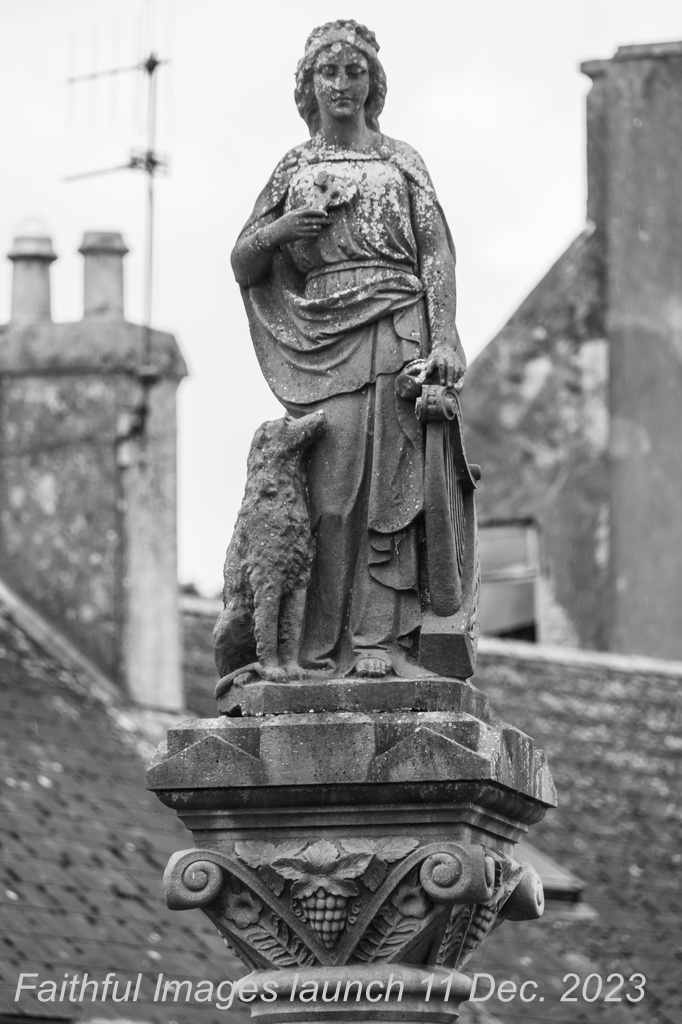
Now, new subjects have secured our attention as we look back in tranquility to cutting turf on the bog, or old village pig fairs, while developing an increasing awareness of our midlands monastic inheritance, scientific endeavours and sporting achievements.

This is a book that succeeds as an enjoyable reflective essay and a stunning visual treat. So many disciplines are brought together that it is truly a great outcome for the Creative Ireland initiative and will give joy and encouragement to many.
Michael Byrne
 offalyhistoryblog