
Michael Hoy was born in Daingean county Offaly in the year 1834 to William Hoy and Rosanna Concasey. His father died when he was a young boy. In 1853 he emigrated with his mother, brother William, and two sisters Rosanna and Elizabeth, settling in Brooklyn. His older brothers Joseph and John, along with another sister Mary had gone to America a few years before. Michael Hoy learned the stone cutters trade in Brooklyn. In 1854 the family moved to Cooperstown, New York, which is two hundred miles north of the city. Young Hoy worked in his trade for one more year before returning to Brooklyn. In 1857 he went to Minnesota, settling in the town of Saint Anthony. At this time Saint Anthony had a few scattered houses on the east bank of the Mississippi river. He followed his trade and the same year of his arrival he cut stone for the building of the State University.
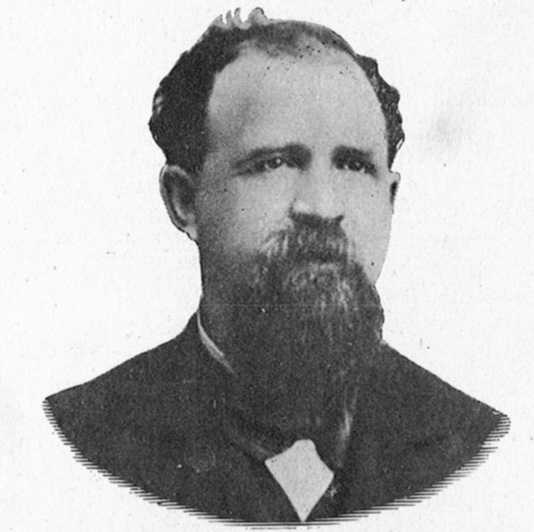
The same year he helped to build Saint Anthony of Padua Catholic Church. This was to replace a small timber framed church which was built in 1849, the first catholic church built in the town of Saint Anthony.
On August 22nd, 1862, one year after the American Civil War broke out Michael Hoy enlisted along with his brother William and friend William Byrne’s from Rhode/Edenderry area. They joined the 10th Minnesota Volunteer infantry and served gallantly in the hottest of the battles.
He was commissioned as a second Lieutenant by Governor Ramsey and first Lieutenant by Governor Miller. He also served in the Indian campaign in 1862. In 1863 his regiment was called south where they engaged in some hot fighting at Tupelo, Oxford, Old Town Creek and the two days fight at Nashville, December 15th and 16th 1864. It was there he was shot in the right arm during the second day of fighting and severely wounded by a mini ball. In 1865 he was honorably discharged.
In 1860 prior to the war Michael Hoy was married to Miss Catherine Queeley from Lissycasey in County Clare. They had twelve children. After the war he returned to Saint Anthony.
He was elected city Marshall on the Soldiers ticket in 1865. Fellow Offaly Man William Byrnes who was elected sheriff of the county at the same time appointed him as his deputy. Hoy held the office of City Marshall for seven years until the consolidation of Saint Anthony with Minneapolis. He was then made captain of police and afterwards chief of police under the then Mayor, George Brackett. He was appointed chief of detectives a few years later. It was as a detective that Michael Hoy distinguished himself.
A friend described him as “a natural born ferret and his exploits would fill volumes “
Captain Hoy was also appointed deputy US Marshal by President Cleveland which position he held until October 1890.
While Captain Hoy was marshal there was only one small structure used as a jail this was known for a long time as “Hoy’s little stone jug,” and it was the only lockup west of St. Paul. When prisoners were committed for any prolonged period, they were taken to St. Paul. Sometimes “Hoy’s little stone jug” would get overcrowded and if there were any females among the unfortunates, they were placed apart from the male prisoners in one of the two rooms that served for the lock-up. The duties of the jailor (Marshall Hoy) were simple enough. He merely turned the key on them and went about his business.
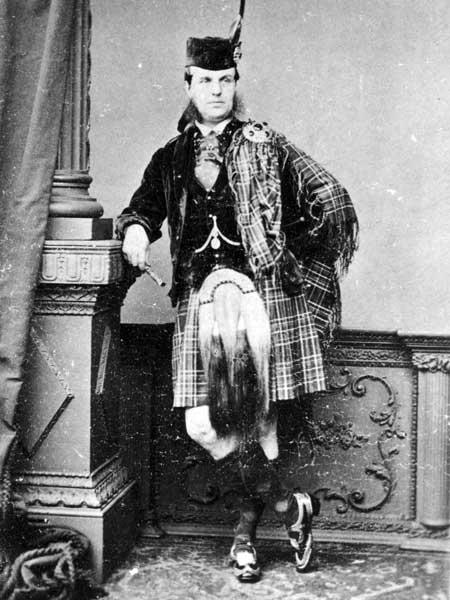
His law enforcement career may be best known for his failed attempt to arrest the fake Lord Gordon Gordon in Winnipeg, Canada in 1872. The fake Lord had bamboozled financier Jay Gould and others out of some capital claiming to be a Scottish Lord. He was arrested in New York and made bail. Jay Gould offered a twenty-five-thousand-dollar reward and his lawyers convinced Minneapolis Mayor Bracket to dispatch an officer to Canada to retrieve Gordon. For almost a year, Gordon-Gordon’s whereabouts weren’t known, but in the Summer of 1871, word reached the States that he was living in Fort Garry, Manitoba, just 50 miles north of Minnesota’s border with Canada. Learning of this, a party of prominent Minneapolis citizens — including Loren Fletcher, Eugene Wilson, and John Gilfillan, all three of whom later were elected to Congress — resolved to bring him to justice. Accompanied by several Minneapolis police officers led by Michael Hoy and another Irish man Owen Keegan, they crossed the border and apprehended Gordon-Gordon, whom they found sitting on his front porch. The kidnapping party threw Gordon-Gordon into the back of a wagon and rushed back to the safety of the States. But their plan failed when they were stopped at the border by Canadian police (the kidnappers later claimed they were a few yards across the border, in U.S. territory) and thrown into jail. They sent Minneapolis Mayor George Brackett a desperate telegram: “We’re in a hell of a fix; come at once.
An international incident ensued. Minnesota papers, such as the St. Paul Pioneer, declared that a militia should be raised to cross the border and rescue the Americans. But instead, diplomatic means were used to secure their release. The negotiations eventually involved officials from the highest levels of government: Minnesota governor Horace Austin, President Ulysses Grant, and Canadian Prime Minister Sir John Macdonald. The would-be kidnappers were finally released on September 15, 1873.
In 1873 Canada was a self-governing state within the British Empire. Two Irishmen crossing the border into British territory to arrest what the Canadian authorities believed was a Scottish Lord doesn’t seem like a smart move. Not to mention the Fenians had three failed raids on Canada in 1866,1870 and 1871. Nevertheless, Hoy and his superiors believed they had their paperwork in order.
The Fenian raids were still fresh in the mind of the crown when the man from Daingean came calling. When they were eventually released a crowd of 2000 + 2 marching bands and the Irish Rifles were present to welcome home the detainees. This incident is told in detail in the book “A History of Minnesota.” By William Watts Folwell.
Hoy and Keegan had suffered gross indignities at the hands of the Canadian authorities especially the Attorney –General, Henry Joseph Clarke. Clarke was born in Donegal and moved with his family to Canada when he was three years old. He became a lawyer and Politician. His support of the fake Lord Gordon was an embarrassment for Clarke when his identity was exposed.
A few years after this incident Clarke took a trip to St. Paul Minnesota. Clarke believed the passage of time had healed old wounds. He would quickly learn this was not the case.
Hoy heard of Clarkes visit to St. Paul and caught up with him where he inflicted what one newspaper described as “an unmerciful beating “for which he was exonerated by the Ramsey County grand jury and never brought to trial.
In 1876 following a failed bank robbery by the infamous Jessie James and Cole Younger gang Hoy along with four others chased them down and almost caught the gang. Sometime later Cole Younger told Hoy how close they came to capturing them.
1887 The control of the Police Department was taken out of the hands of the mayor and vested in the Police Commission. Michael Hoy was made a member of that board, a position which he held until the board was legislated out of office several years later. That was his last public office, but he was always active in the councils of the Democratic Party until failing health interrupted his career.
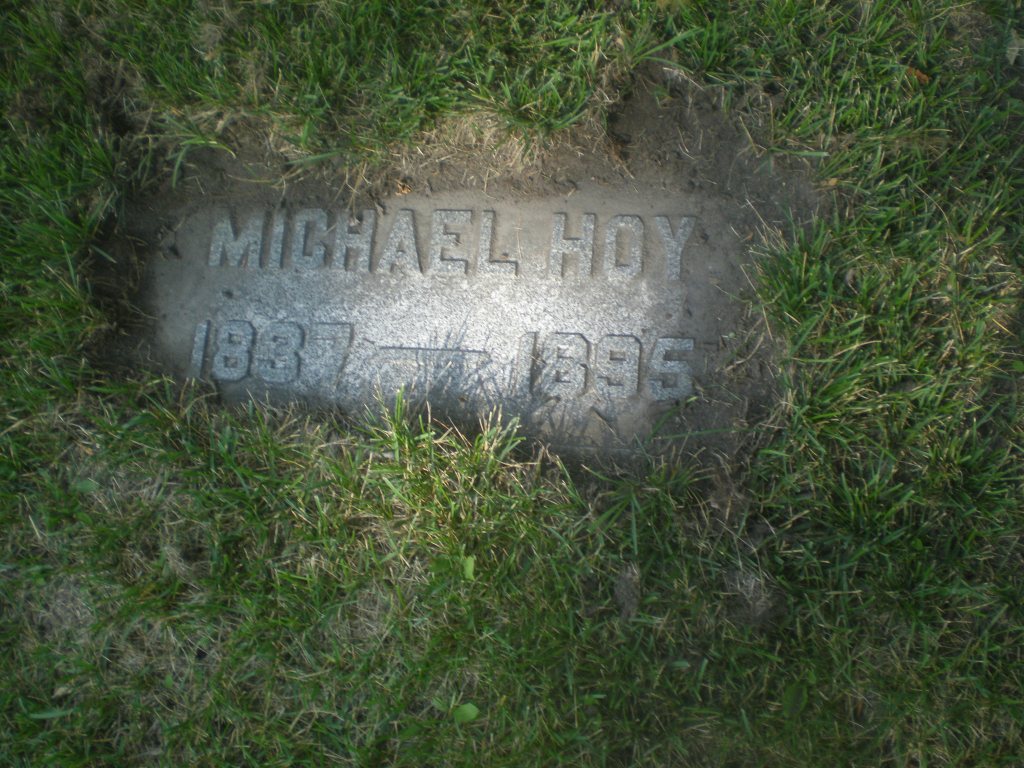
Michael Hoy Passed away in 1895 at the age of sixty-one. The newspaper headline read “Funeral of Michael Hoy from the Church he built.”
The article goes on to say “The remains of Michael Hoy were yesterday conveyed to their last resting place in Saint Anthony Cemetery. A huge crowd showed up for his funeral with hundreds unable to fit in the church. Father Oreilly arose to speak the praises of Captain Hoy, the pioneer citizen and honored soldier.
From the altar father O’Reilly went on to say.
“It can matter little to Michael Hoy what words are spoken here he said. Censure and applause are alike to him now. But it is fitting that we speak of his worth. He came to this country a mere boy, with everything against him race, prejudice, creed, and lack of education, but he triumphed over it all. When the war broke out Michael Hoy was quick to offer his life for the defense of his country.
He was remarkable for his bravery and unswerving in his loyalty to duty. He did his part to keep the stars of our flag bright and stripes as pure as if they were left by heroes. Many a criminal had turned pale at the mention of his name. His was a stormy life and he had faced death many times, but his life had been guided by the hand of the infinite. Shortly before his death, said Father O’Reilly. He said to me. I have gazed into the face of death many times and have often had narrow escapes. Has not God been good to me. It is no light praise to him as a father that in a family of twelve, not one ever brought the blush of shame to his cheek. He will never be forgotten. May he rest in peace.”
The infamous Lord Gordon committed suicide in 1874 while the Toronto authorities were closing in. Many of the Hoy and Byrnes family names are listed as contributors to the construction of the church mentioned earlier. It is important to remember these families were famine emigrants who faced adversity on both sides of the Atlantic like so many Irish did at the time.
Our thanks to Danny Leavy for this article
 offalyhistoryblog