
Ireland’s peatlands have long been a defining feature of the country’s landscape and identity—vast, open expanses that have shaped communities, powered homes, and inspired generations. But in recent years, these peatlands have entered a new chapter. TRANSITION, a striking new photographic book, captures this moment of profound change with sensitivity and depth.
In 2019, a High Court ruling mandated that commercial peat harvesting on bogs over 30 hectares would now require planning permission. This shift accelerated the decline of industrial peat extraction, a process already underway as awareness grew of the ecological importance of peatlands. These landscapes, once seen primarily as fuel sources, are now recognised as vital carbon sinks and havens for biodiversity.
TRANSITION captures this story through objects in time – each one a tangible link to the past, a marker of the present, or a symbol of the future. Structured in a unique A–Z format, the book presents a curated collection of items that reflect the evolving relationship between people and peatlands. These objects are thoughtfully juxtaposed to highlight the dramatic changes in land use, environmental values, and cultural identity. Each item occupies a liminal space, bridging the industrial legacy of peat harvesting with the emerging ecological renewal.
Spanning over 100 pages, TRANSITION is not intended as a comprehensive history. Rather, it offers a compelling snapshot of a landscape in flux—a visual meditation on change, memory, and renewal. It acknowledges the ingenuity and resilience of those who worked the bogs, while also embracing the possibilities of a future where peatlands are restored, reimagined, and revalued.
TRANSITION is a timely and thought-provoking work that will resonate with readers interested in Irish heritage, environmental change, and visual storytelling. It offers a powerful reflection on where we’ve come from—and where we’re going.
A Glimpse Inside TRANSITION
Machinery
Whether drawing turf home for the family to burn through winter or being deployed as an integral component of peat production, the tractor is a versatile machine that invokes strong memories for those involved in saving turf or harvesting peat from bogs throughout Ireland.
Historically those involved in large scale peat production in Ireland designed and manufactured their own millers, harrows, ridgers, harvesters all which were attachments pulled by tractors. This is a sign of the ingenuity of those involved in peat harvesting throughout the ages by using the tractor as the totem for most of the processes associated with modern peat harvesting.

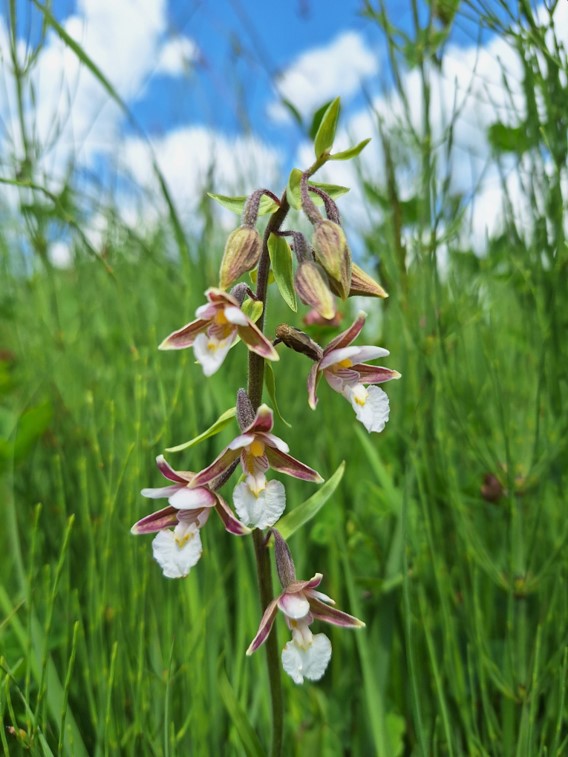
Marsh Helleborine
The striking Marsh Helleborine (Epipactis palustris) generally emerges from limy marshes, fens and lakeshores from June to August each year. Marsh Helleborine is relatively rare despite having a wide distribution across the country. These perennial orchids hold their attractive spiked flowers in sets of twelve or more on each stem and can grow up to a metre in height.
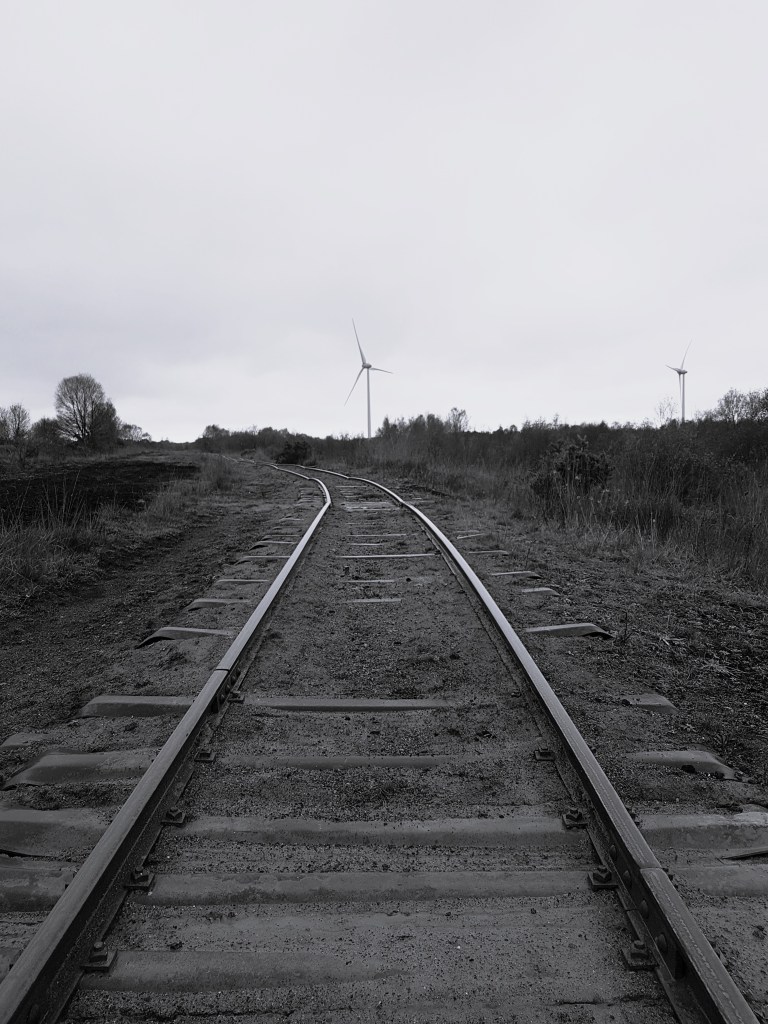
Railways
Ireland formerly had numerous narrow-gauge railways, most of which were built to a gauge of 3 ft (914 mm). The last non-preserved public rail line to close was the West Clare Railway in 1961. Bord na Móna developed an expansive network of narrow-gauge industrial railways in Ireland to service the large-scale harvesting and distribution of peat from the vast areas of bog throughout the Irish midlands, with the first peat railway running to Lullymore briquette factory in the 1930’s. In its zenith, this railway network expanded to almost 1000 km.
The Bord na Móna rail network is no longer in use due to the end of commercial peat harvesting and represents a unique part of Ireland’s industrial heritage. This infrastructure also overlaid earlier incarnations of Ireland’s industrial past whereby Bord na Móna once operated a rail line along a section of the former Ballinasloe branch of the Grand Canal to the former West Offaly Power Station at Shannonbridge, Co. Offaly.
Rehabilitation
Peatland rehabilitation typically involves rewetting the peat surface through targeted interventions to achieve environmental stabilisation as the key objective. This allows the bog to revegetate over a period of time and slows surface water flow from the bog. The soggy ground conditions facilitate the natural colonisation of vegetation and can lead to water quality improvements, reduction in carbon emission and biodiversity enhancements.
Depending on the rehabilitation intensity adopted, more substantial ecosystems and habitats can be encouraged through the installation of peat drain blocks or by creating large cells. This allows for water levels to be optimised close to the peat surface, accelerating the desired habitat growth which is dependent on the depth of peat remaining at the site. For example, shallow peat will likely become a fen or shallow wetland habitat through rehabilitation, while the creation of cells on deep peat sites can facilitate peat forming habitats over time.
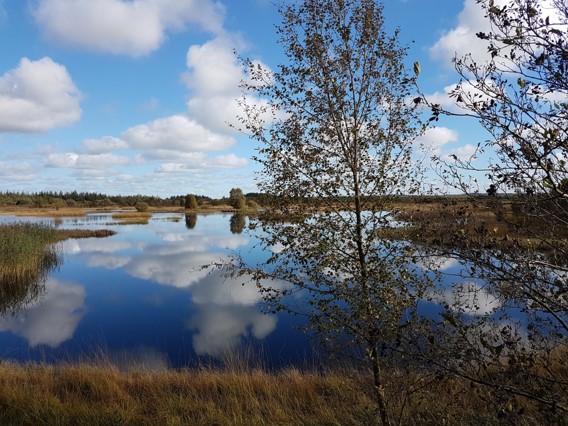
Rehabilitation_rehabilitated wetland in Lough Boora Discovery in Park Co Offaly
A quiet story of change. TRANSITION captures Ireland’s bogs through objects and images that trace their past, present, and future.
The new book is available from Midland Books and Offaly History at Bury Quay, Tullamore and Bridge Centre, Tullamore
 offalyhistoryblog