
The changing face of Offaly towns in the early 1900s: An illustrated history edited by Michael Byrne with contributions from Paul Barber, Stephen Callaghan, Grace Clendennen, Kevin Corrigan, Michael Goodbody, Ger Murphy, John Powell, Laura Price, Ciarán Reilly and Brendan Ryan (Offaly History, Tullamore, 2024, 368 pp). Available from Offaly History Centre and Midland Books Tullamore and online at www.offalyhistory.com. ISBN 978-1-909822-38-2 (hard back), €27.99. The book will be launched at Offaly History Centre, Bury Quay, Tullamore – beside the new Aldi and Old Warehouse. It is already available at the Centre, online at http://www.offalyhistory.com and at Midland Books, Tullamore. If you cannot attend in Tullamore we have a launch at Giltrap’s of Kinnitty on Thursday 21 Nov. at 7. 30 p.m. We will have copies in Bridge Centre for the Christmas Sale 14 to 24 December.
(more…)Category: Banagher
-
59 ‘The month of September in Banagher, and all along the Shannon banks, is visually a glorious one, with golden autumn mornings, the low sun making long shadows of the houses in the street’, Pope Hennessy, Bence Jones, Trollope, Banagher and the Shannon/Grand Canal landscape. No. 59 in the Grand Canal Offaly series. Blog No 619, 5th June 2024

Banagher, County Offaly has associations with two well-known writers of the nineteenth century – Anthony Trollope and Charlotte Bronte. Up to recent years nothing by way of notice of this was to be found in Banagher, but that has all changed as Banagher, now hard pressed along its main street, looks again to embrace tourism in a way that it did so well in the late nineteenth century and in the 1960s. The plans for the former hotel at Banagher will do much for the promotion of the architectural heritage of the town as did the voluntary work by the co-operative at Crank House. Pope Hennessey’s description in 1971 of Banagher in September would be music to Failte Ireland anxious as they are to extend the holiday season. He wrote:
‘The month of September in Banagher, and all along the Shannon banks, is visually a glorious one, with golden autumn mornings, the low sun making long shadows of the houses in the street. At dusk the whole river reflects the varied sunsets as the days draw in – effects of palest pink, for instance, striped by cloudy lines of green, or an horizon aflame with scarlet and orange light.’ And
The bridge at Banagher affords a splendid view over the level reaches of the river, which here flows glassily between a countryside as flat as that in some Dutch picture. In winter-time the flooded river spreads across these meadows to create an inland sea. In spring and early summer kingcups bloom amongst the sedge and reeds along the Shannon’s bank, wild yellow irises abound and cowslips also. In early summer, too, plumes of mauve and purple lilacs hang over the white walls of the yards of Banagher, and the whole countryside beyond the town displays brilliant variations of the “forty shades of green”.
Many have tackled Trollope’s life, but none immersed himself so much in Banagher as the late James Pope Hennessy.
John McCourt in his 2015 study of Trollope Writing the Frontier: Anthony Trollope between Britain and Ireland ‘offers an in-depth exploration of Trollope’s time in Ireland as a rising Post Office official, contextualising his considerable output of Irish novels and short stories and his ongoing interest in the country, its people, and its always complicated relationship with Britain’.
(more…)
-
58 Henry Inglis travels on a River Shannon steam boat and includes Killaloe, Portumna, Banagher and Athlone on his Tour in 1834. No 58 in the Grand Canal series. Blog No 618, 1st June 2024
Last week we looked at the history of steamers on the Shannon. Today we take the account of Henry D. Inglis published in 1835. Inglis was a professional travel writer and author of Spain in 1830, A Journey through Norway etc, published his A Journey throughout Ireland during the Spring, Summer and Autumn of 1834 in London in 1835. His account is well thought of and in his concluding remarks he says why jest or narrate the curious and witty eccentricities of Irish character when ‘God knows there is little real cause for jocularity, in treating of the condition of a starving people.’ So there was a degree of sympathy rather than of superiority.
Inglis was born in Edinburgh and was the only son of a Scottish lawyer. His Irish travels volume was published the year of his death, (first edition, 1835, fourth edition 1836). While considered a ‘fairly benevolent interpreter’ he could find no explanation for the Irish situation other than defects of character.
Inglis spent a week there and also visited Killaloe, Portumna and Banagher. He went from Banagher to Athlone by road and thought the latter was a remarkably ugly town – but not withstanding an interesting and excellent business town. He spent a week in Athlone and used it as a base for touring in the county of Longford to see Goldsmith’s Country.
(more…)
-
57 The Golden Era of Shannon Steamers. No 57 in the Grand Canal series. Blog No 617, 29th May 2024
The history of passenger steamers on the Shannon, covering a period of 140 years, was traced by Dr McNeill of Southampton University, in a lecture jointly sponsored by the Old Athlone Society and the local branch of the Inland Waterways Association, and held in the Prince of Wales Hotel, Athlone, in January 1966.[1] Dr McNeill soon after published two volumes on the subject of steamer transport. Ruth Delany has also published material in her The Shannon Navigation (Dublin, 2008).[2]
McNeill, in his 1966 Athlone lecture, said that Ireland had a tremendous heritage of water transport. Mentioning that the first experiment in the idea of iron bulkheads in streamers was tried out on the Shannon in 1829, he said that we were apt to forget the work done by Irishmen in the technical field in the last 150 years. Iron steamers were cradled in Ireland in the 1820s.
Mr. McNeill acknowledged his debt to the late Dr Vincent Delany and to the files of the Westmeath Independent for much information on Shannon steamers.
Recalling that in 1829, the first commercial passenger steamer service commenced plying on the lower Shannon, he said it was operated by the City of Dublin Steampacket Company for roughly thirty years. The fleet included the Garryowen, the largest iron steamer in the world at that time and first development of the new idea of iron bulk-heads. Another steamers, Erin Go Brath, made marine history at that time by keeping her engines running for six days without stopping.
(more…)
-
Offaly and the Great War essays published in 2018 now on Open Access to all. Thanks to the Decade of Centenaries. Blog No 609, 4th May 2023
The bumper volume of essays (list below) in Offaly and the Great War (Offaly History, 2018) can now be accessed free online at www.offalyhistory.com thanks to the Decade of Centenaries. The book of 28 essays is also available in hardcopy from Offaly History for just €20. In all over 50 articles free to download. Go to the Decade of Centenaries on the offalyhistory.com website.
When the great historian and first ‘telly don’ A.J.P. Taylor published his short history of the First World War just in time for the remembrance days of over fifty years ago he wrote that the war reshaped the political order in Europe. That its memorials stood in every town and village and that the real hero of the war was the Unknown Soldier.
(more…)
-
52-53, Grand Canal Townlands East to West: Ballysheil to Clonony Beg No 52-53 in the Grand Canal Offaly Series. By Philomena Bracken, Offaly History. Blog No 607, 1st May 2024
Ballysheil is in the Electoral Division of Gallen, in Civil Parish of Gallen, in the Barony of Garrycastle, in the County of Offaly. The Irish name for Ballysheil is Baile Uí Shiail meaning the town of O Siail.
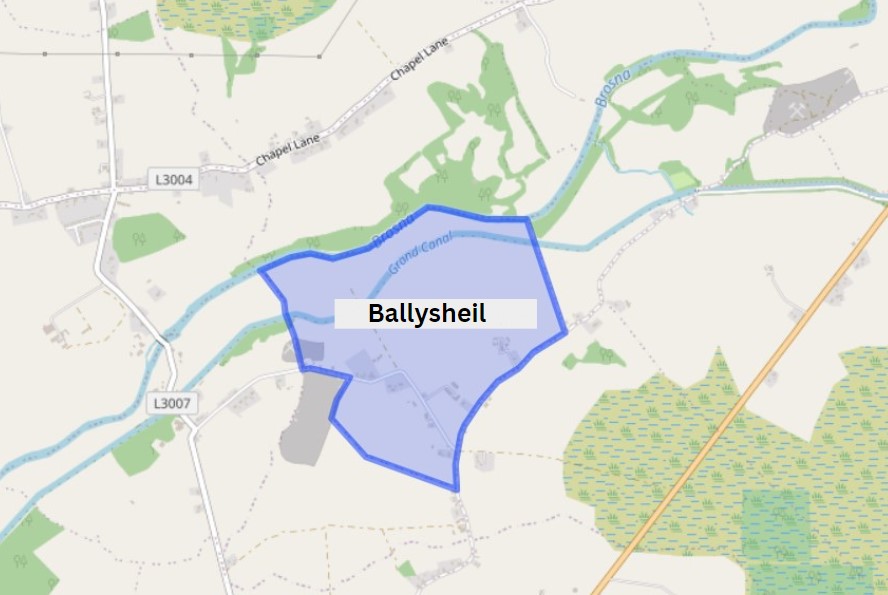
Ballysheil townland.ie/ Image Source: https://www.townlands.ie/ In this area we come to two smaller bridges, not far part from each other. Glyn and Judge’s Bridge. You will find the remains of the old Ballysheil house, once a beautiful tall building that stood out for its unique stone work and design. Where it once called home to noble guests, where it saw a number of events over its time, which would have had servants pacing back and forth doing the bidding of lord and lady of the house[1]. You will also find a bawn here this property was owned by the Sheil family, well known for their medical skills. The house and bawn exchanged hands to new owners when the Sheil family were forcibly transplanted to Galway in the mid17th century. If looking around this area along the way, you may also find evidence of a corner tower[2].
(more…)
-
50-51, Grand Canal Townlands East to West: Derries to Glyn No 50-51 in the Grand Canal Offaly Series. By Philomena Bracken, Offaly History. Blog No 606, 27th April 2024
With the construction of the Grand Canal from the late 1750s, brought with it the expansion of Trade. goods could be carried from East to West along the line, this helped boost the development of the local economy from the late 18th century. The Offaly section of the canal runs approximately 42 miles and is home to a number of species and wild plants, due to the cross over through wet bog land during the development of the canal way[1].
The first townland we come to along this way is Derries. It is situated in the Electoral Division of Ferbane, in the Civil Parish of Wheery or Killagally, in the Barony of Garrycastle, in the County of Offaly. The Irish name for Derries is Na Doirí meaning The Oak Woods.

Derries townland map. Image Source: Townlands.ie / Illustrations Nature on Irish Canals by Paul Francis Wheery or Killagally is a large civil parish and it extends about 7 miles from Pollagh Village.
(more…)
-
Launch of new book ‘The River Brosna – An Environmental History’ by John Feehan, Friday 22 March 8 p.m. Blog No 590, 21st March 2024
There is an open invitation to all those interested in the River Brosna to come to the book launch on Friday 22 March at 7.30pm in The Star (GAA hall) River Street, Clara hosted by Clara Heritage Society.
John Feehan has dedicated much of his life to studying and communicating the evolution of the landscape and how we have lived in and changed it – his previous Offaly publications have included books on the Slieve Blooms, Croghan Hill, the Landscape of Clonmacnoise, An Atlas of Birr and more recently Killaun Bog and the Camcor River. This new publication focuses on the River Brosna and its catchment.
The River Brosna is one of Ireland’s hidden rivers, glimpsed over bridges and for short stretches as it travels through Mullingar, Ballinagore, Kilbeggan, Clara, Ballycumber and Ferbane on its journey from Lough Owel to ShannonHarbour. Until now very little has been written about it yet few rivers have a more fascinating and varied story to tell. In this beautifully illustrated book John Feehan brings his long experience as an environmental scientist and historian to bear on all aspects of the natural, cultural and industrial heritage of the river and its catchment. Successive chapters review geological origins, the biodiversity of the river and its tributaries as well as the great area of bogland it drains. The history of the mills along the course of the river, and of the two great arterial schemes that so altered the river are reviewed and particular attention is devoted to the extraordinary stories of Mesolithic Lough Boora and the Bronze Age Dowris hoard.
(more…)
-
26-27 Vallancey’s account of the north Offaly towns in 1771 and the improvements that were expected to follow canal navigation. No 26-27 in the Grand Canal Offaly series featuring Edenderry, Daingean, Tullamore, Clara and Ferbane, County Offaly. Blog No 581, 2nd March 2024
This article looks at the north Offaly towns featured in Major (later general) Vallancey’s report carried out in 1771 and designed to support the construction of the new Grand Canal line to Tullamore and the Shannon. Vallancey was then a young engineer, employed to report to the Commissioners of Inland Navigation and his findings were published in, A Report on the Grand Canal or Southern Line (Dublin 1771).[1] This report is useful as a window on some of the north King’s County (hereafter generally referred to as Offaly) towns and villages.[2]
(more…)
-
24 Some old photographs of the Grand Canal: the Shackleton photographs of Tullamore and West Offaly in the 1890s. No 24 in the Grand Canal Offaly Series. By Offaly History. Blog No 579, 24th Feb 2024
Jane W. Shackleton’s Ireland compiled by Christiaan Corlett (Cork, 2012) is an attractive large format publication was issued by Collins Press and consists of 180 well produced photographs by Jane Shackleton. These pictures are important for the photographic record in County Offaly and mostly date to 1894.
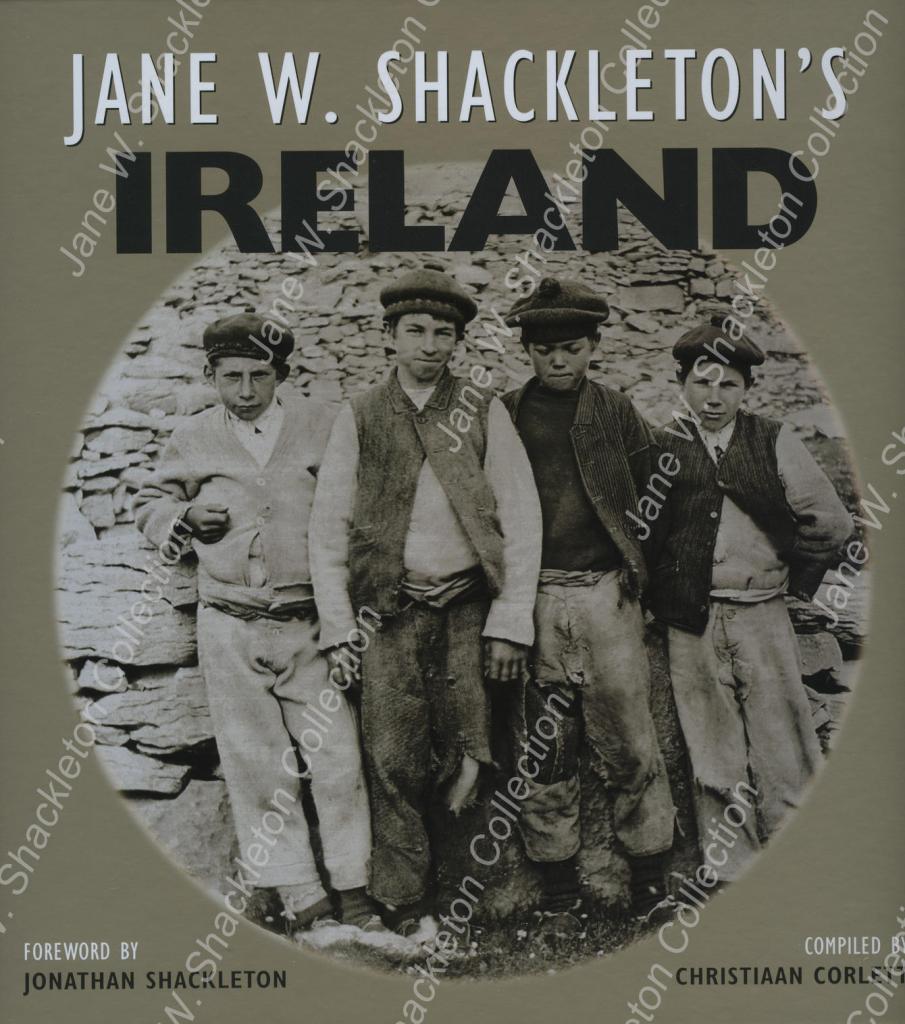
Not surprisingly there are many pictures of mills in this book and there are about ten pictures of Offaly interest. Jane Shackleton started taking pictures in the 1880s and made several tours on the Shannon and along the Grand Canal and Barrow lines. These waterways photographs contribute greatly to the history of the canals and the great mills which were associated with river locations. Many of these were in fact owned by Quaker industrialists. Like other interested women of the period Jane Shackleton was a member of the Royal Society of Antiquaries (RSAI) and took photographs of some of their tours including that of June 1904 around Ireland. Midleton Biddulph, the amateur photographer and retired army officer of Rathrobin near Tullamore was also on this trip and some of his pictures survive and have been published as Rathrobin and the two Irelands; the photographs of Middleton Westenra Biddulph, 1900–1920 (Tullamore, 2021). Corlett informs us that the Shackleton collection consists of 1,000 lantern slides and 44 albums containing several thousand prints, mostly of Irish subjects. This writer had the pleasure of seeing some of the Grand Canal and the turf works at Pollagh back in the early 1970s with Richard Shackleton and Jonathan Shackleton.
(more…)
 offalyhistoryblog