A recent purchase by a ,member of Offaly History of the Letters of William Stubbs (1825-1901), edited by W.H. Hutton included an original letter from the Hon. Secretary of the London-based Society for the Promotion of Hellenic Studies sending a gentle reminder to the learned and revered historian that his subscription was outstanding for four years. i.e. from when that society was formed in 1879. This sometimes happens in Offaly History too, when perhaps a distinguished member will forget to renew and one would not have the temerity to send a reminder. Not so the Hellenic Society.
(more…)Category: Archival collections
-
Launch of new book ‘The River Brosna – An Environmental History’ by John Feehan, Friday 22 March 8 p.m. Blog No 590, 21st March 2024
There is an open invitation to all those interested in the River Brosna to come to the book launch on Friday 22 March at 7.30pm in The Star (GAA hall) River Street, Clara hosted by Clara Heritage Society.
John Feehan has dedicated much of his life to studying and communicating the evolution of the landscape and how we have lived in and changed it – his previous Offaly publications have included books on the Slieve Blooms, Croghan Hill, the Landscape of Clonmacnoise, An Atlas of Birr and more recently Killaun Bog and the Camcor River. This new publication focuses on the River Brosna and its catchment.
The River Brosna is one of Ireland’s hidden rivers, glimpsed over bridges and for short stretches as it travels through Mullingar, Ballinagore, Kilbeggan, Clara, Ballycumber and Ferbane on its journey from Lough Owel to ShannonHarbour. Until now very little has been written about it yet few rivers have a more fascinating and varied story to tell. In this beautifully illustrated book John Feehan brings his long experience as an environmental scientist and historian to bear on all aspects of the natural, cultural and industrial heritage of the river and its catchment. Successive chapters review geological origins, the biodiversity of the river and its tributaries as well as the great area of bogland it drains. The history of the mills along the course of the river, and of the two great arterial schemes that so altered the river are reviewed and particular attention is devoted to the extraordinary stories of Mesolithic Lough Boora and the Bronze Age Dowris hoard.
(more…)
-
Tullamore and the Irish National Foresters 1899-2024. By Aidan Doyle, Part 2, concluded. [We are marking the 100th anniversary of the re-opening the new hall, cinema and club rooms on the eve of St Patrick’s Day 1924 and the 125th anniversary of the founding of the Tullamore branch in April 1899.] Blog No 586, 15th March 2024
In March 1914 the Foresters Hall played host to meeting called organise the Irish Volunteers in the district. Following the outbreak of the Great War and the resulting divisions within nationalism, the Tullamore Corps of the National Volunteers gathered at the Foresters Hall to reaffirm their support for John Redmond. The Foresters branch secretary James Hayes joined the 5th Lancers in early 1916.
In December 1915, the Ideal Cinema was the venue for a screening of ‘Joan of Arc’ in aid of the Red Cross. Two months later, the Urban Council arranged a reception at the hall to present an address to captain Edward Sherlock after the Rahan man was awarded a military cross for his actions on the Western Front. As late as February 1918, the hall hosted a lecture by Henry Hanna KC on ‘The Pals (7th Dublin Fusiliers) at Suvla Bay’ in aid of the Leinster Regiments Prisoner of War fund. Nevertheless, by then the Foresters and their hall had come to be associated extreme nationalism in the mind of some within the police.

A programme for the Foresters in 1916 At a show the hall in on St Patricks Day 1917, a twelve-year-old girl Lena McGinley dressed in a ‘Green, White and Yellow’ costume performed a poem dealing with the 1916 Rising entitled ‘Vengeance’. As a result, sergeant Henry Cronin had the concert organisers James O’ Connor and Edward O’Carroll charged under the Defence of the Realm Act (DORA) for ‘attempting to cause disaffection among the civilian population ‘. On their conviction O’Connor and O’Carroll refused to be bound to peace and were instead imprisoned in Mountjoy.
(more…)
-
Richard Biggs (1847–1904) MA, LLB, LLD, tutor to the Rosse children, driver of the ill-fated Birr steam engine in 1869 that killed Mary Ward, founder of Birr’s Chesterfield School and later headmaster of Galway Grammar School and Portora Royal School. By Georgina Gorman, Offaly History. Blog No 576, 15th Feb 2024

From the online The Atlas of Irish Mathematics 30: Fermanagh (Apr 2022) — Maths Ireland
Richard Biggs was born in Devizes, Wiltshire, England into a Presbyterian family of educated and educators. Religious faith was prevalent in the paternal side of his family. Richards’s great grandfather James Biggs became a Presbyterian Minister, his grandfather Richard Biggs became a Senior Deacon and alongside Richard’s father Richard W. Biggs ran a highly acclaimed private boarding school for boys in Devizes Wiltshire between 1822 and 1865.
Richard Biggs’ (b.1847) maternal side were the Purser family of Rathmines Castle. His mother Sarah Purser was the youngest daughter of John Purser’s first marriage to Sarah Smith. The Pursers were also educated, and educators. Richards’s uncles and cousins were Civil Engineers, Chief Engineers, Barristers, Millers and Grain Merchants, Physicians, Artist, Secretaries, Teachers, including Professors of Mathematics, some of the Purser family worked and owned shares in the firm of Guinness Brewers Dublin. It is said that John Purser who died in Cork in 1781 was the first to brew porter In Ireland[i]
Richard Biggs’ (1847) early education began in the Biggs boarding school in Devizes alongside his cousin John Purser (b.1835). Some members of the Geoghegan family also attended the school (www.devizesheritage online). John Purser received numerous prizes and awards for his mathematical skills. He became tutor to the four sons of William Parsons earl of Rosse Birr, in 1857, including Charles Algernon Rosse who is known for inventing the steam turbine. Another first cousin, Sarah Henrietta Purser (b.1848) a well-known artist and stain glass worker who launched An Tur Gloine (The Tower of Glass), was the first female member of the Royal Hibernian Academy 1923. Sarah painted amongst others, William Butler Yeats, Maude Gonne and Countess Markievicz, some of her stained glass work is in St Patrick’s Cathedral, Dublin. A further first cousin, Alfred Purser (1847), a School Inspector, married Ellen Hilderbrand. Their daughter Olive Constance Purser born in Parsonstown (1886) was one of the first women to be admitted to Trinity College Dublin in 1904. Both Richard Biggs (b.1847) and son Henry Biggs (1882) are named in The Atlas of Irish Mathematics Fermanagh 2022 (online).
Birr 1869–1874, the death of Mary Ward and the new school founded

Mary Ward, died Birr, 1869. On the 28 July 1869 Richard Biggs, BA, Scholar of Trinity College Dublin, under the immediate patronage of the Earl of Rosse advertised in the Kings County Chronicle that he intended opening a school for young gentlemen in Parsonstown (Birr). The following advertisement reads under the headline Education: ‘Mr Richard Biggs BA, Scholar of Trinity College Dublin, and Honourman in the University of London announces that he intends early in September to open a SCHOOL FOR DAY PUPILS in his premises recently occupied for that purpose at 15, Oxmantown Mall, Parsonstown, and that he is also making arrangements for the reception of boarders [This house was later that of Mrs Burbage ]. In seeking to establish a first-rate school in this neighbourhood, Mr Biggs is honoured and encouraged by the immediate patronage of the Right Hon. the Earl of Rosse. Full particulars of the terms, the course of study etc. will be given on application. Birr Castle, Parsonstown’ (KCC 04 August 1869).

Oxmantown Mall c. 1900. The first school at no 15 was on the lower left. The Ward accident took place on the right corner below the trees. On the 31st of August 1869 Richard was driving a steam engine when an unfortunate accident occurred, Mary Ward a scientist, astronomer, microscopist, and author was thrown from the vehicle. Mary’s death is known as the world’s first recorded motor vehicle accident. The following day, Richard Biggs gave evidence at the inquest as follows: ‘I was guiding the engine, at the corner of Cumberland Street and Oxmantown Mall on yesterday, at about half past 8 o’clock, we had just turned into Cumberland Street when I felt a slight jolt and saw Mrs Ward fall, I jumped off immediately, I cannot give any reason for the jolt’. The jury returned a verdict that ‘Mary Ward’s death was caused by an accidental fall from a steam engine on which she had been riding in the town of Parsonstown the previous day. The jury expressed their sympathy towards the Hon. Capt. Ward, they also stated there was no blame attaching to any person in connection with the occurrence.’ [ii]
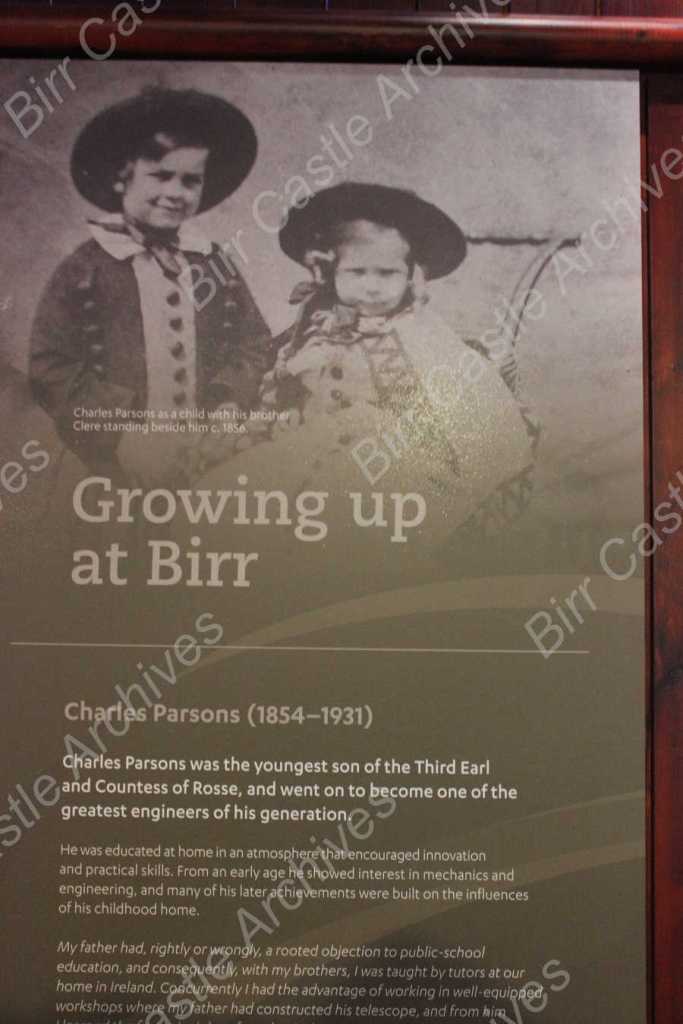
The Rosse boys were educated at home. Charles Parsons did exceptionally well. A year after the fatal death of Mary Ward Richard Biggs married Sarah Francis Geoghegan (c.1848) daughter of Thomas Geoghegan MD and Anne Purser, eldest daughter of John Purser’s first marriage to Sarah Smith in Dublin on the 12 January 1870. Sarah Geoghegan’s brothers Thomas Grace Purser (c1841) and William Purser (1843) were in 1870 leading brewers in the Guinness brewery, another brother Samuel (1848) followed as a leading brewer later becoming chief engineer to the firm. [iii] A daughter was born to Richard and Sarah at the Parsonstown School in August 1872.
Various articles in the King’s County Chronicle between 1872 and 1874 report:
Mr Biggs threw open the Chesterfield school grounds for the Sunday school of Birr Church to hold their annual fete (July 1872). Mr Biggs also threw the school grounds open to the respectable public so they could witness ‘this species of development of muscular Christianity’ at the Chesterfield Sports Day. (December 1873). Chesterfield school pupil Mr L’Estrange broke his left arm whilst enjoying a game of football in the recreation grounds, Mrs Biggs immediately placed him under the care of Dr Myles (February 1874). The Leinster Reporter mentions Dr Biggs Chesterfield Grammar School is now one of the best regulated and patronised private colleges in the country has consulted with builder Mr M. Moran in relation to building a new wing to accommodate the increasing number of boarders (LR 15 October 1874) An advertisement requesting ladies and gentlemen to join the choir of which Richard Biggs. L.L.D. was the Hon Sec. of Parsonstown’s Choral Society. (December 1874).
Chesterfield, Parsonstown [Birr] School
The following article of 1874 describes Birr’s/Parsonstown’s Chesterfield School run by Richard Biggs under the headline:
Probably Parsonstown stands first among provincial towns, as far as the facilities for obtaining a first-class education are concerned. To be sure in Armagh, Dungannon, Enniskillen and some other towns, there were endowed grammar schools; but thanks to Richard Biggs, Esq., M.A. Parsonstown, unendowed as it is, has all the advantages and privileges of the Royal School districts. Besides laying out a considerable sum in putting the fabric of Chesterfield School and the surrounding ground into a condition such as Eton might be proud of, and besides devoting his own time in the class room with a constancy which is downright amazing, considering Mr Biggs is a gentleman of independent private means, this philanthropic scholar has given other proofs without number of his resolution to make Chesterfield School second to none in the country. And it is gratifying to know that his exertions are receiving extending encouragement, as the number of the pupils attest to the value of his endeavours. Within the past ten weeks four additional masters, teachers of the various classic and modern continental languages, have been appointed by Biggs. The various details belonging to a first-class school, are not wanting and in the local appointments, Mr Biggs is to be congratulated. The Department Instructor, in the person of Mr Arundel being as efficient a drill-sergeant as could be chosen, and the other arrangements are in nice harmony. The natural salubrity of the elevation on which the school stands, could not be surpassed, while the sanitary arrangements – so far as art can go– are perfect to which happy combination is due the almost total immunity from sickness among the scholars, rendering the office of medical adviser and attendant, which Dr Stoney is so well qualified to discharge virtually a sinecure. The townspeople owe no little gratitude to Mr Biggs for the benefits which he has conferred, and is conferring in so many ways; and we are sure if the opportunity ever presents itself for their giving expression to the sentiment of good will that prevails for him among every class in the community, they will accord an ovation as warm as it will be genuine’ [sic] (KCC 26 February 1874).

Chesterfield school possibly about 1880-1900. It was on the Banagher Road, Birr. Offaly History will publish a further article on the school soon. Galway 1875-1894
Richard Biggs and Sarah Francis Geoghegan had seven further children, Richard Thomas (1878-1883). Grace Elizabeth (1879). Henry Francis (1882). John (1884). James Richard (1886). Maurice William (1888). Edward (1891-1891). All the children’s place of birth is noted as College Road Galway and their father’s rank/profession is noted as Head/School Master or Gentleman.
Richard Biggs began his post as headmaster of Galway Grammer School in 1875, a newspaper advertisement reads under the headline, Education: ‘Galway Grammar School. On the foundation of Erasmus Smith. This school will after the summer holidays, be carried on by Richard Biggs, MA, L.L.D. Information can be had on application, to him at Parsonstown School. Boarders cannot be received for some months to come, but the work of the day school will be resumed by Howse, ex Scholar QCG, and the classes will be at once assimilated to those at Parsonstown School under the direction of the headmaster, Richard Biggs, MA, LL. D, Parsonstown’ (IT June 1875).
Despite unfavourable conditions Richard Biggs continued to build a reputable school. In 1876 he wrote to the Board of Harbour Commissioners requesting that an alteration of the strict rules would allow his boarders to bathe at the end of the jetty before seven o’clock in the morning. A Trinity College Dublin entrance examination placed a pupil of Galway Grammar School sixth out of eighty-five candidates, Mr F. Sheppard, son of Frank Sheppard, Esq was solely prepared by Dr Biggs headmaster of Galway Grammar School. 1885 saw Galway Grammar school rugby team join five other fledging rugby clubs to become Connacht Rugby, Richard Biggs became the first president of the Connacht branch of the IRFU.[iv]
An extract of a report given by inspector Professor Mahaffy employed by the Erasmus Trust reads, ‘Galway flourished under a new Headmaster Dr Biggs who was appointed in 1875 from Parsonstown School. Within 15 years numbers had increased to almost 90. This occurred in spite of conditions which Mahaffy described as unfavourable to a boarding school:
‘No advantage is offered by Galway except good bathing. The town is full of decay and pauperism. Idle boys trespass on the school grounds, and molest the school, because it is respectable.’
Nevertheless, Mahaffy was impressed by the school, although both the schoolroom and the boys ‘wanted brushing and cleaning.’ The Headmaster was ‘a very able man and thoughtful man, full of new ideas and very attentive to his school’ and his staff were also praised.[v]
In May of 1878, the Irish Times reported that Mr and Mrs Richard Biggs paid a short visit to Chesterfield school, and that a fete given by Mr and Mrs Rev. W. Ewing in honour of the late principal’s visit.
Portora, 1894-1904
In November 1894, an announcement in The Northern Whig named Richard Biggs as successor to the Rev. W.B. Lindesay headmaster of Portora Royal School, Enniskillen. Over the following years further advertisements at the beginning of each school term naming the assistant Masters, along with some of the pupils’ scholarships, first honours, prizes and various exam achievements were placed in newspapers.
In early 1899 the Intermediate Commissioner conducted an inquiry into the workings of the Intermediate Education Act. Mrs Biggs headmaster of Portora School amongst others gave his opinions and beliefs. Biggs believed it was highly desirable and practicable to have separate papers for pass and honour students, he also thought the middle grade be abolished, at that time there were one hundred pupils of which eighty-six were boarders in Portora School. (Daily Express, 09 February 1899).
In Portora (Enniskillen Rural, Fermanagh) the address on the Biggs family’s 1901 census, named the residence as, Richard Biggs Headmaster Royal School aged fifty-four, born in England, his wife Sarah F. Biggs, no occupation aged fifty-two born in Dublin, three of his children: Grace E. Biggs, no occupation aged twenty-one born in Galway; Henry F. Biggs, Scholar aged eighteen born in Galway; Maurice W. Biggs, Scholar aged twelve born in Galway; Nephew Richard Thomas, Scholar aged thirteen born in India; Margaret Bell Matron of school aged forty-seven born in England, and eight servants.[vi]
Richard Biggs, aged fifty-seven, drowned in Lough Erne on the 23rd of June 1904. A solicitor, Mr James Pringle, when arriving at his own boat house noticed Mr Biggs canoe floating on the lake. ‘The Sad Death of Dr Biggs’ headlines the inquest for Richard Biggs Headmaster of Portora Royal School, whose body was found close to Portora boat house about five yards from the shore in Lough Erne after his canoe was seen floating upside down. The jury found ‘that the deceased came to his death by drowning and added that they agreed with Dr Kidd’s evidence that from the appearance of the body it was not incompatible with heart seizure or a fit of apoplexy as a factor in the cause of death’ the jury expressed heartfelt sympathy with Mrs. Biggs and family. (Weekly Irish Times, 02 July 1904). Richard Biggs was buried in Rossery COI cemetery, Fermanagh on the 27th of June 1904. His effects in the sum of £21,970 13s 9d was granted to his wife Sarah Francis Biggs. Richard Biggs was the second member of his family whose death occurred accidently at Portora School, his cousin Robert Mallet (1843-1859) Purser, son of Benjamin Purser the brother to Richard’s mother, died in an accident on the 22nd March 1859 aged sixteen at Portora School Enniskillen.
Trinity College Dublin Entrance Awards Biggs Memorial Prize.
The Old Boys of Parsonstown and two other school where the late Dr Biggs was Principal and other friends supported by subscription a memorial which is to take the shape of a Trinity College Annual Prize. Subscriptions varied from £50 to 10s.
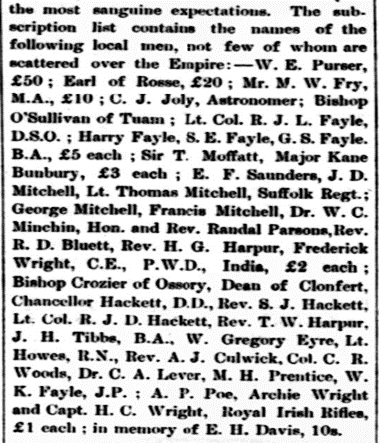
19041217 The Leinster Reporter Entrance award. This prize was founded in 1905 by subscription in memory of Richard Biggs. It is awarded annually on the basis of public examination results as defined in section 1, to the person who achieves the best results of those who have been pupils for at least one year at Chesterfield School, Birr (or such other school at Birr as may take its place), or at Portora Royal. The list includes (among others) Archie Wright of the Chronicle, Birr, an old boy of the school.
[i] Ronald Cox. Dublin Port Chief Engineers (Dublin 2023) p. 70.
[ii] King’s County Chronicle (Offaly 18690901), p. 3.
[iii] Patrick Lynch & John Vaizey. Guinness’s Brewery in the Irish Economy 1759-1876 (Cambridge 1960), p. 236.
[iv] ‘History | Connacht Rugby’ (https://www.connachtrugby.ie/about-us/history/272/) (13 Feb 2024).
[v] W.J.R Wallace. Faithful to our Trust A History of the Erasmus Smith Trust and High School, Dublin (Dublin 2004), p.170.
[vi] Census | (https://www.census.nationalarchives.ie/pages/1901/Fermanagh/Enniskillen) (13 Feb 2024).
-
19 The Grand Canal in Offaly and Westmeath: the five great aqueducts: Part Two. By James Scully. No 19 in the Grand Canal Offaly series. Blog no 574, 10th Feb 2024

Part two of this presentation looks at the Charleville and Macartney aqueducts west of Tullamore and the Silver River aqueduct halfway between Ballycommon and Kilbeggan.
- THE CHARLEVILLE AQUEDUCT
The Clodiagh River rises in Knockachoora Mountain in Sliabh Bloom and flows swiftly through Clonaslee and on under Gorteen, Clonad and Mucklagh bridges into Charleville Demesne before passing under the Charleville Aqueduct, just before its confluence with the Tullamore River at Kilgortin in Rahan. Less than half a mile upstream on the canal stands the Huband Aqueduct overlooked by the imposing Ballycowan Castle.
The Charleville Aqueduct is called after Charles William Bury who had become Viscount Charleville in December 1800 and it was as such, he was recorded in the lists of attendees of the Court of Directors of the Grand Canal Company during the years the canal was being constructed from Tullamore to Shannon Harbour, 1801-04.

Image 1. excerpt from the minutes
An excerpt from the minutes of a meeting of the canal company held 24th February 1801 where Lord Charleville’s request for the use of one of the company’s boats for the purpose of conveying Lady Charleville to town was accommodated. The memo further states that his wife was in a precarious state of health, most likely an allusion to her being in the advanced stages of pregnancy as her son Charles William Bury was born nine weeks later, on 29th April 1801. (Courtesy of National Archives of Ireland, Dublin)

Image 2. Charles William Bury, 2nd earl
Charles William Bury, 2nd Earl of Charleville, born late April 1801, seated in red cloak before a curtain, portrait by Henry Pierce Bone, 1835.
C. J. Woods’s entry for the first earl of Charleville, (1764-1835), in Dictionary of Irish Biography, R. I. A., (2009), gives a concise résumé of his adult life:
Bury was MP for Kilmallock in 1789–90 and 1791–7, becoming Baron Tullamore on 26 November 1797, Viscount Charleville on 29 December 1800, and 1st earl of Charleville (of the second creation) on 16 February 1806. He was an Irish representative peer from 1801 until his death. With Johnston he designed and built a Gothic castle on his demesne, Charleville Forest, 3 km south-west of Tullamore. Begun by November 1800, it was completed in 1808, to which a terrace, lawns, artificial lake, grotto, and 1,500 acres of woodland were added. Elected a fellow of the Royal Society in 1803 and a fellow of the Society of Arts in 1814, Charleville had ‘wide intellectual interests which never came to fruition’. The earl of Charleville died 31 October 1835 in his lodgings at Dover and was buried at Charleville.
Fred Hammond’s great survey of the bridges in Offaly (2005) gives the following description of the building:
Triple-span masonry bridge carries Grand Canal over Clodiagh River. Abutments, piers and cutwaters are of dressed limestone blocks, regularly laid. The cutwaters are of triangular profile and rise to arch spring level at both ends of the piers. The arches are of segmental profile and each spans 3.07m; their voussoirs are of finely dressed stone. The soffits are very slightly dipped towards their centres to accommodate the bed of the canal. Dressed string course over arch crowns. Parapets are of random rubble, coped with dressed masonry blocks. The parapets are spaced at 10.08m and terminate in out-projecting dressed stone piers. The east end of the south parapet has been rebuilt. The canal narrows to 4.50m, with tow paths either side. The sides are stone lined at this point and there are timber stop slots at the east end of the aqueduct.
Hammond considered the edifice worthy of regional heritage importance.
THE MACARTNEY AQUEDUCT

Image 3. Detail of William Ashford’s painting
Detail of William Ashford’s painting of the crowded scenes at the opening of the Ringsend Docks, Dublin, 23 April 1796, showing Lord Camden, the Lord Lieutenant of Ireland, conferring a knighthood on Mr. John Macartney with the Westmoreland, Buckingham and Camden Locks in the background. Macartney can be seen in a genuflected position on the right-hand quay wall beneath a billowing British naval flag. (Courtesy of the National Gallery of Ireland)
This is the western-most aqueduct in Offaly straddling the townlands of Falsk and Derrycarney, south of Ferbane. The structure is named after Sir John Macartney, one of the more influential directors of the Grand Canal Company. As alluded to above he was knighted by the Lord Lieutenant at the opening of the Grand Canal Docks in 1796, “in consequence of his energetic exertions in the promotion of the inland navigation of Ireland.” Like Huband’s Aqueduct at Ballycowan, it has two commemorative plaques dating it to 1803.

Image 4. Commemorative plaque dated 1803
Commemorative plaque dated 1803 on the south parapet wall of the Macartney Aqueduct.
Fred Hammond’s appraisal of the building says it all:
This is the largest aqueduct on the Grand Canal in Co. Offaly and second only to the Leinster Aqueduct (Co. Kildare) in size on this canal. It is of high-quality construction and has been sympathetically refurbished. It is of historical interest due to attested date and link with Grand Canal Co. Also, a substantial landscape feature hereabouts. Of national heritage significance, meriting inclusion in Record of Protected Structures.
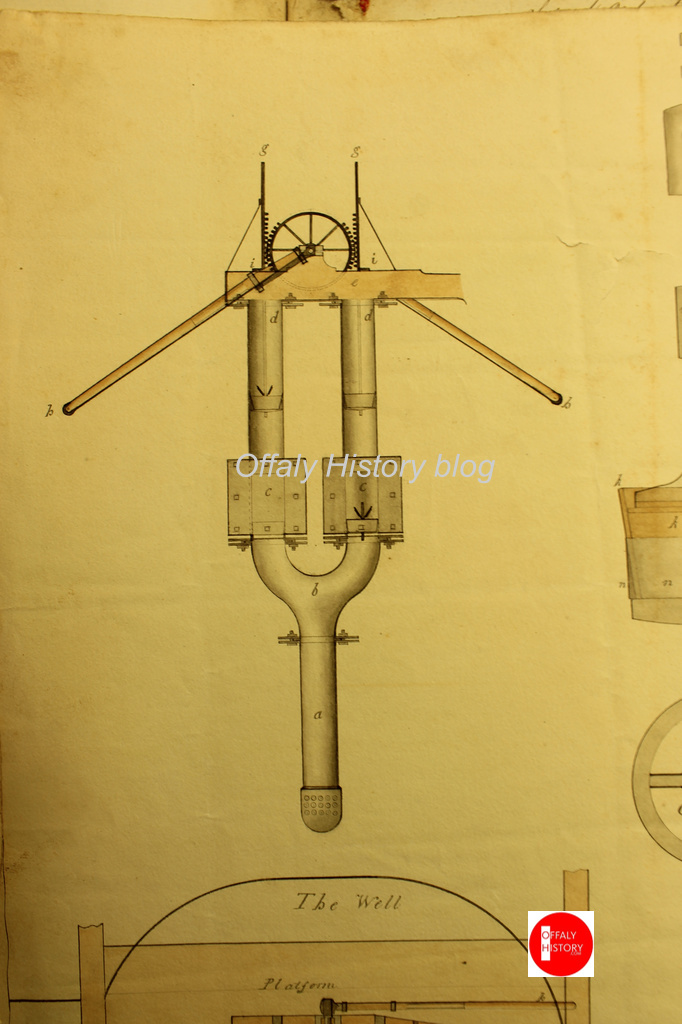
Image 5. A delightful drawing by Israel Rhodes
A delightful drawing by Israel Rhodes, dated to March 1802, showing details of the steam-powered pump that was used during the construction of the Macartney Aqueduct over the Silver River. This is from the minute books of the Grand Canal Company where such visual representations are very rare. The depiction is signed by Rhodes as engineer and by Arthur Chichester Macartney, then an influential director of the canal company. (Courtesy of National Archives of Ireland, Dublin)
The aqueduct crosses the fast-flowing Silver River after it has meandered over twenty-miles from the slopes of Wolftrap Mountain high up in Sliabh Bloom The river’s course takes it through Cadamstown, Ballyboy, Kilcormac and Lumcloon before joining with the Brosna half a mile downstream of the aqueduct.
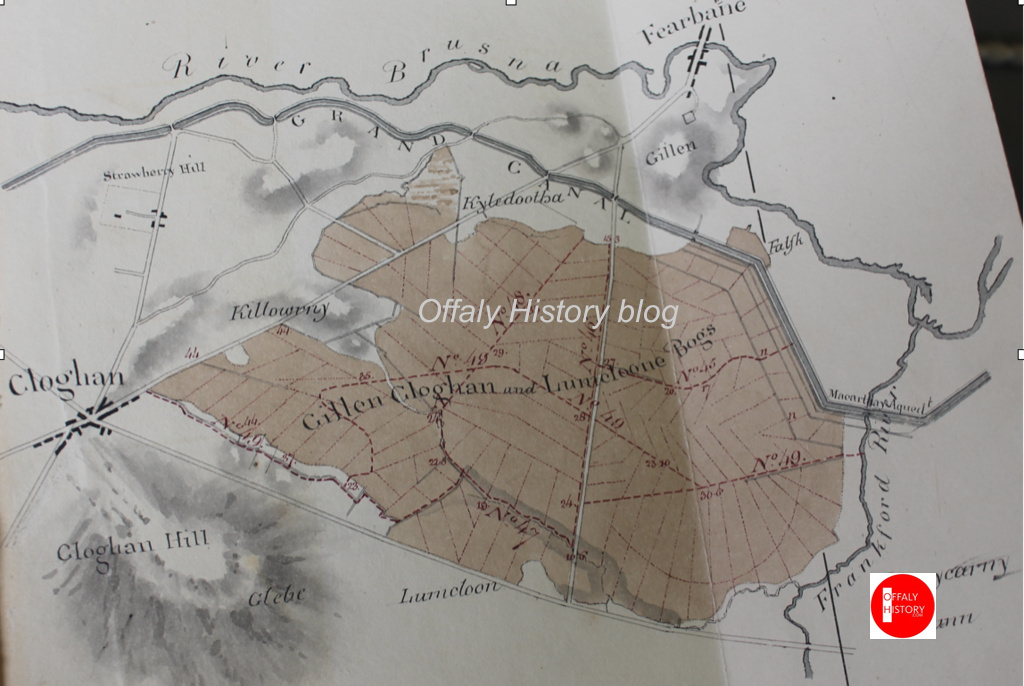
Image 6. Map by John Longfield c.1810
Map by John Longfield c.1810 showing the Grand Canal turning sharply to the north-west just downstream of the Macartney Aqueduct and thus avoiding the Gallen, Cloghan and Lumcloon complex of bogs before meandering (almost) from Gallen to Belmont, always in close proximity to the River Brosna. The Silver River is depicted as the Frankford River in deference to the old name for Kilcormac, the last town it passes through before its confluence with the Brosna. (Courtesy of The National Library of Ireland)
- SILVER RIVER AQUEDUCT ON THE KILBEGGAN BRANCH
To avoid confusion with the other Silver River crossed by the Macartney Aqueduct, this aqueduct straddles the Silver River which separates the counties of Offaly and Westmeath between the townlands of Bracklin Little and Lowertown. The river rises upstream of New Mill Bridge, in Rahugh, in Westmeath. In Offaly it flows via Derrygolan, Acantha, Gormagh, Ballyduff, Aharney, Coleraine, Coolnahely and Aghananagh before joining the Clodiagh at Aghadonagh, in Rahan. The 1838 six-inch map shows five mills on this relatively short river. The earliest of these mills is probably that at Ballynasrah or Tinnycross as it is shown on John Gwin’s map of the Barony of Ballycowan which was drawn c.1625, almost four hundred years ago.
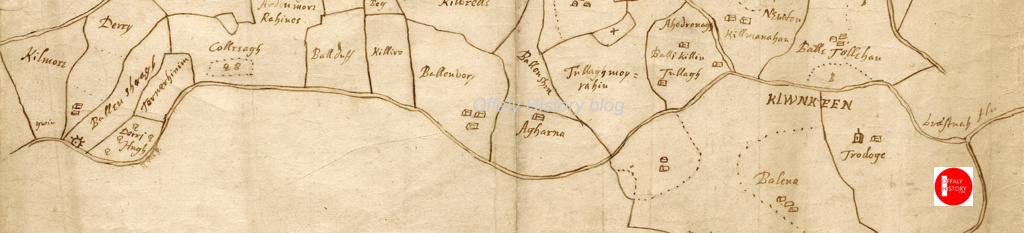
Image 7. Detail of John Gwin’s map showing Silver River
Detail of John Gwin’s map of the barony of Ballycowan which shows the Silver River flowing from Ballynasrah in the bottom left-hand corner to its confluence the Clodiagh at Aghadonagh on the right- hand side, passing Ballyduff, Aharney and Tullymorerahan. The mill is indicated by a mill-wheel symbol. The map is part of a set of twenty-eight important maps of various parts of Offaly drawn four hundred years ago in the Mathew De Renzy papers in the National Archives in London.
KILBEGGAN BRANCH
As early as 1806 the Grand Canal Company’s engineer John Killaly had prepared a detailed map for a proposed branch from Ballycommon on the main canal to Kilbeggan. This line was closely adhered to when work finally begun twenty-four years later in 1830. An application for funding was made in 1825 and despite strenuous objections from the Royal Canal Company a loan was approved in 1828. In March 1829 Killaly had completed the plans and specifications for the line. A month later William Dargan’s proposal to build the line for £12,850 was accepted.

Image 8 William Dargan
William Dargan, (1799-1867)
From the outset work was slow due to continuous wrangling between the contactor and the company. Dargan had taken his own levels, but the canal company insisted he use those of Killaly. Even when progress was made recurring problems with staunching the huge embankments at Bracklin Little and Lowertown delayed construction. Allied to this was the major distraction of Dargan’s involvement with the building of Ireland’s first railway line.

Image 9. Bracklin Little and Lowertown townlands on the 1912
Bracklin Little and Lowertown townlands on the 1912 Ordnance Survey six-inch map, showing the meandering Silver River and the dense hachuring between Lowertown and Murphy’s bridges. This represents the steep slopes of the embankments which carry the aqueduct high above the surrounding landscape. Note the overflow at south end of the aqueduct. This was to prevent the level of the canal rising to a height where it would overflow the banks and lead to a major breach. Just like at the Blundell Aqueduct there were twenty-six miles of canal without a lock which would have poured out at this point if a burst occurred, leading to much destruction and a long-term closure of the navigation.
Dargan’s chief biographer Fergus Mulligan describes this episode in Dargan’s life in the Royal Irish Academy’s Dictionary of Irish Biography:
Ireland’s first railway line, the Dublin & Kingstown, opened in 1834 and Dargan was fortunate to win the contract to build it against six competitors. Working under another Telford pupil, Charles Vignoles (qv), as engineer, Dargan began work near Salthill in April 1833, and although he was six months late finishing the line (which opened on 17 December 1834) the penalty clauses in his detailed contract were not enforced. The successful completion of this line gave Dargan a springboard to winning a substantial share of Irish railway construction contracts on offer in the 1840s and 1850s.
Again, we are greatly indebted to Fred Hammond’s monumental survey of all 407 bridges in Offaly in 2005 for a detailed description of this aqueduct:
A tall arched masonry bridge carries the disused Kilbeggan Branch of the Grand Canal over the Silver River at the county boundary. The abutments are of dressed limestone blocks, regularly laid and with finely dressed quoins. The arch is of semi-circular profile, with finely dressed radial voussoirs and dressed stone soffit blocks; it spans 3.59m. The arch is embellished with finely dressed string courses around the tops of the quoins and across the crown. Over the top of the upper string course are four regular courses of dressed stone blocks. They are surmounted by a slightly inset random rubble parapet. The sloping wing walls are detailed as the abutments and are coped with stone flags.
-
5 L.T.C. (Tom) Rolt’ trip on the Grand Canal in 1946 – Athlone to Clonmacnoise. No. 5 in the Grand Canal Offaly series presented by Offaly History. Blog No 561, 6th Jan 2024
The pioneering travel book on the Irish canals was Green and Silver (London, 1949) by L.T.C. Rolt (1910–74). Tom Rolt made his voyage of discovery by motor cruiser in 1946 along the course of the Grand Canal, the Royal Canal (fully open from Mullingar to the Shannon, until 1955 and thereafter from 2010), and the Shannon navigation from Boyne to Limerick (happily now navigable up to Lough Erne). The Delanys writing in 1966, considered Rolt’s book to be the most comprehensive dealing with the inland waterways of Ireland.[1]
During the 1940s, and up to the early 1970s the canal candle was flickering but was kept burning by enthusiasts in England and in Ireland. Among these were the late Vincent Delany and Ruth Delany whose book on the Irish Canals in 1966 was a seminal work. As pointed out in the Irish Times in November 1993 Ruth Delany is the most prolific author on the subject of the Irish canals and herself acknowledges that Green and Silver had a profound influence on her. Other writers were Hugh Malet and Colonel Harry Rice – the latter largely founded the Inland Waterways Association. In 1973 Ruth Delany extended the 1966 book with a full-scale study of the Grand Canal which was reissued in 1995 with an update on the previous twenty years.
Tom Rolt was born in Chester in 1910 and after working in engineering and with vintage cars he became a full-time writer in 1939. Some of his many books are shown in the attached illustrations while ‘his biographies of great engineers, such as Isambard Kingdom Brunel (1806-1859), are still highly regarded. As a campaigner, activist and champion of industrial heritage Rolt is best known for his involvement with the Inland Waterways Association, the Talyllyn Railway Preservation Society, the Newcomen Society, and the Association of Industrial Archaeology.’[2] On his marriage in 1939 to Angela Orred, daughter of a retired army major. They went to live on his house boat Cressy and in 1944 published Narrow Boat, a passionate evocation of the British canals and those who worked on them. His wife left him in 1951 to join the Billy Smart circus. Two very focused people.
(more…)
-
3 From bonded warehouse and grain store to Old Warehouse bar/ restaurant and Aldi Retail Store: the changing uses of canal side buildings at Bury Quay, Tullamore, Ireland. No 3 in the new Grand Canal Offaly series from Offaly History. Blog No 559, 30th Dec 2023
The recent demolition of all the former Irish Mist liqueur warehouses in Tullamore and the upcoming demolition of the great oats store of D.E. Williams have prompted this lookback at the site that may have been intended for the first canal harbour or docking point in Tullamore close to Pound Street, later called William Street and now Columcille Street and Bury Quay – where the Old Warehouse (‘Shane Lowry’s’) is now located. The newly cleared site is intended for a 1,644 sq. metre Aldi retail store and associated parking. The bonded warehouse or now Old Warehouse and the oats store south of it were built close to the canal as part of a strategic acquisition by the distiller, maltster and merchant Daniel E. Williams and at a time when the Grand Canal provided a commercial transport artery for smooth access to Dublin and Limerick. This article is no. 3 in the series on the impact of the Grand Canal on Offal
If you would like to contribute contact us info@offalyhistory.com
(more…)
-
2 The background to the development of the towns on the Grand Canal in County Offaly. ‘The man-made features of the Irish landscape, urban and rural, were created within little more than a century before the 1840s and remained largely unchanged till the 1950s.’[1] Prepared by Offaly History. Blog No 558, 27th Dec 2023
This week we look at the background to the Vallancey report on the Offaly towns carried out in 1771 to facilitate the construction of the new Grand Canal line from Dublin to the Shannon. Vallancey was then a young engineer, employed to report to the Commissioners of Inland Navigation and his findings were published in a little known and very scarce pamphlet, A Report on the Grand Canal or Southern Line (Dublin 1771).[2] This report is useful as a window on some of the north King’s County (hereafter generally referred to as Offaly) towns and villages and all the more so because of the scarcity of published accounts of the midland towns prior to 1800.[3] The report was published in the same year as that of John Trail who was at the time employed by Dublin Corporation.[4] Vallancey was writing with a mission. He was being paid to spin the story of the benefits that would come from inland navigation and to highlight the difficulties with road transport and its adverse impact on competition and pricing of commodities so as to bolster the arguments in favour of canal construction and satisfy those who were paying his consultancy fees.
Why not contribute to our series of blog articles on the Grand Canal in Offaly – info@offalyhistory.com.
(more…)
-
Try again, Explain Better: A Revolution in Profiles, the Offaly Story. By Aidan Doyle. Blog No 555, 16th Dec 2023
There is a popular saying in politics sometimes attributed to Ronald Reagan ‘When you’re explaining, you’re losing
History often involves explaining, but in recent times I’ve regularly watched people’s eyes glaze over as I described my latest research project.
Q: What’s it called.
A: ‘A Revolution in Profiles’.
Q: What’s it about.
A: Its about Offaly in the Revolutionary Decade.
Q: Okay. How many words in it?
A: Over 60,000, but it’s divided into profiles, each about 600 words long
Q: Is it a book?
A: No, it’s a website with over 100 different profiles of people from the period.
Q: So, it’s a blog?
A: Not really, it’s modelled on the RIA’s Dictionary of Biography.
Q: How much are you charging for It?
A: No, there’s no charge. Access is completely free. The RIA provided a bursary to build the website as part of the Decade of Centenaries programme, but anyone can view the profiles and there’s no fee.
At this stage the questioner runs the entire gamut of emotions from confusion, disbelief, pity and finally suspicion. ‘If its free there must be a catch’.
If we’re lucky the conversation shifts to the height of the Shannon or which senior clubs are still looking for a hurling manager, if not it peters out into a prolonged awkward silence.
‘I’ll tell what it’s not’
The site is not a definitive history of Offaly in the revolutionary period. That will come later, written by others more qualified to do so. It is a reference tool designed to educate on and simulate interest in Offaly’s revolutionary story. In time perhaps it may provide other researchers with a foundation from which a deeper understanding of the era might be developed. One of the ways it aims to do so is providing readers with the opportunity to compare and contrast different people from the period.
Don’t tell, show me!
Mark Twain reportedly once said ‘Don’t just say the old lady screamed. Bring her on and let her scream!’ Having struggled to explain the site, I usually take a leaf out of Twains book an give an example. Offaly History have been kind enough to host two profiles from the site dealing two elected officials.
The People’s Choice
Between 1918 until 1923 the constituencies of Kings County and Laois-Offaly were represented by Dr. Patrick McCartan. A leading member of the Irish Republican Brotherhood from Tyrone; McCartan spent most of those years on diplomatic missions to the United States and the Soviet Union.
Meanwhile Hugh Mahon from Killurn outside Tullamore sat as a Labor representative in the Australian Parliament until his expulsion in 1920. His ejection was carried out in response to Mahon’s public condemnation of the British Empire in the aftermath of the death of Terence MacSwiney on hunger strike in Brixton prison.
Mahon and McCartan’s biographies are among 30 extra profiles which will be added to the site over the next year, but for now the focus centres on two other parliamentary representatives from Offaly, representing two different traditions. Frank Bulfin and Sir Robert Woods.
Frank Bulfin
Frank Bulfin was born in 1874 at Derrinlough, where his parents William and Ellen Bulfin (nee Grogan) owned a large farm.
His uncle Patrick Bulfin acted as Lord Mayor of Dublin and a cousin General Edward. S. Bulfin served with distinction in the British Army during the Boer and Great Wars. In 1900 it was reported that Frank’s brother, J.V. Bulfin had died while serving with the Rimington Guides in the Boer War. Frank and his brother Joe (who was later associated with Clonony and Edenderry) were keen agriculturists. During the Ranch War both men were vocal advocates for small farmers and imprisoned for their involvement in cattle driving.
Frank’s uncle Fr. Vincent Grogan served as provincial of the Passionist order in Argentina. The South American connection was to have important ramifications for the family, as Frank’s older brother William emigrated to Argentina where he enjoyed considerable success and eventually became owner of the Southern Cross newspaper. On his return to Ireland, William Bulfin helped to stabilise the Derrinlough farms finances, wrote a popular nationalist travel book Rambles in Erin, promoted the Gaelic League and political movements of his friend Arthur Griffith. William died aged 45 in 1910.
William’s son Eamon attended St Enda’s school and fought under his former teacher Patrick Pearse in 1916 Rising.
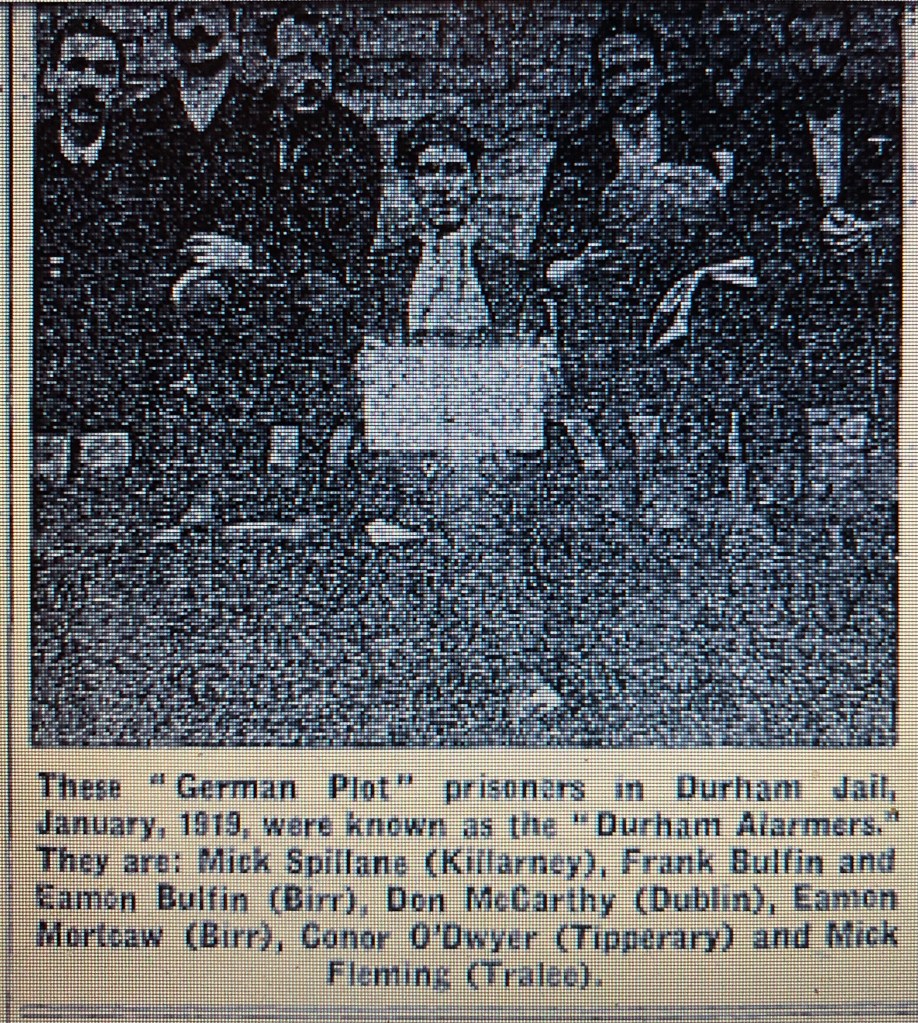
Following the release of republican prisoners from internment in late 1916, Eamon and Frank were involved in establishing the republican movement in south Offaly. They were arrested as part of the German Plot in the Summer of 1918 and imprisoned in Durham Gaol. Eamon was later deported to Argentina where he acted as an emissary for the republic during the War of Independence.
On his release from prison Frank Bulfin returned to Derrinlough, where he was involved in sheltering Sean Treacy, Seamus Robinson, Sean Hogan and Dan Breen during the summer of 1920. The so called ‘Big Four’ were on the run following shootings at Soloheadbeg and Knocklong.
Nominated as one of four Sinn Féin candidates, Bulfin was elected unopposed in the Laois-Offaly constituency at the 1921 general election. Arrested and interned at the Curragh, he was released with other TDs in August following the arrangement of the Truce.
Bulfin did not take a high-profile stance during the Treaty Debates but voted to accept the agreement. He was re-elected in the pact election. His nephew Eamon opposed the treaty but took no part in the Civil War following his return from South America and Frank’s niece, Catalina ‘Kid’ Bulfin a member of Cumman na mBan went on to marry well known anti-treaty republican Sean MacBride.
In August of 1922, Frank Bulfin was one of the pall bearers who carried Arthur Griffith’s coffin.
Although he rarely spoke in the Dáil, Bulfin continued to vote with the Cosgrave Government throughout the Civil War. In a statement to the Bureau of Military History Ernest Blythe suggested that because of republican intimidation, Bulfin attempted to resign his seat, but after the intercession of armed Free State Intelligence officers was convinced…
‘It might be more dangerous to resign from the dail than stay in it’. (1)
The veracity of Blythe’s story is difficult to authenticate.
Addressing an election meeting in July 1923 Bulfin commented…
‘Many unpleasant things we have had to do —many very distasteful decisions had to be made, but we never sought popularity at the expense of the real interests of the nation’. (2)
After his re-election, rifts appeared in Cumann na nGaedheal. Bulfin did not support the Army Munity of 1924. Nevertheless, he was understanding of those who left the party at that time to establish the National Group and critical of some in the cabinet whom he felt were self-important and drifting too far from the party’s roots in Sinn Féin commenting …
‘Let these people not get their heads swelled. Greater men than they, Griffith and Collins, had to be done without.’ (3)
At local level his electoral machine was considered ineffective, and he lost his seat in 1927.
In the 1930’s Bulfin moved to Barrysbrook, Croghan close to his mother’s birthplace and farmed there until his death in 1951. He was buried at Rhode cemetery.
Sir Robert Henry Woods
Robert Henry Woods was born at Tullamore in 1865. His father Christopher and mother Dorothea (Lowe) operated a shop and held property in the town.

Sir Robert Woods Educated at Wesley College and Trinity, he qualified as a doctor. An expert on the ear, nose and throat; Woods was considered a world leading physician. President of the Royal College of Surgeons he was knighted for his services to medicine in 1913.
His son Thornley died in 1916 while serving with British Army in Flanders.
In 1918 general election Woods was elected to Westminster for the National University constituency, a seat held until 1917 by Edward Carson.
Elected as an Independent Unionist, Woods was a moderate in personality and politics. He did not take up his seat at the first meeting of the Dail in January 1919. However, unlike other unionist MPs he did send a formal reply to decline his invitation to attend.
In July 1921 he was part of a delegation of southern Unionists who met with Eamon de Valera in the Mansion House Conference which facilitated the announcement of the Truce.
A rare contributor at Westminster, he made his last speech there in the aftermath of the signing of the Treaty when he told the House of Commons…
‘I hope the Prime Minister will permit me to offer him my congratulations on having brought this Conference to so successful a conclusion. If I may say so without offence, he has done a big thing, and he has done it in a big way. The Unionists in the South of Ireland have received the news of this agreement with feelings of satisfaction that can only be appreciated by those who have lived there in recent years, and perhaps by those who have got imagination to visualise what would have happened had these negotiations fallen through. I think I am correct in saying that the majority of Southern Unionists have for a long time seen that there was no other possibility of settlement of the age-long struggle, and the healing of this Irish sore, except through a Conference… I believe that the end of this Agreement will be an accession of strength, not only to Ireland herself, but to the peace and the prosperity of the world at large, and particularly of that great community of nations of which Ireland will, in the future, herself form an integral part.’ (4)
His last political intervention was an unsuccessful run for the Senate in 1925.
A collector of antique furniture, he was also musical enthusiast, president of the Dublin Zoological Society he donated several animals to the Zoo following trips to Asia.
Robert Woods died at his home in Marino in September 1938 and was buried at Deansgrange Cemetery. At his own request the funeral service was private and attended only by his immediate family and household staff.
On his death the Irish Independent commented…
‘Although a Unionist, his liberal and free-minded attitude on all Irish questions was very marked. Rather abrupt and unconventional in manner, the late Sir Robert was a man with a big heart. He was charming in private conversation and his humour was never hurtful, while his wit was always kind. He was extremely popular with his professional colleagues and was ever helpful to the young men attending’ his school. Physically a splendid type of Irishman, he was a familiar figure in Dublin, his broad shoulders, well-shaped head and rugged- features arresting attention.’ (5)
Further biographies online at https://revolutioninprofilesoffaly.com/
Online launch 8pm Thursday December 14th at https://www.facebook.com/profile.php?id=61553625544577
Sources:
(1) Bureau of Military History. Ernest Blythe (Witness 939)
(2) Offaly Independent 7 July 1923.
(3) Cork Examiner 20 January 1925.
(4) Hansard online at https://api.parliament.uk/historic-hansard/commons/1921/dec/15/irish-free-state
(5) Irish Independent. 9 September 1938.
1901 and 1911 Census. Search online at http://www.census.nationalarchives.ie/search/
Bureau of Military History Statements: Ernest Blythe (Witness 939) Patrick Colgan (850)
Hansard online at https://api.parliament.uk/historic-hansard/commons/1921/dec/15/irish-free-state
Patrica M. Byrne & Cathy Hayes. ‘Sir Robert Woods’ Dictionary of Irish Biography online at https://www.dib.ie/biography/woods-sir-robert-henry-a9118
Michael Gallagher. ‘Politics in Laois Offaly 1922-1992’ in Laois History and Society edited by Padraig G Lane and William Nolan online at https://www.tcd.ie/Political_Science/people/michael_gallagher/LaoisOffalyPolitics99.pdf
John Gibney RIA Dictionary of Irish Biography profile of Eamonn Bulfin online athttps://www.dib.ie/biography/bulfin-eamonn-edmond-a10114
C.J. Woods RIA Dictionary of Irish Biography profile of William Bulfin online at https://www.dib.ie/biography/bulfin-william-a1109
Belfast Telegraph. 6 March 1925.
British Medical Journal. 17 September 1938.
Butte Independent. 26 February 1910.
Freeman’s Journal. 5 August 1921.
Irish Independent. 15 June 1907. 22 July 1918. 9 September 1938.
Irish Press. 12 September 1938
Irish Times. 29 June 1907.
Leinster Leader. 31 March 1951.
Leinster Reporter. 20 January 1900.
Nationalist and Leinster Times. 19 Aug1922.
Offaly Independent. 26 March 1966.
Sunday Press. 1 April 1979.
Index of those profiled
George Adam 1894-1922. Great War Veteran, RIC Constable.
Patrick Adams 1881-1939. Politician.
George Adamson 1897-1922. Great War Veteran, IRA Leader, National Army Officer.
Phillip Ahern. 1862-1918. RIC Sergeant.
Thomas Allen 1892-1919. British Army Sergeant.
Andrew Harvey Armstrong 1866-1922. British Army Officer.
Sean Barry 1897-1931. IRA Officer, National Army Officer.
Alan Bell 1858-1919. Magistrate, retired RIC Officer, Intelligence Advisor, Financial Investigator
John Bergin 1889-1922. IRA Officer.
Harry Biggs 1897/ 1899-1920. Great War Veteran, RIC Constable.
Sean Blaney 1898-1922. IRA volunteer. National Army Solider.
Patrick Boland 1890-1962. IRA Police Officer, County Councillor Neutral IRA Association Official.
Joseph Boyle 1889-1944. Teacher, IRA Officer.
Peter/Peader Bracken 1887-1961. Easter Week participant.
Caitlin Brugha/Kathleen Kingston 1874-1951. Sinn Féin TD, Republican Activist.
Eamon Bulfin 1892-1968. Easter Week participant.
Frank/Francis Bulfin 1874-1954. Sinn Féin and Pro- Treaty TD.
Emily Weddall-Burke 1867-1952. Irish Irelander, Cumann na mBan Activist.
James Burke 1892-1920. RIC Constable.
Fr. Thomas Hilary Burbage 1879-1966. Republican Priest.
Thomas Francis Burke/ Bourke 1898-1955. IRA Officer.
James Carroll 1879-1938. Easter Week participant.
Alice Cashel 1878-1898. Cumann na mBan Officer, Republican Judge.
Charles/Charlie Chidley 1903-1975. British Solider, Anti Treaty IRA man.
Cherio/Count Louis William Warren Hammon of Normandy. 1866-1936. Occultist, Entrepreneur.
Christopher/ Christy/ Chris Clarke. 1891-1923. RIC Segreant.
Joseph Connolly 1896-1979. IRA leader, National Army Officer.
Michael Cordial 1898-1972. IRA leader, National Army Officer, Hurler.
John Cooke 1863-1916. Ex-Serviceman,Civilian.
James Corrigan 1891-1918. Irish-Irelander, Republican Activist, Hurler and GAA official.
Felix Cronin 1890-1961. IRA leader, National Army Officer, Hurler, Golfing Official.
Henry Cronin 1873-1920. RIC Sergeant.
Matthew Cullen 1901-1922. IRA Volunteer, National Army Officer.
Thomas Cunningham1871/1876-1921. Ex-Serviceman
David Daly 1895-1970. IRA Officer.
Dr Patrick Gabriel/ Paddy Daly 1898-1983. Republican Gunrunner.
Liam/ William jr/ Willie Dignam 1898-1921. IRA Officer.
William Dolan 1896-1918. Civilian.
John Francis Doody 1899-1963. IRA Volunteer, National Army Solider, Anti Treaty IRA Man.
Edward/Eddie Donoghue/O’Donoghue 1910-1922. 12 year old Civilian.
John Joseph/ JJ Donnelly B. 1897. US Army Veteran, National Army Officer. Garda.
Joseph Doolan 1883-1974. Easter Week participant.
Edward Doran 1897-1921. RIC Constable.
Frank/Francis Dolan 1896-1922. IRA Volunteer.
Dr. Patrick Joseph/P.J. Doyle 1892-1964. Easter Week participant.
John/Jack Drumm 1900- 1990. IRA Volunteer, National Army Officer.
James Duffy 1896-1922. Great War Veteran, National Army Solider.
John Dunne 1899-1921. RIC Constable.
Peter Fahey 1893-1916. Civilian
Thomas Feery 1860-1920. Civilian.
Jack/Sean/John Finlay 1897-1923. IRA Volunteer, Gaelic Footballer, Drayman.
Denis Fitzgerald 1895-1961. IRA Officer.
Michael Patrick Foley 1893-1960. Easter Week participant.
George Frend 1850-1921. Land Agent, Farmer, Magistrate.
William Frith 1878-1916. Dublin Metropolitan Police officer.
Patrick Geraghty 1890-1923. IRA Officer.
John Greene/ Green 1870-1921. RIC Sergeant, Republican intelligence source.
Thomas Gibson 1897-1923. Great War Veteran, National Army Solider, Anti Treaty IRA man.
Patrick Gilligan 1882-1916. Instructor Irish Volunteers, British Solider.
John Gunning 1891-1923. Great War Veteran, National Army Solider.
John Hannon. D 1920. Retired RIC policeman reengaged as a Special Constable
Daniel/ Dan Hoey 1888-1919. Detective, G Division, Dublin Metropolitan Police.
Alfred/ James Albert/ John Alfred Hayes 1902-22. National Army Solider.
James Hayes 1888-1974. IRA Officer.
Rev. Francis Ryan Hitchcock 1867-1951. Church of Ireland minister.
John Joly 1857-1933. Polymath, Inventor, Academic.
Matthew Kane 1881-1921. IRA Volunteer.
Colum/Columb/Columba Kelly 1901-23.
James/ Jimmy/ Seamus Kelly 1895-1986. Easter Week participant
Michael Kennedy 1902-1920. IRA Volunteer.
Kieran Kenny 1887-1922.Easter Week participant
Seamus/James Kenny 1884-1953. Easter Week participant.
Sylvester Rait Kerr 1849-1922. Agriculturist.
Joseph Lawlor 1895-1922. Great War Veteran, National Army Solider.
Gabriel/Gabe Lee 1904 -1937. National Army Solider.
Patrick Joseph Lopeman 1893-1971. Great War Veteran, Connaught Ranger Mutineer.
Denis Patrick Maguire/ McGuire 1875-1920. RIC Sergeant.
Catherine Mahon 1869-1948. Teacher, Trade Unionist, Cumann na mBan leader.
Patrick McDonald/ McDonnell 1895-1921. RIC Constable.
Patrick McDonnell 1894-1949. Easter Week participant
Annie McGrath- Fleming 1897-1972. Cumann na mBan Officer.
Mary Anne Meleady-Treacy 1892-1978. Cumann na mBan Officer.
James Moran 1889-1987. All Ireland Football medalist, IRA leader.
Edward George Morley 1899-1920. Great War Veteran.
Aine ni Rian 1887-1955. Easter Week participant, Cumann na mBan leader.
Patrick Reardon/ Riordan 1892-1976. IRA Officer.
Seamus O’Brennan/ James Michael O’Brennan 1886-1968. Easter Week participant.
Thomas/Tomas/Tommy O’Connell 1900-1924. IRA Officer.
George Charles Payne 1903-1921. British Solider.
Richard (Dick) Pearson 1897-1921 & Abraham (Abe) Pearson 1902-1921.
Mike/ Michael Reilly D.1921. Ex-Serviceman.
Patrick O’Reilly 1892-1920. RIC Constable.
Sean/ John/ Johnny Robbins 1892-1960. IRA Officer, County GAA player and official.
Patrick/Paddy Seery 1889-1920. IRA Officer.
Eric Steadman D 1921. Great War Veteran.
Patrick/Paddy Tiquin/Tyquin 1896-1922. Great War Veteran, National Army Solider.
Constance/Connie Tynan 1901-1922. Civilian.
Leo White B 1887. Great War Veteran.
Patrick Columba/ P.C./Patsy White 1898-1923. IRA Volunteer, National Army Solider.
William Harding Wilson 1864-1920. RIC District Inspector.
Sir Robert Henry Woods 1865-1938. Surgeon, Independent Unionist MP.
-
5 The Brewery Tap, Tullamore (1713- ): part of the story of the evolution of the market place to the Georgian Charleville/O’Connor Square, Tullamore, Ireland. A contribution to the Historic Towns Initiative funded by the Heritage Council. Blog No 554, 13th Dec 2023
Business and residential
The square proper never had a public house until that in GV 5 in recent times, while the Brewery Tap on the western side at GV 3 High Street has served the public for well over 100 years. It was only in 2018 that a new public house and night club was opened at GV 5, now known as The Phoenix. The great garage of G.N. Walshe (GV 1 High Street) replaced the Goodbody hardware store which was in business from the 1840s to 1930 and with a tobacco factory at the rear until 1886.
(more…)
 offalyhistoryblog