I once more visited by friends in Tullamore, Killoughy and Banagher after an unexpected gap of almost six months. Young Covid intervened and I did not get down from my perch in D4 until ten days ago.
Upper East Side Tullamore
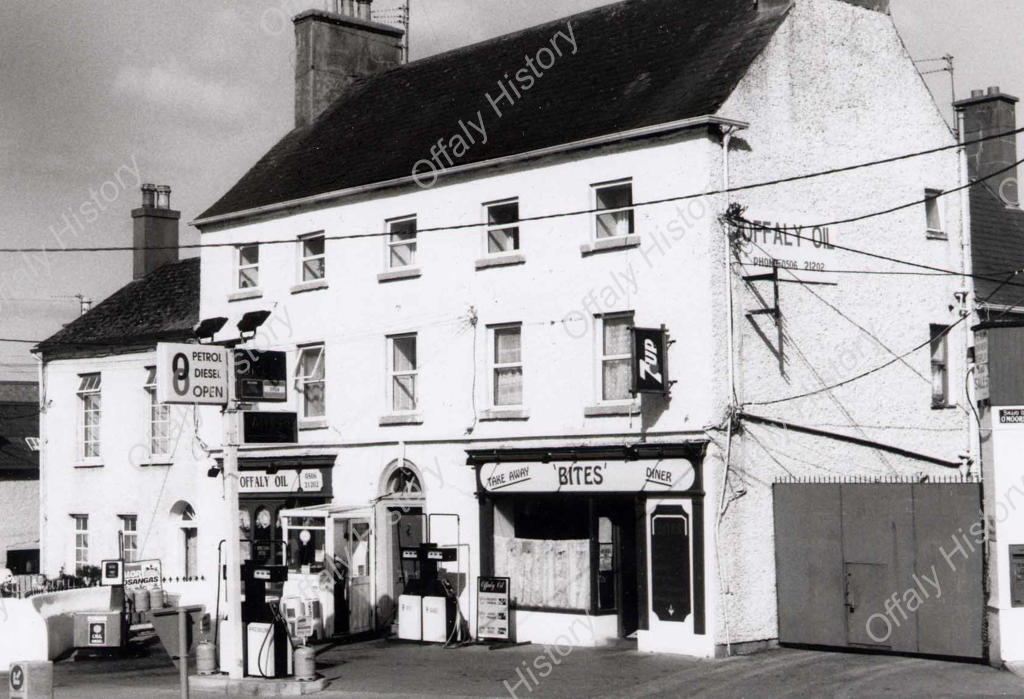
It was great to see my old town looking so well and all the works in the square and from High Street to Kilbeggan Bridge almost finished. Walking from the railway station down to the square brought me back to the 1950s and 1960s when I lived in the town and the High Street was a busy spot. The footpaths are wide now but there were few walking and even on Saturday the street was quiet. I see no space to park for my mother (if she were alive God rest her) to pull up in the old Prefect that she had. Sure that is progress. Maybe the plan for High Street got mixed up with O’Connell Street or Grand Parade! Anyway, today I am writing about the east side of High Street, what I will call ‘Upper East Side’, and I will talk about the west side of the street on another visit – if the pause button is not changed to stop!
Clonmacnoise from the Harris’s edition of Ware’s Antiquities (Dublin 1739) showing the work of Blaymires and Dempsy his companion.
It must be conceded that the unassertive landscapes of County Offaly have never been a great source of inspiration to painters, most of whom just made a quick stop at historic Clonmacnoise before dashing on to record the West of Ireland.
Yet, others took the trouble to look more closely (or were paid to do so) and found inspiration in its lush farmland, bogs and woods, slow rivers, rolling hills and ancient ruins. Happily, their numbers have grown in the recent past.
The Cotton Map
The first, and in my opinion the finest, artistic image of Offaly is the Cotton Map of 1565. Prepared to assist the Elizabethan Plantation, this is an imaginative creation more akin to Harry Potter’s ‘Marauder Map’ or Robert Louis Stevenson’s chart of Treasure Island than a realistic cartographic exercise. One wonders if its unknown compilers ever visited Offaly or were relying on travellers’ tales.
Home Rule/Rome Rule. A china mug with a portrait of Pope Pius X (1903-14) who increased the devotionalism of the Catholic church, who promulgated the Ne Temere decree concerning the children of mixed marriages, whose orders on the role of women in church music (1903) was commented on by the Morkan sisters in James Joyce’s story ‘The Dead’, and who oversaw the excommunication of Fr. George Tyrrell (1861-1909) on a charge of heresy, whose childhood had been spent at Dangan’s Farm between Portarlington and Mountmellick. He also enjoined the admission of children to regular communion at the age of reason. (Autobiography … of George Tyrrell, 2 vols. 1912, p.20-22)
We welcome a new contributor to the blog this week with this article by John Stocks Powell. Enjoy and remember we have almost 190 articles to read at http://www.offalyhistoryblog. Like to get it each week and share to your friends.
There is a hierarchy of sources for the historian, local historians and those with the wider landscapes. The principal material is the written word; evidences from the time, written archives, and later written published assessments such as county histories, church memoirs, Ph.D. studies gone to print. On-line developments have made for more in quantity, and more exciting revelations, from the checking of dates on Wikipedia, or the digitised sources such as Irish and British newspapers online, and directories. Yet we know the old cliché that history is written by the winners, and that is especially true when trying to write about the history of the losers, the poor, and the illiterate. Every source has its importance.
On Wednesday last we said goodbye to a dear friend, Hugh Carr as he was buried in Clonaslee graveyard beside his beloved wife Máire Eibhlín, who predeceased him in 1982. We joined Hugh’s family and friends as mummers – travelling actors who traditionally visited houses in disguise, singing and rhyming. We did not go in disguise but went in memory of and tribute to, Hugh’s great play The Mummers of Reilig. In 1979 Hugh and Máire Eibhlín gathered a large cast and we started rehearsals for what was to become an 18 month journey together – culminating in winning best play at Listowel Writers’ Week in 1980. (more…)
Arthur & Charlotte: A Victorian Romance Remembered is the title for a dramatic evening to be presented by Offaly History in Hugh Lynch’s Pub, Tullamore on Thursday 5th December at 8 p.m. The event will chronicle the story of Arthur Bell Nicholls of Banagher and his romance with and marriage to the famous Victorian novelist, Charlotte Brontë of Haworth in Yorkshire. Using contemporary source material the presentation will narrate this intriguing love story in written word and song. Readings will recall Arthur’s early years when he lived in Cuba House with his uncle the Reverend Alan Bell, Master of the Royal School of Banagher, his subsequent ordination and appointment as curate to the Reverend Patrick Brontë in Haworth.
Extracts from Charlotte’s letters will describe her marriage to Arthur and her honeymoon in Ireland. The production will close with an account of Arthur’s life following Charlotte’s death in 1855 and his return from Haworth to Banagher in 1861, up to his death in 1906.The event will be performed by the Martello Tower Players from Banagher, All proceeds from the evening will go towards the new Offaly Archives recently completed in the Axis Business Park, Clara Road Tullamore. Tickets are €12 each and can be obtained from Offaly History Centre. Telephone: 05793 21421 or email: info@offalyhistory.com and James Scully, Banagher
Medieval architecture
In a region crowded with fine buildings, County Offaly has a lot of significant works of architecture of which to be proud. It is rich in early Christian and Romanesque remains at Kinnitty, Durrow and Rahan, while the monastic settlement at Clonmacnoise is one of the outstanding survivals of this period in Ireland.
PHOTO 1. Clonony Castle, a seat of the MacCoghlan clan. From 1612 the home of German planter Mathew de Renzi
The county is less fortunate in its late medieval ecclesiastical buildings, but of the three Central Leinster counties (Laois, Offaly and Kildare) retains perhaps the most extensive architectural legacy of its Gaelic lordships – notably in tower houses such as Leap, Cloghan and Clonony, among others.
The jacket for the 2019 edition designed by Brosna Press, Ferbane.
Mary Ward takes her place alongside the Rosses, Jolys and Stoneys in the King’s County/Offaly people of science gallery. Born Mary King, at Ballylin, Ferbane on 27 April 1827 she died in a shocking accident at Birr on 31 August 1869 (see our blog of 24 August 2019). On Saturday 31 August 2019 we mark the 150th anniversary of her death and say something of her achievements. So join us on Saturday from 3.30 pm at Oxmantown Mall, Birr. All are welcome. The book launch is at 5 pm in the Courtyard Café, Birr Demesne. The book will be general sale from 1 September at Birr Demesne, Offaly History Centre and Midland Book, Tullamore.
Tullamore from the William Larkin map of 1809. The church had not yet been built at Hop Hill.
For Offaly History Mapping Offaly began as a project to map the archaeological sites in Offaly in the mid-1970s. The state archaeological survey was in progress but nothing had been published and some members of the society decided to embark on a project they knew little about but were excited about the prospects. The then president of the Society, Monsignor Denis Clarke, allowed a sum of £50 out of the Society’s savings of £120 to buy a full set of the county ordnance maps of 47 sheets at £1 each from the Stationery Office. This was almost half of the society’s capital and led to the quiet resignation of Society secretary Fr Conor McGreevy. When he saw that the young students joining up at that time were serious he came back to his history flock and went on to publish a history of Killoughy with the PP of Kilcormac. (more…)
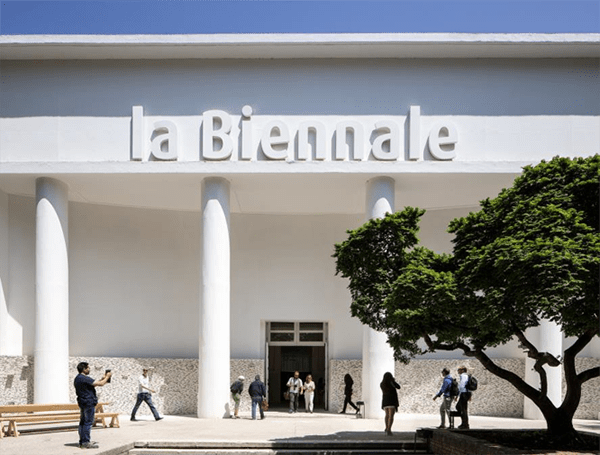
To be invited to participate in the Biennale is one of the highest accolades for an architect – to be asked to curate it, set the theme and organise the gigantic assemblage into a coherent whole, is simply stratospheric and lifts the reputation of the organisers into the top most rank.
This year’s show is entitled ‘FREE SPACE’ and runs from May to November. It is curated by Grafton Architects who have established their international reputation with new university buildings in Milan and Lima. Grafton is the creation of two remarkable women, Shelley McNamara and Yvonne Farrell who are recognised as among the most important female architects of our time. Critics have marvelled at the bravura, confidence and muscularity of the architecture of the quietly spoken, almost excessively modest pair
. Views of the Boconi building in Milan (Universita Luigi Bocconi, Milan, Italy).
Yvonne Farrell is, of course, from Tullamore (Clara Road and St. Philomena’s Convent School) and acknowledges the formative experiences of growing up in the town on her subsequent career. She sees architecture as an essentially collaborative process produced by the entire team at Grafton, which includes her fellow director Ger Carty from Walsh Island. The Offaly tinged firm is now engaged in work in London, Toulouse and Paris but in particular have two important projects in Dublin, the redevelopment of the former ESB offices and the new City Library in Parnell Square. Early sketches suggest that these will be exciting additions to the capital city.
The exhibition hall in Venice
The Biennale exhibition which is spread over three different locations around Venice has fifty five national pavilions and individual projects/presentations by one hundred architects. All are stimulating and I wish I had the space to discuss them in detail, but would single out just one entry that appealed to me. For the first time ever, the Holy See was invited to participate and responded by commissioning seven well known architects to create seven chapels (or contemplative spaces, as the more secular might call them) on the island of St. Giorgio and each is delightful yet profound in its own way.
The scale of the whole exhibition can be overwhelming and I would not be the first to observe that while architects can be fluent in their visual presentations, the impenetrability of the language used to describe their projects can often be daunting. The Irish Pavilion is devoted to an exhibition entitled ‘FREE MARKET’ which is a study of the market square as a place of social, cultural and commercial exchange in smaller Irish towns. Fifty examples are cited including those in Edenderry, Portarlington and Mountmellick. This entry has attracted a lot of attention and has featured in reviews in the international media, attesting to the universality of this seemingly Irish typology. Regrettably, while offering comprehensive surveys and a degree of analysis, no case studies are supplied of successful transformations. Indeed, the only example given is that of Dungarvan in which the sole change would appear to be that of providing a better quality of paving under an otherwise unaltered carpark.
Boconi building, Milan
As the controversial pedestrianisation of both Emmet Square in Birr and O’Connor Square in Tullamore has shown, the role of market squares and the approach necessary to converting them in whole or part to public spaces is a lot more complex than the Irish entry suggests. I believe that such initiatives can only be realised in the context of well laid overall plans which consider, traffic, parking, land uses, retail needs, urban design, architectural conservation and a myriad list of other issues which can justify their future scale and nature. Standalone building projects just don’t work.
These minor quibbles should not diminish our pride in the prestige which Yvonne and Shelley have brought to Irish architecture and to their own roots. In a commentary on the Biennale, the distinguished architectural critic Shane O’Toole has written of how Irish architects of the past ‘would have been amazed to learn that less than half a century after we ‘joined’ Europe, Irish architects have resolutely clambered to the top of the international architecture mountain range, and that Shelley and Yvonne have planted our flag of values at its very summit’.
Department of Finance, 7-9 Merrion Row, Dublin 2: top left.
Right: University of Engineering and Technology in Lima, Peru, won the RIBA’s inaugural International Prize last December
How marvellous it would be if they were commissioned to design an important building here in Offaly! The imminent redevelopment of the Harbour in Tullamore would present an excellent opportunity here in Offaly!
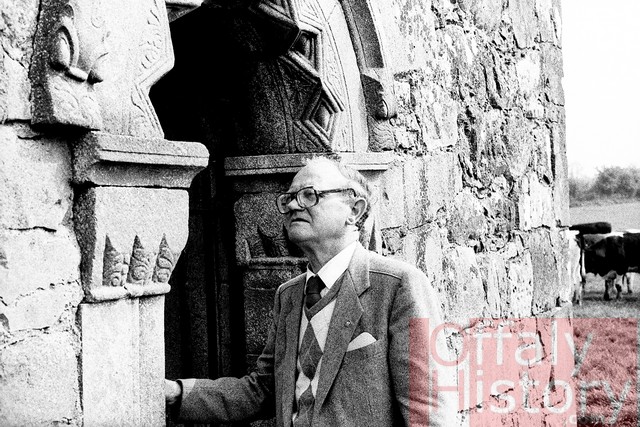
The late John Sweeney, founder member of Offaly History, distinguished book and coin collector, died 1993.
A good friend and great coin collector, the late John Sweeney (founder member of Offaly History who died 25 years ago), told me that the Charleville token or thirteen-penny shilling was one of the finest coins issued in the nineteenth century (more…)





 offalyhistoryblog