Skip to content
  • Home
  • About Offaly History
  • Copyright statement
offalyhistoryblog

offalyhistoryblog

  • Facebook
  • Instagram
  • Fate and the killing of Sergeant Cronin of Tullamore in October 1920 during the War of Independence: release of Brigade Activity Reports from the Military Archive. Michael Byrne. Blog No 123, 02 March 2019

    Two memorial cards: :Terence McSwiney and Henry Cronin. One was killed in retaliation for the death of the other.

    McSwiney memorial card
    11 012 Henry Cronin

    Most people will readily agree that good fortune in life is dependent on hard work and luck. Getting a break can make all the difference. Policeman Sergeant Henry Cronin was shot at Tullamore’s Henry Street (now O’Carroll St) on 31 October 1920 and died the following morning. Now those who shot him that night have been identified in the release of the latest batch of records from the Military Archive. It was a case of bad timing for Cronin as he had been sent to Tullamore only four years earlier in 1916 to replace Sgt Philip Ahern who was injured in the Tullamore Incident and was retired in September of that year.

    (more…)

    March 2, 2019

  • Early Aviation in and around Offaly by Guy Warner. Blog No 122, 23 Feb 2019

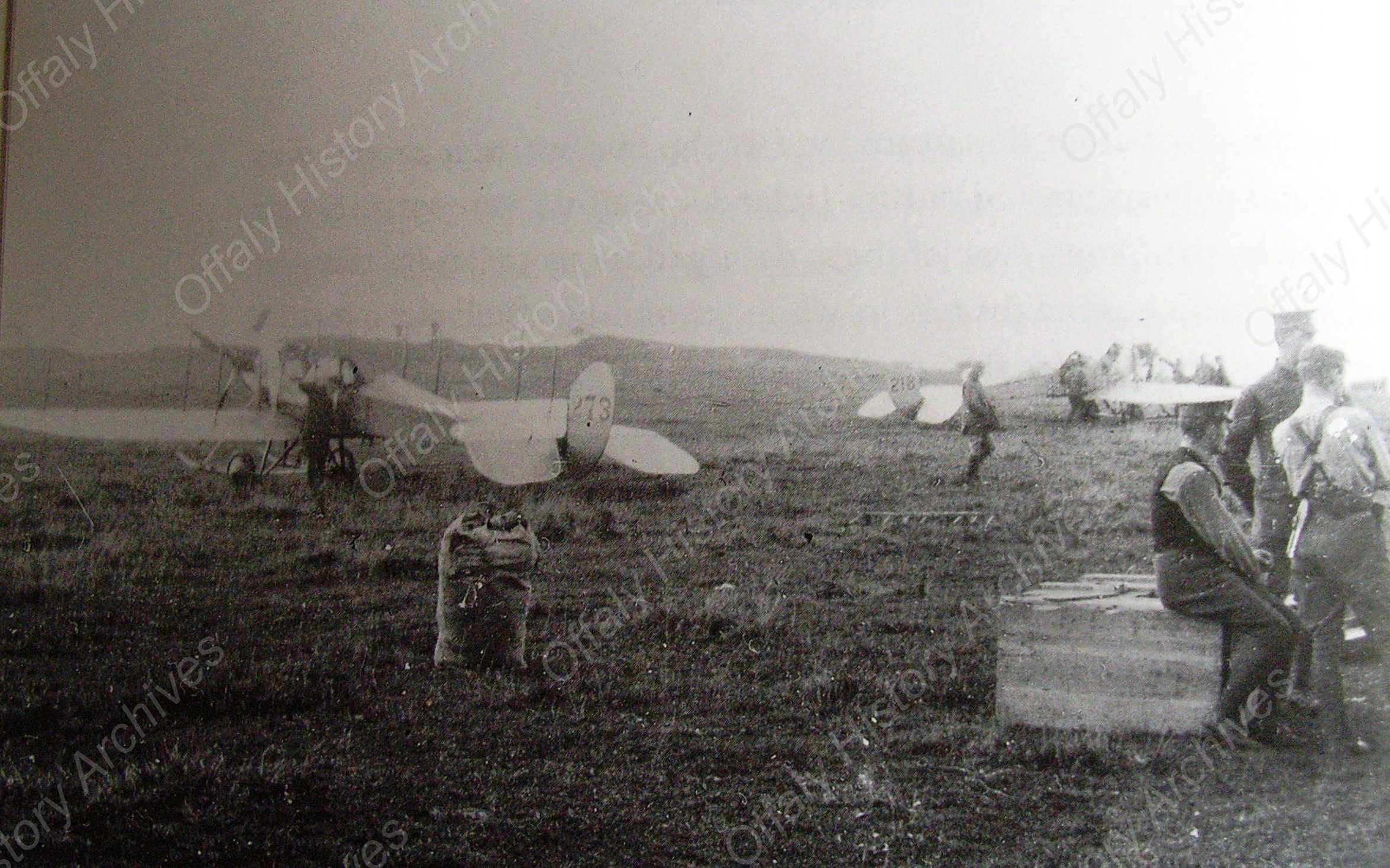
    No 2 Squadron at Limerick in 1913.
    No 2 Squadron at Limerick in 1913.

    In 1910, about six weeks before the first successful powered flight in Ireland by Harry Ferguson in Co Down, the King’s County Chronicle reported as follows, ‘Mr Michael Carroll, cycle mechanic, conducted experiments in aviation in the hills adjoining Birr reservoir. An apparatus constructed from calico and bamboo made one or two fitful attempts to ascend. The incredulous may laugh at his efforts but it should not be forgotten that every great invention has its beginning in failure.’ One week later it was noted that the Engineering and Scientific Association of Ireland [founded in Dublin in 1903] had been discussing aviation, ‘The opinion was expressed that flying through the air was not an accomplished fact, though eventually it would be, that flying was not of any practical use and that men now engaged in a series of experiments in aviation would not die in their beds.’

    (more…)

    February 23, 2019

  • Jane Molony, the hot lover from Clonony Castle near Ferbane by Cosney Molloy. Blog No 121, 16th Feb 2019

    Spring is in the air and I decided to tip down to Offaly during the week of St Valentine’s and see my old friends in Killoughy and Banagher. There are a still a fair number of Molloys in that part of the world. Everywhere I go now I hear about Tullamore because of the new distillery and I think back to the time when some of my ancestors had distilleries in Tullamore, Kilcormac and Banagher. As to Molonys I was told once by a Tipperary man that there are at least 22 variants of the name so good luck with the searching for this family.

    IMG_0265
    Clonony Castle August 2018 with Barrister Molony and Sir Matthew de Renzi

    Clonony Castle
    I was down before Christmas and got to visit Clonony Castle where the charming woman Rebecca Armstrong resides and is the hostess for seasonal and summer events there and has the old castle open to the public. I believe she restored it herself and is there about sixteen or seventeen years. She has done a great public service and I suppose got no grants of any kind. Had the OPW done the job you can be sure it would have cost millions and be closed half of the year.
    De Renzi and Clonony
    Anyway enough grousing. We Molloys are nothing if not resilient. I asked some of the big wigs in the Offaly Historical Society to find out more about a barrister by the name of Edmund Molony because I came across an inscription that he put up for his wife in a London church which seems to have been as ample as was her love for the same Edmund. It struck a chord because of my pre-Christmas visit to that lovely old castle which is near the Grand Canal and the town of Ferbane.

    (more…)

    February 16, 2019

  • Memories of Church St. Tullamore in the 1960s and 70s: living in flatland. Imelda Higgins. Blog No 120, 09 Feb 2019

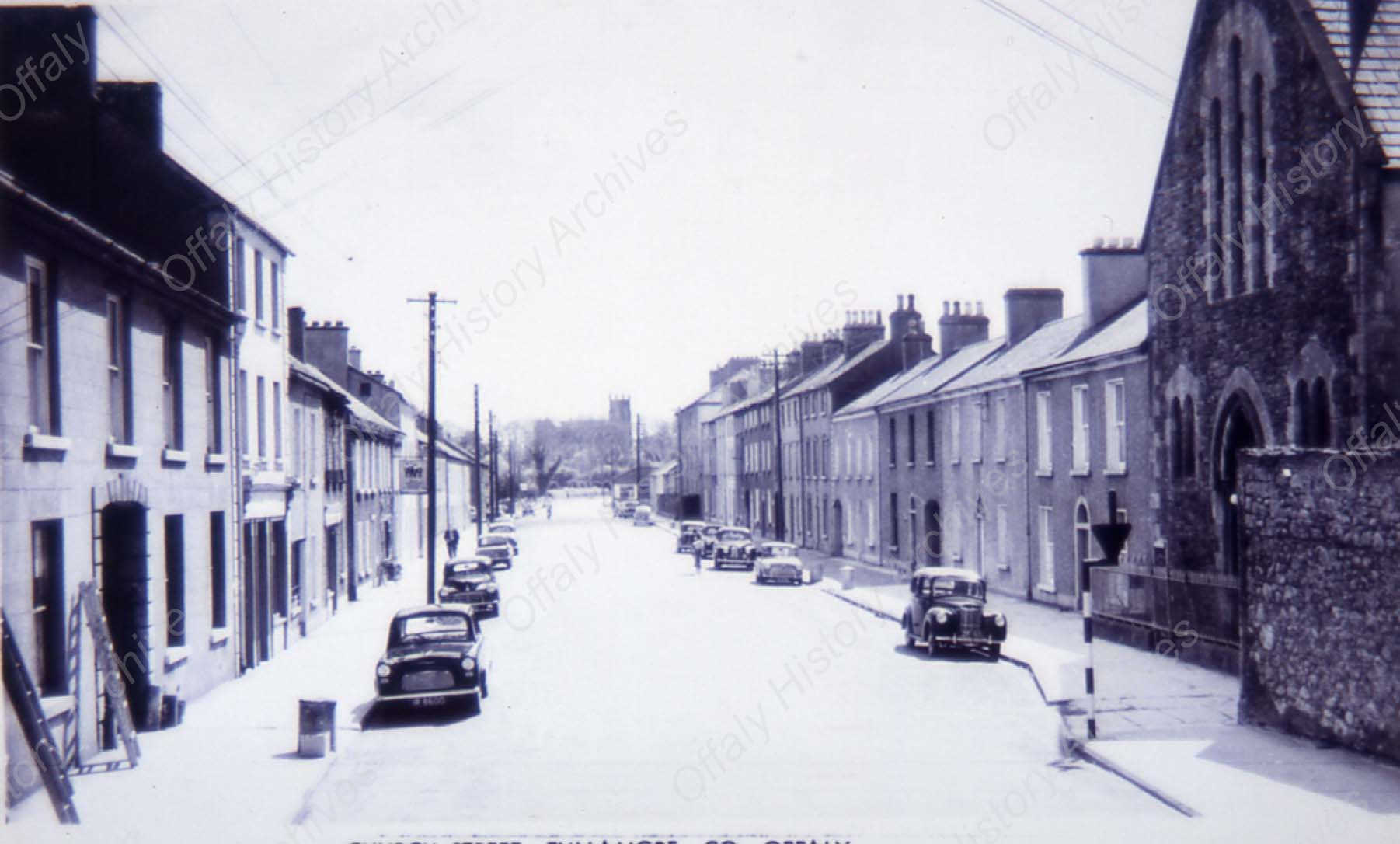
    027 Church Street c.1960
    I left Tullamore years ago but I enjoy reading the Offaly History blogs. A friend of mine died there recently and it brought back many memories of my time in a flat in Church St, Tullamore. I was there in the late 1960s and 70s and it had certainly changed when I saw it lately. I came to work in the hospital from a small farm near the Mayo Sligo border and found the midlands a bit strange at first. I came to love Tullamore. I lived in hospital accommodation at first but eventually a friend and I branched out into a flat. There were lots of flats in Church St in those days. Nobody called them apartments! We were down near Merrigan’s furniture store in the terrace below the Methodist church. There were two of us. We had one bedroom and a living room. Our kitchen was actually little more than the passage between the two rooms with a two ring cooker and oven, a sink and a little press. Ikea eat your heart out! We shared a bathroom and toilet with the girls across the corridor and it was fine .We took turns to clean it and we never fought! We also took turns to answer the phone in the hall and answer the front door. We all certainly knew each other’s business! There were lots of people living in similar flats right along Church St and we knew each other well to see. You could set you watch by one lad who used to drive his car around from Church St to Harbour St every morning to collect his paper from Francie Gorry ! I think he was one of the teachers from near the Manor.

    (more…)

    February 9, 2019

  • Offaly and the First Air War: Joe Gleeson. Blogs No 119, 02 Feb 2019

    2_D.H.4
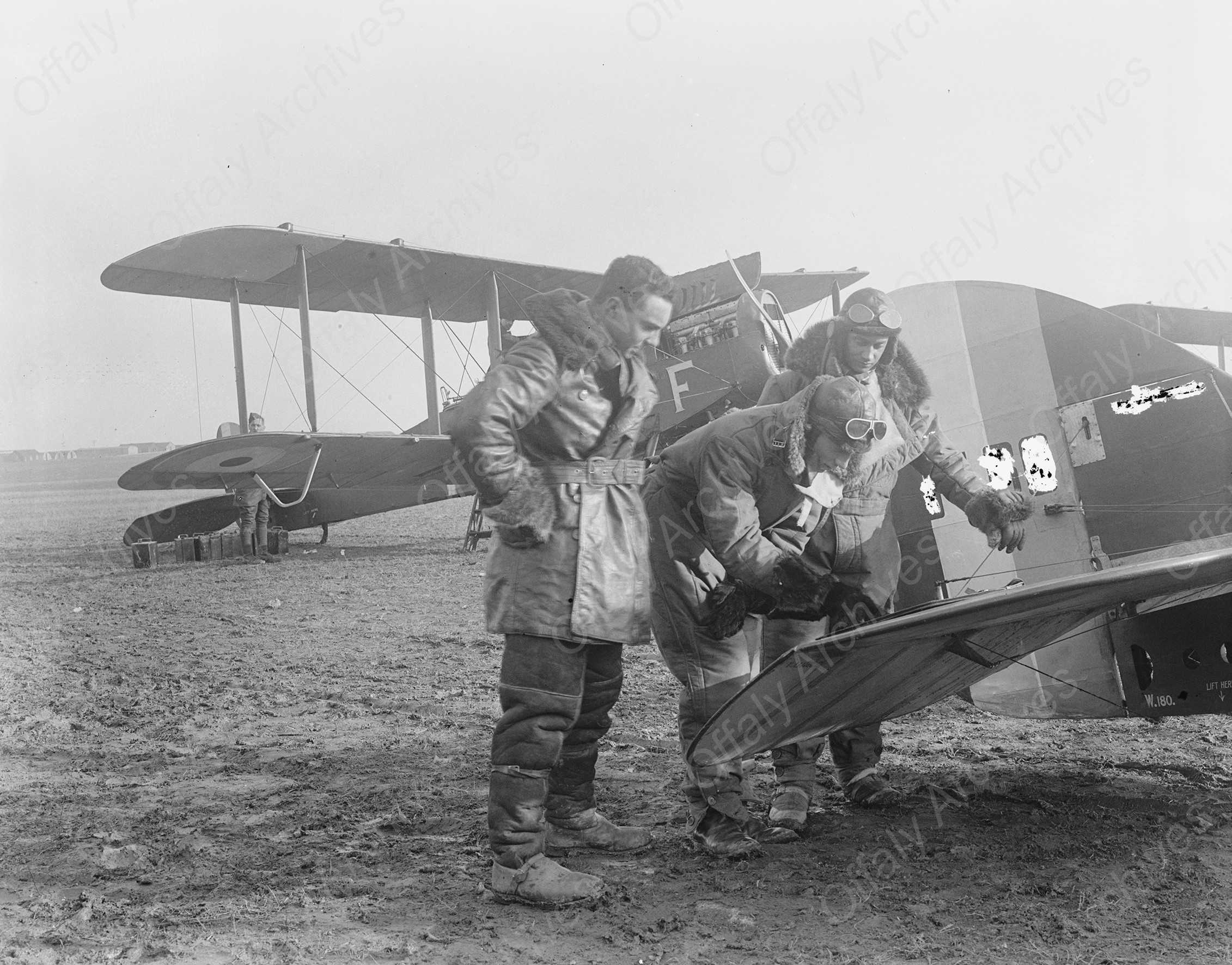
    2. D.H.4 bomber, aircrew posing with map (IWM, Q12021)

    Offaly had a small but significant part in the early years of military aviation. In September 1913 Offaly was an important base for some of the earliest uses of aircraft in the annual British Army manoeuvres; some of the Royal Flying Corps’ earliest crashes took place in Offaly during those operations. Approximately 85 men who served in the Allied flying services were born or from Offaly, but their impact was far greater than would be expected. Ferbane hosted an operational wartime base at ‘RAF Athlone’, and there was a landing ground at Birr during the 1918-1920 mobilisation period.

    (more…)

    February 2, 2019

  • The pivotal role Tullamore Harriers has played in the social fabric of the midlands by Kevin Corrigan. Blogs 118, 26 Jan 2019

    inside 4

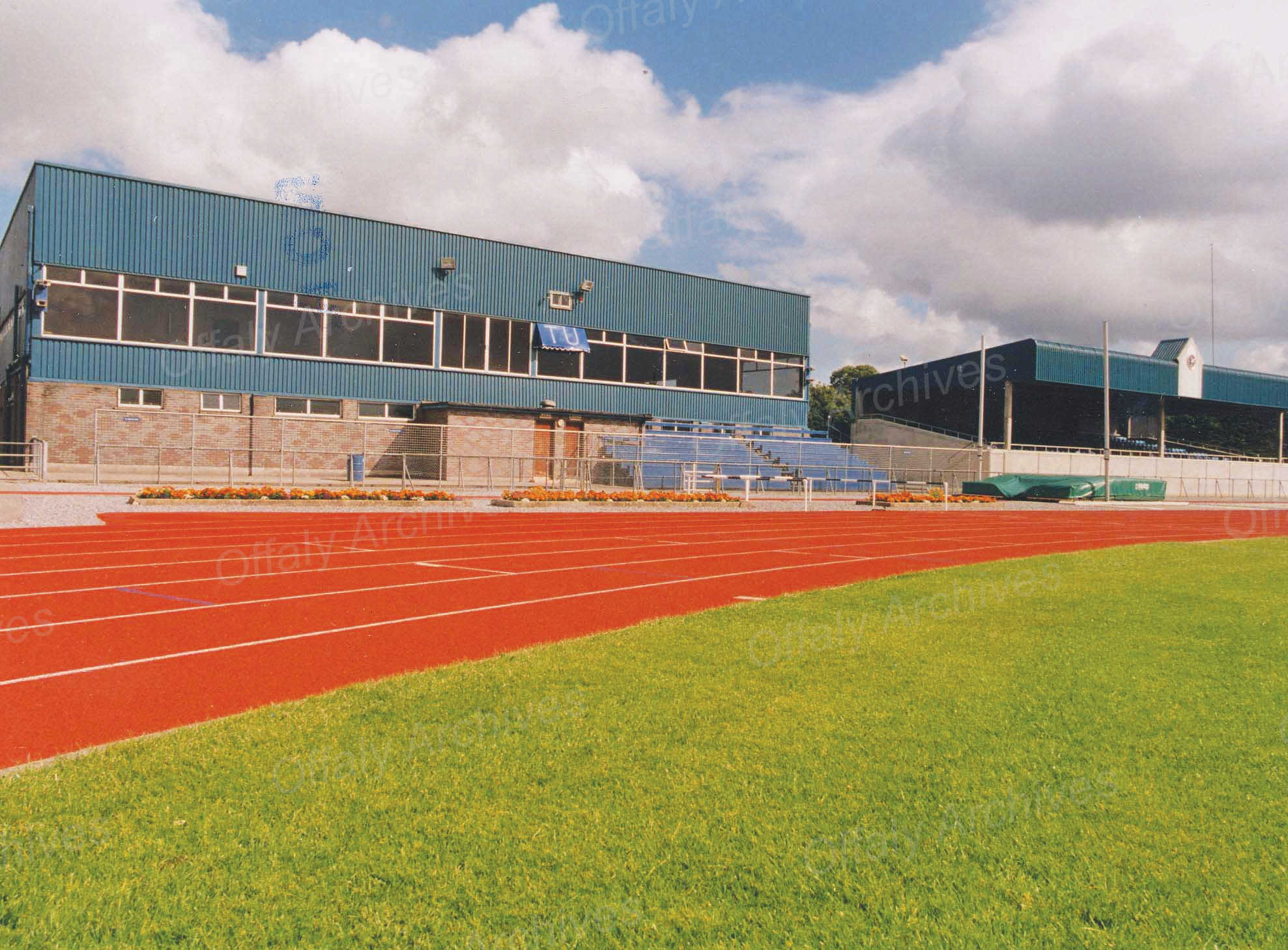
    WHEN a group of nine young men, mainly in their 20s at the time, gathered in William Street in Tullamore on a Winter’s November night in 1953 to form a new athletics club, they could hardly have envisaged the pivotal role it would play in all facets of life, not only in the town but the wider midlands.
    Invited by Eddie, known as Tobin, Clarke into the warmth of Clarke’s Hairdressers, where one of the founders and a future long serving chairman Noel Gowran worked, the formation of Tullamore Harriers was a somewhat controversial move at that time.
    There was an athletics club in existence in the town, Columban, and they resisted the attempts to form a new club in competition with them. It meant that it took the casting vote of the chairman, Br Kenny, an Oblate in Daingean Reformatory, to bring Tullamore Harriers into existence when they sought permission to affiliate at a meeting of the Offaly Athletics County Board – most of the founding members worked in Salts at that time and they essentially sought permission to change the name of Salts Athletics Club, which was confined to factory workers, to Tullamore Harriers, which could take in membership from the general public.

    (more…)

    January 26, 2019

  • The famous suit of ‘ Tullamore Tweed’: a story from the Land War of the 1880s by Maurice Egan. Blogs No 117, 19 Jan 2019

    Tullamore gaol and a cartoon from St Stephen’s of November 1887

    tullamore gaol
    o'brien from st stephen's 11 1887

    The remarkable story of Land Leaguer, Henry Egan and his inspired visits to Tullamore Gaol. (November 1887-May 1888)
    The brothers Henry and Patrick Egan were well known in the Midlands as proprietors of the acclaimed merchant firm P. & H. Egan’s Tullamore. Both brothers were active Irish nationalists. Henry was a founding member and secretary of the Tullamore branch of the Land League. On Monday 17 October 1881 he was arrested under the Coercion Act of 1881 and imprisoned at Naas gaol. He was accused of being one of the organisers of a monster meeting held at Clara, protesting the imprisonment of Charles Stuart Parnell, the Land League President, four days earlier. Henry was released after 5 weeks.

    In 1887, when the Land League leaders William O’Brien, M.P. (Mallow) and tenant farmer John Mandeville were imprisoned at Tullamore gaol, Henry Egan became a regular visitor of his fellow members. In fact, he and his brother-in-law, Dr. George A. Moorhead, visited the gaol upwards of thirteen times per day. They were not alone as hundreds of townsfolk joined them in their quest to put pressure on the authorities to release the two ‘political prisoners’. Mandeville and O’Brien refused to wear official prison garments, protesting their non-criminal status and declaring themselves ‘political prisoners’. The wardens, on instruction from the Tullamore gaol governor and the Chief Secretary of Ireland, Arthur Balfour, responded with beating them, stripping them of their clothes and putting them on a diet of coarse bread and water. Both were released on Christmas Eve 1887. Mandeville died seven months later, and an inquest found his death was because of the severe treatment received at the hands of the wardens in gaol.

    In nationalist circles the two became known as ‘The Heroes of Tullamore’.

    (more…)

    January 19, 2019
    prison reform

  • ‘Fit as fiddles and as hard as nails'[Howard Bury of Charleville and Belvedere] by Jane Maxwell. Blogs No 116, 12 Jan 2018

    img_0001
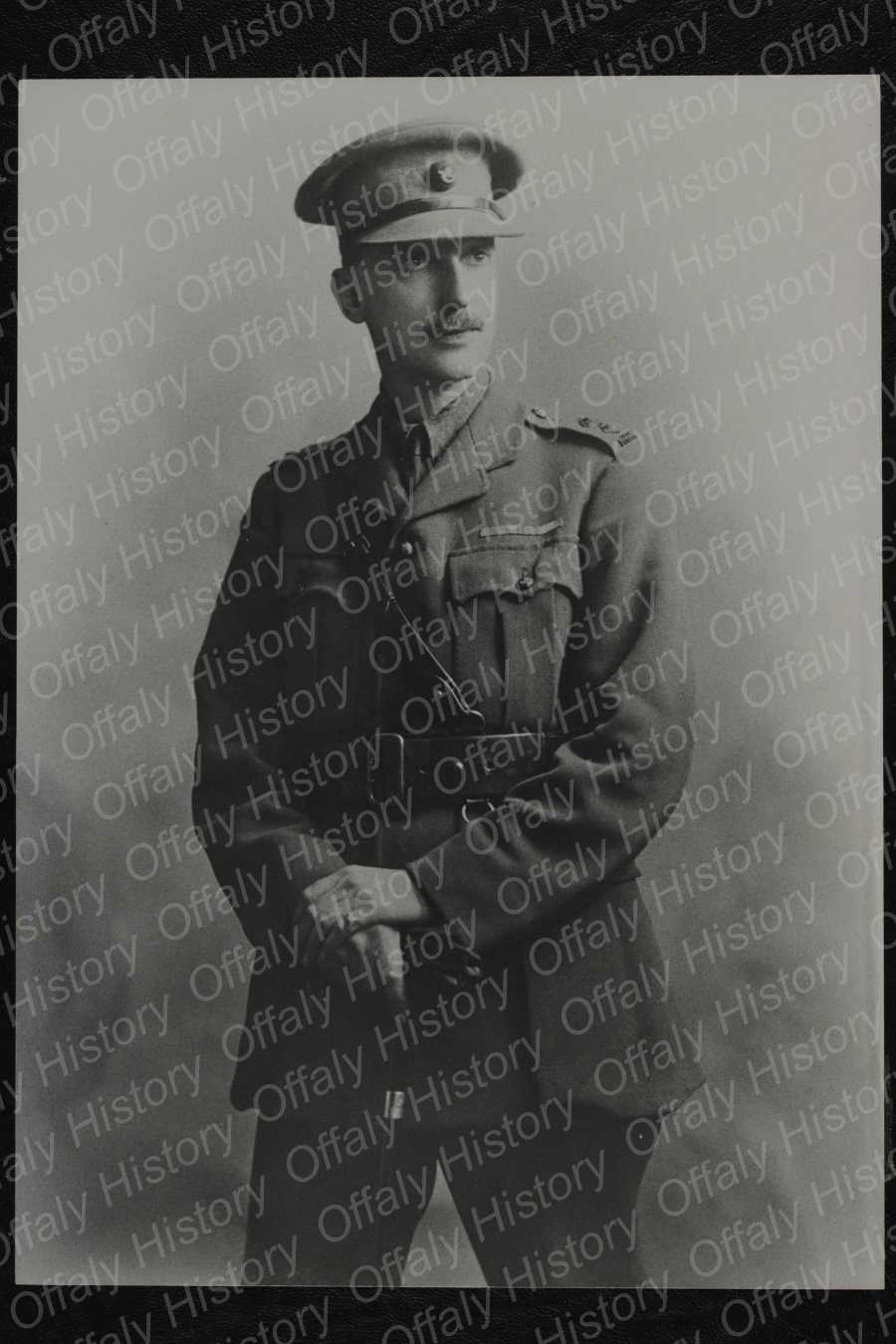
    Charles Kenneth Howard Bury of the Royal Irish Rifles, probably c. 1914. Courtesy of David Hutton Bury.

    At the beginning of the centenary commemorations for the War, at the Theatre of Memory Symposium at the Abbey Theatre in 2014, President Higgins spoke of the commemorative activities in terms of myth-making and ethical remembering. He remarked that ‘for years the First World War has stood as a blank space in memory for many Irish people – an unspoken gap in the official narratives of this state’. He suggested that ‘literary memoirs written during or after the War can be enabling sources for ethical remembering’ and advocated using the commemorative period to create ‘opportunities to recollect the excluded, to include in our narratives the forgotten voices and the lost stories of the past’. In the aftermath of the death in the last few years of all the veterans of the War, to find these stories and these voices we must go back to the archives and seek out the diaries, memoirs letters and photographs of those who served. The Library in Trinity has a fascinating collection of this kind of material, gifted and bequeathed over the decades and, to mark the centenary of the War, the Library decided to publish this material online.

    Fit as fiddles and as hard as nails is the name given to the online project which allows free access not only to digitised images of over 1500 pages of WW1 letters and diaries from the Library’s special collections, but transcriptions of the texts are also provided. There are nine war-time authors involved – almost all officers – and altogether they produced three sets of letters, four diaries (including a very brief home-front diary by the single female author among them) and three memoirs (two of which are prisoner-of-war accounts). The authors served on both Western and Eastern fronts, and ranged in age from twenty years of age to thirty-three. Two of them won Military Crosses, and one of them received the DSO having been mentioned in despatches seven times. This was Charles Howard-Bury – the oldest of our authors; he was born in Charleville Castle, Co. Offaly in 1881 and was a career military man who went with the British army to India in 1904. He was present at the Battle of the Somme and was eventually taken prisoner in 1918.

    (more…)

    January 12, 2019

  • Poverty in pre-Famine Offaly (King’s County) By Ciarán McCabe. Blogs No 115, 05 Jan 2019


    In the decades before the Great Famine of the late-1840s numerous parliamentary inquiries were held into the condition of the poorer classes in Ireland. Political and social elites wished to understand the nature of Ireland’s seemingly endemic poverty in the hope of improving the social, economic and moral condition of the peasantry, as well as quelling the country’s tendency for social upheaval and political radicalism. The most significant of these inquiries was the Royal Commission for Inquiring into the Condition of the Poorer Classes in Ireland (aka the Poor Inquiry). Chaired by the Church of Ireland archbishop of Dublin Richard Whately (1787-1863), the commission sat between 1833 and 1836, holding extensive public inquiries (akin to court sittings) in parishes throughout the country, supplemented by extensive correspondence with persons of significance across the island, as to the social condition of the poor in their locality. The printed output of the commission – totalling more than 5,000 pages of detailed information, witness testimonies and statistics – constitutes an unparalleled source for the study of poverty in the pre-Famine period. The Poor Inquiry reports tell us much about County Offaly (King’s County) a decade before the Great Famine. (more…)

    January 5, 2019
    Death, disease, health

  • Frank Quirke: the boy who was abandoned to drown on Charleville Lake near Tullamore at Christmas 1901. Retold now by Cosney Molloy. Blogs 114, 29 Dec 2018

    145 Hanly - Charleville Lake winter scene
    Skating at Charleville Lake in 1962

    I was glad to get out of Dublin before Christmas and get down to see my friends in Tullamore, Killoughy and Banagher for a pre-Christmas visit and bask in the mildest winter for many years. Dublin is mad at this time of year and what with one restaurant telling us about steaks at €120 I had to get down to the nice butchers in Tullamore – old Tormey’s is still going strong and now you have Grennan’s, Hanlon’s and a few more I would not know. I miss Paddy Mac’s, Cleary’s and Joe ‘the Butch’ Kearney of course. All old friends gone to the heavenly pastures.
    I can remember the desperate cold of December 2010 when it was as low as -20 and I can recall the winters of 1982 and 1962 when we could skate on Charleville Lake near the town of Tullamore and to the east of Colonel Bury’s Charleville Demesne. I have only a hazy memory of the long winter of 1947 when the Grand Canal was frozen over for months and some of the Egan boys of the Tullamore merchant family are said to have made it to Dublin skating on the canal for some lark or wager. All good simple fun it was. I understand that Dr Boediccker who worked at Birr Castle until the First World War kept weather records from about 1872 and was able to state that 1909, 1896, 1893 and 1890 were also very cold. Another very cold year was in 1901 when a young boy drowned at Charleville Lake, trapped by the ice, while up to 200 people looked on and did nothing.

    (more…)

    December 29, 2018
    Death, water

Previous Page Next Page

Blog at WordPress.com.

Loading Comments...
  • Subscribe Subscribed
    • offalyhistoryblog
    • Join 376 other subscribers
    • Already have a WordPress.com account? Log in now.
    • offalyhistoryblog
    • Subscribe Subscribed
    • Sign up
    • Log in
    • Report this content
    • View site in Reader
    • Manage subscriptions
    • Collapse this bar