
Down the Decades was launched in Rahan Hall in November 2023 with a large audience and since then the new book by Tom Minnock has proved to be extremely popular with more copies printed to meet the demand. We asked Tom Minnock to tell us in this blog article about how the book came about. Born in 1922, the life of George Griffith tracked the life of the new Irish State, down through the decades. George never left his native Clonshanny giving him a local perspective on community life in the area during a fascinating period in the history of Ireland and the world. George Griffith died in March 2022.
Tom’s book is a collection of George’s reflections on that century up to 2022. Tom has set the context both locally and globally for each decade.
Tom Minnock writes:
The book is out there now and it is a peculiar feeling that is hard to put into words as something that you have spent countless hours living with takes wings. A few random words sketched out on a large note book and transferred on to a computer screen had grown and grown over time. How did this come about and why do I think it was important to publish it and expose myself to my community to be judged? I would like to share the journey and in doing so challenge you all reading this to consider writing or sharing your stories with somebody who will set them down for a future generation to ponder and continue the process.
Because local history is about you and your life and it is important that the ordinary person has their opportunity to be heard and recorded as well as professors and politicians who can be sometimes remote from everyday life.
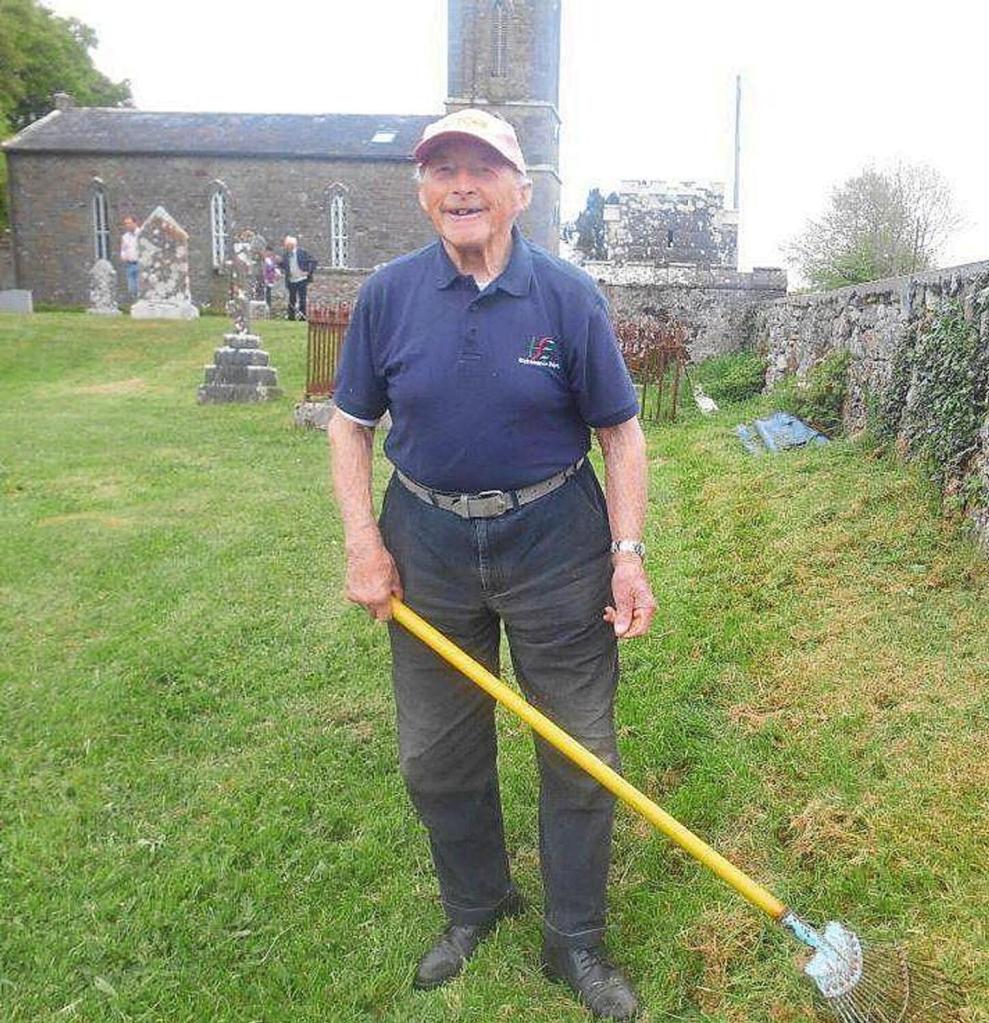
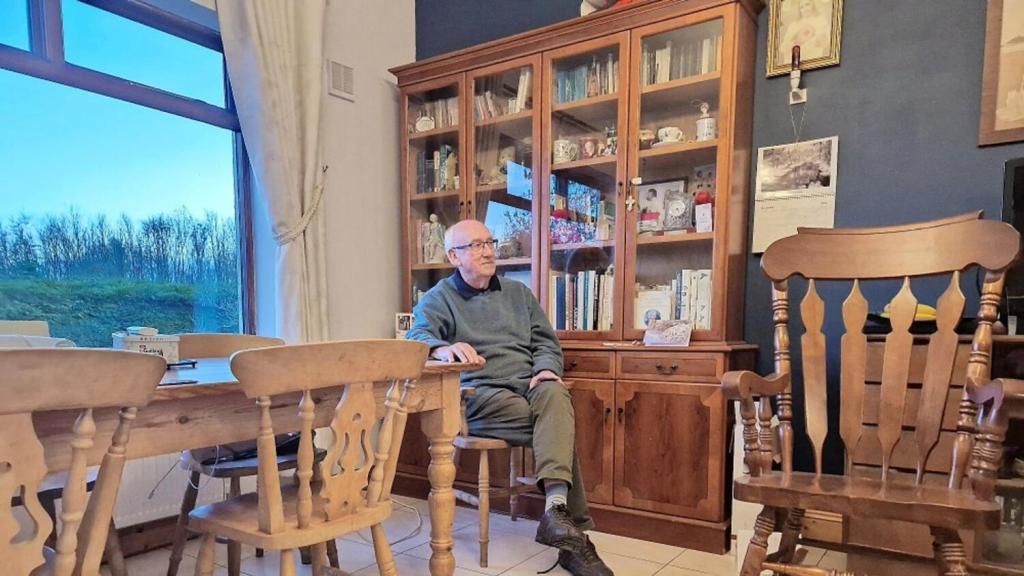
My journey began with the words of my wife Mary to me ‘’George knows you better than you do’’, this as Geoge Griffith left the house following our chat about my grandfather and then my wider family in Clonshanny. ‘’Very profound Mary’’, I replied as I closed the notebook but very true because that conversation with George was prompted by my desire to know more about my grandfather who died before I was born. Now, like many, I wished I had asked my father the many questions that sprang to mind now when he was alive. These questions would help us to discover where we came from and by extension who we are. Yes, these words, ‘’George knows you better than you do’’ made sense.
Every story has a back story and I found myself back in Ireland after 44 years living in the UK and by an unexpected set of circumstances living in Clonshanny on land that had been owned by my grandfather and next door to the house where my father was born. The same house that I visited many times, as a boy, to see my grandmother.
My father knew George and his family and although I had not met George in my youth I felt I knew him as my father talked about him and thought very highly of him.
The opportunity to ask questions about my grandfather was not to be missed and this journey began of two men chatting together about the past where the talk moved from the Minnocks to the Griffiths and to other families as we explored aspects of rural life. Now every journey has changes of direction on the way and this was no different.
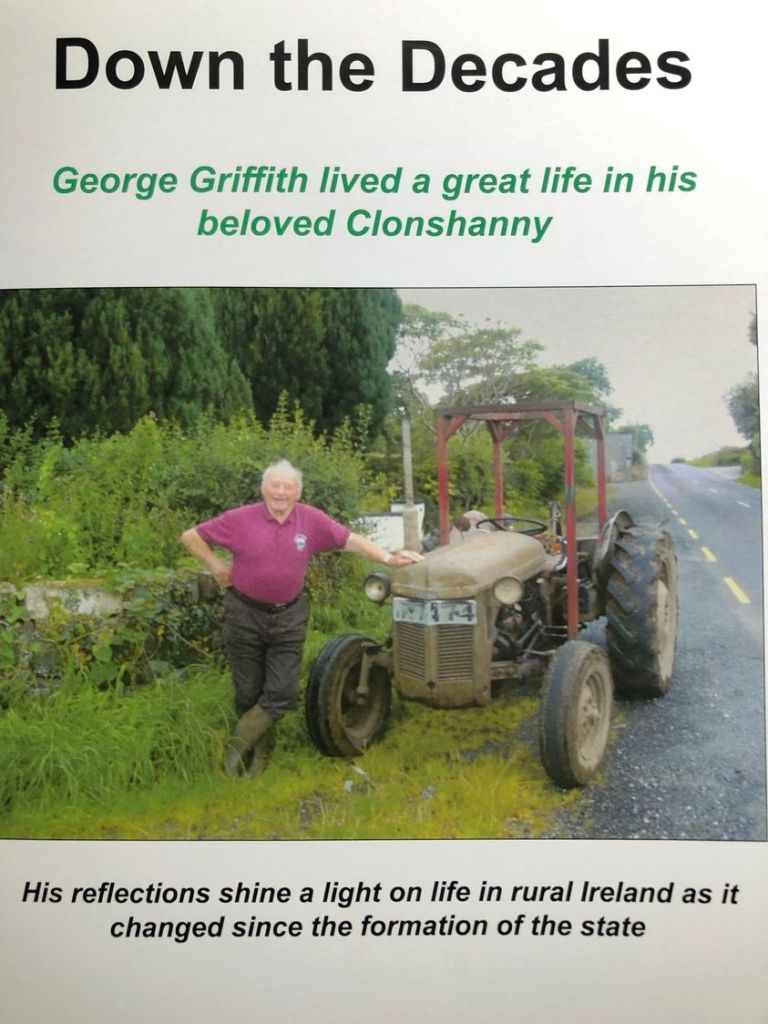
The early part was easy and undemanding as the stories unfolded in a random manner as I took a few notes and then transferred the information to the computer making more notes to clarify points and maybe I would ask a few questions to expand on this or that when I next met George. It became a habit and when events were of a certain time and outcome I would check these with a little research. I have to say here that all his information was spot on. This research might also trigger off a few more questions about events of the time and result in more material. Now, as many of us have heard a number of times a story teller will leave with the words “Shure I could write a book”, and this was the case with George. We continued on in this random manner and the “Shure I could write a book” changed to ‘’I would like to write a book’’. It took me some time to process this change by which time I was informed that I was a ‘’well educated man’’ and “good at the writing’’. George, as they say, knew what buttons to press and as I said earlier that my father had great time and respect for George and I wanted George to think well of me. I soon agreed that we might as well get our conversations into some order and make the book. My ambition at this time was to produce a number of pages on the computer with a few pictures inside and a cover with George and his tractor on it. I would bind it nicely and pass on a few copies for George and his family. Job Done.
What was I thinking?
When I sat down and scrolled through the contents I was surprised that there was so much material. I re read through it to see if there were repeats and I could start deleting. There were no repeats. The stories were interesting and had a lot of factual information about the local rural life. It had humour; sadness; words of wisdom; hard times; happy times and references to social issues as well as personal observations on the uneasy religious dynamic that existed side by side with a community that was living and cooperating together each day except it appeared on Sundays.

A change of journey here big time and what am I to do. The random nature of the pieces needed to be connected in some way. To cut a long story short the best outcome seemed to be to divide the book into decades of Georges life and use the information I had gathered when checking facts to extend it into an insight into the happenings in the World and Ireland at each decade. This took many months to carry out and meanwhile more material built up.
Having got the discipline and structure to record the events, I was also aware that I needed to give myself the opportunity to get George to reflect on what we had written and to expand or comment on what went before. There were also some areas of local history that did not easily fit in a particular decade. This meant that the last chapter became the mostly leisure years and the reflections. I could see that George was thinking as a boy, a youth, a married man with a family and then a man looking back on his life as a grandfather so his perspective would change and it would be interesting to give him the opportunity to reflect on what was written.
I shared this with George as we made progress and he was in agreement. He was amused that he would share the book with great people and events. He was particularly amused that there was a description of men walking on the moon as he was roving around Clonshanny in his prized 1955 Ferguson tractor. I pointed out that he got more written words that they did as it was his story primarily.
Then another change of direction when suddenly George passed away, albeit as he always said to me how he wanted to, attending to the cattle. I was devastated and with Covid coming in with its isolation and fear and my good companion gone, the book was parked as the change in direction became a full stop.
It was well over a year before I approached Daphne with my idea to revive the book and it was greeted with great enthusiasm, backed up by the fact that George had always kept a diary that they both contributed to it since they married. I had often been asked by George to “ask Daphne” as we explored more detail in many instances. Her contribution has been invaluable and the support of the family who were very familiar with Georges’ enthusiasm for the book was absolute. There is a lesson here for us all and it shows the importance of recording information.
This information supplied by Daphne allowed me to weave more stories and expand others into the decades until the book was complete.
This brought about another change of direction as the now completed story could be printed for the community to read. As I read through the chapters I realised that the content could be contrasted with a much different world environment now unfolding than the one that existed when George and I set out on the journey.
Like most of us of the older generation I was worried that the uncertainty of the times with Covid followed by the Ukrainian war and the economic upheaval was likely to impact on our sons, daughters and grandchildren both mentally and financially.
Reading through George’s story I began to see a parallel between the past and the present as he had seen a worldwide economic depression; a world war; an economy that produced a poor standard of living; a TB epidemic that was contagious with no vaccination and that it brought fear and trepidation to communities; energy shortages; high interest rates and the economic crash that brought the country to its knees.
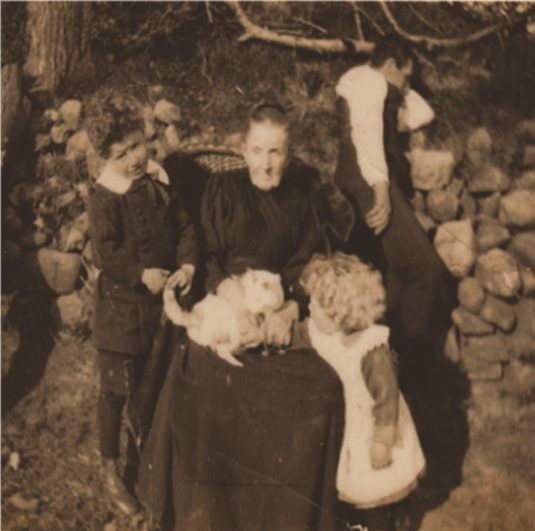
I could not resist the opportunity to use this story of a century with the challenges faced by George and his like in rural Ireland and hold it up as a beacon of hope for the young people who now face into a challenging and uncertain future.
George had a great life in his beloved Clonshanny and while his reflections shine a light on life in rural Ireland as it changed since the formation of the state, it is more than that as how he faced and overcame the challenges, can give hope to our young people.
So you, the reader, may think that you (or somebody you know) have had an ordinary life and have nothing valuable to say but it is for others to judge as I have with George’s story.
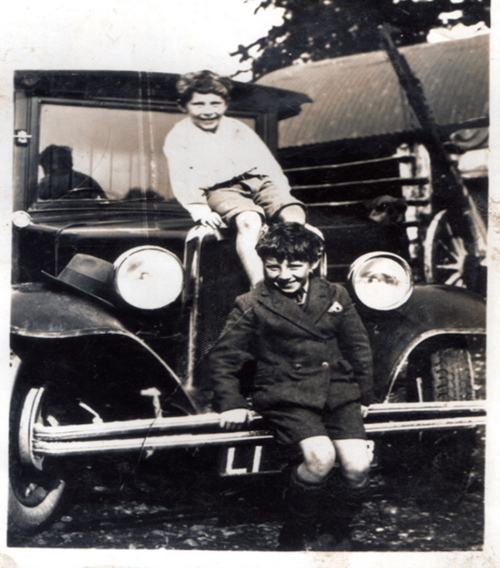
My challenge to you is to record your story or somebody else’s story, so that it can be retained as it is likely to mean more than you think.
Down the Decades is just the stories of an ordinary man who lived all his life in Closhanny, with an area of less than a square mile, who persuaded me to get it written down. But who is to say what an ordinary man is? I am glad I did and can share that journey with you.
So, who am I ? I am not a writer or a historian but I will confess to writing a series of papers on enterprise education in the UK. I was a recorder of George’s story as told to me and hopefully brought a little structure to it as well as taking the opportunity to identify and expound on what it might mean to young people (once a teacher always a teacher ! ) to encourage them to value local history. You could do the same.
Down the Decades, George Griffith lived a great life in his beloved Clonshanny, [between Clara and Ballycumber, Offaly] paperback, 110 pp, €15.00. Prepared for publication by Tom Minnock, launched 18 Nov. 2023. Available from Offaly History shop at Bury Quay, Tullamore and from our online shop at http://www.offalyhistory.com.
 offalyhistoryblog