

A singlehanded trip from the River Shannon to the town of Tullamore along the western section of the Grand Canal was conducted by the writer over seven days in August, 2023. The trip was conducted aboard the heritage vessel Bomb Scow a converted thirty-three foot Royal Navy seaplane tender. Our thanks to Donal Boland for this comprehensive overview of the Brosna Line, Shannon Harbour to Tullamore which is better presented as one extensive with its helpful picture coverage. This comprises articles 6 to 10 in the series on Grand Canal Offaly.

Content
- Overview
- Entrance from the River Shannon
- First Lock Number 36
- Lock 36 to 35
- Lock 35 to 34 Shannon harbour
- Lock 34 to 33 Clonony Barracks
- Lock 33 Belmont…
- Belmont to Tullamore
- Memories
Appendix 1: Hull and Spoke Concept
Appendix 2: The Napoleonic Aspect
1. Overview
A singlehanded trip from the River Shannon to the town of Tullamore along the western section of the Grand Canal was conducted by the writer over seven days in August, 2023. The trip was conducted aboard the heritage vessel Bomb Scow a converted thirty-three foot Royal Navy seaplane tender.
The trip, was a fact-finding event to record the on-water experience as part of an initiative to highlight the possibility of attracting more visitors to this section of the canal. Described here as The Grand Extension, previous research had revealed its construction was later than the eastern section of the canal and forming part of the British Militaries Napoleonic defensive network.
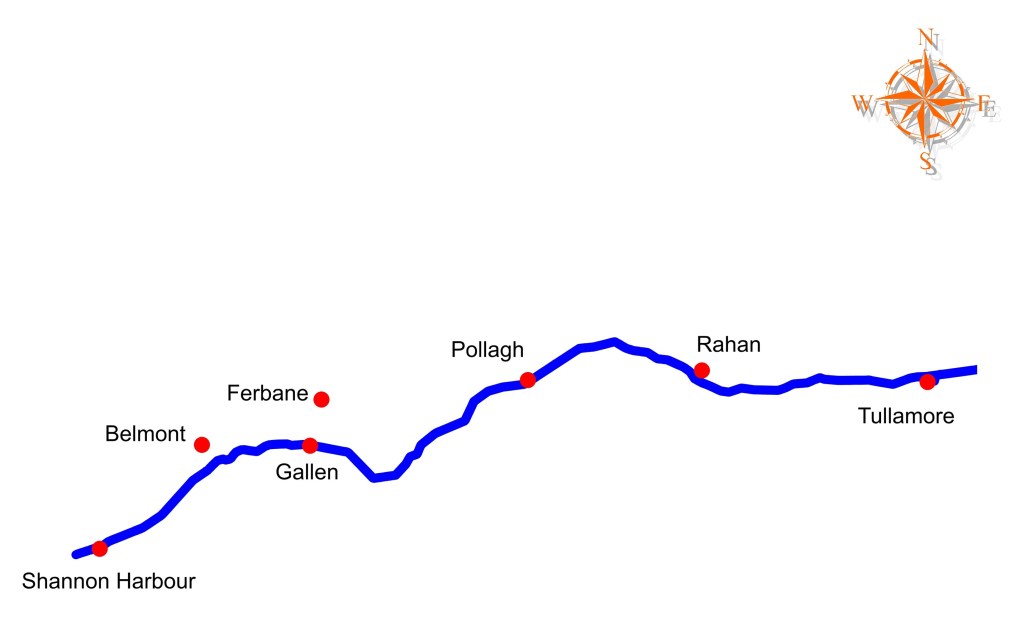
The route commenced in the west on the callow fringed landscape of the River Shannon, travelling through boglands on a raised section of the canal and terminating to the east in an Esker dominated upland landscape, encountering the villages of Shannon Harbour, Belmont, Ferbane, Pollagh, Rahan and the town of Tullamore.
The Stllwater Navigation extending for a distance of twenty two miles and rising some ninty feet is comprised historically of the waterway, ten locks, twenty bridges, eighteen aquaducts, four feeders and four spillways. Presently the waterway is managed by four lock keepers or waterway patrollers with overlapping areas of responsibility, who operate the lock systems and control the sections water levels.

2. Entrance from the River Shannon
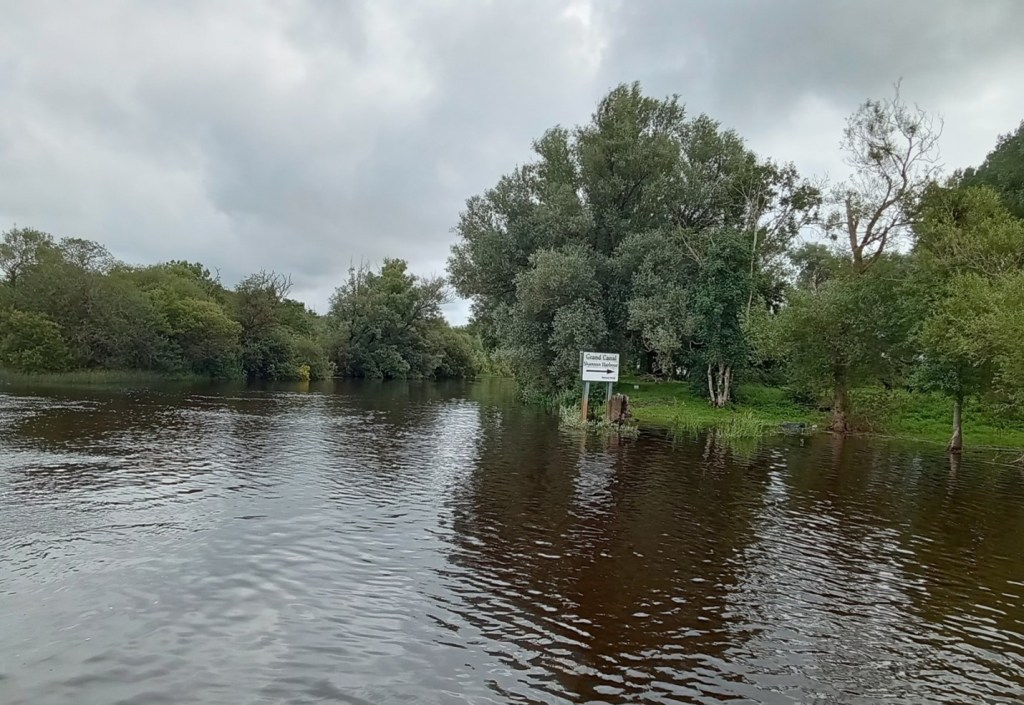
The Stillwater navigation of The Grand Extension is accessed from the River Shannon by way of the Brosna River and its confluence with the Shannon. This entrance is characterised by magnificent over-hanging foliage to the north and earthen banks associated with the canal’s construction to the south. An isolated, derelict bridge-keeper’s cottage that stands on Bullock Island is passed as you enter the River Brosna waterway.
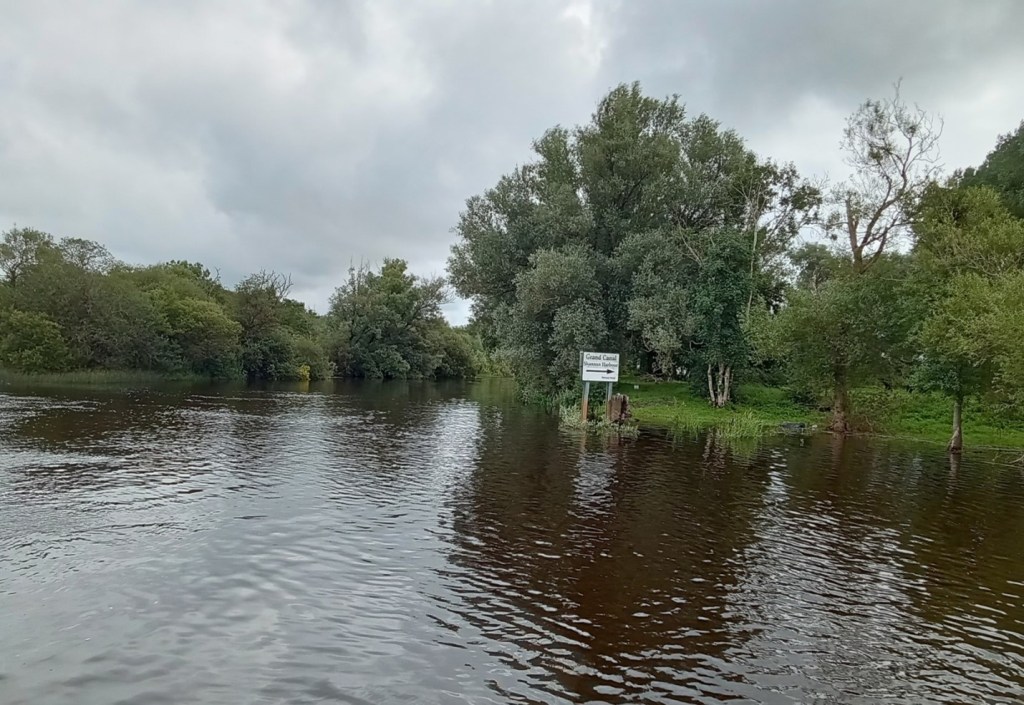
The confluence of the River Brosna waterway with the River Shannon
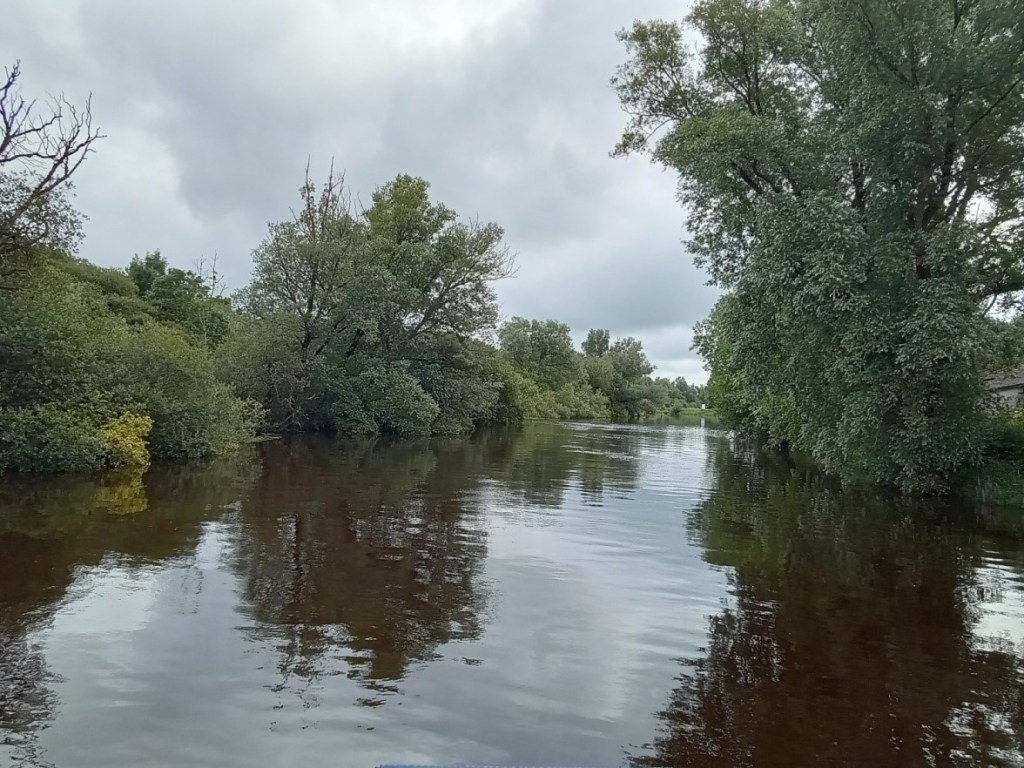
The River Brosna waterway

The confluence of the River Brosna Waterway and The Grand Extension
3. Lock Number 36
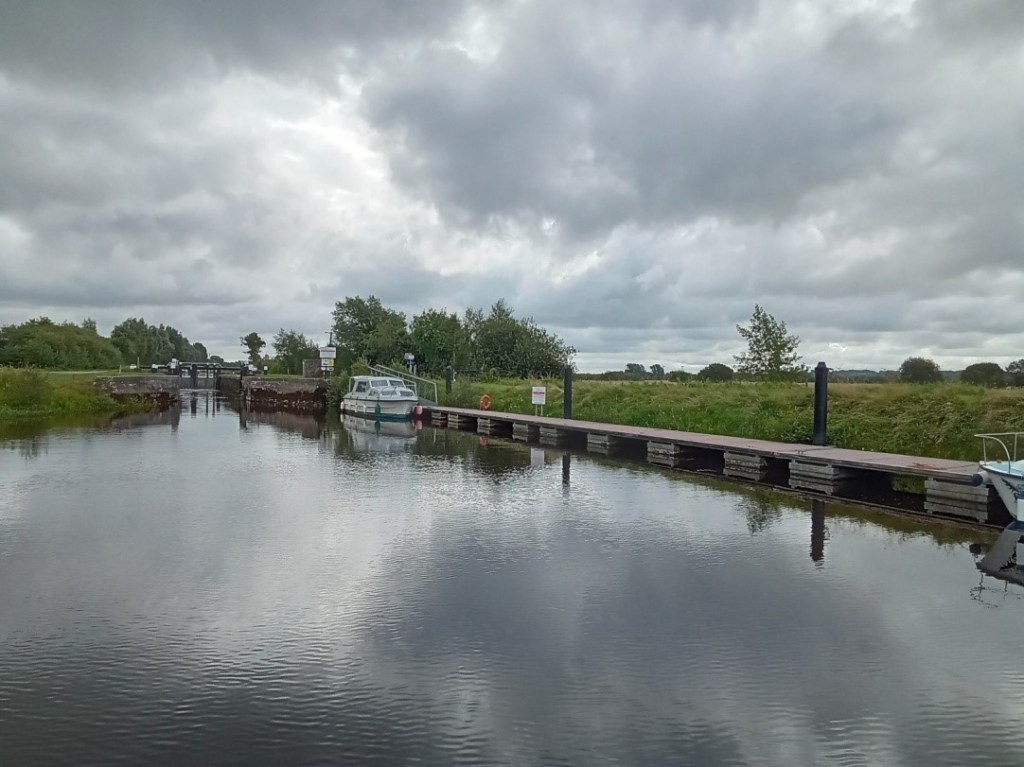
Lock 36 is the final, lowest lock on the Grand Canal system and the first lock you meet when arriving from the River Shannon. A long, floating jetty stands on the southern bank immediately below the lock, providing access to land by way of a large sloping ramp. The lock constructed of cut-stone is entered via wooden balanced, hanging gates that incorporate water control sluices, operated by the lock keeper utilising a rack and pinion mechanism mounted on the gates topside. The gates are opened and closed by way of the long balance beam that extends from each gate.
An engraved stone plaque mounted on the north wall of the lock, details the construction and features of the extension.



The empty cut-stone lock chamber and wooden gates

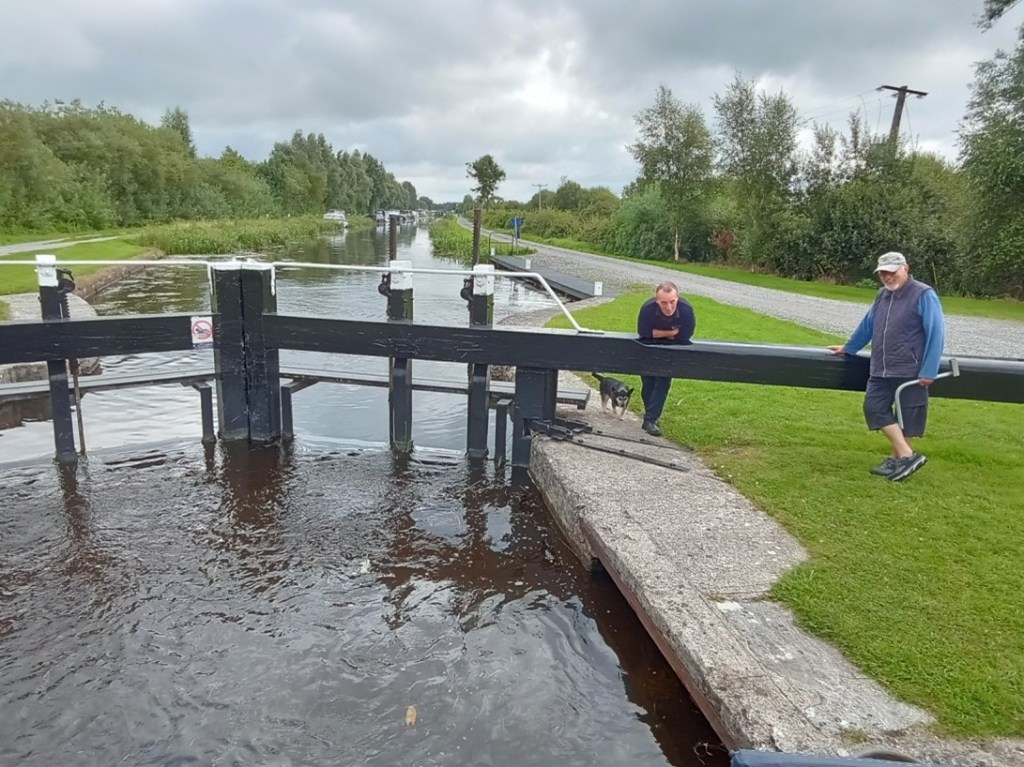

The upper lock gates opened and the ever-attendant lock keeper
4. Lock 36 to 35
This short section of the canal provides an initial experience and understanding of the Stillwater navigation. It is many times narrower than the River Shannon with a defined navigation path bordered by moored vessels to the north and a rich reed-based ecosystem to the south.

Entering the first section of The Grand Extension

The short canal section extending from Lock 36 to Lock 35

Lock 35
5. Lock 35 to 34
The second, Lock 35 on the system, provides access from the first level up to the second level which is comprised of Shannon Harbour, Griffith and Clonony bridges and a section of canal extending to the thirty fourth lock that contains numerous moored vessels for most of its length The waterway beyond the moored vessels starts to provide an understanding of the true characteristics of this Stillwater navigation.
A feature of this canal is the construction of bridges and locks immediately adjacent to one another, this allowed for the transfer of horses (which were originally employed to pull barges along the navigation) from one towpath to the other.

Entering Shannon Harbour
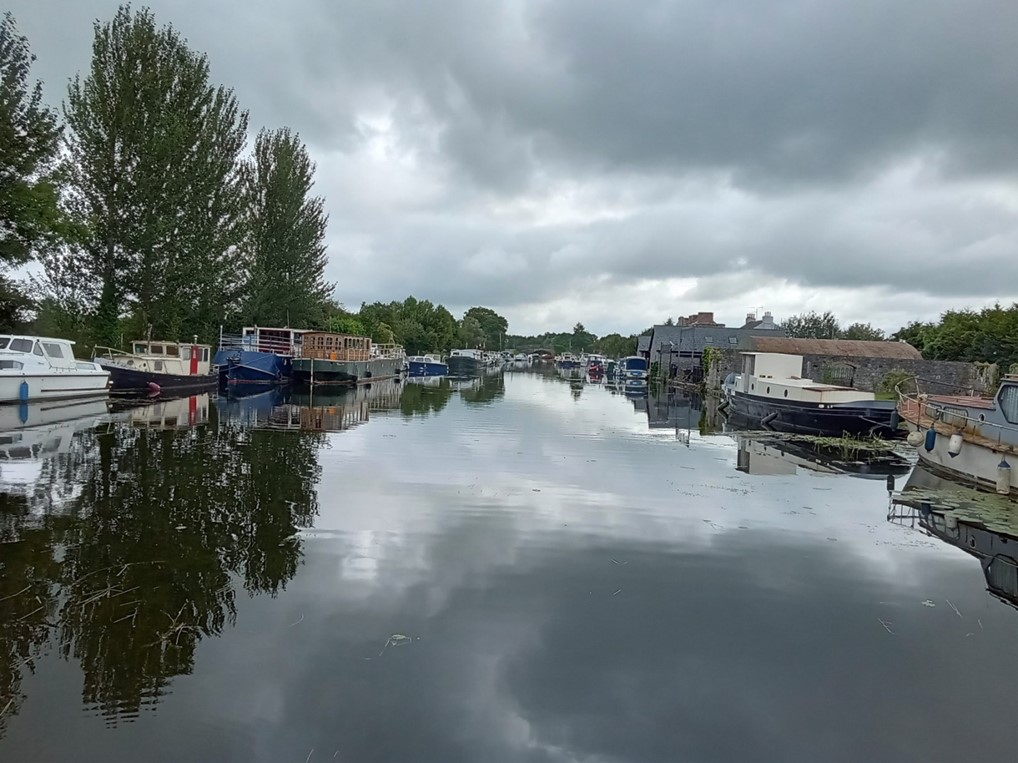
Shannon Harbour
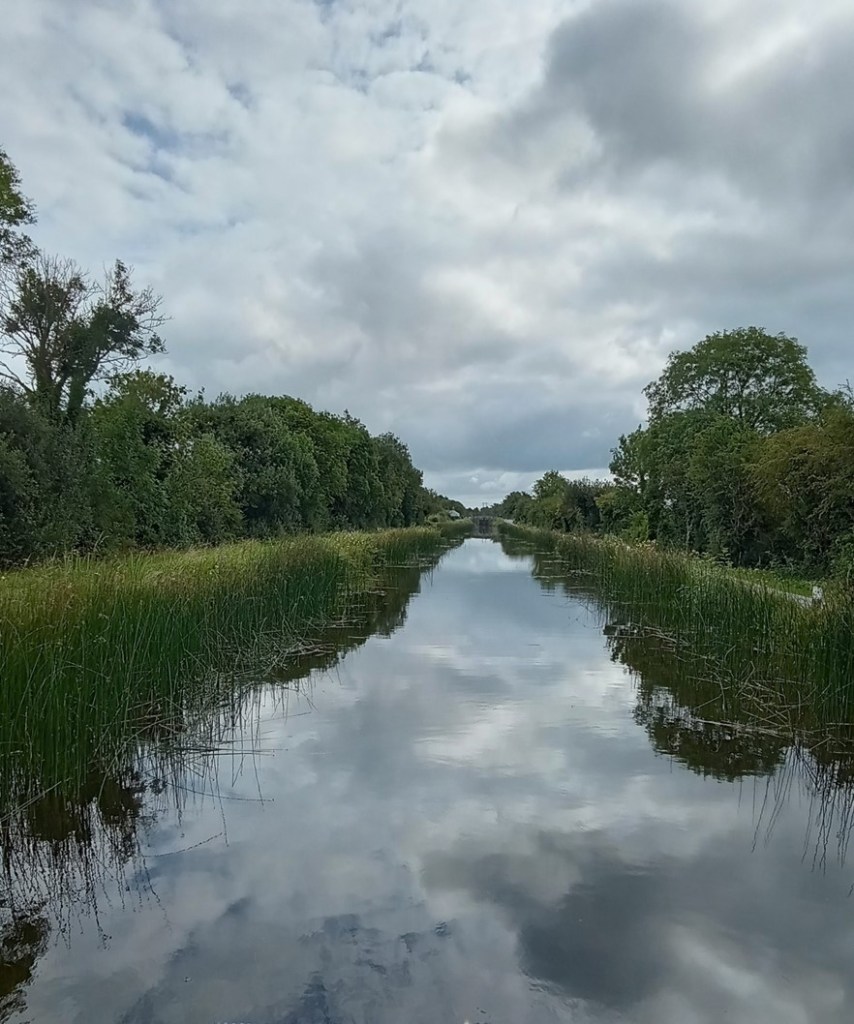
The canal extending to Clonony Bridge and Lock 34
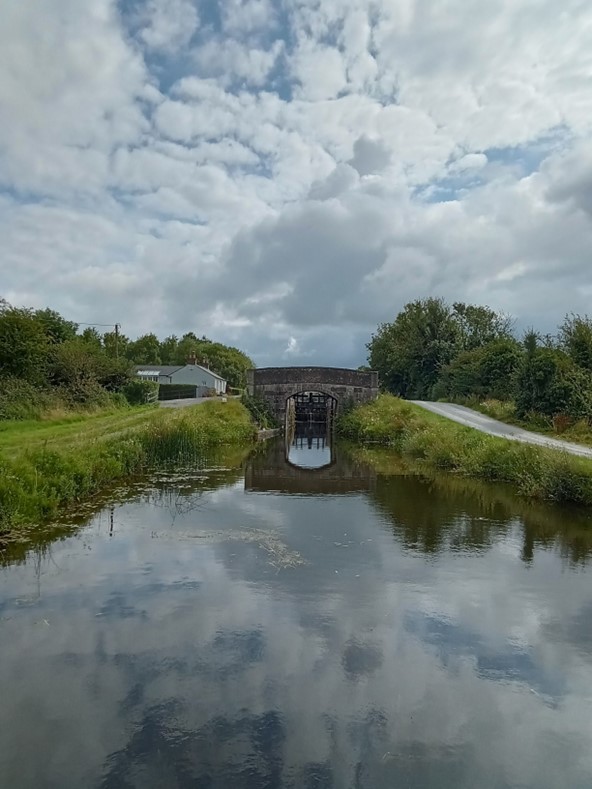
Clonony Bridge and Lock 34
6. Lock 34 to 33
The section of canal east of Lock 34 is best described as the military section as along its northern bank lies the remains of Clonony Military Barracks – most likely the military destination of the canal and the reason it was constructed swiftly. The military grounds are defined to the west by a wooden fence and metal gate and to the east by a long roadside timber fence. The towpath within the military grounds is substantially wider encompassing a lay-by or mooring area. Immediately east of the military grounds lies L’Estrange Bridge and Quay which was utilised by the L’Estrange family for commercial purposes possibly associated with the barracks.
The canal beyond L’Estrange Bridge and Quay displays its mature natural character as a tranquil linear still-waterway navigation mostly devoid of habitation and humanity broken only by the arrival of Belmont Mill.


The Eastern and Western boundaries of the Military Lands
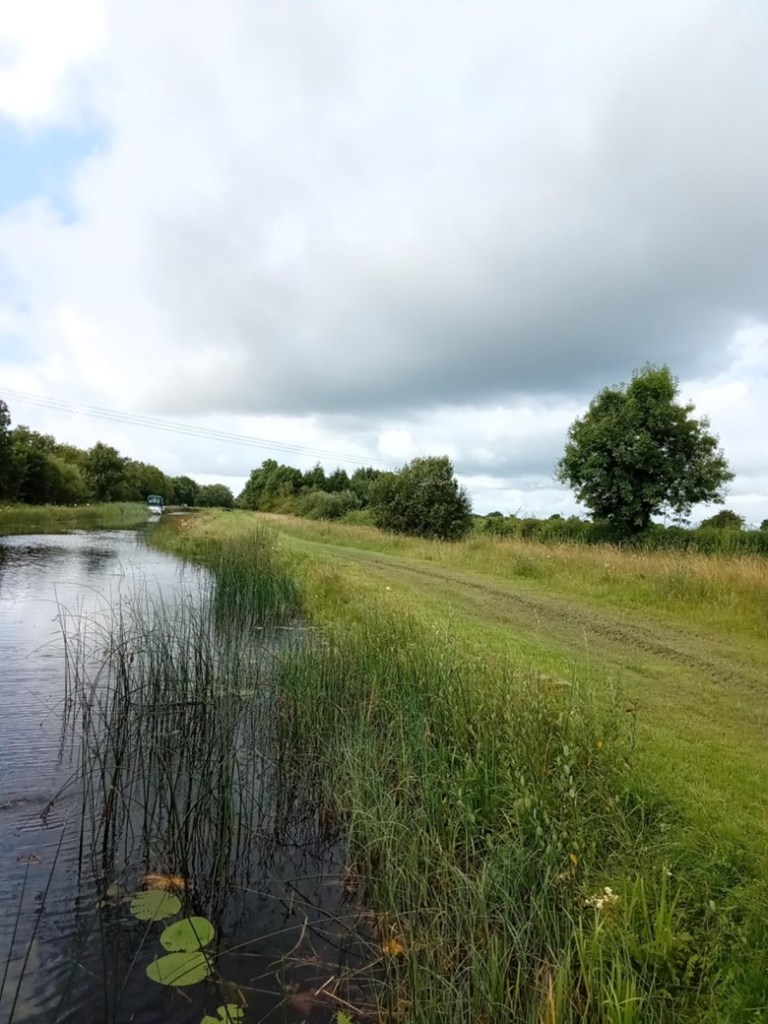
The lay-by and broader towpath within the Military Grounds

L’Estrange Bridge / Quay and Belmont Store
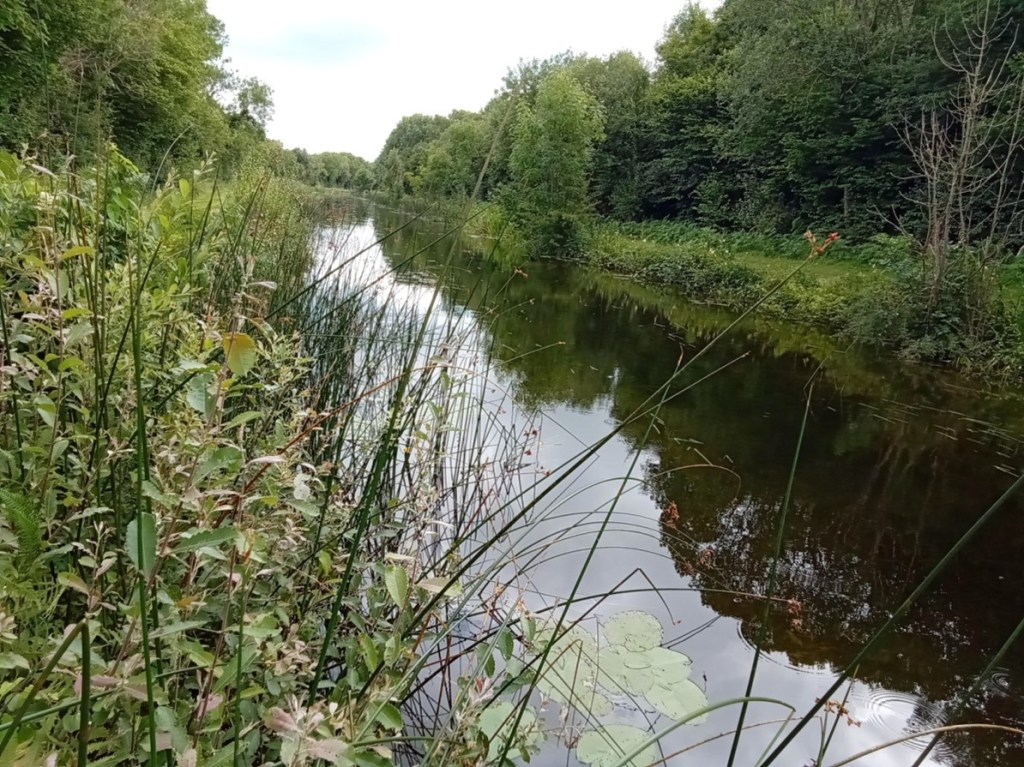
The magnificent natural features of The Grand Extension
7. Lock 33
Lock 33 or Belmont Lock is the only double lock on the Grand Extension. A double lock is constructed when a high lift is required at a location. The standard lift for locks on the canal is circa eight feet while the lift a Belmont Lock is some fifteen feet. Transiting this lock is a delightful experience hard to describe and best experienced.

Belmont Mill and Lock

Lock 33 at Belmont
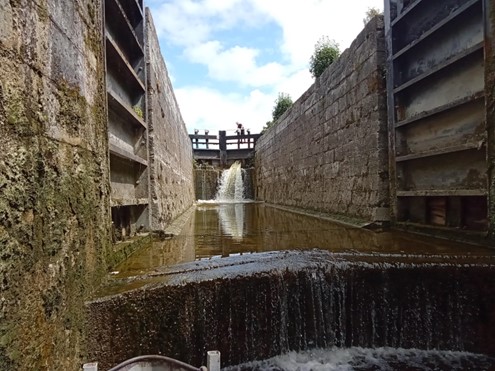

Filling and emerging from the upper level
8. Belmont to Tullamore
The canal extending east from Belmont Lock to Tullamore is best described as isolated continuous delightful for some and a horror for others. The mind may transition into a relaxed static state imbibing the natural landscape and the activities of inhabiting creatures or one may be bored to insanity. The architecture of the locks, bridges and associated buildings coupled with the relatively unchanged landscape propels one back in time to the period of the canal’s construction in the early eighteen hundreds. This relaxation is interspersed by interludes of surprise and delight when a bridge is encountered and frantic activity when locking from one level to another. The villages of Gallen/Ferbane, Pollagh and Rahan when encountered are a connection with present times providing basic mooring facilities. The town of Tullamore provides an opportunity for the replenishment of supplies and the possibility of fresh water. The facilities available to the canal traveller are sparse and presently reflect the industrial era of canal usage.

A simple water tap

The continuous Stillwater Navigation

A canal bridge endowed with generations of growth

Bell’s Bridge and Lock 32

Gallen Village, bridge and rest area
Gallen Village bankside mooring area

| Pollagh Village and Canal-Side facilities |

Lock 31
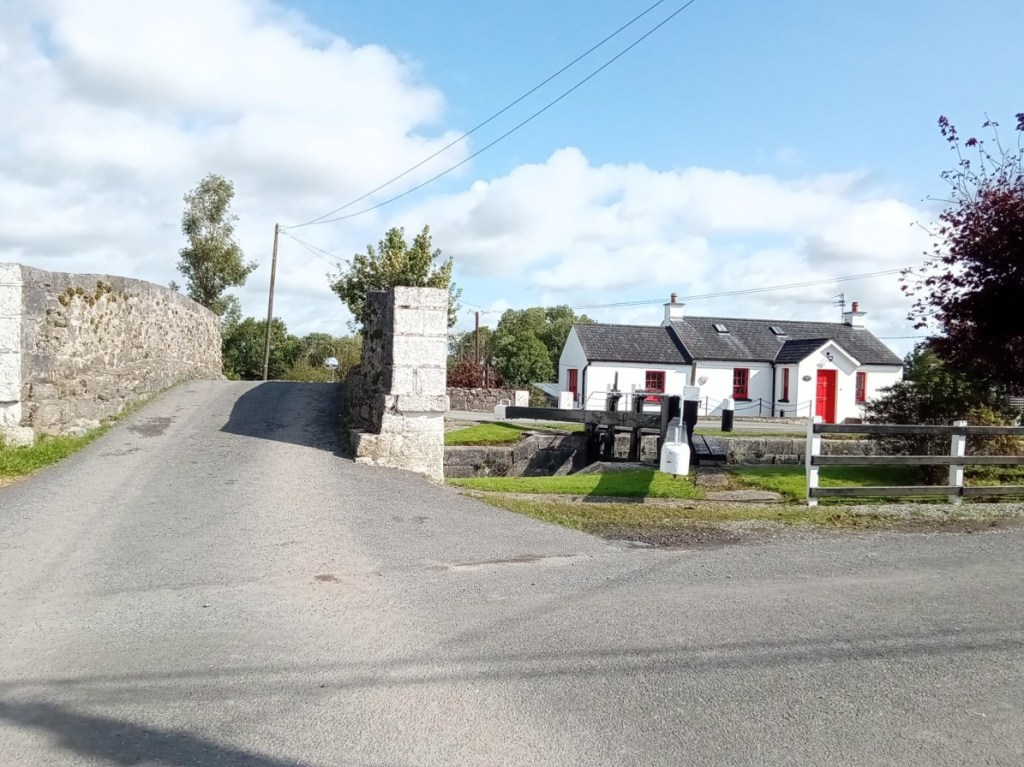
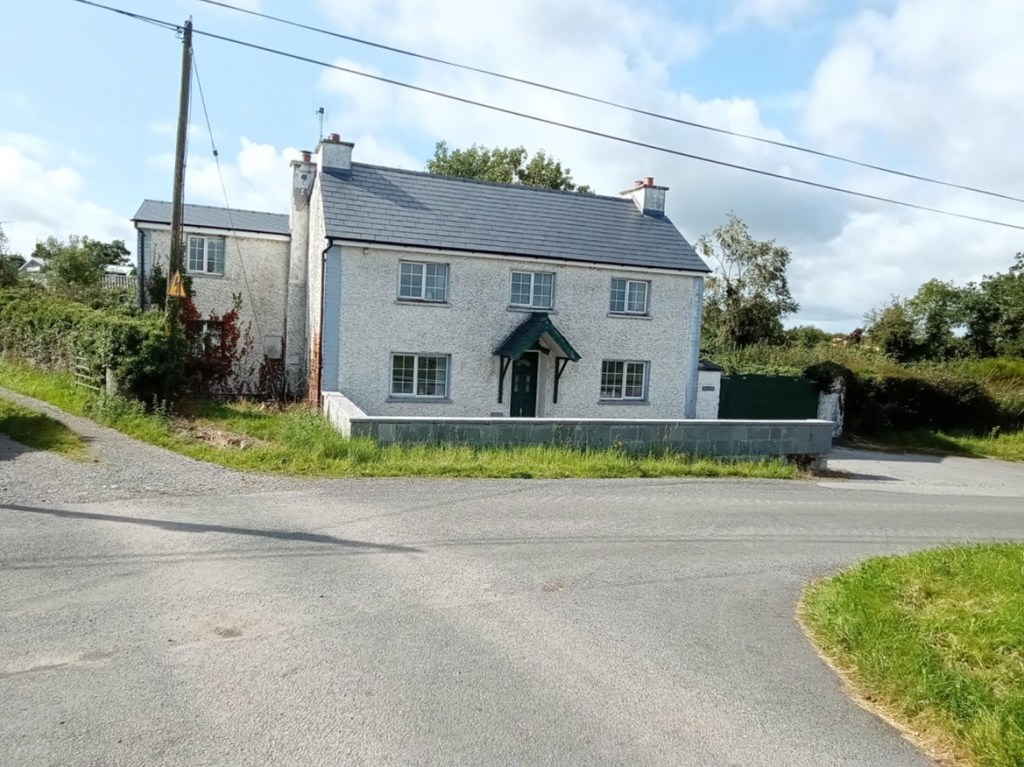
Lock 30 and the canal manager’s house.

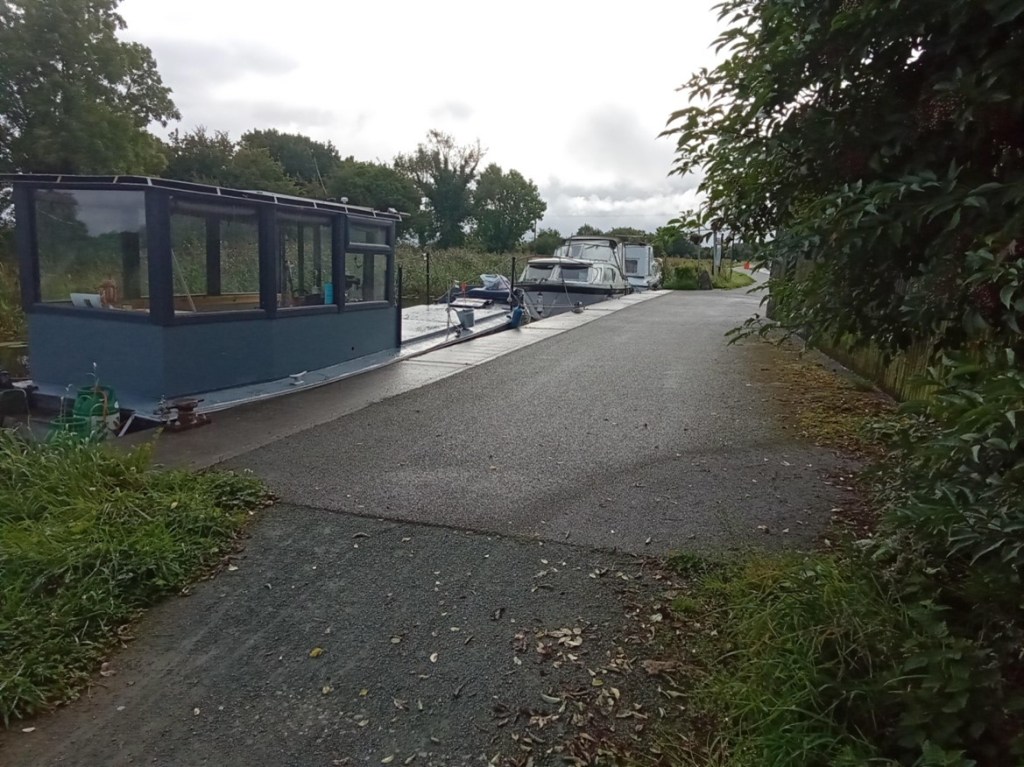
The canal-side facilities at Rahan Village and the Thatch pub – a former Williams branch shop


Srah Castle, Bridge and and the railway bridge
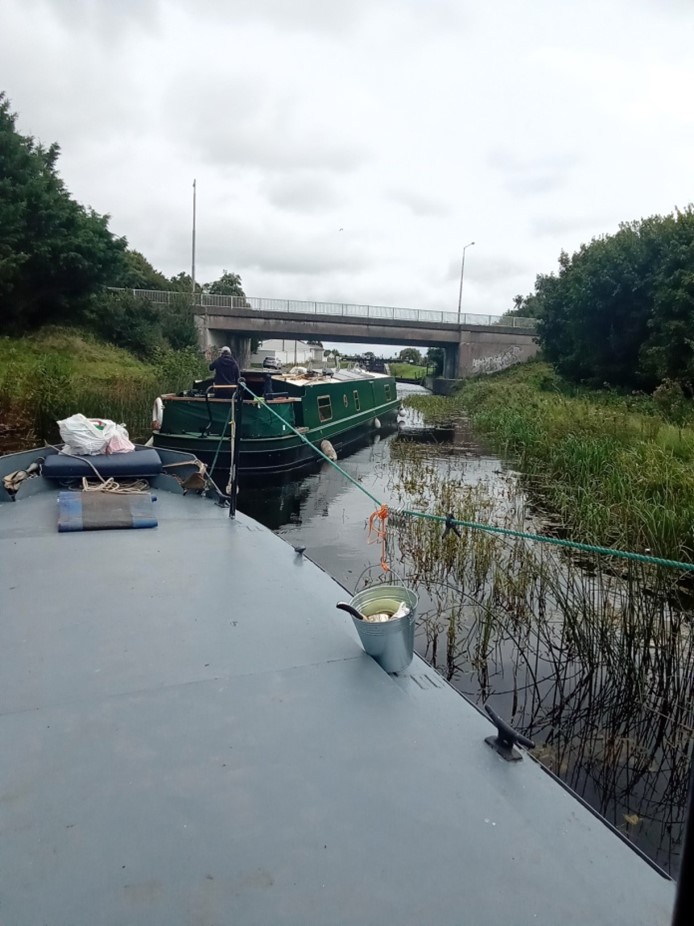
Sragh Bridge and Lock 28
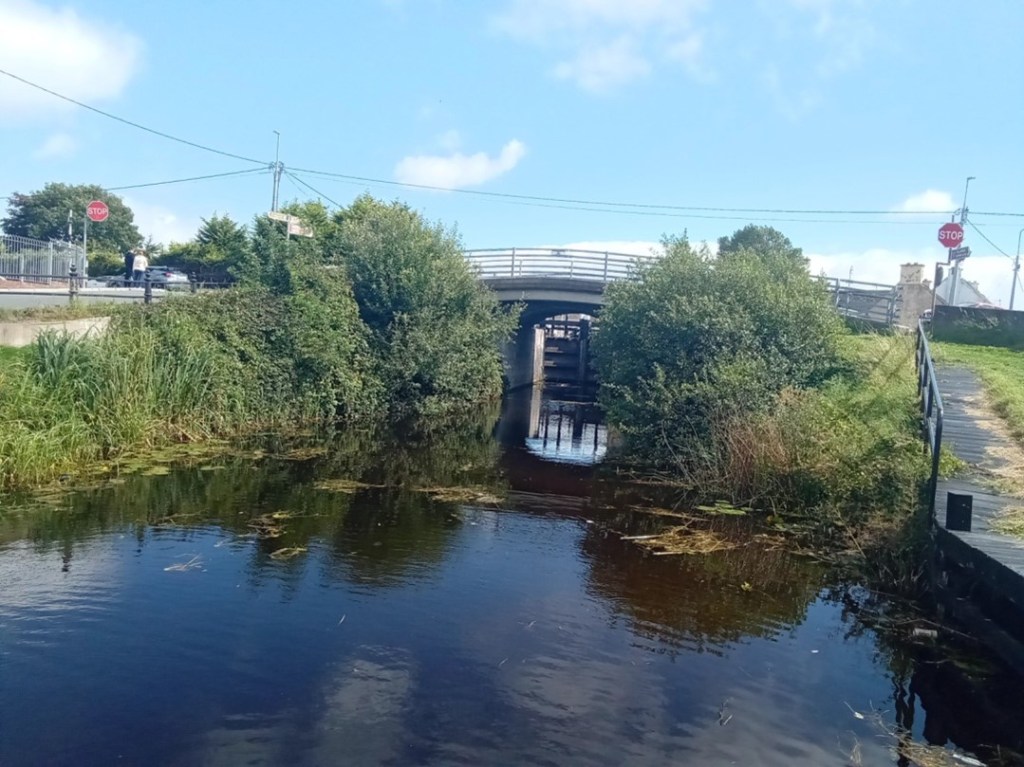
Entering Tullamore at the Clara Road Lock 29
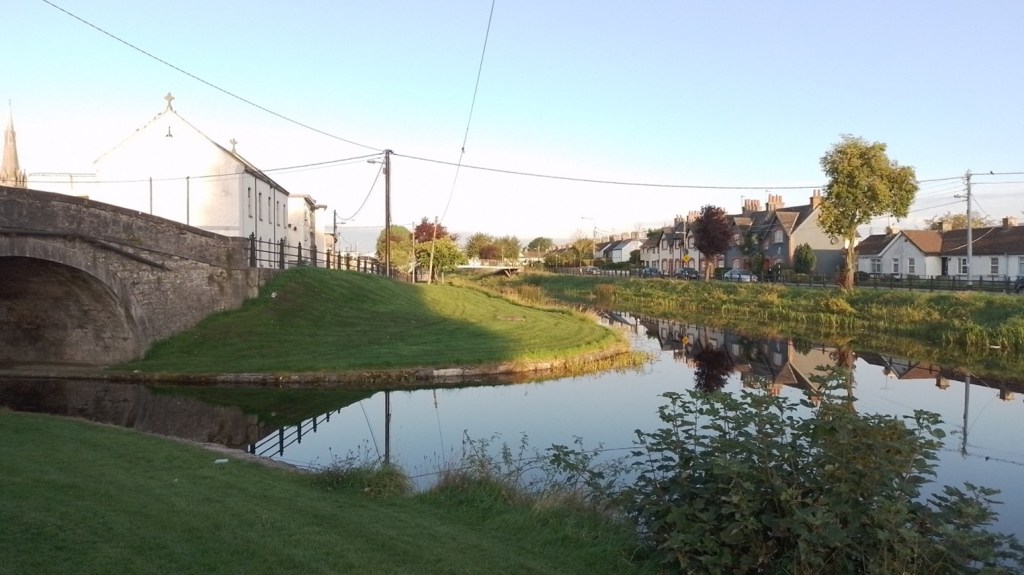
The spur from the canal main line to Tullamore Harbour

The canal side facilities in Tullamore Town
9. Memories
Memories of this trip are especially positive
- The waterway was weed free with a good water level
- The courtesy and efficiency of the water patrollers was first class
- The lock landings were in a good condition
- The lock operating systems all worked well
- The lock surrounds were neat and well maintained
- The lock keeper’s cottages were a joy to behold
- Canal-side moorings and services were adequate and of their time
Appendix 1: The Hull and Spoke Concept

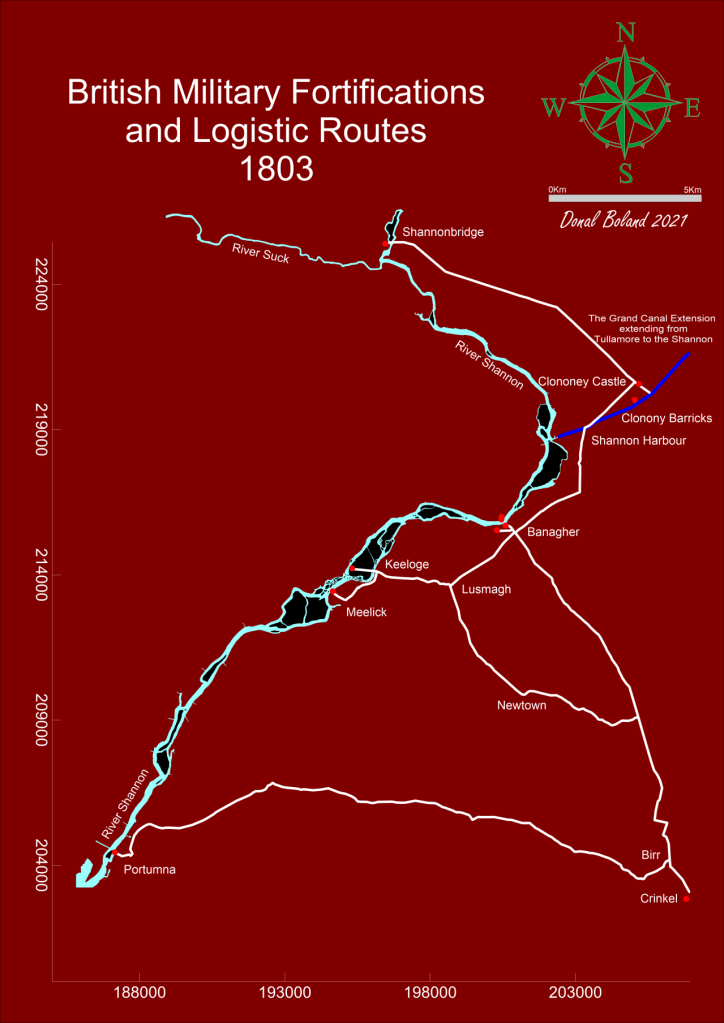
Appendix 2: The Napoleonic Aspect
Donal Boland
The James & Mary Barge
Rodgers Lane, Shannon Road
Portumna, H53 K5C6
 offalyhistoryblog