
There are 20 houses in all from south of the town hall and as far as the junction with the road to Kilcruttin beside the railway station. Following the numbering of these houses in the first valuation of 1843 and the second published in 1854 can be confusing. The numbers in the 1843 survey inclusive of Acres Hall are 505 to 520, with the count commencing at the single-storey over basement cottage at the junction of Cormac Street with the later road to Kilcruttin and finishing at Acres Hall (no. 520). That in the printed valuation of 1854 was Charleville Street nos 1 to 11. No. 1 was the home of Dr Pierce, son-in-law of Thomas Acres, and his wife Ellen and their ten children. The story of the house and the family we have looked at in blogs 2, 3 and 4 on Cormac Street, once called Charleville Street because it was the road to Charleville Demesne, the home of the Moore family from 1740 to 1764 and the Burys from 1764 to the present day (albeit now Hutton Bury since 1963).
The valuations published in 1854 are interesting in showing the great contrast or inequality at the time: Acres Hall was £34 on the buildings while the last house in the terrace beside the town park was £1. 5s. This would suggest that the last two houses before the opening to the park were thatched and rebuilt post 1854 to serve as one house, as also was house nos. 3 and 4, in 1898, occupied by Michael Connolly and John Connolly. We know that these two with the brick string course and handsome doorcases were built by the McMullen family in 1898, and that no. 5 was rebuilt in the 1970s by the Clancy family.
In the eighteenth century and well into the nineteenth century it was common for landlords to develop back gardens of large front dwelling houses for housing in what came to be known as ‘cabin suburbs’. In the case of the Acres leaseholds at Kilcruttin hill, some housing development took place in that area of the land fronting the west side of Cormac Street and there is evidence that a lease of what was formerly Lloyd’s shop (later a launderette and now a sports shop was granted in 1791. The attractive dwelling house immediately to the south of Acres Hall would appear to be of early nineteenth-century vintage while the two houses (formerly Hanahoe and Kelly’s) were built only in 1898 on the site of two fairish houses valued at £2. 5s. each. Surprisingly, Acres did not build all better-quality houses on this important entrance road to Tullamore from Charleville demesne.

Looking at the 1843 (the house number is in brackets below) and 1854 valuations (see image):
No. 2 (519) Cormac Street
Held by A. & J. Pierce in 1843 and vacant in 1854, and the occupiers described as not in business. The premises was small with scarcely any yard and no garden and may have been a house retained by the Acres family for relatives while servants may have occupied the next two two houses.
No. 3 (518) Cormac Street
A two-storey, two-bay house erected in 1898 on a site of a house similar to No. 2 above. This house was occupied by Michael Connolly a pensioner in 1843 and 1854 with Connolly described as paying ground rent only, presumably to Dr Pierce.
Garner (1980) described the new houses on sites 3 and 4 as:
‘To the south of Acres Hall is a pair of two-bay, two-storey houses with rendered walls, brick string-courses and brick cornices. The segmental-headed doorcases have blocked-architrave heads and chamfered jambs. The two houses share a single [chimney] stack which is dated 1898.’ The date on the chimney stack cannot now be seen as it was plastered over in the 1980s or 1990s.

No 4 (517) Cormac Street
In 1843 the occupier was Thomas Dempsey, a blacksmith and in 1854 John Connolly. This was a single-storey house some 33 ft in front and held from John Connolly of Clonminch at a yearly rent of c. £5.
No.5 (516) Cormac Street
A three-storey, three-bay house; John Connolly held the building in 1843 as ‘to be let’ and in 1854 Michael Farrell. Connolly was described as living in High Street. So this John Connolly may have been the purchase of sites 2, 3 and 4 from Acres by way of long lease, but we cannot be sure as yet. This is the house that was rebuilt in the 1970s.
No. 5 and 6 (515) Cormac Street
A three-storey, three-bay house, Thomas Carroll a Dublin merchant had the building in 1843 but it was shut up and to be let; it was later occupied by Anthony Daly and by 1854 by John Sexton. Carroll was looking for £15 annual rent but it was later valued at in the range of £8 to £12. 15s. This rent would be that pertaining to a completed house being sold by way of long lease.
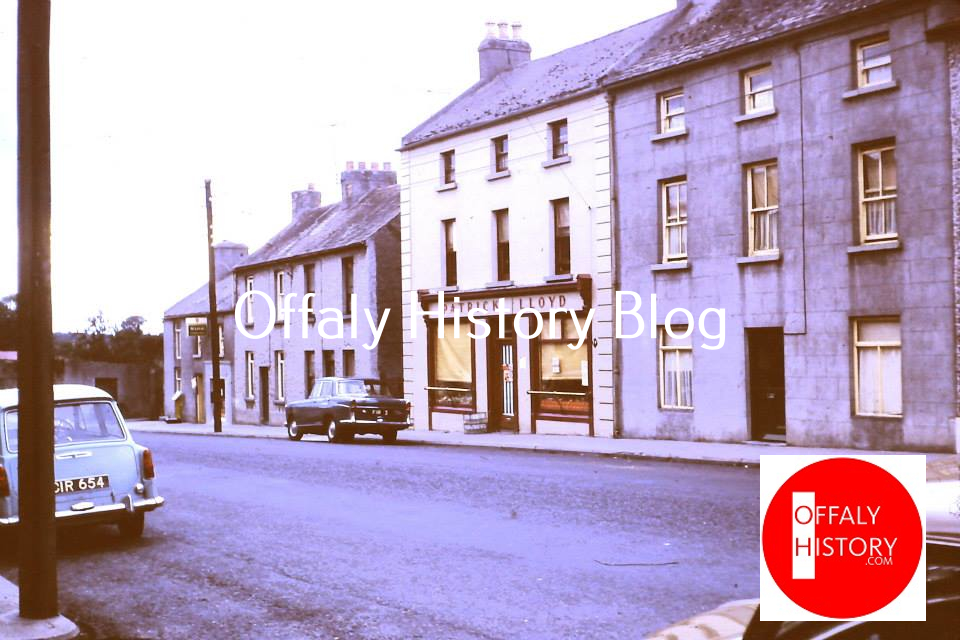
No.7 (514) Cormac Street
The former Lloyd’s shop, a three-storey, three-bay building with ground floor shop front and is dated to 1791 by reference to the lease to Robinson from Acres at only 17s. per annum. . This may mean that numbers 5 (the original house) and 6 may be dated to the same time.[1] In 1843 the house was held by Robert Robinson who lived in Killarney; it was vacant and to be let at the time and in 1854. The rent called for may have been up to £20 but was not put at £7. In the 1840s the house was in bad repair with the windows broken. Robinson was a builder carpenter and we can surmise that the low ground rent was part of a set-off deal with Acres, as were Acres to get the full value for a completed house on a long lease it would have been up to £15.
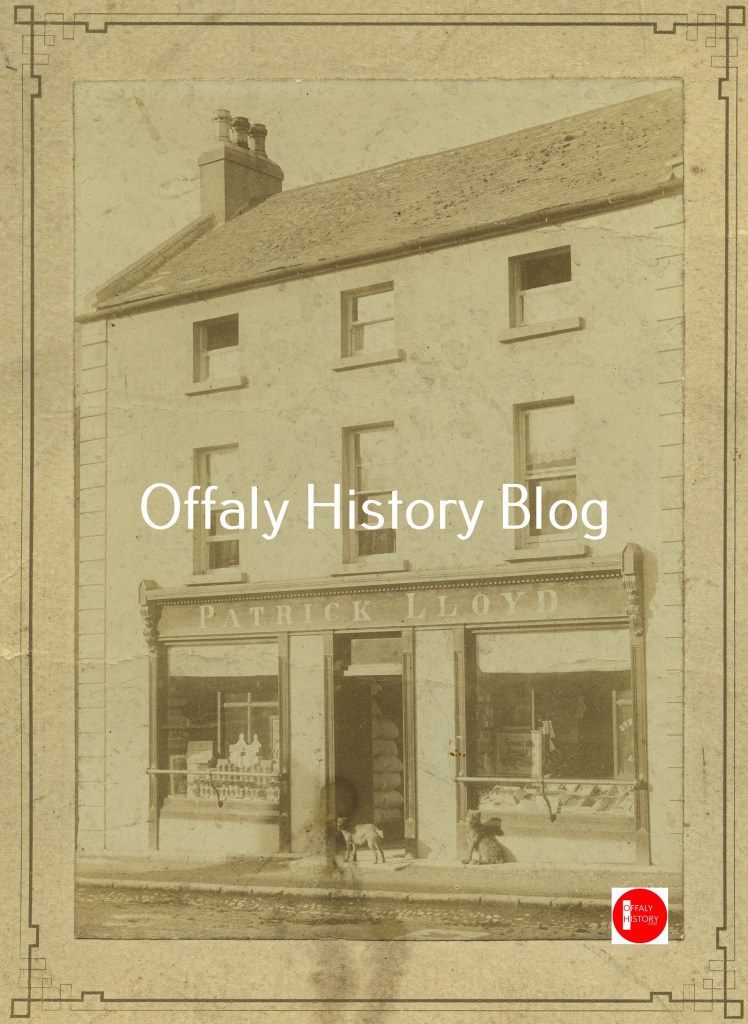
In the1980s the shop was described by Garner as: ‘Patrick Lloyd’ is a three-bay, three-storey house with lined rendering on the facade and parallel raised coigns. The admirable shop front, which dates from the late nineteenth century, is of timber and has beautifully carved consols with a dentil course and simple painted front with protective brass bars.’ The shop was closed in the 1990s and was later converted to offices and is again a shop. The brass bars were removed in recent years (see photographs).
No.8 (515) Cormac Street
A two-storey, two-bay house. The house was for letting from Dr Pierce in 1843 and was occupied by John Connor in 1854.
No.9 (515) Cormac Street
A two-storey, two-bay house. The house was occupied by Mr Gavin a tailor in 1843 and John Doolan in 1854 and held from Dr Pierce.
The valuation of £3. 10s each is in line with the terrace of six in O’Moore Street between Tyrrell’s and the Cottage.
No 10 Cormac Street In 1854 this house was occupied by John Lynch and valued at £1.5s – suggesting that was a cabin and rebuilt post 1854.
No. 11 Cormac Street
The former Poole shop, now Dervill Dolan, a two-storey, three-bay house with a shop front on the ground floor to the right. Occupied by Andrew Tracy as a lodging house in 1843 and by Richard Kearney in 1854. Again, the landlord of the street was Dr Pierce.

No. 7, a, b, c, d, and e, f, g, Cormac Street, townland of Kilcruttin. This is the location of the terrace of the houses with porches with pierced bargeboards above the entrance door. The 1838 six-inch map shows the townparks beside the graveyard and the cottages opposite the jail.
Between what was Poole’s and Kemmy’s shop there were about eight houses, mostly cabins, (7a-7g) which must have been demolished before 1879 when the terrace of ten houses was erected. The ten two-storey houses opposite the gaol were erected in 1879–80 by the Pierce family.
In the 1840s there some poor-quality housing here let at varying rents. William Browne, a pensioner held no. 509 at £7 per year. William Kelly (and in 1854) Michael Roche held a cottage at about £5 per year. Next were two small, slated houses and 1s. 10d. per week each and in bad repair. Beside these were three small cabins. The new and the old houses can be seen in the mapping surveys of the 1830s and 1880s and in the printed valuation of 1854. The new terrace was built opposite the gaol and is a row of ten, two-bay, two-storey houses built of coursed-rubble limestone with brick window-dressing and brick stacks. Except for three houses the facades are now all rendered. Four houses still retain their original porches with pierced bargeboards. These houses may have been occupied by some of the prison warders for a time before the Gaol Lawn houses were built some ten years later in 1889.
No. 5 a, b (505) Cormac Street, townland of Kilcruttin
A single storey house over a basement (south of the former Kenney’s shop at the southern end of the terrace) and near the railway station. The house was built of yellow brick with raised coigns, a single central stack and before 1850 was divided in two. Each house had a tall square-headed doorcase with a rectangular light, simple bracket, and a planked door. In the past fifty years the house again became one household.
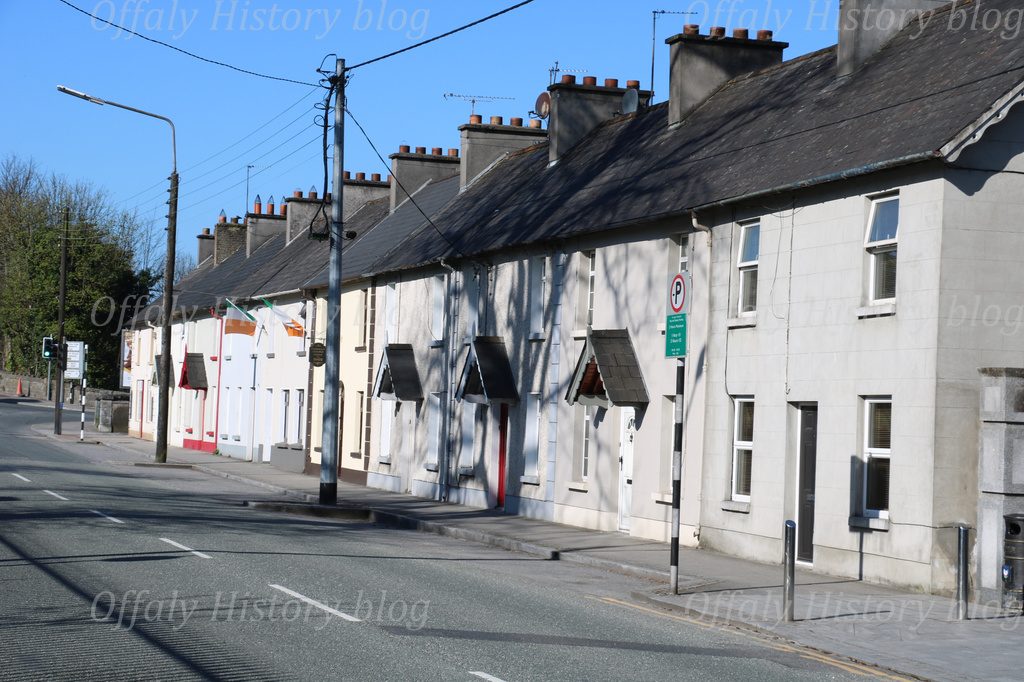

This house was built in the mid-1830s by Francis Berry, agent to the earl of Charleville (d. 1864). He lived in a double house at no. 9 Cormac Street (1854). The plot was leased by Lord Charleville for 150 years at £4.10.0 a year. This single-storey over basement house was occupied by Thomas Berry in 1843 but between that time and 1854 it was let into two and occupied by Arabella Cooke and Joseph Hayes. The surveyor of 1843 noted that this house was in the 1A category and was a ‘remarkably neat cottage lately built’ but that the situation was not desirable being opposite the gaol.[2] The house was valued at £5 in 1854, or in the same category as Lloyd’s (now the sports shop) in the same street. The dressed stone wall to the front of the house probably dates from the time of the construction of the railway station in the 1860s to allow for a curved entrance to the new railway station. Berry, as the owner and the landlord, may have built this house at the behest of Charleville to improve the view from the jail. It was rated to Thomas Berry in 1843 who was the solicitor to Bury so it may have been used for estate business in that decade. That use, if correct, had changed by the 1850s and would change again in the 1860s with the construction of the new railway station in place of that at Chancery Lane, Clonminch.

[1] Copy title deeds shown to MB by the late Patrick Lloyd, the owner in the 1970s.
[2] Registry of Deeds, 27 February 1841, Charleville to Berry, memorial no. 1841/11/200; MS valuation, Tullamore, 1843, property no. 505.

 offalyhistoryblog