
We have looked at the houses in Cormac Street and will soon follow up with the jail and courthouse reviews. In this article we want to look at the families of Cormac Street in the early 1900s. In the c. 41 residences in the street in 1901 were about 326 people. About 250 were RC and about 60 were C of I and Others. It was a street of contrasts with overall good housing on the main street, poor housing in Wellington Barracks and sixty and upwards in the prison. Of the total number in 1901 98 were in the prison, 85 of whom were confined there and 13 were staff living in the building There were four prison officer families in the jail lawn houses: Alexander Spence (2 people in the house – himself as a widower and his daughter), a prison officer; Michael Curtin (8 in the house), a prison warder; James Creane (11 in the house, including 9 children), a prison warder; Alexander McCullagh, prison warder (2 in the house).
The houses on the street were as to 11 in the first class with the rest in the second class. The highest concentration of 1st class houses was on the terrace on the east side of the street bookended by Dr Ridley and William Adams (GV 3 to GV 14 as per maps in earlier blogs). There were no 3rd or 4th class houses on the street, but is should be remembered that the two-room cottages in Wellington Barracks (later Coleman’s Place Lane) were all described as being in the second class.
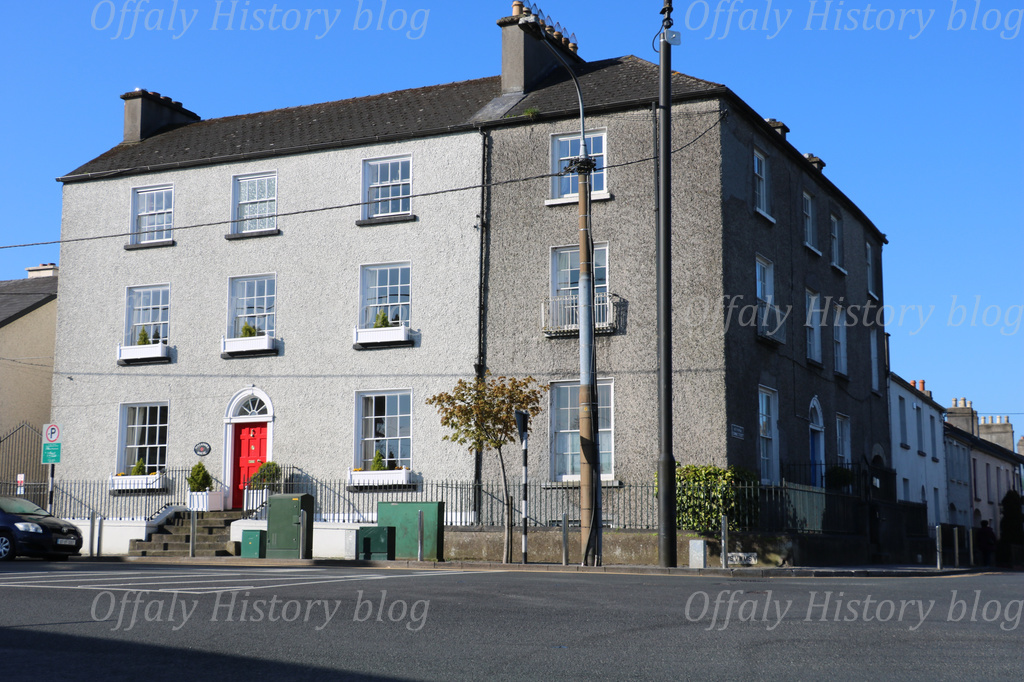
The rest of the houses were private residences (some with a business) commencing with the Egan family of The Hall in no. 1 Cormac Street or Charleville Street as it then was. Pat Egan was temporary head in the absence of his father Henry Egan. Their mother died in the 1890s. In the house on census night were five brothers: Pat, a brewer at this time (died in 1960); Henry or Harry, the solicitor died 1907; James F. a wine merchant and William, a maltster. Their youngest brother on census night was Anthony. There were three helping in the house – a housekeeper, maid and a cook.
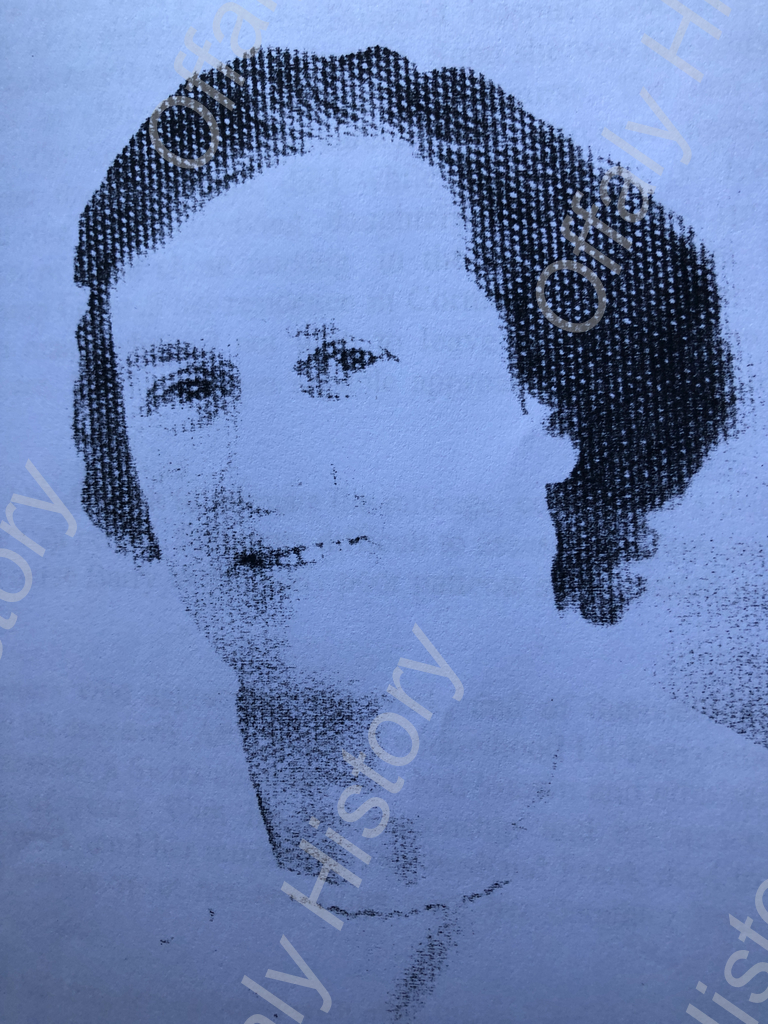
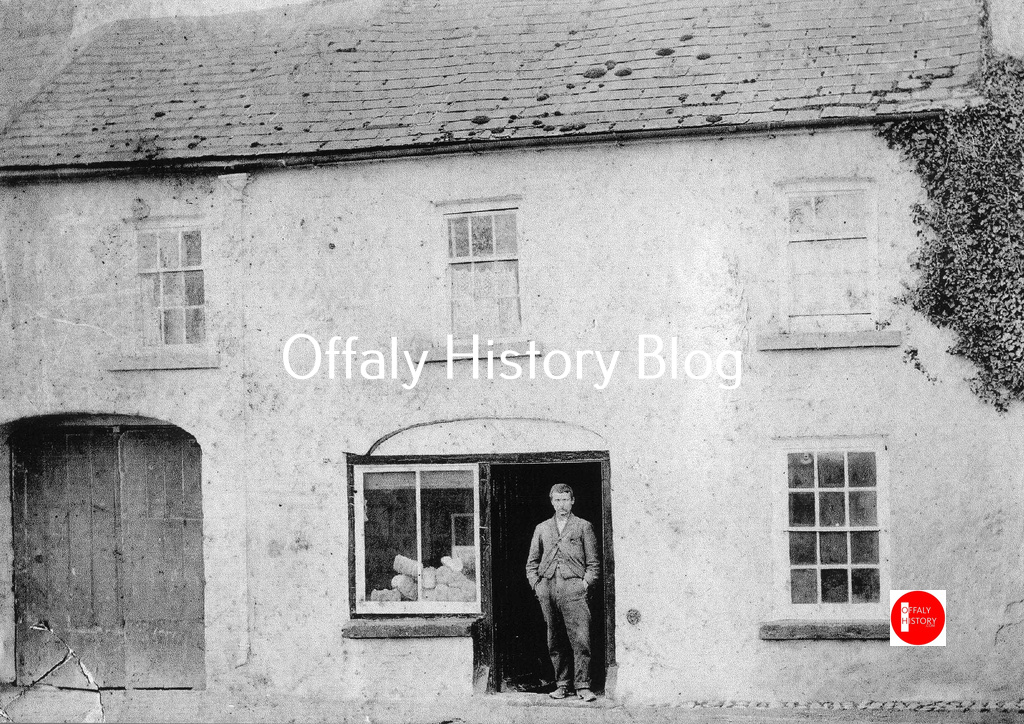
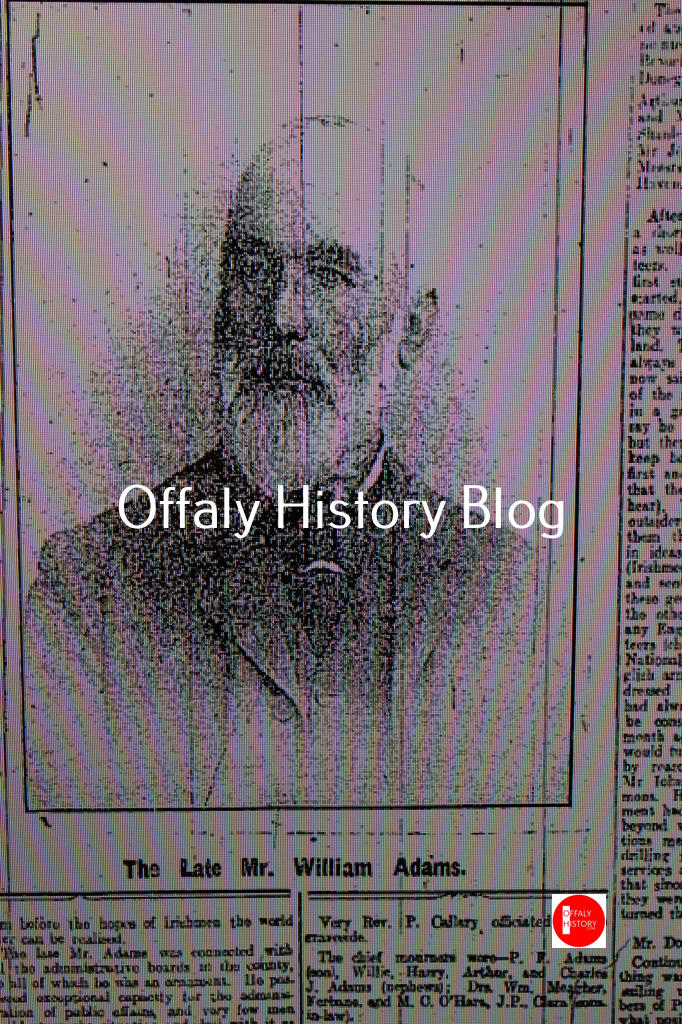
James Carter with a temperance hotel was in no 5, Patrick Lloyd, the grocer and shopkeeper was in no. 7. Michael Kemmy was in no 21 and kept a lodging house. William Adams (form no. 30 in the census and 3 in Griffith’s Valuation of 1854) was in what is now Dr Delaney’s house beside the courthouse. Adams was then aged 62 and lived on until 1914. His son Patrick, aged 19 in 1901, was elected to the town council in 1913 but did not succeed in the by-election for the vacant Westminster seat in North King’s County in 1914. Beside William Adams in 1901 was John Lavin (aged 36) the national teacher. He was renting and in 1916 built the red brick house on Charleville Road near the junction with Dillon St, where his daughters still lived in the 1960s. Donald Pierce, great grandson of Thomas Acres was living in the terrace opposite what was Lloyd’s shop and was RC. His son Bernard was born in South Africa and another son John, was the parish priest of Rathmines in the 1970s.
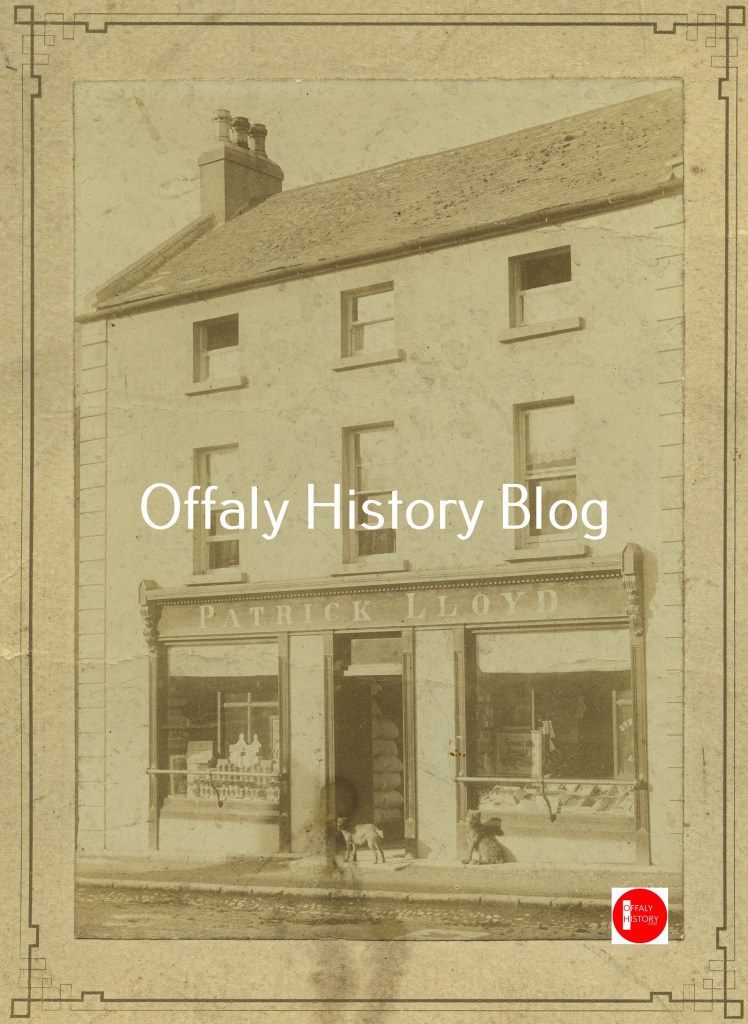
In the first house at the junction with Earl/O’Moore Street (now Brian and Maura Adams) lived Dr George Pierce Ridley. He was the last of the Ridleys of Tullamore and died in 1906. His family, including Dr Pierce, the son-in-law who had lived in Acres Hall, had been physicians to the county infirmary in Church Street since 1817. He was a widower and his only child, then aged 17, had the benefit of a governess and two servants.
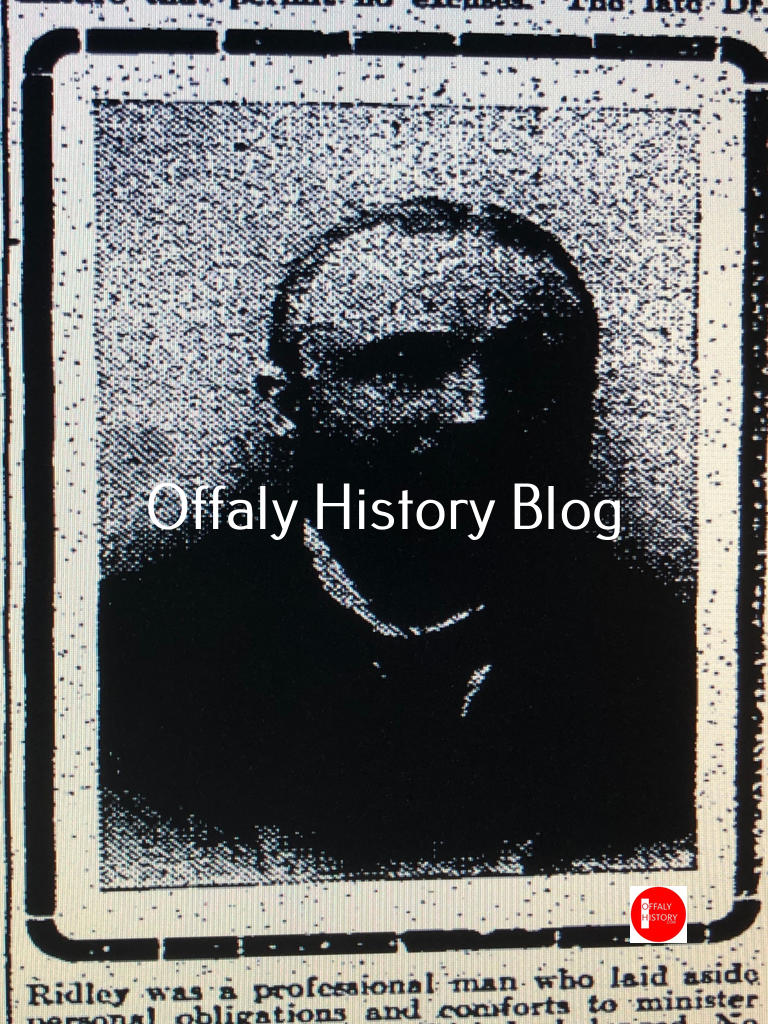
The last house in the terrace, opposite Dervill Dolan’s, was still a double house (GV 9 in 1854) when it was an hotel. In 1901 it was occupied by Richard Hannagen, an ironmonger, with a shop where the arts centre is today. He had his wife Margaret, four young children, and two young girls working in the house of 20 rooms. Hannagen was later associated with the agricultural show and died about 1922.
Links with the 1970s included that Alice Haines who lived in the courthouse in 1901 was then aged one and was later associated with Charleville Estate office and lived with her sister in the cottage at the entrance to the demesne. She and her sister Mrs [Jane] Potter were generous with their homemade wines to visitors to the lovely estate cottage, dated to 1860 and beside the estate office.
Another family that will long be remembered were the Kemmys who had a small shop beside the railway house. The family in 1901 was comprised of Kemmy, his wife, four children and three boarders – a retired tobacco spinner, and ex-constable and a clerk.
Prison Governor Morton was living in the governor’s house in the prison and had 10 other prison staff and two others helping in the house. He was single, aged 40, and probably had succeeded Fetherstonhaugh who had been governor for about 30 years up to his death in 1898. Across the street was John Hayes, the station master, in no 22, the brick house. The Haines family of 9 lived in the courthouse and had come from Kinnitty in the 1880s when appointed caretakers of the courthouse.
In 1911 60 people were confined in the prison including the mothers of two babies., ‘in the arms’ of mothers no. 19 and no. 55 in the return. No 19 was a married mother, aged 30, from Mountmellick, convicted of being drunk in charge of a child, with three months in prison. No. 55 was a Londonderry girl of 25, arrested in Daingean for larceny and awaiting trial.
Occupiers of houses in Cormac Street in 1911.
Cormac Street was included with High Street in the 1911 census return. This table starts at the junction with O’Moore Street. No 13 here in no 14 in Griffith Valuation of 1854. The table is based on the 1911 census returns online. The named person here is ‘head of household’ in that census. The order of entries here and in the census report is not in line with the order on the street. Wealth was concentrated in the terrace opposite Acres Hall and in a few houses on the west side below Acres Hall. Jail Lawn and the ten Acres built house with canopies near the railway station had, for example, no servants. Only a quarter of the forty or so houses on the street in the 1911 census return had paid domestic help.
| House no. | Building use | Class of house | No. of Distinct families | Name of ‘head’ of family | Occupation | No of rooms occupied | Total no. of persons In each family | No. of Servants |
| 1 | Private dwelling | 1 | 1 | Williams, Daniel | Spirit Merchant | 11 | 7 | 2 Servants |
| 2 | Private dwelling | 2 | 1 | Peirce, Donald M | Commercial Traveller | 8 | 6 | 1 Servant |
| 3 | Private dwelling | 1 | 1 | Mc Neill, John | Grocer’s Manager | 10 | 5 | 1 Servant |
| 4 | Private dwelling | 1 | 1 | Browne, John V | Asst Surv. King’s Co. Council | 9 | 3 | 1 Servant |
| 5 | Private dwelling | 2 | 1 | Douglas, Hugh B | Solicitor’s Manager and Accountant | 9 | 3 | None |
| 6 | Private dwelling | 1 | 1 | Harvey, William H | Veterinary Surgeon | 16 | 8 | 2 Servants |
| 7 | Private dwelling | 2 | 1 | Hogan, John | Car Driver Domestic Servant | 5 | 6 | None |
| 8 | Private dwelling | 2 | 1 | Behan, Michael | Baker | 6 | 10 | None |
| 9 | Private dwelling | 2 | 1 | Burke, Ellen | Dressmaker | 6 | 1 | None |
| 10 | Private dwelling | 2 | 3 | Mather, Elizabeth | Keeping Boarders | 3 | 6 | None |
| 11 | Private dwelling | 2 | 1 | Adams, Patrick F [no 4 in GV 1854] | Farmer | 9 | 6 | 2 Servants |
| 12 | Private dwelling | 1 | 1 | Adams, William [no 3 in GV 1854] | Shop Keeper | 11 | 4 | None |
| 13 | Private dwelling | 2 | 1 | Clery, Patrick | Retired Coachman | 2 | 2 | None |
| 14 | Private dwelling | 2 | 1 | Deering, Thomas | Labourer | 3 | 7 | None |
| 15 | Private dwelling | 2 | 1 | Mullins, Hugh | Game Dealer | 4 | 2 | None |
| 16 | Private dwelling | 2 | 1 | Digan, Hugh | Tailor | 10 | 8 | None |
| 17 | Temperance Hotel | 1 | 1 | Carter, James | No Occupation | 9 | 7 | None |
| 18 | Lodging house | 1 | 1 | Lyons, Patrick | Ex Head Constable R I C | 7 | 10 | None |
| 19 | Shop | 2 | 1 | LIoyd, Patrick [Lloyd’s shop] | Grocer and Dairy Farmer | 6 | 6 | 1 Servant |
| 20 | Private dwelling | 2 | 1 | O’Dowd, Patrick | Cattle Dealer | 5 | 8 | None |
| 21 | Private dwelling | 2 | 1 | Carter, John | General Labourer | 4 | 5 | None |
| 22 | Private dwelling | 2 | 1 | Dalton, Elizabeth | – | 4 | 2 | None |
| 23 | Private dwelling | 2 | 1 | Bredin, John P | Clerk Prison Service | 4 | 6 | None |
| 24 | Private dwelling | 2 | 1 | Daly, James | Labourer General | 4 | 10 | None |
| 25 | Private dwelling | 2 | 1 | Dunne, James | Town Postman | 4 | 3 | None |
| 26 | Private dwelling | 2 | 1 | MacNamara, | Queen’s Jubilee Nurse | 3 | None | |
| 27 | Private dwelling | 2 | 1 | Hurley, John | Plasterer | 4 | 8 | None |
| 28.1 | Private dwelling | 2 | 1 | Guinan, Michael | R I C Pensioner | 1 | 1 | None |
| 28.2 | Private dwelling | 2 | 1 | Kemmy, Michael | Insurance Agent | 5 | 4 | None |
| 29 | Private dwelling | 2 | 1 | O’Brien, Michael | Inspector on G S and Western Railway | 5 | 7 | None |
| 30 | Private dwelling | 2 | 1 | Connell, William | Civil Service Prisons Dept Storekeeper | 8 | 2 | None |
| 31 | Private dwelling | 2 | 1 | Green, Thomas | Prison Warder (Ordinary) | 5 | 7 | None |
| 32 | Private dwelling | 2 | 1 | Dane, Jas Joseph | The Prison Service | 5 | 2 | None |
| 33 | Private dwelling | 2 | 1 | McCullagh, Alexander | Warder in Prison Service | 5 | 2 | None |
| 34 | Private dwelling | 2 | 1 | Murphy, Michael | RC R I C | 5 | 7 | None |
| 35 | Private dwelling | 2 | 1 | Lowndes, Thomas Francis | Dist Inspector of R I C | 10 | 4 | 1 Servant |
| 36 | Private dwelling | 2 | 1 | Scully, Michael | Merchant | 8 | 3 | I Servant |
| 37 | Private dwelling | 2 | 1 | Greene, Joesph P | Photographer | 5 | 2 | None |
| 38 | Private dwelling | 1 | 1 | Egan, Henry [The Hall] | JP Retired Merchant | 17 | 8 | 3 Servants |

 offalyhistoryblog