
An Impressionable In-Patient
When I was eleven I spent a long Easter weekend in the County Hospital in Tullamore. I don’t know what was wrong with me but it can’t have been anything serious and I remember it as a most enjoyable and stimulating experience.
The nurses and the nuns were kind and caring, the ward was spacious and sunlit with a lovely view across O’Connor Park to the Slieve Blooms, while the food was a lot more varied than I was accustomed to at home. My friends and neighbours visited with gifts of Easter eggs and sweets. I particularly remember getting little furry yellow chicks in one egg and kept them as a souvenir for many years after.
I think that my stay in that icon of Irish Modernist architecture, must have instilled my future love of good buildings but it was the glimpses of the large colourful painting in the entrance hall that really stuck in my mind. In the years to come, when visiting my mother or sick friends, I always stopped for a while to look at it again.
Its installation in the entrance of the new County Hospital, which opened in 1942 and of which the town was so proud, was the inspiration of the architect Michael Scott.

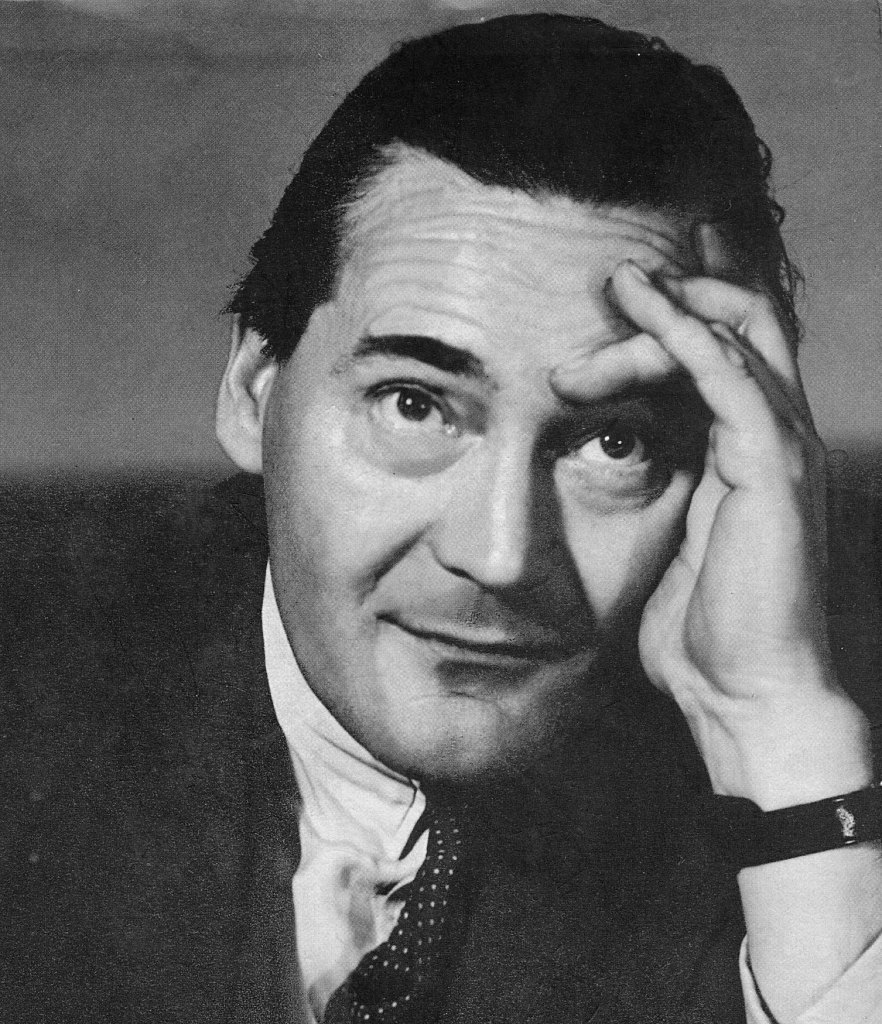
Michael Scott (1905-1989)
As a long standing member of the Arts Council and instigator of the Rosc exhibitions which introduced advanced international movements, Scott had an enormous impact on arts and culture in 20th century Ireland. In particular, he was a pioneer in integrating works of art into his architectural designs. In his work for the noted Midlands business company D.E.Williams he commissioned Louis le Brocquy to decorate their pub in Athlone, while the wonderful ‘ Connemara Wedding’ by Sean O’Sullivan RHA which graced the Murals Bar in Patrick Street was one of the better examples of the marriage of art and architecture. Both murals are long gone.
In 1936 Scott and his architectural partner Norman Good designed the County Hospitals in Portlaoise and Tullamore. However, the experience of integrating public art into each building was to have different outcomes in both counties.
In later years Scott recollected:
‘I had a terrible time with the clients, particularly in Portlaoise where there was a dreadful County Manager, an appalling fellow, a big bosthoon of an eejit of a chap! He was very difficult.
I very badly wanted to have a mural in the entrance hall of the hospital and he wouldn’t bloody well let me have it.. We had a terrible row about it, amongst many rows indeed…. He didn’t want to spend money on the mural, something like thirty quid, something very small. He wouldn’t agree to the principle of it. However, in Tullamore the County Manager was an entirely different person, and he agreed happily to the idea of a mural. I got Frances Kelly to do it, who was a good artist.
Quite a nice mural it is too’.

‘The Legend of Saint Colmcille’
The finished work is not actually a mural but a large oil painting within a heavy timber frame. It greets you when you come into the Hospital and dominates the entrance hall by its scale and quality.
The painting, whose title is’ The Legend of Saint Colmcille’, shows the saint laying a book- presumably the Book of Durrow – at the feet of the Virgin, who is holding the Christ Child in her arms. The source of this legend is untraceable and would appear to be a creation of the artist.

In the top right hand corner is a boat from which the saint has presumably just disembarked and in the top left hand corner a young monk holds the bridle of a prancing steed which will soon carry him off to spread the Faith in Ireland and Scotland and found even more monasteries. It is springtime and the blossoms are on the trees and the daffodils and tulips in bloom. The Virgin’s spreading blue gown contrasts beautifully with the verdant green of the landscape.
The composition relies on large swirling shapes of strong colour onto which swift brushstrokes outlining the trees and leaves are applied. There is a wonderful contrast between the peaceful interaction of the Virgin and the Saint and the urgency and restlessness of the background.
I made a sketch of it some years ago but it doesn’t do justice to the original which is a beautiful composition of subtly different colors.

Frances Kelly
The painting is a major work of Drogheda born Frances Kelly (1908–2002), one of the talented group of women painters who emerged in the early days of Irish independence.
Kelly studied at the Metropolitan School of Art in Dublin where she was a star pupil and where she first met and became friends with Michael Scott. She exhibited frequently in the RHA from the age of 21 and throughout her career concentrated on portraits and still lifes.
Her paintings were, and still are, popular though they are decorative more than challenging and generally delivered in pastel tones with loose spontaneous brush work. Nonetheless, they are sophisticated and thoughtful works. Her delightful painting of flowers in a vase and which was very typical of her style, adorned the entrance hall of the famous Tullamore hostelry Hayes Hotel for many years.
In 1932 Kelly became the first recipient of the Henry Higgins travelling scholarship and went to Paris for three years to study with the cubist painter Léopold Survage (1879–1968), though cubism had little perceptible influence on her later style which, as her Legend of Saint Colmcille’ demonstrates, has echoes of Matisse.
She held her first solo exhibition to great acclaim in Daniel Egan’s Gallery, St Stephen’s Green, in November 1934. A review in the Irish Times was so lavish in its praise for her ‘delicate, subtle observation and exquisite and effortless touch’ that it prompted a rather bitchy reader to write criticising the reviewer for overstating the talent of a young, unproved artist.
But, together with her contemporaries May Guinness, Margaret Clarke, Nano Reid, Mary Swanzy, Norah McGuiness, Barbara Warren and her friend Evie Hone, Kelly was to become one of the talented group of women who dominated Irish modern art in the mid 20th century.
In the 1930s and 40s the decoration of public spaces with artistic murals became popular and Kelly was much sought after for such commissions in prominent settings, embellishing the dining room of the Russell Hotel, the Four Provinces ballroom and Butlins holiday camp. All have long vanished.
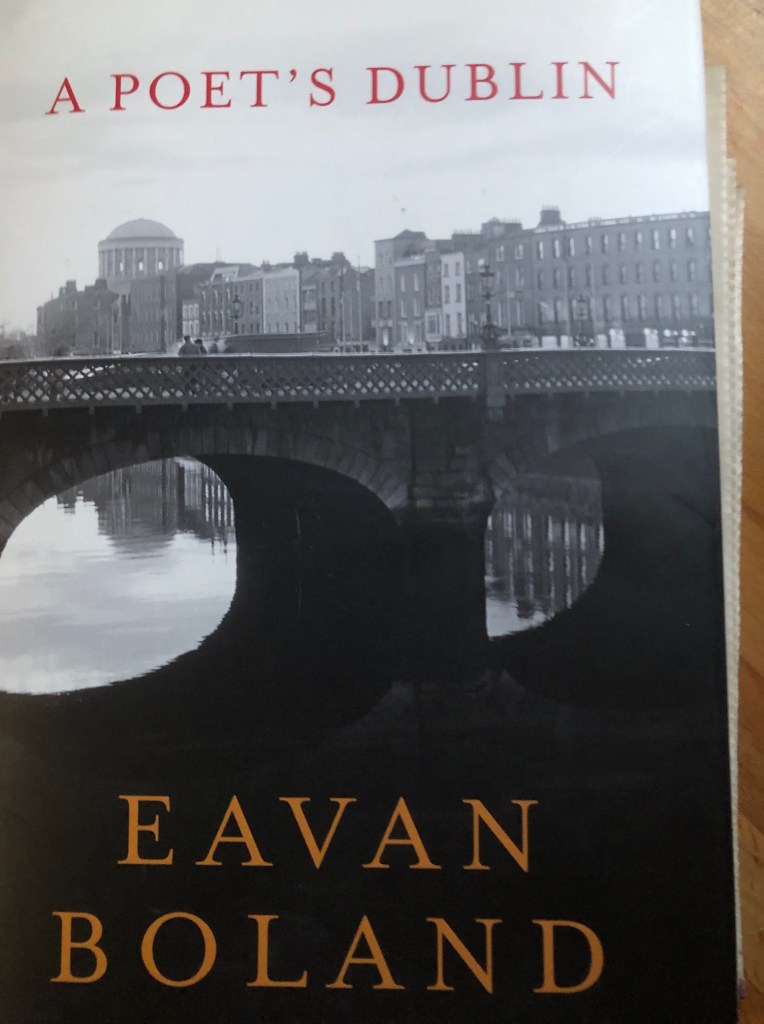
When her husband Freddie Boland was appointed Irish Ambassador to the Court of St James in 1950, Frances Kelly morphed into Judy Boland and scaled back her career as a painter. She now had five children, one of whom was the poet, Eavan Boland, all needing her full attention. Adapting well to the life of the elegant diplomatic soiree she advised a younger diplomat’s wife: ‘Don’t talk shop , they hear enough of it. Tell them dirty stories and make them laugh.’
Back in Dublin she sat on art committees, but her husband’s career, which eventually brought him to the Presidency of the General Assembly of the United Nations, increasingly took precedence and her last exhibited works were two Connemara landscapes in the Living Art exhibition of 1954.
A Public Display?
When the Regional Hospital opened in 2011 the old County Hospital closed and today is used for administrative purposes by the Health Service Executive.
The building is listed as a Protected Structure of Regional Importance and as an original and integrated element of its design, Kelly’s painting is included in that designation. It cannot therefore, and should not, be moved to an alternative location on a permanent basis. Unfortunately, but understandably, without giving prior notice, this work of art is inaccessible to the general public and to art lovers.
Yet, this is probably the finest modern painting in public hands in County Offaly.
Possibly the HSE might consider permitting and assisting its temporary display in an accessible venue such as the Esker Arts Centre, after which it would return to its home in the hall of the former Hospital as originally intended by the artist and the architect.


This series is supported by Offaly County Council’s Creative Ireland community grant programme 2025-2027.
 offalyhistoryblog