
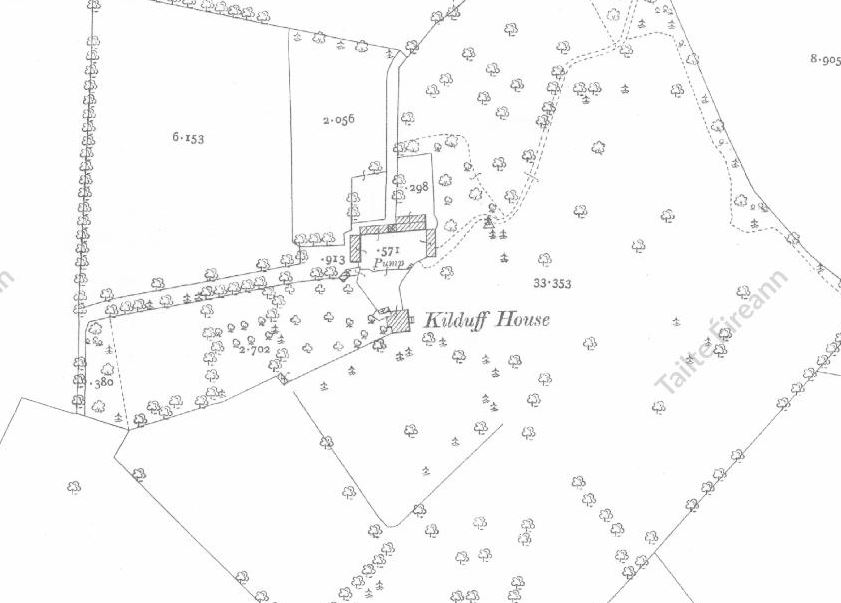
This is part three of a four-part blog on the 1835 Poor Law Inquiry into the baronies of Philipstown Upper and Lower. The respondents to the questionaries for Philipstown/Daingean were Rev P. Rigney and Roger North. Roger North was a landowner in King’s County. He inherited the Kilduff estate upon the death of his father, Roger North, in 1830. He was involved in estate management, including raising rents, which made him unpopular with local farmers and other landlords.[1] North was shot dead in 1850.
Transcripts of the Poor Law Reports – Continued The questions raised by the Poor Law Commissioners for the local respondents are in the column on the left
Appendix 2
Supplement – containing answers to Appendix 1 questions. The questions are shown here in the column on the left
| PARISH, AND POPULATION IN 1831. The questions below: | Ballycommon – Pop. 1,226 | Kilclonfert – Pop. 1,734 | Kilclonfert – Pop. 1,734 |
| RESPONDENT | Rev. P. Rigney, P.P. | Rev. P. Rigney, P.P. | Roger North, Esq. |
| 1. How many labourers are in your parish? How many in constant employment? How many in occasional employment? | About 70 (lay labourers, and 76 farm servants. Of the day labourers, 24 are in constant, and 46 in occasional employment. | About 178 day labourers, of whom about 68 are employed constantly, and 110 during 10 months of the year: besides these, there are believed to be 158 farm servants, being an average of one farm servant to each holding above two acres. | About 400, generally in constant employment. |
| 2. How are they maintained when out of employment? | Mostly by obtaining food on credit. | Some on their stock of potatoes, but most of them on food taken up on credit, upon very unfavourable terms. | From the proceeds of their labour. |
| 3. What is the ordinary diet, and condition with respect to clothing of the labouring classes in your parish? | Chiefly potatoes and buttermilk, occasionally stirabout or oaten bread; but the farm servants and dieted day labourers have, besides, meat or butter at dinner, three times a-week: the clothing is poor. | The ordinary diet of labourers receiving only money wages consists of three-fourths potatoes, and one-fourth oaten meal, with the genev.al addition of buttermilk: the farm servants and dieted labourers have usually, in addition, meat or butter on every second day : the clothing is scanty and unsubstantial. | Potatoes, and occasionally stirabout; and, as to clothing, they are generally well clad, |
| 4. What are the daily wages of labourers, with or without diet, (specify winter and summer,) in your parish | With diet, to 5d. to 6d. in summer, and 4d. to 5d. in winter; 8d. and 10d. without diet. | With diet, in summer 5d. and 6d., in winter 4d. and 5d., without diet, in summer l0d., in winter 8d. | Without diet, l0d. in summer, and 8d. in winter; with diet, 6d. |
| 5. At what periods of the year are they least employed? | Midwinter and July. | January and July. | Generally in winter. |
| 6. Are women and children usually employed in labour, and at what rate of wages? | Women and young people are employed in catting and dropping seed potatoes, in saving turf, binding corn, picking potatoes, weeding, at half men’s wages. | Women, and young persons from 10 years upwards, are always employed in cutting and dropping seed potatoes, in weeding.in saving turf, in binding corn, and in picking potatoes, at half men’s wages. | They are very much employed in spring and harvest, and their wages are 5d. in summer, and 4d. in winter. |
| 7. Is task-work general in your neighbourhood? | No. | It is not. | It is not. |
| 8. What in the whole might an average labourer, obtaining an average amount of employment, both in day-work and task-work, earn in the year, including harvest-work and the value of all his other advantages and means of living? | The undieted permanent labourer would earn in the year, in wages, about £9 10s., and would derive from other sources about £5 5s.; in all, less than £15: the occasional undieted labourer about £2 less. | The undieted labourer, in constant employment. will earn about £9 10s. in the year; the dieted labourer about £6, the occasional labourer one-sixth less: the permanent labourer receives no addition wages in harvest; the occasional labourer does, but he also frequently consents to take less than the average wages, by which his average earnings when employed are reduced, at the very best, to the common standard: the other sources of profit not hereafter enumerated are, from pigs about £2 10s., from eggs about £1, from fowl about 16s., from 10 perches of flax about £1 5s. | With diet, about £6 10s.; without diet, about £9 10s. |
| 9. What in the whole might his wife and four children, all of an age to work (the eldest not more than 16 years of age) earn within the year, obtaining, as in the preceding case, an average amount of employment? | About £3 3s. | They will earn by farm work about £2 2s.; by spinning, taking the earnings at l/2d. a-day, and the employment at half the year, both rather overestimated, about £1; thus the whole earnings of a labourer and such a family will be £18 3s. | Independent of domestic employments, each child could earn about £1 a-year; married women seldom leave their houses. |
| 10. What would be the yearly expense of food for an able-bodied labourer in full work, at the average price of provisions, during each of the last three years? | £5 10s., when consisting of three-fourths potatoes, and one fourth oaten meal with buttermilk £7 3s. with the addition of two pounds of bacon weekly. | Estimating his consumption at 13lbs. of potatoes a-day, and 3 1/4 lbs. of oaten meal a-day respectively, and that three-fourths of his food consists of potatoes, and adding two quarts of buttermilk a-day, the potatoes valued at 3d. the stone, the meal at 1s. 3d. the stone, and the buttermilk at 1d. for three quarts, the yearly costs would be £5 10s. 2d., with the addition of 2 lbs. of bacon weekly, at 5d. the pound, deducting quarter of the cost, on account of the saving of other food, the annual cost would be £7 2s. 8d. | About £4 10s. |
| 11. Are wages for labour usually paid in money, or provisions, or by con acres? Or in what other way? | In money, provisions, by con acre, and the grass of cows. | They are paid in the three ways specified, and also occasionally by the charge for the grass of a cow. | Sometimes in in money, sometimes in provisions, and frequently ill con acres. |
| 12. Upon what terms are herds usually hired in your parish? | They have from one to two acres of land, and also grass and hay for two cows. | They usually get one and a half acre of land, and grass and hay for two cows. | They are seldom paid in money, but get a house, garden, and grass for one or two cows. |
| 13. Of what class of persons, generally, are the landlords of cottages or cabins? | Farmers. | Farmers. | Indolent and distressed. |
| 14. What is the usual rent of cabins with, and of cabins without, land? | £l 1s. a-year without land; and £1 11s. 6d. with from 15 to 30 perches of land. | With 20 perches of land, £l 10s; without land, £1. | Without land, £l a-year; with land, according to the quantity; the rent decreasing as the complement increases. |
| 15. Of what description of buildings are those cabins, and hew furnished? Are they supplied with bedsteads and comfortable bedding? | Usually of mud. The furniture and bedding a little superior to what has been detailed in reference to the parish of Kilclonfert. | Generally mud cabins ; the furniture is usually limited to one table, a dresser or shelf, three or four stools, two metal pots, a small supply of delf, and a few milk and water vessels, and one bedstead; the bed usually straw or chaff, rarely feathers, with scanty covering. | The buildings are generally bad; furniture rather comfortable. |
| 16. Upon what conditions, exclusive of rent, do labourers or cottiers-hold their cabins midland? Is it usual to require duty-labour, in addition to, or in lieu of rent? | They engage to work for their landlord, when called upon, at the usual rate of wages. Duty-labour does not exist. | To work at the usual rate of wages for the landlord. Duty work only exists in one instance. | They generally pay by their labour. Duty-labour is not exacted in this neighbourhood. |
| 17. In how many instances, within your parish, are two or more families resident in the same cabin? | In about eight. | About 20. | As far as I can learn, none. |
| 18. Is the general condition of the poorer classes in your parish, improved, deteriorated, or stationary, since tile Peace, in the year 1816, and in what respects? Is the population of the parish increasing or diminishing? | The poorer classes are worse fed and better clothed. The population is increasing. | In respect to food their condition is worse; better in regard to clothing. The population is on the increase. | The condition of the poorer 1 classes is, I understand, stationary; and the population very little increased. |
| 19. Has your parish been disturbed or peaceable during that period? | Occasionally disturbed; chiefly owing to the influx of strangers, caused by public works. | Searches for anus and other nightly outrages have occasionally occurred; open defiance of the laws but once, on the occasion of the transfer of a large farm, but the persons immediately interested, and most of the actors in it, were of a different parish. | Remarkably peaceable. |
| 20. Is there any savings’ bank or benefit society, in your parish’? In what state of prosperity is it, in respect of the contributions made thereto, and of what description of persons are the contributors? | None. | Not any nearer than Tullamore, distant about seven miles. | There is not. |
| 21. Are there any pawnbrokers’ shops in your parish? if so, is it with the lowest class of poor that their dealings are principally carried on ? | None. | Not one. | There are not. |
| 22. What is the number of public houses, or houses where spirituous liquors are retailed, within your parish? Does illicit distillation prevail in it? | One licensed house; four or five unlicensed. No illicit distillation. | There is no licensed house, but many unlicensed ones. Illicit distillation does not prevail. | At present there are not any licensed houses; but I understand there are many unlicensed. |
| 23. Number of acres in your parish or parishes, following the division as taken by the enumerators under the Population Returns, and stating whether the same? | 2,621 plantation acres, besides 32 under roads, as returned by the valuators under the Composition Act. | The return made under the Composition Act was 3,577A. 2R. 34P., exclusive of roads, 43A. 2R. 23P., plantation measure. | 3,621A. 1R. 17P., including 43A. 2R. 23P. public roads, plantation measure. |
| 24. How much public common? how much woodland? how much arable, pasture, waste, and bog, in your parish, so far as you are enabled to describe the same? | No public common; three or four acres under wood; about 1.076 under tillage; 1,545 of pasture; waste about 30, and about 1,500 of bog. | There is no public common; woods and groves occupy about 78 acres, the arable land about’ 2,000; pasture and meadow about 1,500, waste about 170, and bog about 1,600; the last two are loose estimates. | There is not any common; no woodland; arable and pasture land in No.23; no waste; a great deal-of bog. |
| 25. What is the average rent of arable land, and of pasture land, in your parish? | From 14s. 6d. to £1 16s. an acre. | Arable land averages about £1 10s. the acre ; good pasture lands near £2 | From £l. to £1 10s. |
| 26. Does the con acre system prevail in your parish? | It does. | It does. | It does. |
| 27. Name the highest and lowest rent usually paid for con acres? | £8 8s. and £6 10s., for potatoes. | £8 10s. and £4-10s. for potatoes; £6 and £3 for oats; and the same for meadow. | Potatoes from £5 to £7; oats from £3. 10s. to £7. |
| 28. Is the con acre crop, on the average, a remunerating crop? or are excessive rents ever given for con acre ground, from other considerations than of actual value? | It reduces the money cosh of potatoes to the labourer generally one-half: the actual value regulates the price. | The con acre system enables the labourer to provide potatoes at above half their market price, his own labour not being taken into account, as it is bestowed by himself when out of employment, or by some member of his family similarly circumstanced; the corn crop is also remunerating: no other considerations than the value influence the rents of con acre in this parish. | Potatoes generally are; oats are promised, but rarely given. |
| 29. To what extent has the system of throwing small farms into large ones taken place in your parish, and what has become of the dispossessed tenants? | It occurred in one instance; the dispossessed tenant obtained a farm in an adjoining parish. | It has not taken place at all. | The forms, generally speaking, are not small, and the tenants in possession have not been disturbed for many years. |
| 30. What number of emigrants, and of what description, have left your parish during each of the last three years? | 64 emigrated; mostly in 1831 and 1832; there were two farmers, two tradesmen, and- ten labourers; nine of the 14 took their families; the rest chiefly consisted of the sons of farmers. | None have emigrated. | None. |
| 31. To what country have they gone? | To the United States and the Canadas. | – | – |
| 32. Have they received any, and what assistance, for the purposes of emigration? | With one exception, they received no assistance; the assistance consisted of food. | – | – |
| 33. Are the landed proprietors absentee or resident? If absentee, do they reside in any part other of Ireland? | Absentee; hut, with one exception, resident in other parts- of Ireland. | The fee proprietors are all absentees; but, with one exception, reside in other parts of Ireland. | Absentee; hut reside in. other parts of Ireland. |
| 34. What is the general extent of the farms held in your parish? Are they generally held by the tenant in occupation from the head landlord? | From 10 to 50 acres. Generally held from the head landlord. | The tenements under 2A. are 27 2A. and not 10 ,, 57 10 do. do. 30 „ 65 30 do. do. 50 „ 20 50 do. do. 100 ,, 10 Above 100 „ 6 In all 185. Held mostly under the head landlord. | The extent of the farms is generally from 20 to 50 acres, and seldom held from the head landlord. |
| 35. What number of labourers have had employment on the public roads in your parish, within the last year, and in what mode or modes have they, been paid? | None. | About six; paid in money. | As far as I can ascertain there were about 700 men employed, and I believe the usual mode of payment is in provisions. |
[1] Fr John Moorhead, SMA, The shooting of roger north (on Monday, 23rd September 1850), p. 1. See also Michael Byrne (ed.) Towards a history of Kilclonfert (Tullamore, 1984).
 offalyhistoryblog