
The noun ‘palimpsest’ derives from the Greek words pālin (again) and psēn (to scrape), and it relates to phenomena that have experienced temporal change and show clear evidence of such transformation.1In industrial heritage, the term ‘palimpsest’ is used to describe the ongoing spatial and social cycles involved in the reutilisation of industrial sites. It indicates multiple layers of activities and cultural practices that evolve within the same geographical space over time. Elements that endure across different periods can be either tangible, such as built heritage structures and redundant machinery, or intangible, like traditional craftsmanship, traditional knowledge systems, and cultural values.2It is important to recognise that the International Committee for the Conservation of Industrial Heritage (TICCIH), the International Council on Monuments and Sites (ICOMOS), and the Industrial Heritage Association of Ireland classify industrial heritage as a vital part of cultural heritage.3
County Offaly, located in Ireland’s heartland, boasts a rich industrial heritage that has shaped its landscape and communities. Although Offaly’s industrial heritage encompasses a diverse range of industries, the county’s industrial heritage is most notably embodied in the peat industry, which held dominance in the region throughout the twentieth century. Bord na Móna, the commercial semi-state company responsible for peat harvesting, established extensive operations in Offaly, thereby providing employment opportunities and contributing significantly to Ireland’s energy requirements. The legacy of peat extraction is evident in the altered landscape, with extensive boglands and remnants of railway infrastructure used to transport peat. Currently, these sites are being repurposed by BnM primarily for renewable energy projects, signalling an accelerated transition in the county’s industrial identity and again a transformation of its landscape. In palimpsest terms, an additional temporal change and layer is to be added as renewable energy materialises as the next phase of industrial heritage.
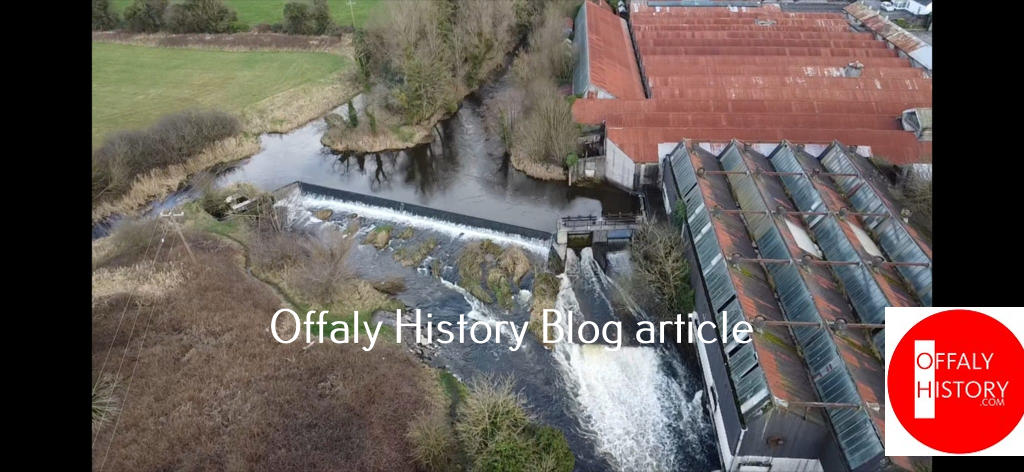
A milestone of the county’s industrial past was the development of the Grand Canal, which facilitated trade and transportation from the late eighteenth century onward, linking rural Offaly to Dublin and beyond. It serves as a testament to the engineering ingenuity of that period and remains a central feature of local recreation and tourism.
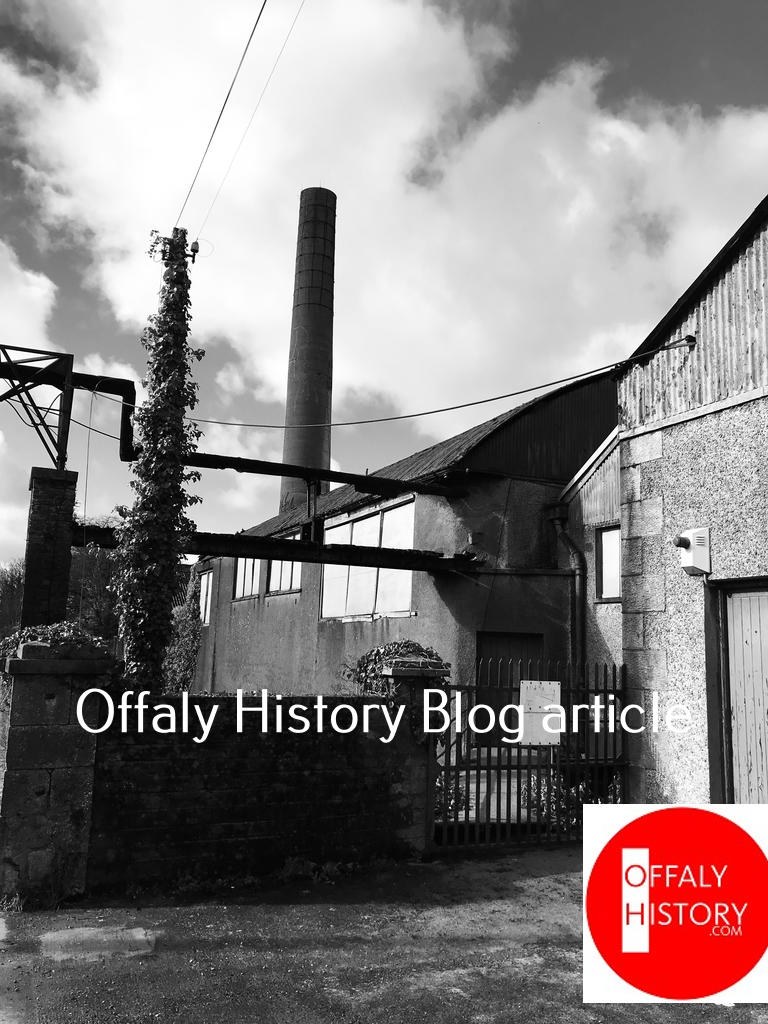
The mid to late 19th century also witnessed the industrialisation of towns in the county, such as Clara, with the construction of the Clashawaun Jute Works in 1864 by Jonathan and Lewis Frederic Goodbody on the town’s western outskirts. The Clashawaun Jute Works hold significant historical importance, as it was the only jute mill in Ireland with a sole purpose-built mill village in County Offaly.4In 1873, under the patronage of the Goodbody family, 120 experimental workers’ houses were built using a roof system from Portlaw. The philanthropic model settlement
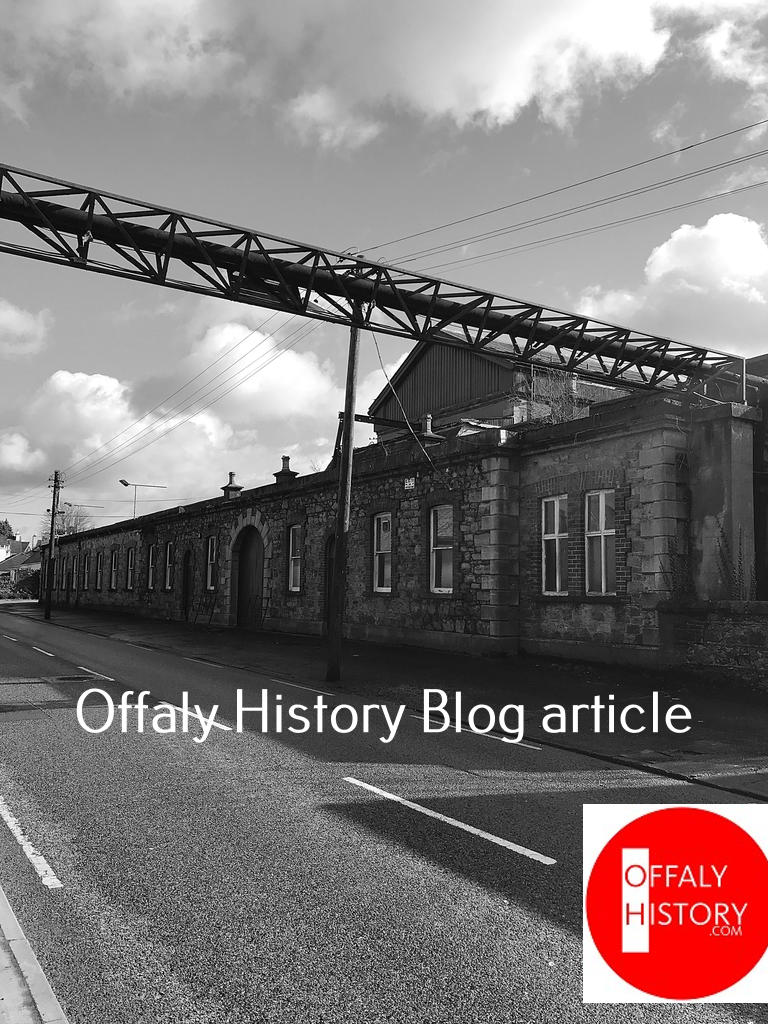
was designed to benefit and promote the welfare of the workers. What remains of the Clashawaun Jute Works today adds interest to the surrounding landscape due to its rarity and river setting.
County Offaly’s landscape is subject to the European Landscape Convention, also called the Florence Convention.5This treaty, ratified by 41 European countries including Ireland, aims to protect, manage, and plan landscapes across signatory states while promoting public awareness and involvement. It highlights that landscapes depend on maintaining a harmonious balance between cultural, economic, environmental, and social needs to survive. The European Landscape Convention addresses renewable energy by promoting the balanced integration of infrastructure into the landscape and emphasises that, while renewable energy is crucial for combating climate change, it must be developed and incorporated in a manner that respects and enhances the character, community value, and quality of the surrounding landscape.6
The European Landscape Convention adopts a broad-ranging perspective, viewing landscapes as shared cultural and natural heritage spaces whilst aligning the concept of landscape with human rights principles. This is outlined in Article 2 of the Universal Declaration of Human Rights and Article 14 of the European Convention on Human Rights, which prohibit discrimination and ensure the enjoyment of the rights and freedoms set out in this Convention.7
Although the Universal Declaration of Human Rights does not explicitly mention landscape, as it was adopted on 10 December 1948 by the General Assembly of the United Nations before the European Landscape Convention, Articles 22, 25.1, and 29.2 address dignity, cultural rights, health, and well-being, concepts that are central to the European Landscape Convention.8These provisions mirror the approach to landscapes presented in the preamble of the European Landscape Convention, which describes them as a vital aspect of individual and social well being and a fundamental part of cultural heritage, which includes its industrial component.
Furthermore, rights and responsibilities regarding cultural heritage are explicitly established in Article 27 of the Universal Declaration of Human Rights, which guarantees the right to freely participate in the cultural life of the community.9It is important to note that Ireland has ratified the European Convention on Human Rights and is legally bound by the Universal Declaration of Human Rights.
Reflecting on the theme for Heritage Week 2026, ‘Heritage at Risk’, the Heritage Council’s sentiment of ‘Our heritage is our story. Let’s keep telling it,” and the fact that County Offaly has established itself as Ireland’s green energy county, cultural heritage should be the focus of a thorough public, local, and national government debate. How does County Offaly, along with Ireland as a whole, strike a balance between conserving irreplaceable cultural heritage assets and strategic infrastructure essential for a sustainable energy future? Who holds authority over historical legacies, and who is qualified to represent past generations and their tangible as well as intangible cultural heritage?
When addressing these questions, consider the idea of a palimpsest and the European Landscape Convention’s inclusive perspective on landscapes as shared cultural and natural heritage spaces. Cultural heritage landscapes are not static remnants of past eras. The concept of conservation implies an acceptance that change is natural and often advantageous. While the urgent transition away from fossil fuels is undeniable, it must be carried out and managed in a way that is sustainable and equitable, safeguarding the landscape’s long-term significance for local communities and respecting their cultural rights and dignity.
A transition to sustainable energy should not be a threat to cultural heritage but rather a catalyst for its conservation and continued legacy; they have to coexist and support one another. Achieving this requires methodical planning, genuine collaboration and recognising that a sustainable future values environmental need, cultural heritage, and human rights in equal measure. If the current situation persists, Ireland is heading towards a Machiavellian degeneration of its cultural heritage, in which the past is systematically devalued and local communities stripped of provenance in a rush towards a perceived sustainable future.10
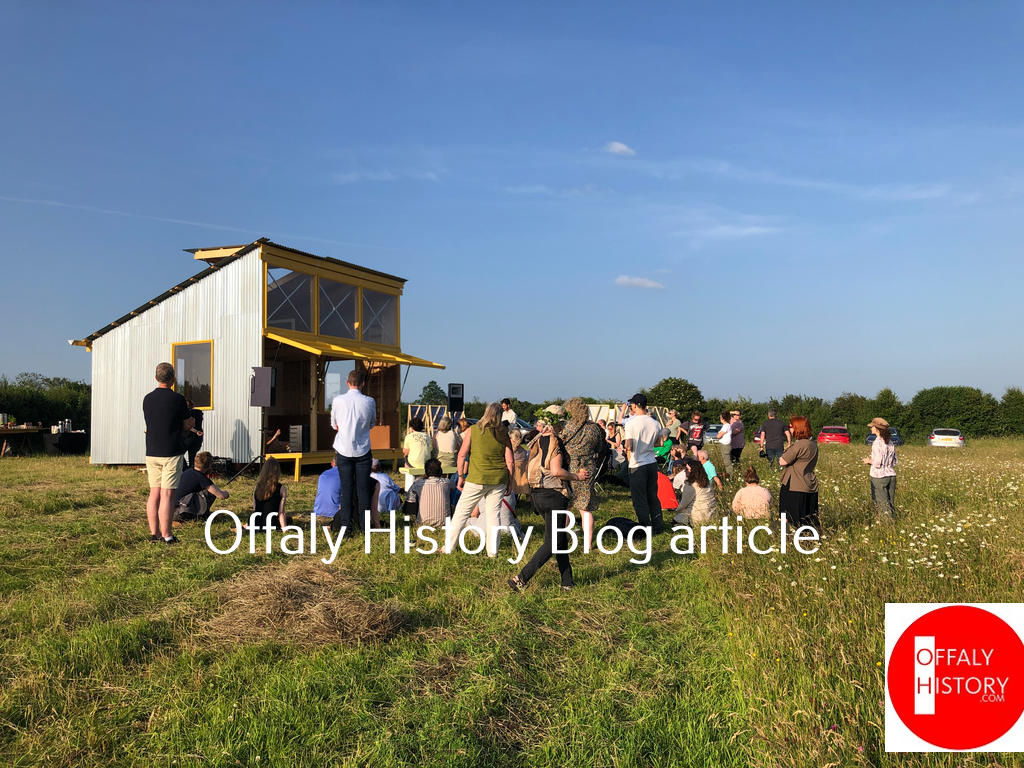
On 19 July 2025, a group of intrepid and concerned parties gathered at the Bog Bothy, overlooking the beautiful Clara Raised Bog, to form the County Offaly Industrial Heritage Conservation Network. Their aim is to develop an industrial heritage route across Offaly and the Midlands, offering locals and visitors an engaging exploration of the region’s vibrant cultural heritage as part of the European Route of Industrial Heritage.
Founded in 2008, the European Industrial Heritage Route (ERIH) is an award-winning tourism corridor showcasing Europe’s key industrial heritage landmarks. Certified as a ‘Cultural Route of the Council of Europe’ (since 2019), it functions as a network, with awards given to sites and projects within its membership.11 The initiative promotes a Europe-wide network of industrial heritage sites, highlighting their legacy and encouraging interest in a shared cultural history of industrialisation. ERIH emphasises regions, towns, and sites that exemplify industrial heritage, promoting them as tourism attractions.
Cultural tourism is among the fastest-growing global markets, constituting 40% of the tourism sector, according to the OECD.12 Cultural tourism’s heritage component market size, which includes industrial heritage tourism, was valued at USD 638.87 billion in 2025 and is projected to increase from USD 667.98 billion in 2026 to USD 954.07 billion by 2034.13 This increase is driven by the demand for authentic, immersive cultural and heritage experiences, something County Offaly has in spades.
Offaly TD Tony McCormack recently emphasised in the Dáil that the county should benefit from its renewable energy initiatives.14 While true, County Offaly should also become a leader in integrating renewable energy technologies with the conservation of cultural heritage, allowing local communities to celebrate their past, tell their stories, and financially gain from it. Renewable energy projects have both the potential and the capacity to act as custodians of historical legacy, especially concerning industrial heritage in County Offaly, while promoting a sustainable future. The idea of a future where cultural heritage, including its industrial component, thrives and benefits local communities alongside renewable and sustainable energy systems offers a compelling vision worth pursuing in County Offaly.15
Now, is that not a Just Transition?
1 Sarri, S. Palimpsest industry: industrial heritage and intangible cultural heritage in the creative city: a comparative analysis of the Old Truman Brewery in London and Technopolis in Athens. In: “Identidades: territorio, cultura, patrimonio”, 2020, núm. 9. ISSN: 1886-6840.
2ibid
3 Dublin Principles: Joint ICOMOS – TICCIH Principles for the Conservation of Industrial Heritage Sites, Structures, Areas and Landscapes. Adopted by the 17th ICOMOS General Assembly on 28 November 2011.
4 Hamond, F. 2009. Mills of County Offaly: An Industrial Heritage Survey Part 1-General Review. An Action Plan of the Offaly Heritage Plan 2002-2006. Offaly County Council.
5 European Landscape Convention. (2000). https://rm.coe.int/european-landscape-convention-book-text-feb-2008- en/16802f80c6
6ibid
7 Universal Declaration of Human of Human Rights. (1948). https://www.un.org/en/about-us/universal-declaration of-human-rights
European Convention on Human Rights. (1953). https://www.echr.coe.int/documents/d/echr/convention_ENG
8 Universal Declaration of Human of Human Rights. (1948). https://www.un.org/en/about-us/universal-declaration of-human-rights
9ibid
10 Sustainable Directory (2025). Cultural Preservation through Renewable Energy Projects. Sustainable Directory. https://prism.sustainability-directory.com/scenario/cultural-preservation-through-renewable-energy-projects/
11 Council of Europe Cultural Routes. (2026). European Route of Industrial Heritage.
12 The Organisation of Economic Co-Operation and Development. (2022). Maximising synergies between tourism and cultural and creative sectors. Discussion Paper for the G20 Tourism Group.
https://www.oecd.org/content/dam/oecd/en/publications/reports/2022/09/maximising-synergies-between-tourism and-cultural-and-creative-sectors_dd784e39/f597b0f0-en.pdf
13 Fortune Business Insight. (2026). Heritage Tourism Market Size, Share, and Industry Analysis, By Type (Cultural Heritage, Natural Heritage, and Religious Sites), By Travel Type (Individual and Group), By Booking Mode (Online Booking and Offline Booking), and Age Group (Under 30, Between 30-50, and Above 50), and Regional Forecast, 2026- 2034. Heritage Tourism Market Size, Share, and Industry Analysis, By Type (Cultural Heritage, Natural Heritage, and Religious Sites), By Travel Type (Individual and Group), By Booking Mode (Online Booking and Offline Booking), and Age Group (Under 30, Between 30-50, and Above 50), and Regional Forecast, 2026-2034
14 O’Neill, K. (2026 Febr 19). Offaly ‘must see the economic benefits’ of renewable energy, Dáil hears. Offaly Independent.
15 UNESCO. (2025). Protecting World Heritage in the face of the renewable energy transition. https://whc.unesco.org/en/renewable-energy/protecting-wh/
Biography:
Anna Orman chairs the County Offaly Industrial Heritage Conservation Network and is active in the Clara Heritage Society, Clara Town Centre First Team, and Offaly PPN. She focuses on conservation, regeneration, and sustainability, and on the links among humans, cultural heritage, and landscapes to combat climate change, advocating for communities as key stakeholders in environmental decision-making.
 offalyhistoryblog