As the 13th of August comes around, the present rising tensions between Russia and the West bring me back sixty-five years to the Summer of 1961 and my ringside seat at its most momentous event.
The Cold War was hotting up and the nuclear powers were preparing for a confrontation when myself and some classmates from the School of Architecture in UCD arrived in London hoping to make enough summer money to get us through the next year. Our skills were instantly snapped up by firms engaged in the delivery of priority defence projects.
For the next two months I worked night and day churning out drawings for the construction of a nuclear submarine base at Faslane in Scotland. By the end of July we were all exhausted but having saved enough money, we badly needed a break. One of us had bought a second-hand car so we decided to make an architectural pilgrimage to the Continent before returning to Ireland.
Copenhagen was our first stop as Scandinavian architecture was then very much the fashionable style with young architects. Its clean lines, exposed brick and large areas of glass may be seen today in Paul Burke-Kennedy’s offices for Irish Mist in Tullamore and Noel Heavey’s elegant church in Horseleap.
Our next destination was Berlin which was undergoing a massive post war reconstruction. We came down through Flensburg and crossing into East Germany, drove without stops (none were allowed anyway) along an almost empty autobahn into the Western Sector. On Friday the 11th August, we booked into a youth hostel in Charlottenburg in the northern part of the city.
Saturday morning was devoted to a tour of new developments in the American zone. I found the buildings around Zoo Station and Hansa Viertel a bit too glitzy and brash for my taste. I had just begun to appreciate the urbanism of Frank Gibney’s Bord na Mona housing and was more attuned to the unified street facades and classicism of Stalinalee which we viewed in the Soviet zone in the afternoon.
The Wall goes up
At breakfast on Sunday the manager of the hostel came around to our table to warn us not to take our car into the city as there were traffic diversions everywhere. Nobody knew what was going on. The East Germans had started putting up fences and traffic barriers and everywhere there were road signs saying ‘Umleitung’, meaning ‘Diversion’. These were of course the first works of the Wall which was later to become a more substantial structure and divide the city for the next twenty-eight years.
International Tension
By Sunday afternoon, people began to realise that these apparently unconnected and temporary barriers might become unified and permanent and were fleeing the Soviet Zone in vast numbers. Many were crossing at Bernauer Strasse where the buildings in the East directly adjoined a road in the West. We went up there and witnessed people jumping to freedom out of windows. I will never forget the sight of a baby being let down in a basket to waiting relatives below.
The atmosphere was getting more frightening by the hour, so we decided to flee the city. Crossing back into West Germany along a now congested autobahn, at the Helmstedt/Marienborn checkpoint we saw American tanks lined up. The newspapers were speculating that their advance into East Berlin was being planned. This would of course be resisted by the Russians and the moves following that were unthinkable.
Stopping for a night in Dortmund we drove on to catch the ferry at Calais, arriving back in London on Thursday. International tension had now heightened further so we decided not to linger but to get back to (hopefully) neutral Ireland as soon as possible. The next day we drove to Holyhead and landed in Dublin on Saturday morning.
Back to Tullamore
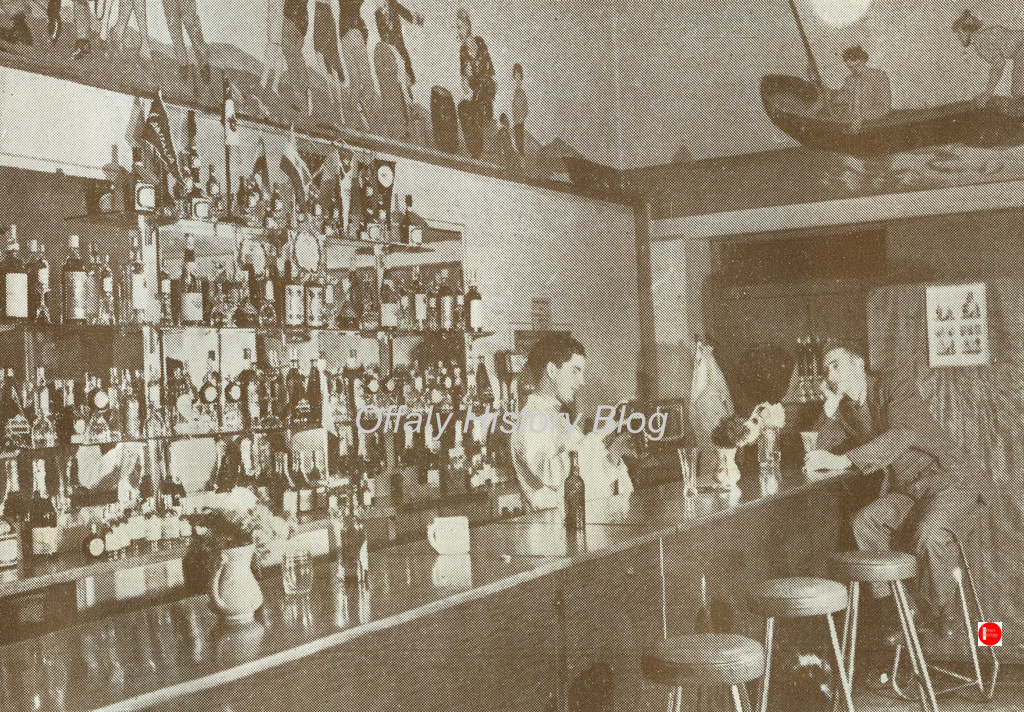
I said goodbye to my friends and took the train to Tullamore. Having first checked in with my worried uncle, I raced down to the ‘Murals’ to entertain my usual drinking companions with my adventures. I confess that I relished the expectation of being the centre of their attention.
But none of the gang were there. No sign of Joe Kenny, Tom Horkan, Pat Carty, Denis Lumley or Billie Champ whom I desperately needed to impress with my account of the events I had witnessed.
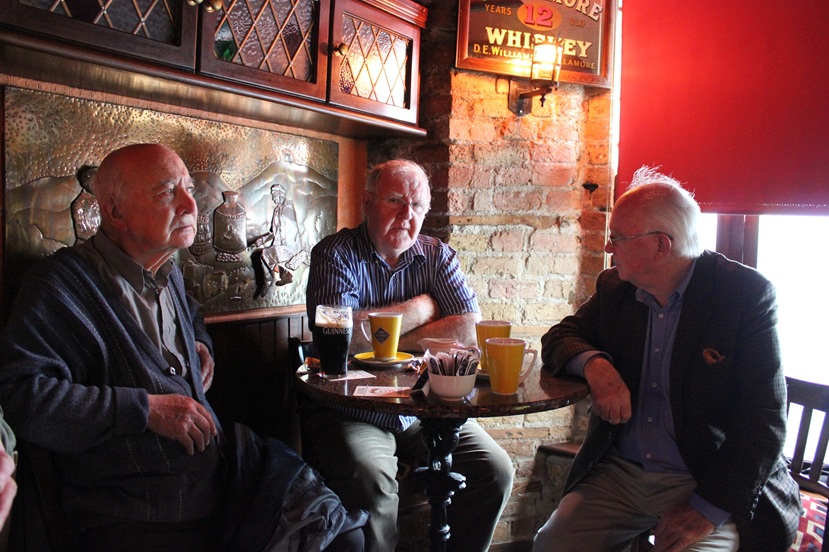
The only customer in the bar was an elderly farmer from Rahan who was enjoying a quiet drink on his own while his wife shopped in the grocery next door. He would have to do.
I invited myself into his company, and he politely accepted. We made small talk for a while and eventually I was offered the opportunity I longed for when he asked me if I had managed to get away anywhere nice for the summer.
‘Now that you ask’ I said ‘I’m just back from Berlin where I saw the Wall going up and might even have witnessed the opening moves of the Third World War’.
‘Well, you got the weather for it anyway’, he observed.