
Interestingly George Brent did have an affair with Gretta Garbo now regarded as a gay icon. Two tabloid newspapers Mason City Gazette 20th December 1934 and Manitowoc Herald Times 27th December 1934 state that while Garbo was filming The Painted Veil, she threatened to leave the production, they were having a go at Garbo using her famous line in its headline to read `I want to be alone……………..with George Brent.
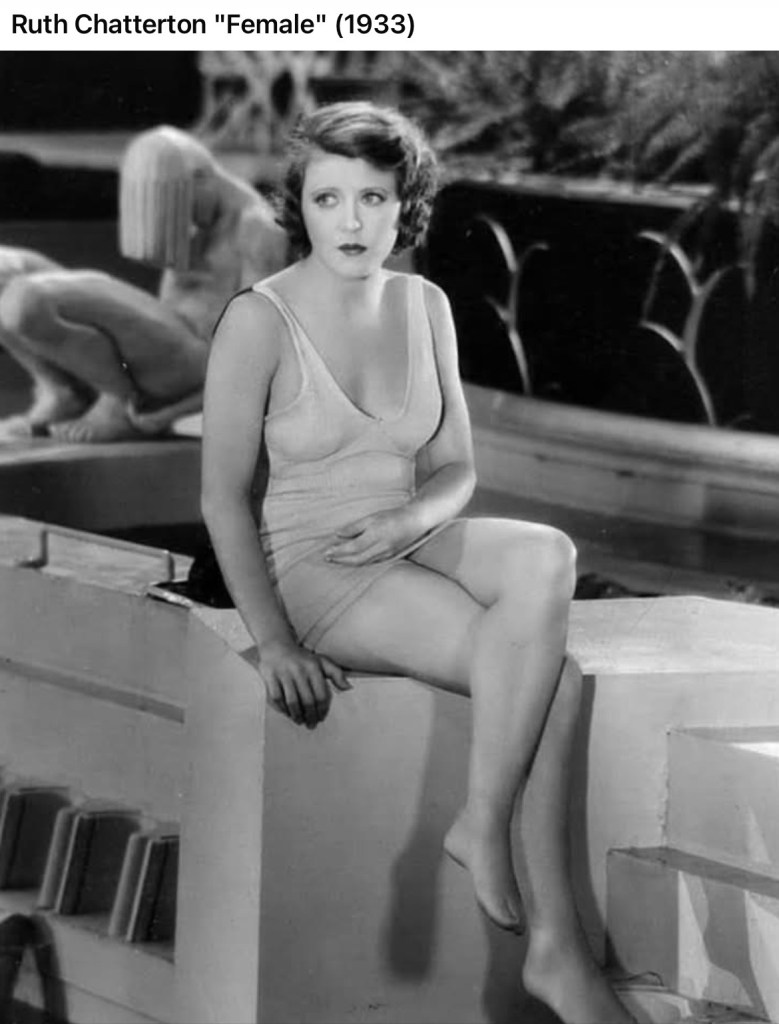
The Morning Union, Springfield, Massachusetts on 22nd August 1932 is reporting that George Brent who recently became the second husband of Ruth Chatterton the stage and screen actress was a former player with the Suffolk Theatre. Reporting that he returned to Ireland for his college education, he spent a year with the Irish revolutionists in their rebellion against the English. He later became a sailor off the Cornish coast, a stoker on a freighter, a blacksmith and a sheep-herder in Ireland. A lot of liberty being taken with the truth in this report.
Warner Bros., in one of the first studio generated stories `The Real Life Story of George Brent` appeared as a two part series in Screenland (September-October 1932) written by Carlisle Jones. It is filled with misinformation, refers to George`s parents as John and Mary Brent, and extended his position as a dispatch rider for the I.R.A. from a few months to two years.
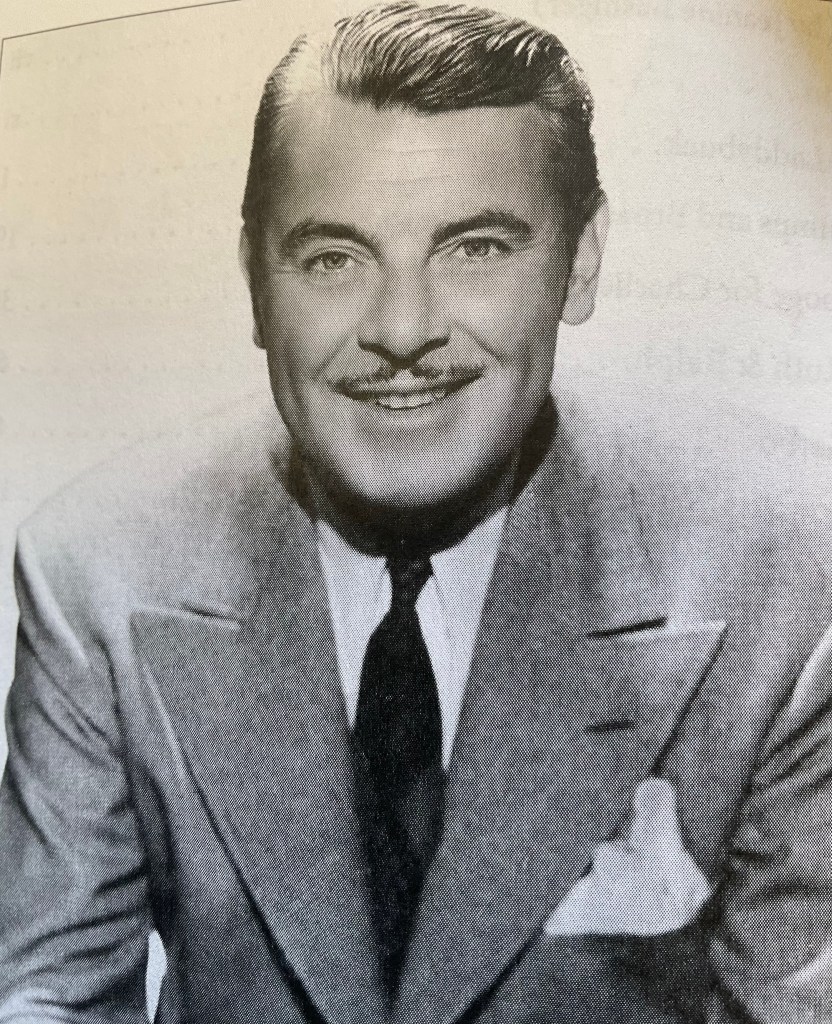
In 1938 we find a very jaundiced view from Dick Mook, a journalist, who interviewed him on the set of `The Goose and the Gander`. `A frustrating experience I let myself in for an interview with George, and there is no story there. At least as far as I am concerned…I can`t get anything out of him. He`s a liar, a pest and a nit wit, he would promise you anything under the sun.. but he thinks no more of breaking his word than he does of tying his scarf`.
In 1939 we find Brent in an article `Without a Shirt` discussing his reclusiveness `People have occasionally complained to me that I do not take them into my confidence, that I do not tell them my life story on first or second meeting. A few hectic months in Ireland during the stormy after-the-war period, when no man knew what other man he could trust, taught me the value of being generally uncommunicative. `
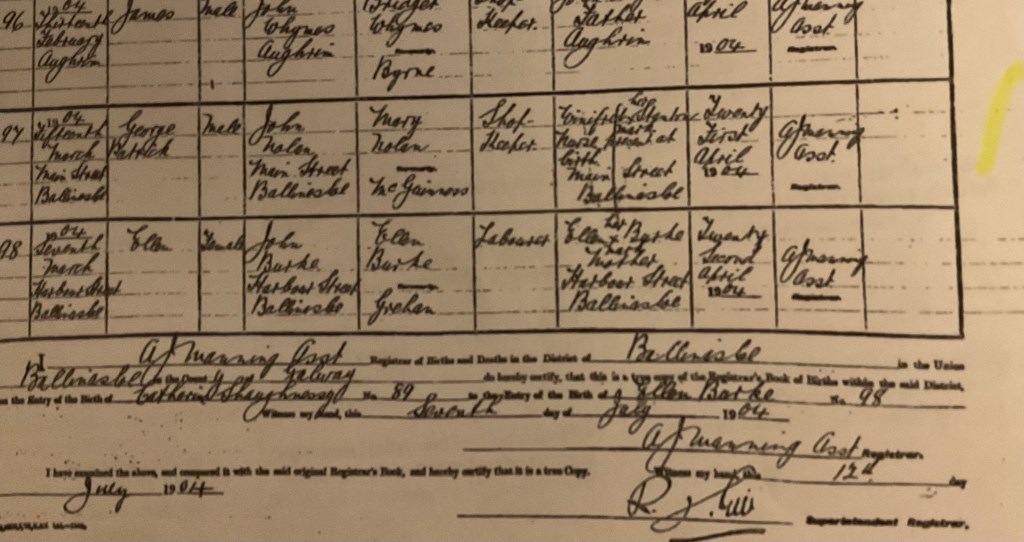
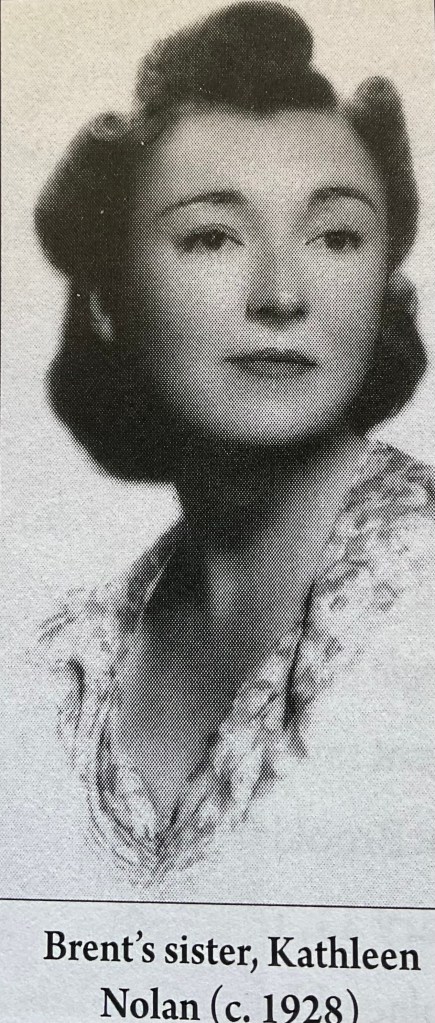
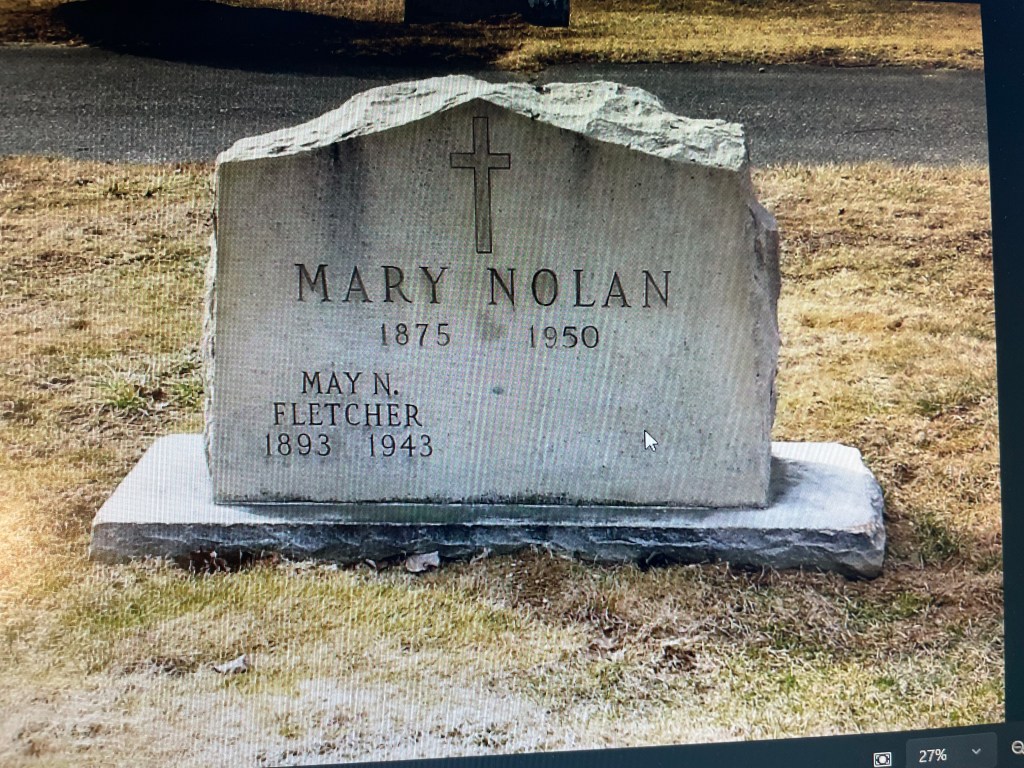
We find numerous errors or lies which he either told or at least did not deny. Examples that I came across, in Movie Classis September 1932 he said `my father was a newspaper man, had died when I was two`, in Silver Screen reports ` orphaned at eleven, sent to live with an aunt in New York`, in Motion Picture February 1940 `when he was seven his father died, when he was fifteen his mother died`. His mother actually died in in 1950 on Long Island, and is interred in Mount Pleasant Cemetery in the same plot as her daughter Mary Fletcher nee Nolan. We find a legal notice in the Suffolk County News 18th December 1952 citing the next of kin of Mary Nolan and requesting those having an interest to make contact. The next of kin are listed a China Martin (formerly Kathleen Nolan) his sister, Lucy Edwards (formerly Lucy Nolan) his sister, John J. Nolan (Brent`s brother), Patrick Watson and Robert Fletcher (Brent`s nephews) and George Nolan sometimes known as George Brent. There are many such reports where the truth is circumvented.
An incident that may help his cause to be a rebel happened in 1966. Out of the blue he decided to relocate his horse breeding business to Ireland. In August he flew to Ireland and settled in Foxrock where he rented a house. He had a working relationship with the famous trainer Paddy Prendergast. However this new found love affair with Ireland did not last long, getting fed up with Irish weather, `we almost froze to death` he said. His daughter Suzanne noted one definite highlight for her father during their stay. It occurred one afternoon while dining in the Shelbourne hotel. A member of the I.R.A came up to Brent and said `Mr Brent….we want to let you know that we haven`t forgotten.` He was honoured they remembered him his daughter recalled. One has to ask was this a case of mistaken identity conflated Brent with George Nolan from Kimmage an authentic member of the I.R.A. As we shall see he was only in Ireland for the period February 1921 until very early August 1921. The Truce was agreed 11th July 1921 so George Nolan aka Brent had a very short window for I.R.A. activities.
On the Hollywood Walk of Fame blurb we find George Brendan Nolan born in Raharabeg, county Roscommon to a family steeped in British Army tradition. During the Irish War of Independence was part of an active I.R.A. Service Unit, as early as 1920 carrying out I.R.A. directions. He fled with a bounty on his head and was a comrade of Michael Collins.
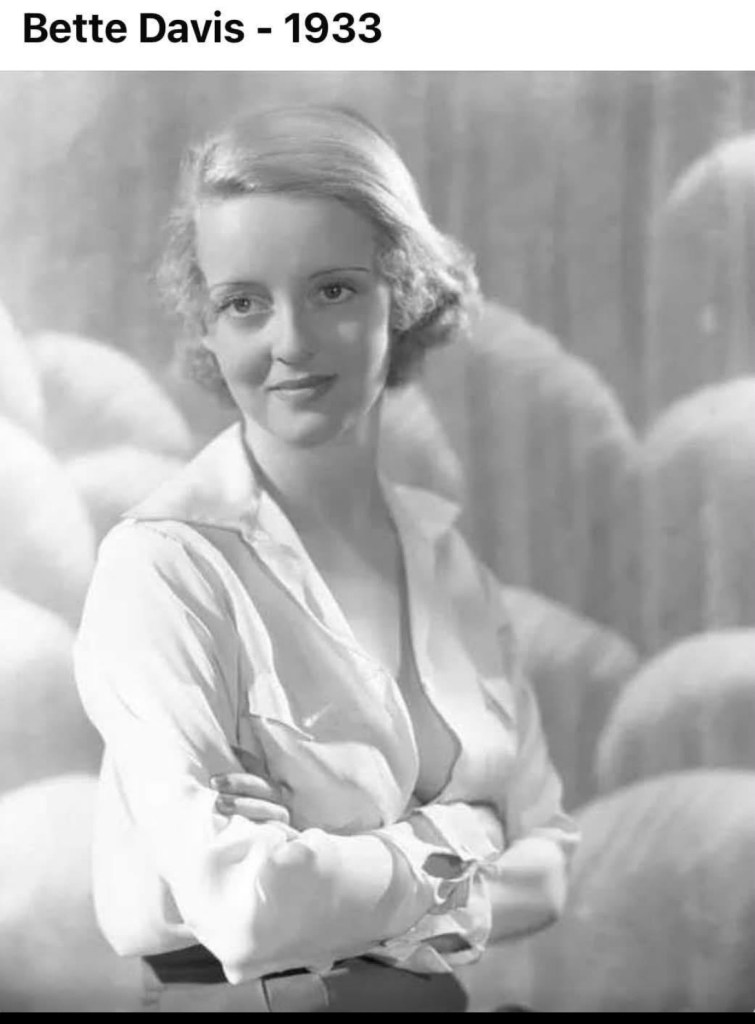
Author Lawrence J. Quirke observed about Brent in `Fasten Your seatbelts: the passionate Life of Bette Davis page 55 `For all his rueful realism, sophisticated awareness of the female psyche, and feet-on-ground cynicism doubtless born of his stark and brutal experiences during the Irish rebellion. Brent has a steadying influence on the ladies in his life and met their problems with a kind of rough compassion that found healing while it lasted.`
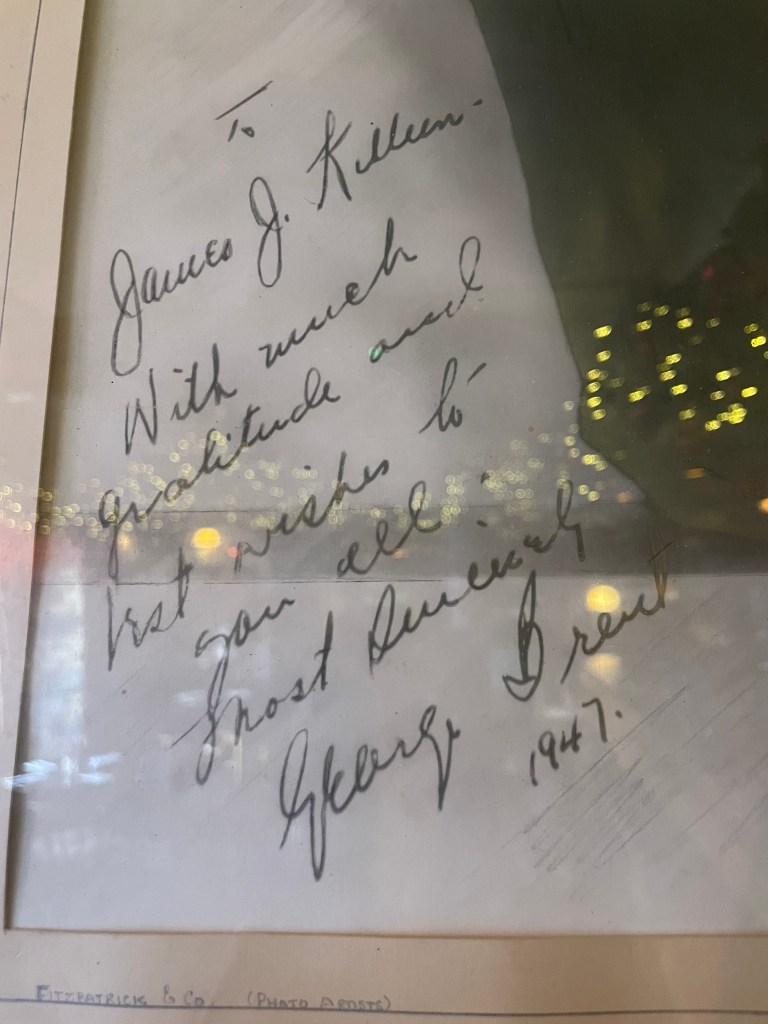
The Irish Independent of 29th May 1979 reported his death thus: Film star, dispatch rider for Collins.George Brent, christened George Patrick Nolan, the county Galway born screen star who died aged 75 in California, was one of Hollywood`s most popular male film actors during `30s and `40s. After his parents death, he was sent to study in New York. He returned to Dublin however, during the War of Independence and rode as dispatch rider for Michael Collins. He had to flee the country when a reward was posted by the British for his capture. He escaped to Canada on a fishing boat where he joined a touring theatre company. A lot of errors here. Sub editor being a tad careless. There is no record of the British ever placing a bounty on his head.
The Irish Independent of 22nd December 2007 in an article entitled `The Irish Rival To Clark Gable` while reviewing his career repeats the suggestion that he had been an active member of the I.R.A. and had to flee with a price on his head, and also mentioning that he had a brief fling with Dublin`s Abbey Theatre, which we know to be untrue. The Mini Bio from IMDb says `George eventually returned to Ireland to study at the university of Dublin. By 1921, he had become, despite his paternal ancestor`s service in the British Army, a dispatch courier for Irish Republican Army guerrilla leader Michael Collins during the `troubles`. At this time he was hunted by the Black and Tans, with a bounty on his head. George had, by then, developed an interest in acting and (partly to cover up his nightly activities for Sinn Fein) joined the Abbey Theatre. Tipped off by a double agent to his imminent arrest by British soldiers, he went into hiding and later skipped town. By August 1921, he had returned to the U.S. via Canada. We know that on 29th January 1921 George sailed second class on the S.S. Carmania arriving in Liverpool on 7th February 1921.
What does George himself have to say? In the `Oakland Tribune 19th May 1935 in an interview with Thornton Sargent he says `When the chance to join the Irish revolution as a dispatch carrier for Michael Collins came my way, I leaped to accept the invitation to danger, adventure and thrill. Our leader Collins was a magnificent man, and fired us all with determination to do or die for him. He himself was eventually killed, and with him went great genius. He has real heroic spirit.`
Again we get George`s voice in a piece by Alan Pardoe West in the Ogden Standard Examiner of 13th September 1942 entitled `Irish Adventure Prime Brent for Soldier Role`, `One of the most exciting moments, was when I escaped out of Ireland into England, and hired a leaky motor boat to take me out to a tramp freighter bound for America. But it was the jump from the boat to the rope ladder that hung over the freighter`s side that was risky, and then after I had made it, I had to face the captain. But I was lucky again, for the fellow happened to be an acquaintance and had a liking for Irishmen in distress. So that ended my career in the old country.` He elaborated more to Gwen Dew a reporter for Movie Classic a Hollywood publication, `I was dining in Glasgow. The waiter fussed rather unnecessarily about my table. Finally he leaned over to fill my glass of water, and as quietly as possible and said `Is everything in order in your room?` Suddenly I realized that this wasn`t an idle query, and I went as quietly as possible to my room. From my dispatch case I removed all incriminating papers, and hid them`
As recent as 1972 in Film Fan Monthly of October 1972 while discussing Ireland he said `The thing goes back two hundred years or more. There is no way of settling it. It`s crazy they`ll keep on fighting, the Catholics against the Protestants, the Irish against the English.` By the time of this interview the recent Troubles in Northern Ireland had broken out.
Frank Gordon, in `The Irish Digest, Volume 68, 1960, p 156` reports about Brent looking up an old I.R.A. friend, `While in New York in the spring of 1939, he looked up Irish pub owner Tim Costello, who owned a notorious watering hole located on Third Avenue. Tim born in county Offaly in 1895, had also been a dispatch runner. Costello`s bar was a sanctuary for famous writers. Costello also fought on the anti-treaty side in the Irish civil war, driving car loads with arms and ammunition.` I discovered that Timothy Costello was born 5th September 1895 to James Costello, a shop-keeper and Teresa Costello nee Flynn of Ferbane. James and his brother Joe started their business on Third Avenue as a speakeasy. Did Brent really know Costello during the War of Independence? Perhaps he did, or was it just a convenient ruse, that was fed to Frank Gordon?
Barry Lally in `The Story of the Three George` in the October/November 2012 edition of Ballinasloe Life takes a very jaundiced view of George`s fight for Irish freedom. Though in 2017 he acknowledge Brian Reddin belief that he may well have had a peripheral part in the War of Independence as a courier for the I.R.A.
Brian Reddin made a film documentary in 2014 called Reabhloidithe Hollywood. It is available on Vimeo, lasting 59 minutes, and deals with the activities of Arthur Shields and George Nolan aka Brent during the Irish War of Independence. Shields contribution is well documented, however George`s much less so. I felt the film maker was trying very hard to believe the Brent story, as it certainly fitted the idea of two Hollywood actors fighting for Irish freedom. It is most certainly worth a look.
In 1976 he decided to write his memoirs. `I can remember everything I can and making notes. I want to be ready to start to write.` However by late Summer he had ditched the idea, telling San Diego columnist Frank Rhoades `This would be an endless project. I don`t see how Niven remembered it all.` Niven had written `Bring on the Empty Horses`, published in 1976. So why did Brent abort his autobiography? Scott O`Brien poses the query thus: `Perhaps he did not want to confront all the blarney he dished out over the years.` We are unlikely ever to know the answer.
So we are back to the basic question, was he involved in the Irish War of Independence and if so in what regard?
I think we can safely dismiss the idea of his involvement in the 1916 rising, he was too young and he was living in New York at the time. We know he was not in Ireland until February 1921, and he was back in the U.S.A. by August that year. We are looking at a five-month window. Could he have been a courier? Just about anyone who passed any message to anyone on the Republican side during the War of Independence might have considered themselves a courier. With Collins in charge any courier might consider themselves couriers for Michael Collins. If he made it up he most certainly would not have been the first. One will find some hilarious stories about folk applying for an I.R.A. pensions based on nothing. Could Brent really have become a dispatch runner for Collins? This would not have been a post advertised in the situations vacant column. I was at a recent lecture given by the Old Dublin Society. The speaker was David Walton the grandson of the famous Martin Walton, he explained that Martin Walton was a dispatch runner for Collins. He told us that Collins who was a master of intrigue kept a very tight ship and would only trust people whom he knew or were vouched for to a high degree. Is it possible that Brent would have earned the confidence of Collins? We don`t know for certain. Is it possible that notwithstanding his British army background, he was involved with Irish nationalists in New York? If so this could be his entry point into the confidence of the Collins circle.
Why would he have done it? In 1921 he was seventeen years old, so maybe a rebellious teenager having a go at his parents. His father was well dead by this time, but George may have been upset by the breakup of his parents marriage, and also could be rebelling against the British army tradition in his family. We know he always had a difficult relationship with his mother. One hears stories that his McGuinness grandfather in Clonfad instilled a lot of anti-British grievance in him based on Irish history. Brent went to school in Clonfad. In The Connaught Tribune of 28th December 2012 I found a piece celebrating the 106th birthday of a Mary Coughlan who was born 20th December 1906 in Culiagh three miles from Ballinasloe. She recalled going to school with George Nolan later Brent. `I remember him well going to school in Clonfad where his mother was from. He left for New York in 1915 with his sister Kathleen and made it big in Hollywood in the late 20`s. He changed his name to Brent and married five times`. It is a bit odd that she did not mention his I.R.A. activities.
In 1911 census George and his sister Lucy are living with their maternal grandparents in Clonfad.
In that paper of record the Irish Times 15th March 2025 I found the following St. Patrick`s Day Quiz question.
Which Hollywood leading man of the 1930s, who starred opposite Bette Davis, was a courier for Michael Collins during the War of Independence?
- George Brent.
- Jimmy Cagney.
- Spencer Tracy
- Cary Grant
Was (a) really a correct answer?