
The now online full census of 1926 is a great boon for family and local history. Already, most of us have looked up the manuscript returns for 1901 and 1911, now available online. Birr is fortunate in having the original returns for the barony of Ballybritt including the towns of Birr and Kinnitty for 1821. Nothing like this survives for the rest of Offaly – that is the other eleven baronies. However, the return of the number of people living in the lanes and streets of Tullamore was published in 1821 and provides an interesting insight into population and housing over 200 years ago. In a few weeks we take a closer look at the streets of Tullamore in new publications on the street names and its Bridge Street and High Street.
(more…)Category: Distilling
-
Reminiscences of Fergal MacCabe: ‘I can never forget….’ waving goodbye to ‘the quare fellow’, the war bombs and celebrating a wedding in two Irish whiskey families, Tullamore Dew and Powers. Blog no 800, Offaly History Series, 5 June 2026.
An Emotional Farewell
My very first memory is of waving goodbye to a man who was on his way to the scaffold.
I was just three and was frightened by the noise and smoke of the steam train and the hubbub created by a large crowd but was totally unaware of the reason for it all.
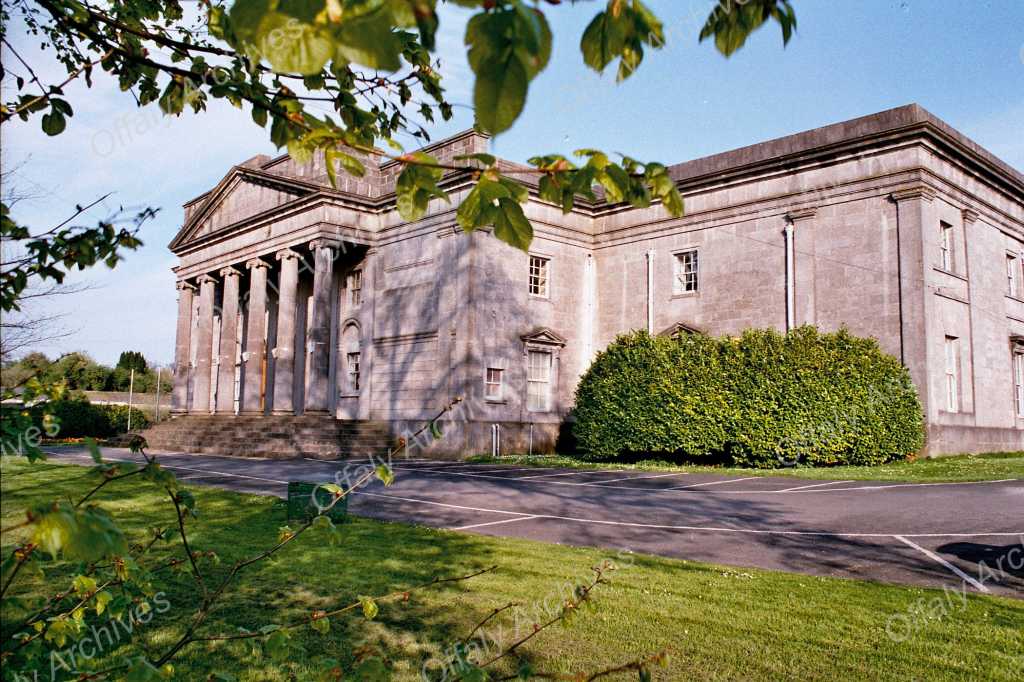
The Tullamore courthouse Barney Kirwan
I was with my mother and her friend Tessie Leonard who had brought me along with them –together with half Tullamore – to wave goodbye to Rahan man Barney Kirwan who was being brought to trial in Dublin accused of having chopped up his brother, following a dispute over property and then burying the pieces in a nearby bog. Barney was now being transferred from Tullamore railway station to Mountjoy Gaol to await a high-profile trial whose guilty verdict he would challenge.
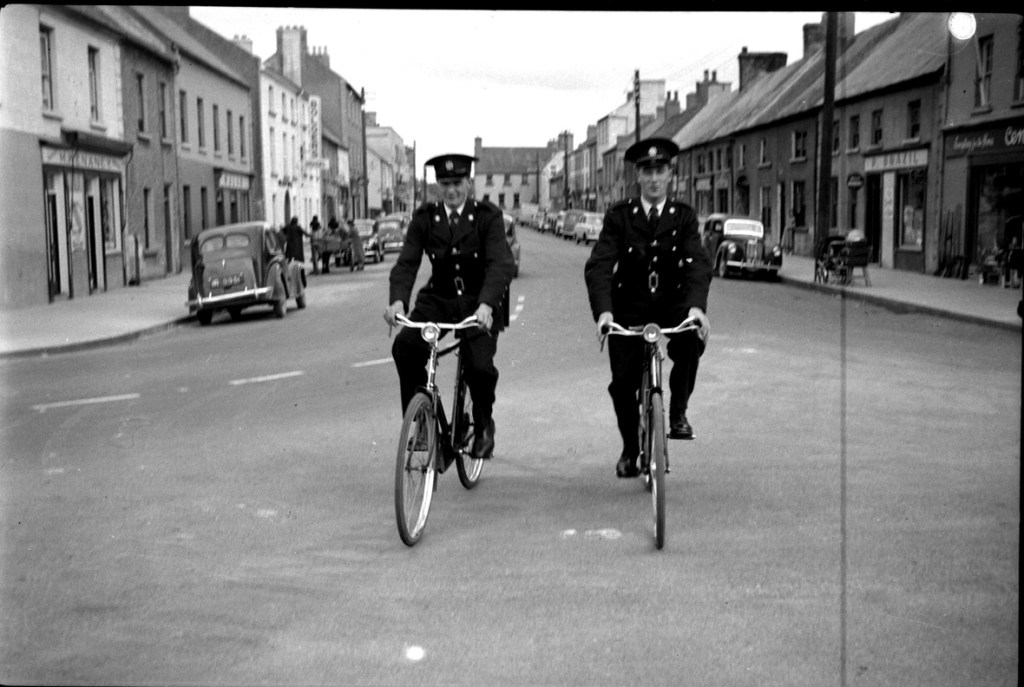
On the bikes in Kirwan’s time at Patrick St, Tullamore. Following an unsuccessful appeal to the High Court he was hanged on 2 June 1943. Brendan Behan who was in Mountjoy on Republican charges at the same time would make the event famous with his play ‘The Quare Fellow’ in which Kirwan is the unseen but central character.
The last hanging in Ireland was in 1954 and the brutal practice was terminated in 1990.
A Threat to Tullamore
I was born three days after the outbreak of the Second World War and was therefore quite oblivious of its progress and significance. This was to dramatically change on the 23rd January 1944 when a massive American B‑17 Flying Fortress which had taken off from Goose Bay, Newfoundland, bound for RAF Prestwick in Scotland, developed engine trouble over Northern Ireland
Its crew of ten parachuted to safety over Enniskillen. Before leaving the aircraft, they had set the now unmanned bomber on a course back toward the coast, hoping it would continue flying until it ran out of fuel and would crash harmlessly into the sea.
However, the prevailing winds shifted the aircraft off its intended path, carrying it further inland rather than out toward the coast. The unmanned bomber (luckily without a lethal load) remained aloft, flying on without its crew, but began gradually to lose height as it flew over the Irish Midlands. Its flight path brought it over Edgworthstown, west of Mullingar, over Kilbeggan and heading straight for Tullamore.
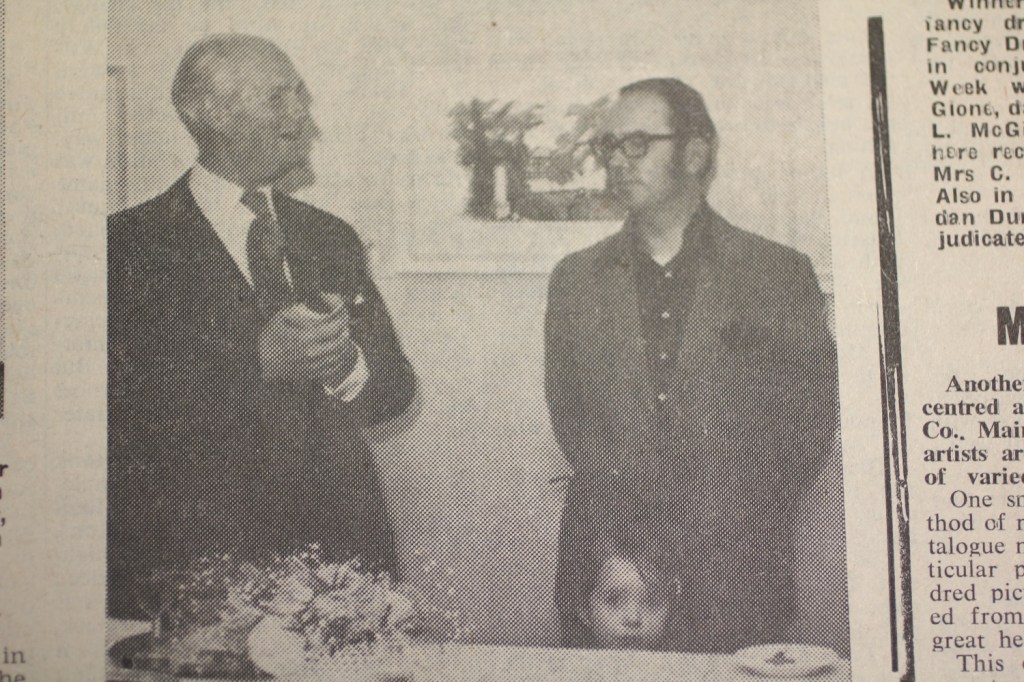
Fergal MacCabe (right) at one of his art exhibitions in 1972 and attentive to the comments of the sixth earl of Rosse. This created an emergency which was transmitted by alarm calls over Radio Eireann. The prospect of its crashing near, or even on, Tullamore caused great excitement. I remember standing in our yard and seeing it drifting slowly and silently over the town at a low level. It disappeared over Ballard bog. We waved it on its journey and hoped Portlaoise would not be its final destination. Eventually it crashed harmlessly in fields half a mile from the village of Johnstown in Co. Kilkenny.
In 1947 I asked my brother Tommy how the war was getting on. So far as I knew there had always been a war. I was quite surprised when he told me it had concluded two years previously.
A Big White Wedding – Williams and O’Reilly
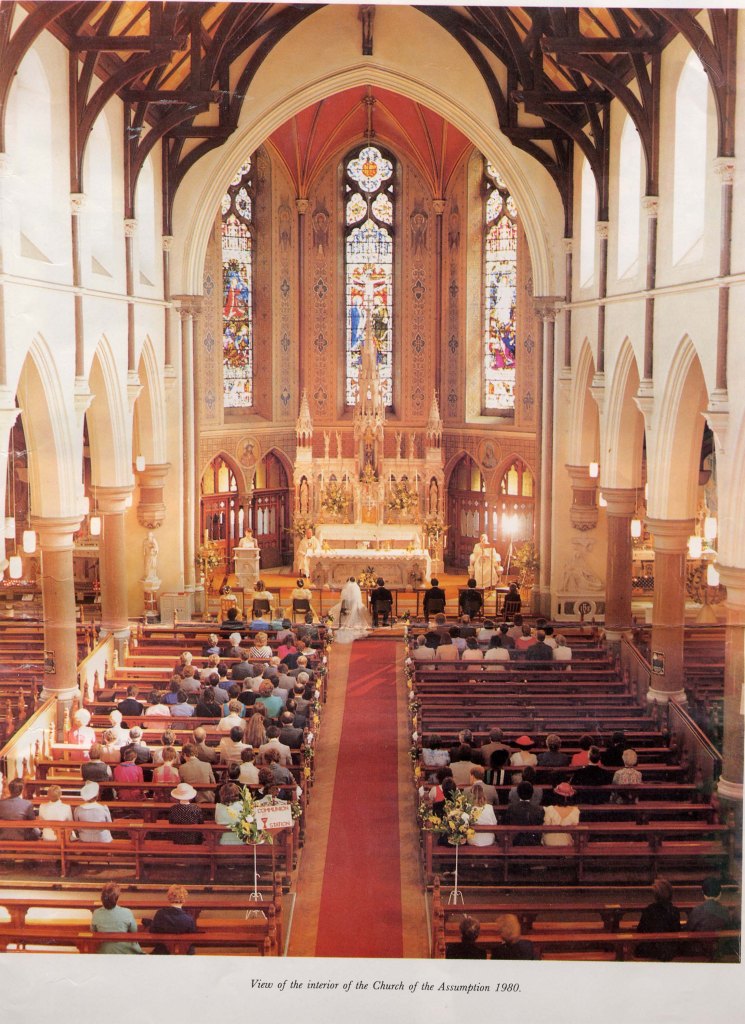
The old Tullamore RC church of 1906-83 Tullamore Dew and Powers
But the event which made the greatest impact on me was the wedding in 1950 of our next door neighbour Teresa Williams to Frank O’Reilly (1922–2013) of Powers Distillery.
The excitement, glamour, fashion, music, food and general gaiety which it generated stimulated my young imagination and had a beneficial effect on the town of Tullamore which in those dreary days desperately needed a diverting public spectacle.
Though wealthy, the Williams family lived very modestly, their only public luxury being a beautiful dark blue Chrysler limousine.
The engagement of their eldest daughter to the handsome Frank O’Reilly who had returned from service in the British army during the Second World War to take over his family business of Powers Distillery, was not just a love match (they went on to produce ten children) but the linking of two great Irish distilling families. No expense would be spared therefore to mark the great occasion and a three-day gala was planned. For Tullamore it would be a huge event and everyone was excited by the glamour of it all.
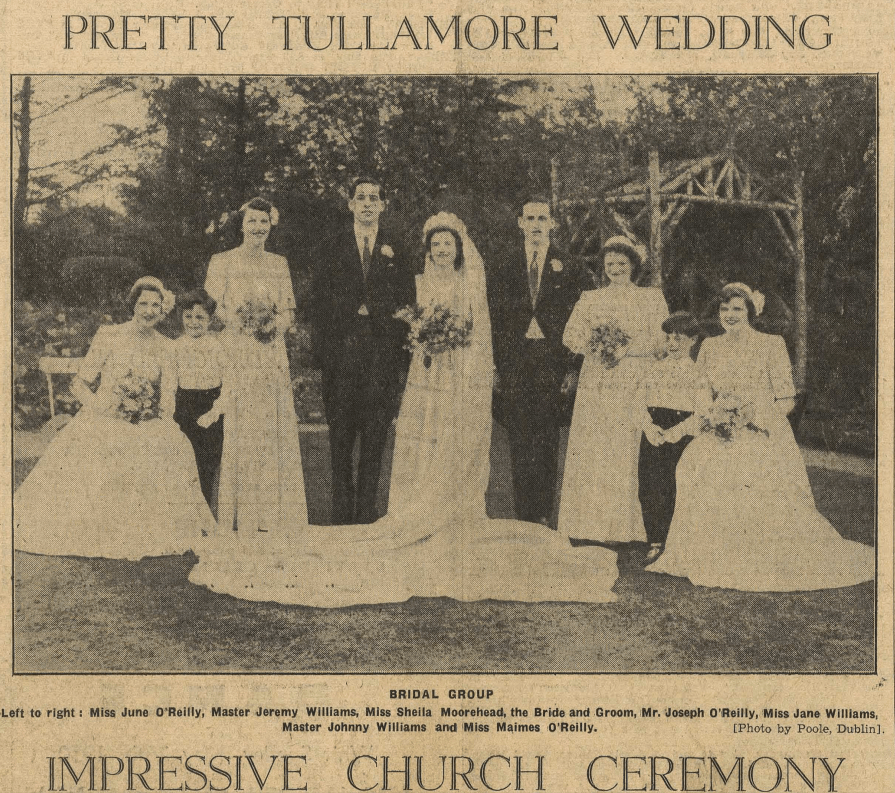
The Williams O’Reilly wedding with a young Jeremy Williams on the left (see an earlier blog). I lived with my mother and brother in my grandparents house ‘Innisfree’ (now Loughmore Lodge) which was semi-detached with the Williams residence ‘Auburn’ owned by Captain Jack. The property had been much extended and additional land acquired to provide a magnificent south facing lawn and tennis court.
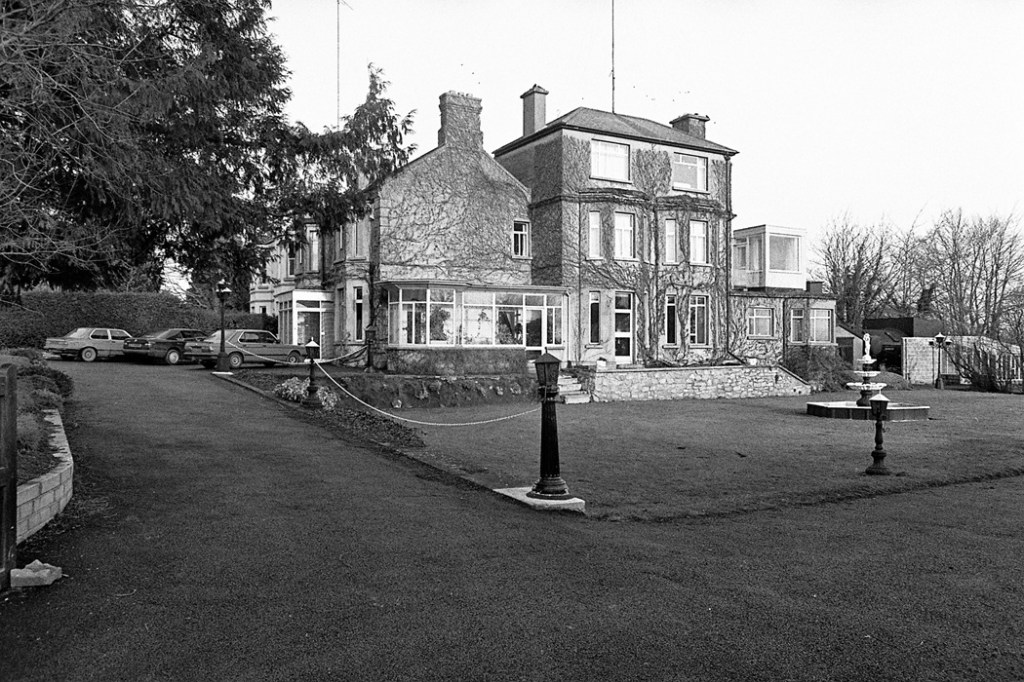
Scene of the wedding breakfast. Auburn then the home of John and Mrs Williams (nee Moorhead). In the run up to the great day tents began to be erected in the grounds to accommodate three days of festivities. On the first evening there was a spectacular fireworks display-the first I had ever seen.
The following day all of Tullamore went to the Church of the Assumption and crowded outside to greet the bride and her six bridesmaids and to witness the first white wedding in Tullamore since 1939.
The imposing west door of the church (now sadly blocked up) made a magnificent backdrop for the emerging bride and groom and I remember confetti being thrown and the bridal bouquet tossed in the air to be grabbed by a scrum of enthusiastic young women.
The bridal party then proceeded to Clonminch where a reception and dinner were provided by caterers brought from Dublin for the occasion. All us neighbouring children gathered on the flat roof of our shed which overlooked the kitchen where the feast was prepared and from time to time we were fed titbits. I savoured the unfamiliar tastes of lobster, pate and rhum baba.
The dancing under the fairy lights continued all night and in my bedroom I could hear it until I went to sleep. It was magical.
On the third day a party was thrown for the staff and employees of the two distilleries whose owners were now united in marriage and the gaiety continued well into that night too.
Then the tents were folded, the caterers cleaned up and departed and Tullamore got back to normal. But the wedding had brought a welcome interlude of glamour at the beginning of a decade that would be marked by further economic decay and emigration.
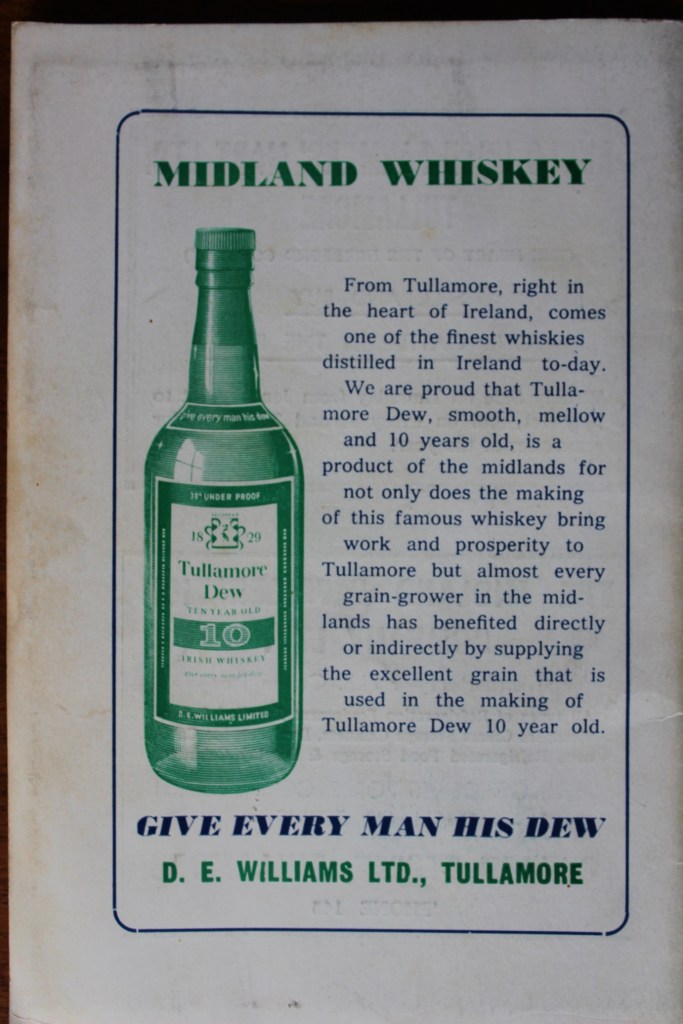
The Tullamore Dew whiskey of the late 1950s – ten years old and a child for every year in the Williams O’Reilly household. The brand was sold in 1965 and yes the sum was £10,000.
For an excellent Life of Frank O’Reilly see the online Dictionary of Irish Biography, written by Tullamore man Terry Clavin [Ed].Thanks to Fergal MacC for these memories and more to come we hope.
Pics and captions by Offaly History
-
The making of O’Connor Square, Tullamore: People, Houses and Business will be launched on Wednesday 10 December 5 p.m. at the Brewery Tap, Tullamore and Ferbane 1950-2000 on 12 Dec. in Ferbane Blog No 766, 9th Dec 2025
The making of O’Connor Square, Tullamore: People, Houses and Business will be launched on Wednesday 10 December 5 p.m. at the Brewery Tap, Tullamore. The Brewery Tap is the longest established business in the square dating back to the 1830s as a pub and brewery. The lease of the site was dated to 1713 with the property in possession of the Brennan and Thornburgh families, later Deverell, Egan, Adams, Carragher and now Paul and Cathy Anne Bell.
We look forward to meeting you at the launch where savouries and tea/coffee will be served. Parking will be available at this time and should not cost more than 1 euro for an hour. Walkers and cyclists go free.
The making of O’Connor Square, Tullamore: People, Houses and Business (Offaly History, Tullamore, 2025), pp 440, p/b €23, h/b €29. ISBN978-1-909822-45-0 (hardcover) ISBN978-1-909822-46-7 (softcover). The book contains fifteen essays by Michael Byrne, Fergal MacCabe, Rachel McKenna and Timothy O’Neill. Publication is supported by the Heritage Council.
At the same event we launch Offaly Heritage 13. This the 13th issue of the Offaly History Journal It’s another bumper issue with over 330 pages and well-illustrated, €19 soft and €25 hardback. The issue is dedicated to the late Christy Maye – a great friend to Offaly History.
The two books are now available from Offaly History Centre, Midland Books and at www.offalyhistory.com for online.
(more…)
-
The changing face of Tea (‘Tay’) Lane/O’Connell Street and Tullamore town centre shopping. Blog No 685, 30th Dec 2024
Much has been written about the changing face of Offaly towns in the 1900-23 period and the same can be said for the period from the mid-1990s to 2007. For towns such as Tullamore the recession lasted up to about 2017 and since then building has improved. The former Tea/ ‘Tay’ Lane, later called O’Connell St (from Stella Press to the canal bank), saw change in the 1950s with the demolition of the old Tea Lane houses. Next came the new wine warehouse for D.E. Williams (now Offaly History Centre, also in the early 1950s), followed by the new Irish Mist warehouses in the early 1970s and early 1980s. This was followed in 1982 by the opening of the Quinnsworth supermarket on part of the Williams ‘yard’ behind the head office of that company. Three years later, in 1985 the Irish Mist bottling facility was sold to C&C and the business transferred to Clonmel with the loss of up to 75 local jobs. Urban renewal tax relief in the late 1980s and early 1990s saw two blocks built close to the lane and off Kilbride Street by M/s Forrestal and Walsh for use as shops and apartments. (Chipland, florist etc).
In a departure from the Gibney plan the town council sold sites in nearby St Kyran Street for offices and apartments as part of the urban renewal scheme. About 1994 the large carpark was developed by the council from lands that had been set aside for the Kilbride park and playground. The year 1995 saw the conversion of the 1929 large Williams oats store to a department store by Tom McNamara. By 2007 the entire area was sold to an investment company for about €50 million with full planning for a supermarket and shops granted in 2009. Alas it was too late as the recession was developing and Ireland (outside of Dublin) did not recover for up to ten years. It was a case of ten years of plenty (the Tiger Years) followed by ten desperately lean years. Covid came next in 2020—21 and it was 2022–3 before the kettle was on the boil again in Tea Lane. Aldi demolished the Irish Mist warehouses and, at a cost of perhaps €1 million. the old 1929 store and former Texas shop that had been opened to great fanfare in 1995.
(more…)
-
Tullamore in the Sixties launch – pictures capturing the period. Blog No 678, 7th Dec 2024
Tullamore in the Sixties was launched to great acclaim on 6 December. Most of the contributors living in Ireland participated in the proceedings with three to five minute talks. The book was launched by architect, town planner and artist Fergal MacCabe. A few of his own watercolours grace the contents of this 450 page book with extensive essays (from 18 writers) and 350 pictures. The book is available from Offaly History Centre, Bury Quay, Tullamore and Midland Books and the pop up at Bridge Centre. It can also be ordered on line.
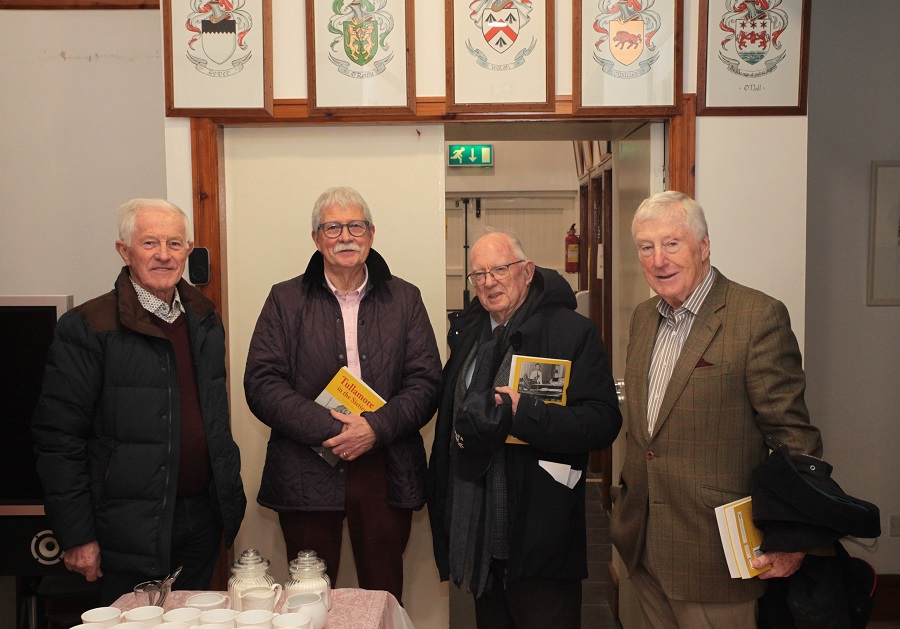
Some of the contributors to Tullamore in the Sixties Some of the pictures capture the period:
(more…)
-
Launch of new book ‘The River Brosna – An Environmental History’ by John Feehan, Friday 22 March 8 p.m. Blog No 590, 21st March 2024
There is an open invitation to all those interested in the River Brosna to come to the book launch on Friday 22 March at 7.30pm in The Star (GAA hall) River Street, Clara hosted by Clara Heritage Society.
John Feehan has dedicated much of his life to studying and communicating the evolution of the landscape and how we have lived in and changed it – his previous Offaly publications have included books on the Slieve Blooms, Croghan Hill, the Landscape of Clonmacnoise, An Atlas of Birr and more recently Killaun Bog and the Camcor River. This new publication focuses on the River Brosna and its catchment.
The River Brosna is one of Ireland’s hidden rivers, glimpsed over bridges and for short stretches as it travels through Mullingar, Ballinagore, Kilbeggan, Clara, Ballycumber and Ferbane on its journey from Lough Owel to ShannonHarbour. Until now very little has been written about it yet few rivers have a more fascinating and varied story to tell. In this beautifully illustrated book John Feehan brings his long experience as an environmental scientist and historian to bear on all aspects of the natural, cultural and industrial heritage of the river and its catchment. Successive chapters review geological origins, the biodiversity of the river and its tributaries as well as the great area of bogland it drains. The history of the mills along the course of the river, and of the two great arterial schemes that so altered the river are reviewed and particular attention is devoted to the extraordinary stories of Mesolithic Lough Boora and the Bronze Age Dowris hoard.
(more…)
-
3 From bonded warehouse and grain store to Old Warehouse bar/ restaurant and Aldi Retail Store: the changing uses of canal side buildings at Bury Quay, Tullamore, Ireland. No 3 in the new Grand Canal Offaly series from Offaly History. Blog No 559, 30th Dec 2023

The recent demolition of all the former Irish Mist liqueur warehouses in Tullamore and the upcoming demolition of the great oats store of D.E. Williams have prompted this lookback at the site that may have been intended for the first canal harbour or docking point in Tullamore close to Pound Street, later called William Street and now Columcille Street and Bury Quay – where the Old Warehouse (‘Shane Lowry’s’) is now located. The newly cleared site is intended for a 1,644 sq. metre Aldi retail store and associated parking. The bonded warehouse or now Old Warehouse and the oats store south of it were built close to the canal as part of a strategic acquisition by the distiller, maltster and merchant Daniel E. Williams and at a time when the Grand Canal provided a commercial transport artery for smooth access to Dublin and Limerick. This article is no. 3 in the series on the impact of the Grand Canal on Offal
If you would like to contribute contact us info@offalyhistory.com
(more…)
-
John Flanagan recalls his time with Irish Mist, Tullamore, Ireland, 1963–1985. An extract from the new book on Ireland’s legendary liqueur and the people who made it, published by Offaly History on 1 December 2023. Blog No 550, 2nd Dc 2023
In 1961 I joined B. Daly & Co Ltd and two years later SI was transferred to Irish Mist (another wholly owned Williams company) to supervise the production line in the Bond Store. I joined up with Joe Scally, and I was still with him until I finished in 1985 over 22 years later. Joe and I were always involved in Production. We overcame many difficulties in the area over the years due to expansion and increased demand for output, with changes in packaging and design etc. I started on the middle floor of the Bond Store. We shared the building with Tullamore Dew. We had a staff of about 12 at the time, with no machinery as the output was small. Within a short time later, in 1966 due to increased demand, we had to move to the top floor. We became much more mechanised and we saw a dramatic increase in output, and also a big increase in staff numbers. We also saw the introduction of the Figurine, Blue decanter, the pocket Flask, the Waterford Glass decanter, and many more display packs, introduced onto the market. In 1966 a new office block was built, along with a new laboratory and a compounding unit.
(more…)
-
The story of Irish Mist is as intriguing as the legendary liqueur, a tale interwoven with the social, cultural and economic life of Tullamore in the Sixties, Seventies and Eighties. By Seamus Dooley. New book on Irish Mist to be launched on 1 December. Blog No 547, 25th Nov 2023
Commerce, community, and creativity are all part of the weave.
Golden, sophisticated, with a dash of mystery Irish Mist occupies a special place in the history of Irish distilling.
Ireland’s legendary liqueur might well be described as the accidental offspring of Tullamore Dew.
First produced in 1947 in response to the urgent need to make economic use of excess stock of whiskey it proved to be an inspired idea by Desmond Williams, grandson of the founder of the Tullamore Dew whiskey company.
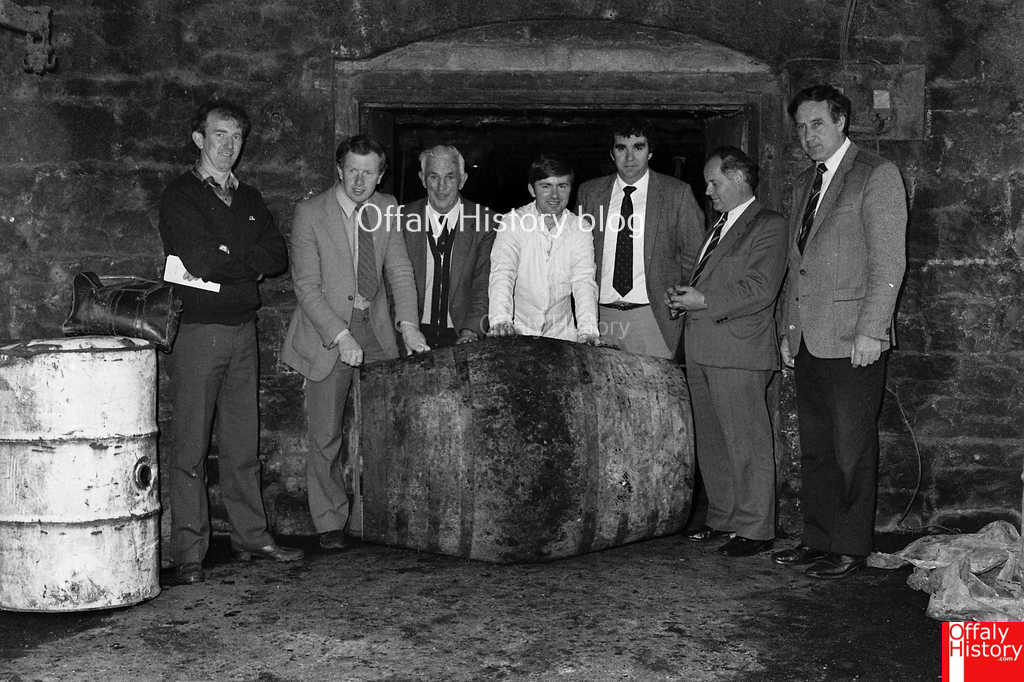
Rolling out the barrell – the last whiskey is the famous Sally Grove warehouse in Water Lane – now called Main Street with Irish Mist staff and the officers of the Excise in 1983. The history of Irish Mist involves a secret receipt from a mysterious Austrian distiller, celebrated through the famed ceramic figure made by Coronetti, Cunardo, Italy.
Now a collector’s item the splendid figurine is a replica of an Irish officer in the Austrian army from the 1750s.
(more…)
-
Exploring Castle Street, Birr – merchants and trading community in the nineteenth century. Part of the Living in Towns series. Michael Byrne. Blog No 533, 15th Oct 2023
Castle Street, Birr comprises a mix of about thirty commercial and residential properties close to the Camcor river to the south, Main Street and the old parish church to the north, and to the west Birr Castle. On the east at the Market Place or Market Square the street opens into Main Street, Bridge Street and from the 1880s into the new Brendan Street. The market house stood from the 1670s where the memorial to the Manchester Martyrs was placed in 1894. Surprisingly, when the market house was taken down in the late 1700s it was not replaced with a new building in a less disruptive location.[1] The new courthouse and jail of c. 1809 took care of the legal functions, while two plots were reserved in Castle Street for the markets.
(more…)

