
An Emotional Farewell
My very first memory is of waving goodbye to a man who was on his way to the scaffold.
I was just three and was frightened by the noise and smoke of the steam train and the hubbub created by a large crowd but was totally unaware of the reason for it all.
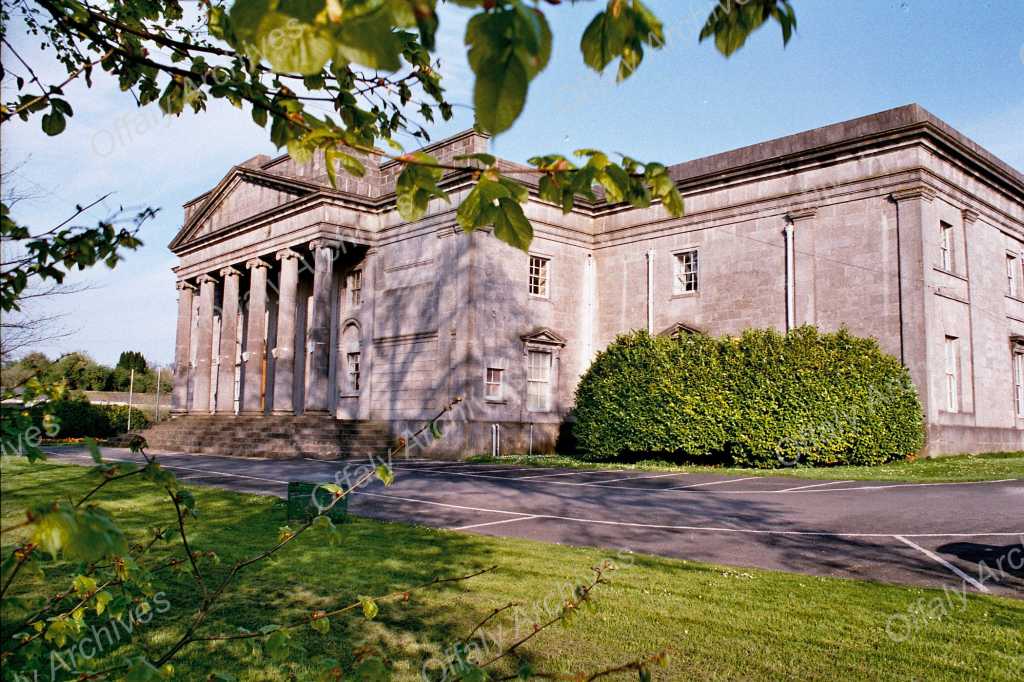
Barney Kirwan
I was with my mother and her friend Tessie Leonard who had brought me along with them –together with half Tullamore – to wave goodbye to Rahan man Barney Kirwan who was being brought to trial in Dublin accused of having chopped up his brother, following a dispute over property and then burying the pieces in a nearby bog. Barney was now being transferred from Tullamore railway station to Mountjoy Gaol to await a high-profile trial whose guilty verdict he would challenge.
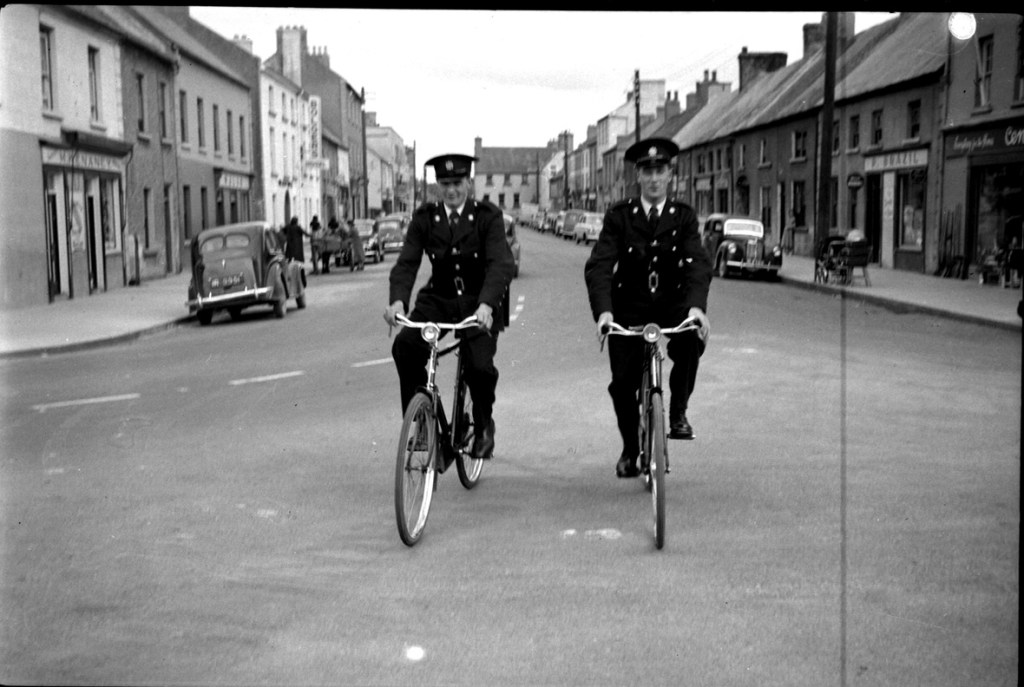
Following an unsuccessful appeal to the High Court he was hanged on 2 June 1943. Brendan Behan who was in Mountjoy on Republican charges at the same time would make the event famous with his play ‘The Quare Fellow’ in which Kirwan is the unseen but central character.
The last hanging in Ireland was in 1954 and the brutal practice was terminated in 1990.
A Threat to Tullamore
I was born three days after the outbreak of the Second World War and was therefore quite oblivious of its progress and significance. This was to dramatically change on the 23rd January 1944 when a massive American B‑17 Flying Fortress which had taken off from Goose Bay, Newfoundland, bound for RAF Prestwick in Scotland, developed engine trouble over Northern Ireland
Its crew of ten parachuted to safety over Enniskillen. Before leaving the aircraft, they had set the now unmanned bomber on a course back toward the coast, hoping it would continue flying until it ran out of fuel and would crash harmlessly into the sea.
However, the prevailing winds shifted the aircraft off its intended path, carrying it further inland rather than out toward the coast. The unmanned bomber (luckily without a lethal load) remained aloft, flying on without its crew, but began gradually to lose height as it flew over the Irish Midlands. Its flight path brought it over Edgworthstown, west of Mullingar, over Kilbeggan and heading straight for Tullamore.
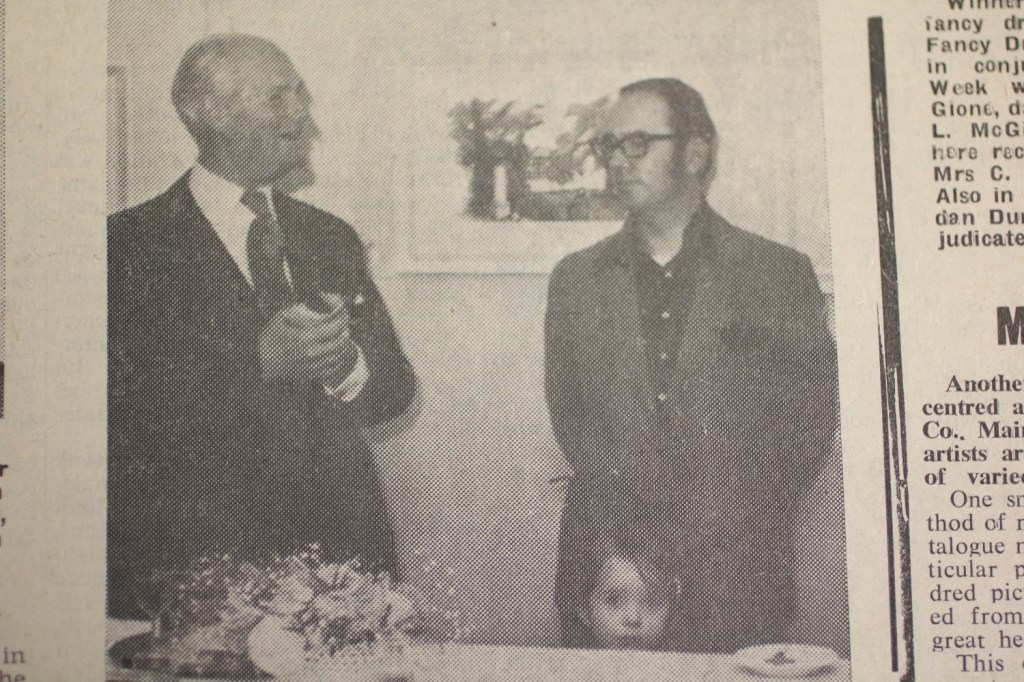
This created an emergency which was transmitted by alarm calls over Radio Eireann. The prospect of its crashing near, or even on, Tullamore caused great excitement. I remember standing in our yard and seeing it drifting slowly and silently over the town at a low level. It disappeared over Ballard bog. We waved it on its journey and hoped Portlaoise would not be its final destination. Eventually it crashed harmlessly in fields half a mile from the village of Johnstown in Co. Kilkenny.
In 1947 I asked my brother Tommy how the war was getting on. So far as I knew there had always been a war. I was quite surprised when he told me it had concluded two years previously.
A Big White Wedding – Williams and O’Reilly
Tullamore Dew and Powers
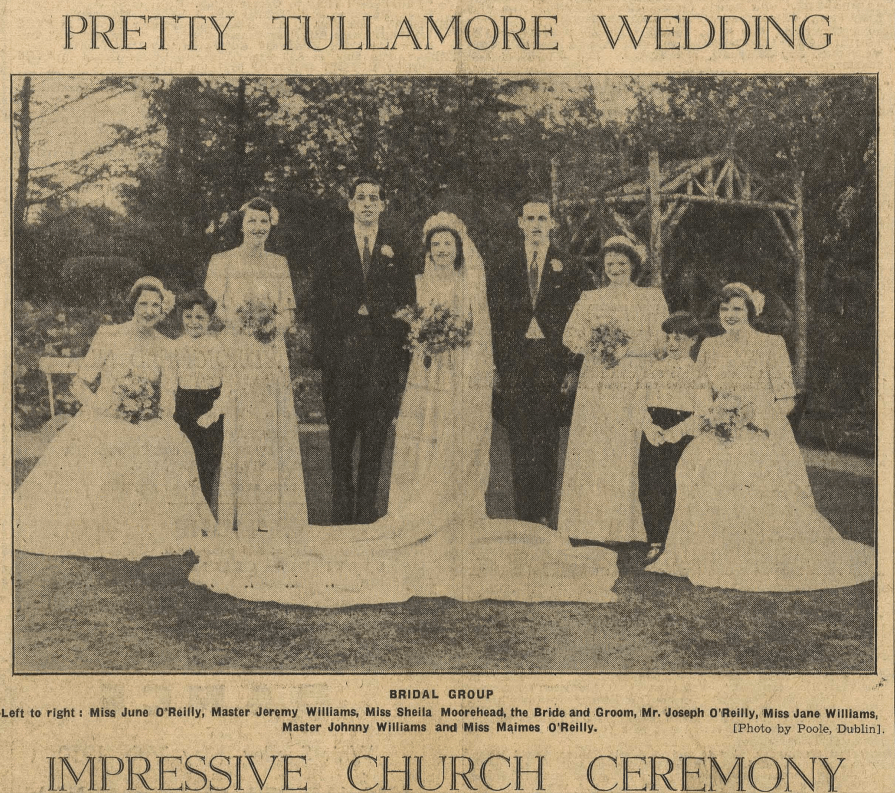
But the event which made the greatest impact on me was the wedding in 1950 of our next door neighbour Teresa Williams to Frank O’Reilly (1922–2013) of Powers Distillery.
The excitement, glamour, fashion, music, food and general gaiety which it generated stimulated my young imagination and had a beneficial effect on the town of Tullamore which in those dreary days desperately needed a diverting public spectacle.
Though wealthy, the Williams family lived very modestly, their only public luxury being a beautiful dark blue Chrysler limousine.
The engagement of their eldest daughter to the handsome Frank O’Reilly who had returned from service in the British army during the Second World War to take over his family business of Powers Distillery, was not just a love match (they went on to produce ten children) but the linking of two great Irish distilling families. No expense would be spared therefore to mark the great occasion and a three-day gala was planned. For Tullamore it would be a huge event and everyone was excited by the glamour of it all.
I lived with my mother and brother in my grandparents house ‘Innisfree’ (now Loughmore Lodge) which was semi-detached with the Williams residence ‘Auburn’ owned by Captain Jack. The property had been much extended and additional land acquired to provide a magnificent south facing lawn and tennis court.
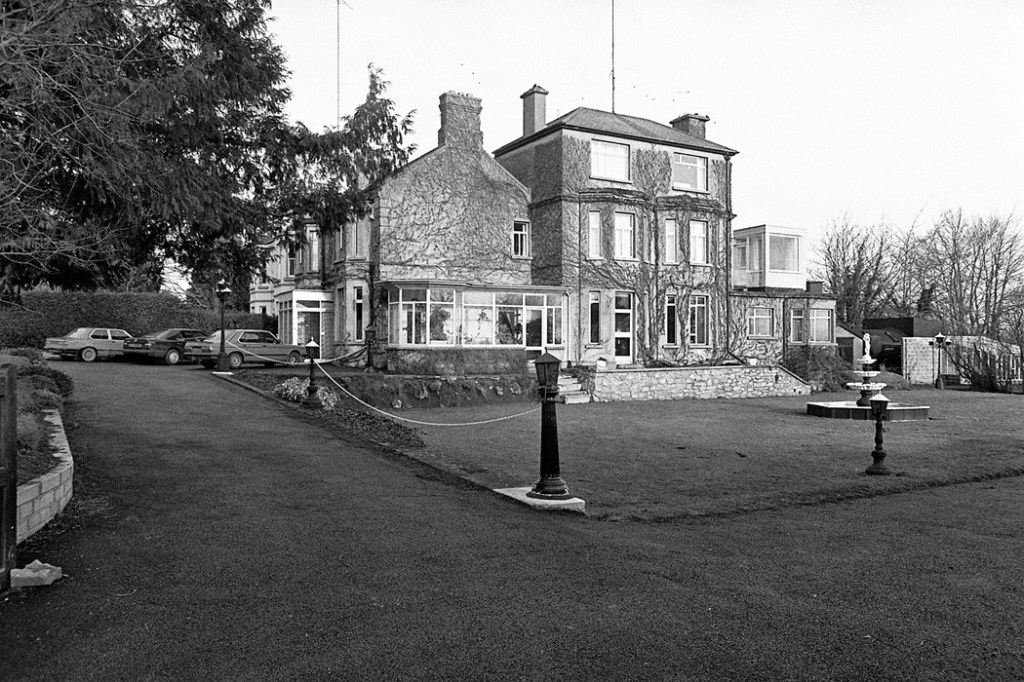
In the run up to the great day tents began to be erected in the grounds to accommodate three days of festivities. On the first evening there was a spectacular fireworks display-the first I had ever seen.
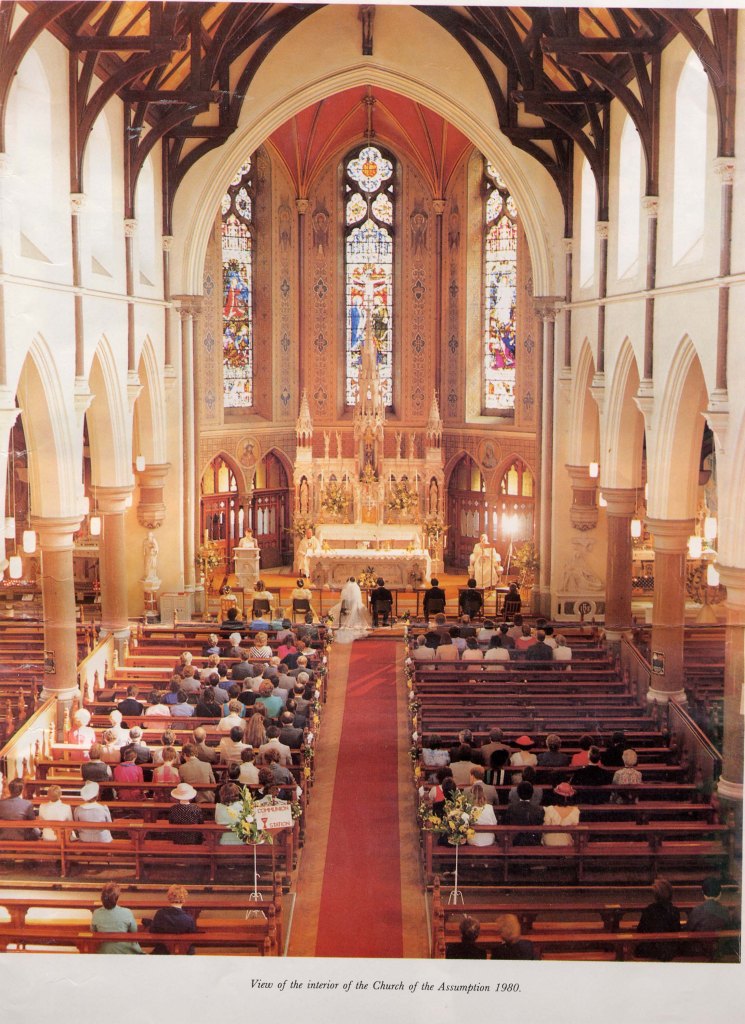
The following day all of Tullamore went to the Church of the Assumption and crowded outside to greet the bride and her six bridesmaids and to witness the first white wedding in Tullamore since 1939.
The imposing west door of the church (now sadly blocked up) made a magnificent backdrop for the emerging bride and groom and I remember confetti being thrown and the bridal bouquet tossed in the air to be grabbed by a scrum of enthusiastic young women.
The bridal party then proceeded to Clonminch where a reception and dinner were provided by caterers brought from Dublin for the occasion. All us neighbouring children gathered on the flat roof of our shed which overlooked the kitchen where the feast was prepared and from time to time we were fed titbits. I savoured the unfamiliar tastes of lobster, pate and rhum baba.
The dancing under the fairy lights continued all night and in my bedroom I could hear it until I went to sleep. It was magical.
On the third day a party was thrown for the staff and employees of the two distilleries whose owners were now united in marriage and the gaiety continued well into that night too.
Then the tents were folded, the caterers cleaned up and departed and Tullamore got back to normal. But the wedding had brought a welcome interlude of glamour at the beginning of a decade that would be marked by further economic decay and emigration.
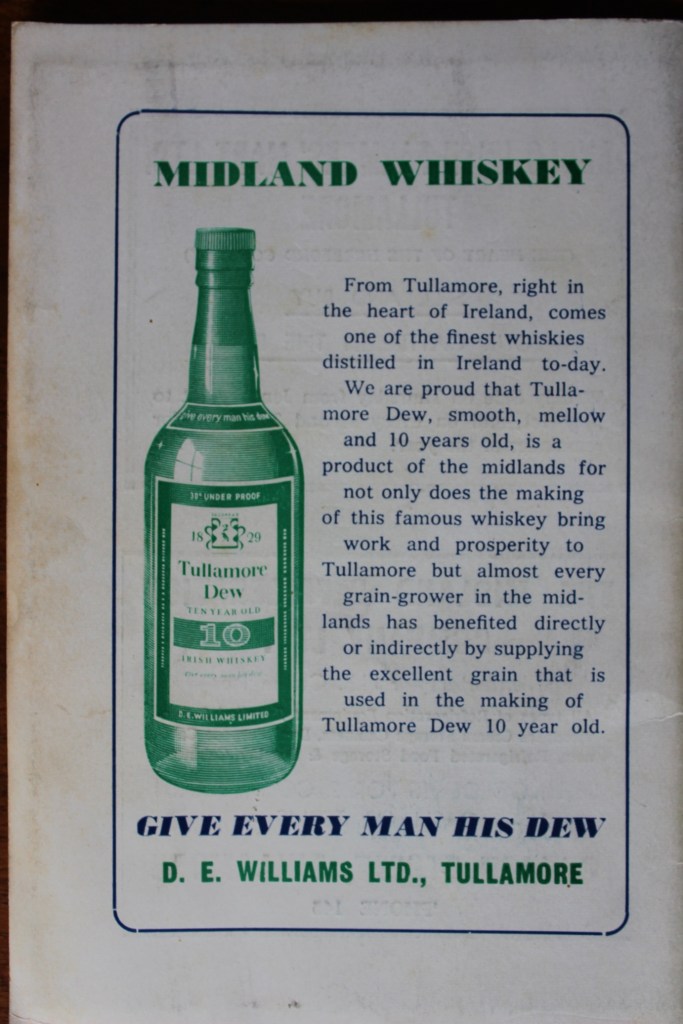
For an excellent Life of Frank O’Reilly see the online Dictionary of Irish Biography, written by Tullamore man Terry Clavin [Ed].
Thanks to Fergal MacC for these memories and more to come we hope.
Pics and captions by Offaly History

