
Once on the edge of the town O’Moore Street, Tullamore was, in the 1800s, known as Windmill Street because of the two windmills erected by the 1720s on the hill south of O’Moore Street The hill (probably the Tulach Mhór giving Tullamore its name) is now obscured by the houses from the courthouse to Spollanstown Road erected after the 1790s. Today O’Moore Street still exhibits some of the mixed residential development that was commonplace before the 1900s and the building of class demarcated suburban housing. Yet O’Moore Street was itself comparatively rural in the early 1800s, but now serves as an artery for traffic to Cloncollog, Clonminch, Killeigh (Mountmellick) and Geashill – with their extensive housing and shopping facilities. In the once undeveloped field opening to Clonminch and Spollanstown the substantial Tullamore Court Hotel was built in 1997. The street has more than a 300-year history it its physical development. The lack of decisions on good planning neglected to be taken in the 1750s continue to impact almost 300 years later and contribute the configuration the street has today.

O’Moore Street continues to be very much a mixed-use street, but with residential dominating with about 40 households. Barring two all of these were terraced housing, until the first apartment block was built in the 1990s with four two-storey units to the street (and to the rear at Spollanstown another 12). There has been some infill among the older houses but largely the houses built from 1800 to the 1850s, and of good quality, have survived. The street has four high quality houses and two good terraces – that at Victoria Terrace and the block of seven east of Tyrrell’s shop. Three of the best houses in Tullamore, that known as Tullamore House (now Bannon’s), The Cottage and Moore Hall, are in this street.
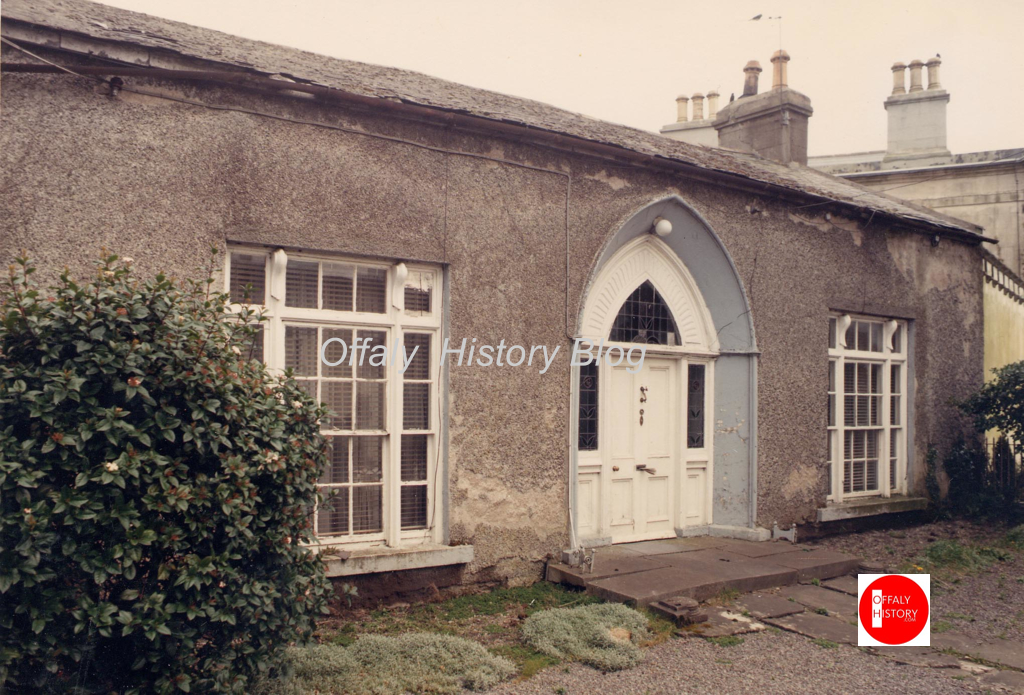
The Cottage is a fine house but has been empty for over twenty years and is now in poor condition. It is a listed building and action is long overdue. The building of the Cottage in about 1809 reflected the situation of the street and being part of the countryside with no houses then in view and only a 100-year-old windmill, falling to ruin, across the street. Its neighbours were Moore Hall, some cabins in the vicinity and houses built by Thomas Acres of Acres Hall on the southern side, nearest the junction with Charleville Parade/Street, now called Cormac Street.
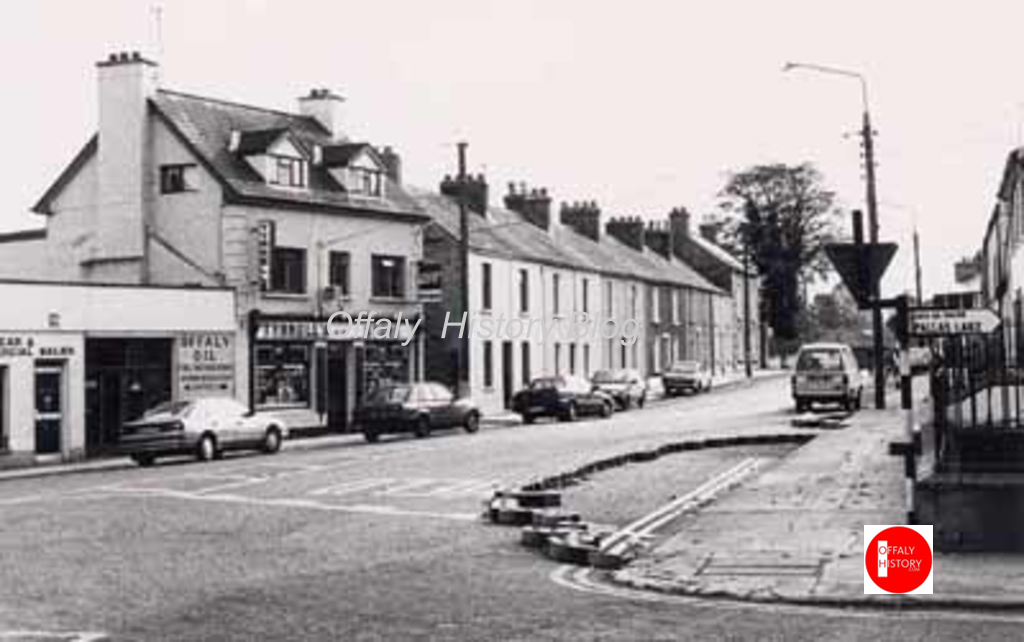
O’Moore Street in recent years had twelve shops/commercial units to the front of the street (all on the town or northern side save a solicitor’s office – Smyth Stapleton) one of which (Tyrrell’s) dates to the 1940s. Before that time it was entirely residential save for a small shop owned by the Parker family near where Tyrrell’s is today. Ten are shop/commercial units of recent years together with a filling station (Circle K and Costcutters). There are also offices and other services, a large hotel with over 100 beds, a school and a masonic hall (since 1884). The hotel (1997) is by far the biggest investment in the street at perhaps €15m in total and the Coláiste Choilm school of 2011 was designed to cater for up to 600 pupils. From the 1920s the street was identified with Hurst’s garage (where the Heffernan-built commercial units are now located together and the former Motor Works property at the junction with High Street and its adjoining four shops, now converted into residential units, as is the large house at the junction with O’Moore Street which had two shops units in recent times and served as a garage from the mid 1930s.

The street was quiet and largely free of heavy traffic until the 1960s. Bachelors Walk adjoining was a country walk on the edge of town and after the 1940s becoming a mainly post-war bungalow suburb. Victoria Terrace on the southern side of O’Moore Street with gardens to the front and rear was the height of respectability, but with car ownership and more comfortable housing in the suburbs things have changed. Now of the seven houses in that terrace at least one is empty, one under repair and another used as offices. Parking and convenience are issues but noise less so with the new bypasses. A plan of the all-powerful traffic engineers in the 1970s to widen the street by taking a piece of the Moore Hall garden was fought and shelved. Also, it was fortunate that the proposal by M/s Mahon and Cloonan to build a cinema in the late 1930s or early 1940s on the site of The Cottage and its garden was set aside in favour of an alternative house in High Street where the Ritz Cinema was located from 1946 to 1980. The water fountains at the corner with Cormac Street are long gone but the gas lamp bracket at Moore Hall has survived. The refurbishment of Acres Hall for the urban council in 1992 was a major boost to O’Moore Street in that it closed off the vista at the western end with a major architectural statement and a big improvement on its dilapidated appearance for about 20 years from 1970.
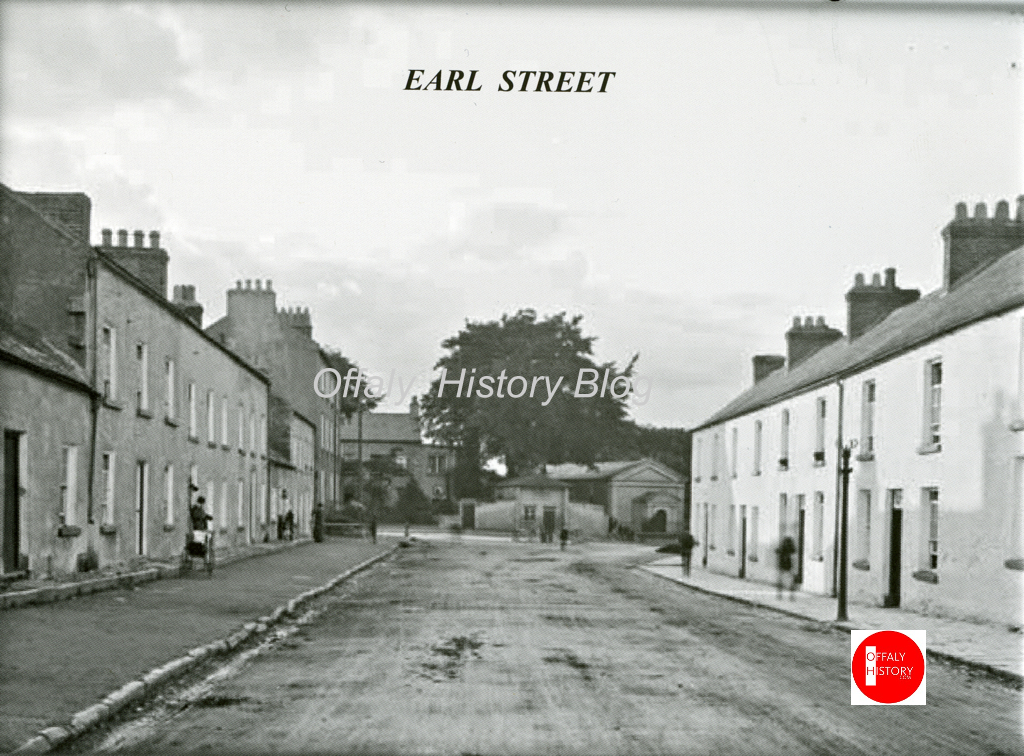
Windmill/ Earl/ Cormac Street
Most Tullamore streets have three layers of names: the first was the functional referring to the windmill, the second after the earl of Charleville, owner of Tullamore and the third after a local saint. O’Moore Street was known as Windmill Street in the 1820s, but by 1838 it was called Earl Street. The name was changed to its present one by the urban council in 1905 in response to the urgings of the Gaelic League, itself exhibiting the cultural change that preceded the 1916 rebellion. In 1905 it was named in memory of the O’Moores of Laois who put up a long struggle against colonisation in the late sixteenth century. The street-name has nothing to do with Moore Hall which is derived from a Protestant merchant family who built Moore Hall in the 1750s. The street is in two townlands: the northern side from High Street to Coláiste Choilm is part of the townland of Tullamore while the southern side is in the townland of Spollanstown. Both sides are in the parish of Kilbride and barony of Ballycowan.

Four head leases from the Charleville landowners made O’Moore Street
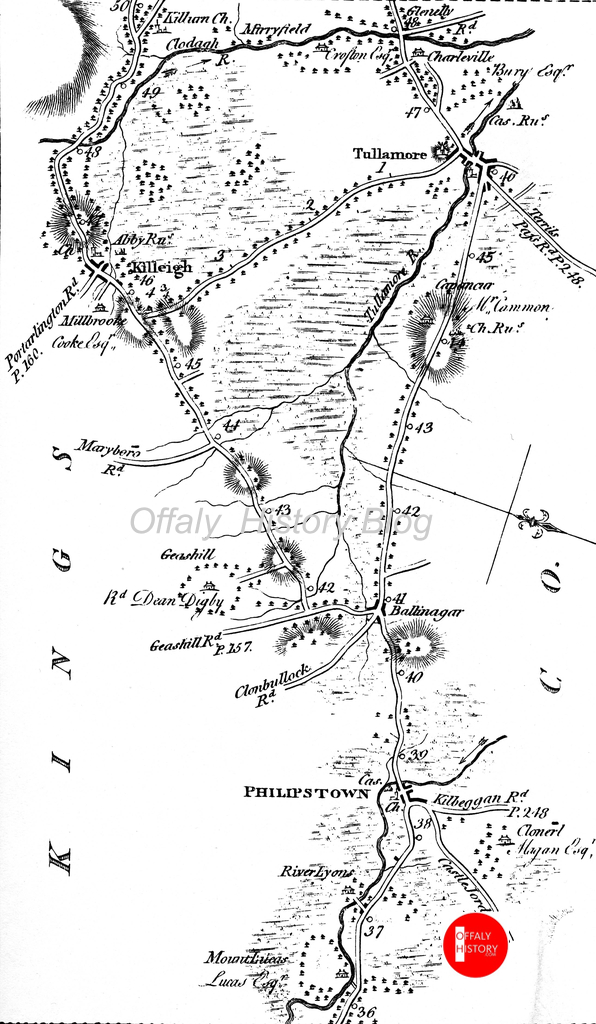
O’Moore Street was carved out of five head leases from Tullamore’s landlords, the earls of Charleville, over the period from 1756 to 1838. Before the 1750s there was little development here with the exception of the windmills by the Barrett family on the high ground behind what is now Victoria Terrace, opposite the later The Cottage and Moore Hall. These mills were in use from at least 1714-1718 up to the 1800s, but by the 1830s were in ruins with one ruined mill shown midway behind Victoria Terrace (and opposite The Cottage) on the first ordnance map of 1838. The mills are also shown on Taylor and Skinner map (1777) and the Bog map of Longfield (1810). These leases almost 300 years old, in some cases, have determined development of the street and largely its housing and commercial composition today.
The street numbering in this essay is all based on the Griffith Valuation of 1854 and this in turn was based on the first valuation of town property in Tullamore carried out in 1843. In the 1843 survey the number of houses specifically enumerated was about 525 (houses under £4 were ignored for valuation purposes and numbered as a lot). By contrast in 1854 every house had a number by reference to its street or townland location).
- The first lease affecting the building line in the street was that from Lord Tullamore to Richard Moore at no. 36 High Street. In 1756 Lord Tullamore leased to Richard Moore the elder, a plot of ground and dwelling house in High Street (now Spollan’s pub). The plot was long and narrow and connected this house with lands in O’Moore Street from what is now Heffernan’s/Circle K filling station to Moore Hall in O’Moore Street also owned by Richard Moore. The old wall east of the filling station follows the property boundary in the direction of what is now Spollan’s pub taking a curve towards High Street. The curve, reflecting the old 1750s property boundary, can be seen from the grounds of Coláiste Choilm and examined on the 1838 OS map. This is the only such town lease to provide for two houses connected by an extensive garden and fronting two streets rather than as a terrace. Moore wanted for his Killeigh road residence rural bliss and a southern aspect not far from his place of business in High Street. The High Street holding has a garden of at least 500 ft in length (where the carpark is today) and from there extended along the boundary of what is Coláiste Choilm (St Columba’s CBS for diaspora readers) to a three to four acre holding running to the built Moore Hall. The Heffernan holding today would largely match this leasehold extent on the O’Moore Street side.
- The second lease on the northern side was that of No. 29 High Street (lately Angelo’s etc, earlier known as the Motor Works from the 1930s, and in the eighteenth century, Crofton’s holding). The big house was built about 1758. This substantial house marked the southern end of the town for at least thirty years and had a long garden to the northern side from the junction with High Street to what is now Moore Hall and may have included part of the garden of the house. The garden of 29 High Street extended from the front of High Street at Shishir restaurant to what is now The Cottage in O’Moore Street. The 1750 leases to Crofton and Moore provided little or no restrictive covenants and in due course the long garden on the O’Moore Street side and as far as ‘The Cottage’ house beside Moore Hall would be ‘spoilt’ by cabin development. The same was to happen on the garden facing O’Moore Street behind 29 High Street. However, six new houses were built here in 1858 and the builder here may have Lewis Downes of the coachbuilding family. The valuation was £3 each from 1858 for the six new houses. O’Moore Street may not have been considered a street until after 1800 when Thomas Acres developed a mix of single-storey and two-storey houses here on the southern side. It is difficult to date Moore Hall, but the first house here may be as early as 1756, while ‘The Cottage’ beside it is about 1809. These two houses and the cabins on the garden of Dr Crofton’s holding (GV 29 High Street) and to the east of Moore Hall looked across to the windmills, perhaps still functioning in 1800.
- The third lease in O’Moore Street was that known as the ‘windmill plot’ and was let to the property developer, Thomas Acres, in August 1795. The area was almost two acres between what is now O’Moore Street and the courthouse and was let for an annual rent of about £9 per year.[1] This lease extended from the terrace in Cormac Street to what is now Victoria Terrace (247 ft) and on Cormac Street ran for 483 ft. as far as the site of the 1830s courthouse. Here a mix of houses were built ranging from the substantial three-storey block over basement at the corner with Cormac Street (no. 1 on the south side and now Bannon’s, Tullamore House) to a mix of single and two-storey houses, eight in all, fronting that part of O’Moore Street as far as Victoria Terrace.
- The fourth lease was that to the O’Connor Square, Tullamore printer Richard Willis in 1838 for the construction of the seven houses in Victoria Terrace, O’Moore Street. The lease from the second Lord Charleville was for 100 years from 25 March 1838 at £21 per year or £3 ground rent for each house. No more sweetheart deals as was done by the first earl for Thomas Acres in the 1790s. Richard Willis died in September 1880 at the age of 82 and seems to have held the profit rent on the houses over his long life. In 1910 the rental was offered for sale reciting that the occupiers’ rent was on average £25 per year for each of the seven houses and showed a profit of £156 per annum.[2] A tidy sum in the nineteenth century and for current values multiply by 100 to 150. This plot was to the front of the street was carved out of the ‘Windmill hill field’ which from the 1800s was in the tenure of Tullamore miller, George Hamilton, for the remainder of three lives.[3] Hamilton was the successor to Barrett and his water mill was on the river at Barrack/Patrick Street. Most leases in Tullamore in the time of the earls of Charleville before 1836 were for three lives renewable forever for residential holdings and three lives and or 31 years for farms and town parks. The tenant of a house site named three healthy lives for the lease duration and when the three were dead had to renew the lease and pay a fine.
- We can ignore the fifth lot of ground being the field where the hotel was built in 1997. This was part of the Clonminch house property up to the 1990s. A scheme of town council cottages was suggested for this location in the early 1900s but the then owners, Egans, offered the field where the O’Brien Street houses were built in lieu in 1912 and this was accepted by the council for 18 to 20 houses competed by 1914. This fifth field in the O’Moore Street mix had the Furlong cottage/house in the corner nearest Tullamore up to the building of the hotel in 1997. It then provided a site for the manager’s new house until it too was demolished by 2003–4, later to make way for the extension to the hotel.
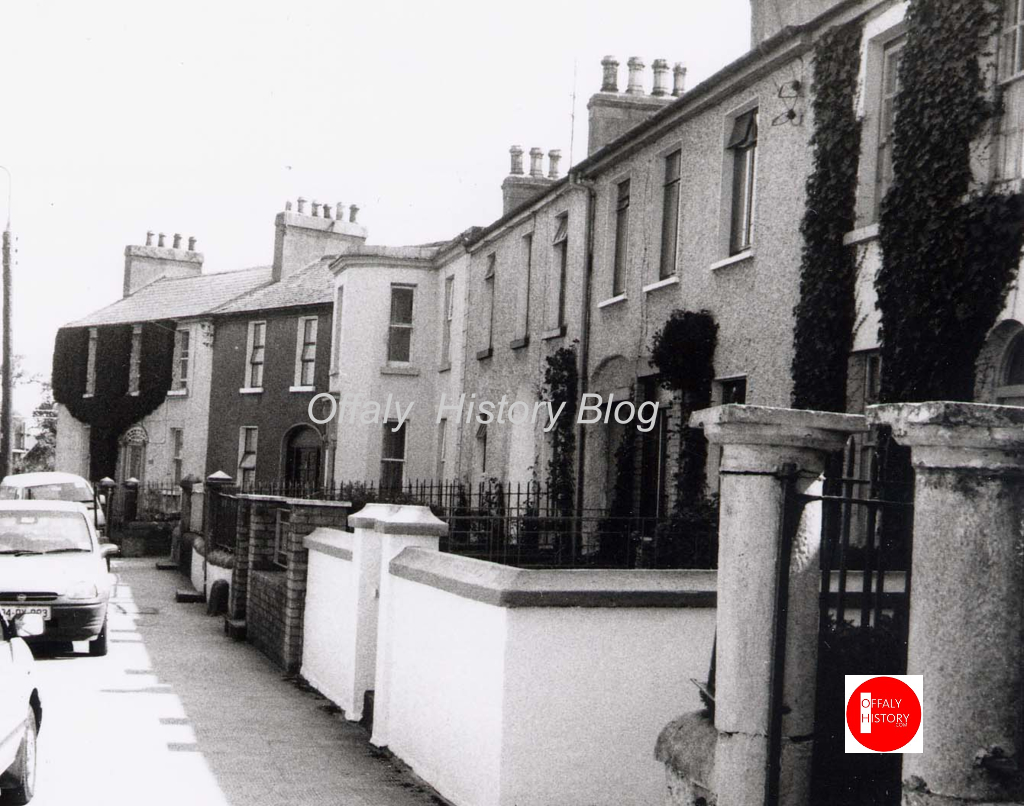
The four intermediate landlords (themselves tenants of the earls of Charleville), Richard Moore, Thomas Acres, Richard Willis and Christopher Woods (in succession to Crofton and Moore as to the ‘cabin suburbs’ in O’Moore Street) had a significant impact on the appearance of and tenurial arrangements in O’Moore Street. These were the middlemen, developers or rentiers who developed the sites for building and rented either the sites, or finished houses, to sub-tenants for a profit. The sub-tenant might also create a lease to occupiers on short lettings. All the owners of the varying superior interest, be it Charleville, the head tenants, the sub-tenants were all taking a profit. This was at a time when there was little by way of banking or pension funds and those who could afford it, and wanted financial security into the longer term, might opt for rental income derived from an interest in property. For example, in the case of Richard Willis he built the seven houses and was getting say £25 per year for each house. After ground rent to the earl he had £22 gross profit per house, not allowing for the capital outlay on the new terrace of the late 1830s when Victoria came to the throne. This profit rent would be about half of what could be obtained for a substantial house in High Street and O’Connor Square. The three developers – Acres, Willis and Woods built the houses (or in Woods’ case cabins) and let directly to the occupiers.
So O’Moore Street as a residential area was mixed in terms of the quality of housing. In the 1750s no thought was given by Lord Tullamore (earl of Charleville from 1758) to the road to Killeigh having any planning significance and the long garden of no 29 High Street running along the Killeigh Road was let to Dr Crofton without restrictions as to development in 1758. Likewise, the lease to Richard Moore in the 1750s of the house where Spollan’s pub is now located with its long garden coming right around to what is now Costcutter’s shop and Moore Hall meant that the whole of this side of O’Moore Street was out of the control of the landlord. On this side prior to the 1850s there were only three good quality houses – the house that was later the Masonic lodge (GV 8), ‘The Cottage’ (GV 7) and Moore Hall (GV 6). The area from Moore Hall to the field now occupied by the Coláiste Choilm was occupied by three small houses and ten cabins under the control of a leading rentier of cabins, Christopher Woods. Of the twenty-four houses on the northern or town side of O’Moore Street Woods controlled 21, and all with a very low valuation. Woods, or his undertenants, improved the terrace from Tyrrell’s shop to the Masonic lodge in the late 1850s. In the late 1840s or early 1850s the ten cabins east of Moore Hall were knocked, and those east of GV 29 High Street were cleared in the 1960s and both sites provided ground for the expansion of the garage business of the Motor Works and Hurst’s from the 1920s and 1930s.
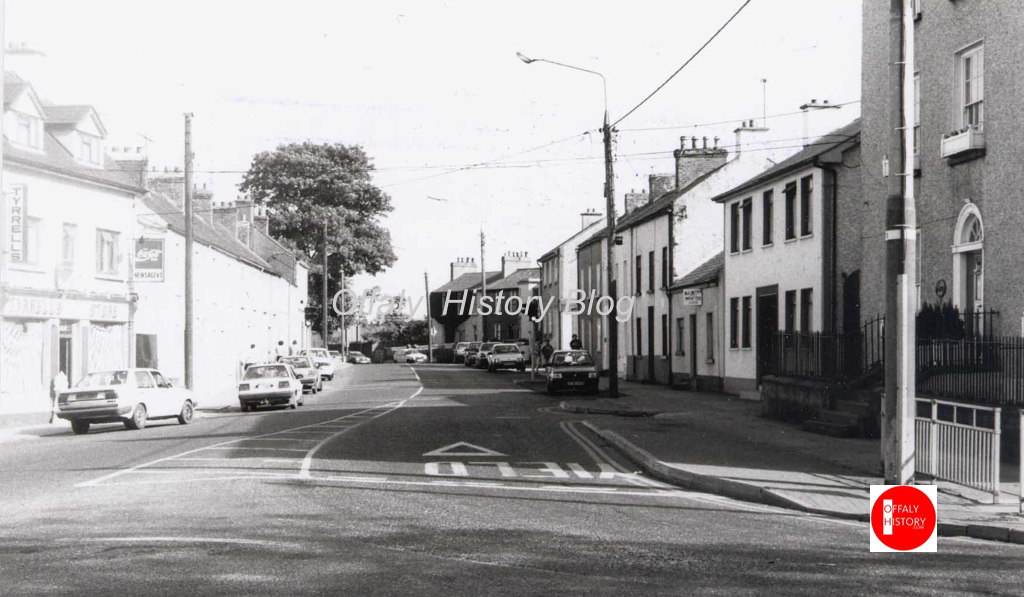
Woods had full occupancy of his cabins in 1843 and was letting for small houses in poor repair at £2. 3s 4d each per year and for others £7.4s. per year. A dressmaker on the corner with High Street (a small house with no rear and therefore no slop out) was paying Woods £4.10s per year.
Dr Pierce, the son-in-law of Thomas Acres (died 1836) and county surgeon was getting up to £8 a year each for the two-storey houses on the Spollanstown side of O’Moore Street. His tenants included a physician (Edward Dennis) and an auctioneer (Forbes). Willis was more systematic and six of his houses were rented at £10. 4s per year while the end house being a little larger came in at £11. 8s per year. His tenants included an attorney (Briscoe), a Revenue officer and the Commissioners of Public Works. Dr Pierce had three houses vacant in 1854 while Willis had one.
[1] Registry of Deeds, 13 August 1795, Bury to Acres, memorial no., 554/114/366406. The lease is in Offaly Archives.
[2] Westmeath Independent, 12 November 1910; see also in Offaly History: index to Tullamore Church of Ireland burials and Charleville rental.
[3] See note on Charleville leaseholders’ map of 1869 in Offaly Archives.
 offalyhistoryblog