
The Bismarck Connection: 1807 – Tullamore
In 1803, Hanover was occupied by troops from Napoleon Bonaparte’s French Army. Up to that point the Electorate of Hanover had been governed by King George III of the United Kingdom. In response to the occupation and the disbandment of the Electorate’s army, thousands of Hanoverian exiles travelled to England where they enlisted in the King’s German Legion of the British Army. The Legion were quickly deployed to Ireland and its soldiers appear to have created a good impression the towns like Tullamore where they were stationed.
This popularity was not however always universally felt, especially by members of the militia, some of whom surmised that the arrival of extra eligible males would hinder their own romantic chances with local women and that additional troops might. When militia units in transit to Derry, Limerick, Monaghan and Sligo found themselves billeted for the night at Tullamore in July, animosity boiled over. A minor street altercation quickly escalated into a major disturbance with fists, stones, bayonets and muskets deployed. The fighting left at least two dead, dozens injured and entered popular memory as the Battle of Tullamore. (8)
In the aftermath of the violence several militia men were sentenced to be flogged and the Legion detachment were transferred to another area, but their replacements were again drawn from the same regiment and German troops continued to be billeted at Tullamore in the years that followed.
In March 1807 it was report that …
‘On the 19th inst, a meeting took place at Tullamore between Lieutenant Bismarck and Captain Quinham, both of the 4th Battalion of the King’s German Legion. The parties drew lots the first fire; Capt Quinham won, and fired at Lieut Bismarck, when Lieut Bismarck shot Capt, Quinham who immediately expired. ‘ (9)
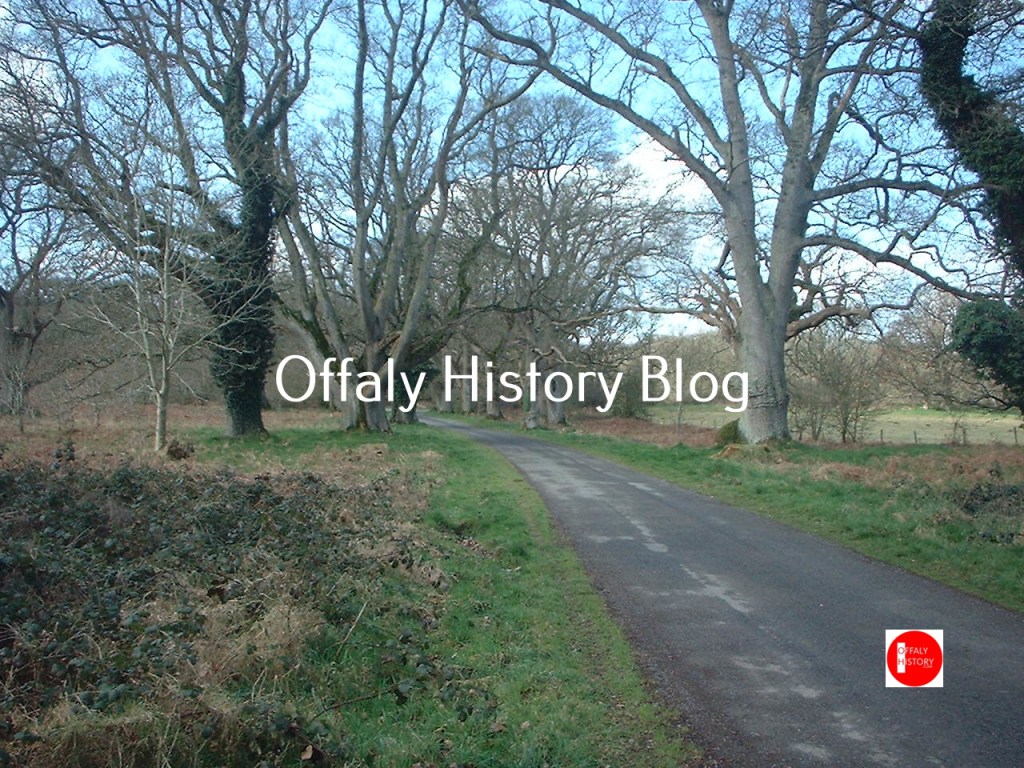
This duel was fought close to the middle gate on the Charleville Estate and for many years two oak trees were pointed out as denoting the position occupied by the opposing parties on that day. Over the years folklore and the limited nature of available sources about the event, have created their fair share of confusion. Perhaps conflating the incident with the earlier Battle of Tullamore, it has sometimes been suggested that the engagement was arranged between an Irish and German officer after a dispute over the affections of local lady. While the catalyst for the duel remains shrouded in mystery, it has been clear for some time that both duelists were German. It has often suggested that an elaborate limestone column memorizing a Baron Oldershausen, paid for by the officers of the German Legion in Killcruttin graveyard marks the final resting place of the deceased Charleville duelist or a causality from the Battle of Tullamore. But neither the dates or the name aligns and the unfortune Baron Oldershausen met his demise in 1808, a year after the duel and two years after the Legion’s deadly engagement with the militia. Instead as Michael Byrne suggested in Offaly Heritage 5 the dead man was Augustus von Quernheim. (10)

For many years popular belief held that Lieutenant Bismarck was the father of Otto von Bismarck, the so-called Iron Chancellor who’s political manoeuvring facilitated the unification of Germany and its emergence as a major international power in the latter part of the nineteenth century. Otto’s father Karl Wilhelm Ferdinand had served in the Prussian military, but it is more likely that the member of the family who served with the German Legion was Friedrich Wilhelm Graf von Bismarck from Westphalia.
Freidrich later described how having been required to leave the regiment having killed a brother officer in a duel in 1807, he joined the Württembergian Army as a cavalry officer. This transfer had major repercussions when Württembergian allied itself with Napoleon between1809 and 1815 during which time Frederick fought with distinction against the Russians, Prussians, Austrians and Swedes. He was promoted following the Württembergian realignment in 1815 and later published widely on military organisation.
A jury of one’s peers
While duelling remained illegal, and participants were often prosecuted, juries rarely convicted and even then, usually only when a breach of the code duello had occurred. Juries were chosen from the same landed class which produced the vast majority of duelists, and this possibly influenced verdicts.
In January 1816, John Cooke from Borrisoleigh shot dead fellow Tipperary native Captain William White in a duel at Sharavogue racecourse. White had previously had an altercation with one of Cooke’s servants and interrupted a public hunt threatening to horse whip the Borrisoleigh man for supporting his employee.
When the King’s County Assizes met a year later to deliberate on the case the Grand Jury impanelled to adjudicate included members of the O’Moore, Drought, and L’Estrange families.
The case was overseen by the infamous hanging judge Lord Norbury. Born John Toler at Beechwood, Tipperary, Norbury often boasted that he had begun life with ‘£50 and a pair hair trigger pistol.(11) In 1792, he used the floor of the House of Commons to demean the physical appearance of the Dublin radical Napper Tandy. The failure of Tandy to promptly issue a challenge for a duel (which Toler had indicated he would welcome) damaged the Dublin radicals standing in the city. The prominent United Irishman William Drennan would comment…
‘Poor Tandy’, after eighteen years struggle against his own interest in the public cause, has nearly lost his reputation as a gentleman in a quarter of an hour.’ (12)
Toler later acted as prosecutor in the case of the Sheares brothers in 1798 and five years later having been promoted to the chief justice of common pleas he pronounced the death sentence on Robert Emmet. In 1815 he acquired Durrow Abbey and its lands outside Tullamore.

Whatever his own experiences with duelling, in 1817 Norbury advised the jury to… ‘Divest themselves of the laws of chivalry’ (13)
After retiring for two hours the jury returned a verdict acquitting Cooke of murder but convicted his second Thomas Laurence on the lesser charge of manslaughter.
The melancholy catastrophe of Munny Hill, Kilcormac
Over a decade later in 1827, an argument at the racecourse in Sharavogue lead to death of two men outside Kilcormac…
‘In consequence of an altercation which took place between John Doolan, of Shinrone esq, and William Sadlier of Tipperary at a horse-race at Sharavogue course, on Thursday last, the above parties met on Friday, at Munny, near Frankford, in this county; the former attended by Wm. McDonough, of Wilmount, in the county of Galway, esq; the later by Wm. Smith, of Gurteen, esq. After an exchange of shots, fortunately without effect, Thomas Doolan of Wingfield, esq, interfered with a view to effect a reconciliation; and on his proceeding towards Mr. Sadlier for that purpose, he was assaulted by a man named David Davis, who was totally unknown to Mr. Sadlier, and who accosted him in a most violent manner, insisting that the parties should fight on, and declaring that neither of the Doolans should leave the ground alive. Mr. Doolan fortunately got away from Davis, who, in the most insulting and abusive manner, called on him to fight (Davis) on the spot. In order to explain this unprovoked and extraordinary conduct on the part of Davis, who was in a humble state of life, it may be necessary to observe, that about two years ago Mr. Thomas Doolan brought an ejectment against, and recovered the possession of the Fair Green of Shinrone on which Davis’s mother had built two houses, and, in consequence, Davis vowed vengeance against Mr. Doolan, and threaten his life, on which event he was bound over to keep the peace to Mr. Doolan. Davis having ineffectually sought to induce both Messer’s. Doolans to fight, approached Mr. McDonough, Mr. Doolan’s second and on meeting him, he (Davis) drew forth a case of pistols from his breast, and challenged McDonough to take one of them, and at the same time to take the end of a handkerchief which Davis held, in other that they might fight across it, which McDonough declined; and on McDonough’s turning away Davis followed him and punched him on the breast with a pistol, which McDonough pushed aside with his left hand, and, presenting a reserve pistol which he held in his hand, fired and instantly shot Davis on the spot. The ball, after passing through Davis’s head, unfortunately lodged in the head of a countryman named Dooly, who stood behind Davis, and whose life is despaired of. The conduct of the unfortunate Davis was violent in the extreme, he having frequently declared on the ground that he would have satisfaction for the Green and the Doolans’ lives, and endeavoured to induce the mob who were assembled to aid him. A desperate riot ensued, in which all Mr. Doolan’s party were assaulted and pelted with stones, and narrowly escaped with their lives. Mr. McDonough, in particular, narrowly escaped the fury of the mob, and proceeded to his residence in the county of Galway, but on the following day surrendered himself to some of the Galway police, and has been transmitted to Philipstown, in order to abide at the ensuing assizes. The melancholy catastrophe is to be deeply deplored’ (14)
There is no doubt that the letter writer was broadly sympathetic to McDonough, but similar sentiments were on display when the Galwayman was tried on two counts of murder at the Philipstown assizes a month later. Edward Page testified that while John Doolan had been eager to continue the duel into another round, McDonough had refused to hand over a second pistol and that he had been struck and spat on by an armed Davis before opening fire. T. Dillon Hearne described the accused as…
‘remarkably good tempered, peaceable, quiet and humane’. (15)
When the jury returned a verdict of not guilty the courtroom erupted in cheering much to the displeasure of the sitting judge.
The Davis family completely rejected the popular characterisation of events. As late as 1889, William Davis would write from Liverpool in defence of his relation…
Fearlessly then I assert, refute me who truthfully can, that Davis was no common or uncommon ruffian; no boisterous bully, and no sneaking poltroon. A high-spirited chivalrous Irish gentlemen, brave as a lion; he knew no fear; swift to avenge an insult- the enemy of oppression, treachery, and crooked dealing- rash if you will, and thoroughly imbued with the chivalrous albeit mistaken fighting spirit of the time. Such was ‘Fighting Davis’. Thus far his family may say in his honour of his memory and his detractors can prove no more. A dead shot, one of the best of his day his fame far and near. There is living yet a man whose naked head Davis with pistol bullet smashed an egg at ten paces. Well knowing all this his opponents trembled with fear of having to measure ground and meet him with pistols. Hence, unquestionably the abject craven “I don’t know you sir” reply of McDonough, who, while refusing to face Davis in fair fight took treacherous opportunity to shoot him dead on the spot’ (16)
William McDonough relocated to England where he himself meet a tragic end. In November 1848 it was reported from London that…
‘On Thursday Mr. Bedford held an inquest at Green’s shooting gallery, Leicester Square to inquire into the death of Mr. Wm McDonough, aged 41, the celebrated steeple chase rider who committed suicide at the above galley on Tuesday, by shooting himself with a pistol. Mr. J. Holmes, of 22, Craven-street, identified the body. Deceased was a native of Portumna, county of Galway, where at one period of his life he farmed a large quantity of land, but having had property bequeathed him by a relative in England he came over to this country, where he lived as a private gentleman, and for many years kept a racing stud at Melton. He was well known as what is termed in sporting circles as a ‘gentleman rider’ and was brother to Mr. Allan McDonough celebrated as even more bold and intrepid horseman than the deceased. During the last twelve months deceased had been in desponding state, the result of serious losses in betting, which it was supposed preyed so heavily on his mind as to induce the commission of the rash act.’ (17)
The Decline of the Duel
By the late 1830s, both political and public opinion had turned resolutely against duelling. In 1838, what was probably the final fatal duel in King’s County occurred outside Tullamore. In July of that year, the Freeman’s Journal reported that…
‘An affair of honour took place in Tullamore on Thursday evening, at half-past eight o’clock, between Mr. Philip Turpin and Bailey, Esq., a half-pay officer and a canal collector. A dispute, followed by blows, arose the previous evening between the two gentlemen, and a meeting was proposed for the next morning; but Mr. Bailey not having pistols on which he could depend, went to Kildare for a case, and arriving in Tullamore at six o’clock in the evening, sent Captain Flood to arrange the meeting for next morning. Mr. Turpin requested it might take place that evening. The gentlemen, with their seconds, accordingly proceeded about half a mile from the town, when, after exchanging one shot, Mr. Turpin was dangerously wounded in the hip, the ball passing out at the opposite hip. Mr. Bailey and both the seconds have been arrested.’ (18)
Turpin lingered for a month before succumbing to his wounds, the following March a jury took three minutes to find Thomas Bailey and his seconds not guilty of murder.
The last lethal duel in Ireland occurred between the sons of Roscommon gentry at Ballygill/Bellagill bridge outside Ballinasloe in 1841. Owen Lynch of Woodpark House, Moore shot dead Malachy Kelly of Woodmount House, Creagh. Once again, the encounter had its roots in a racecourse dispute. (19)
While some attempted to retain duelling, they soon found that the police were unwilling to indulge their efforts. In 1845 the authorities sabotaged a prospective duel involving well known King’s County native…
‘On Saturday morning, when the magistrate of the head-office had taken their seats on the bench, Superintendent O’Connor, of detective police force, with two of his men, Brennan and Murphy, brought up in custody Lord Tullamore, one of the aides-de-camp to his excellency the Lord Lieutenant, and whose residence appeared on the charge sheet as of the Lower Castle yard, together with Robert Bell, Esq. (said to be a barrister), of De Vesey Lodge Monkstown both of whom were charged with an “Intent to commit a breach of the peace, by fighting a duel in the Park, between five and six o’clock on that Saturday morning.’ The history of the case, as far as could be collected from the mystery which seemed to shroud it, was as follows: -It appeared that Mr. Bell conceived the idea-whether well founded or not- that Lord Tullamore was rather assiduous in his attentions to a female friend. Some persons report the lady was insulted by his lordship and, that she required Mr. Bell’s protection, but this version of the case is not vouched for; but, at all events, it is certain that the met a few days since in the Club-house, Kildare-street, where either blows or language of such a nature is not to be tolerated, took place, the result of which was a “message” but it did not transpire from which of the parties it proceeded; the presumption is that Lord Tullamore was the ‘challenger’ it being supposed that Mr. Bell gave him the necessary provocation to adopt such a step. Captain Charles Webber Smith, of the Royal Artillery, Portobello Barrack was deputised to act as the friend to Mr. Bell and Lord Tullamore choose as his ‘man of business’ the Hon. C Lindsay, another aide de camp to his excellency, and who occupies quarters in the Lower Castle yard. The preliminaries being settled, the parties agreed to meet on Saturday morning, at six o’clock, in the Park, convenient to the ‘fifteen acres’, but in inconsequence of an information lodged by some friend of either party, the warrant was put into the hands of Mr. O’Connor for their arrest. The superintendent proceeded around half past three on Saturday morning to Kildare Street, and he was only a few moments there when he observed Lord Tullamore and his second come out of the clubhouse and enter a covered car and he then stepped up and politely took them into custody. He subsequently proceeded to the park, when he arrested Mr. Bell and Captain Smith, who were on the ground and “all ready”. Immediately after the arrest of the latter gentlemen, and before they left the spot, a note was delivered to them from the parties “in quod” stating how matters stood, and expressing regret at the “untoward circumstances” The magistrates ordered the parties to enter into sureties, themselves in 200L and two sureties of 100L to keep the peace for seven years; and having procured the necessary bail and signed the bonds they were discharged. So, stands “this affair”. (20)
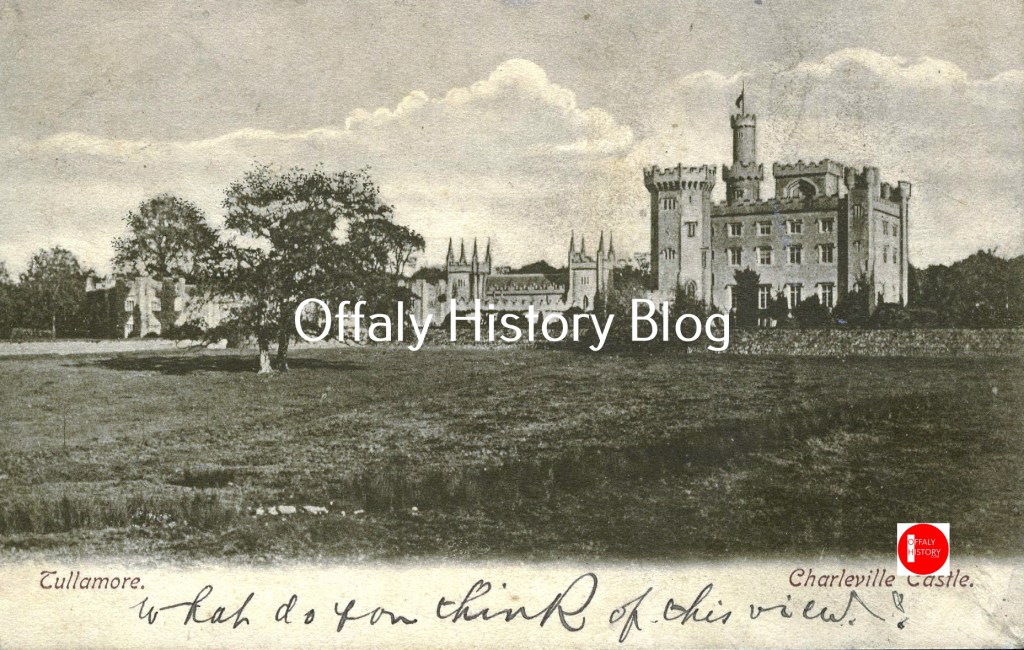
Two and sixty-two years after the legal elite had crowded a yard in Dublin Castle to observe the two O’Connors do battle; the connection between King’s County and duelling came to an end when Superintendent O’Connor detained two residents of the same Castle to prevent an encounter. The heyday of the duel had come and gone. In future, the rising middle classes would be far keener to find satisfaction in the court of law than the field of honour.
Sources
1. Irish Times. 20 April, 2018. Frank McNally, ‘an Irish Diary’. Online at https://www.irishtimes.com/opinion/seconds-away-an-irishman-s-diary-about-the-once-legal-remedy-of-trial-by-combat-1.3467408
2. SJ Connolly. Contested Island: Ireland: 1460-1630. Oxford (2009) P 154.
3. Ipswich Journal. 11 September 1725.
4. Finn’s Leinster Journal. 12 November 1774.
5. Reading Mercury. 15 April 1799.
6. James Quinn. ‘John Warneford Armstrong’ Dictionary of Irish Biography. Online at https://www.dib.ie/biography/armstrong-john-warneford-a0222
7. Oxford Journal. 22 June 1799.
8. Daniel Gray. ‘A gross violation of the public peace: The Tullamore Incident 1806’ online at https://offalyhistoryblog.wordpress.com/2024/06/19/a-gross-violation-of-the-public-peacethe-tullamore-incident-1806-daniel-s-gray/
9. Norfolk Chronicle. 11 April 1809.
10. Michael Byrne, ‘The Battle of Tullamore 1806: The German Legion Incident and the growth of a Legend’ in Offaly Heritage 5 (Tullamore) 2007.
11. W.N. Osborough. ’John Toler’ Dictionary of Irish Biography. Online at https://www.dib.ie/biography/toler-john-a8585
12. James Kelly. The Duel in Irish History. History Ireland. Vol II 1994. Online at https://www.historyireland.com/the-duel-in-irish-history-by-james-kelly/
13. Dublin Evening Post. 8 April 1817.
14. New Times (London). 21 February 1827.
15. Belfast Commercial Chronicle. 13 April 1829.
16. King’s County Chronicle.12 December 1889.
17. Bell’s Weekly Messenger. 11 November 1848.
18. Freeman’s Journal. 23 July 1838.
19. Kevin Bergin. ‘ Ballygill Bridge, scene of the last fatal duel in Ireland’. Online at https://www.ouririshheritage.org/content/archive/topics/miscellaneous/ballygill-bridge-scene-of-the-last-known-fatal-duel-in-ireland
20. The Pilot. 24 March 1845.
 offalyhistoryblog