
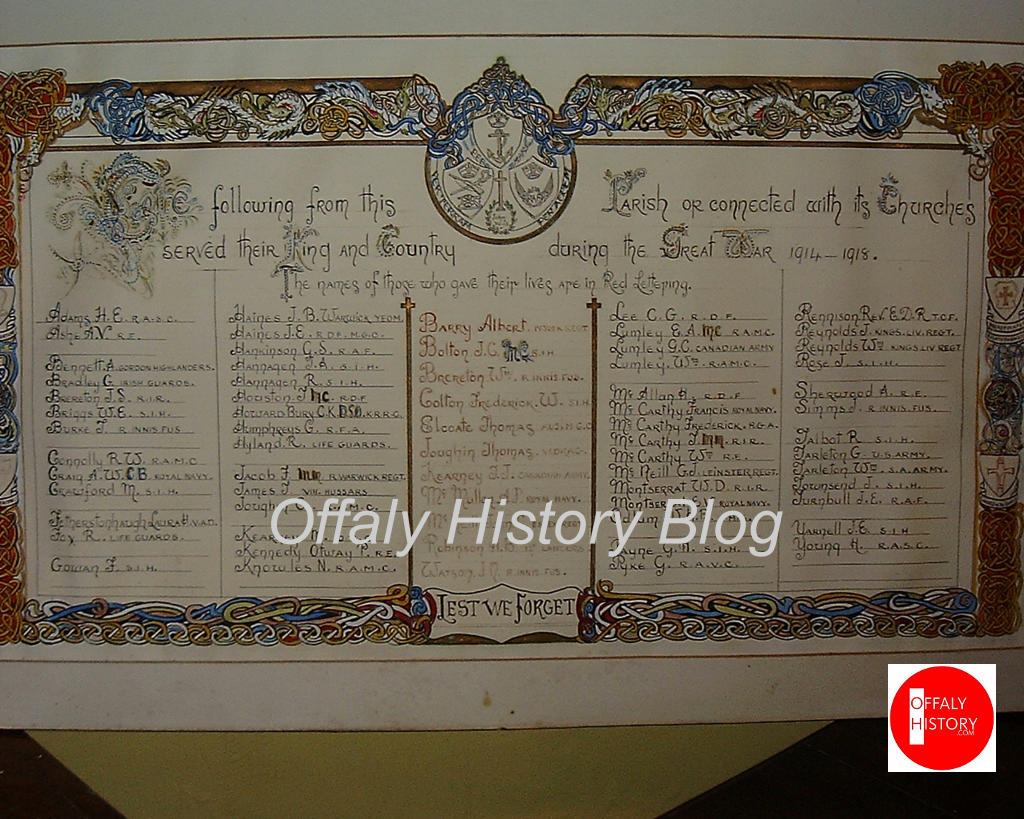
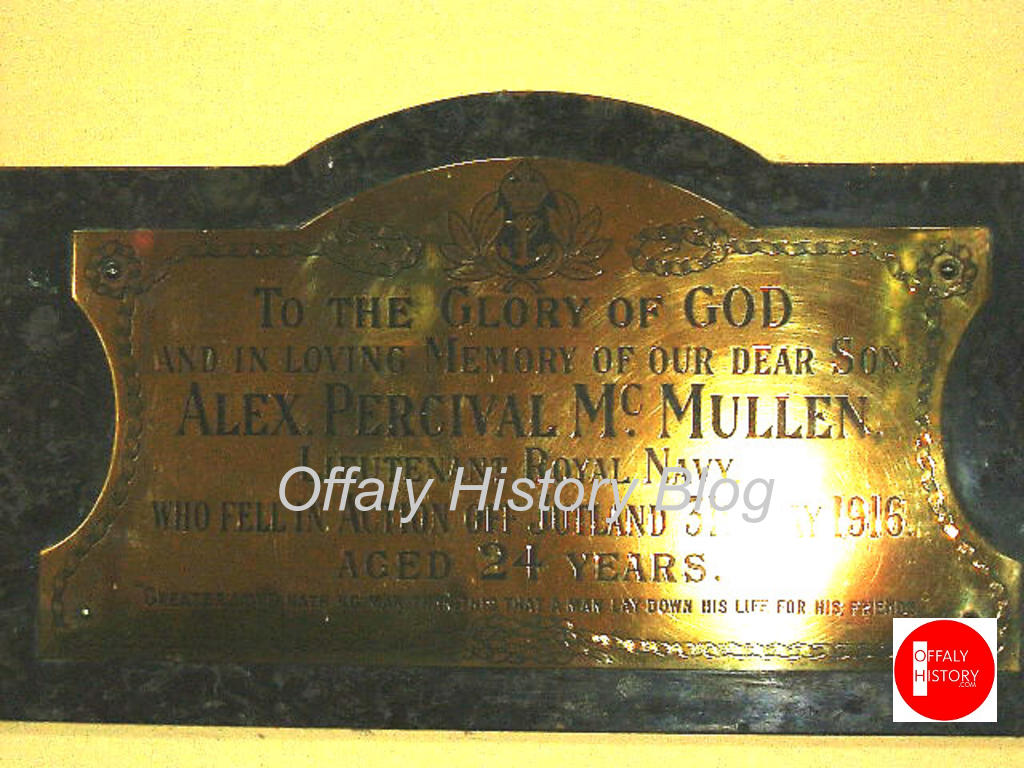
The recently announced sale on 11 March 2025 by Noonans of Mayfair of the Jutland medals of Tullamore man Arthur Craig (assumed Waller in 1920 on inheritance) is a reminder of the fact that despite being an inland county Offaly (King’s County up to 1920) has a significant association with the Royal Navy through the celebrated achievements of Birr-born Charles Parsons (1854–1951), of Dreadnought fame; Birr-born Sir Frederick Charles Dreyer (1878–1956), the expert in naval gunnery; and Tullamore-born Alexander Percival McMullen (1885–1916) who was killed at the Battle of Jutland in 1916. The Birr men could have lost the war in an afternoon! Both McMullen and Craig were associated with St Catherine’s, Tullamore – the first of an old Tullamore family who emigrated to Canada in 1910, and Craig as a son of the rector of the parish from 1869 to 1902. His brother succeeded in 1902 and was parish rector up to his death in 1929.
I am obliged to Stephen Callaghan for bringing the auction notice of the medals to my attention. Alas we have no county museum in Offaly and little by way of an acquisition fund to buy memorabilia associated with the county. We do have a county archive which should be your first stop if you have documentation including photographs, posters, diaries and much more that may add to the history of the midlands. The McMullens and the Craigs were associated with the founding of the first Tullamore Golf Club in about 1895, and with the social life of the Protestant minority in Tullamore in the years from the 1880s to 1914.
Graham Craig (later well known as Dean Craig), father of Arthur W. Craig, was born in 1834 and was the son of Stuart Craig of Banbridge, County Down. Educated at Trinity College, Dublin he was ordained a deacon for Meath in 1857. His first curacy was at Athboy County Meath, and he spent some years at Christ’s Church, Belfast. In 1858 he married Ellen Kathleen, daughter of Reverend Mr Noble, rector of Athboy and one of eleven children.[1] Craig was appointed rector of Tullamore in 1869 and died in 1904, two years after a serious cycling accident in 1902.

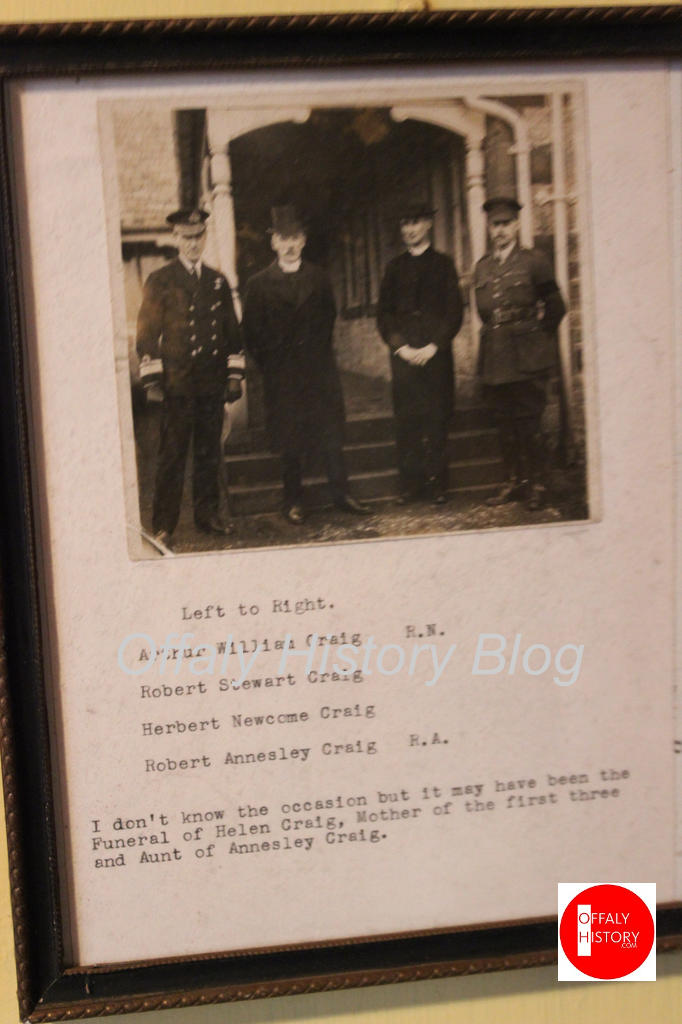
Their children:
Robert Stewart Craig b. 5 Sept 1864 d 1929. He had succeeded his father as rector of Tullamore in 1902.
Henry Graham Craig, b.28 October 1865 died 1898.
Herbert Newcome Craig, b. 17 Sept 1868-
Arthur William Craig, b.22 December 1872 accpted in the Royal Navy in Sept 1884.
Allan Noble Craig, b. 22 December 1874
Edmund Waller Craig, b. 1876, d. 1878, buried at Clonminch.
Helen Mary Stewart, b. 10 January 1880
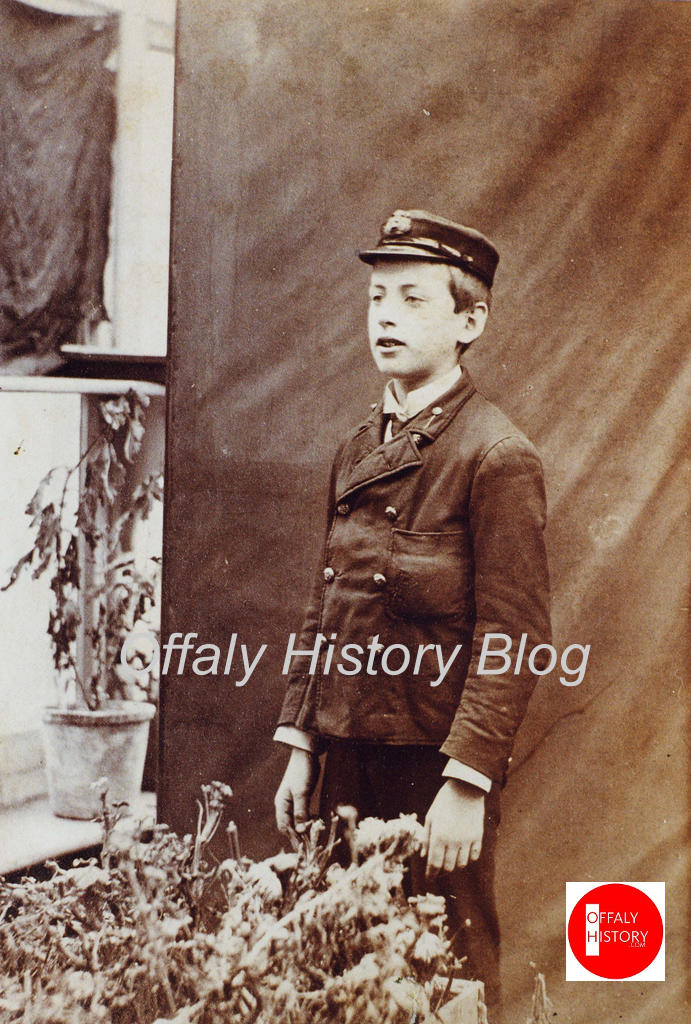
Dean Craig was keenly interested in local history and some of his research survives in the RCB Library and as published locally in 1907.[2] He was appointed Archdeacon of Meath in 1898 and later Dean of Clonmacnois. In 1907 a window was unveiled in his memory at St Catherine’s church, Tullamore.[3] Under his will made in 1898 he left estate valued at £4,050. The contents of the rectory were sold in November 1904 following his death.[4]
The young navy recruit Arthur Craig, who was just 12 in 1884 went on to have a brilliant career in the Royal Navy. He married at the age of 38 in 1910:
At St. Mary Abbotts, London, on 22nd June, Captain A.W. Craig, Assistant Director of Naval Ordnance, Admiralty, son of the late Dean of Clonmacnoise, Rector of Tullamore, married Mary, daughter of Mr. A.F. Beaufort, 20 Ladbroke Road, Kensington. The ceremony was conducted by Rev. H.N. Craig, Vicar of Newtownmountkennedy, and brother of the bridegroom. The bride was given away by her father, and Commander Smith, R.N., acted as best man. There were four bridesmaids. Master Harry Graham Craig acted as page, costumed as a first-class petty officer. The bride wore a dress of ivory satin, the bodice veiled with ribbon and trimmed with Limerick lace, and a tulled veil over a coronet of orange blossoms, myrtle and white heather. Her ornament was a pendant of diamonds, pearls and dark blue enamel. The presents, which numbered over three hundred, included a portrait of himself from the King; the officers of the Naval Ordnance Department, silver coffee service; captains at the Admiralty, silver salver.[5]
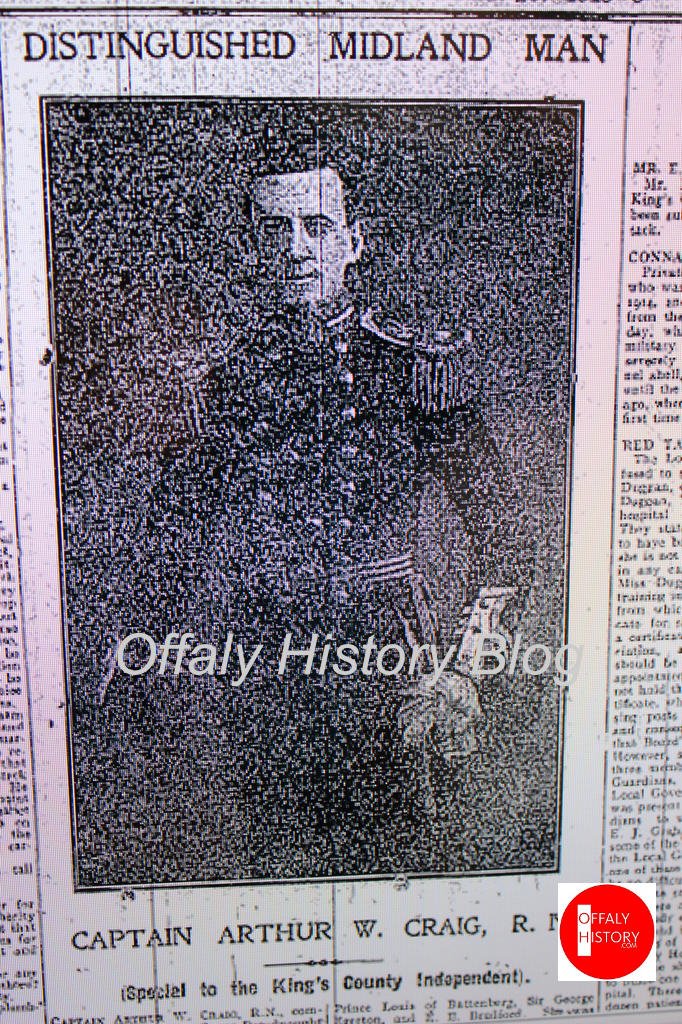
Captain Arthur Craig makes the local news in the early years of the First World War – when aged about 43.
In 1915 the local newspaper the Tullamore and King’s County Independent carried the following article[6]
‘Captain Arthur W. Craig R.N. commands the largest Super-Dreadnought a float.
‘THE captain is the fourth son of the late very Rev. Graham Craig, Dean of Clonmacnoise and rector of Tullamore and was born at St., Catherine’s Tullamore on June 18th 1872. He passed into the navy in December 1884, twelfth in term of 52 cadets, joined H.M.S. Britannia cadet training ship in January 1885 and passed out third of term in December 1886. In March 1887 he joined H.M.S. Alexandria, flagship of H.R.H. the Duke of Edinburgh in command of the Mediterranean fleet. During part of this commission H. R. H. Prince George now King George V. was a lieutenant in the Alexandria. He returned home in June 1889, and, after serving a short time in H.M.S. Aurora joined H.M.S. Calypso in December 1889. The Calypso was one of the training squadron which almost always cruised under sail and the cruises included visits to the West Indies, Algiers and Norway. In the spring of 1891 the Calypso was ordered to turn over the island of Helgoland to Germany and Midshipman Craig was landed with the party which removed the British guns from the island and brought away the governor and his wife and the coastguards He became an Act Sub Lieutenant on 18th June 1891 on passing the examination in seamanship and went through the qualifying course in navigation, mathematics, physics etc. at Greenwich and the gunnery torpedo and pilot age courses at Portsmouth obtaining a first class in each subject and consequently promotion to Lieutenant on the expiration of the courses in December 1892 was antedated to 18th June 1892. Lieutenant Craig served in H.M.S. Tounnaline from March 1893 till August 1895 on the North America and West Indies station including a winter at St. John’s Newfoundland where the ship was sent to prevent riots after the great fire in 1895, on selection to qualify for gunnery duties and went through the theoretical course at Greenwich passing out second and the practical course at Portsmouth in which he took.
First Place at the Final Examination In June 1897. After serving as Gunnery Lieutenant of H.M.S. Devastation in the manoeuvres of 1897 and a year on the staff of the Gunnery School at Whale Island he was appointed Gunnery Lieutenant of H.M.S. majestic flagship of the Channel Squadron where he served three years and was First Lieutenant for the last year. During this time the Majestic flew the flags in succession of Vice-Admirals Sir H. Stephenson, Sir Harry Rawson and Sir A. K. Wilson and was commanded by H.S.H. Prince Louis of Battenberg Sir George Egerton and E. E. Bradford She was flagship of the squadron which received Queen Victoria at Kingstown and Lieutenant Craig was in Command of the Naval Guard of Honour

Which received her majesty on landing and Brigade Major of the Naval Brigade which was reviewed in the Phoenix Park. In September 1901 he proceeded to Hong Kong and joined H.M.S. Ocean as First and Gunnery Lieutenant serving in her on the China Station until January 1903. During this time the Ocean broke all previous records in the shooting tests of the navy with both 12-inch and 6-inch guns. Lieut. Craig was promoted Commander on 1st January 1903 and served as flag Commander on the staff of Admiral Sir C. Bridge commander-in-Chief of the China station in H.M.S. Glory from January 1903 till April 1904. During the latter part of this time the Russo-Japanese war broke out. Commander Craig returned to England via Japan San Francisco and New York and shortly afterwards was appointed to H.M.S. Queen.
On The Mediterranean Station
As Second in Command. He returned to England in March 1905. On appointment as Experimental Commander at the Gunnery School Whale Island and remained in this appointment until January 1908 during his term of office he carried out the gun trials of H.M.S. Dreadnought. In January 1908 he proceeded to the Cape of Good Hope and took command of the light cruiser Pelorus and was promoted Captain in June 1908. Whilst on her way home to pay off in October 1908 the Pelorus was ordered to proceed from St Helena to South America and after visiting Rio de Janeiro, Buenos Ayres and Monte Video she was directed to proceed up the Amazon river in January 1909. The Pelorus reached Ignetos in Peru 2,300 miles from the mouth of the Great river and returning without mishap to Para reached Plymouth in April 1909. Captain Craig was then appointed.
ASSISTANT DIRECTOR OF NAVAL ORDNANCE At the Admiralty, which post he held until November 1911 when he took command of H.M.S. Orion then just completed and the first ship of the Dreadnought type to carry 13.5-inch guns. The Orion was flagship of the second-in-command of the Second Battle Squadron Leaving her after two years in command he was appointed in December 1913 to H.M.S. Albemarle, battleship tender to the Gunnery School at Portsmouth and remained in command at the outbreak of the war until recently appointed to the command of the latest Super-Dreadnought Battleship.
TULLAMORE MAN’S COMMAND
Captain Arthur W. Craig R. N. has been given the command of the largest super dreadnought afloat. He is the 4th son of the late Very Rev Graham Craig Dean of Clonmacnoise and rector of Tullamore Rev R S Craig. Captain Craig has had a distinguished naval career serving all over the world. In 1909 he became Assistant Director of Naval Ordnance at the Admiralty where he remained until 1911 when he took command of the H. M. S. Albemarle, battleship tender to the Gunnery School at Portsmouth and remained in command at the outbreak of the war until recently appointed to the command of the latest Super Dreadnought Battleship.’
According to a note from the Navan History Society (online) the Vice Admiral inherited the Allenstown estate in Co Meath and took the name Craig Waller.
‘In 1920 the final family owner was Vice-Admiral Arthur William Craig who took the name Waller in 1920 in order to inherit the estate from his distant relative. Craig had served in the Navy and been in command of a ship at the Battle of Jutland in 1916. Vice Admiral A. Craig Waller presented a perpetual challenge cup to Bohermeen Cycling Club in 1937. In the late 1930s the property was sold to the Irish Land Commission and the estate broken up. The house was demolished in 1938. Craig Waller died in 1943. His son, Commander Michael Waller Beaufort Craig Waller, served in World War II and also the Korean War.’

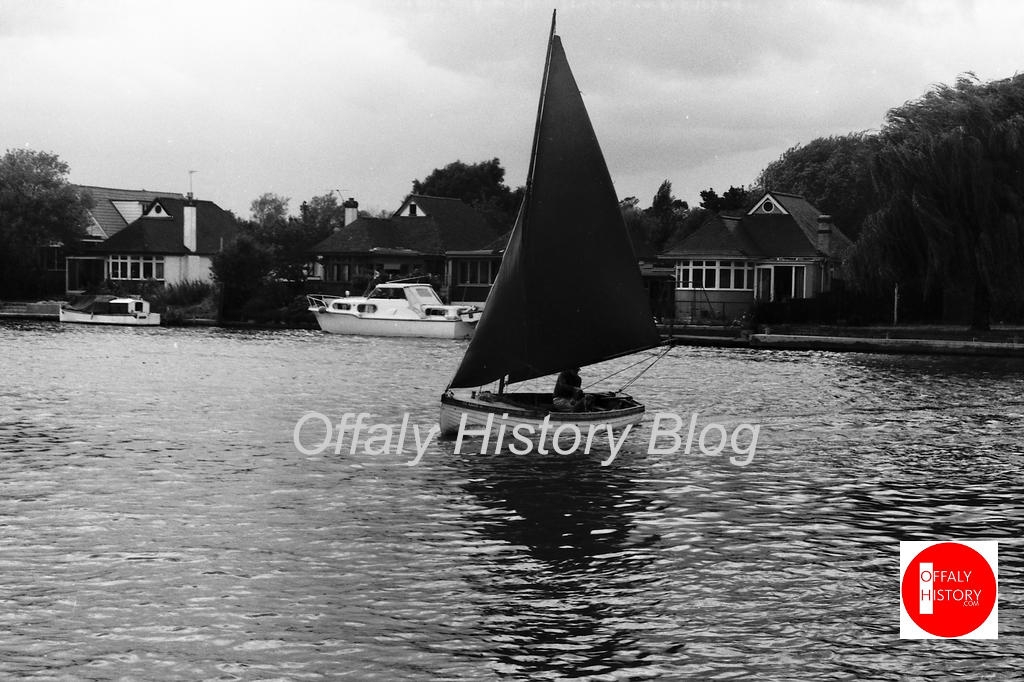
The medals to be sold in London on 11 March 2025 by Noonans courtesy of the online catalogue
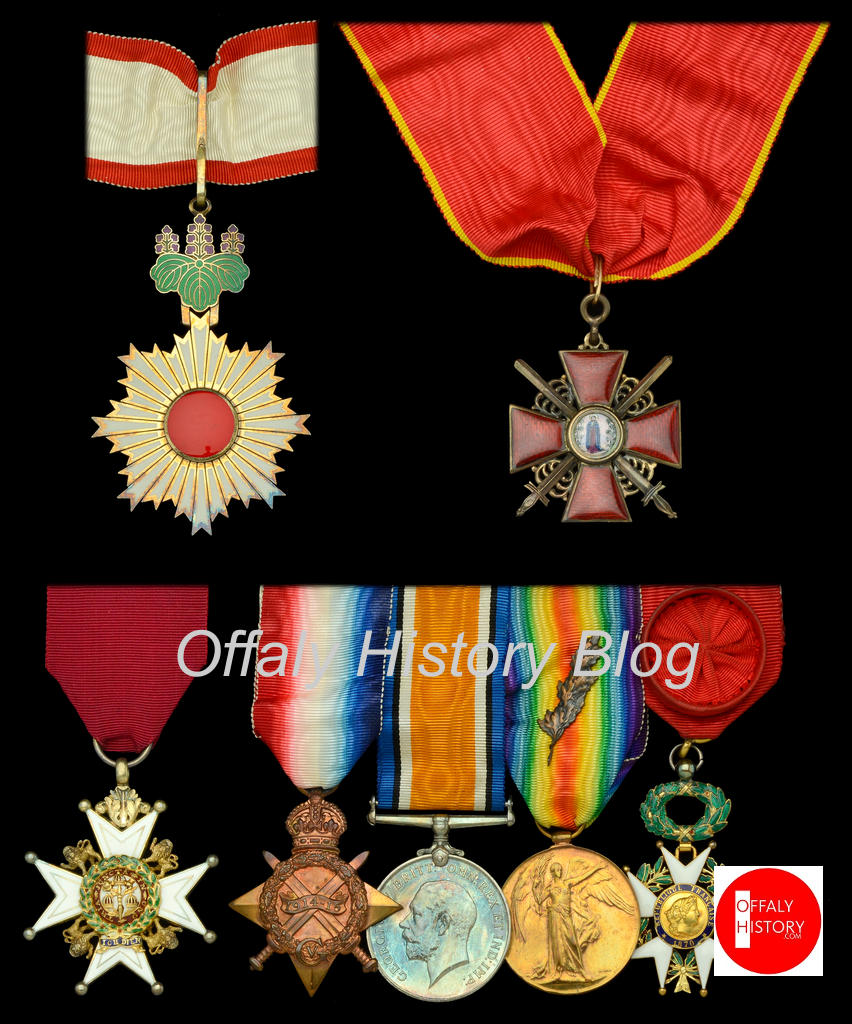
‘The important Jutland C.B. group of seven awarded to Vice-Admiral A. Craig-Waller, Royal Navy, who commanded H.M.S. Barham on that memorable occasion; in company with her consort Valiant, Barham was credited with being the most accurate British battleship engaged at Jutland, when she fired a staggering total of 337 15-inch shells with commendable results: but her achievements came at a cost, six direct enemy hits causing her casualties of 26 killed and 46 wounded.
The Most Honourable Order of the Bath, C.B. (Military) Companion’s, breast badge converted for neck wear, silver-gilt and enamels, in Garrard, London case of issue gilt inscribed ‘A. W. Craig’; 1914-15 Star (Capt. A. W. Craig, R.N.); British War and Victory Medals, with M.I.D. oak leaves (Capt. A. W. Craig. R.N.); France, 3rd Republic, Legion of Honour, Officer’s breast badge, gold and enamels, these last four mounted as worn; Japan, Order of the Rising Sun, 3rd Class neck badge, silver-gilt and enamels, with central cabochon, with neck cravat in its original black lacquered case of issue together with various fitments; Russia, Empire, Order of St. Anne, Military Division, 2nd Class neck badge, gold and enamels by Edouard, in original case of issue and outer paper envelope, both marked for 2nd Class, the mounted group contained in an old leather case, the lid gilt inscribed, ‘Vice-Admiral A. Craig-Waller, C.B.’, good very fine or better (7) £3,000-£4,000.
—
Importation Duty
This lot is subject to importation duty of 5% on the hammer price unless exported outside the UK
Provenance: Spink, July 2000.
C.B. London Gazette 15 September 1916:
‘The Rear-Admiral commanding reports that the ships under his command were handled and fought by the captains in the manner one would expect from those officers and in accordance with the best traditions of the British Navy.’
M.I.D. London Gazette 15 September 1916.
Russian Order of St. Anne, 2nd Class, with swords London Gazette 5 June 1917.
Japanese Order of the Rising Sun, 3rd Class London Gazette 29 August 1917.
French Legion d’Honour, Officer London Gazette 27 May 1919.
‘Arthur William Craig (later Craig-Waller) was born at Tullamore, Co. Offaly, Ireland on 18 June 1872, the son of a clergyman. Having attended the training ship Britannia as a Cadet in 1884-85, he specialised in gunnery and passing out with five Firsts was advanced to Lieutenant in June 1892. A succession of seagoing appointments having ensued, he was advanced to Commander in December 1902 and to Captain June 1908, in which rank he served as Assistant Director of Naval Ordnance in 1909-11.
By the outbreak of hostilities in August 1914, however, Craig-Waller was back at sea with command of the battleship Albemarle, in which capacity he remained employed until June 1915, when he removed to the battleship Barham.
And it was for his command of Barham in the 5th Battle Squadron at Jutland that he gained wider fame and recognition, not least her excellent gunnery discipline which inflicted serious damage on the S.M.S. Derfflinger, Lützow, Moltke, Seydlitz and von der Tamm. Admiral Scheer later paid tribute to Barham and her consorts, describing their arrival on the scene of battle as a critical moment for his battle cruisers: ‘The new enemy fired with extraordinary rapidity and accuracy.’
Barham’s rate of fire was indeed phenomenal: she expended 337 15-inch and 25 6-inch shells and, with Valiant, was credited with a combined total of 23 or 24 hits, thereby winning them the accolade of the most accurate British battleships engaged.
But Barham also suffered severe damage, most notably when Admiral Evan-Thomas turned the 5th Battle Squadron north at around 1650 hours on the 31 May, a manoeuvre that placed Barham in the killing zone of Admiral Hipper’s battle cruisers. One heavy calibre shell from the Derfflinger detonated above Barham’s medical store compartment, blowing a 7ft by 7ft hole in her main deck and sending lethal shell fragments through her middle and lower decks; another destroyed the ship’s sickbay, killing the staff and its patients, including eight boy ratings. In total, Barham was hit by five 13-inch shells and one 11-inch shell and suffered casualties of 26 killed and 46 wounded.
Craig-Waller – who had also done his best to persuade Evan-Thomas to follow Beatty’s main battle group in the absence of a signal – was appointed C.B., in addition to being awarded the Russian Order of St. Anne, 2nd Class, with swords; his subsequent award of the Japanese Order of the Rising Sun, 3rd Class, in August 1917, likely reflected his part in the battle, too.
Appointed to the command of the battleship Renown in April 1918, Craig-Waller was appointed an A.D.C. to the King in February 1919, awarded the French Legion d’Honour in May 1919, and advanced to Rear-Admiral in November 1919. He retired in the rank of Vice-Admiral in 1922 and submitted an account of the 5th Battle Squadron at Jutland to the R.U.S.I. Journal in the 1930s; see Volume 80, Issue 520.
Having then volunteered his services after the renewal of hostilities in September 1939, by which date he was aged 67 and ‘employed on A.R.P. work’, the Admiral died in Walton-on-Thames in February 1943.’ With thanks to Noonans
[1] See the family of Noble of Glassdrummond in Burke, Irish landed gentry (1899), p. 330.
[2] King’s County Independent, 23 November 1907.
[3] KCC 4 July 1907.
[4] KCC 17 Nov. 1904
[5] KCC 7 July 1910.
[6] TKI, 20 Nov. 1915
Supported by the Department of Culture Communications and Sport as part of the Commemorations Series for 2025.

 offalyhistoryblog