
As this year is the fiftieth anniversary of the death of Eamon de Valera it is probably a good time to recount meeting this towering (literally) but often controversial figure.
It would now appear to have been discontinued, but in those days the newspapers regularly printed a sort of Court Circular announcing the official engagements of Uachtarán na hÉireann. Dev’s visitors seemed to be drawn almost exclusively from visiting American priests and nuns, so in 1970 I wrote him a rather provocative letter accusing him of being out of touch with ordinary Irish people – especially go ahead modern youngsters such as myself and my wife Brid. How could he possibly know what was happening in the real world!
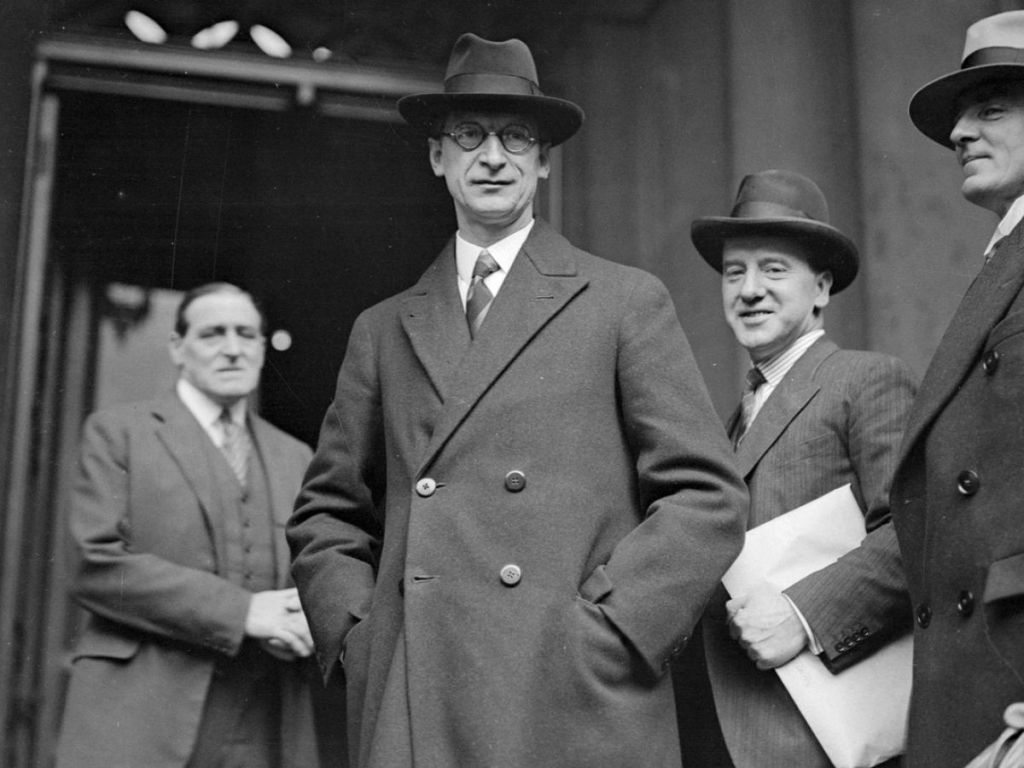
I was astonished to get a courteous reply from his secretary Marie O’Kelly inviting us to the Áras for afternoon tea at 4.30 on Friday the 4th December.
We drove up in our battered Volkswagen with its front tied down by binder twine. The elderly Guard at the gate waved us through without stopping us-‘Go on up-he is waiting for ye’.
Colonel Brennan, Dev’s aide de camp, was standing at the door. He brought us on a tour of the building and then into the Chief’s study. Dev who was standing behind his desk, leaned over to shake our hands and warmly welcomed us.
My first impression was of his height and dignity. The second was his smile and slightly rural accent. He was not in the least the austere schoolmasterish character I had anticipated and he immediately put both of us at ease with his charm and openness.When I mentioned that my uncle Hugh Holohan had succeeded him as Professor of Mathematics in Blackrock College he warmed even more.
He asked me to tell him about what was going on in the world of architecture and I gave him an overview and added some remarks on my first impressions of the Áras. This led him into a vigorous diatribe against the Office of Public Works which he felt was neglecting its repair and conservation. He was having a continuous row with them regarding dampness in the flat where he lived and apologised that his wife Sinead wasn’t here to meet us because she was in bed with a cold which he felt might have been brought on by their poor living conditions
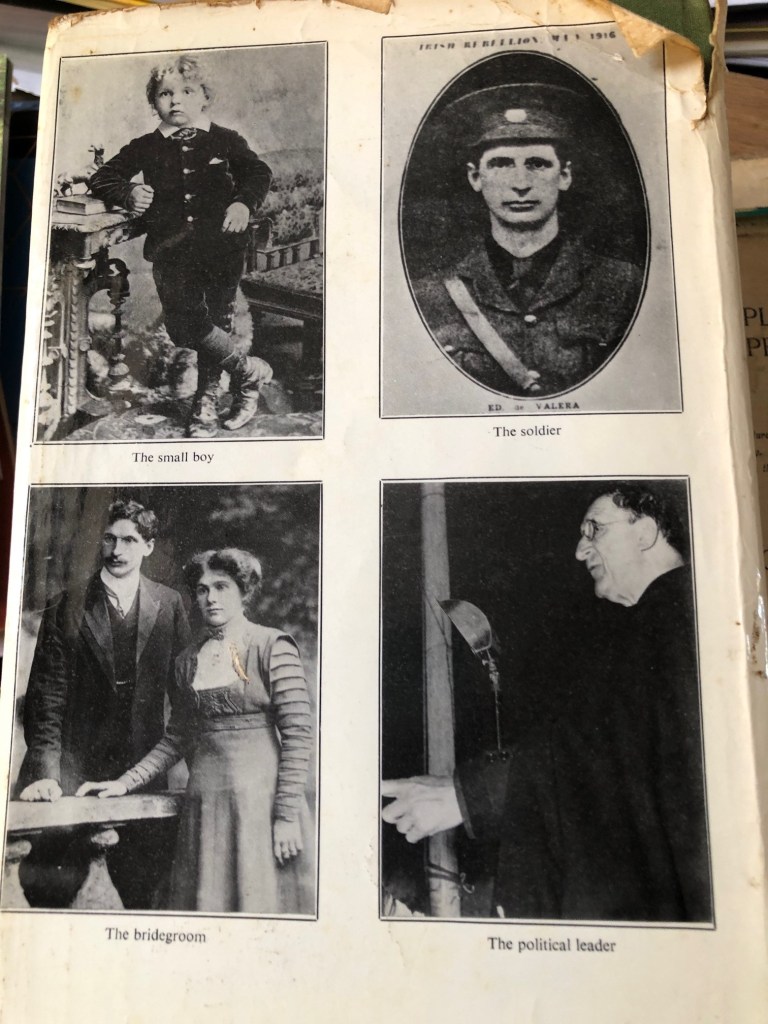
He then began to talk of his daily life and his love of early morning radio particularly of listening to ‘What it says in the Papers’ on his portable radio while shaving in the morning and we had a great discussion on our favourite radio programmes.
As there was a set in the corner, Brid asked him if he watched television. To our embarrassment he explained that he was almost totally blind but that he did have some peripheral vision. He then remarked that he sometimes saw things out of the corner of his eye which he was not supposed to see.
At this stage we were joined by Colonel Brennan and Miss O’Kelly who brought in some tea and scones. I remarked on the magnificent tree just outside the window and Dev replied that it had been planted by Queen Victoria and it had grown to be squat and dumpy – just like her.
I then observed that on our tour I had noticed that the dining room table was elaborately laid out for dinner and wondered who was coming. Colonel Brennan replied that it was for the Irish Bishops who were given an annual dinner in the Áras. To my astonishment Dev exclaimed ‘ Please God, they never will get married, we wouldn’t be able to fit the wives into the room!’ The three of them nearly collapsed with laughter at this surprising quip.
Years later I wondered whether they had been referring to the Catholic or Church of Ireland Bishops.
The atmosphere was of three old friends who enjoyed each other’s company and their regular afternoon tea and scones and chat. There was dignity but no pomp or ceremony. It seemed to us truly republican.
Dev was then 88 but as our conversation continued and expanded he did not in any way appear frail and certainly his mind was agile and engaged.
As we were leaving I asked him to autograph my copy of his biography written by the Earl of Longford and Thomas P. O’Neill. At first he politely refused on the grounds that he was the subject of the book and not its author. After some cajoling he agreed saying ‘I normally sign these things ‘Le Dea Mhein’ but as you are now my good friends, I will make an exception and sign it ‘Le Dhea Ghuí’.
I subsequently discovered that was how he signed everyone else’s copy too.
The old charmer.
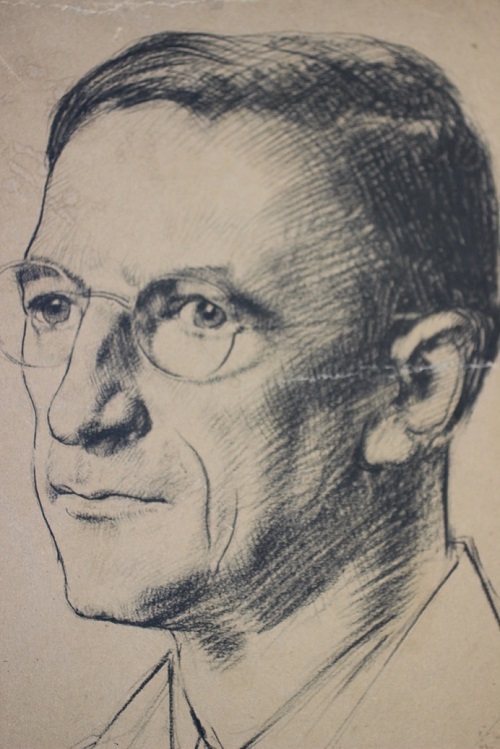
Eamon de Valera died 29 Aug. 1975 aged 92
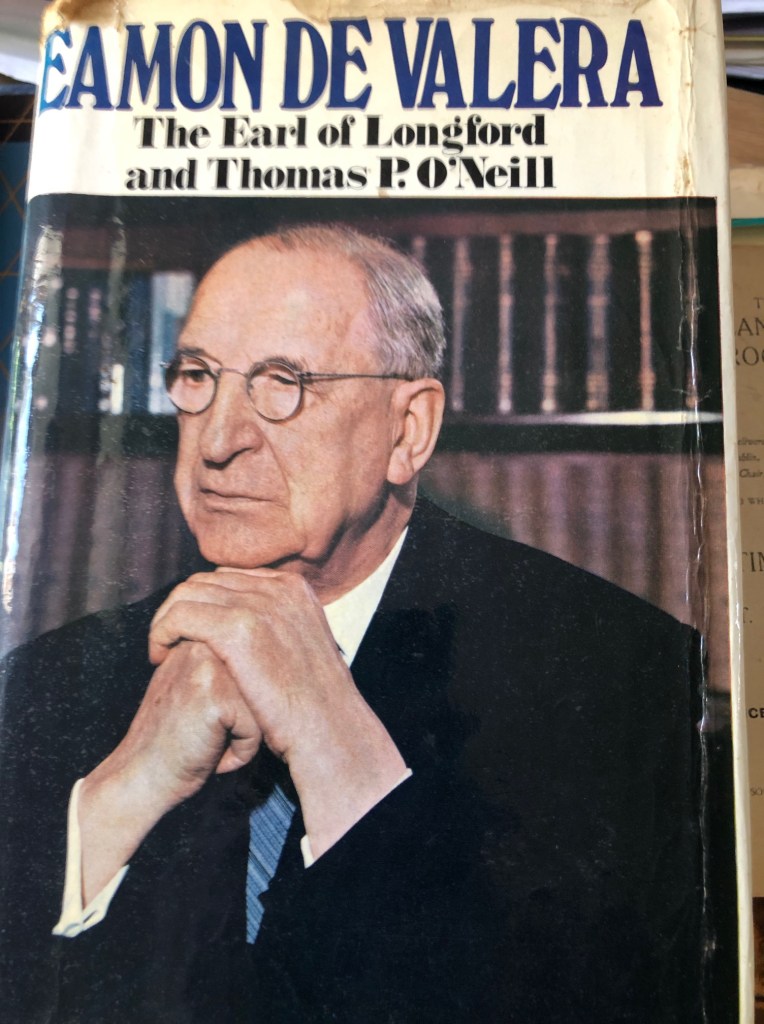
Supported by the Department of Culture Communications and Sport as part of the Commemorations Series for 2025.

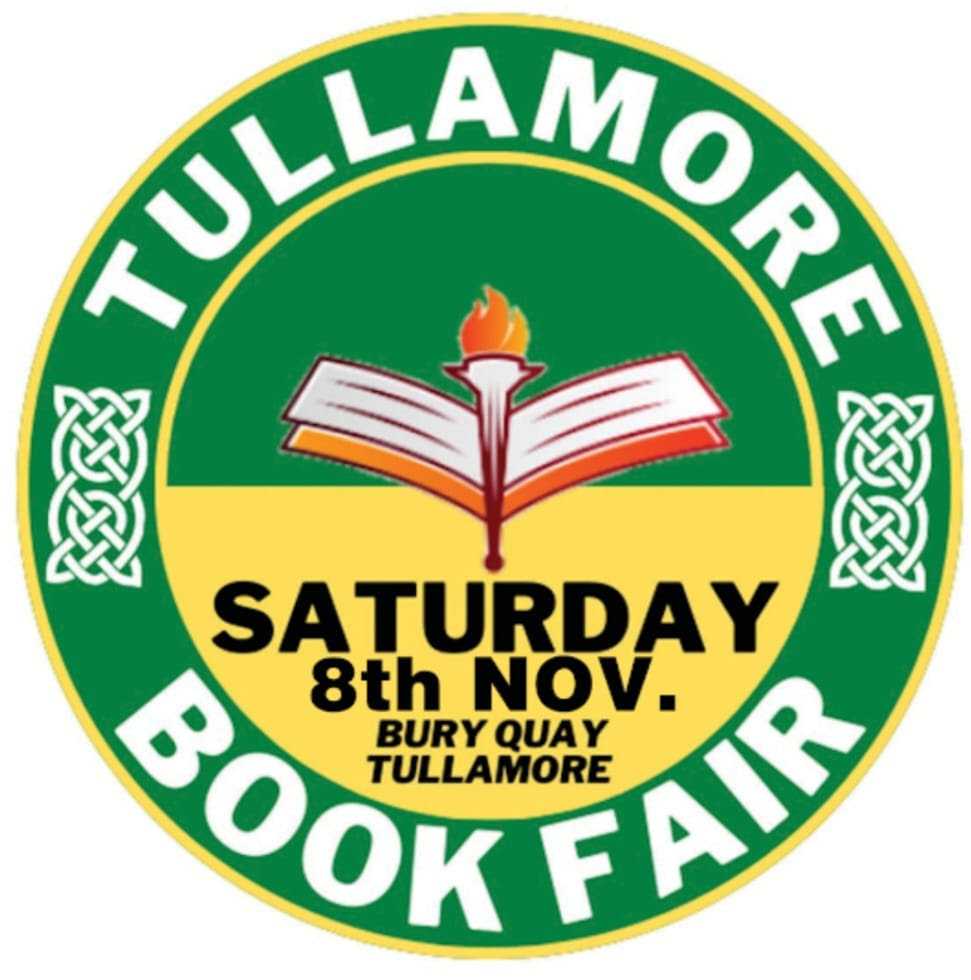
We have a book fair tomorrow Saturday 8 November 2025, 10 a.m. to 4 p.m. . All welcome. Admission is free.
 offalyhistoryblog