Introduction
My grandfather, Henry Robinson, was born on the 18th of November 1920 and lived his entire life in the countryside between the villages of Belmont and Cloghan in County Offaly in Ireland. He grew up on a small strip of land between the River Brosna and the Grand Canal.
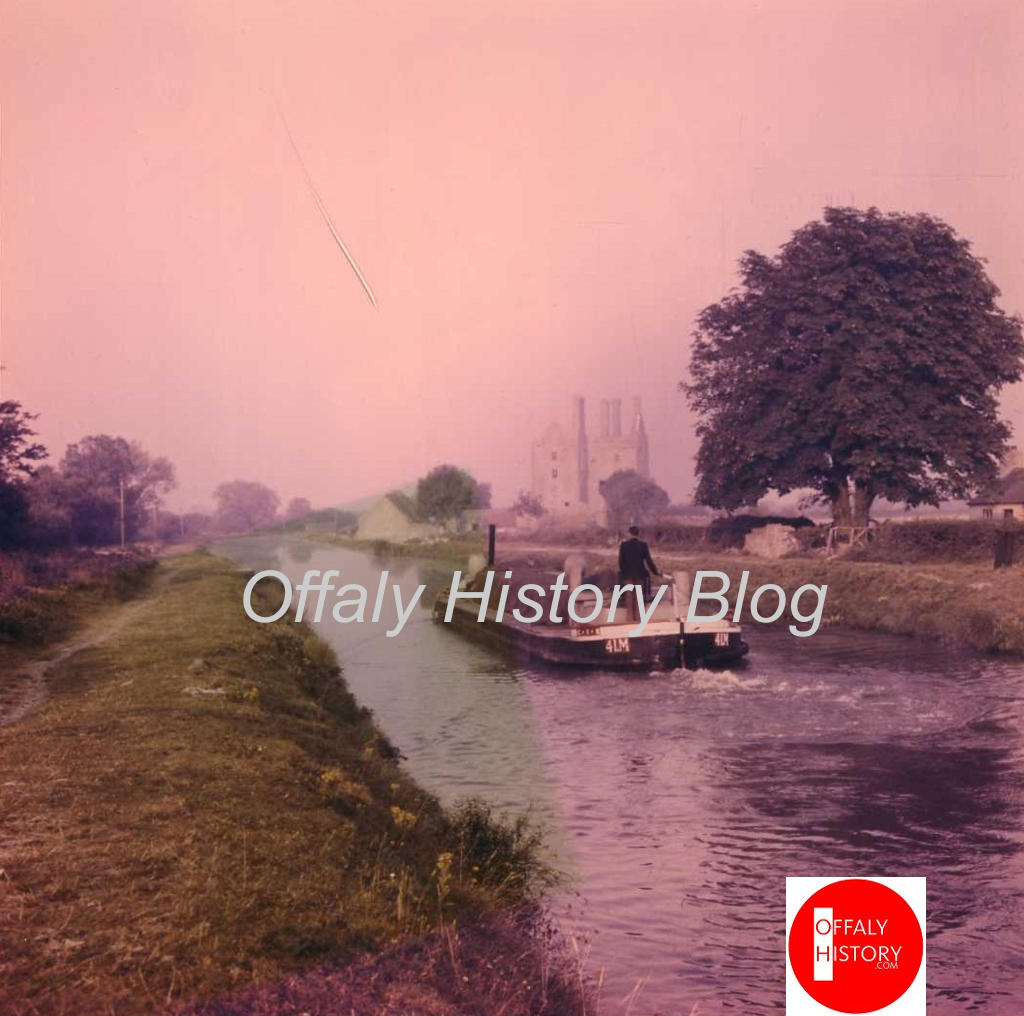
It was on the Grand Canal where his own father, G.R. worked on the local jetty, unloading goods and acting as an agent for Guinness. The Grand Canal to Shannon Harbour was opened in 1804, and for some 150 years was a vital industrial thoroughfare linking Dublin with Limerick.
The canal ran from the centre of Dublin and through the Irish Midlands until it met the River Shannon. Barges would travel along the canal and then down the Shannon and across the waters of Lough Derg, until they reached the city of Limerick.
Over the course of several months in 2003, my aunt Sandra Robinson sat down with her father, my grandfather, and recorded some 24 hours’ worth of material on cassette tapes detailing his life and his knowledge of farming, milling, the canal trade and the history of the Belmont area of West Offaly. I have digitised and remastered these recordings in order that they be preserved for posterity. Here I present some 35 minutes of cut together with material detailing my grandfather and great grandfather’s experiences working on the Grand Canal.
Do you know what age your father was when he started?
Well, he left school and went straight into the canal office at
And where did he go secondary school?
Oh, no, not to my knowledge. No, no, never went. Never went to any further than national school as far as I can….
And did he go up there? Yeah. He went to my school
Yeah he did.
Was he kind of pulled out of school to go in there, or did he come to an end in school and then go there? Like, was he taken out and shoved in there in an emergency kind of thing?
Well, as far as I can understand that he was taken out of school and had to take over the job of the canal, running the canal office and whatever they had to do with Guinness as well.
Was his father in ill health when he took over, or was he just too drunk to be fully in charge?
To my knowledge, I think things were so bad sort of financially, everything was on the go down.
And was that the dad couldn’t be trusted with the money anymore?
It’s possible. And there was just nothing else for it. Only for my dad just to take over everything.
So in the canal stores over there, was he in charge of everything that went on at the jetty, or was he only in charge of the Guinness stuff?
Well, in charge of everything that went on down at the canal jetty.
So what hours did they work down there at the jetty?
There was a case of all hours. Boats that time were traveling night and day if a boat pulled in at any hour he’d have to get up and attend to that boat. And off load whatever was for here.
And would they, come up and knock here at the house or would he be expecting them and would he go down?
Well, he’d be partly expecting that boat some part of the night. And the public come up here and tell him,
Did they always keep on going or did they ever stop here then at night; would they stop down at the jetty there for the night?
Just keep going. The engine of the boat had never stopped, and when the boat was emptied, daddy would attend to the manifest book. The skipper always came in to the office and signed that the stuff was delivered.
Who did the unloading or the loading of the boats? Would the men on the boats do all that unloading? Or would granddad have men here or could call on to do that?
No, there was no workman. My father did the unloading with the help of whatever… they’d be two boatsmen on duty on the boat. There was four men in a boat at that time, and two on and two off…. kept going all the time.
And would the two that were off duty, would they stay off duty, or would they help with the unloading?
As far as I can remember, just the two men that were on duty – unload the boat.
It might be only miscellaneous stuff, or it might be, a load of casks.
Would they come with, big loads of grain during the night?
If there was a whole big load of grain – that would be left till the next day. They wouldn’t unload a big load like that – Only small stuff.
And about, say, if it was casks to be delivered for the Guinness’s or that – about how many?
Well there could be maybe about 50 casks of various sizes, there’d be what we would call a Kilderkin (a half barrel). And then there was the Firkin, which was a quarter barrel, and that was as big as we got. The canal traffic increased a lot.at one stage. All the manure coming in here were all coming by boat. All the Guinness stuff came by boat. The maize from Limerick came by boat. They were all big bulk traffic.
And what stage are we talking about now?
Around the 1940s.
And the traffic was good. On the canal. All right
Oh it was.
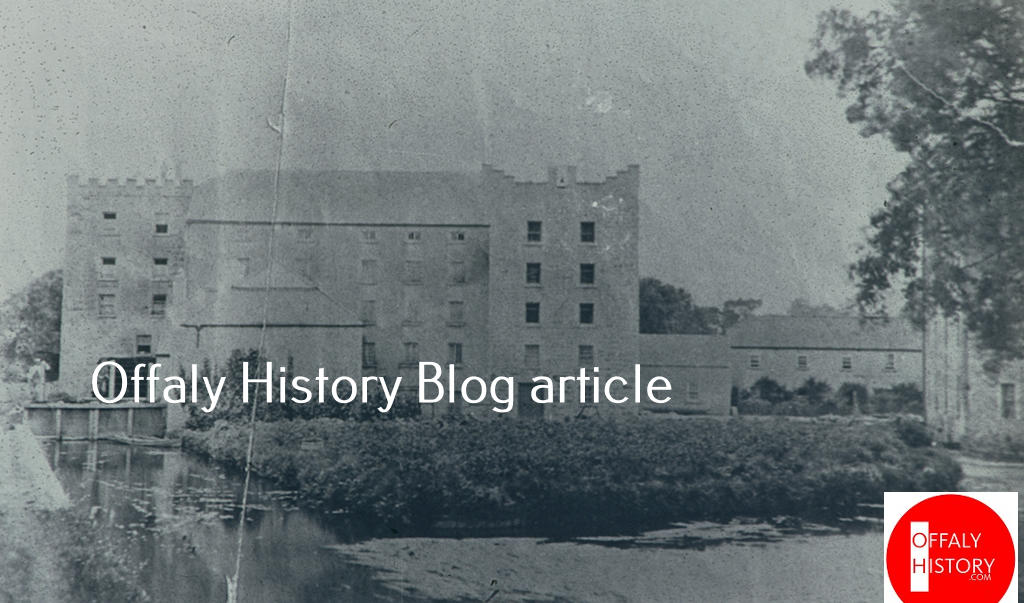
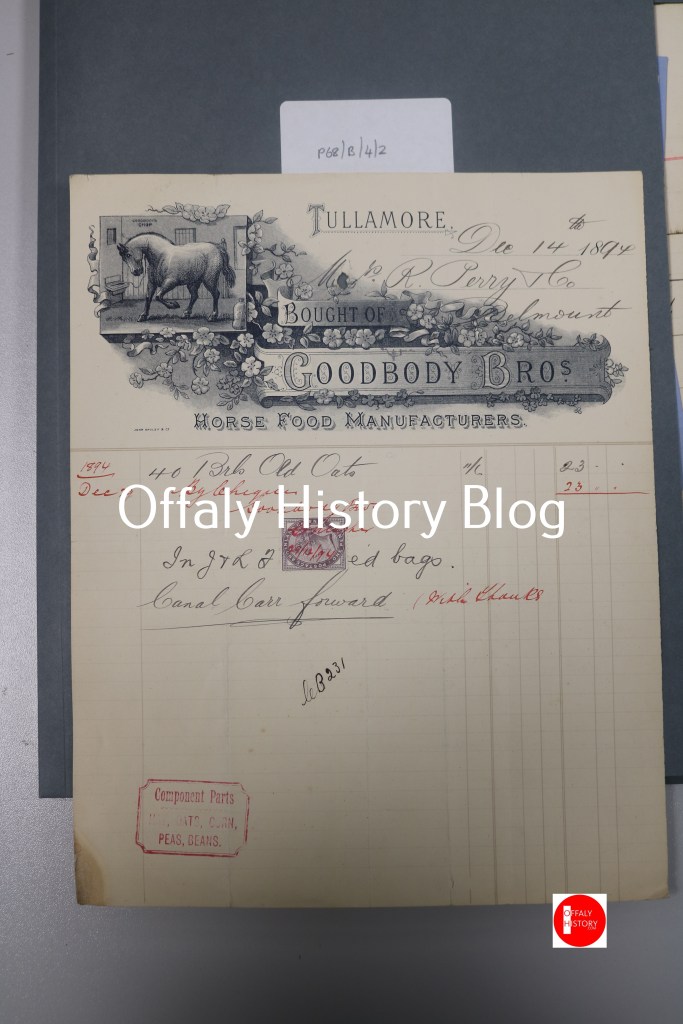
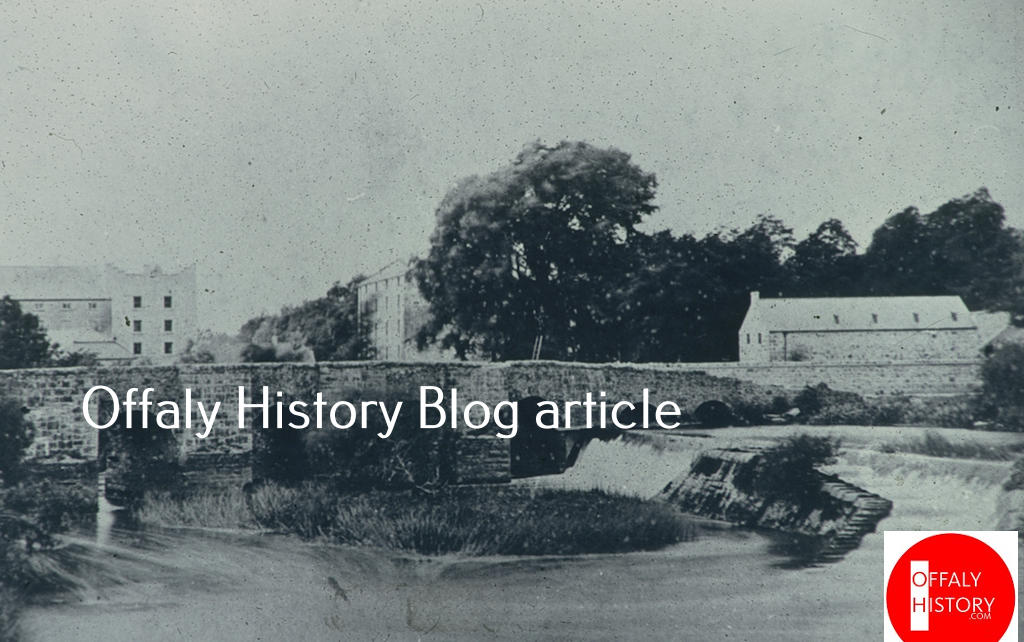
So there was the Guinness for GRR. Guinness agency. And there was the grain which, which was coming and going out to and from Perry’s. And what was grain would come. And what would go from Perry’s at that time?
There would have been maize coming from Limerick to Perry’s.
Now, when the mill – before it was burnt down, I’m sure there must have been grain wheat coming in by canal for Perry’s. I couldn’t be sure of that now. I remember unloading an odd boat. But I’m sure there must have been wheat coming by canal to Perry’s. When the flour ….before the flour mill was burnt down.
What else would come then? By canal?
Miscellaneous stuff. Small stuff. Such as? Well, there might be merchandise maybe for, some of the shops, there’d be maybe something for someone in particular away from.. Parcel?. Yeah. Then as time went on and farmers began to use more fertilizer. That became a big trade on the canal. A couple of firms used to get in big, big boat loads of this manure, maybe in the fall of the year and they get a cheaper rate you see and it all came in big 200 weight canvas bags and we had to unload all that stuff, a big boatload – it might be 45 tons at the most.
Anything else that you can think of?
Well, you would see an odd chest of tea or that coming down for somebody, right?
You see, or small goods, you know, shop stuff
Were potatoes sent from here?
Oh yes. Potato trade started here around the 1930s. And the canal company built frost proof shed because they were going to get a big trade in potatoes by doing that. And Williams already had the big store here. The new shed had a sort of a brazier thing, and it was to create smoke more than anything else to keep the frost out.
And that was with the potatoes.
Yes.
And there was another stove then down with the that.
Oh yes, yes, yes, bottle stuff, of course.
And he used to have to go at night to stoke that.
Yes. Just to make sure that there would be some heat to condition the cask.
And he used to always bring someone –one of ye children with him.
Generally, it was me I remember well. And he’d put on this “bum freezer coat”, as they call it, ¾ coat. And I’d be with him and he’d always have something in his hand. And this was he was of course, he never knew when he could be attacked any time he was afraid of being attacked by anybody. No, no. Maybe drunkards or that, you know, looking for. Yeah. Free beer.
And how many times a night would he have to go down?
I see only the once he was go down.
Go down about 10:00 stoke up and come back home. And that was it till the morning.
Previous to the canal company doing setting up the shed, there wasn’t there was no trade in potatoes on the canal.
No, no.
So did all those potatoes come by roads then?
Farmers brought them in their horse and carts, whatever they had that time.
I remember railway lorries coming with stuff and goodness knows where
And where did all that go then?
Well, that was all stored in that big store, and it was graded down at the bottom floor and bagged. And then there was an inspector there, and the bags were sealed and they went out into the trans shipping shed. I suppose Williams would get an order for so many tons of Kerr Pinks, say, or Skerry Champions or Arran Banners.
You know, they might get an order for maybe so many tons of each and a boat would come in and it didn’t matter what time of the night it was, that stuff was loaded onto the boat.
The, drink situation You know, you had all these barges carrying Guinness. You know, did they carry anybody else’s beer besides? No, no, no, but they weren’t Guinness’ barges as such. They were canal company barges.
So they came with the Guinness and they never had kegs of anything else on that.
Well, Bass was around by the simple reason that daddy got bass ready-bottled and all from Savage Smith in Dublin in big six dozen cases. But that’s the way it came – just in big six dozen cases, it would take 2 to handle them.
And these bottles would be what size?
Just ordinary half pint bottle labeled, corked and – all ready for sale.
Yeah, yeah, but when the barges were going by here, with grain or whatever or Guinness, they’d be loaded -be very, very low in the water.
Sure they would be ….how much freeboard?
6 or 8in I’ve seen. Yeah. Oh very low. And they’d had to watch their step going out and Lough Derg. Yeah. Well that was I’d imagine like it’d be all right on the canal but. When she got out on the lake there, waves could go over the boat, you know, up on the decks and everywhere.
Do you remember that one being sunk down there?
Well, I remember the time I read that some were drowned and had that gone past here.
Oh, yeah, there was beer on it. They all had to pass here. Yeah.
And did you, did you know any of the men that were drowned at that time?
No, not not really. You’d hear names that had been mentioned. That’s so and so from. He’s from up there in Kildare. There was one the Hatpin Doolin we used to call him. A big long lanky fella. And Thompson’s another fella and Dunnes and ???????.
Did any or many barges go, you know, go up and down, which didn’t actually stop here.
Oh, yeah. Oh. Oh, lots of them. Yeah. There was that Drugans. Yeah. They never stopped here. They kept going – get to hell to Limerick as quick as they could. Yeah.
So there was an awful lot of through traffic.
Oh yeah indeed there was a lot.
And counting barges which stopped and barges which didn’t stop. And going in each direction about how many barges would pass per day. That varies a lot from like
Was it ten, was it 20?
Oh no, no, no, I suppose – 5 or 6. Maybe a couple of be going down and a few coming back up empty, and they’d be going somewhere to get a load of something.
So you’d have an average, you could have six barges in all passing per day.
Well you could have, it wouldn’t be a regular number like that. Or there would be days when you’d say to yourself a lot of boats are after passing today. No, it varies a lot. Yeah.
So the Guinness will be going then straight from Dublin to Limerick. And was there anywhere else any other big towns.
Well there’d be Athlone would be if we get there by boat I’d imagine too. They had a store there actually at the bridge there in Athlone. Yeah.
And then down the Shannon, of course you have Portumna. Well, yeah. Banagher of course I would stop there be served here. Yeah. And you’d have Portumna. You’d have Scariff, I suppose.
Yeah. I have often heard it mentioned having to call at Scariff.
But the main thing was it was it was the route to Limerick. Oh yeah.
When it got down to the harbour then some went off to Ballinasloe did they? That’s right.And was there anywhere else up that line?
No, no I stopped there.
But that was the end of the canal. Oh.
Is there any other line that then would have gone off the canal? Branch off anywhere else down between here and Dublin?
Oh, well, they go down the Barrow, you see, and they’d be going, you hear a fellow a boat here with a full load of manure or something, and they say, well, we have to get a load of beef, such and such a place. So that meant I had to go down the Barrow, down to Carlow, and then they went off down to Graiguenamanagh and, well, they could go to Waterford.
Did you ever go anywhere on the barge or beside getting a lift kind of up and down to ????????or something like that?
No, the only thing we really went on a journey was from here to Tullamore.
There were four men in the board at that time, and there was always one man detailed to get the grub. So anyway, the grub consisted of a great big pan, big black pan, and there’d be cabbage and bacon and grease of all sorts in this big pan. And I remember well we settled
into this feed for dinner time. And that’s what I consisted of. And this this would be down in the boat Oh down in the boat. Down in the cabin. Down there in the cabin and nice and snug and nice and warm down there and all that. And eventually all the lads have come dinnertime to come down, and I dig into this big pan of bacon and cabbage.
Was it cooked on top of a stove? Oh, yeah.
There was a stove down there in the. In the cabin. Yeah. Nice. Comfy. Little faster than
What was there in the line of sleeping quarters.
Well, there’d be two beds, bunks where you’d be sitting during the day and, and then there was two hanging bunks. Right. So that was the room for the four of them sleep.
They folded away they fold it away on the wall. Yeah, on the side of the boat.
And that’s where they lived and slept and grubbed and everything down there.
G.R. buying his first lorry was to prove to be important to the changing times. The canal trade declined from the late 1940s through the 50s until in 1959, the last of the commercial trade on the Grand Canal ceased for good. G.R. Robinson retained his license to bottle and distribute Guinness, and moved his operation from the tiny shed at the back of his house to a purpose built facility the other side of the canal, where, alongside his Guinness business, he made and bottled his own brand of soft drinks. His son, Henry Robinson, who you have been listening to, spent much of the rest of his life working in this facility and farming a stretch of land that extended between the River Brosna and the Grand Canal.
To be continued. Thanks to Sandra Robinson for her help and to Aidan Barry