Kieran Keenaghan began his professional journey in 1967 as a civil engineer working on motorway construction in County Down. After gaining experience in the North, he returned to his native Offaly in 1969 to work for Bantile, a precast concrete factory near his home. He later moved to Charleville, Co. Cork to work as a project engineer for Golden Vale, overseeing significant building projects during a period of major investment in the dairy industry. In 1976, Kieran took a significant entrepreneurial risk by partnering with five others to buy the insolvent Bantile premises and establish Banagher Concrete. Under his leadership as Managing Director for over 40 years, the business grew from a small local operation into a national leader employing up to 500 people. Throughout his career, he integrated his professional engineering expertise with a deep commitment to the GAA, often leading major local development projects such as the Faithful Fields in Kilcormac.
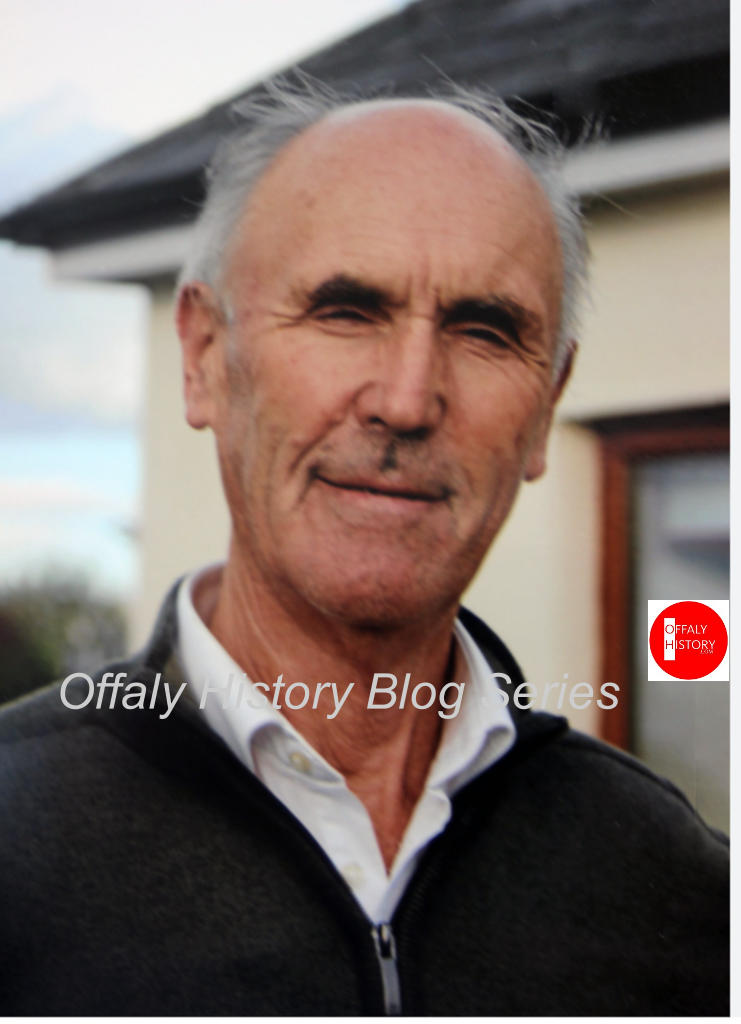
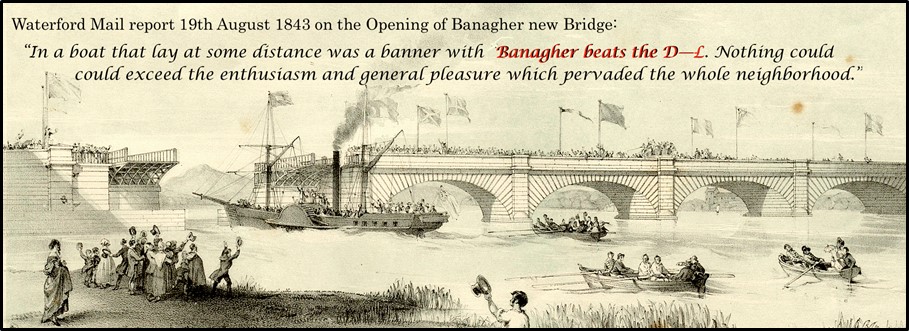
In his retirement Kieran gave much of his time to the history of Banagher and its placenames. As a practical man of business, he sought to introduce modern methods to the study of history and appreciated the value of archives. His generosity kickstarted the Offaly Archives funding project and enabled Offaly History to complete a €750,000 building in 2019. In 2025 he and James Scully produced a very fine and entertaining book on the origins and course of the well-known expression “That Beats Banagher”.
Kieran was working on a study of the new colonists in West Offaly in the 1620s and was fascinated and shocked by the artifice and legal chicanery employed by characters like Sir Matthew De Renzi to fully exploit and expropriate the lands of the MacCoghlans and other native families of West Offaly such as the Dallaghans. This would have been his life’s work of retirement years had better health allowed him.
He had his sorrows in life too and bore his own ill health of recent years without complaint. His love of his native place and its bogs left him upset and saddened at the intervention of Bord na Mona in what he saw was the destruction of the landscape with excessive roadbuilding by that agency across bogs in what may have been a local employment measure rather than any long-term tourism or environmental strategy. His was a lone voice and the ‘Great Silence’ descended with employed PR agencies retained to sweep up and provide “the good news” about Just Transition Funds and how they were spent.
Offaly History extends its sympathy to Kieran’s family and friends. We have a lost a great person but we can be proud of his achievements. In his house near the old St Paul’s Church on the hill in Banagher he could look across the town and landscape he loved so well. Of course he never rested and would always be up and at it. He loved life to the full and made the best of it . In doing so he brought his family, his friends and his community on an exciting life’s journey. We cherish his memory.
The appreciation piece that follows is based on an Oral History interview that Kieran participated in with “Irish Life and Lore” in April 2019 at his home in Banagher.
Introduction
The story of Kieran Keenaghan is not merely a chronicle of business success; it is a masterclass in the “bounce of the ball,” the power of community, and the enduring resilience of the Irish spirit. Spanning from a small farm in Lumcloon to the helm of one of Ireland’s most significant precast concrete enterprises, Kieran’s life reflects a half-century of Irish transformation. It is a life defined by engineering precision, a deep-seated passion for the GAA, and an unwavering loyalty to the people of West Offaly.
Early Years
Kieran Keenaghan was born into the parish of St. Rynagh’s, specifically in the townland of Lumcloon, an area he aptly described as being “locked in by bog”. Growing up on a small farm purchased by his father in 1936, his early years were synchronised with the rhythm of the Midland bogs and the rise of Bord na Móna. The bog wasn’t just a landscape; it was a livelihood. He recalled his father selling land to the “bog project” in the early 1950s for a mere two and sixpence an acre—a modest sum that underscored the humble beginnings from which Kieran emerged.
Named after St. Ciarán of Clonmacnoise, a name ubiquitous in that part of the world, Kieran’s identity was rooted in local tradition. His childhood was shaped by a large, blended family—four siblings from his father’s second marriage and an older stepsister—growing up in an environment where faith and family were the twin pillars of existence.
St Mel’s College, Longford
Kieran’s journey toward engineering was nearly derailed by a clerical error that serves as a pivotal “what if” in his life story. After attending a single-room “Bunscoil” in Lumcloon and later a more modern national school in Cloghan, Kieran competed for one of twenty secondary school scholarships offered by Offaly County Council.
In a dramatic turn of events, he was initially told he was successful, only to receive a second letter stating he had placed 23rd and the offer was withdrawn. It was only through the intervention of the renowned local politician Oliver J. Flanagan—who persuaded the council to expand the scholarship quota to twenty-three that year—that Kieran was able to attend St. Mel’s College in Longford.
“Had the assessment to be done properly, I would have gone to the local school and it’s unlikely that I would have achieved the results that I did achieve.”
St. Mel’s was a semi-seminary environment where priests made up the entirety of the teaching staff. While the “flavour” of the time leaned heavily toward the priesthood—his own stepsister and three aunts were nuns—Kieran’s path lay elsewhere. Even in those early years, he displayed a streak of quiet rebellion. In 1963, when the college principal forbade students from attending the All-Ireland Colleges Final, Kieran and a group of seniors organised a daring “breakout,” sneaking out through fields and catching a train to Dublin. They returned victorious, having risked expulsion on the eve of their Leaving Cert—a testament to Kieran’s early courage and his devotion to the GAA.
Engineering Degree
Kieran’s entry into University College Dublin (UCD) to study engineering was another leap of faith. Having come from a curriculum heavy in Latin and Greek, he lacked the standard physics and chemistry background. The first few months were a “tough going,” and he nearly gave up.
The intervention of a determined landlady in his “digs” proved decisive. She refused to let him quit and enrolled him in night courses at Dundrum Technical School to bridge his knowledge gap in Maths and Science. This perseverance paid off, and by 1967, Kieran was a qualified civil engineer, starting his career building motorways in County Down. This period in the North was “wholesome” and social, a time of long hours, site work, and “mixing with all the various grades,” which helped shape his grounded approach to management.
Banagher Concrete
After stints in Down and with the Golden Vale dairy industry in Charleville, Kieran returned to his roots. In 1975, the local precast concrete company in Banagher (then known as Bantile) became insolvent. Where others saw failure, Kieran and five partners saw opportunity. In early 1976, they bid for the assets and resurrected the business as Banagher Concrete.
As Managing Director for over 40 years, Kieran steered the company through the turbulent economic cycles of the 1980s and the explosive growth of the 2000s. The company became a national leader, providing the essential “beams” for Ireland’s motorway network and the agricultural infrastructure of the Midlands. At its peak, the business employed 500 people, becoming the lifeblood of the local community.
Kieran’s philosophy was simple: reliability. He believed that doing what the customer wanted, when they wanted it, was the “recipe for success”. He took immense pride in the fact that the company’s expertise was grown from within, rather than imported. “We wouldn’t bring in expertise or buy in management… we’ve always sort of blended in from our own resources”.
Devotion to the GAA
Parallel to his professional life was a lifelong devotion to the GAA. For Kieran, the GAA was more than a sport; it was a social lubricant and a source of profound community identity. He lived through the “freakish” success of Offaly football and hurling, witnessing the 1971 and 1972 All-Ireland wins while working in Banagher.
Even after hanging up his own jersey (having played midfield for his club), his contribution continued through administration and development. He chaired the development of the GAA Centre of Excellence, Faithful Fields, in Kilcormac and was instrumental in building stands and pitches in Banagher. To Kieran, the GAA represented a “voluntary commitment” and a “wholesomeness” that mirrored his own approach to business.
Legacy
Kieran Keenaghan’s career was defined by the “stress and strain” of deadlines but also the “great fondness” of shared achievement. He successfully navigated the transition from drawing boards and faxes to the digital age, always keeping the human element at the centre of the enterprise.
Perhaps his greatest legacy was his groundedness. Despite his success, he remained a man of the Midlands, someone who valued the fact that his employees could “go home for their 10 o’clock tea”. He was a man who understood that while the “bounce of the ball” matters, it is what you do after the bounce that defines a life.
Kieran Keenaghan’s story is a tribute to the power of perseverance, the importance of local roots, and the quiet dignity of a life spent building—both in concrete and in community.
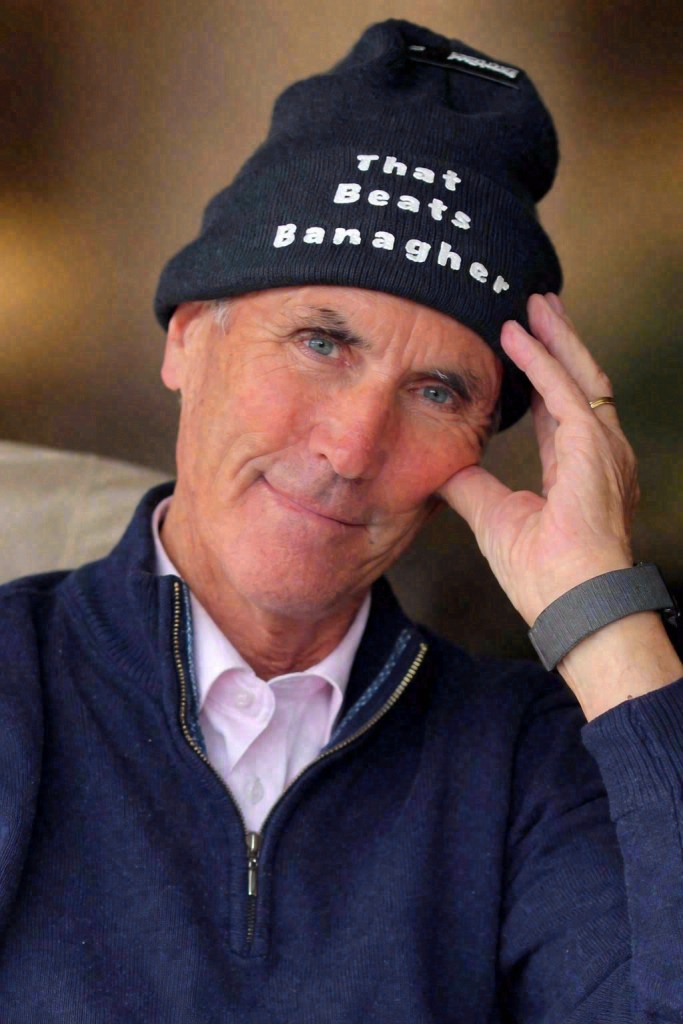
Kieran Keenaghan, Feeghs, Banagher, Co. Offaly. Kieran died on April 16th 2026, peacefully at home surrounded by his family.
He was predeceased by his beloved parents Kieran and Kitty, son Barry, brother Paddy and sisters Eileen (Kerin) and Sr Anna Maria (USA).
Kieran will be sadly missed and fondly remembered by his loving family, his wife Sheila and children Raymond, Julian and Kate, brother Oliver, cherished grandchildren Conor, Rossa, Tom, Julia, Cayden, Rose, Sam and June, daughters in law and son in law, nieces, nephews, relatives, neighbours and a wide circle of friends. Source RIP.ie

