
The first meeting of the Tullamore Board of Guardians took place on Tuesday, the 26 November 1839, with 21 guardians present.[i] There were 24 elected members from 15 electoral divisions. The Union comprised an area of 246 square miles, covering 13 electoral divisions in King’s County and two in County Westmeath, with a total population of 53,905.[ii] It was headed by a chairman, John Hussey Walsh, with Charles Bagot as vice-chairman and John O’Brien deputy vice-chairman.
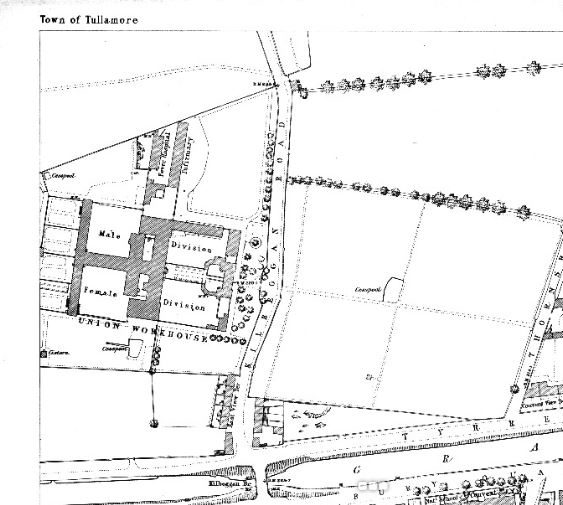
Figure 1 Tullamore Union Workhouse (Ordnance Survey, 1889)
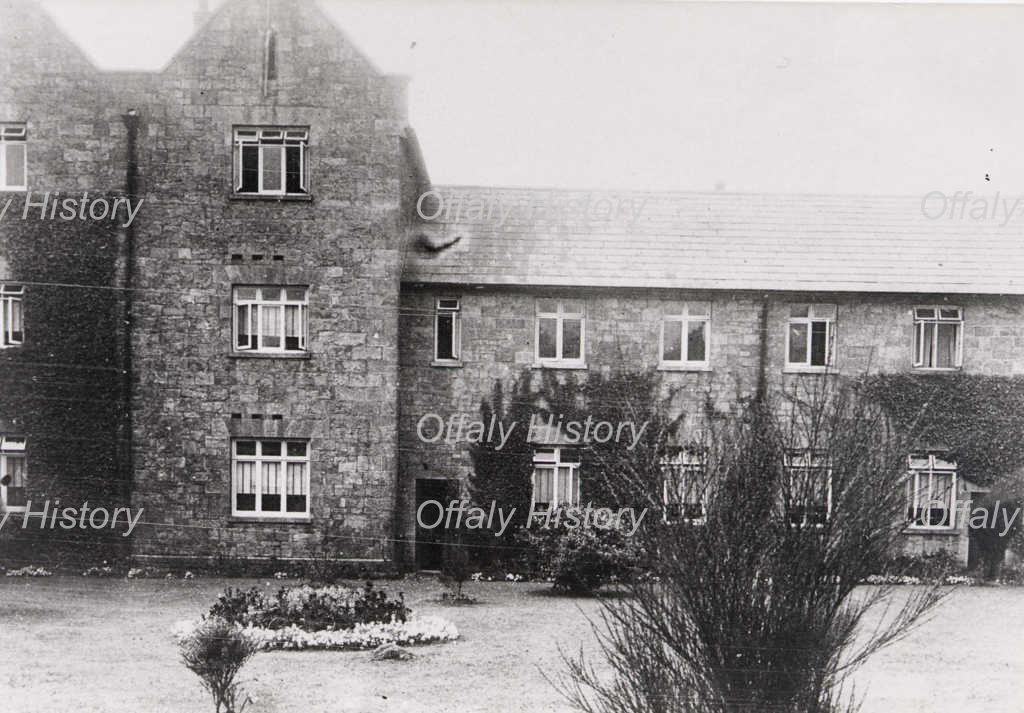
The workhouse was situated on a 6.5 acre plot of land north of the Grand Canal on Emmet Road, or better known as Ardan Road. George Wilkinson, an Englishman, was the architect who followed similar designs to other poor houses built according to his designs in the years following the passage of the Irish poor laws Act. The Workhouse opened to inmates on the 9 June 1842. The workhouse cost £5,950 to build and a further £1,265 for fittings and furnish, bringing a total cost of 7,215.[iii]
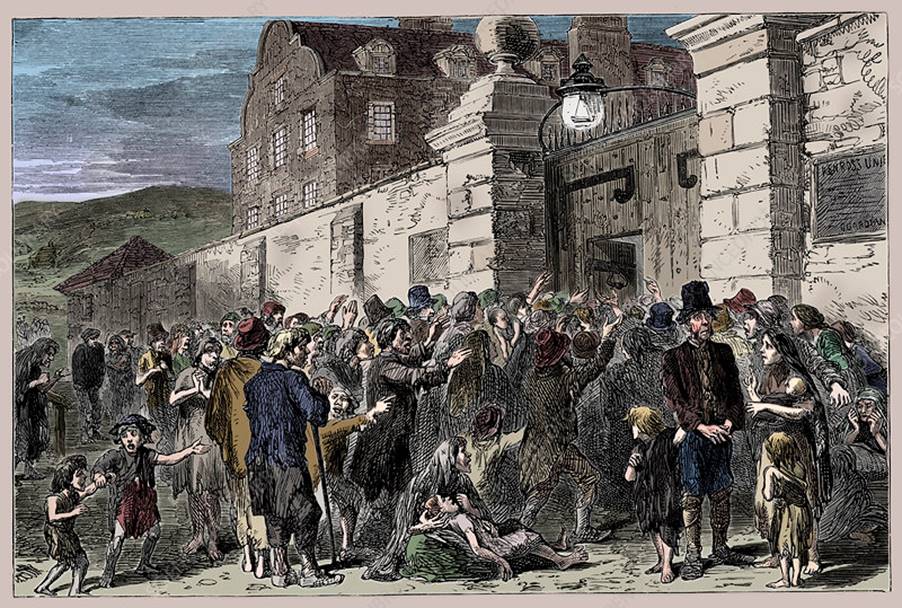
Figure 2 A crowd outside a workhouse (John O’Connor, The Workhouses of Ireland)
The Tullamore Union struggled to contain disease as was mentioned in the annual report of the P.L.C. in 1844.[iv] In December 1844 the Board decided to build a fever hospital.[v] The Board resolved that the cost of the fever hospital would not exceed £300. Frances P. O’Flanagan; John Locke, Samuel Robinson, John O’Brien, Matthew Houghan, Francis Berry and Marcus Goodbody were appointed to the committee with Frances P. O’Flanagan in the chair.[vi] It was added in the minute book of the Tullamore Union that ‘no additional sum be granted by the members of the board for the staff further than assistant nurses.’[vii] The motion was approved 13-9 in favour of the resolution for a fever hospital to be erected as soon as possible.
As Brendan Ryan has written, there was chronic overcrowding in the workhouse in 1846. In April 1846 of that year the fever hospital opened. By November 1846 there were 740 inmates in a building with a capacity of 700, by January 1847 there were 900 in the workhouse.
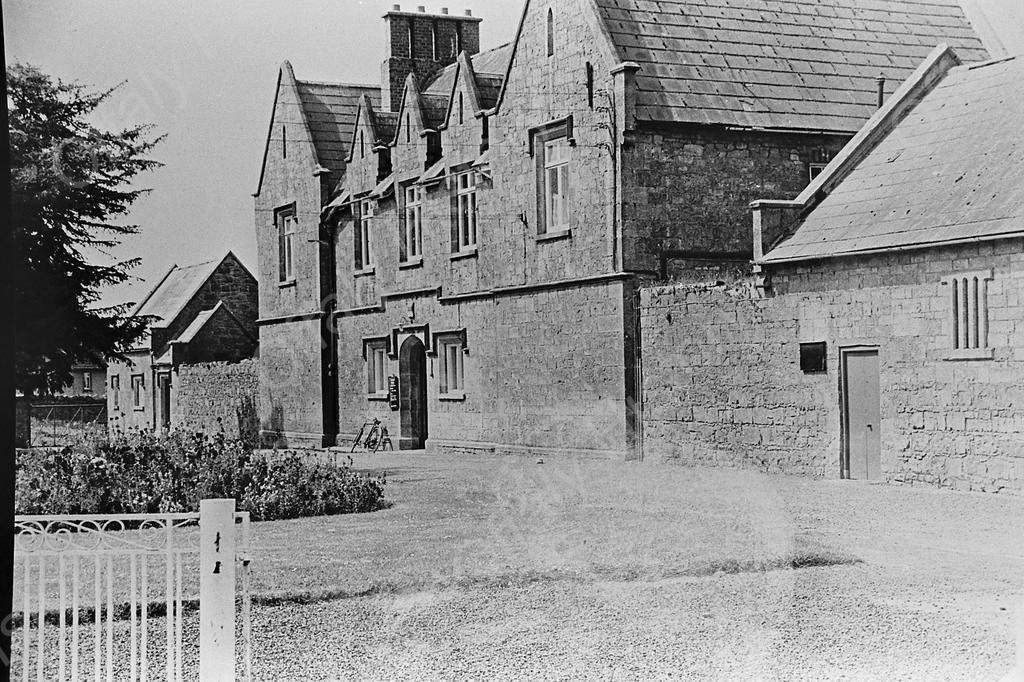
Emigration of children from the workhouses to Australia
In the workhouses of the period before and during the famine children were a significant population within the poor law system. In the early years of the Irish workhouse fifty per cent of the inmates were children under 15. To qualify for relief a whole family had to enter the workhouse together. If orphans or deserted children arrived they were made an exception. Children over two years were placed in the children’s ward, separate from their parents.[viii] Upon arrival children unlike adults were not provided with footwear such as shoes or stockings. Eighteen orphans were sent to Australia in 1848 and 35 in 1849.[ix]. Provision later had to be made for unmarried mothers and their children. Later in 1853 a P.L.C. report found that the housing of children together with adults in the workhouse was harmful both physically and mentally.
In September 1843 the Board enquired under what circumstances orphan boys, or the boys of soldiers whose mothers are living but unable to support them can be received into Hibernian School, Phoenix Park.[x] The appointment of a schoolmaster and schoolmistress were one of the first tasks of the Tullamore Board. A plan to pay for the transport of a female students to the Hibernian School in Dublin was attempted by the Board in July 1845. The payment was disallowed by the Poor Law Commissioners (P.L.C.) as it informed the Board that union funds could not be legally applied for the expense involved.[xi]
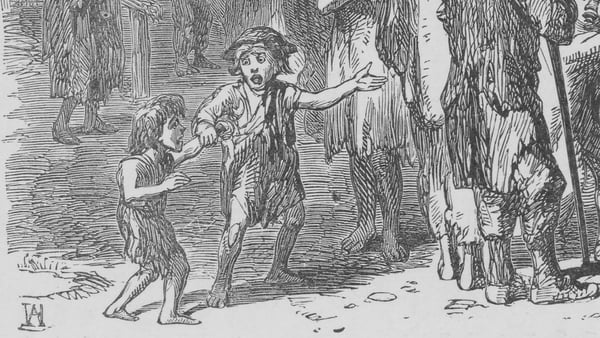
Figure 3 Sketch of children outside a workhouse
Life inside the workhouse building was overcrowded, unsanitary and miserable. Tullamore workhouse had a capacity of 700 people in September 1847. Due to overcrowding 735 were actually living in the workhouse at this date. In 1849 the workhouse was documented to have increased in number to 1,863 inmates with this dropping back down to 1,339 in 1852 as the famine subsided.[xii] The workhouse by 1852 had failed to prevent the worst excesses of the famine. The poor living conditions and quality of food contributed to mortality in order to follow the logic of the poor law system as by design a place of hardship and deterrence.
[i] Minute Book Tullamore Union (M.B.T.U.), 26 November 1839.
[ii] Brendan Ryan, ‘The workhouses of Ireland and their manifestation in King’s County’ in Offaly Heritage, 10 (2018), pp 185-228 at p. 190.
[iii] Ryan, ‘The workhouses of Ireland and their manifestation in King’s County’, p. 208.
[iv] Steve Dolan, The workhouses of County Offaly (2020), p. 13.
[v] M.B.T.U., 17 December 1844.
[vi] M.B.T.U., 17 December 1844.
[vii] M.B.T.U., 17 December 1844.
[viii] John O’Connor, The workhouses of Ireland (Dublin, 1995), p. 85.
[ix] Ryan, ‘The workhouses of Ireland and their manifestation in King’s County’, p. 210.
[x] M.B.T.U. 22 September 1843.
[xi] Michael Murphy, Tullamore workhouse: the first decade, 1842-1852 (Tullamore, 2007), p. 14.
[xii] Dolan, The workhouses of County Offaly, p. 12.

